3 MW xStorage Now Live at the Johan Cruijff ArenA

We covered the start of this story, and are now pleased to be able to report that the xStorage Buildings electricity storage system at the Johan Cruijff ArenA, home of Ajax Amsterdam, is now live. According to this morning’s press release:

Today the largest European energy storage system using second-life and new electric vehicle batteries in a commercial building was made live. Amsterdam Alderman Udo Kock, deputy mayor for Finance and Economic Affairs (Amsterdam) conducted the official opening ceremony.

This unique project is the result of collaboration between Nissan, Eaton, BAM, The Mobility House and the Johan Cruijff ArenA, supported by the Amsterdam Climate and Energy Fund (AKEF) and Interreg.

The 3 megawatt storage system provides a more reliable and efficient energy supply and usage for the stadium, its visitors, neighbors and the Dutch energy grid. Combining Eaton power conversion units and the equivalent of 148 Nissan LEAF batteries, the energy storage system not only enables a more sustainable energy system, it also creates a circular economy for electric vehicle batteries.

Europe’s largest energy storage system is now live at the the Johan Cruijff Arena

Europe’s largest energy storage system is now live at the the Johan Cruijff Arena

According to Henk van Raan, director of innovation at the Johan Cruijff ArenA:

Thanks to this energy storage system, the stadium will be able to use its own sustainable energy more intelligently and, as Amsterdam Energy ArenA BV, it can trade in the batteries’ available storage capacity.

The ArenA is assured of a considerable amount of power, even during an outage. As a result, the stadium will contribute to a stable Dutch energy grid. The Johan Cruijff ArenA is one of the most sustainable stadiums in the world and leads the way in introducing smart innovations like this unique energy storage system.

The press release continues:

The energy storage system plays an important role in balancing supply and demand of energy in the Johan Cruijff ArenA. The storage system has a total capacity of 3 megawatt, enough to power several thousand households. This capacity also means that the energy produced by the 4,200 solar panels on the roof of the ArenA can also be stored and used optimally. The energy storage system will provide back-up power, reducing the use of diesel generators, and provide relief to the energy grid by flattening the peaks that occur during concerts.

Finally, for the moment at least, here’s a video of the Ajax Amsterdam ArenA and it’s new static distributed energy storage system in action:

Nissan Unveil Solar PV Integrated Static xStorage for UK

In two separate press releases there have been two interesting announcements from Nissan on the ex EV battery storage front. In the first there’s a football connection!

Nissan, power management leader Eaton and The Mobility House today signed a ground-breaking 10-year deal with Amsterdam ArenA – home of Ajax Football Club and world-famous entertainment venue – to provide back-up power from second life Nissan LEAF batteries.

The xStorage Buildings system efficiently stores and distributes energy when it’s needed, ensuring that the lights never go out at the renowned 55,000-seater stadium, which has played host to numerous high profile concerts and sporting events over the years.

By repurposing batteries from previously used electric vehicles, the xStorage Buildings system can draw energy from the grid, providing businesses with more control, better value and a more sustainable choice for their energy consumption.

Using 280 Nissan LEAF batteries, the system designed for the Amsterdam ArenA will be the largest energy storage system powered by second-life batteries used by a commercial business in Europe and will have four Megawatts of power and four Megawatts (sic) of storage capacity.

As well as providing vital back-up power services to the ArenA, xStorage Buildings also enables the Amsterdam ArenA to power the surrounding neighbourhood when necessary and protect the grid.

We’ll excuse Nissan PR the misprint because they’ve provided this nice video accompaniment to their announcement, which doesn’t make the same mistake:

In the second announcement it is revealed that:

Nissan and power management leader Eaton are broadening their portfolio of xStorage Home residential energy storage solutions by introducing a range of six product configurations, giving consumers greater choice to meet their energy needs. This announcement comes as pre-orders of xStorage Home begin today in the United Kingdom, Norway and Germany with other European markets to follow in the coming months.

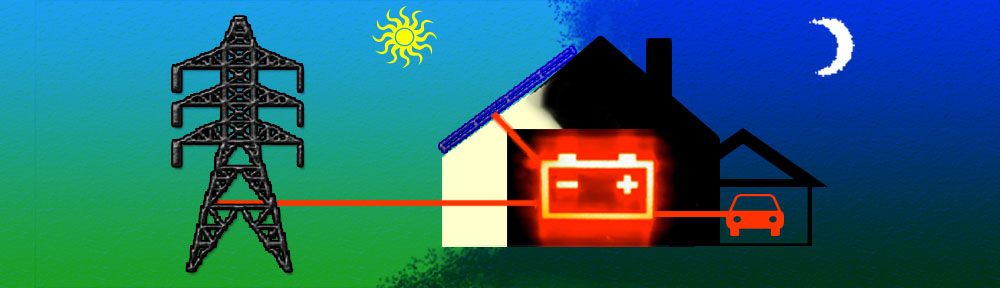
The xStorage Home system can draw energy from the sun or from the grid, making energy consumption more affordable and encouraging home-owners to make a more sustainable choice. The cutting-edge technology in the xStorage Home system is also fit for the future, and can enable customers to sell energy back to the grid – an opportunity that is expected to be offered by energy companies in the future.

The system gives consumers greater control over how and when they use energy in their own homes enabling them to avoid expensive tariff periods. The expanded range will offer consumers greater choice over power capacity and price as well as units. Consumers can opt to purchase units powered by either second life batteries or new batteries.
xStorage Home units – which provide a sustainable second life for Nissan’s electric vehicle (EV) batteries after their first life in cars is over – will be priced competitively starting at €3,500 (excluding VAT and installation costs) for a power capacity of 3.5kW rising to just €3,900 for 6kW. Units powered by new Nissan batteries will start from €5,000 rising to €5,580 for the highest capacity and will come with an extended warranty period of ten years.

Connected to a residential power supply and/or renewable energy sources such as solar panels, the unit has the potential to revolutionise the way people manage energy usage in their own home, providing added flexibility.

xStorage Home comes with solar panel inverters already integrated meaning that if a home is equipped with solar panels, the consumer can connect directly to xStorage Home, storing and then powering their homes using clean, renewable energy. It can also save customers money on their utility bills by charging up when renewable energy is available or cheaper, and releasing that stored energy when demand and costs are high.

The xStorage Home unit also has the capability to provide energy back to the grid in countries where the conditions enable customers to do so. This provides another potential revenue stream as customers will be able to sell stored energy back to the grid when demand and costs are high.

The system also provides the ultimate back-up energy solution to consumers, ideal at a time when energy grids are coming under significant strain. With smartphone connectivity, it allows consumers to switch between energy sources at the touch of a button.

I wonder if Eaton have solved all the Great British G83 issues yet, and whether they will incorporate V2H functionality into their xStorage offering? I also cannot help but wonder how many Great British Pounds that €3,500 will translate to by the time UK deliveries eventually commence?