In case the six letter acronym (SLA for short) in our title for today means nothing to you it stands for “Sustainable Energy Without The Hot Air“, the title of a 2008 book by David MacKay, who amongst other things is Regius Professor of Engineering at the University of Cambridge. We first mentioned SEWTHA back in 2012, when Bill Gates praised it in an interview with the Wall Street Journal. I mention it again today because my attention was drawn by a bit of a barney (BoB for short) on Twitter between Prof. MacKay and Jeremy Leggett, who amongst other things is a founding director of solar PV company Solarcentury.
First of all here’s the BoB in question, including the V2G UK addendum!
In case you would like to listen to the edition of Evan Davies’ “The Bottom Line” on the topic of “Renewable Energy” under discussion, here it is:
Evan’s guests were Jeremy Leggett, Juliet Davenport of Good Energy and Paul Cowley, managing director of RWE Energy UK. Here are of few of my own “edited highlights”:
01:30 JD – One of the examples is Wyke Farm Cheeses. When they wash down the dairy every night and when they make the cheese, that they then anaerobically digest which creates a gas and they generate power. That’s one of our generators.
02:37 JL – A small cottage with bespoke solar tiles. these are different from the modules you use in solar farms or on a big installation on a commercial roof because they really are tiles. They go straight on the battens of the house. They generate electricity. They’re waterproof.
08:45 ED – I also wanted to talk about the physical constraints on whether you can get, in a country like ours, to 100% renewables. I’ve been very influenced by a particular book called SEWTHA by David MacKay.
09:30 JL – That book was published a good few years ago now. It’s out of date and I don’t think Dr. MacKay even believes that any more.
10:18 JD – We did some work, following David MacKay’s book actually, and used the work that he did. He went on to be the scientific advisor to DECC. He developed these pathways/models and we used them to look at how hard can you push the system to get it 100%. The UK has sufficient resource, whether it’s wind, whether it’s solar, to get to 100% on the current usage. [My emphasis!]
One of the things about climate change, it’s going to change the way we use power as well. So we saw last year energy usage in the domestic gas market dropped by 10%. 2014 one of the warmest years ever. You’ve also had the highest ever wind power production this winter. We’ve seen a lot of storms come through… So the parameters that David used in that book, I think we’re now looking for Hot Air 2.0.
11:30 ED – To give another example from the book, taking that it’s out of date, to get 50 kWh per day per person, and we’re currently using 125 kWh per day, to get 50 from offshore wind would mean filling a sea area twice the size of Wales. It would be expensive. It would be a very big deal.
One of things here, and it’s been much under-discussed in this area, is not only do we need to get our current electricity decarbonised, but we’re talking about decarbonising the transport industry to a large degree, and David MacKay’s good on this. You’ve got to almost double or triple your electricity generation, so not only do we have to replace the nuclear power and the coal that’s falling out of use over the next decade. You’ve got to replace that and add in plug-in cars. [My emphasis!]
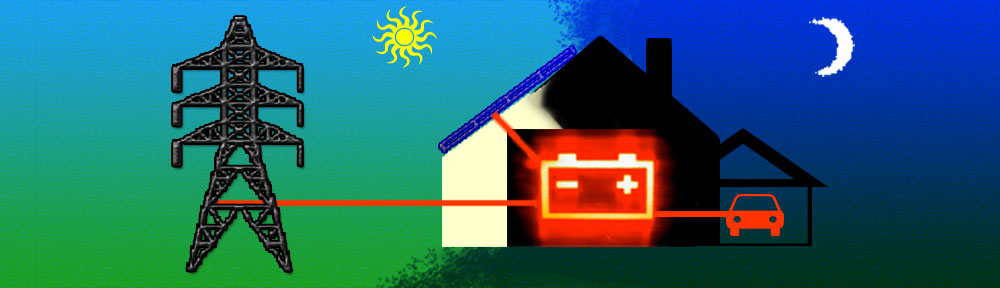
12:59 JD – That’s what really exciting about right now. We’ve got a different problem on our hands. We’re going to have different technologies coming through, and we’re going to have to figure out how consumers use that. And actually the car storage part is really interesting because each car has a battery in it, and suddenly you’ve got a flexible power source that you can either use for transport or potentially use within people’s homes. And that piece of technology hasn’t really been thought through, about what that can really deliver [Juliet’s emphasis!]
13:45 PC – We see it in the press all the time. Wind turbines not running because the wind’s not blowing! The reality is that turbines generate around 85% of the time. They start generating at a very low wind speed… and then builds up to an optimum wind speed.
14:13 ED – We haven’t got yet a very efficient mechanism for storing electricity have we?
14:25 JL – Things are moving so fast. Let’s not forget, Apple is going to be mass producing electric vehicles four years from now. That is their stated intent. Each one of those is going to be a little power plant, and who knows how they’re all going to be hooked up to each other? It’s going to move so fast Evan, and I think this is the criticism that people like me have of, you know good guys like David MacKay with his book. They’re still flogging the idea of these vast centralised, humongously expensive centralised power plants, nuclear in particular, that take 10 years to construct.
The upshot of all this, apart from the BoB? More and more people are mentioning the concept of vehicle-to-grid technology in public pronouncements here in the UK. Andrea Leadsom at DECC assures us that she’s “as keen as mustard” on energy storage. That is of course nice to hear, but what do Physics & Chemistry have to tell us about the hard realities of distributed energy storage? And what about DECC & Ofgem too, with their assorted rules and regulations?
I might also have a minor quibble about Juliet’s “hasn’t really been thought through” remark. Some people have been thinking quite hard about V2H and V2G for quite some time!