The First Great Dunchideock Blackout

At May’s film night in Dunchideock Village Hall it was announced that anybody interested in learning more about the recent power cut in the village could “read all about it” on this very web site. A cry was heard from the audience:

Which one is that then?

It has now been brought to my attention that the other end of the village has suffered far more from the absence of electricity this year than my own particular neck of the woods. Having engaged in further communications with some local residents and Western Power Distribution I have another long tale of woe to tell!

There was undoubtedly much wet and windy weather around the Haldon Hills earlier this year. According to the UK Met Office, handily situated just up the road in Exeter, in their summary of Winter 2013/14:

Winter 2014 was an exceptionally stormy season, with at least 12 major winter storms affecting the UK in two spells from mid-December to early January, and again from late January to mid-February. When considered overall, this was the stormiest period of weather experienced by the UK for at least 20 years. An analysis of pressure fields by the University of East Anglia suggests this winter has had more very severe gale days than any other winter season in a series from 1871.

All those storms didn’t appear to have any long lasting impact on the southern side of Dunchideock at the time, but the story is rather different slightly to the north. Here’s a map of Western Power Distribution’s high voltage electricity network in the area:

WPD map of 11 kV (red) and 33 kV (green) cables south and west of Exeter

WPD map of 11 kV (red) and 33 kV (green) cables south and west of Exeter

Hopefully it is now apparent to you that the northern part of Dunchideock is on a completely different “circuit” to the southern part. You can also see that there have been a few electricity supply issues over the past few months! Taking them in chronological order, the first outage was on Tuesday February 4th. It’s unlikely to be mere coincidence that on the same day the Met Office issued a press release saying that:

The stormy conditions are expected to bring damaging gusts of wind of up to 60 mph inland and perhaps as high as 80 mph along some southern and western coasts of Britain on Tuesday night and Wednesday. These severe gales, combined with further heavy rain may cause some disruption because of fallen trees and high waves in coastal areas.

The net result as far as northern Dunchideock was concerned was:

A power cut from 21:00 to 02:00 on the 5th. When the power went off alternate houses in the road came back on after a minute or so and stayed on.

According to Western Power Distribution the immediate cause was that:

One of two low voltage fuses blew (on a split phase transformer). Hence 50% of customers would be on supply.
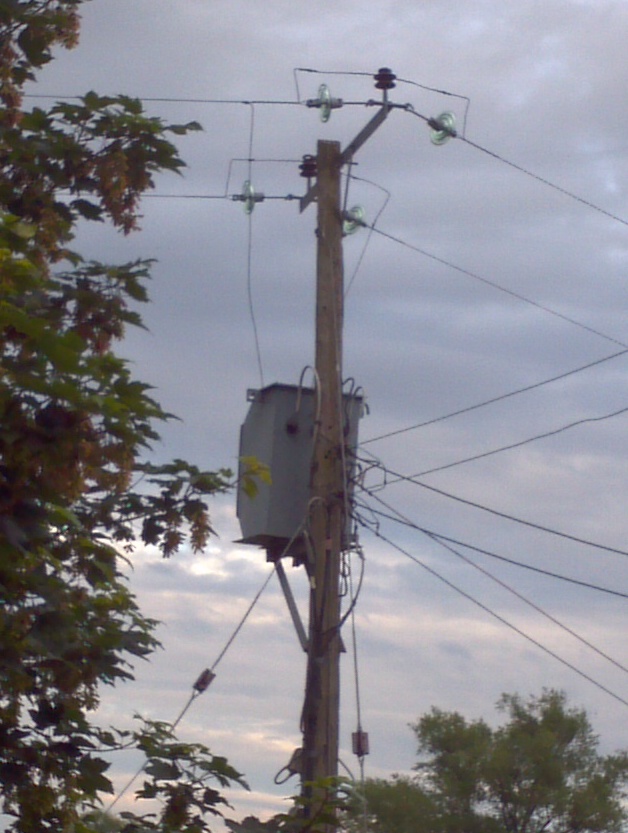
Transformer 31/0174 near Thornes Meadow, Dunchideock

Transformer 31/0174 near Thornes Meadow, Dunchideock

Ten days later the real “Great Dunchideock Blackout” occurred. According to the Met Office once again, in their forecast for Friday February 14th:

The Met Office was so concerned about the wind speeds on Wednesday a Red weather warning was issued for wind, the first red warning since January 2013. Extremely strong winds were seen in the south and northwest of England and parts of Wales.

We have another weather system crossing the UK on Friday bringing further heavy rain and very strong winds, leading to a number of weather warnings being put in place. The rain will push into the UK from the southwest during Friday morning, moving quickly north eastwards.

There are Yellow weather warnings for wind in place for the South coast and round into East Anglia with an Amber weather warning for wind along the South coast. We are expecting some gusts of around 60 miles per hour inland and perhaps 80 miles per hour in exposed areas along the coast itself. With these very strong winds large waves will push onto the coastline with dangerous conditions possible as well as some localised coastal flooding.

Here in Dunchideock, for the residents of Thornes Meadow at least, the result was a power cut lasting almost two days:

The second power cut was on 14th February at 19:30 and the electricity did not come back on until 14:00 on the 16th. Everybody in Thornes Meadow was off this time. The recorded messages of restoration times were continually put back.

As you may be able to imagine, in such circumstances Western Power Distribution had a very long list of problems to deal with. The immediate issues for Dunchideock were:

Two separate  High Voltage faults (conductors down due to trees and an entire barn roof being blown onto the line).

Due to the number of faults WPD had to bring in extra engineers from the Midlands and South Wales to help with the repairs. In normal circumstances the UK electricity market regulator Ofgem specifies a maximum 18 hour time limit on restoring electricity supplies. However in extreme circumstances this can relaxed. Ofgem themselves foresaw the potential difficulties, and issued a news release of their own on February 12th, stating that:

Severe weather is currently forecast across Great Britain. Electricity distribution companies, who own and operate the local networks, are making preparations ahead of this weather. We set rules on how quickly companies have to respond to restore power in both normal weather and severe weather conditions.

For severe weather there are different categories according to the severity of the storm. The category sets the amount of time companies have to restore power before compensation must be paid. The category is determined by the number of major faults experienced within a 24 hour period on the distribution company’s network.

The distribution company may be able to give an initial early view of what category the storm is but the data is checked and verified by us. The time you are off supply before being able to claim payments varies according to severity of storm. This is because the companies will have more work to do to fix faults.

  • Category 1: After 24 hours
  • Category 2: After 48 hours

In this case the storm was ultimately classified as category 2, and hence the unfortunate residents of Thornes Meadow are not entitled to any compensation despite being without any electricity supply for nearly two days.

Moving on to the next outage, which took place on “February 25th from 18:50 to 19:45” on which date there were no special press releases from the Met Office. Thankfully this power cut was of much shorter duration than the previous one, and was because:

A high voltage fuse operated. Restoration was via HV fuse replacement.

Finally we come to May 14th, when “a faulty high voltage insulator” led to a power cut in properties supplied by transformer 31/6871 in the vicinity of Dunchideock Church. Once again the weather wasn’t sufficiently inclement to warrant a Met Office press release.
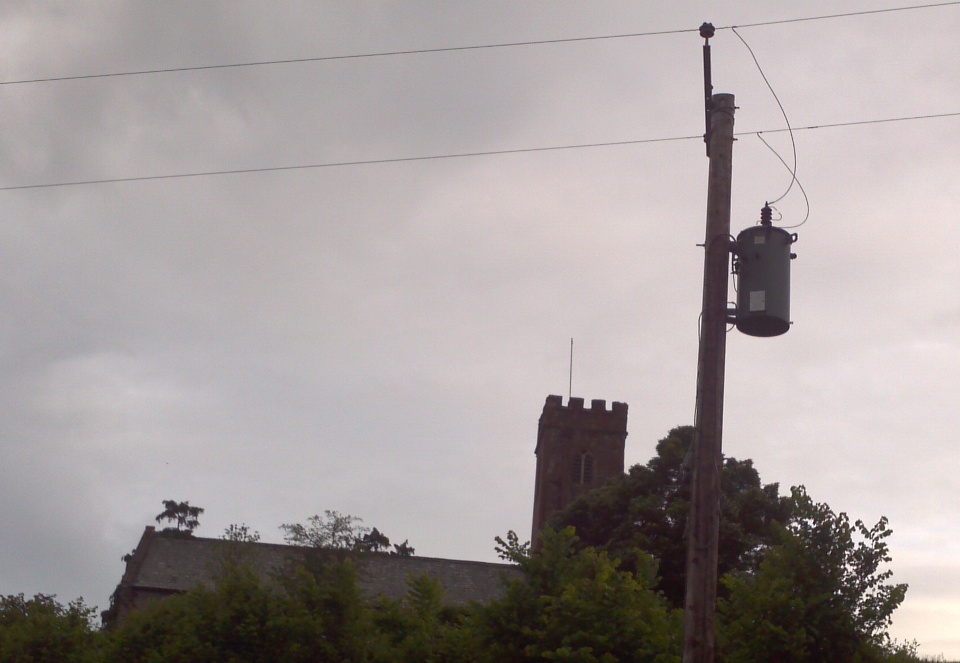
Transformer 31/6871 near Dunchideock Church

Transformer 31/6871 near Dunchideock Church

All of this additional information leads me to conjecture yet again about all those blown fuses and faulty insulators. What stresses and strains is our local electricity distribution network being subjected to these days by the combination of lots of inclement weather and renewable electricity generation, down here in not always Sunny South West England?

Rather too many for comfort would seem to be the answer, if Dunchideock’s recent experience is anything to go by.



Sinopoly to Invest $42 Million in Smith Electric Vehicles

Smith Electric Vehicles also have a factory here in the UK, but they stopped production at their U.S. factory near Kansas City airport late in 2013. Now they have announced that they have:

Secured a $42 million commitment from Sinopoly Battery Limited, a worldwide leader in the research, development, production, distribution and sale of Lithium-ion batteries and related EV products. The first $2 million in funding closed today, and the remainder will be invested in two tranches pending milestones to be achieved by both companies in the coming months.

The $42M investment will position Sinopoly as a strategic shareholder in Smith Electric. Under the agreement, Sinopoly will become Smith Electric’s exclusive supplier for batteries in vehicle applications that are compatible with Smith Electric’s platforms and customer requirements. Sinopoly will also become a preferred supplier for certain electric vehicle components that can be manufactured in its Hangzhou facility.

Bryan Hansel, chief executive officer of Smith Electric Vehicles, said that:

Demand for all-electric commercial vehicles is rapidly increasing in China, and Sinopoly’s investment in Smith Electric highlights the important role we will play in the global marketplace,” said Bryan Hansel, chief executive officer of Smith Electric Vehicles. This investment provides both companies with the opportunity to leverage the synergies between our operations while Smith maintains the financial and operational flexibility to scale manufacturing, transition and strengthen our supply chain, and move toward company profitability.

whilst Mr. Cao Zhong, the chairman and executive director of Sinopoly Battery Limited, said that:

Smith is an internationally renowned supplier of EVs. Sinopoly’s investment in Smith represents an important and strategic advance step in establishing Sinopoly as a significant integrated player in the EV industry. The combined expertise of Smith and Sinopoly, which will adopt the name of FDG Electric Vehicles Limited shortly, along with the macro-subsidy policy for alternative energy vehicles, uniquely positions us to capitalize on the rapidly growing commercial EV market in China and the U.S.

Smith (or should that now be FDG?) chairman of the board Charles Gassenheimer hinted at a future IPO, saying that:

Sinopoly’s investment in Smith Electric Vehicles marks an important milestone in recapitalizing and restructuring the company in preparation for the public market. This agreement underscores Sinopoly’s institutional understanding of the global electric vehicle industry and the company’s commitment to working with Smith Electric to create a major player in the market.

Western Power Distribution will be one of many UK companies breathing a sigh of relief that Sinopoly have breathed new life into their favourite supplier of electric commercial vehicles. Perhaps the U.S. Department of Defense will do likewise?

A Smith Electric Vehicles Newton stake bed truck

A Smith Electric Vehicles Newton stake bed truck

The Great Dunchideock Blackout Saga

We recently suffered a power outage, or power cut as we prefer to call such things here in the UK. This wasn’t any old power outage either. Let me explain.

The lights went out at 17:44 on Friday April 11th 2014. I hurriedly powered down everything in the lab and office except my laptop and our broadband router, which was by then being powered from the battery in an uninterruptible power supply. When the lights hadn’t come back on a few minutes later I telephoned our local Distribution Network Operator (DNO for short), Western Power Distribution, to enquire what the problem was, and when it might be fixed. WPD’s automated system suggested that our power should be restored by about 21:00 that evening.

9 o’clock came and went, by which time the batteries in my laptop and UPS were flat. I called WPD again, to be informed that the latest estimate for the time at which I would be able to get connected to the internet once again would be 01:00 on Saturday morning. I figured I’d allow WPD a bit of leeway, and eventually went to bed having set the alarm on my smartphone for 02:00. The alarm went off, but the lights still hadn’t come back on.  I phoned Western Power again to be informed that things should be back to normal in an hour or so. Bleary eyed I returned to bed.

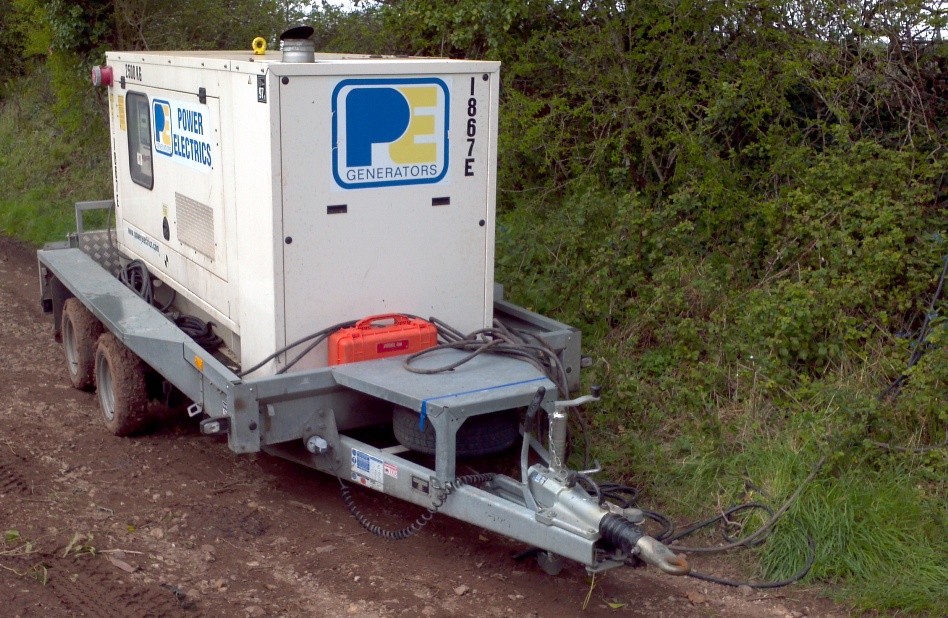
When I arose next morning I wasn’t in need of any lights, but my router and laptop were working once again. There was, however, the continuous drone of an engine audible not too far away so I set out to investigate by following the sound, and here is what I discovered:

Generator on the track to Haldon Belvedere on April 12th 2014

Diesel generator on the track to Haldon Belvedere on April 12th 2014

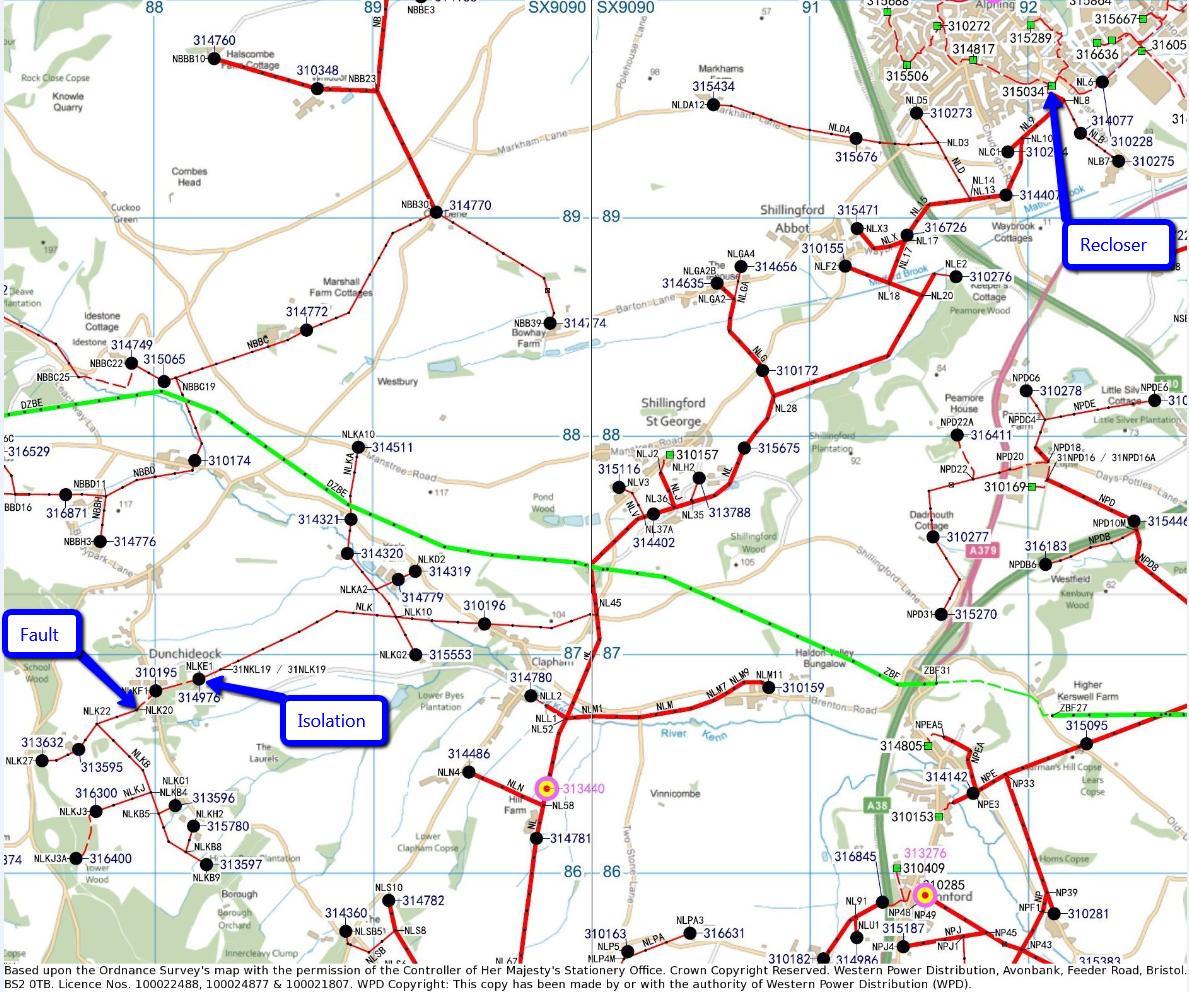
Another call to Western Power Distribution elicited some further information. I managed to speak to WPD’s standby manager for the day, who explained what had happened the previous evening. Initally over 300 properties had been without electricity following the operation of an automatic circuit recloser mounted on pole NLT1M in Alphington, as shown at the top right of the map of WPD’s network below (click the image for a larger version), and in this photo I took subsequently:

Schneider pole mounted recloser and air break isolator in Alphington

Schneider U-Series pole mounted recloser and an air break isolator in Alphington

WPD map of 11 kV and 33 kV cables Southwest of Exeter

WPD map of 11 kV (red) and 33 kV (green) cables south west of Exeter

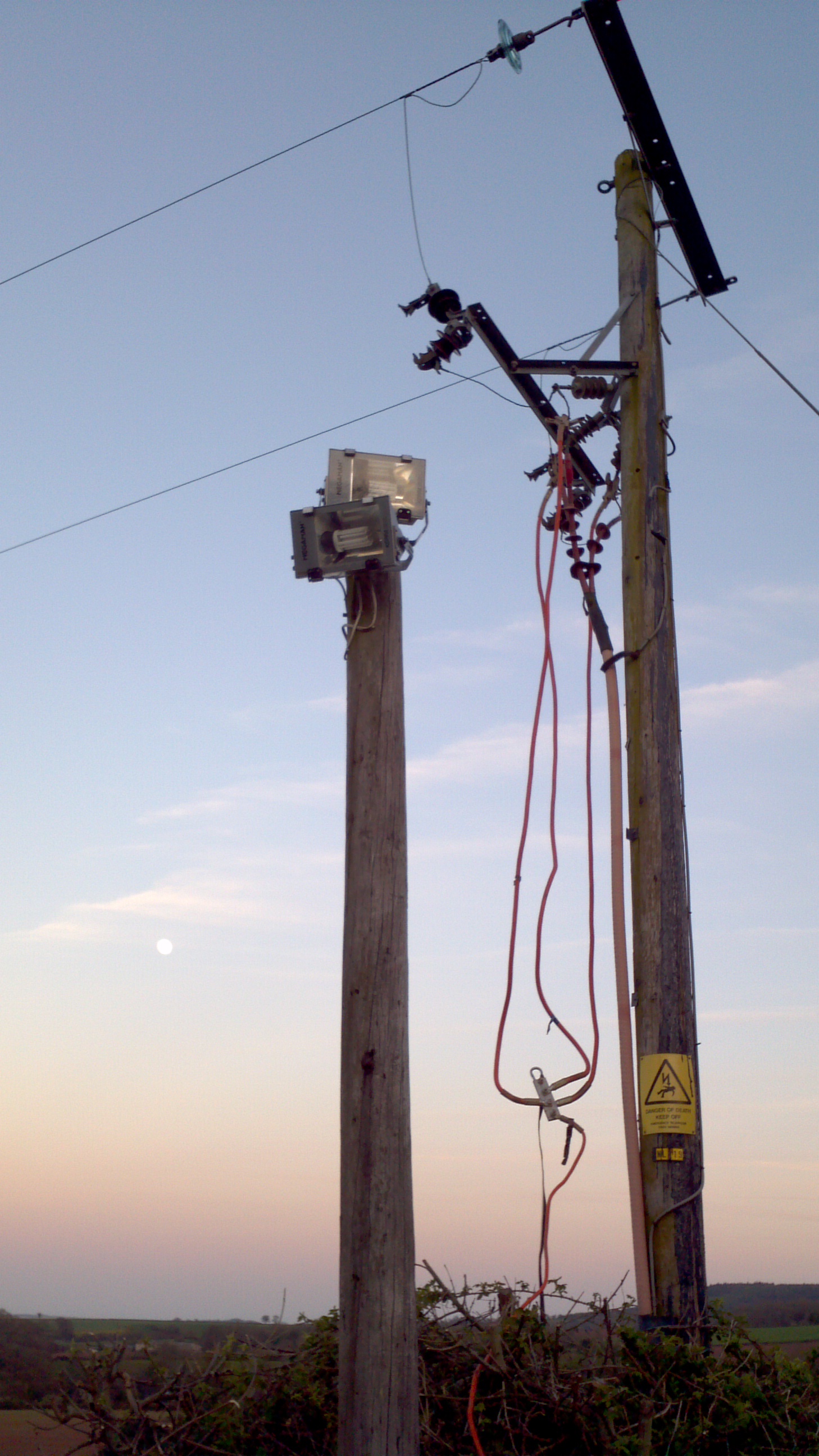
At that point everything powered via the 11 kV 3 phase (thick red) cables running from top right to bottom left of WPD’s map was without electricity. By around 21:00 the problem had been isolated to somewhere in the bottom left corner of the map, and power now reached as far as pole NLK19, near the north east corner of The Lord Haldon Hotel car park.

Pole 31NLK19, whilst The Lord Haldon Hotel and The Haldon Belvedere were running from WPD generators

Pole 31NLK19, draped with extra cables, whilst The Lord Haldon Hotel and The Haldon Belvedere were running from WPD generators

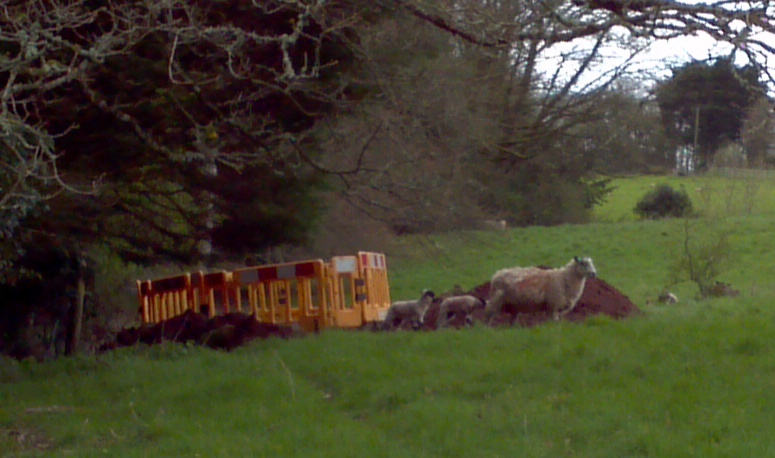
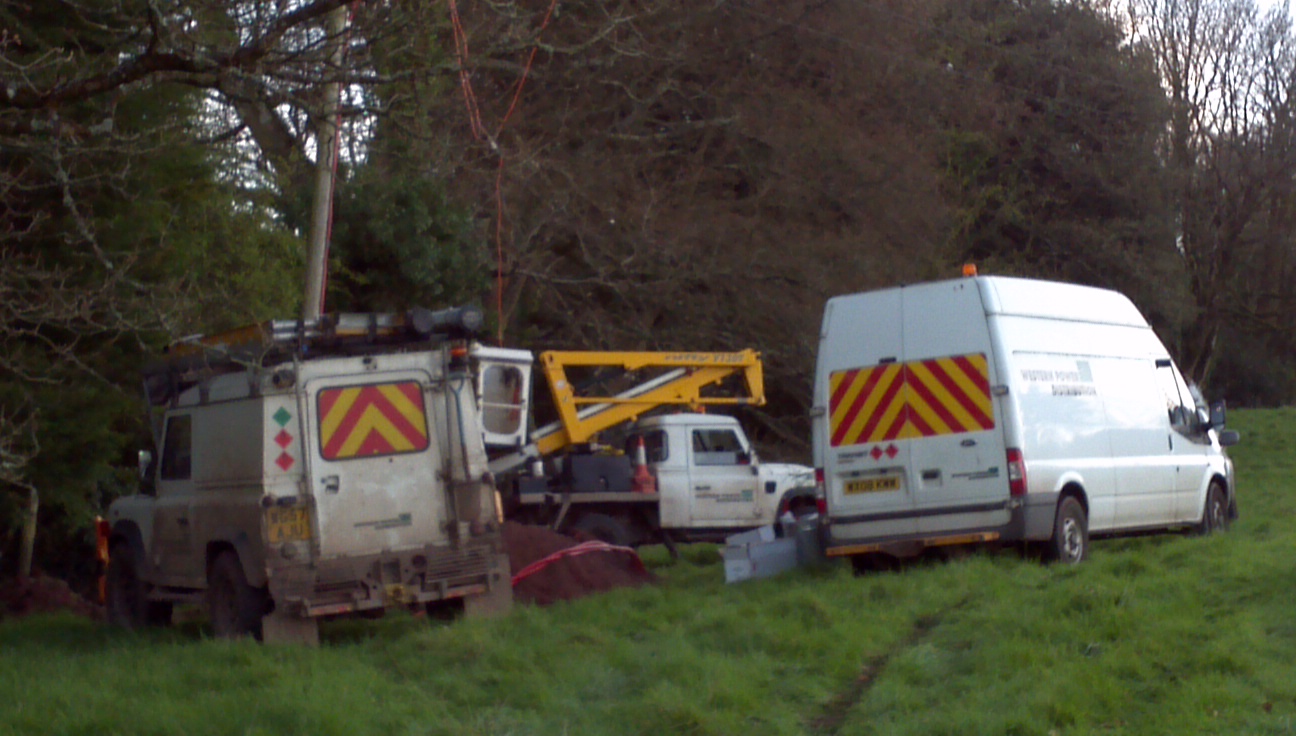
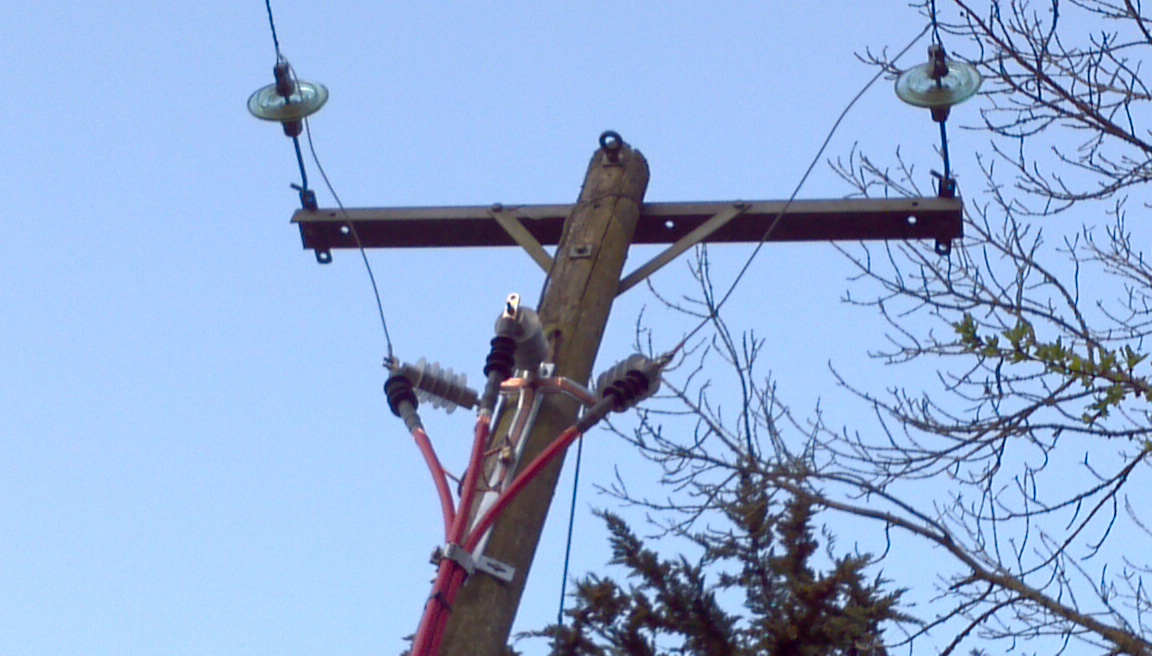
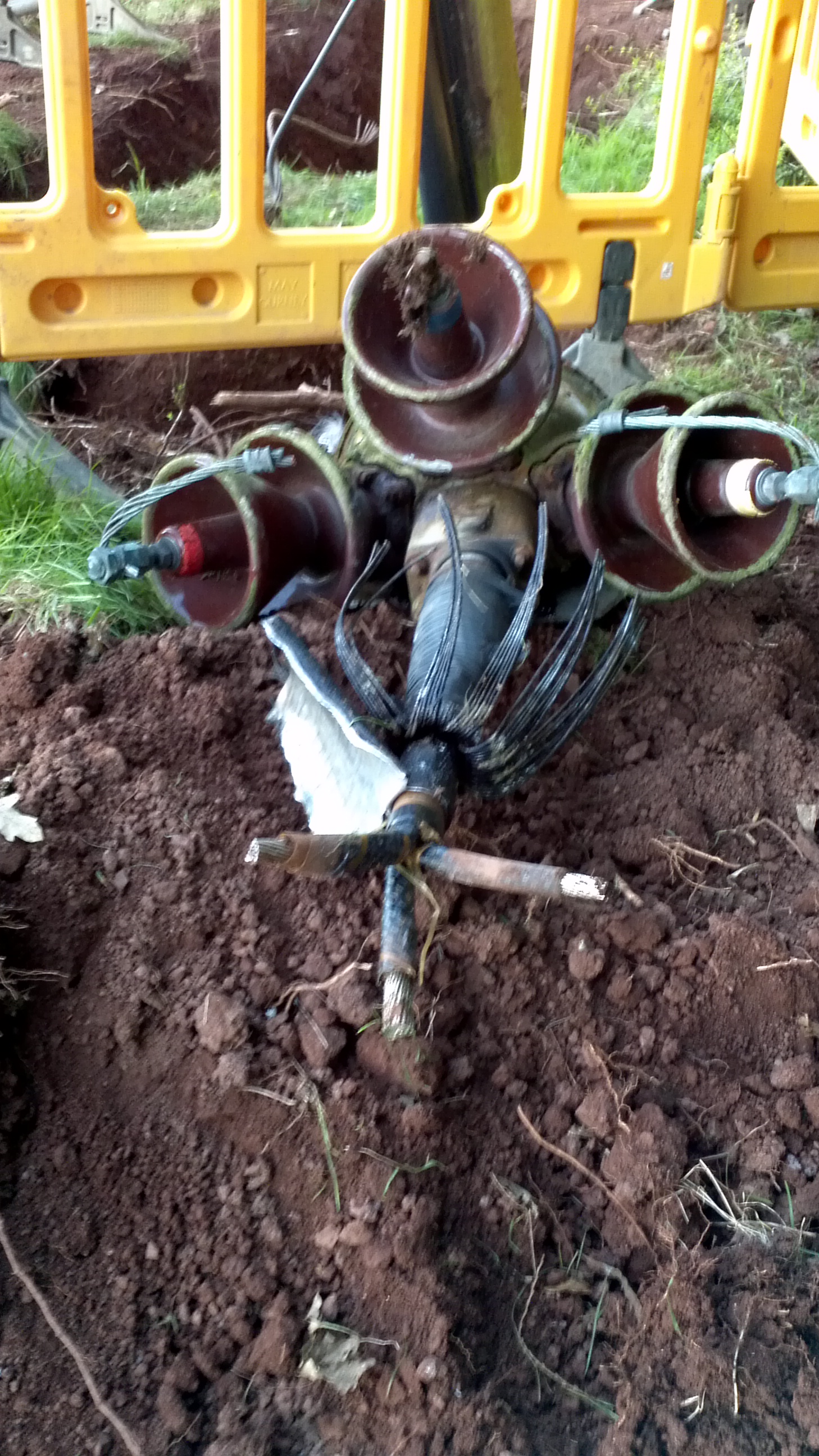
Unfortunately the hotel itself, which had a wedding reception booked that night, and everyone else in our corner of the village of Dunchideock and Haldon Hill were still without power, and WPD still didn’t know where the fault was. I am assured by a local resident that once it had got dark his wife noticed some arcing at the top of an electricity pole in a field behind his house, so he drove to the hotel car park and informed the WPD engineers gathered there about her discovery. The problem ultimately proved to be a faulty pole top cable termination, shown below in situ together with some inquisitive lambs:

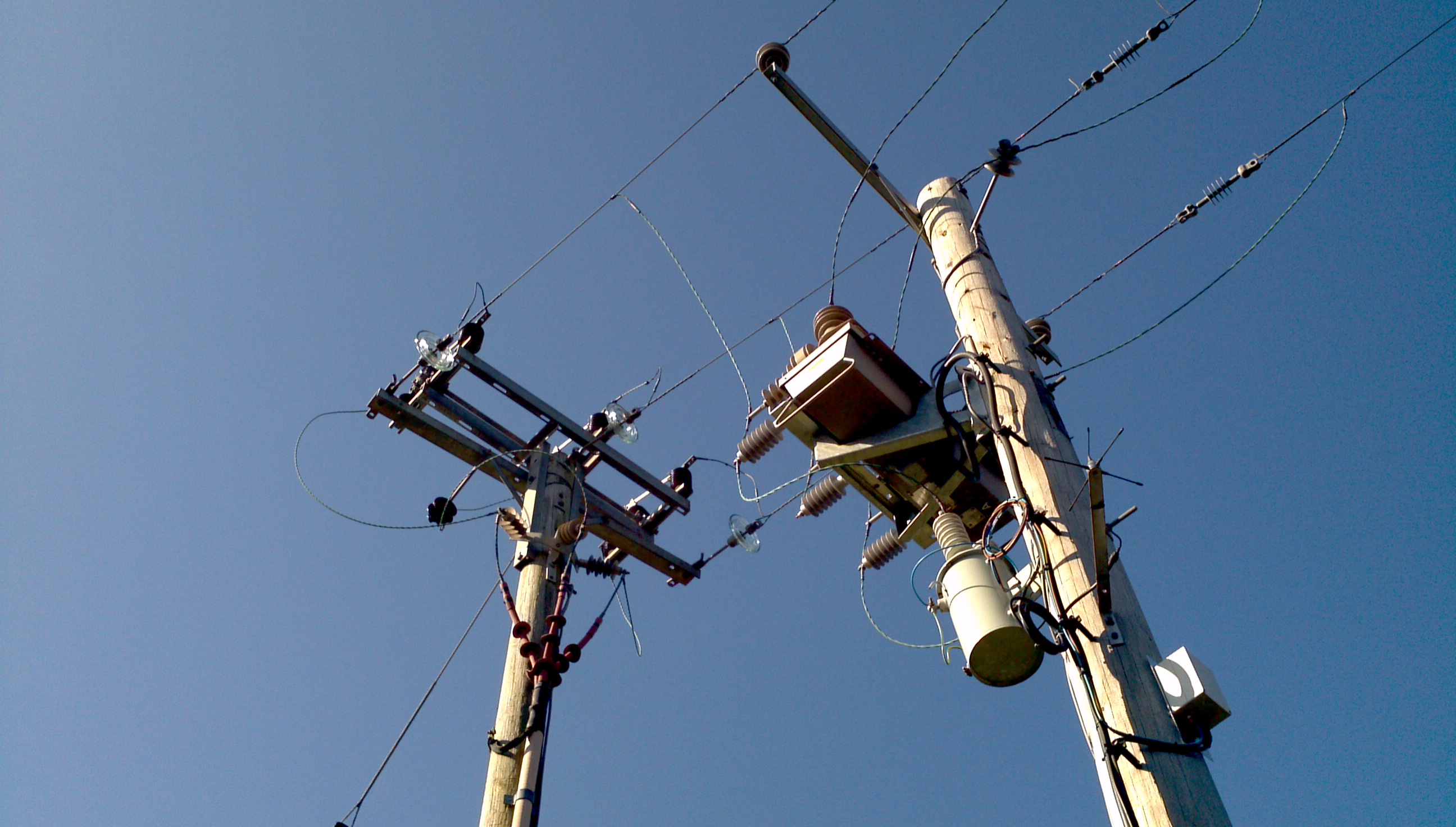
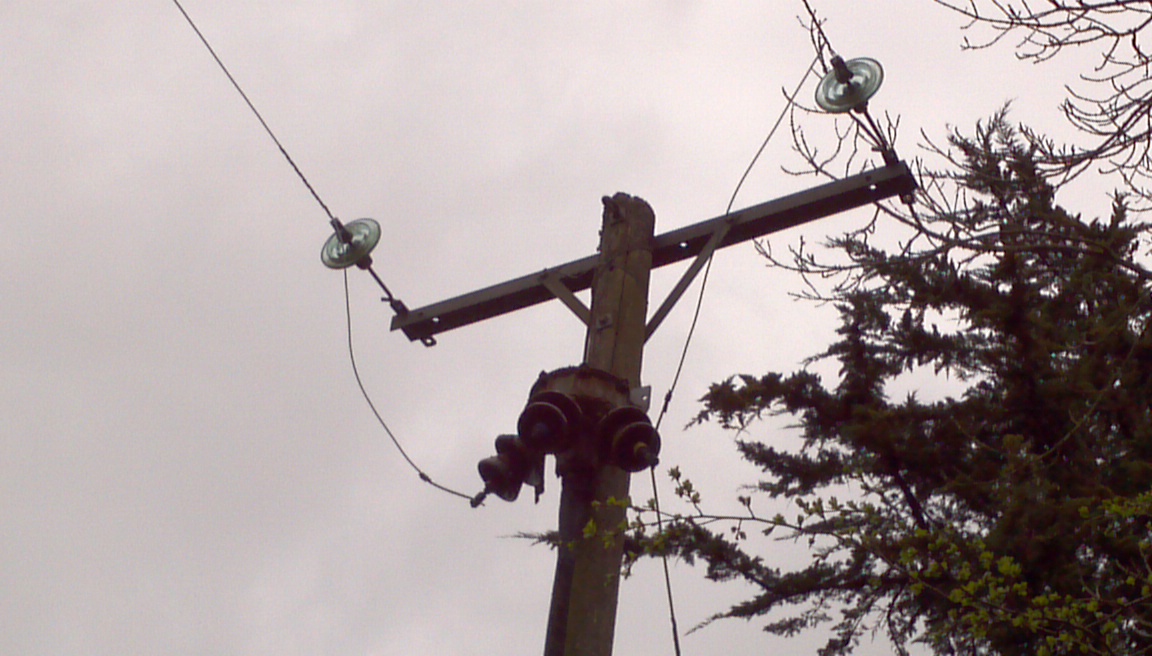
A 48 year old cable termination at the top of pole NLK20

Youthful interest is shown in a big hole in the ground

Some youthful interest is shown in a big hole in the ground

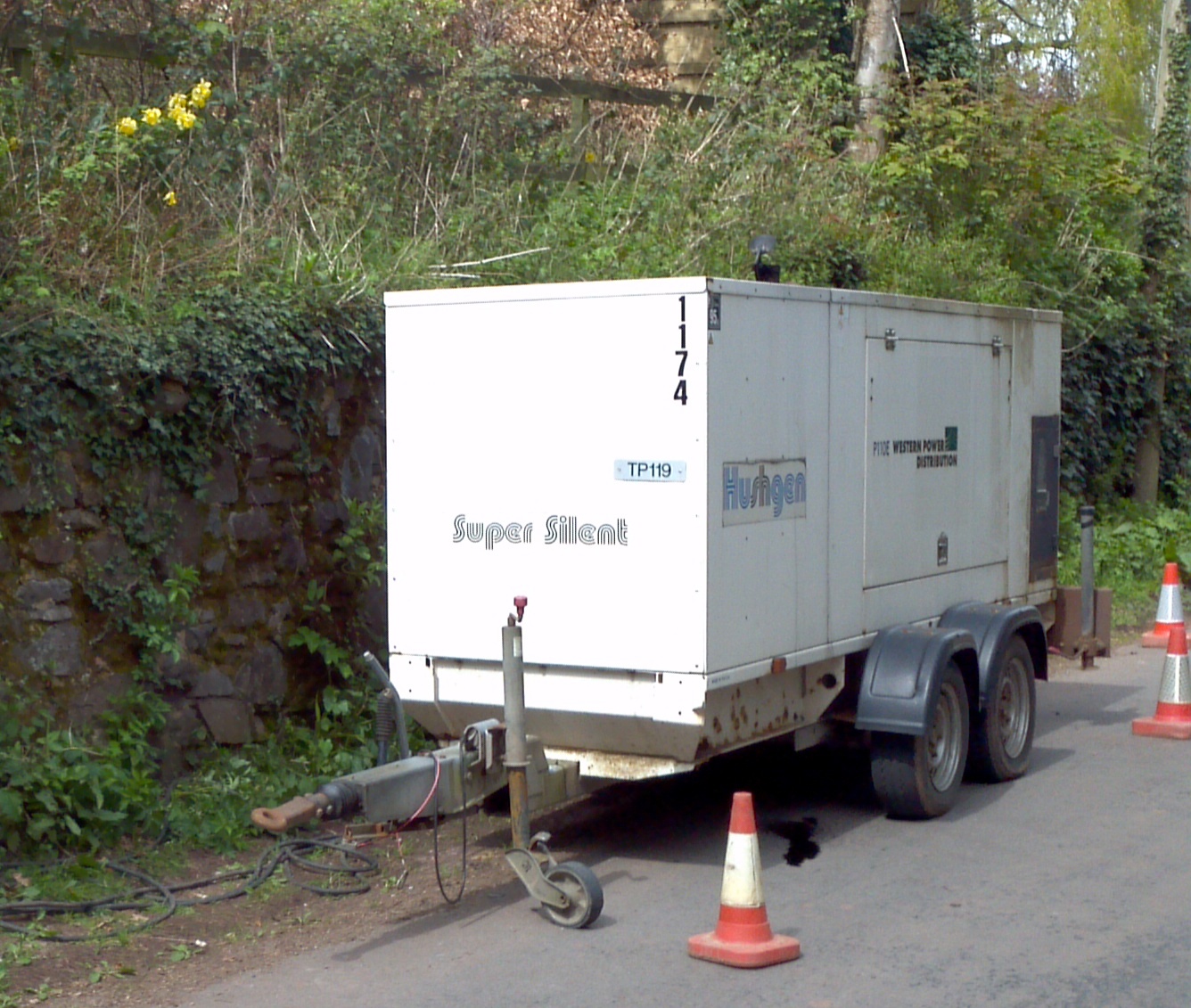
By the time the likelihood that this was indeed the ultimate cause of the problem had been established time was pressing. According to WPD they have a self imposed 12 hour time limit on turning the power back on after any interruption in supply, and there was no way this problem would be fixed within that timeframe. That being the case some generators would be required, which presented WPD with another big headache. It seems there had been some other problems in Devon on the same day, and there weren’t enough generators in Exeter to go around, so WPD brought some more in from Torbay. That still wasn’t adequate for the scale of the problem, so they brought some more in from Taunton. Even that wasn’t sufficient, so finally they had to hire a few more from Bristol, one of which was emitting the dulcet tones that greeted me on Saturday morning. Here’s one of WPD’s own generators, that was located a bit further up the road near the entrance to the hotel:

WPD Generator hard at work outside Pen Hill Cottage

WPD diesel generator hard at work outside Pen Hill Cottage

All in all, by the time everyone affected had their electricity supply restored, which in our case seems to have been at around 3:30 on Saturday morning, 9 diesel generators were scattered across the north side and ridge of Haldon Hill. WPD assured me there was no danger of any further power cuts, since every 12 hours or so they would be hauling a bowser around the local vicinity to top up the tanks of any generator that might be running low on diesel fuel.

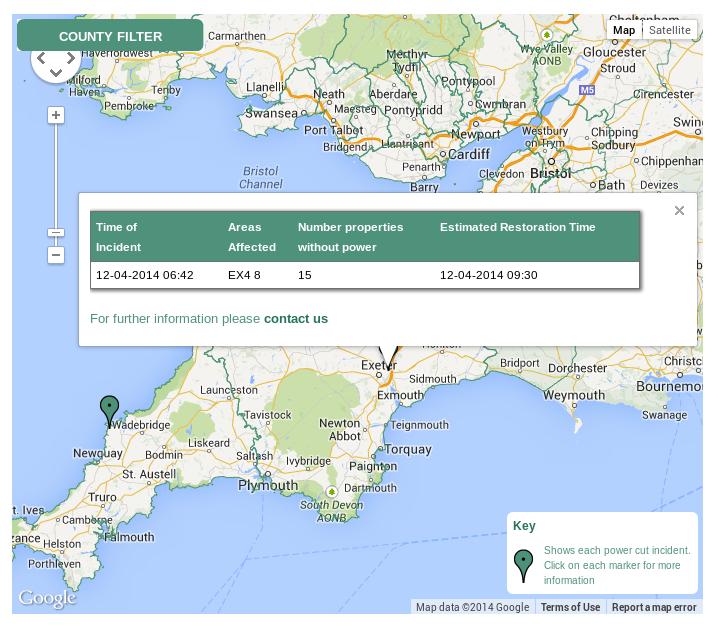
Whilst they didn’t have such a thing last time I checked, during the recent winter storms, I was also informed that Western Power now provide an online power cut map. This is how it looked on the morning of Saturday April 12th 2014:

Western Power Distribution power cut map at 08:39 BST on Saturday April 12th

Western Power Distribution power cut map at 08:39 BST on Saturday April 12th


It seems as though “running off a generator” doesn’t count as a “power cut”, because Dunchideock isn’t on that map, all of which meant that WPD could now fix the problem as and when time permitted. Here’s how things were looking by Sunday evening:

By Monday morning the epoxy resin in the Lovink red box had set, the big hole in the ground was filled in, and we were all back on mains power once again. All of which raises a few questions, in my mind at least.

In my conversations with WPD’s duty engineers I enquired whether this particular failure might be in any way attributable to the recent wet and windy winter weather here in South West England I alluded to earlier. I was told that while a causal link with any single failure was impossible to establish, it was conceivable that WPD’s electricity distribution network had suffered additional “stress” due to increased lightning strikes and the potential for trees to be more easily toppled by strong winds whilst their roots were sitting in sodden soil. I also idly enquired about the stresses placed on the network by renewable generation in the South West, but that story will require an article of its own at the very least.

In the meantime I’ve been pondering how this saga would have panned out if some of the homes in Dunchideock had already been in possession of an electric vehicle and some vehicle to home or even vehicle to grid technology. Since the powers that be here in the UK don’t seem to be wild about either of those concepts maybe a pile of shiny new lithium ion batteries from Tesla in the corner of each garage in Dunchideock might be more realistic to speculate about, or at the very least some second user EV batteries that are at least receiving some R&D funding on this side of the Atlantic? In that case perhaps we should add distributed storage to grid (or S2G for short) to our list of TLAs under consideration?

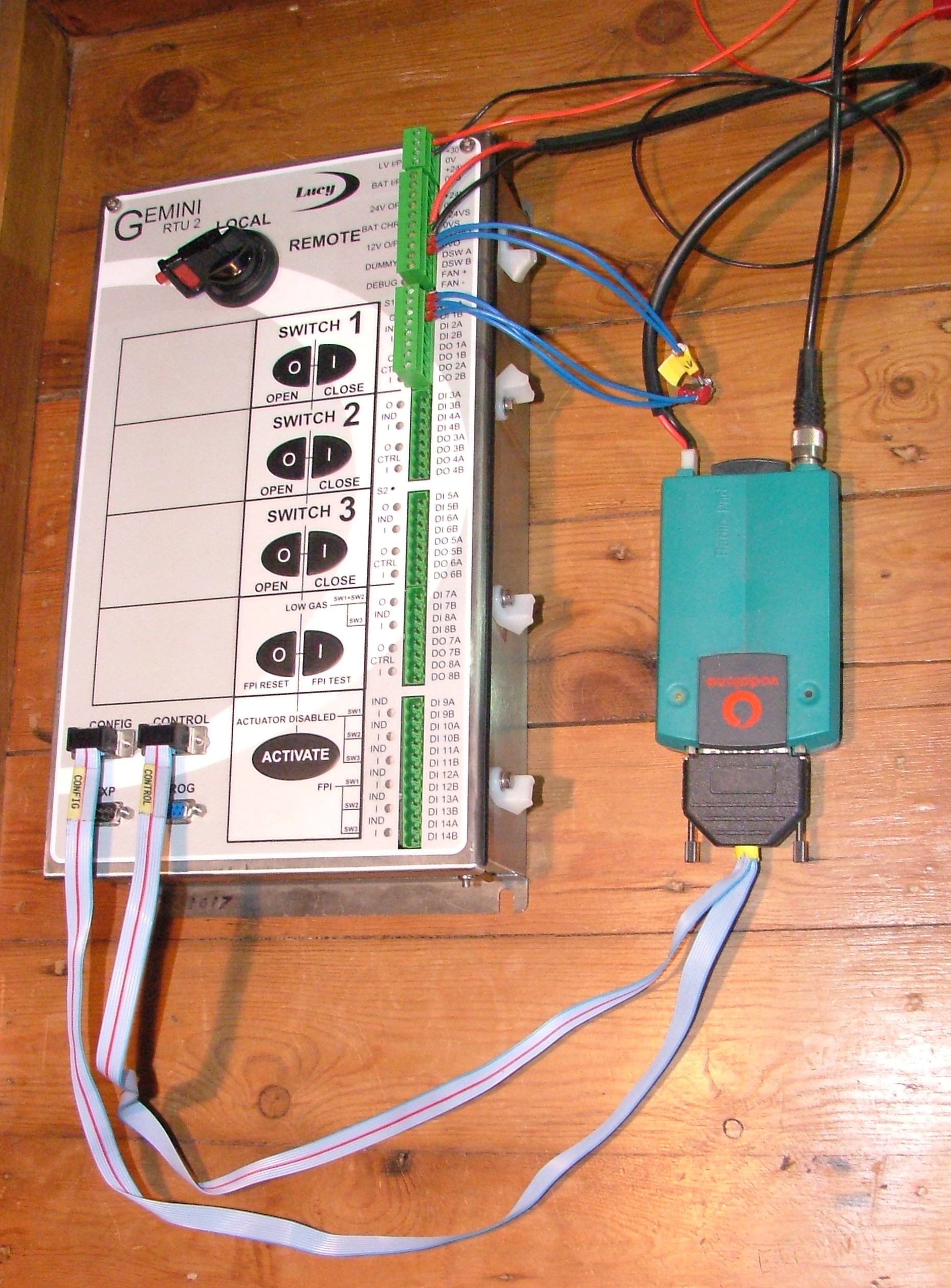
The lights wouldn’t have gone out in any V2H or storage equipped home. Their broadband would have kept on working too, so information about the failure could have been swiftly despatched to WPD’s control centre to enable the location of the fault to be pinpointed more swiftly. If some people had V2G and/or S2G installed as well, and subject to being suitably reimbursed for their public spiritedness, they could have kept their neighbours’ lights on as well as their own provided that WPD’s equipment was capable of sectionalising their network with greater granularity than at present. As luck would have it there is a pile of such equipment already in Dunchideock, although it’s only in the V2G lab at the moment rather than attached to any of the WPD poles I’ve mentioned apart from the one in Alphington, or in the corner of anyone else’s garage in Dunchideock. Here’s what a remote terminal unit looks like from the outside:

A Lucy Switchgear Gemini Remote Terminal Unit plus PakNet PAD

A Lucy Switchgear Gemini Remote Terminal Unit plus PakNet PAD

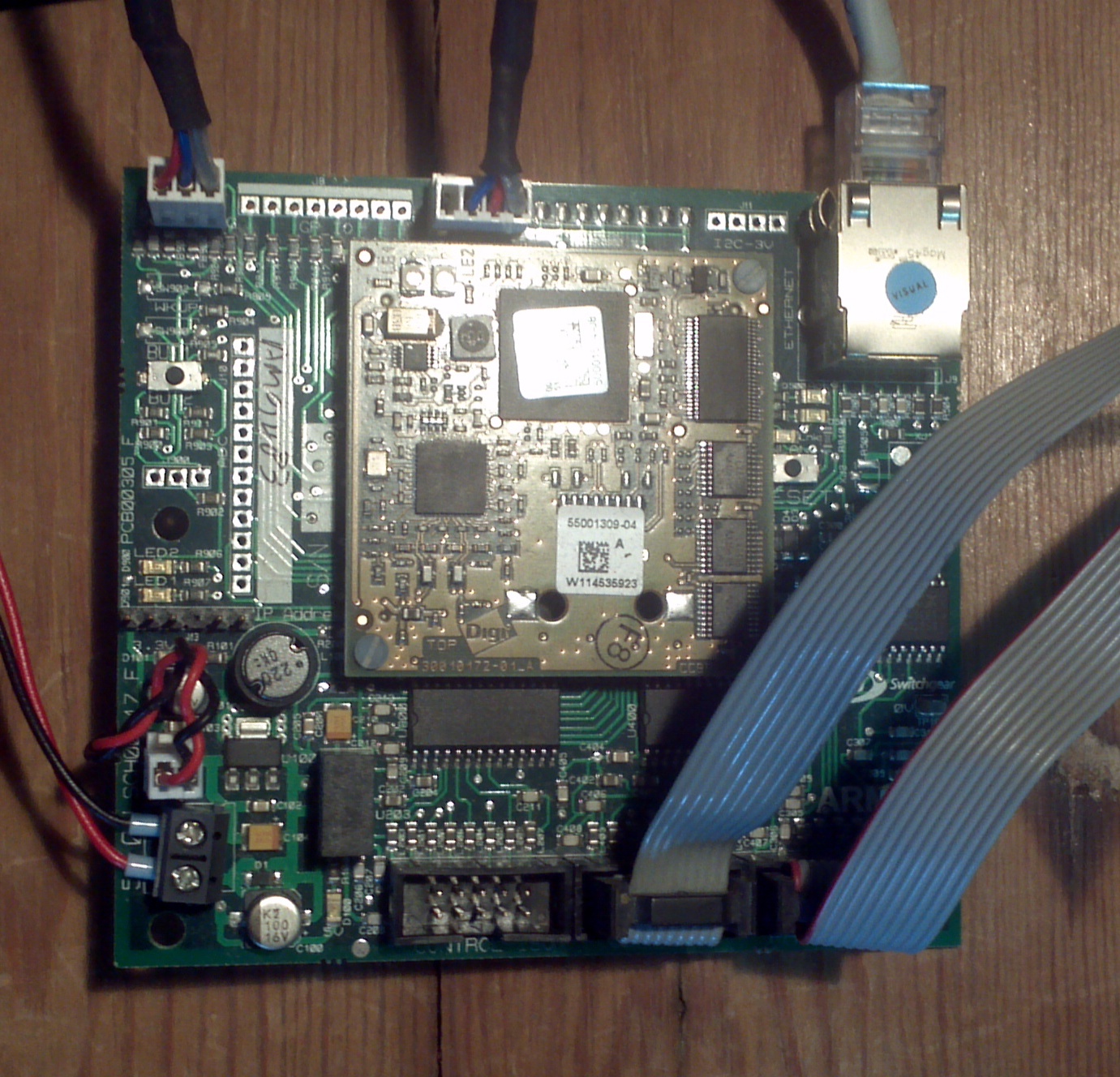
and here’s what the ARM powered CPU board on the inside looks like:

Gemini ARM CPU card

A Lucy Switchgear Gemini ARM CPU card, connected to the internet

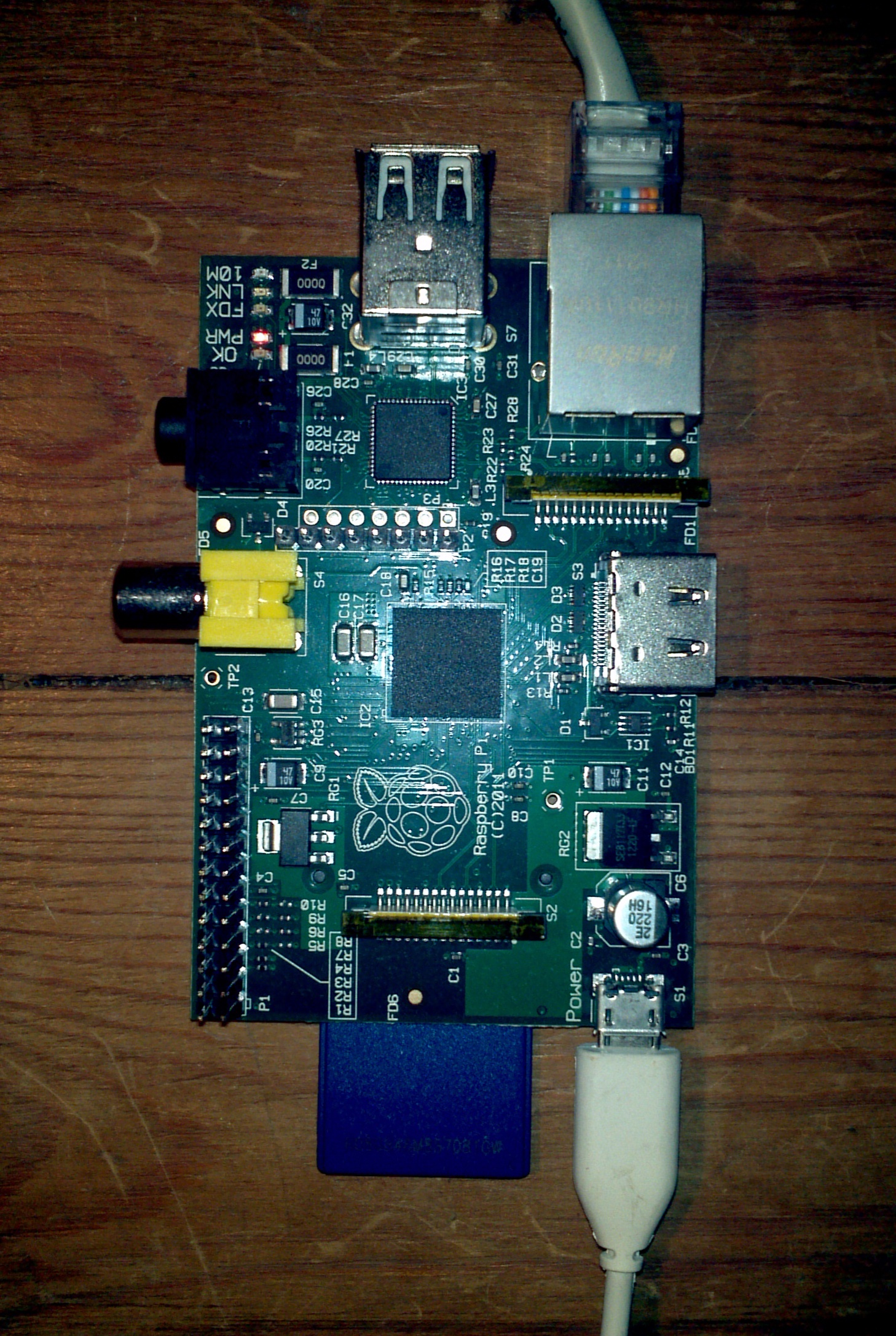
As you can see, in actual fact it’s not a whole lot different to a Raspberry Pi, or the guts of the average smartphone for that matter:

A Raspberry Pi model B, connected to the internet

A Raspberry Pi model B, connected to the internet

Hence such a piece of electronics wouldn’t in and of itself add a whole lot to the price of an electric vehicle and/or a garage in Dunchideock, or anywhere else on the planet for that matter.

In conclusion, I also cannot help but wonder how much the Great Dunchideock Blackout cost Western Power Distribution, how much the evidently changing climate in this part of the world is costing and will cost them, and how their electricity distribution network is coping with the assorted stresses and strains generated by all the renewable power sources currently being tacked onto it down here in not so Sunny South West England that do not currently have any form of energy storage associated with them.

Isentropic and Western Power to Test Pumped Heat Electricity Storage

I missed the announcement at the time, but what with one thing and another I’ve recently been doing my due diligence on innovative methods of storing energy in and around 33 kV substations.  I’ve just discovered that last week Isentropic Ltd.revealed that:

The Energy Technologies Institute (ETI) has provided project funding and an equity investment, together totalling £14m ($22m). The funding is to build a full scale demonstrator of its revolutionary, low cost energy storage device – called Pumped Heat Electricity Storage (PHES).

All that money is going to be put to some practical use, since:

Isentropic will use the funds to develop and deploy a 1.5MW/6MWh electricity storage unit on a UK primary substation owned by Western Power Distribution in the Midlands region.

This news was obviously of great interest to me, so I called Isentropic and spoke with their Chief Technology Officer Jonathan Howes earlier today. Unfortunately in all the circumstances, Jonathan told me that whilst a scaled validation system will be up and running in the not too distant future, a utility scale machine capable of delivering 1.5 MW of power and 6 MWh of storage in the field at an overall efficiency of 75% is still several years from fruition.

As UK Business Secretary Vince Cable puts it:

As our energy supplies change, finding innovative ways to store energy will become an increasingly important factor in the transition to a green economy.

and as Western Power Distribution Project Engineer Philip Bale puts it:

We believe that distribution scale energy storage could be used to improve the future operation of the distribution network

Hear, hear!