
General Motors Announce V2H Pilot Project

A number of commenters on Twitter are getting very excited about an announcement from General Motors earlier today. Here’s GM’s Mary Barra and PG&E’s Patti Poppe talking with Phil LeBeau on CNBC’s “Squawk Box”:

As Mary says to Phil:

Bi-directional charging will help when there’s a power outage or additional demand, to really help supply energy and keep everybody having the energy they need to live their lives.

Phil suggests:

What you guys are talking about doing is making smart vehicles and a smart grid, where the communication happens and I don’t need to be involved. Correct?

Patti responds:

Automatically! There’s like this value stack for electric vehicles that I don’t think people fully appreciate yet. The first is obviously decarbonising transportation, number one and everybody gets that. And it’s a great driving experience. But then you stack on the resiliency play because of the effects of climate change, and then on a peak summer day imagine being able to leverage the fleet of electric vehicles. In California, in fact in my service area alone, one in five electric vehicles sold in America are in my service area, so we can really deploy them to power homes and to enable the grid.

In the accompanying press release General Motors reveal that:

Pacific Gas and Electric Company and General Motors today announced a breakthrough collaboration to pilot the use of GM electric vehicles as on-demand power sources for homes in PG&E’s service area.

PG&E and GM will test vehicles with cutting-edge bidirectional charging technology that can help safely power the essential needs of a properly equipped home. EVs play a critical role in achieving California’s goals for reducing greenhouse gas emissions and already provide customers with many benefits. Bidirectional charging capabilities add even further value by improving electric resiliency and reliability…

Skipping to the “How the pilot will work” section of the news release GM explain that:

PG&E and GM aim to test the pilot’s first vehicle-to-home capable EV and charger by summer 2022. The pilot will include the use of bidirectional hardware coupled with software-defined communications protocols that will enable power to flow from a charged EV into a customer’s home, automatically coordinating between the EV, home and PG&E’s electric supply. The pilot will include multiple GM EVs.

Following lab testing, PG&E and GM plan to test vehicle-to-home interconnection allowing a small subset of customers’ homes to safely receive power from the EV when power stops flowing from the electric grid. Through this field demonstration, PG&E and GM aim to develop a user-friendly vehicle-to-home customer experience for this new technology. Both teams are working quickly to scale the pilot with the goal of opening larger customer trials by the end of 2022.

It seems as though Mary, Patti, Phil et al. are blissfully unaware that pilot projects involving V2H/V2G and several hundred electric vehicles have been under way here in the United Kingdom since 2018.

We have even been running a “cutting-edge bidirectional charging technology” project in our very own car park here in wild and woolly South West England for the last couple of years:

For a more detailed overview of the UK pilot projects referred to above please download the presentation available at our sister web site:
“UK ‘Domestic’ V2G and DSR Trial Projects”

Cornwall Climate Emergency Energy Workshop

Earlier this year Cornwall Council declared a climate emergency. According to the Council’s original announcement:

Cornwall Councillors met at the Full Council on the 22 January 2019, where Councillors debated a significant motion on tackling climate change and voted to support the declaration of a climate change emergency.

This was an amendment tabled by Councillor Jayne Kirkham to the motion put forward by Councillor Dominic Fairman calling for ‘Urgency on Climate Change’. The amended motion was agreed by the Council and a climate emergency was declared.

View the minutes of the Full Council meeting on meeting on 22 January 2019

The declaration requires the Council to prepare a report outlining how it can sufficiently reduce carbon emissions through energy and other Council Strategies, plans and contracts to ensure Cornwall works towards carbon neutrality by 2030.

Section CC/381 of the minutes concerning “Urgency on Climate Change” reveals that:

A key element of the planning system was reduced car dependency and a move towards electrification was now government policy to help improve air quality. Other issues included highly energy efficient homes to tackle fuel poverty and well insulated homes also added protection for the vulnerable during heatwaves. Members were reminded that Cornwall was the sweet spot of the UK for renewable energy having the best resource in Western Europe and the best solar and geothermal resource in the UK.

A few days ago there was a lively debate on the topic in the Council chamber. Now as part of the process of drawing up that action plan the Council held an energy strategy workshop at the Penryn campus of the University of Exeter yesterday. Here is my brief report on what went on behind the closed doors of the Green seminar room:

Here too is one of our own suggestions for “reducing car dependency and moving towards electrification of transport” whilst improving air quality in Camelford:

“The Camelford Electric Car Club”

Apart from improving air quality an electric vehicle club in Camelford would also reduce the number of cars sitting unused in garages and car parks for much of the time. One car club vehicle can result in 10-20 private cars being taken off the road. If you don’t possess a car you’re more likely to indulge in healthier alternatives such as walking or cycling for short journeys. In rural areas with poor public transport car clubs allow people who could never afford a car of their own to make occasional longer trips they would otherwise be unable to, except perhaps by taxi.

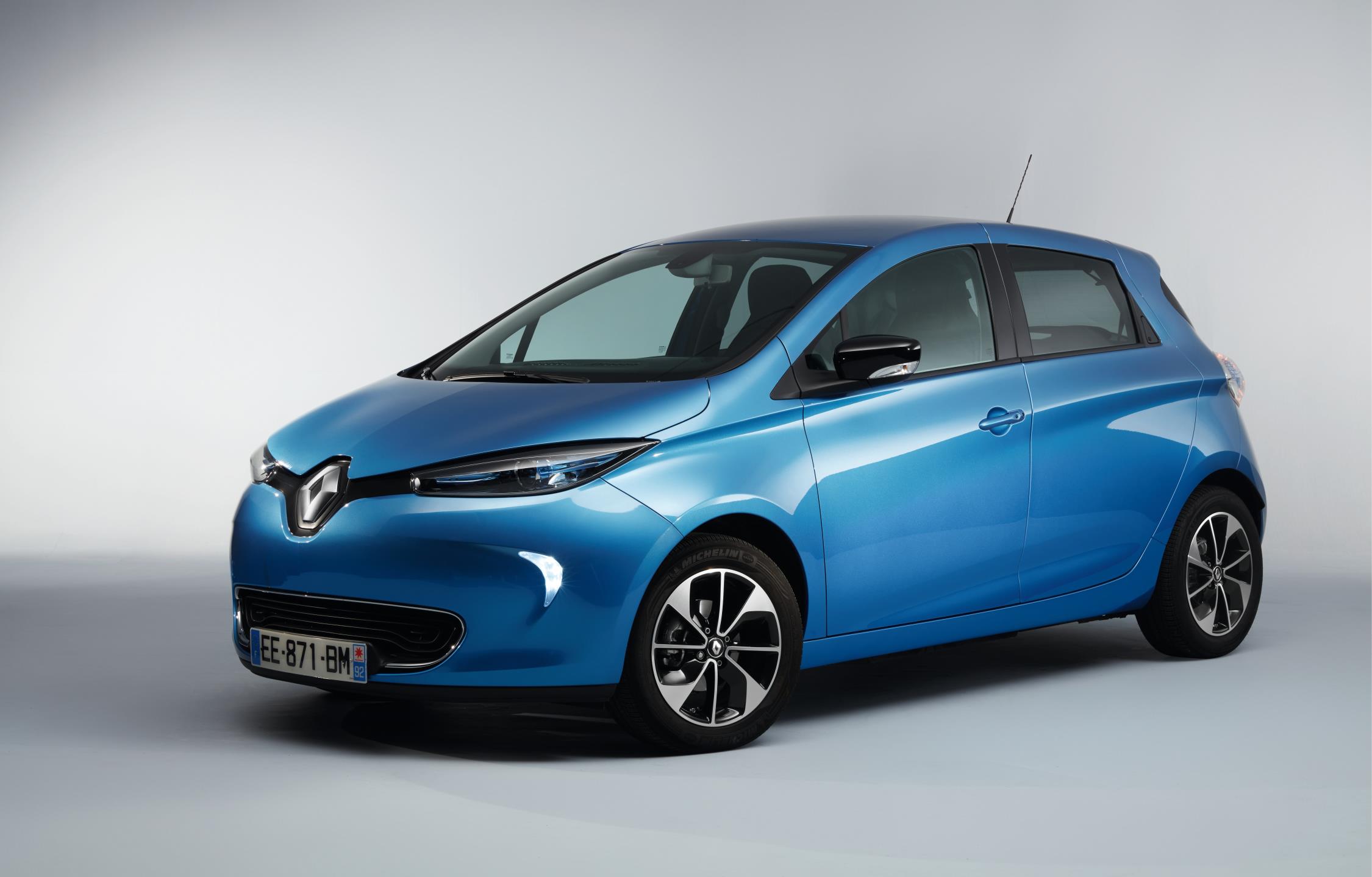
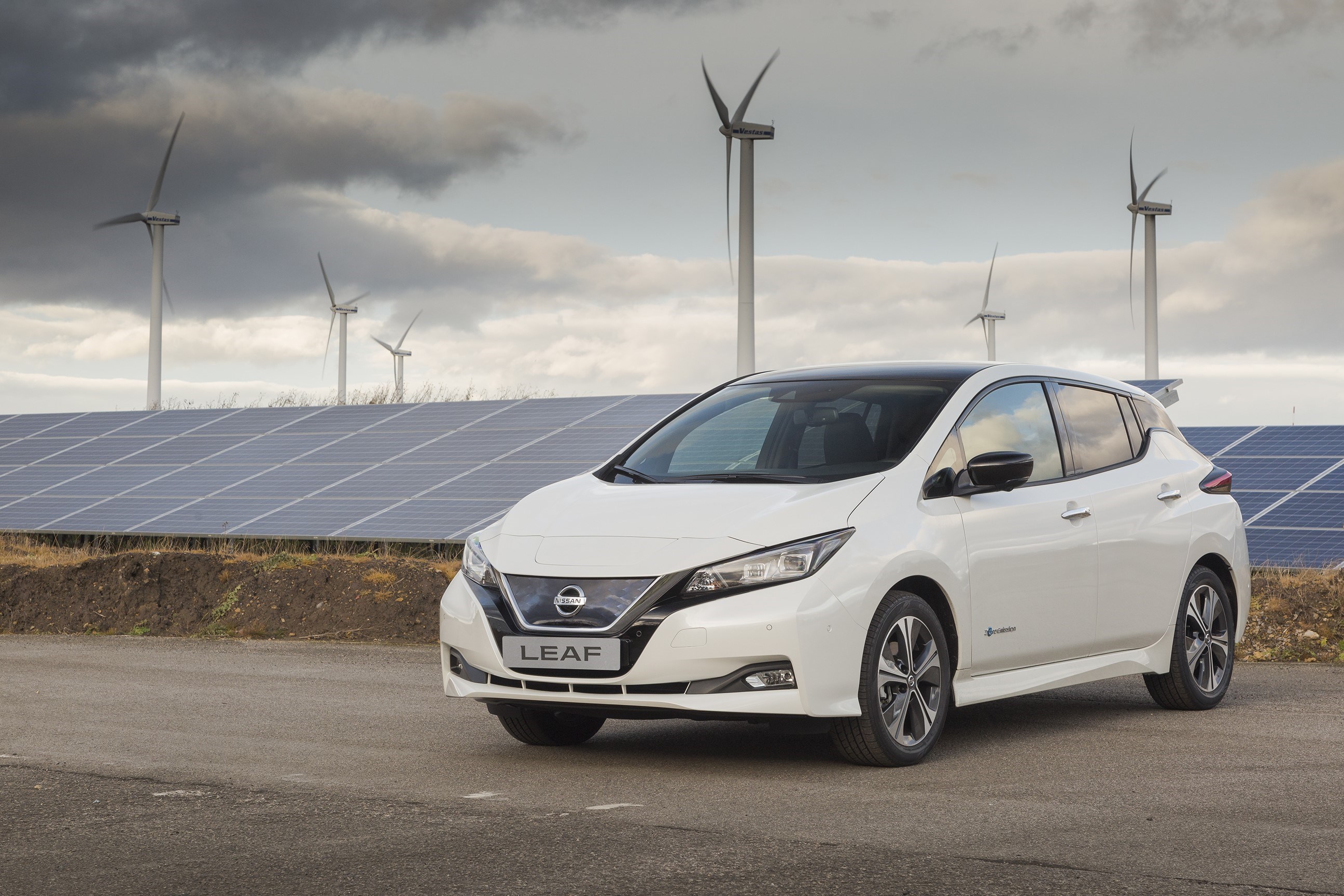
Here are a couple of popular potential car club vehicles:

Renault ZOE

Renault ZOE

Production begins of the new Nissan LEAF in Europe

Production begins of the new Nissan LEAF in Europe

Which would you prefer to drive?

What Should Be In SEWTHA 2.0?

In case the six letter acronym (SLA for short) in our title for today means nothing to you it stands for “Sustainable Energy Without The Hot Air“, the title of a 2008 book by David MacKay, who amongst other things is Regius Professor of Engineering at the University of Cambridge. We first mentioned SEWTHA back in 2012, when Bill Gates praised it in an interview with the Wall Street Journal. I mention it again today because my attention was drawn by a bit of a barney (BoB for short) on Twitter between Prof. MacKay and Jeremy Leggett, who amongst other things is a founding director of solar PV company Solarcentury.

First of all here’s the BoB in question, including the V2G UK addendum!


In case you would like to listen to the edition of Evan Davies’ “The Bottom Line” on the topic of “Renewable Energy” under discussion, here it is:

http://bbc.in/1PIZD9G

Evan’s guests were Jeremy Leggett, Juliet Davenport of Good Energy and Paul Cowley, managing director of RWE Energy UK. Here are of few of my own “edited highlights”:

01:30 JD – One of the examples is Wyke Farm Cheeses. When they wash down the dairy every night and when they make the cheese, that they then anaerobically digest which creates a gas and they generate power. That’s one of our generators.

02:37 JL – A small cottage with bespoke solar tiles. these are different from the modules you use in solar farms or on a big installation on a commercial roof because they really are tiles. They go straight on the battens of the house. They generate electricity. They’re waterproof.

08:45 ED – I also wanted to talk about the physical constraints on whether you can get, in a country like ours, to 100% renewables. I’ve been very influenced by a particular book called SEWTHA by David MacKay.

09:30 JL – That book was published a good few years ago now. It’s out of date and I don’t think Dr. MacKay even believes that any more.

10:18 JD – We did some work, following David MacKay’s book actually, and used the work that he did. He went on to be the scientific advisor to DECC. He developed these pathways/models and we used them to look at how hard can you push the system to get it 100%. The UK has sufficient resource, whether it’s wind, whether it’s solar, to get to 100% on the current usage. [My emphasis!]

One of the things about climate change, it’s going to change the way we use power as well. So we saw last year energy usage in the domestic gas market dropped by 10%. 2014 one of the warmest years ever. You’ve also had the highest ever wind power production this winter. We’ve seen a lot of storms come through… So the parameters that David used in that book, I think we’re now looking for Hot Air 2.0.

11:30 ED – To give another example from the book, taking that it’s out of date, to get 50 kWh per day per person, and we’re currently using 125 kWh per day, to get 50 from offshore wind would mean filling a sea area twice the size of Wales. It would be expensive. It would be a very big deal.

One of things here, and it’s been much under-discussed in this area, is not only do we need to get our current electricity decarbonised, but we’re talking about decarbonising the transport industry to a large degree, and David MacKay’s good on this. You’ve got to almost double or triple your electricity generation, so not only do we have to replace the nuclear power and the coal that’s falling out of use over the next decade. You’ve got to replace that and add in plug-in cars. [My emphasis!]

12:59 JD – That’s what really exciting about right now. We’ve got a different problem on our hands. We’re going to have different technologies coming through, and we’re going to have to figure out how consumers use that. And actually the car storage part is really interesting because each car has a battery in it, and suddenly you’ve got a flexible power source that you can either use for transport or potentially use within people’s homes. And that piece of technology hasn’t really been thought through, about what that can really deliver [Juliet’s emphasis!]

13:45 PC – We see it in the press all the time. Wind turbines not running because the wind’s not blowing! The reality is that turbines generate around 85% of the time. They start generating at a very low wind speed… and then builds up to an optimum wind speed.

14:13 ED – We haven’t got yet a very efficient mechanism for storing electricity have we?

14:25 JL – Things are moving so fast. Let’s not forget, Apple is going to be mass producing electric vehicles four years from now. That is their stated intent. Each one of those is going to be a little power plant, and who knows how they’re all going to be hooked up to each other? It’s going to move so fast Evan, and I think this is the criticism that people like me have of, you know good guys like David MacKay with his book. They’re still flogging the idea of these vast centralised, humongously expensive centralised power plants, nuclear in particular, that take 10 years to construct.

The upshot of all this, apart from the BoB? More and more people are mentioning the concept of vehicle-to-grid technology in public pronouncements here in the UK. Andrea Leadsom at DECC assures us that she’s “as keen as mustard” on energy storage. That is of course nice to hear, but what do Physics & Chemistry have to tell us about the hard realities of distributed energy storage? And what about DECC & Ofgem too, with their assorted rules and regulations?

I might also have a minor quibble about Juliet’s “hasn’t really been thought through” remark. Some people have been thinking quite hard about V2H and V2G for quite some time!

Nick Clegg Promises £500 million for ULEVs

The UK Government has announced in a press release that the:

Deputy Prime Minister takes ‘green’ cars up a gear!

The government will invest £500 million to boost the ultra low emission vehicle industry and help drivers both afford and feel confident using electric cars, the Deputy Prime Minister announced today.

The automotive sector is a success story of the UK’s economic recovery, with a new vehicle rolling off a UK production line every 20 seconds and the industry is worth £11.2 billion to the economy. The production of ultra low emissions vehicles (ULEV) is a major part of growth both now and for the future.

The investment of £500 million between 2015 and 2020 will create jobs, reduce emissions and set the agenda for the industry, for our towns and cities, and for motorists, so that Britain remains at the forefront of green technology.

The £500 million on offer will be divided up amongst four target areas which the press release itemises as follows:

Create ‘Ultra Low City Status’
Local areas coming up with the most ambitious plans can win a share of £35 million to make the leap to becoming ultra low. Winning cities could, for example, incentivise drivers of green cars by letting them use bus lanes or allowing them to park for free. Additional funding of £50 million will also be available for local areas to invest in cleaner taxis and buses.

Create jobs and innovate
We will invest £100 million in research and development in ULEV to cement the UK’s position as a leader in the development of these technologies. The UK’s automotive industry has undergone a renaissance in recent years and we have the potential to emerge as a world leader in the development, design and manufacture of green vehicles. This investment will help create skilled British jobs and have further positive impact down the supply chain.

End ‘range anxiety’
£32 million funding boost for charging infrastructure including plans to install rapid chargepoints across the ‘M’ and ‘A’ road network by 2020 so that drivers can find a rapid chargepoint when they need one. Rapid chargepoints mean that a car can be charged in as little as 20 minutes.

Save consumers money
To encourage more people to use ULEV, car grants of £5,000 off the upfront cost will be extended. This is worth at least £200 million.

More detailed information on reducing “range anxiety” reveals that:

The average journey made by motorists is just 7 miles, with the typical range of a pure electric car being around 100 miles. For the longer journeys, there will be a rapid chargepoint (20 minutes to charge up) at every motorway service station by the end of 2014, and a network of 500 rapid chargers across the country by March 2015 – the best network in Europe.

Accompanying Nick Clegg on his recent visit to the  the Transport Research Laboratory was Chief Secretary to the Treasury Danny Alexander. He had this to say on the economic benefits of the planned investment:

Our economic plan is delivering a growing economy, rising employment and making Britain a more attractive place to invest. But there is still a large amount to do to ensure our recovery is sustainable and prosperity is secure.

That is why it’s right that we squeeze spending elsewhere to invest in the interests of the future.

Ultra low emission vehicles bring together our most successful manufacturing sectors with our biggest long-term challenge – climate change. Britain can be the leading country in the world in developing, manufacturing and using ULEV. This half billion pound government investment will help to ensure we rise to the challenge.

From a personal point of view my own average journey is a lot longer than the figure quoted by the government.  I don’t drive in cities, I don’t commute to work, I shop largely online,and most of my mileage involves journeys over 100 miles. What would suit me best would be the ability to recharge an electric vehicle at any and all of the surf beaches along the north coast of South West England, but for some strange reason Nick and Danny make no mention of that!

They also make no mention of the possibility of any of those shiny new rapid chargepoints, or any other type of chargepoint for that matter, supporting vehicle to grid technology. It looks as though I’ll have to give Nick and Danny a ring and challenge them to part with some of their £100 million R&D budget to help fund a project along the lines that interest me!