Power Packed Cyber Security?

Given my evident enthusiasm for all things V2x, regular readers may be wondering why I have been more hesitant than most commentators to unequivocally applaud Greg Jackson’s announcement of Octopus Energy’s “Power Pack” retail vehicle-to-grid offer last week? £299 per month which covers all your electric mobility needs including “fuel”. What’s not to like? Surely it’s “a compelling consumer offer”, as I myself put it!

As already hinted at in my introductory article linked to above, perhaps it’s not quite so attractive if you are in fact a “prosumer”, with a few solar PV panels already installed on your very own roof? Here are some other recent items of news to ponder too. In these troubled times hackers are hard at work around the world. There was initial speculation that the recent Spanish “blackout” was a cyber attack. However, according to the BBC on April 29th:

The Spanish grid operator has ruled out a cyber attack as the cause of a massive power cut that crippled Spain, Portugal and parts of France on Monday.

Red Eléctrica’s operations director Eduardo Prieto said preliminary findings suggest “there was no kind of interference in the control systems” to imply an attack, echoing Portuguese Prime Minister Luís Montenegro the day before.

But the exact reason behind the cut is still unclear.

More recently, it was announced on June 17th that:

In January 2025, we participated in Pwn2Own Automotive with multiple targets. One of them was the Tesla Wall Connector — the home charger for electric vehicles (including non-Tesla ones)…

This article explains how we studied the device, how we built a Tesla car simulator to communicate with the charger, and how we exploited this logic bug during the competition.
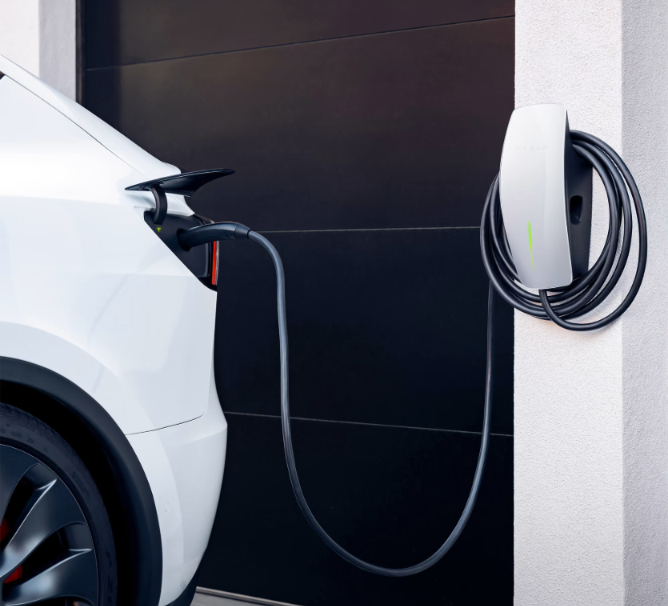
The “hackers” of the Tesla wallbox wore “white hats”, but what might have happened if they had been wearing “black hats” instead? While you ponder your answer to that question, you may find it reassuring that the United Kingdom’s National Cyber Security Centre has been worrying about it for quite some time. According to the NCSC’s web site their mission is:

Making the UK the safest place to live and work online.

We support the most critical organisations in the UK, the wider public sector, industry, SMEs as well as the general public. When incidents do occur, we provide effective incident response to minimise harm to the UK, help with recovery, and learn lessons for the future.

The first example use case for their efforts reads:

Defending the digital infrastructure on which a sustainable world depends.

For example, by helping to protect a flexible energy system from cyber threats.
Image courtesy of ImageFX

In November 2023 the NCSC published a blog post that began as follows:

In 2020, the NCSC published a white paper on Preparing for Quantum-Safe Cryptography. This paper explained the threat that a possible future quantum computer – one much larger, and much more capable, than any that exist today – would pose to a large class of widely deployed cryptography. That cryptography is known as public-key cryptography (PKC). PKC is the enabling technology for secure communication at scale, on the internet and many other networks.

The same white paper also explains why NCSC’s recommended mitigation of the quantum computing threat is quantum-safe cryptography, or post-quantum cryptography (PQC). PQC is cryptography that is resistant to attack by quantum computers, and also to today’s digital, or classical, computers. Furthermore, PQC offers broadly equivalent functionality to the quantum-vulnerable PKC currently in use, and can be deployed in many of today’s devices (including PCs, smartphones etc.) with a software update.

This seems like a simple solution to the threat from a potentially disruptive technology. And conceptually, it is – but the migration to PQC is a very complicated undertaking. This blog explains why.

Do you suppose that Greg and/or the Octopus Power Pack team have read it?
The Kraken/EPRI “Mercury Consortium” Launch

Last week there was a significant “Energy Technology” announcement in Manchester. This article was supposed to be written/published last weekend, but Storm Darragh and our subsequent 20 hour power cut proved more than capable of disrupting the carefully laid plans of both mice and men!

Hastily returning to a rather damp Manchester on December 5th, here is a recording of the meat of the initial presentation by Devrim Celal, Chief Marketing and Flexibility Officer of KrakenFlex Limited, speaking at the launch of the “Mercury Consortium” at the “UK’s first energy tech superhub”:

Devrim’s presentation was followed by a panel session with representatives of four “manufacturers”, which we will cover at a future date. After a “networking break” there was another panel session with speakers from four “utilities”, introduced by Arshad Mansoor who is President and CEO of the Electric Power Research Institute. Here’s what Arshad had to say:

Continue reading →

Will the Energy Transition Only Benefit The Few?

That’s a question I’ve been wondering about since UK retail electricity prices started rising and suppliers started going bust in droves. And I am not the only one. Here’s Enel CEO Francesco Starace speaking to CNBC back in the summer:

If you look at Europe this [electricity price spike] was quite easy to predict. 2021 is the first year in which the ETS (Emissions Trading Scheme) gets into this mechanism of cutting quotas as the slack shows up, and that’s working, and I think that is something that everyone was expecting to work and it’s doing the job. The question is whether this will become too much, or whether politicians will be able to understand that they have to be part of this game, and use fiscal levers to mitigate the impact on the most vulnerable customers.

No doubt there are also other factors at work, but one way and another we here in the
United Kingdom seem be losing “this game” by many a mile at the moment.

Those “most vulnerable customers” are currently feeling the impact, as indeed are we when perusing our own electricity bills. I’ve been documenting that impact via videos of our own local friendly neighbourhood wind turbine at Upper Tremail when the wind is blowing, thanks to both Storm Arwen:

Continue reading →

Octopus and Ohme Announce a Smart Cable

This is a piece of electric vehicle smart charging (V1G for short) news rather than directly related to vehicle-to-grid technology. It is extremely interesting nonetheless. In a press release this morning it was announced that:

Octopus Energy and Ohme are today announcing a partnership to offer Octopus Energy customers the chance to have smart charging at home – enabling them to charge any electric car when Octopus’s green electricity is cheapest.

By integrating with Agile Octopus, the UK’s only smart time-of-use tariff, the Ohme cable and app brings smart charging to any home.

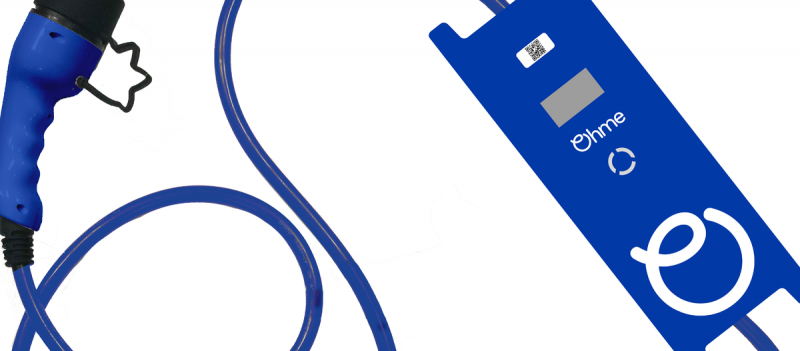
Here’s the image of Ohme’s new “smart cable” that accompanied the press release:

OHME_cable_launch

The press release continues:

Once the cable is connected, the driver can just open up the app and enter the amount they would like to charge their car and by when, and then let Ohme manage it for them. For example: “On weekdays, charge my car battery to 100% by 7am”. Ohme then uses the Octopus Agile API to automatically deliver the right amount of electricity when it is cheapest.

By optimising their charging in this smart way, Octopus Energy and Ohme estimate that customers using Ohme in parallel with the Agile Octopus tariff could save around £300 per year on their charging costs in comparison to charging on a typical industry standard variable tariff.

The cable will cost £399, but the first 1,000 Octopus Energy customers get a special launch price of £199.

The Ohme cable is available for pre-order on the Octopus Energy web site. Whilst we wait for them to start shipping the new product, here’s an image of the Ohme app in action:

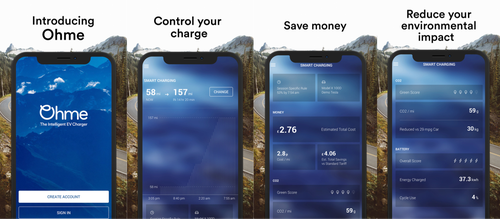
OHME_app_launch

According to Ohme’s CEO, David Watson:

At Ohme we believe the future of transport is electric and that flexible home charging is the key to mass adoption. Ohme’s innovative smart charging cable is the first App-controlled, intelligent EV charger, that combined with Octopus’ smart energy tariffs, delivers real savings and environmental benefits. All you need to do is plug in and let Ohme do the rest.

I cannot help but think that the likes of Wallbox might well quibble with David’s “first app-controlled, intelligent EV charger” remark? The press release didn’t include a telephone number, but we’ll let you know Ohme’s thoughts on the matter when we manage to get hold of them.


[Edit – March 30th]

After desperately doing my due diligence I eventually managed to have a long chat with Ohme’s technical guru, Dan Hollingworth, yesterday evening. As I strongly suspected, the Ohme “smart cable” isn’t actually that smart, by V2G UK’s standards at least. It contains a microprocessor and a 4G modem, not unlike our sister company V2G EVSE’s “smart controller” except that it doesn’t optionally do WiFi, Bluetooth, 2.5 G, 3G, LTE-M and NB-IoT as well.

Ohme’s device doesn’t determine the electric vehicle (EV for short) battery pack’s state of charge by communicating with the EV through the cable. Instead it finds out that useful piece of information by using its 4G modem to communicate with assorted EV original equipment manufacturer’s (OEM for short) cloud platforms, which in turn communicate wirelessly with the EV the Ohme’s cable is plugged into using proprietary protocols.

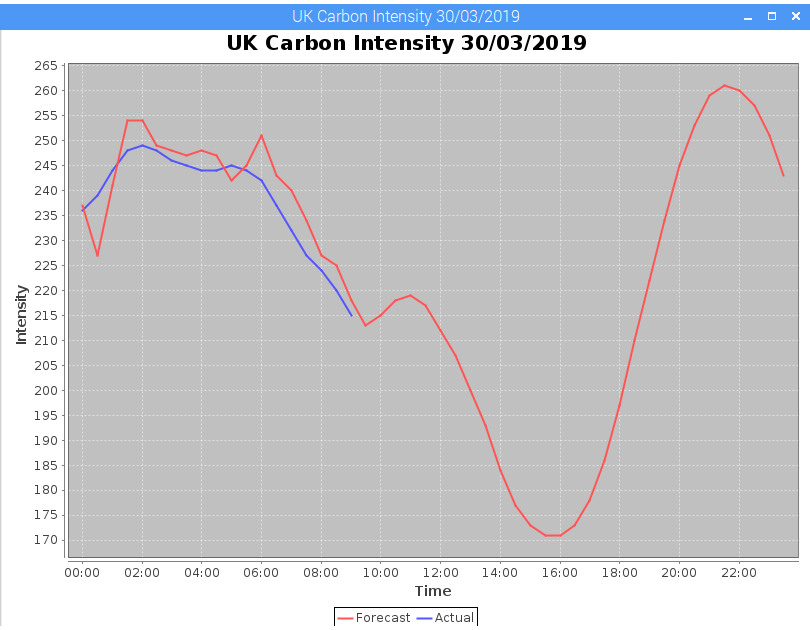
Ohme’s cloud platform is somewhat smarter since it communicates with National Grid’s Application Programming Interface (API for short) to forecast the “carbon intensity” of the UK Grid and thus determine the “greenness” of the electricity used to charge the EV to which the “smart cable” is attached. Here’s the current output of our open source example of how to go about doing that, generated by the V2G EVSE smart controller:

Screenshot from 2019-03-30 10-05-54

Ohme’s cloud platform also determines the price of electricity on Octopus Energy’s Agile or Go tariffs by communicating with the Octopus Energy API

Ohme’s smartphone application (app for short) allows the EV’s owner to instruct Ohme’s cloud based platform how much charge they’d like in their EV battery pack by when. On the basis of all the information Ohme’s cloud based platform has acquired it then uses version 1.6 of the Open Charge Point Protocol (OCPP for short) to instruct the cable when and how fast to charge the EV it’s connected to. In case it’s of interest here’s our open source smart charging station simulator, based on a mildly modified clone of Thomas Volden’s OCPP 1.6 library over on GitHub:

https://github.com/V2G-Ltd/OCPP-1.6-EVSE-Demo

Does that all make perfect sense now?