Given my evident enthusiasm for all things V2x, regular readers may be wondering why I have been more hesitant than most commentators to unequivocally applaud Greg Jackson’s announcement of Octopus Energy’s “Power Pack” retail vehicle-to-grid offer last week? £299 per month which covers all your electric mobility needs including “fuel”. What’s not to like? Surely it’s “a compelling consumer offer”, as I myself put it!
As already hinted at in my introductory article linked to above, perhaps it’s not quite so attractive if you are in fact a “prosumer”, with a few solar PV panels already installed on your very own roof? Here are some other recent items of news to ponder too. In these troubled times hackers are hard at work around the world. There was initial speculation that the recent Spanish “blackout” was a cyber attack. However, according to the BBC on April 29th:
The Spanish grid operator has ruled out a cyber attack as the cause of a massive power cut that crippled Spain, Portugal and parts of France on Monday.
Red Eléctrica’s operations director Eduardo Prieto said preliminary findings suggest “there was no kind of interference in the control systems” to imply an attack, echoing Portuguese Prime Minister Luís Montenegro the day before.
But the exact reason behind the cut is still unclear.
In January 2025, we participated in Pwn2Own Automotive with multiple targets. One of them was the Tesla Wall Connector — the home charger for electric vehicles (including non-Tesla ones)…
This article explains how we studied the device, how we built a Tesla car simulator to communicate with the charger, and how we exploited this logic bug during the competition.
The “hackers” of the Tesla wallbox wore “white hats”, but what might have happened if they had been wearing “black hats” instead? While you ponder your answer to that question, you may find it reassuring that the United Kingdom’s National Cyber Security Centre has been worrying about it for quite some time. According to the NCSC’s web site their mission is:
Making the UK the safest place to live and work online.
We support the most critical organisations in the UK, the wider public sector, industry, SMEs as well as the general public. When incidents do occur, we provide effective incident response to minimise harm to the UK, help with recovery, and learn lessons for the future.
The first example use case for their efforts reads:
Defending the digital infrastructure on which a sustainable world depends.
For example, by helping to protect a flexible energy system from cyber threats.
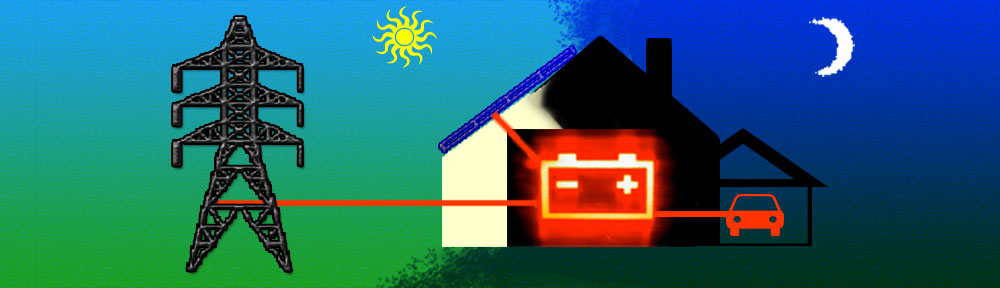
Image courtesy of ImageFX
In November 2023 the NCSC published a blog post that began as follows:
In 2020, the NCSC published a white paper on Preparing for Quantum-Safe Cryptography. This paper explained the threat that a possible future quantum computer – one much larger, and much more capable, than any that exist today – would pose to a large class of widely deployed cryptography. That cryptography is known as public-key cryptography (PKC). PKC is the enabling technology for secure communication at scale, on the internet and many other networks.
The same white paper also explains why NCSC’s recommended mitigation of the quantum computing threat is quantum-safe cryptography, or post-quantum cryptography (PQC). PQC is cryptography that is resistant to attack by quantum computers, and also to today’s digital, or classical, computers. Furthermore, PQC offers broadly equivalent functionality to the quantum-vulnerable PKC currently in use, and can be deployed in many of today’s devices (including PCs, smartphones etc.) with a software update.
This seems like a simple solution to the threat from a potentially disruptive technology. And conceptually, it is – but the migration to PQC is a very complicated undertaking. This blog explains why.
Do you suppose that Greg and/or the Octopus Power Pack team have read it?
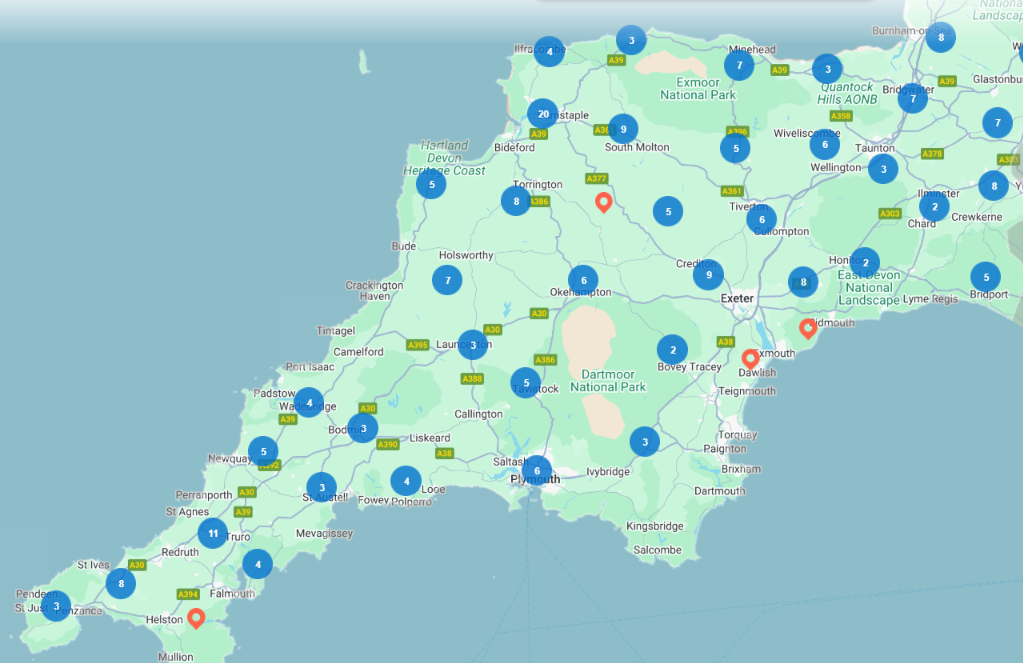
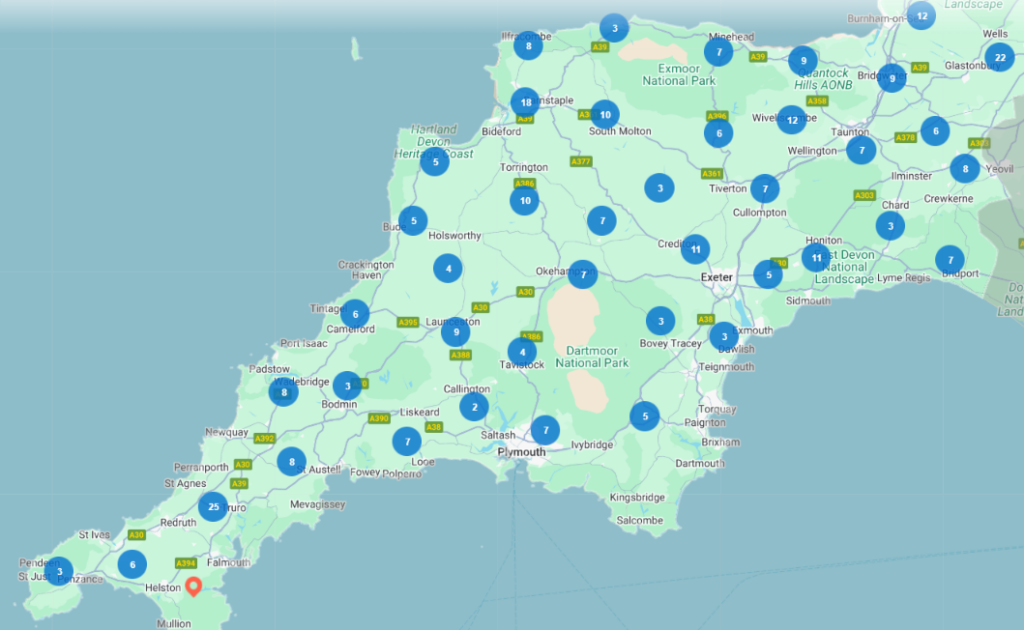
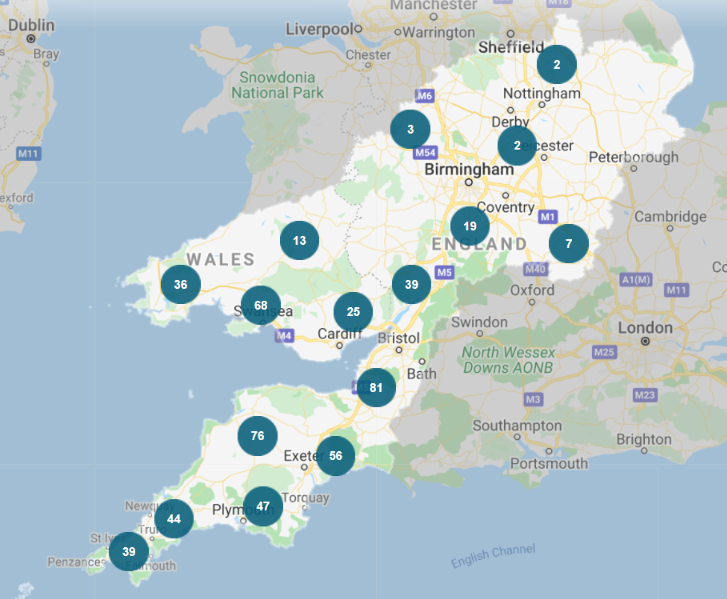
Storm Darragh arrived in the West Country yesterday. causing carnage far and wide. Here is how the Devon and Cornwall section of National Grid Electricity Distribution’s power cut map looked at 4 PM:
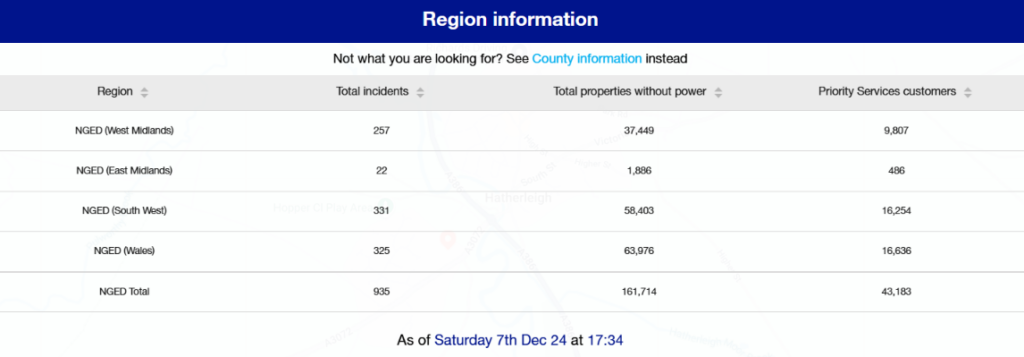
Somewhat later, here’s how NGED’s table of regional power outages looked:
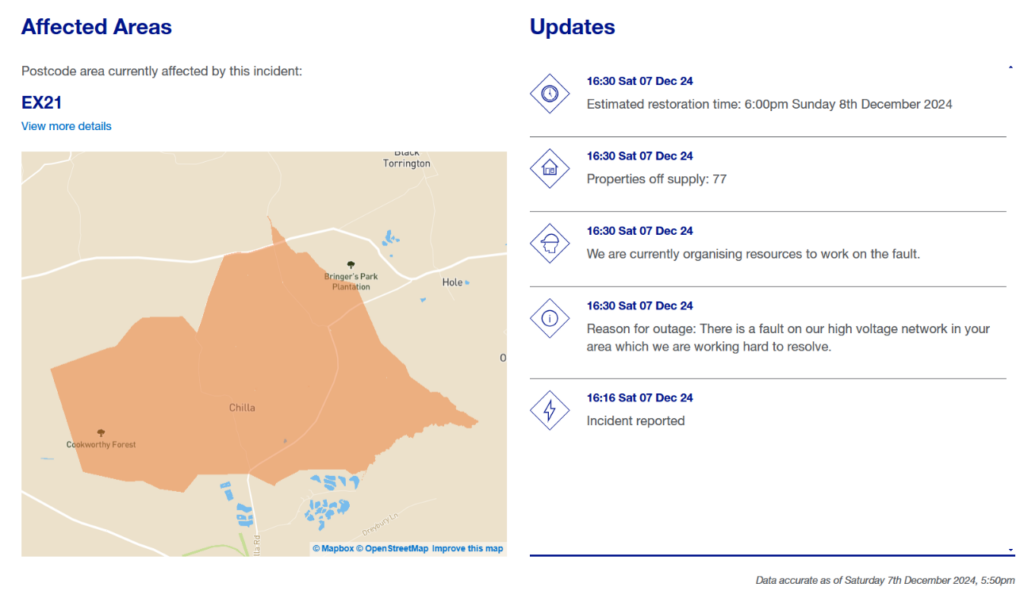
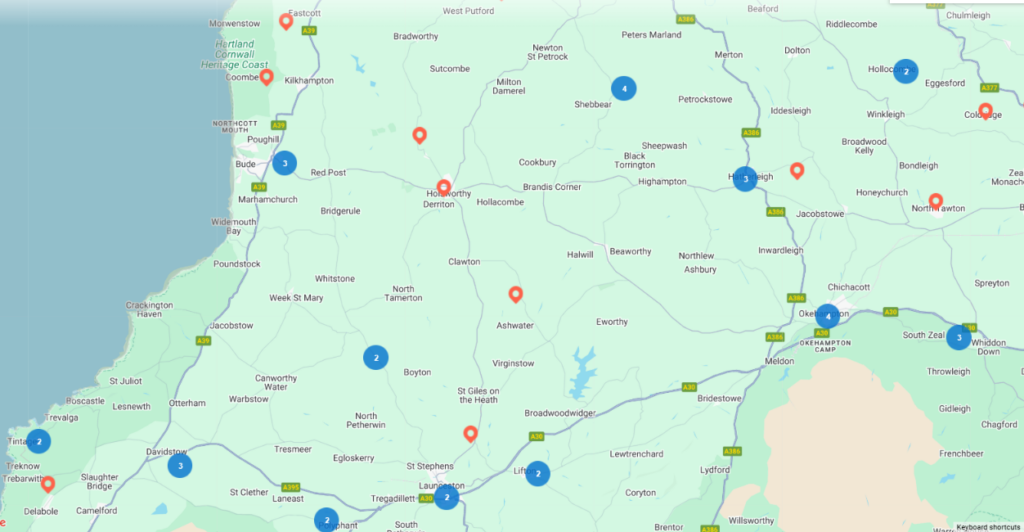
77 of the 58,423 properties in the South West without an electricity supply were just up the road from us near Chilla:
By 8:30 PM the NGED power cut map was awash with outages:
while our local area looked like this:
The power cut in Chilla was rather confusingly located in Hatherleigh according to the map!
This morning the Met Office in Exeter issued a warning of high winds due to the imminent arrival of Storm Betty, the second named storm of this tempestuous summer!
Met Éireann have named Storm Betty as a low-pressure system which is also triggering Met Office warnings…
A Met Office yellow warning for wind covers coastal areas of western Wales, eastern Northern Ireland and parts of northwest England and southwest Scotland. Rain warnings have also been issued from late Friday and into Saturday for Northern Ireland and parts of Scotland.
According to the yellow warning for wind:
Power cuts may occur, with the potential to affect other services, such as mobile phone coverage
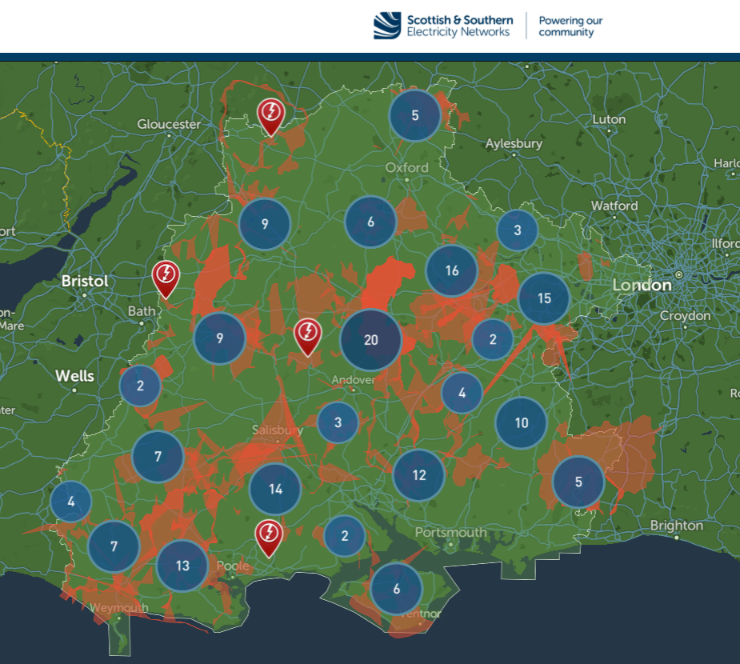
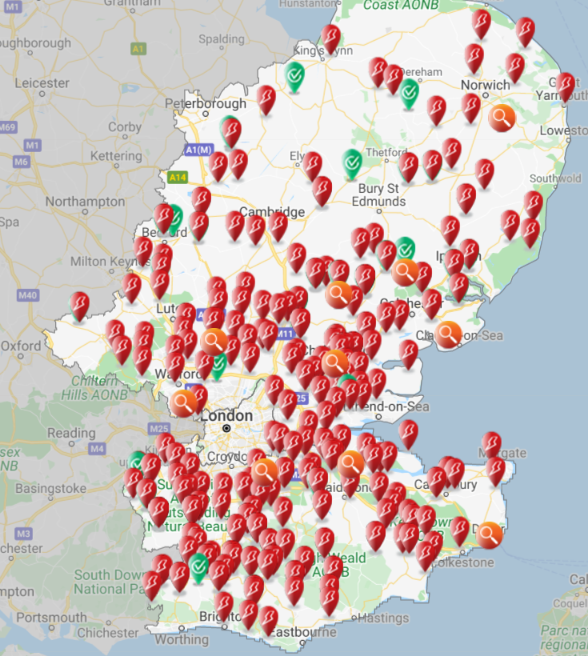
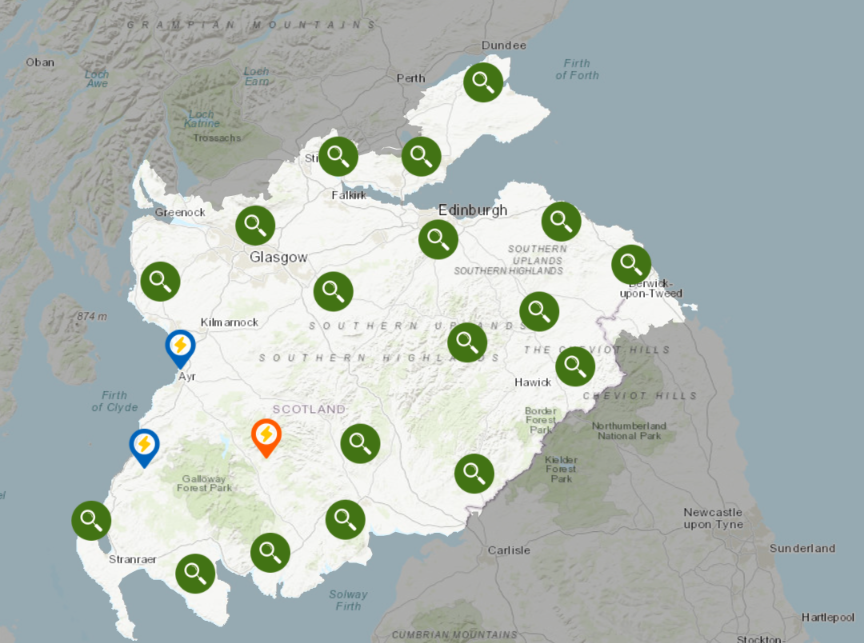
In such circumstances I have a penchant for recording “baseline” images of the UK’s distribution network operators’ power cut maps. I was rather surprised to discover that Northern Powergrid’s looked like this earlier today:
Zooming in on the map, it seems many of those alleged power outages have been “scheduled” in advance, some of which remain on the map despite having already been cancelled for today.
It remains to be seen how many “unscheduled” additions Storm Betty leaves in her wake.
[Update – August 18th 20:30]
The predicted “unscheduled” power cuts due to the passage of #StormBetty across the British Isles have begun.
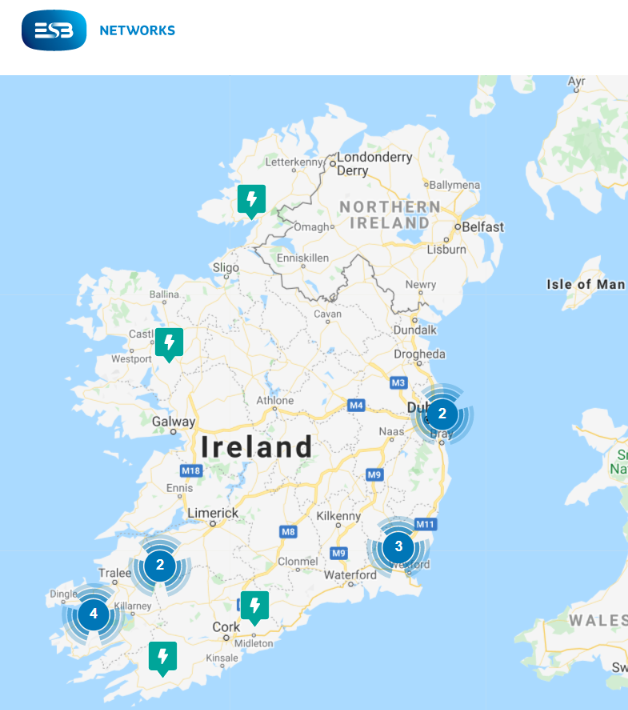
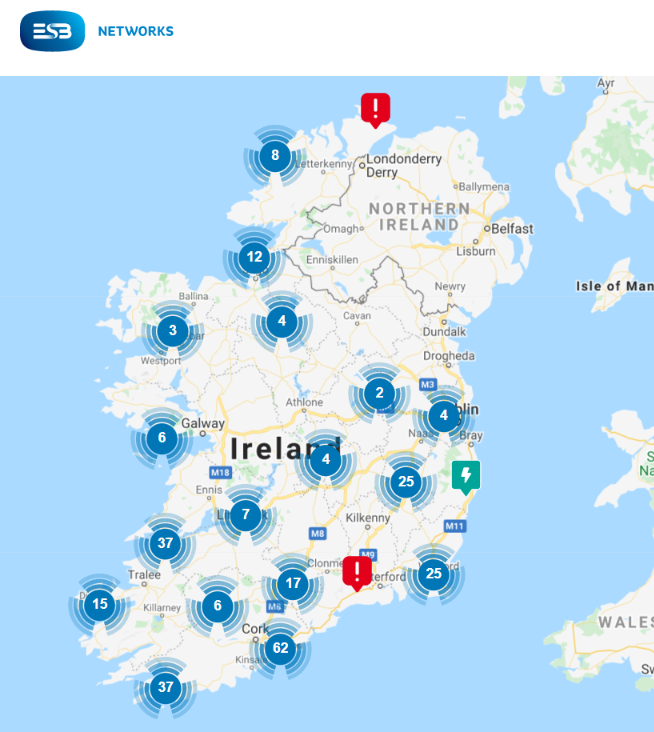
Here are the current power outage maps of ESB Networks in Eire:
Storm force winds associated with Storm Betty caused damage to the electricity network overnight affecting just over 70,000 homes, farms and businesses at the peak. As at 11.30am, just under 50,000 electricity customers remain without power with the damage mainly attributable to lightning and fallen trees on overhead lines as a result of the high winds.
Areas most impacted include counties in the South-East along with North Dublin, Dundalk, Portlaoise and Kilkenny.
All available resources are being deployed to respond to all electricity outages where safe to do so. ESB Networks crews have been working since first light and will work through this afternoon into this evening to restore power to as many customers as possible. A significant number of impacted customers will have their power restored by this evening. However, due to the scale of the damage to the electricity network, some customers in localised areas may remain without supply overnight.
Yesterday morning the United Kingdom’s Met Office issued a press release about the impending arrival of a disruptive weather system:
A low-pressure system which will bring high winds and rain to parts of the UK has been named Storm Otto by the Danish Meteorological Institute (DMI).
Storm Otto will move east across the far north of the UK from the early hours of Friday morning, likely bringing gusts in excess of 75mph to some northern areas.
Met Office Chief Meteorologist Andy Page said: “Storm Otto will bring high winds and rain to the UK, with some northern parts of Scotland and the northeast of England likely to get the strongest gusts of wind, possibly in excess of 75mph. Warnings have been issued and could be updated as Storm Otto develops.
“There’s a chance of travel disruption and high-sided vehicles could be particularly prone to disrupted plans in this set-up. There’s associated rain with Storm Otto, with 40-50 mm of rain likely to fall over parts of western Scotland.”
Potential impacts highlighted in the warning also the likelihood of large waves, especially in North Sea coasts, as well as a chance of some damage to buildings and infrastructure.
This was accompanied by a weather warning for high winds from Storm Otto:
Ministers are discussing launching a public information campaign to encourage households to reduce their energy use this winter as fears grow over winter blackouts.
Households could be asked to turn their thermostats down and use their dishwashers and washing machines during the night and at times when energy demand is lower, under plans being discussed between the business department, energy companies and the network operator National Grid.
No names are mentioned of course, but allegedly:
Sources close to the discussions said that government officials and industry executives were determined to avoid blackouts disrupting the supply of energy to Britons’ homes. A public information campaign could help ease pressure on energy supplies during the winter. Ministers have so far resisted callsto tell consumers to cut their energy use, saying consumption of gas and electricity was a “decision for individuals”.
The article mentions the recent trial in Scotland run by Octopus Energy and SP Energy Networks, in which a financial incentive was offered to domestic consumers to shift the timing of their electricity demand.
Over 2,500 Octopus Energy customers across Dumfries and Galloway participated in the six-week trial*. Directed to power up their usage when green energy supply was highest, households used 20MWh more energy across the six two-hour trial windows. Households who increased their usage by more than 10% were credited back all the energy they had used during the two-hour timeframe. Those who used more than 100% extra were credited double the amount they had used. Participating customers were rewarded with an average of £5 of free energy, with some saving up to £73.
According to The Guardian once again:
National Grid will lay out its outlook for winter energy supplies on Thursday, giving the first comprehensive assessment of the risk of blackouts this winter.
The eagerly awaited document should show how resilient Britain’s energy supplies are over the coming months. An early view, published in August, showed the UK should be able to meet its energy demand in the coming months. However, since then Norway has indicated it may prioritise supplying its domestic market over exporting power.
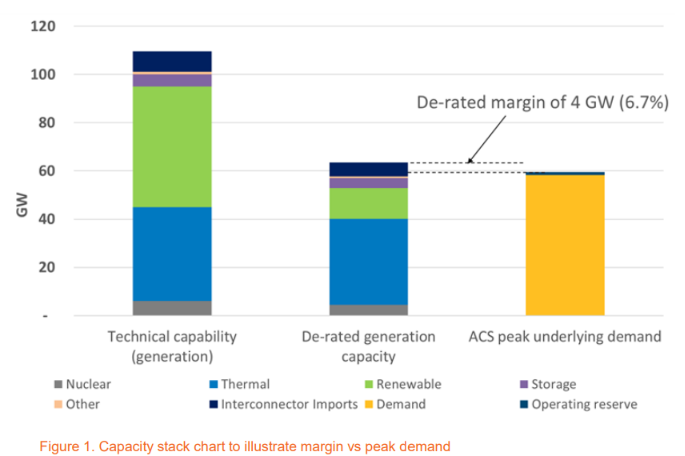
Here’s how things stacked up for the National Grid in August:
We eagerly await any changes revealed in tomorrow’s report!
[Edit – October 6th]
The National Grid Electricity System Operator has now published its “Winter Outlook Report” for 2022/23. Here is the executive summary in full:
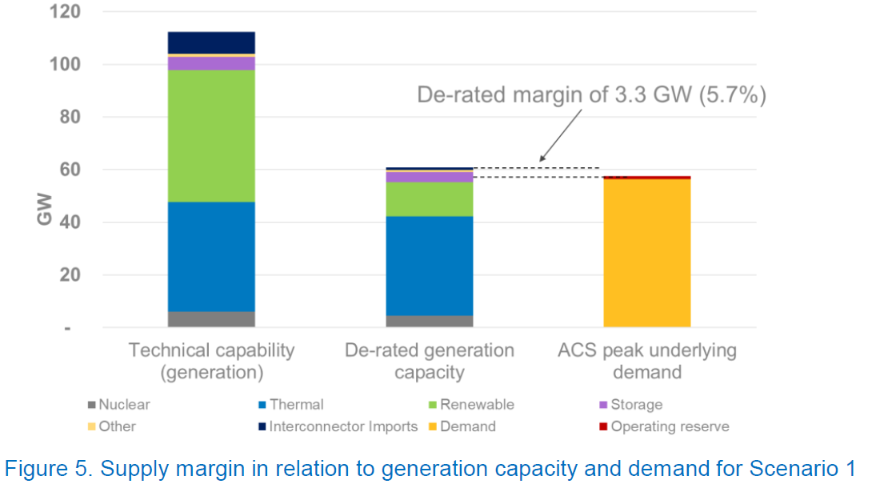
Our first illustrative scenario examines what would happen if there were no electricity imports from continental Europe . In this scenario we would deploy our mitigation strategies – dispatching the retained coal units and our Demand Flexibility Service. By securing 4GW through these actions, we would maintain adequate margins and mitigate impacts on customers.
Our Demand Flexibility Service is new and innovative, and we have worked with suppliers, aggregators, industry, Ofgem and BEIS on the design to ensure it is ready for the winter and capable of delivering the required level of participation and response (2 GW+). It will launch on 1 November, and we are encouraging suppliers and aggregators to work with their customers to ensure the highest levels of engagement and participation. We see particular potential from commercial organisations who can shift their load from peak hours and have had positive feedback from British companies on this.
Without the Demand Flexibility Service, we would expect to see a reduction in margins. In this scenario on days when it was cold (therefore likely high demand), with low levels of wind (reduced available generation), there is the potential to need to interrupt supply to some customers for limited periods of time in a managed and controlled manner. However, we expect the mitigations outlined above to be effective.
A second, more extreme scenario, looks at a hypothetical escalation of the energy crisis in Europe such that there is insufficient gas supply available in Great Britain (in addition to no electricity available to import from continental Europe as per above scenario). In the unlikely event that escalation of the situation in Europe means that insufficient gas supply were to be available in Great Britain this would further erode electricity supply margins6 potentially leading to interruptions to customers for periods. All possible mitigating strategies, including our new measures, would be deployed to minimise the disruption.
Overall, this is likely to be a challenging winter for energy supply throughout Europe. We have taken extensive measures to try to mitigate the impacts for British consumers and expect that, under our base case, margins will be adequate. Nevertheless, there remain scenarios, driven principally by factors outside of Great Britain which could impact upon British electricity supplies. Plans are in place to ensure the impact is minimised and the overall security and integrity of Britain’s energy systems are protected.
Here too is the updated version of the “base case” supply margin chart shown above:
The chart is accompanied by these two provisos, amongst others:
Our base case assumes electricity imports from Europe are available at times when we need them to meet demand, delivering in line with their Capacity Market agreements, and that there is no disruption to gas supplies.
Our base case does not assume any material reduction of consumer demand due to high energy prices. It does not include any of our mitigation measures such as coal contracts or the Demand Flexibility Service as we would not expect to deploy them here.
The winter outlook also considers “Scenario 1” in which there are “reduced electricity imports from Europe”:
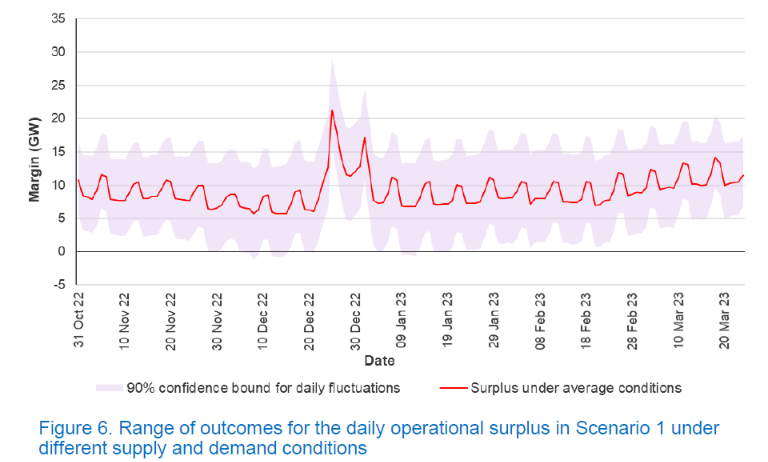
The bar chart is accompanied by a graph of “operational surplus”:
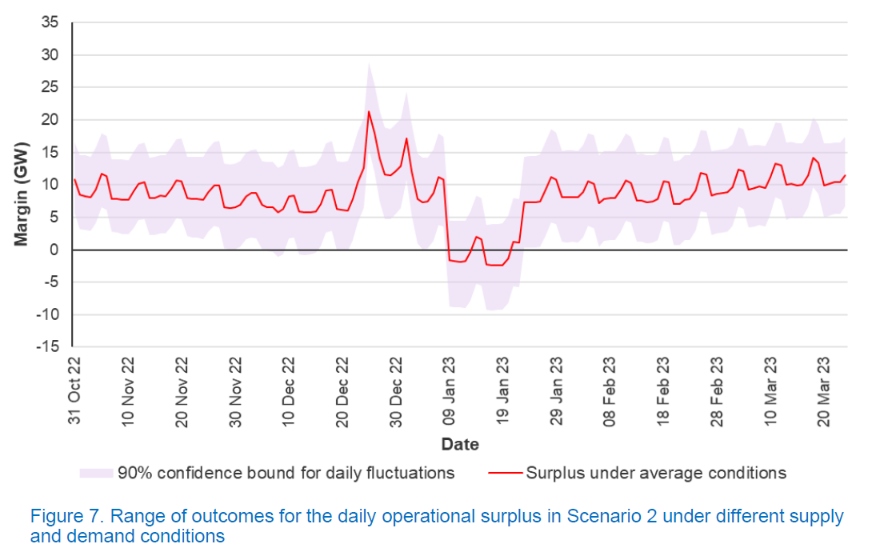
That shows National Grid’s “90% confidence” that the surplus will not turn negative over the winter. However now let’s take a look at “Scenario 2” in which there is in addition “insufficient gas supply in Great Britain”:
Due to the war in Ukraine and gas shortages in Europe, there is a significant risk that gas shortages could occur during the winter 2022/23 in Great Britain. As a result, there is a possibility that GB could enter into a Gas Supply Emergency.
Perhaps it would be prudent at this juncture for us all to cross our fingers and hope that the gas keeps arriving at Great British shores over the coming months, whether via pipeline or LNG tankers?
Though no power cuts are currently planned, in their winter outlook National Grid ESO raised the possibility of the need for planned national power cuts, in order to manage the possibility of energy demand outstripping the supply available.
Firstly, it’s important to know that before any emergency planned power cut instruction is given, National Grid ESO takes several steps to protect customers. These include:
* Encouraging additional generation through the supply market. * Asking heavy industrial users to limit their demand during peak periods. * Reducing domestic power demand – this could include paying customers to change how and when they use appliances like washing machines and dishwashers or reducing voltage across the country by a small percentage, which would be undetectable.
Procedures for emergency planned power cuts like this have existed for decades and are simulated in emergency exercises by the energy sector each year ahead of the winter.
If needed, the emergency procedures are designed to minimise the impact on customers as far as possible, by limiting power cuts to shorter periods in order to manage overall electricity demand. However, while the winter is expected to be challenging, there is no guarantee emergency measures will be necessary.
If an emergency power cut is implemented, customers in certain parts of the country would typically be without power for around three hours per day during the emergency.
Distribution network operators, which run the local power networks, would be legally instructed by National Grid ESO, which controls the flow of energy around the country, to disconnect power supplies using established procedures. These procedures are set out by the government in a document known as the Electricity Supply Emergency Code, sometimes referred to as ESEC. The procedures ensure that power is shared fairly across all customers during a national energy emergency…
If emergency power cuts are needed customers will be able to find their rota and what it means for them at powercut105.com by entering their postcode. The rota will only be published once emergency power cuts have been approved to take place.
[Edit – October 17th]
In an article in today’s Financial Times, energy correspondent Nathalie Thomas writes that:
National Grid’s chief executive has warned British households to prepare for blackouts between 4pm and 7pm on “really, really cold” weekdays in January and February in the event of reduced gas imports from Europe.
John Pettigrew said the company would have to impose rolling power cuts on “those deepest darkest evenings in January and February” if generators failed to secure enough gas from the continent to meet demand, particularly if the country suffers a cold snap.
Pettigrew’s comments at the Financial Times’s Energy Transition Summit came after National Grid, which oversees Britain’s electricity and gas systems, this month took the unusual step of setting out various “unlikely” scenarios in which Britain might not have sufficient energy supplies this winter.
[Edit – November 4th]
National Grid ESO’s Director of Corporate Affairs, Jake Rigg explained their Demand Flexibility Service on BBC Breakfast this morning. · According to a BBC article:
Households will be offered discounts on their electricity bills if they cut peak-time use on a handful of days over the winter, as part of National Grid’s efforts to avoid blackouts.
The network operator has announced details of the scheme, which it said could save households up to £100.
There will be 12 “test” days initially, designed to see how customers respond, between November and March.
But only homes with smart meters will be able to take part.
Only 14 million, less than half, of households in England, Scotland and Wales, where the scheme is being tested, have a smart electricity meter installed.
Customers taking part will be given 24 hours’ notice of a “test” day where they will be asked to reduce their peak-time electricity use if they can during a one-hour period identified by National Grid, likely to be between 16:00 and 19:00.
That could include delaying use of a tumble-dryer or washing machine, or cooking dinner in the microwave rather than the oven.
National Grid said it will pay energy suppliers, which will be required to sign up to the scheme to operate it for customers, £3 for every kilowatt-hour during the test periods.
Individual suppliers will decide how much customers will receive and whether the money is taken off bills, credited to accounts, or if there’s an option to withdraw the cash…
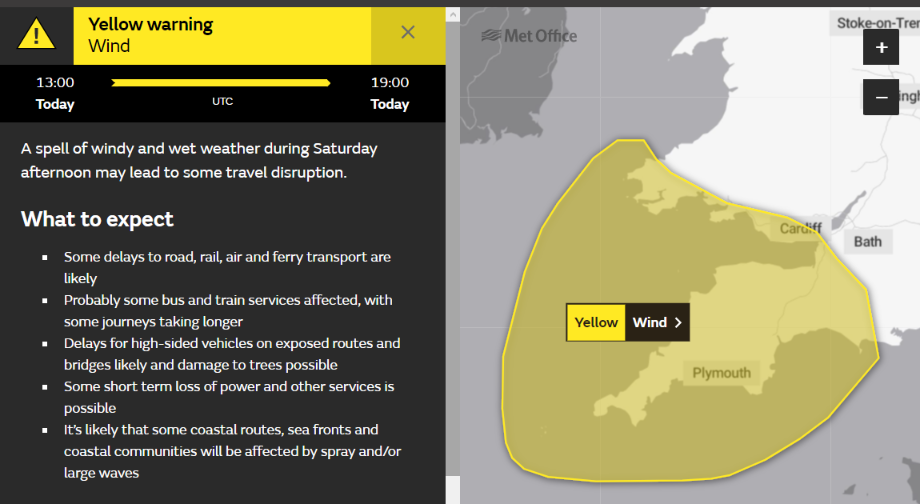
The UK’s Met Office has issued a yellow warning for wind and rain across South West England this afternoon:
As the Met Office point out:
Some short term loss of power and other services is possible.
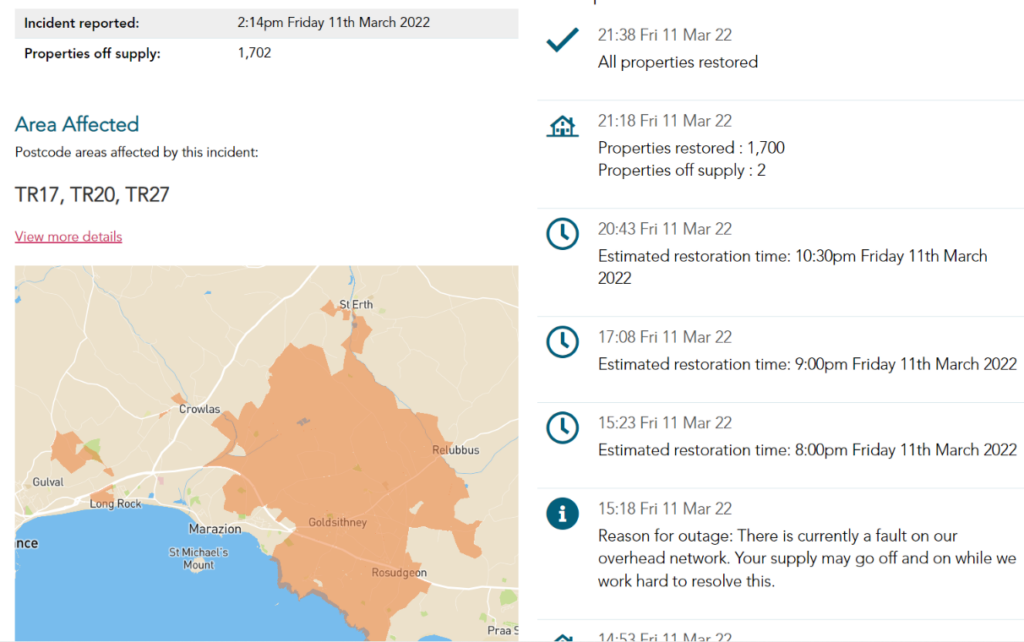
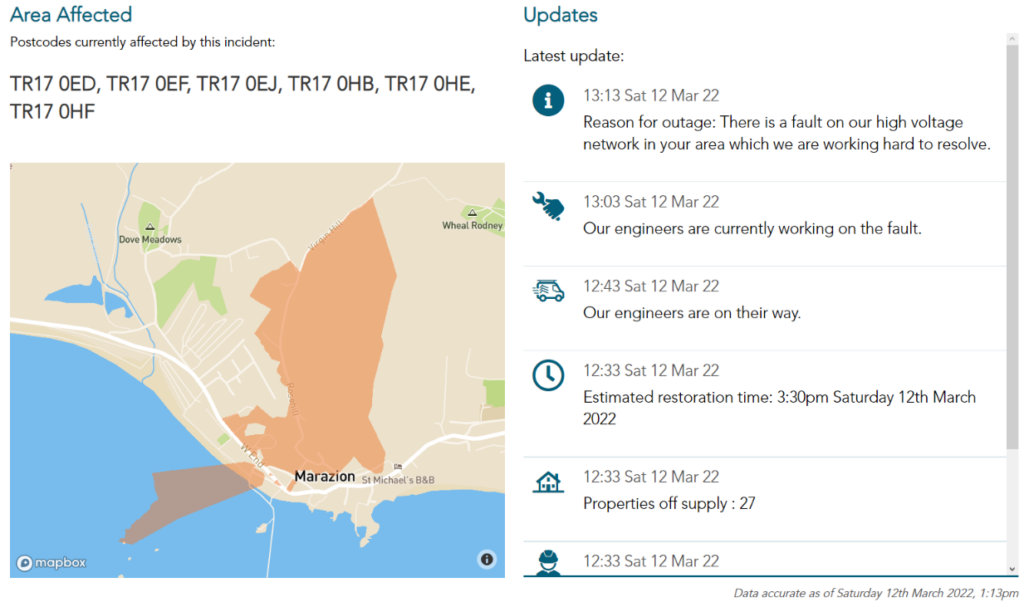
We would go somewhat further, and suggest that some power cuts are likely here in Cornwall. Not least because 1,702 properties near Marazion suffered a power cut yesterday afternoon:
It’s just gone 10 AM, and Storm Eunice is raging outside. Our lights went out and our uninterruptible power supplies started beeping a couple of minutes ago. The lights came back on and the beeping stopped a few seconds later. There are 13,884 properties suffering a power cut in Cornwall, but at least ours was brief!
However some other local residents are not so fortunate:
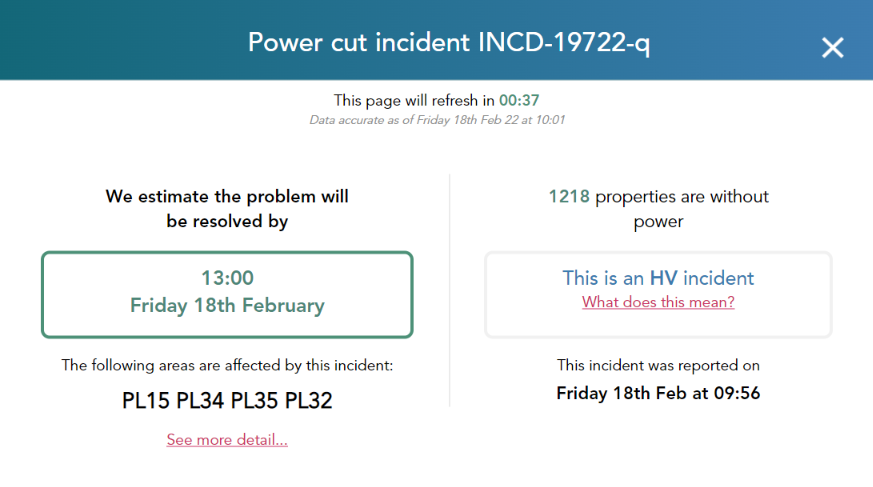
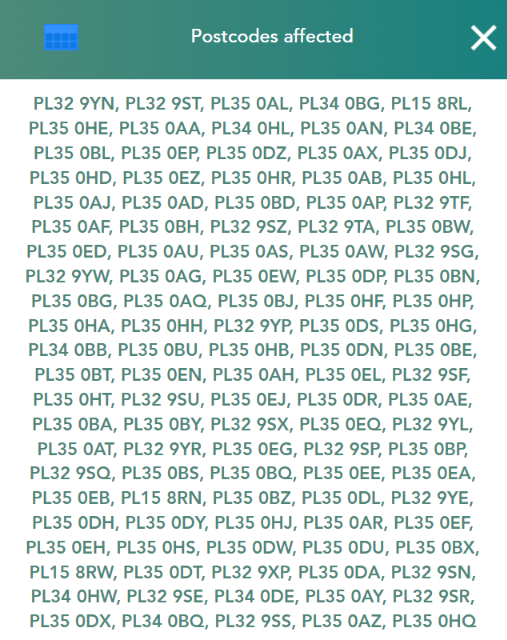
Western Power Distribution currently estimate that the fault will be fixed by 1 PM, but what with one thing and another that strikes me as being a bit optimistic.
[Edit – 11:00 February 19th]
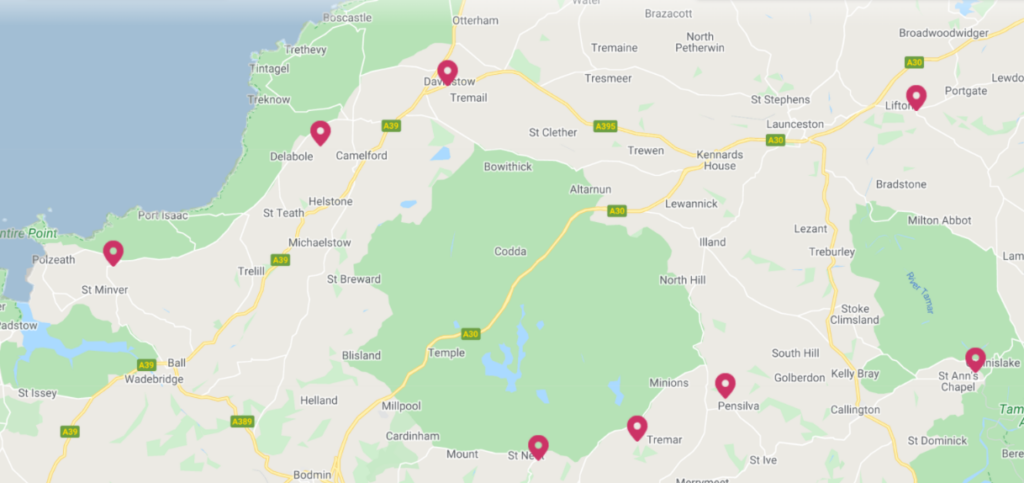
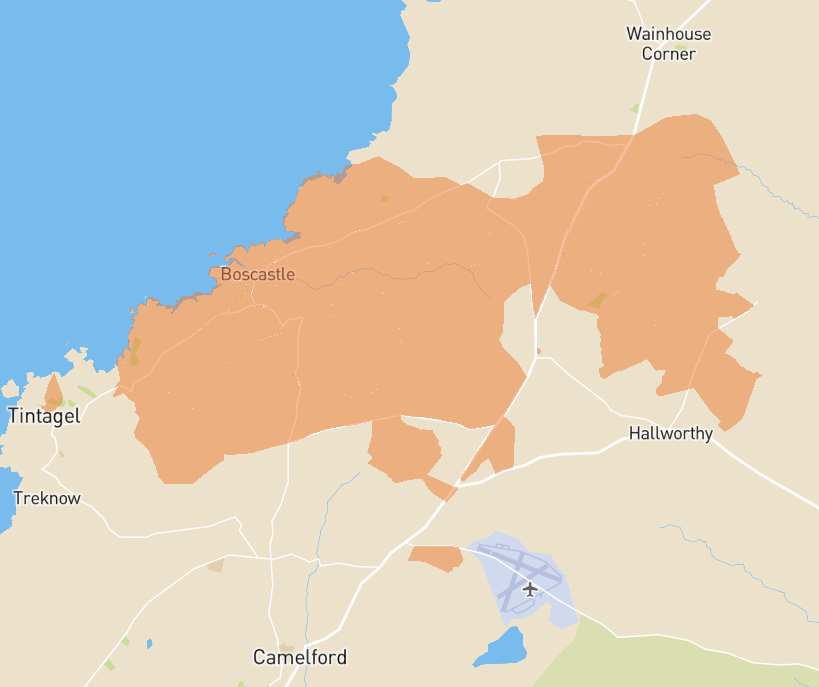
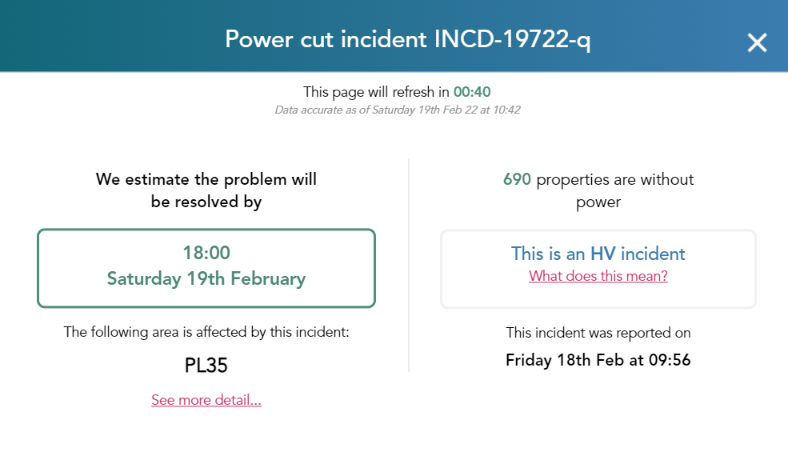
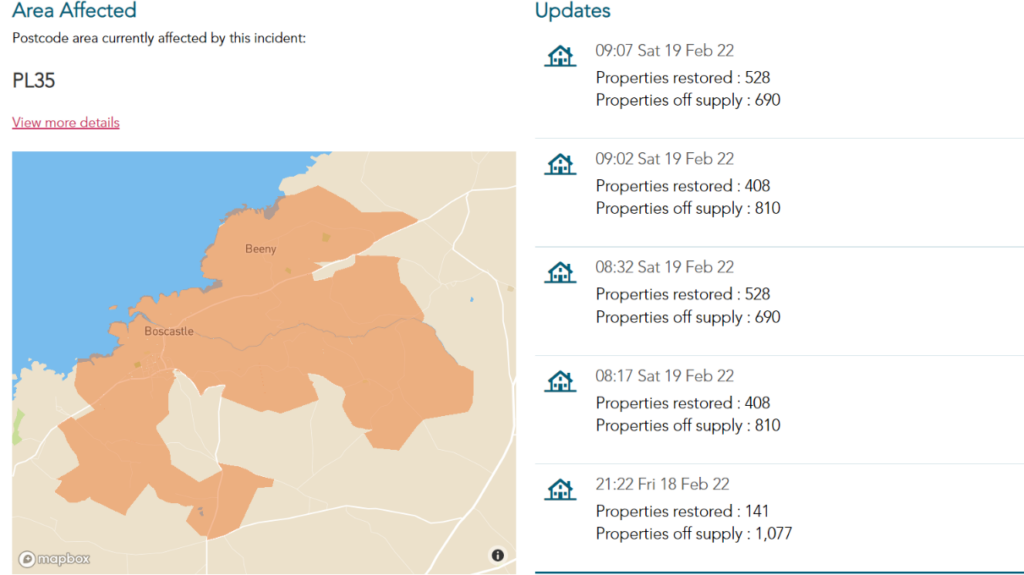
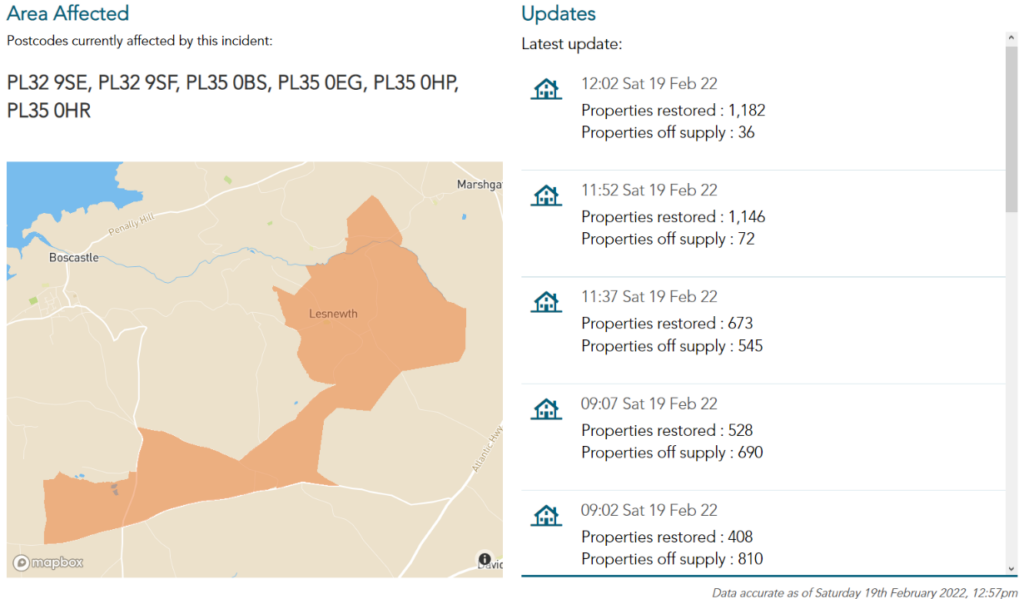
WPD have been gradually fixing the faults on their network in the Davidstow area following Storm Eunice yesterday. However there are still 690 properties that have been without electricity for over 24 hours:
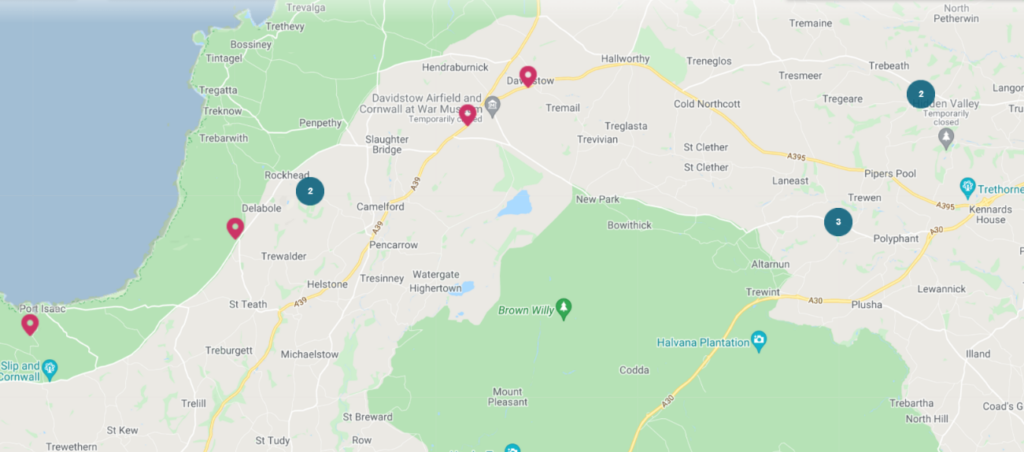
There are also still several more faults nearby:
[Edit – 14:00 February 19th]
It seems our flickering lights this morning meant that we’ve just dodged another metaphorical electric bullet here on the fringes of Davidstow. Whilst yesterday’s fault is now almost fixed:
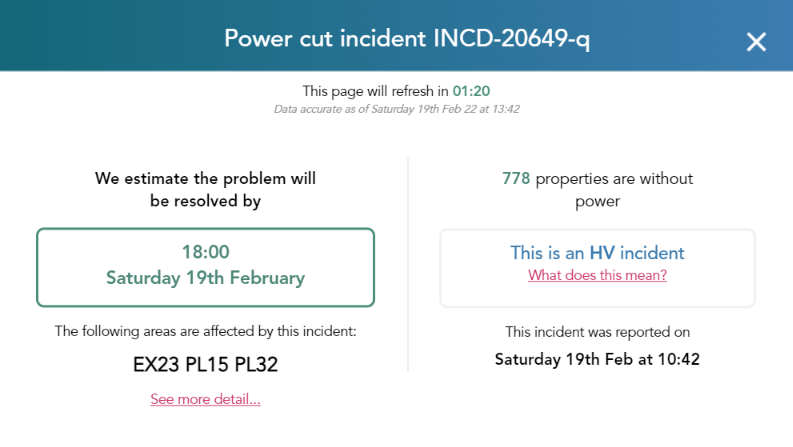
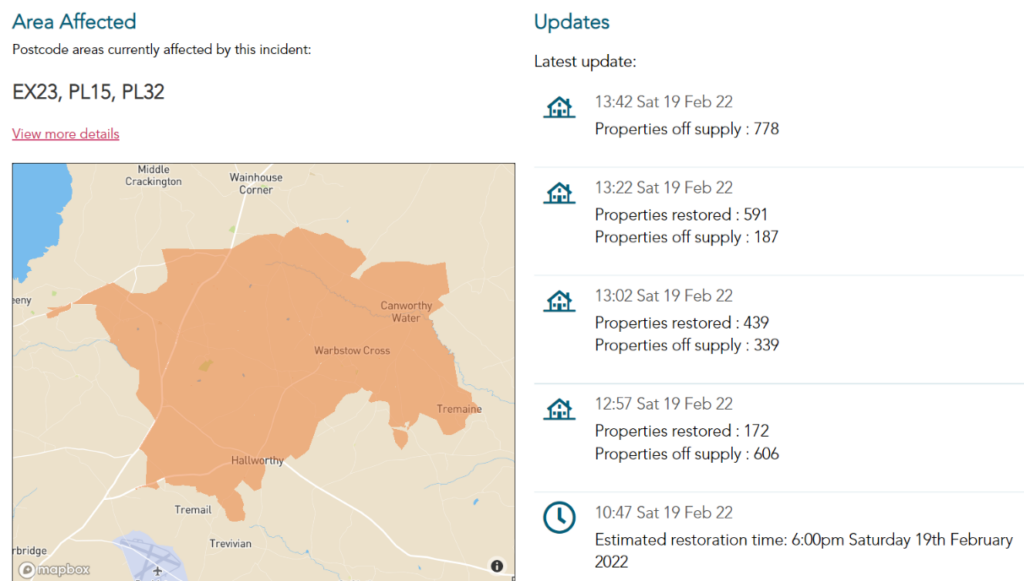
another big high voltage fault hit this side of the Atlantic Highway this morning:
[Edit – 18:00 February 19th]
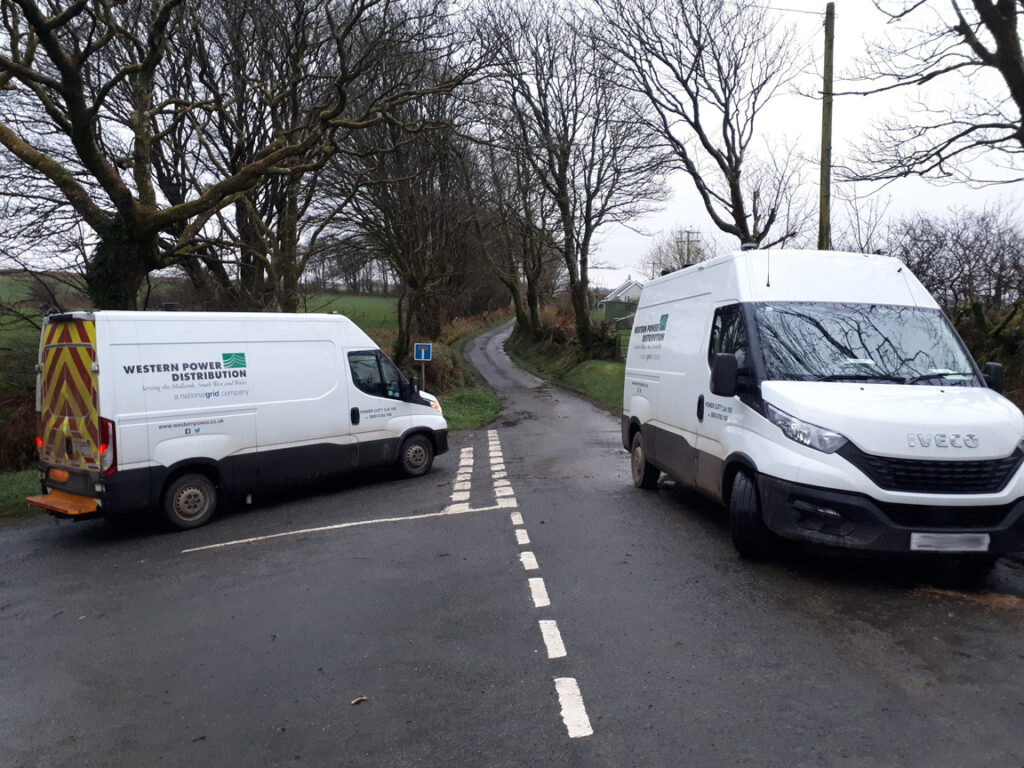
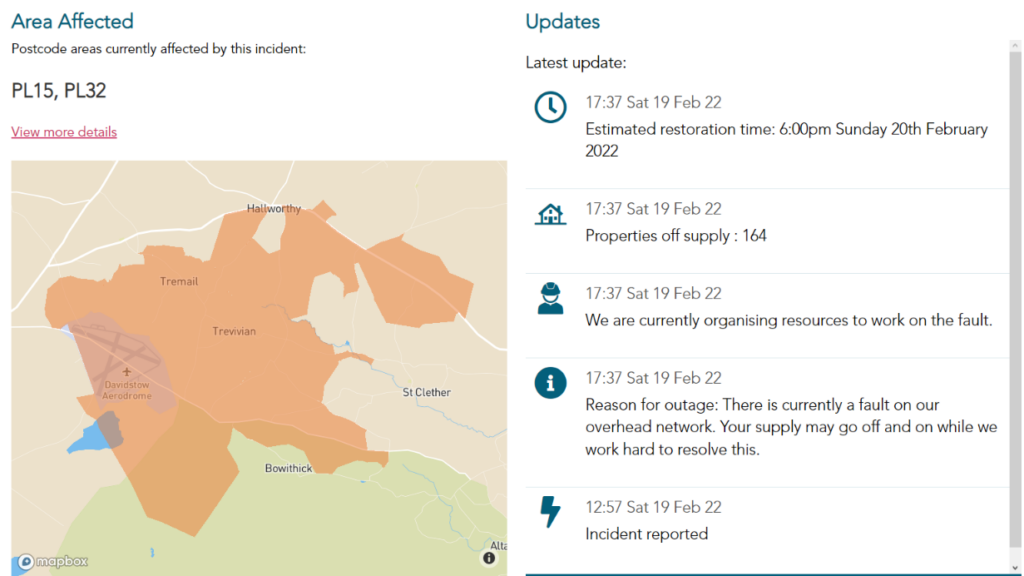
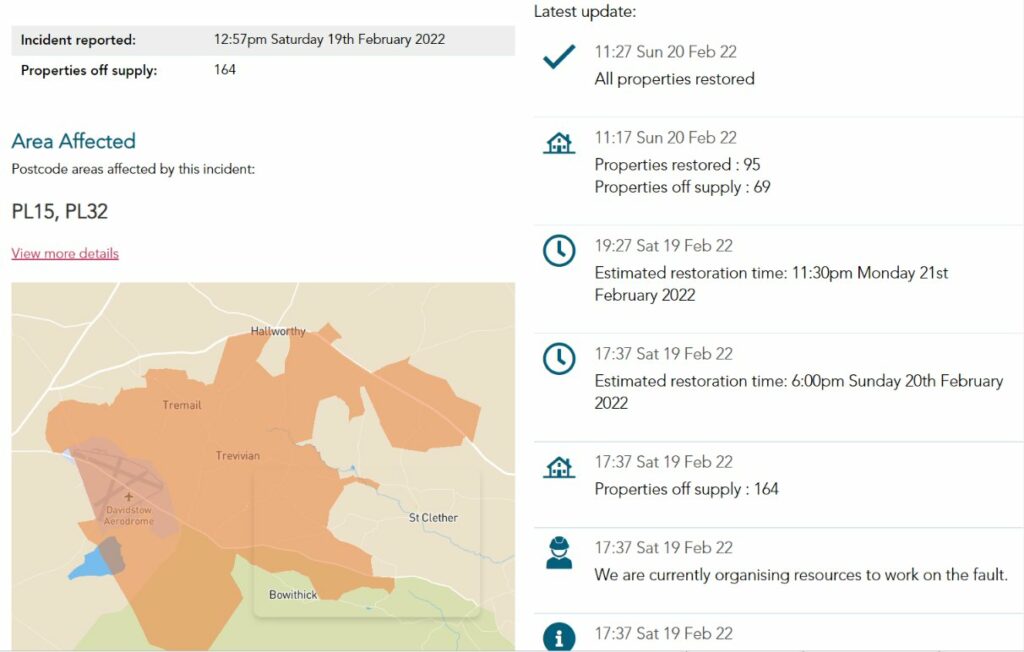
We may have managed to dodge the first two bullets, but unfortunately not the third. I went on a bike ride around the neighbourhood this afternoon try to find some WPD engineers. More on all that in due course, but I failed miserably in my mission until the very end of my ride. This was the sight that greeted me at the end of our lane:
This was the reason for their visit:
[Edit – 12:00 February 20th]
We’ve received some unexpected good news this morning. Thanks to the efforts of Western Power’s engineers by floodlight overnight electricity is already flowing around our ring mains once again!
Regular readers may recall our own recent power cut in the wake of Storm Arwen before Christmas? Whether we experience another one tomorrow remains to be seen, but I am confident that many other people down here in South West England will.
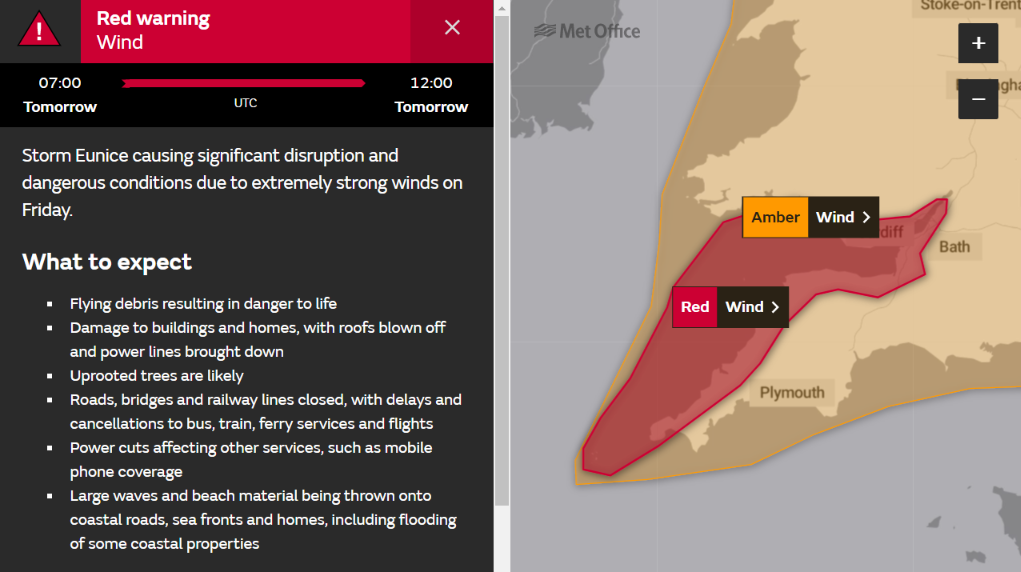
The Met Office issued a rare “red” wind warning for our part of the world earlier today:
The Met Office forecasts that:
Extremely strong west to southwesterly winds will develop over southwest England and south Wales early on Friday. Widespread inland gusts of 70-80 mph are likely and up to around 90 mph near some coasts, with dangerous conditions on beaches and seafronts. Winds are expected to ease from the west during the late morning.
What to expect
Flying debris resulting in danger to life
Damage to buildings and homes, with roofs blown off and power lines brought down
Uprooted trees are likely
Roads, bridges and railway lines closed, with delays and cancellations to bus, train, ferry services and flights
Power cuts affecting other services, such as mobile phone coverage
Large waves and beach material being thrown onto coastal roads, sea fronts and homes, including flooding of some coastal properties
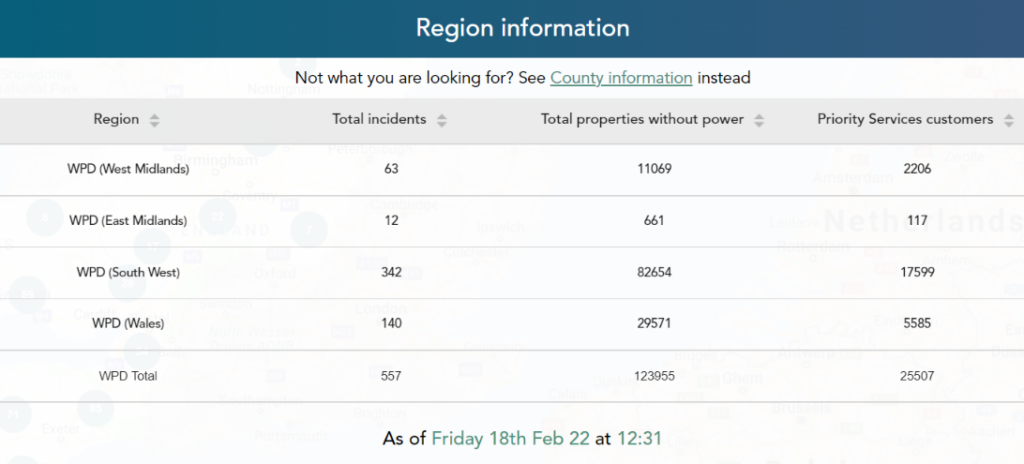
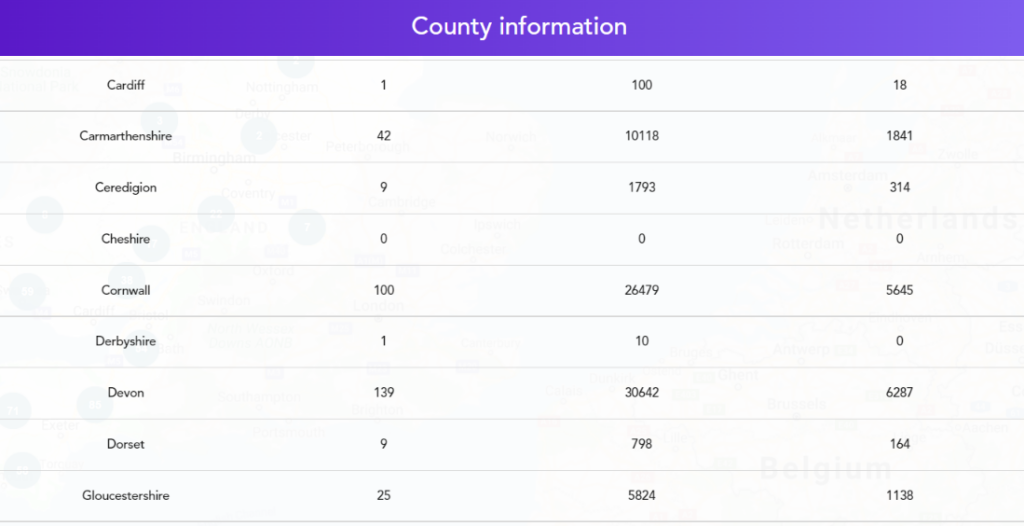
The other DNOs don’t provide handy tables of real time outage numbers, but WPD’s reveal that at 12:40 there were 123,955 properties without electric power across their four regions of the UK, of which 26,479 are here in Cornwall with another 30,642 next door in Devon.
Storm Franklin arrived on our shores before all the faults caused by Storm Eunice were repaired. Hence the story continues over at:
Today’s title refers back to a similar incident we experienced back in 2014 at our previous premises half way up Haldon Hill near Exeter. The forecast for Storm Arwen suggested lots of power cuts in lots of places. We thought we had escaped unscathed. Until the very early hours of this morning that is, when this happened:
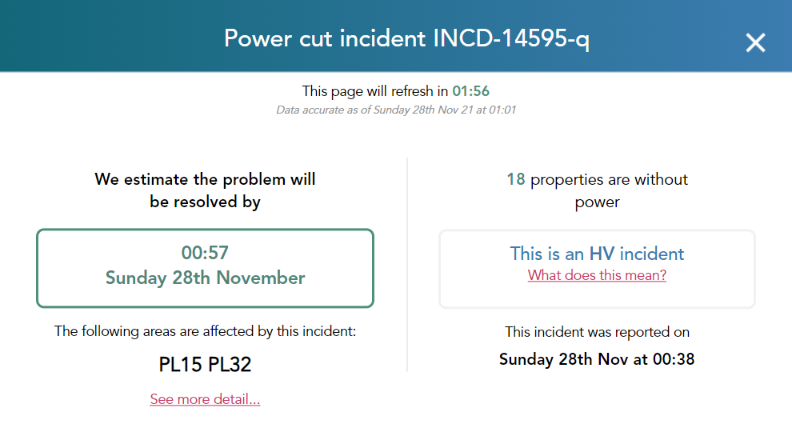
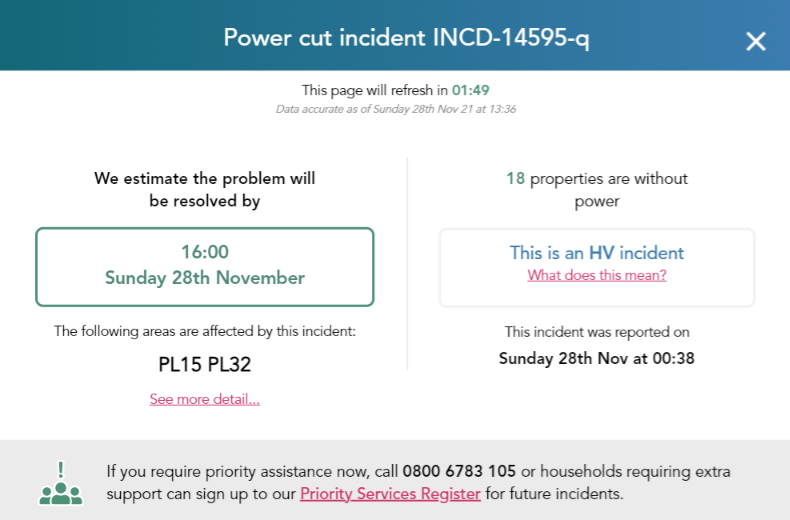
A few minutes later this information appeared on Western Power Distribution’s power cut map:
By that time our mains power had returned, but that of 18 of our near neighbours had not.
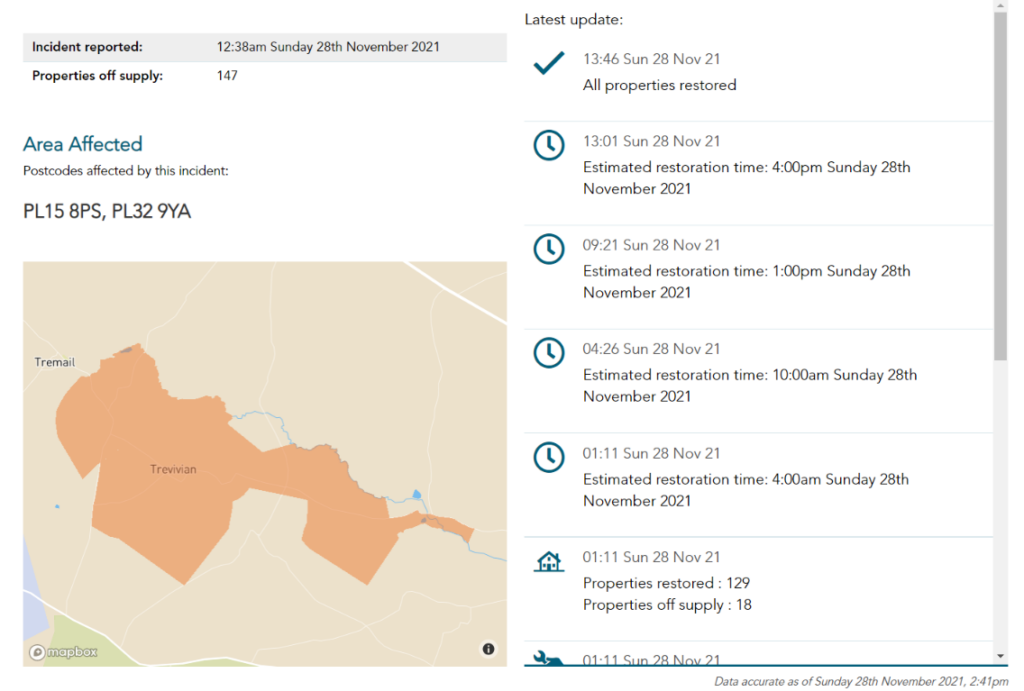
It is now over 12 hours later, and those 18 properties are still unintentionally “off grid”:
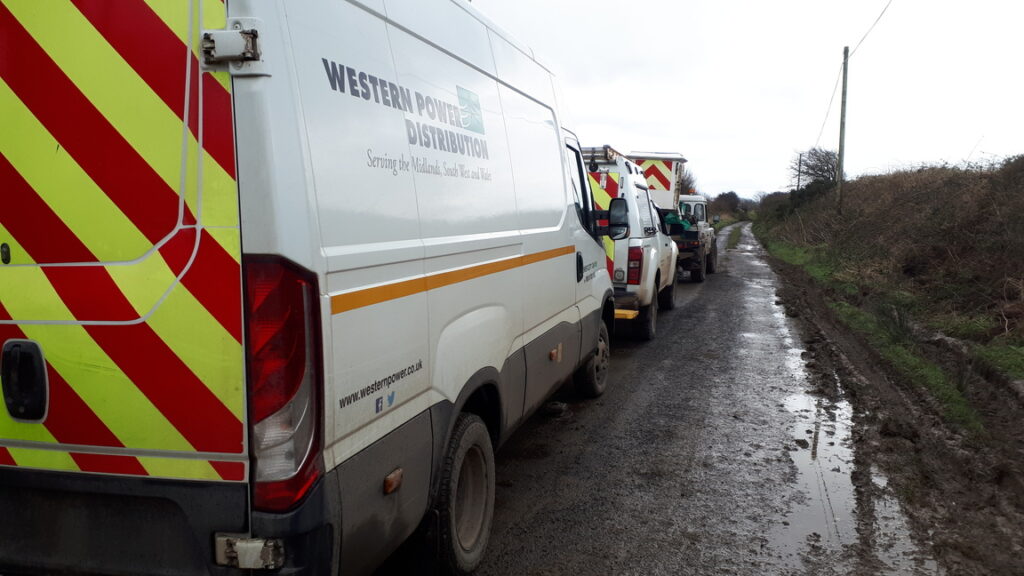
I’ve recently returned from a bike ride around the local, somewhat soggy lanes, where I happened across a valiant 3 man WPD repair crew:
It seems that some of their South West colleagues were up country helping out in the Midlands, and they had started their current shift a mere 6 hours after finishing the previous one.
Their efforts seem to have paid off, since after returning home the WPD web site was running properly once again, to reveal this no doubt welcome information to our near neighbours:
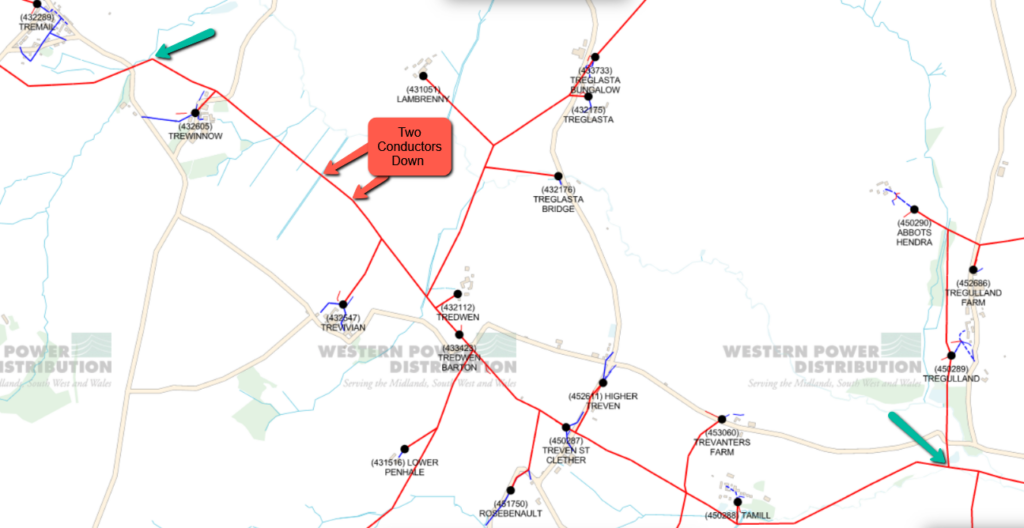
Based on my conversation with the repair crew and subsequent poring over a map of WPD’s distribution grid here is my best estimation of what happened during the power cut in Trevivian. Firstly here’s my video of what was happening to WPD’s wires in the vicinty of Tremail in the immediate aftermath of Storm Arwen, together with a comment on the current high retail price of electricity:
After #StormArwen had subsided somewhat yesterday afternoon we took a stroll up the hill towards #Davidstow Moor to take a look at our local #OnshoreWind "power station"
Here are the sights (and sounds!) that greeted our sore eyes#LocalEnergy#NetZero
I’m not sure why it took until gone midnight, but 2 of the conductors carrying the 3 phase 11 kV supply from Tremail past Trevivian came down in the early hours of Sunday morning:
At first Tremail was amongst those cut off by the fault, but then WPD opened the air break isolators identified by green arrows and turned the power from Davidstow substation back on. After that everyone’s lights came back on apart from the properties powered by the network between the two isolating switches.
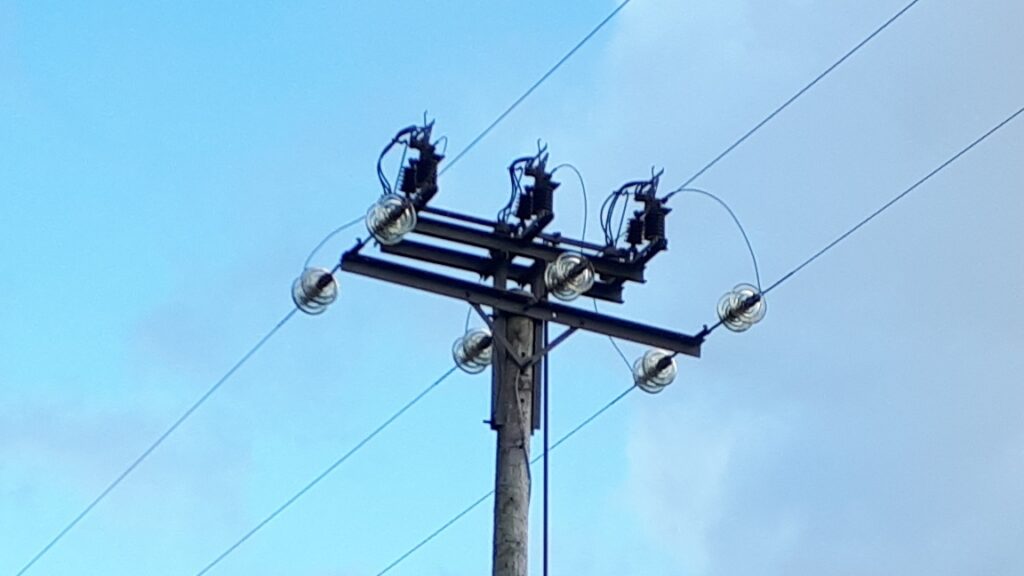
What with one thing and another it then took quite a while to repair those sections of cable and close the ABIs again! Here’s a close up of the ABI at the Tremail end of the isolated section of the local electricity distribution grid in normal operation:
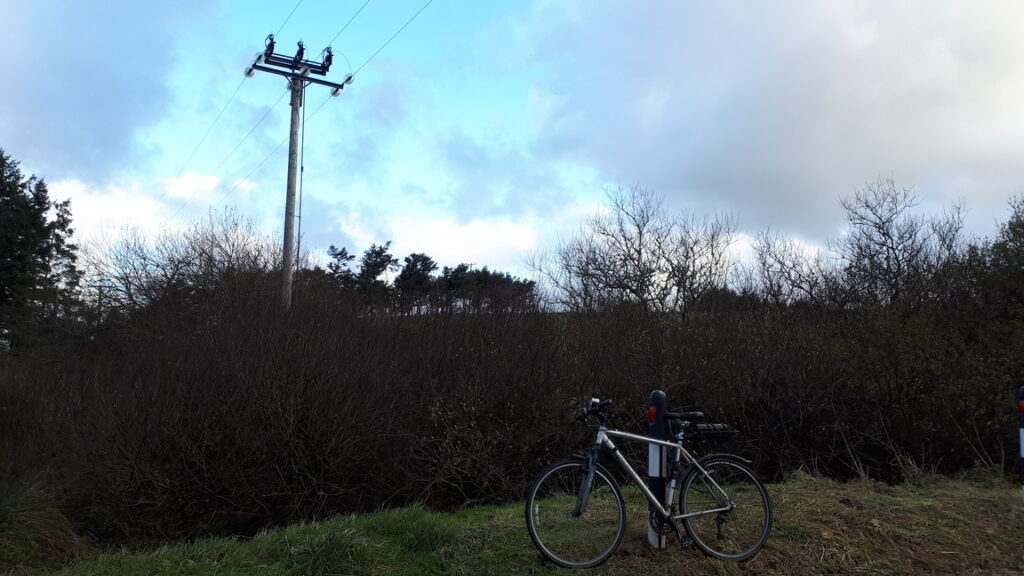
and here’s a picture of it that might be more familiar to those who travel the road between Tremail and Trevivian on a regular basis:
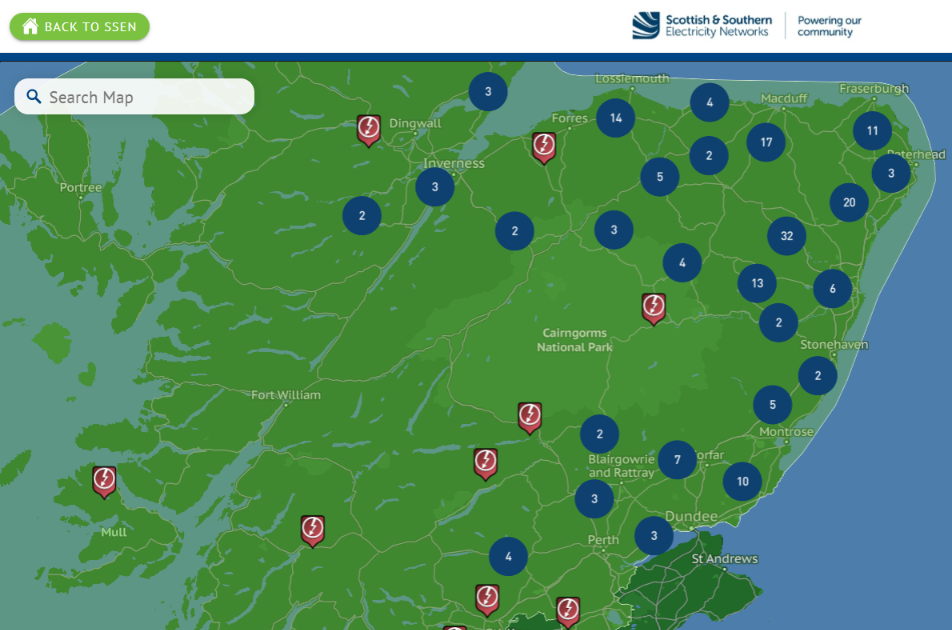
As you can see from the forecast above, very strong winds are forecast to hit the north east coast of Scotland later today, which will inevitably lead to a large number of power cuts.
The UK Met Office has now also issued a red weather warning for Storm Arwen: