Storm Katie Cuts Power Across Southern England

On Easter Saturday the Met Office announced the impending arrival of another named storm from across the Atlantic:

Storm Katie is forecast to affect southern England and south Wales on Easter Monday

Anticipating the development of an area of low pressure, which will affect southern England and south Wales on Easter Monday, The Met Office has decided to name the storm Katie. This will be the 11th named storm since last autumn.

A National Severe Weather Warning for strong winds has been issued, covering much of Easter Monday.

The Met Office also issued a severe weather warning for the winds from Storm Katie across Southern England:

Issued at: 1031 on Sat 26 Mar 2016
Valid from: 0115 on Mon 28 Mar 2016
Valid to: 1400 on Mon 28 Mar 2016

Winds will strengthen markedly across southern England and through the Bristol Channel from the start of Monday, with the potential for 50-60 mph gusts inland and 70 mph gusts around coasts exposed to the south. Whilst there is a low likelihood of all areas seeing these strong gusts for a time southern coastal counties from Hampshire eastwards look most likely to see the strongest winds. These will then ease from the southwest during the morning, clearing from the east early in the afternoon. Additional hazards may include large waves around exposed coasts as well as a period of heavy rain.

Please be aware of the potential for disruption to outdoor activities and travel, as well as the possibility of fallen trees and temporary interruptions to power supplies.

On Easter Sunday the Met Office’s “Chief Forecaster’s assessment” firmed up the forecast a bit, saying that:

There is increased confidence in the likelihood of a period of disruptive southerly winds, veering westerly later. Winds are likely to be strongest in southern coastal areas, but there is potential for some very strong, squally gusts inland during the morning before winds ease from the west during the day.

Now the morning of Easter Monday has arrived, as have those “temporary interruptions to power supplies”. Storm Katie has done her worst, and here’s how the damage looked at 08:00 BST. First of all here’s Western Power Distribution‘s current power cut map:

Further east here’s Scottish and Southern Energy Power Distribution‘s power cut map:

and here’s one from UK Power Networks‘ for South East England:

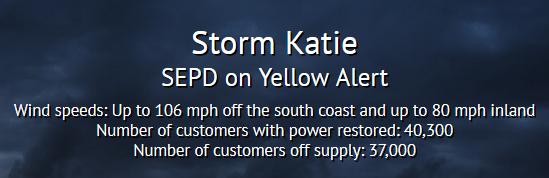
Unlike WPD, SSEPD and UKPN don’t publish real time tables of the number of properties without power. SSEPD are however providing a “Live Storm Feed” for Katie:

According to their latest news bulletins:

Southern Electric Power Distribution has more than 900 engineering, technical and support staff on duty to deal with Storm Katie, and since last night power has been restored to 40,300 customers.

There are currently 28,497 customers in West Sussex whose power supply have been affected by Storm Katie.

There are currently 4,152 customers in Berkshire whose power supply have been affected by Storm Katie.

There are currently 2,893 customers in Dorset whose power supply have been affected by Storm Katie.

According to the UKPN Press Office:

There are currently 19,000 properties without power across South East England (Kent, Surrey and Sussex)

SSEPD are also “Live Tweeting” about the problems Katie’s winds have caused their network:

Storm Imogen Follows Floods in South-West England

The United Kingdom’s Met Office is just down the road from here in Exeter, and they have just announced that the newly named “Storm Imogen” is heading our way:

Imogen follows in the footsteps of her brother Henry further north and the unnamed storm that has just deposited 57.8 mm of rain on Okehampton in 24 hours:

whilst Exeter Airport endured gusts of wind up to 50 mph and a mere 21.0 mm of rainfall:

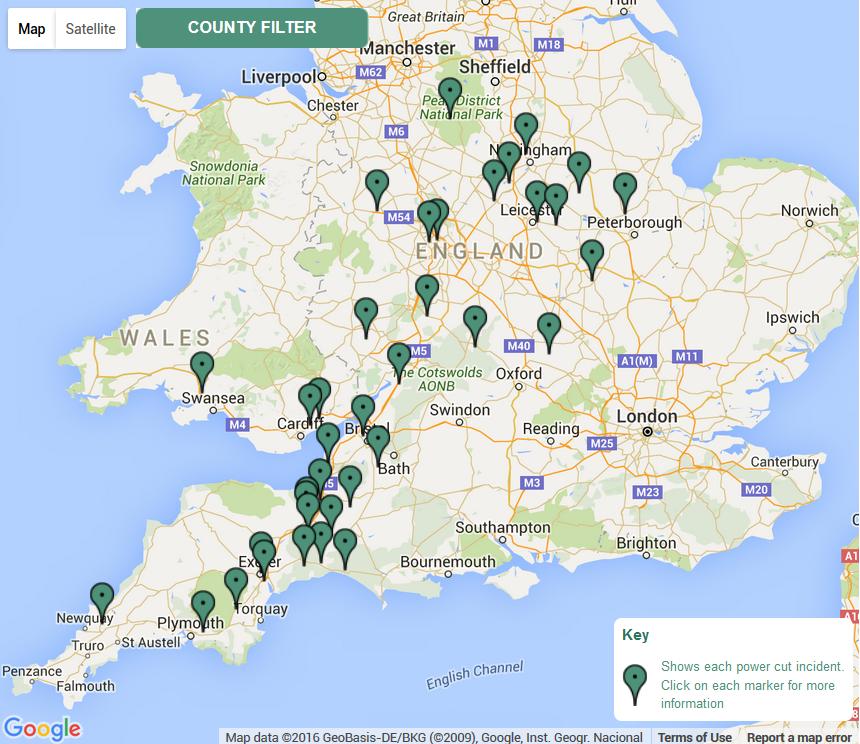
We have previously speculated about the effects of such storms on Western Power Distribution’s network in the South-West Peninsula, so here is how things look qualitatively at the moment, following today’s flooding:

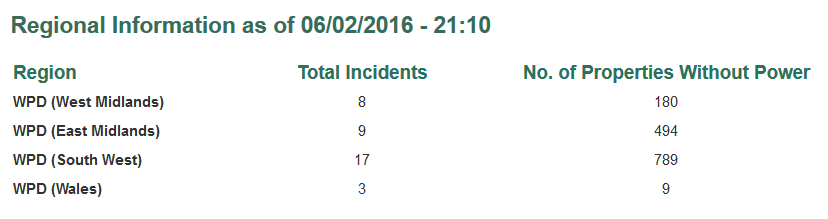
and here’s the associated quantities

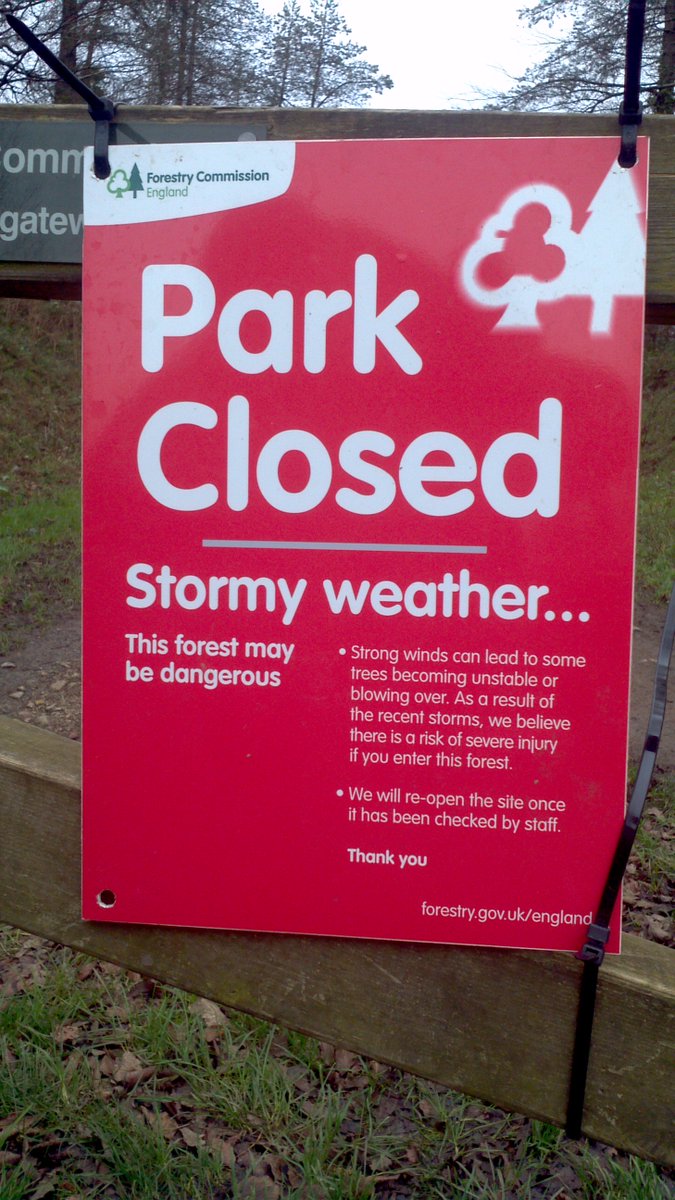
Here’s how Haldon Hill has been preconditioned for Imogen’s imminent arrival:

and here is the Met Office’s forecast [updated Sunday AM] for our back yard on Monday:

Do you suppose there will be another power cut here tomorrow?

The Great Storm Henry Blackout Saga

Regular readers will realise that here at V2G UK we take an unhealthy interest in power cuts, or outages as they call them on the other side of the Atlantic. Not least that’s because we suffered an extended lack of mains electricity ourselves not so very long ago!

We recently followed the progress of the controversially named “Storm Jonas” along the eastern seaboard of the United States using helpful information provided online by Distribution System Operators (DSO using the generic term, or ISO if you’re from the US!) such as Duke Energy. Here’s an example:

Since “Storm Henry” was officially named by the UK’s Met Office a couple of days ago, and is due to arrive over on this side of the North Atlantic today, we thought we’d undertake a similar exercise for the western seaboard of the United Kingdom this week. However there is a fly in the blackout ointment. After perusing the web sites of the Distribution Network Operators (DNO in the Queen’s English) most likely to be affected by Storm Henry it seems none of them provide the summary information available in the top left hand corner of Duke Energy’s power outage map, including in particular “Active outages” and “Affected customers”.

Following some conversations with the DNOs on Twitter it appears as though we’ll need to keep track of a set of press releases to try and keep real-time tabs on the forthcoming Great British Blackouts. The first of these that we’ll bring to your attention is from Scottish Hydro Electric Power Distribution (SHEPD for short), the Scottish portion of Scottish and Southern Energy Power Distribution (SSEPD for short):

Scottish Hydro Electric Power Distribution (SHEPD) has moved to Yellow Alert after closely monitoring the development of high winds.

Our weather models anticipate Storm Henry will bring wind speeds over 90 mph in the Western Isles and Skye. All other parts of our network area will see winds reach 70-90 mph.

We have frontline and support staff standing by and we have engineers in the areas we expect to be hit by the storm.

Our customer service team has been making outbound calls to customers on our Priority Service Register in the affected areas to alert them and offer extra assistance, where required.

Members of the public should not approach fallen or damaged power lines, which may still be live.

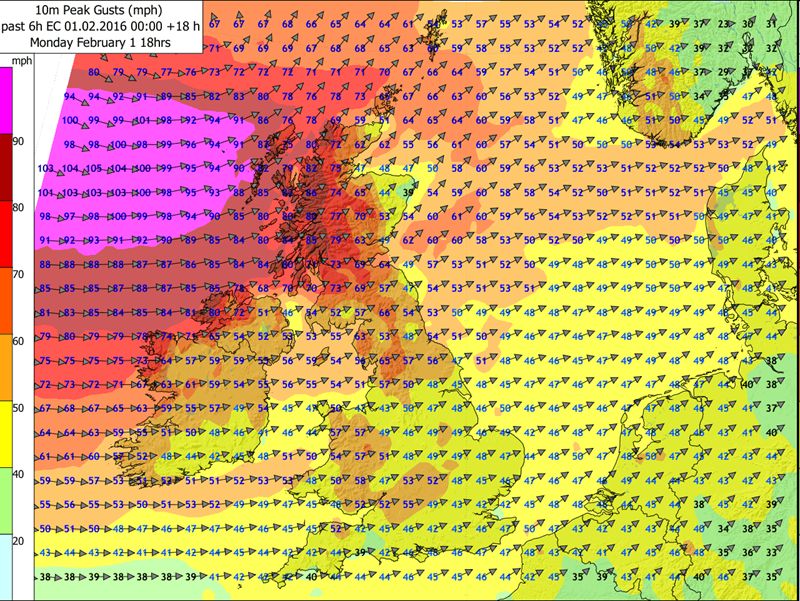
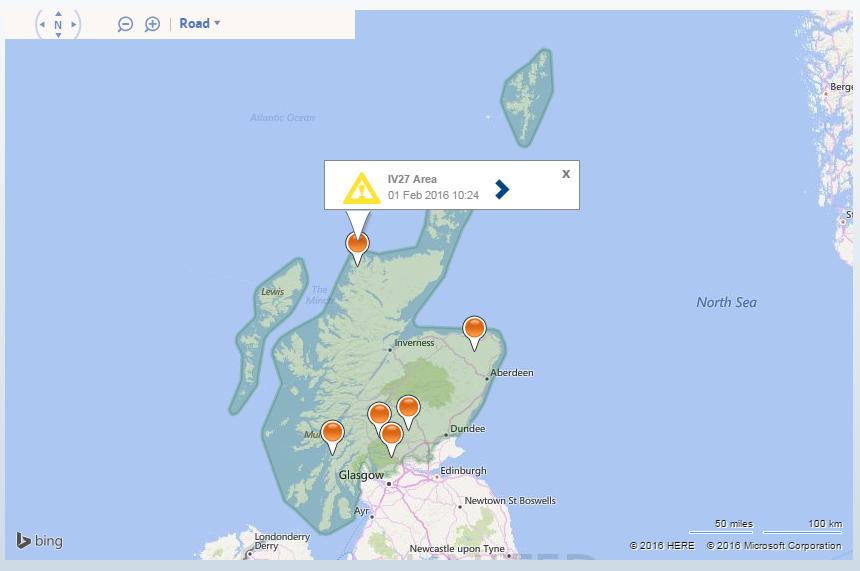
Whilst we wait for the full force of Storm Henry to hit, here’s how the SHEPD live power cut map looks at lunchtime on Monday February 1st 2016:

The Resilience of the UK’s Electricity System

Coincident with yesterday’s “Fuelling the Debate” report by the House of Commons Energy and Climate Change Select Committee, the House of Lords Science and Technology Select Committee published a report of their own, entitled “The Resilience of the Electricity System“. The Committee say in their overview of the report that:

The Government should not be congratulated on keeping the lights on. It is not acceptable for an advanced economy, hugely dependent on electricity, to sail so close to the wind. It found that we have been forced to generate extra capacity in the system, using expensive measures with heavy reliance on fossil fuel generation. The report urges the Government to improve its long-term planning to avoid squeezing the capacity margin like this.

The Chair of the Committee, Lord Selborne, commented that:

We chose to look at this issue because, such is our increasing reliance on electricity, any blackouts have the potential to bring our communications and vital services to a grinding halt.

The encouraging finding from our investigation is that overall, the resilience of the electricity system is robust, and witnesses told us we have the most reliable transmission network in Europe. But our report found that the Government sailed too close to the wind, allowing the capacity margin, its safety net, to be squeezed too tightly before taking last minute measures. Moreover these measures, which came at a cost to the taxpayer, were in conflict with the Government’s wider aims to decarbonise electricity generation.

We’re entering new and unchartered territory. As we strive for more decarbonised electricity provision, it will become harder and harder to keep electricity affordable and to guarantee security of supply. These are the three irreconcilable pressures of the ‘energy trilemma’, and we feel that there is more the Government needs to do to inform the public about potential higher prices.

We found that new technologies mean that our electricity system is undergoing immense and radical change. The report stresses that the Government must stay ahead of the game, with dedicated investment into research and development across a wide range of technologies, and constant alertness to cyber‑threats. Only then can the Government ensure that it can weather any storm, and continue to keep the lights on in the long‑term.

Delving deep into the report itself, chapter 5 concerns itself with “Changing demand”, and paragraph 143 even mentions vehicle to grid technology, albeit not using that name:

Electric vehicles and electric heat pumps are two technologies that are expected to increase demand for electricity.

If electric vehicles are widely taken up then they will increase electricity demand, though this could be concentrated during off peak hours. On the other hand, a smart grid could allow battery-powered electric vehicles to supply power to the grid, e.g. during peak times when prices are high, and then to recharge during off peak hours. They could also further contribute to electricity security by providing a backup supply during power outages. Electric vehicles are not the only low carbon option for road transport – hydrogen and biofuels (2nd or 3rd generation) also offer potential.

Paragraph 144  goes on to point out that:

Electrification of large parts of the energy used for heating or transport “would change its time-of-use profile, placing ever increasing pressures on the electricity system.” Charging electric vehicles will bring complexity and it will be important that vehicle
charging management systems and standards are carefully designed. Vehicle charging is a manageable problem, since the overnight load can be fitted into the available system capacity. However simplistic charging management solutions will create unfortunate effects, such as cliffs of coordinated switch-on and switch-off. There are other issues that need to be addressed in designing an effective charging system. Unmanaged systems will contribute significantly to peak load, since people naturally
plug in at the point of arrival home and then charge through the evening peak. It is therefore critical that carefully designed vehicle charging management systems and standards at the national level are developed and incorporated into any large scale demonstrations and early roll-outs. These systems need to address both the capacity of the national system and also the local distribution system.

Plenty of sensible suggestions then, which at the end of the day leaves us coming to much the same conclusion as the House of Lords Select Committee:

We recommend that the Government supports research, development, demonstration and early deployment across a diverse range of technologies. This should include electricity supply, demand side response, storage and smarter networks [and V2G!].
Particular attention should be paid to technologies that could strengthen electricity system resilience and how these technologies fit together in systems.

Given budgetary constraints, there will be a need to prioritise some technologies over others. We recommend that the rationale for these choices is clear, transparent and made publicly available.

Implementing that final sentence would certainly be a big improvement over the current state of affairs!

The First Great Dunchideock Blackout

At May’s film night in Dunchideock Village Hall it was announced that anybody interested in learning more about the recent power cut in the village could “read all about it” on this very web site. A cry was heard from the audience:

Which one is that then?

It has now been brought to my attention that the other end of the village has suffered far more from the absence of electricity this year than my own particular neck of the woods. Having engaged in further communications with some local residents and Western Power Distribution I have another long tale of woe to tell!

There was undoubtedly much wet and windy weather around the Haldon Hills earlier this year. According to the UK Met Office, handily situated just up the road in Exeter, in their summary of Winter 2013/14:

Winter 2014 was an exceptionally stormy season, with at least 12 major winter storms affecting the UK in two spells from mid-December to early January, and again from late January to mid-February. When considered overall, this was the stormiest period of weather experienced by the UK for at least 20 years. An analysis of pressure fields by the University of East Anglia suggests this winter has had more very severe gale days than any other winter season in a series from 1871.

All those storms didn’t appear to have any long lasting impact on the southern side of Dunchideock at the time, but the story is rather different slightly to the north. Here’s a map of Western Power Distribution’s high voltage electricity network in the area:

WPD map of 11 kV (red) and 33 kV (green) cables south and west of Exeter

WPD map of 11 kV (red) and 33 kV (green) cables south and west of Exeter

Hopefully it is now apparent to you that the northern part of Dunchideock is on a completely different “circuit” to the southern part. You can also see that there have been a few electricity supply issues over the past few months! Taking them in chronological order, the first outage was on Tuesday February 4th. It’s unlikely to be mere coincidence that on the same day the Met Office issued a press release saying that:

The stormy conditions are expected to bring damaging gusts of wind of up to 60 mph inland and perhaps as high as 80 mph along some southern and western coasts of Britain on Tuesday night and Wednesday. These severe gales, combined with further heavy rain may cause some disruption because of fallen trees and high waves in coastal areas.

The net result as far as northern Dunchideock was concerned was:

A power cut from 21:00 to 02:00 on the 5th. When the power went off alternate houses in the road came back on after a minute or so and stayed on.

According to Western Power Distribution the immediate cause was that:

One of two low voltage fuses blew (on a split phase transformer). Hence 50% of customers would be on supply.

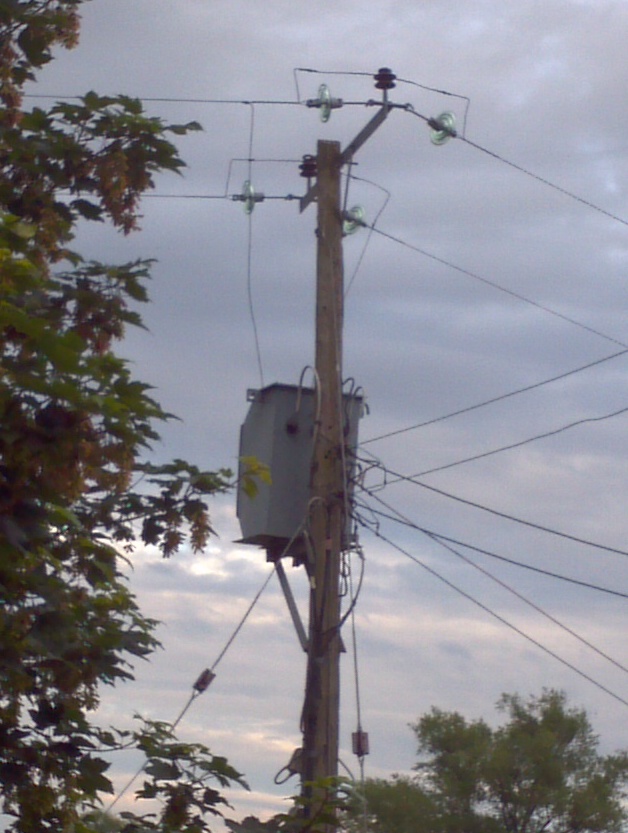
Transformer 31/0174 near Thornes Meadow, Dunchideock

Transformer 31/0174 near Thornes Meadow, Dunchideock

Ten days later the real “Great Dunchideock Blackout” occurred. According to the Met Office once again, in their forecast for Friday February 14th:

The Met Office was so concerned about the wind speeds on Wednesday a Red weather warning was issued for wind, the first red warning since January 2013. Extremely strong winds were seen in the south and northwest of England and parts of Wales.

We have another weather system crossing the UK on Friday bringing further heavy rain and very strong winds, leading to a number of weather warnings being put in place. The rain will push into the UK from the southwest during Friday morning, moving quickly north eastwards.

There are Yellow weather warnings for wind in place for the South coast and round into East Anglia with an Amber weather warning for wind along the South coast. We are expecting some gusts of around 60 miles per hour inland and perhaps 80 miles per hour in exposed areas along the coast itself. With these very strong winds large waves will push onto the coastline with dangerous conditions possible as well as some localised coastal flooding.

Here in Dunchideock, for the residents of Thornes Meadow at least, the result was a power cut lasting almost two days:

The second power cut was on 14th February at 19:30 and the electricity did not come back on until 14:00 on the 16th. Everybody in Thornes Meadow was off this time. The recorded messages of restoration times were continually put back.

As you may be able to imagine, in such circumstances Western Power Distribution had a very long list of problems to deal with. The immediate issues for Dunchideock were:

Two separate  High Voltage faults (conductors down due to trees and an entire barn roof being blown onto the line).

Due to the number of faults WPD had to bring in extra engineers from the Midlands and South Wales to help with the repairs. In normal circumstances the UK electricity market regulator Ofgem specifies a maximum 18 hour time limit on restoring electricity supplies. However in extreme circumstances this can relaxed. Ofgem themselves foresaw the potential difficulties, and issued a news release of their own on February 12th, stating that:

Severe weather is currently forecast across Great Britain. Electricity distribution companies, who own and operate the local networks, are making preparations ahead of this weather. We set rules on how quickly companies have to respond to restore power in both normal weather and severe weather conditions.

For severe weather there are different categories according to the severity of the storm. The category sets the amount of time companies have to restore power before compensation must be paid. The category is determined by the number of major faults experienced within a 24 hour period on the distribution company’s network.

The distribution company may be able to give an initial early view of what category the storm is but the data is checked and verified by us. The time you are off supply before being able to claim payments varies according to severity of storm. This is because the companies will have more work to do to fix faults.

  • Category 1: After 24 hours
  • Category 2: After 48 hours

In this case the storm was ultimately classified as category 2, and hence the unfortunate residents of Thornes Meadow are not entitled to any compensation despite being without any electricity supply for nearly two days.

Moving on to the next outage, which took place on “February 25th from 18:50 to 19:45” on which date there were no special press releases from the Met Office. Thankfully this power cut was of much shorter duration than the previous one, and was because:

A high voltage fuse operated. Restoration was via HV fuse replacement.

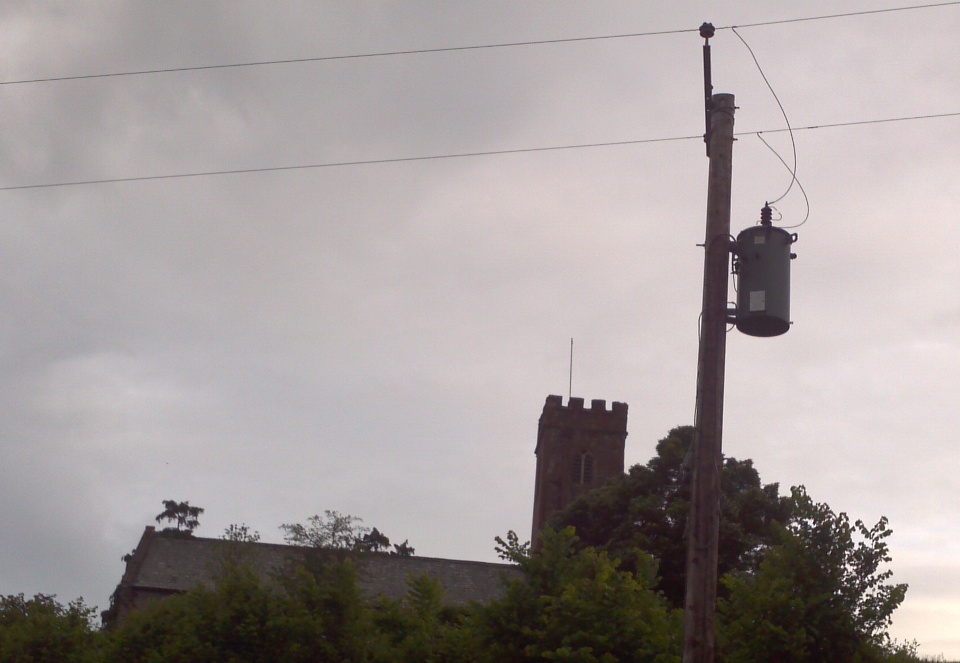
Finally we come to May 14th, when “a faulty high voltage insulator” led to a power cut in properties supplied by transformer 31/6871 in the vicinity of Dunchideock Church. Once again the weather wasn’t sufficiently inclement to warrant a Met Office press release.

Transformer 31/6871 near Dunchideock Church

Transformer 31/6871 near Dunchideock Church

All of this additional information leads me to conjecture yet again about all those blown fuses and faulty insulators. What stresses and strains is our local electricity distribution network being subjected to these days by the combination of lots of inclement weather and renewable electricity generation, down here in not always Sunny South West England?

Rather too many for comfort would seem to be the answer, if Dunchideock’s recent experience is anything to go by.


The Great Dunchideock Blackout Saga

We recently suffered a power outage, or power cut as we prefer to call such things here in the UK. This wasn’t any old power outage either. Let me explain.

The lights went out at 17:44 on Friday April 11th 2014. I hurriedly powered down everything in the lab and office except my laptop and our broadband router, which was by then being powered from the battery in an uninterruptible power supply. When the lights hadn’t come back on a few minutes later I telephoned our local Distribution Network Operator (DNO for short), Western Power Distribution, to enquire what the problem was, and when it might be fixed. WPD’s automated system suggested that our power should be restored by about 21:00 that evening.

9 o’clock came and went, by which time the batteries in my laptop and UPS were flat. I called WPD again, to be informed that the latest estimate for the time at which I would be able to get connected to the internet once again would be 01:00 on Saturday morning. I figured I’d allow WPD a bit of leeway, and eventually went to bed having set the alarm on my smartphone for 02:00. The alarm went off, but the lights still hadn’t come back on.  I phoned Western Power again to be informed that things should be back to normal in an hour or so. Bleary eyed I returned to bed.

When I arose next morning I wasn’t in need of any lights, but my router and laptop were working once again. There was, however, the continuous drone of an engine audible not too far away so I set out to investigate by following the sound, and here is what I discovered:
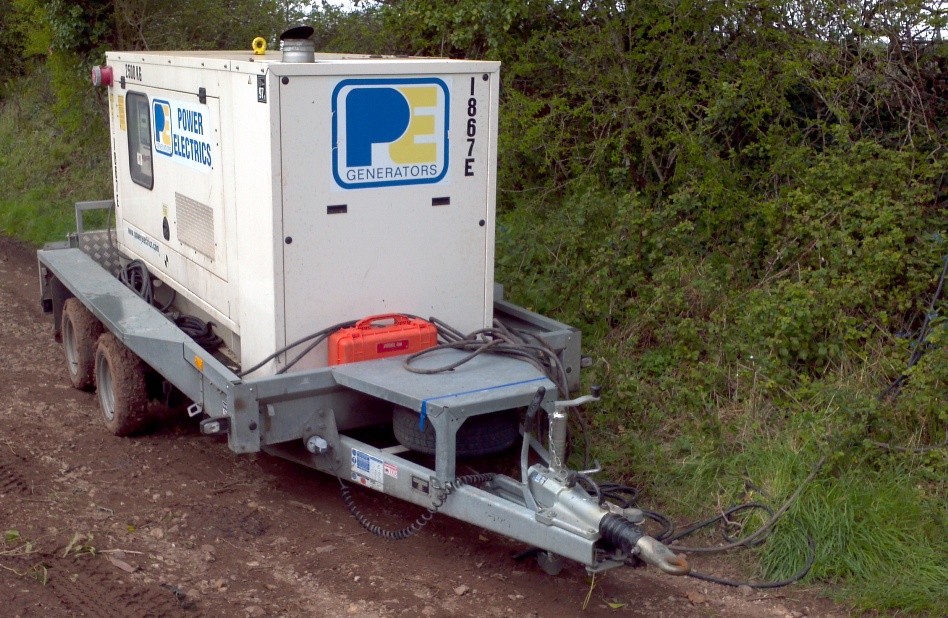
Generator on the track to Haldon Belvedere on April 12th 2014

Diesel generator on the track to Haldon Belvedere on April 12th 2014

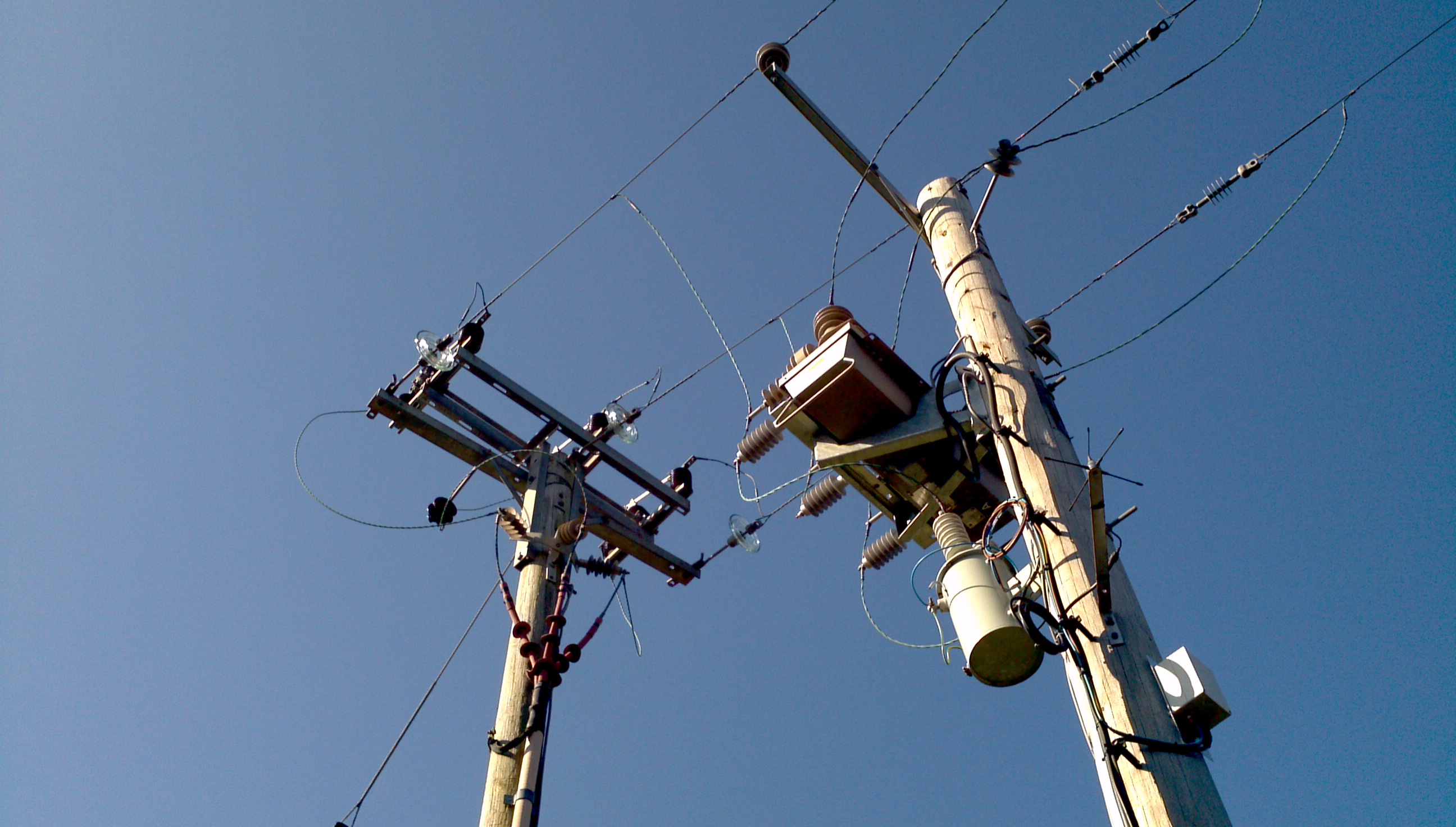
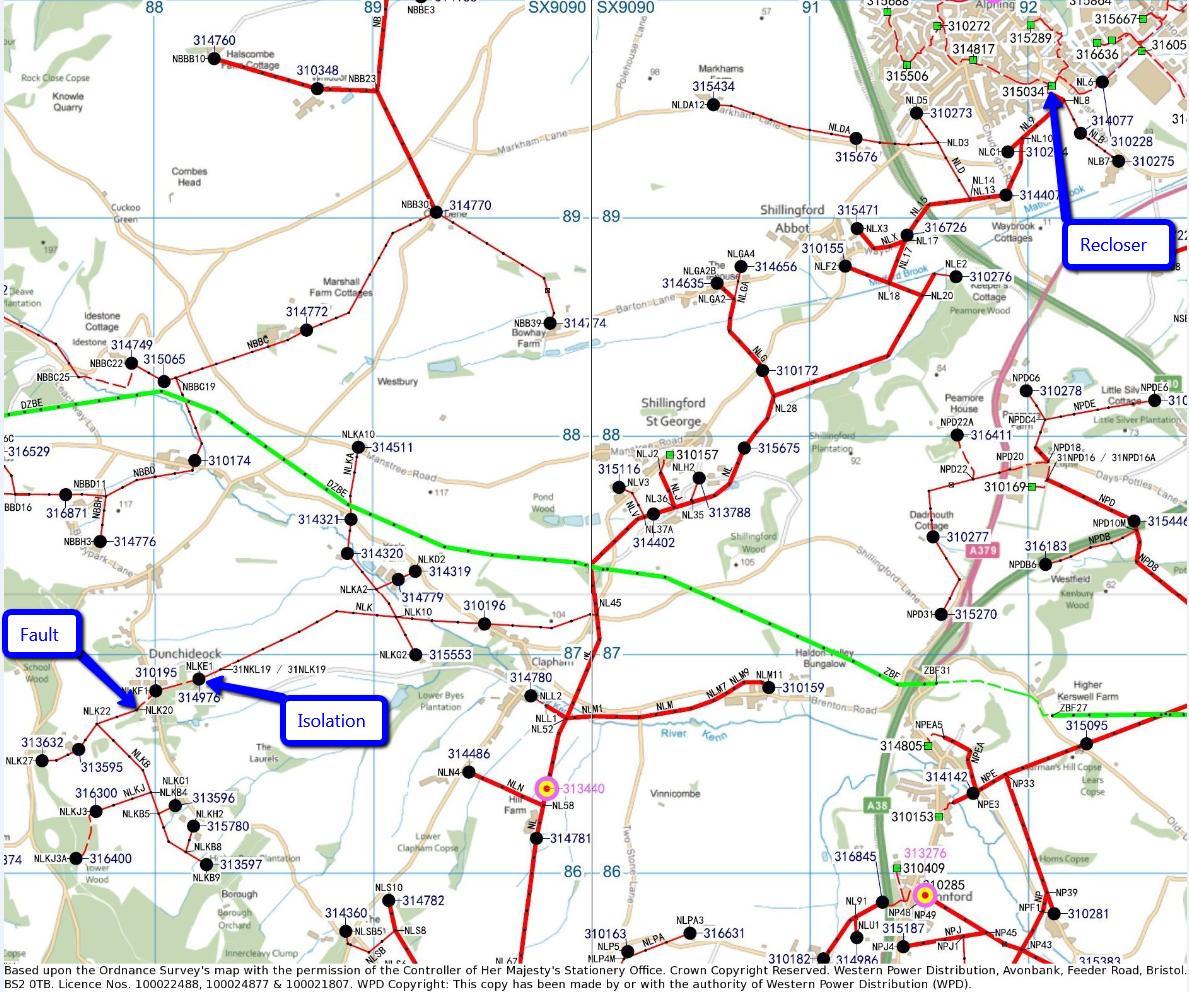
Another call to Western Power Distribution elicited some further information. I managed to speak to WPD’s standby manager for the day, who explained what had happened the previous evening. Initally over 300 properties had been without electricity following the operation of an automatic circuit recloser mounted on pole NLT1M in Alphington, as shown at the top right of the map of WPD’s network below (click the image for a larger version), and in this photo I took subsequently:
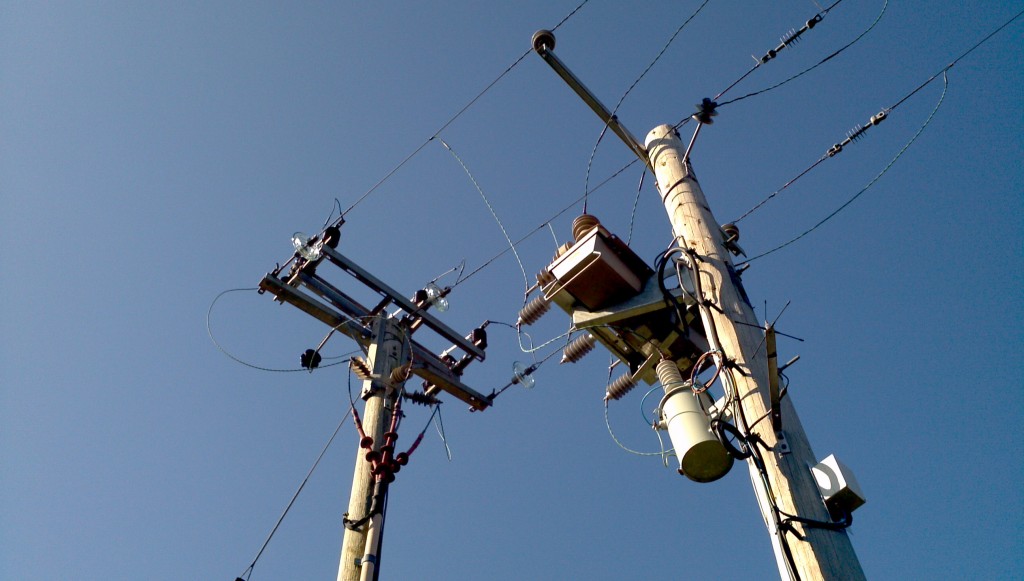
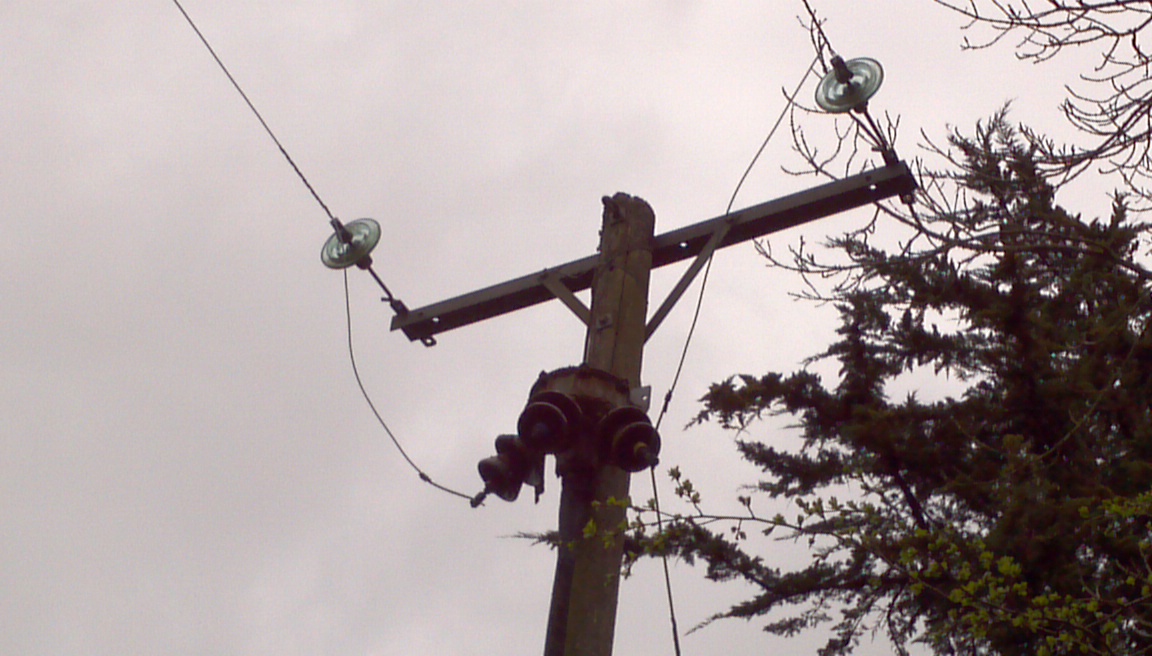
Schneider pole mounted recloser and air break isolator in Alphington

Schneider U-Series pole mounted recloser and an air break isolator in Alphington
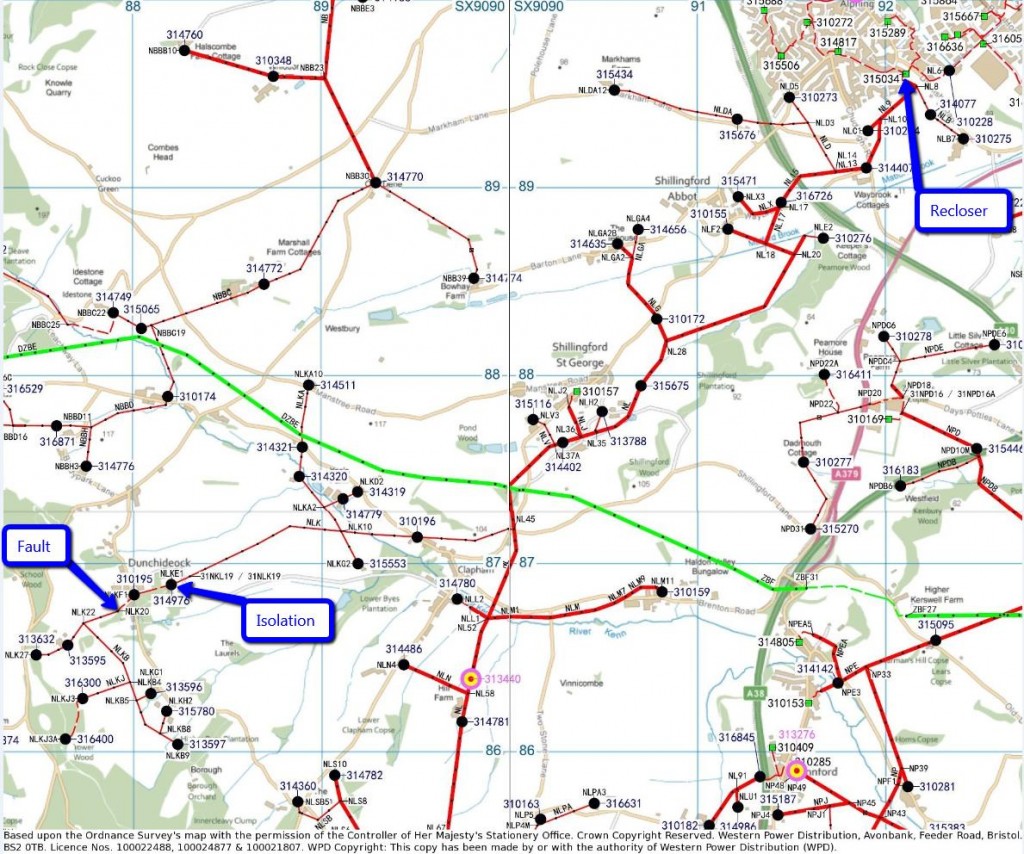
WPD map of 11 kV and 33 kV cables Southwest of Exeter

WPD map of 11 kV (red) and 33 kV (green) cables south west of Exeter

At that point everything powered via the 11 kV 3 phase (thick red) cables running from top right to bottom left of WPD’s map was without electricity. By around 21:00 the problem had been isolated to somewhere in the bottom left corner of the map, and power now reached as far as pole NLK19, near the north east corner of The Lord Haldon Hotel car park.
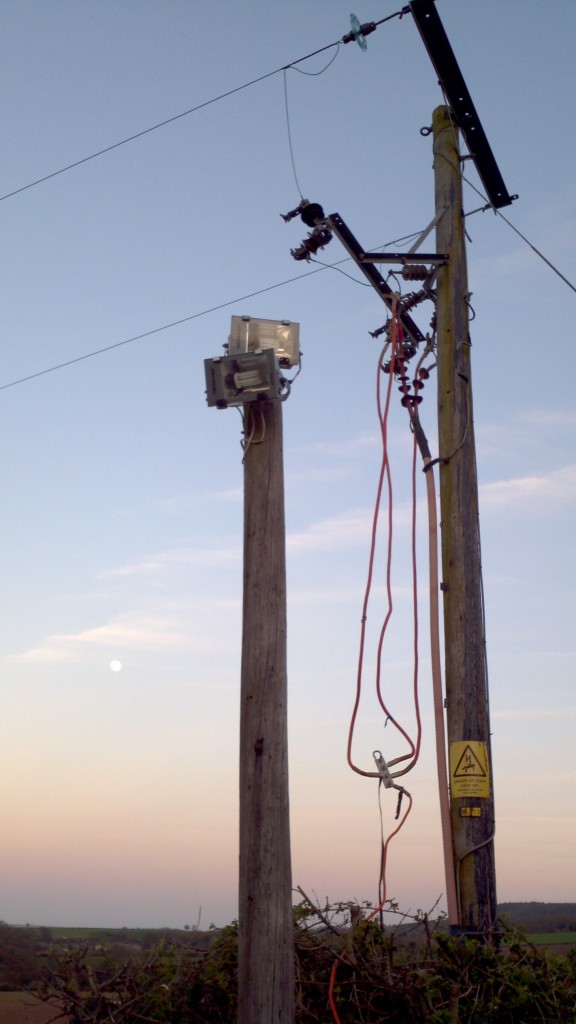
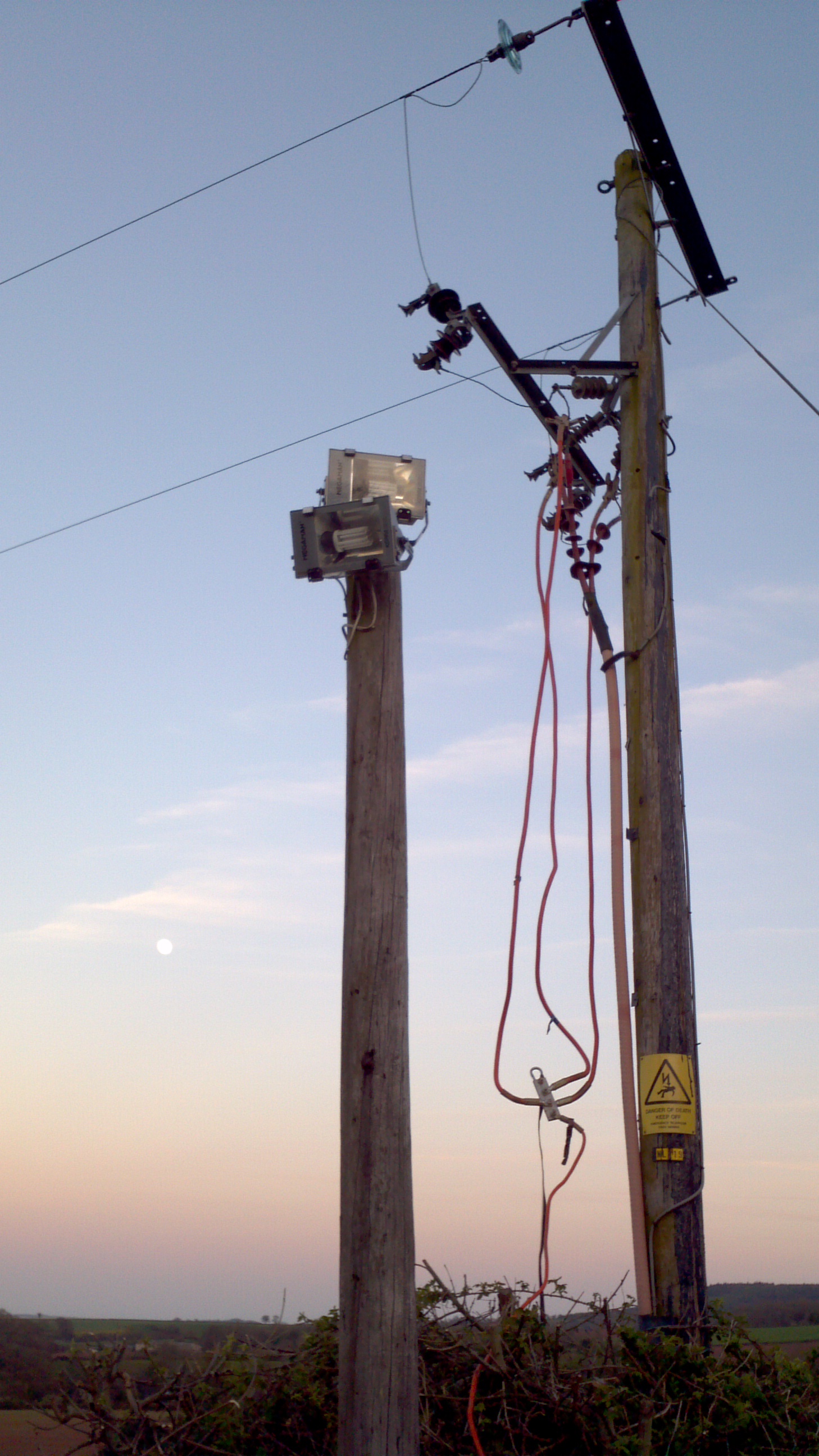
Pole 31NLK19, whilst The Lord Haldon Hotel and The Haldon Belvedere were running from WPD generators

Pole 31NLK19, draped with extra cables, whilst The Lord Haldon Hotel and The Haldon Belvedere were running from WPD generators

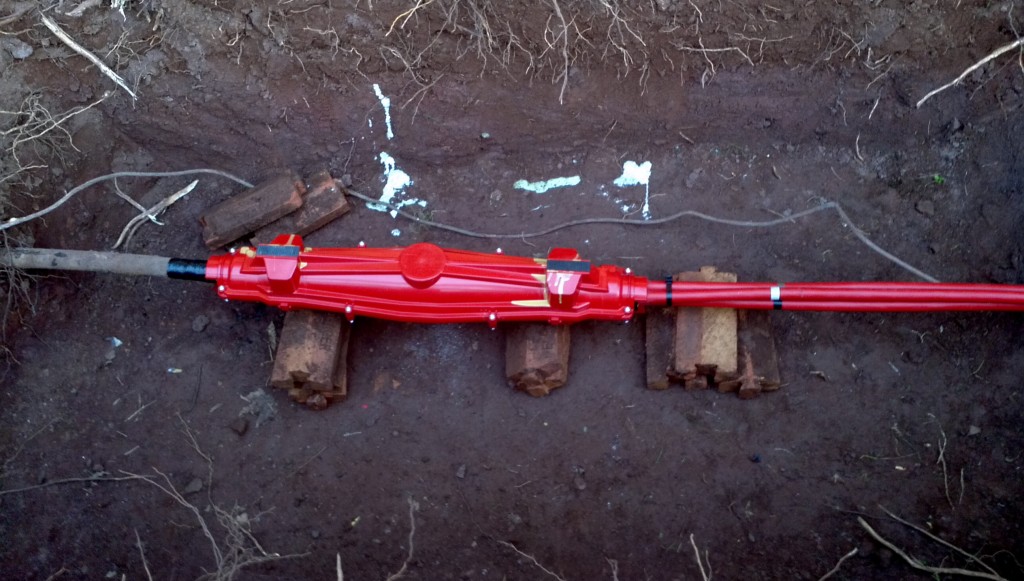
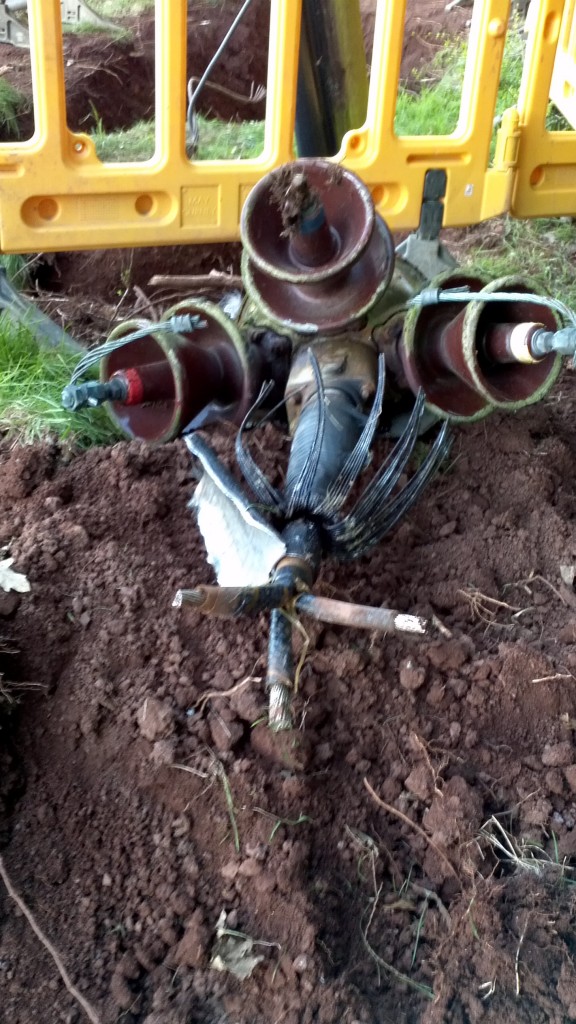
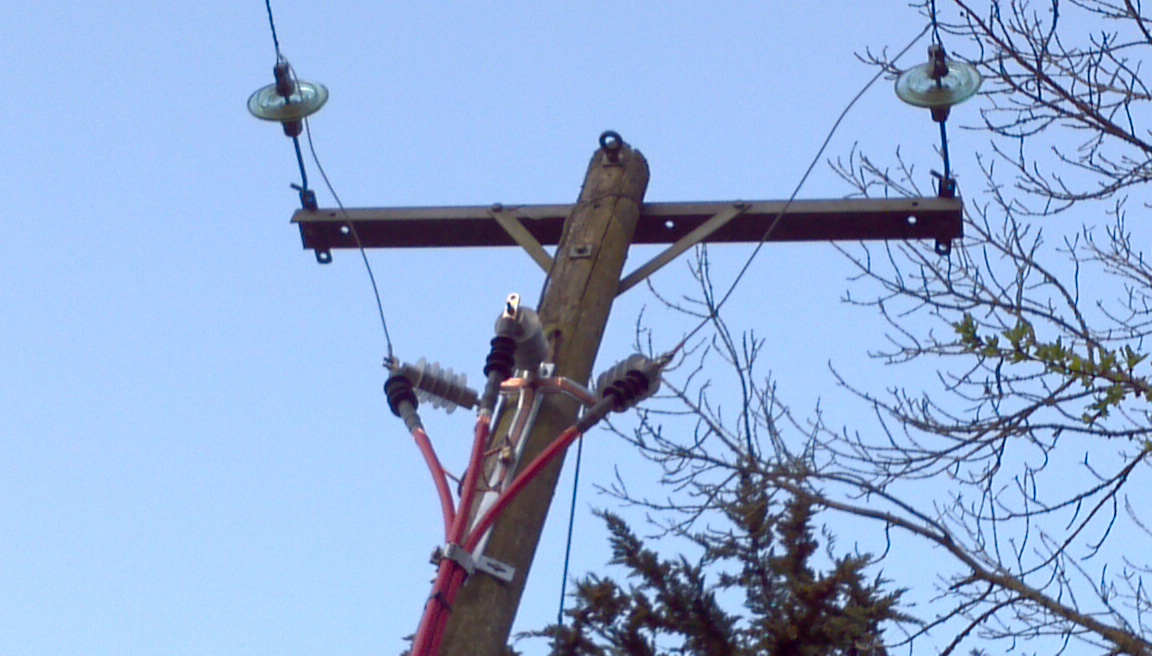
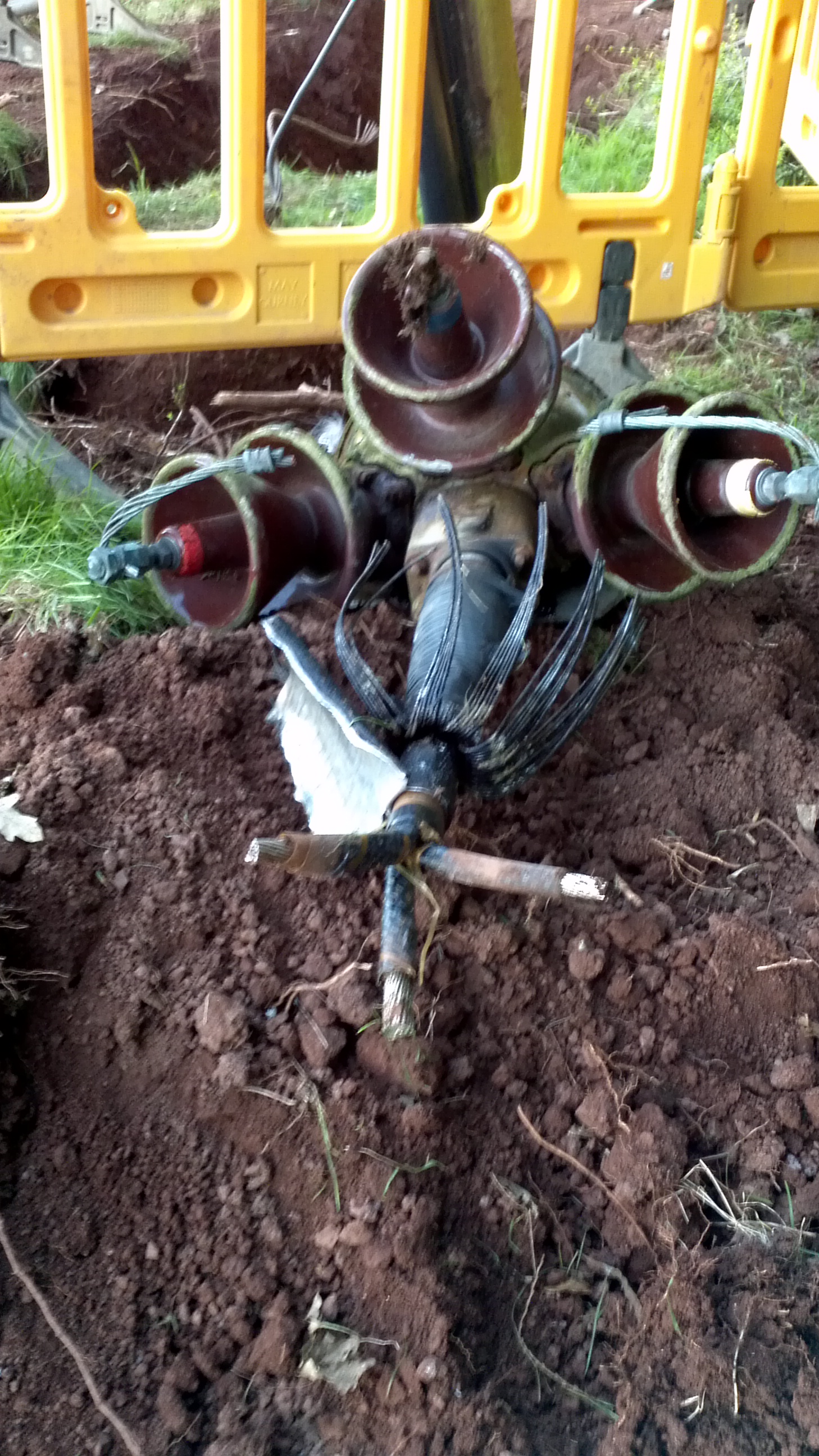
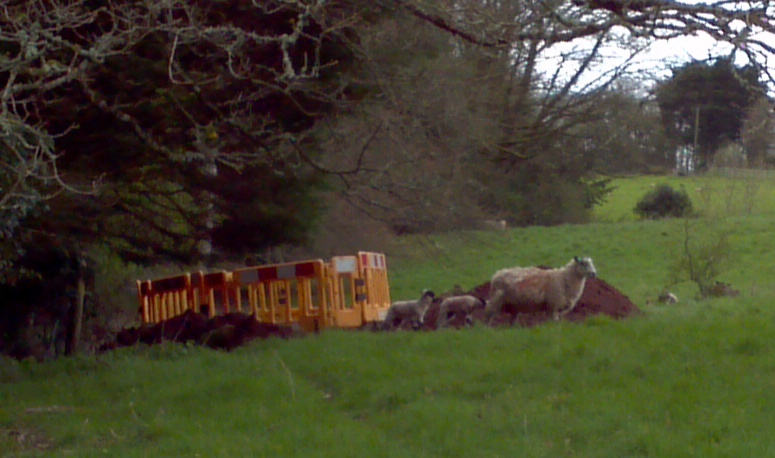
Unfortunately the hotel itself, which had a wedding reception booked that night, and everyone else in our corner of the village of Dunchideock and Haldon Hill were still without power, and WPD still didn’t know where the fault was. I am assured by a local resident that once it had got dark his wife noticed some arcing at the top of an electricity pole in a field behind his house, so he drove to the hotel car park and informed the WPD engineers gathered there about her discovery. The problem ultimately proved to be a faulty pole top cable termination, shown below in situ together with some inquisitive lambs:
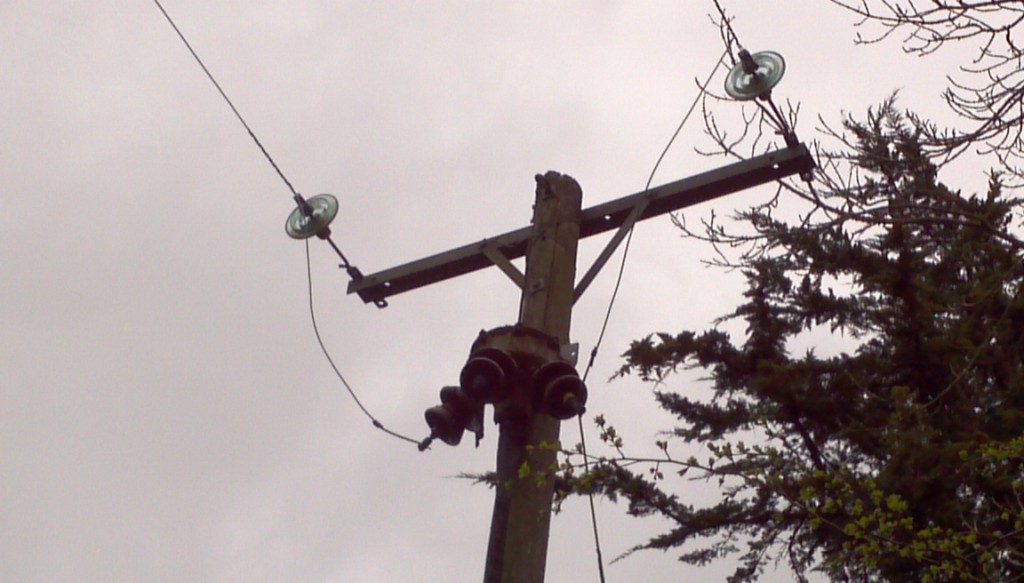
A 48 year old cable termination at the top of pole NLK20

Youthful interest is shown in a big hole in the ground

Some youthful interest is shown in a big hole in the ground

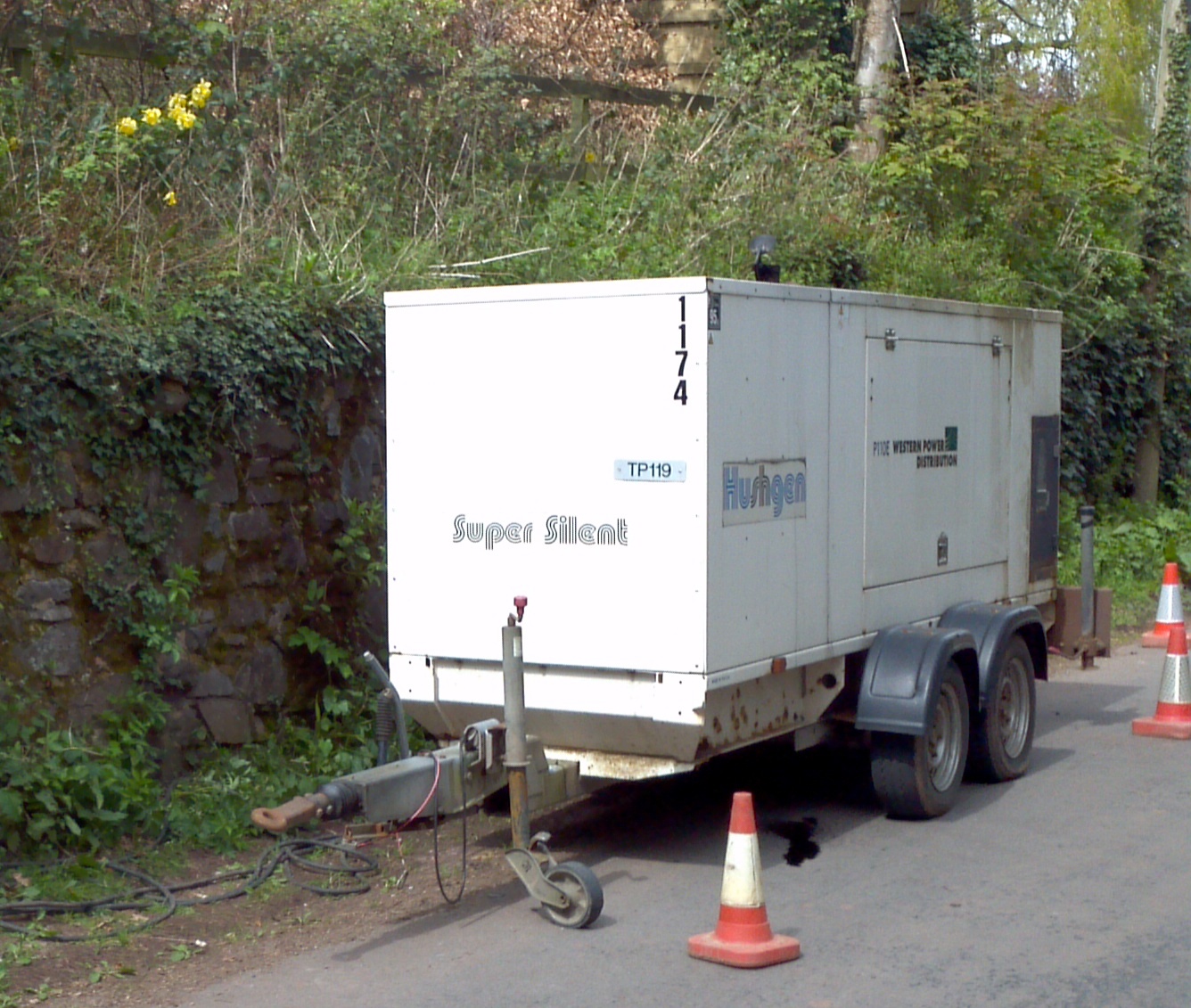
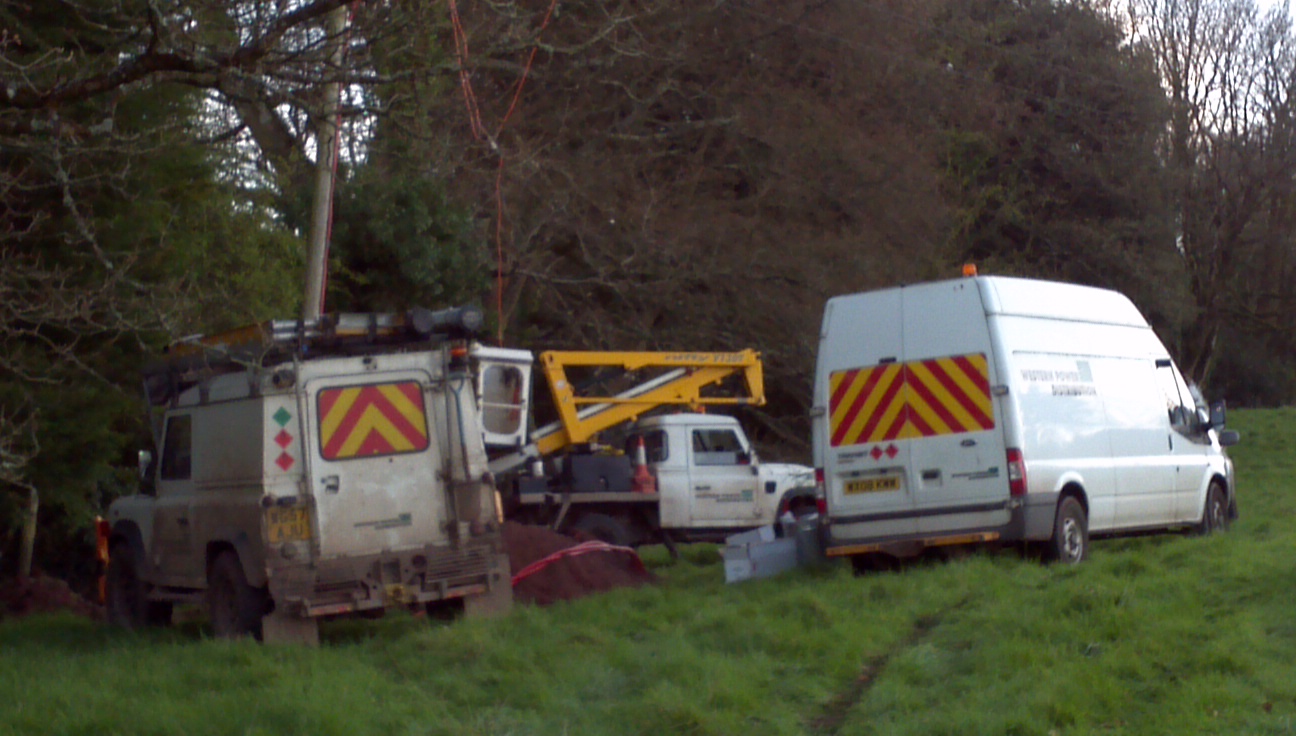
By the time the likelihood that this was indeed the ultimate cause of the problem had been established time was pressing. According to WPD they have a self imposed 12 hour time limit on turning the power back on after any interruption in supply, and there was no way this problem would be fixed within that timeframe. That being the case some generators would be required, which presented WPD with another big headache. It seems there had been some other problems in Devon on the same day, and there weren’t enough generators in Exeter to go around, so WPD brought some more in from Torbay. That still wasn’t adequate for the scale of the problem, so they brought some more in from Taunton. Even that wasn’t sufficient, so finally they had to hire a few more from Bristol, one of which was emitting the dulcet tones that greeted me on Saturday morning. Here’s one of WPD’s own generators, that was located a bit further up the road near the entrance to the hotel:
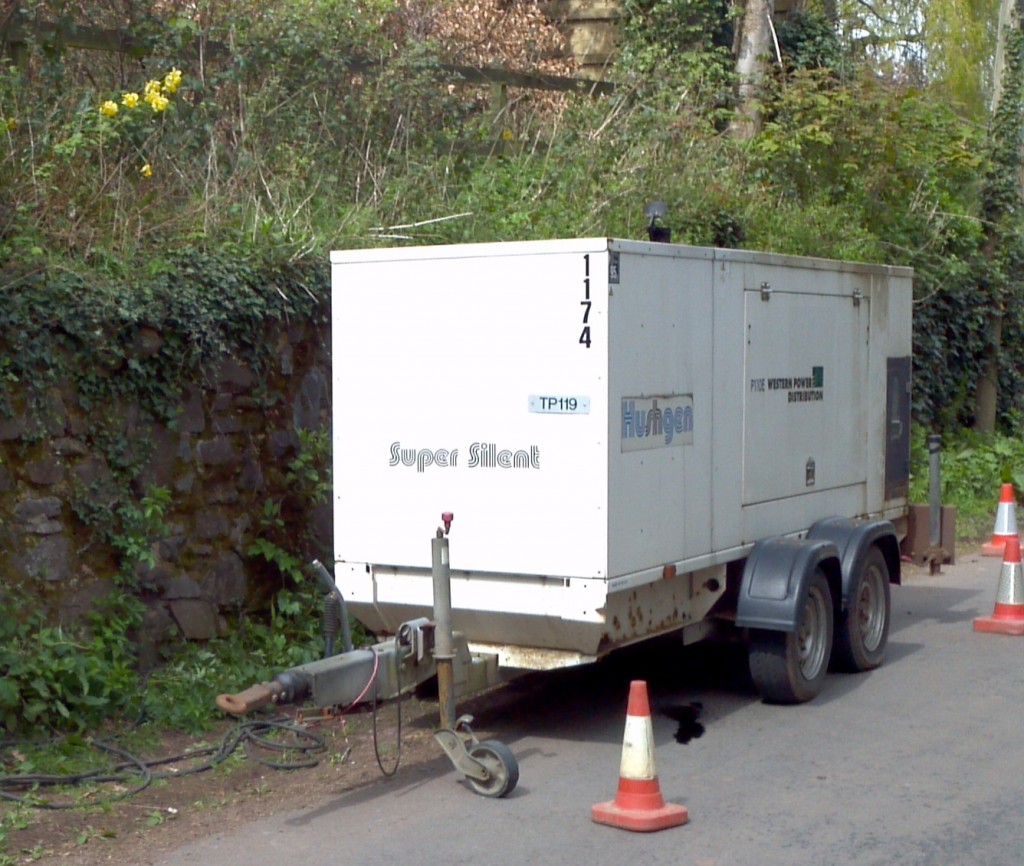
WPD Generator hard at work outside Pen Hill Cottage

WPD diesel generator hard at work outside Pen Hill Cottage

All in all, by the time everyone affected had their electricity supply restored, which in our case seems to have been at around 3:30 on Saturday morning, 9 diesel generators were scattered across the north side and ridge of Haldon Hill. WPD assured me there was no danger of any further power cuts, since every 12 hours or so they would be hauling a bowser around the local vicinity to top up the tanks of any generator that might be running low on diesel fuel.

Whilst they didn’t have such a thing last time I checked, during the recent winter storms, I was also informed that Western Power now provide an online power cut map. This is how it looked on the morning of Saturday April 12th 2014:
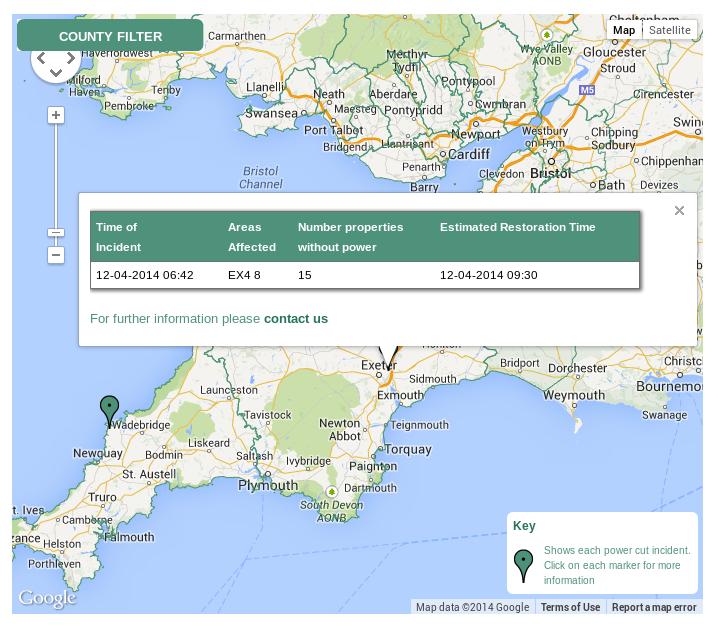
Western Power Distribution power cut map at 08:39 BST on Saturday April 12th

Western Power Distribution power cut map at 08:39 BST on Saturday April 12th


It seems as though “running off a generator” doesn’t count as a “power cut”, because Dunchideock isn’t on that map, all of which meant that WPD could now fix the problem as and when time permitted. Here’s how things were looking by Sunday evening:
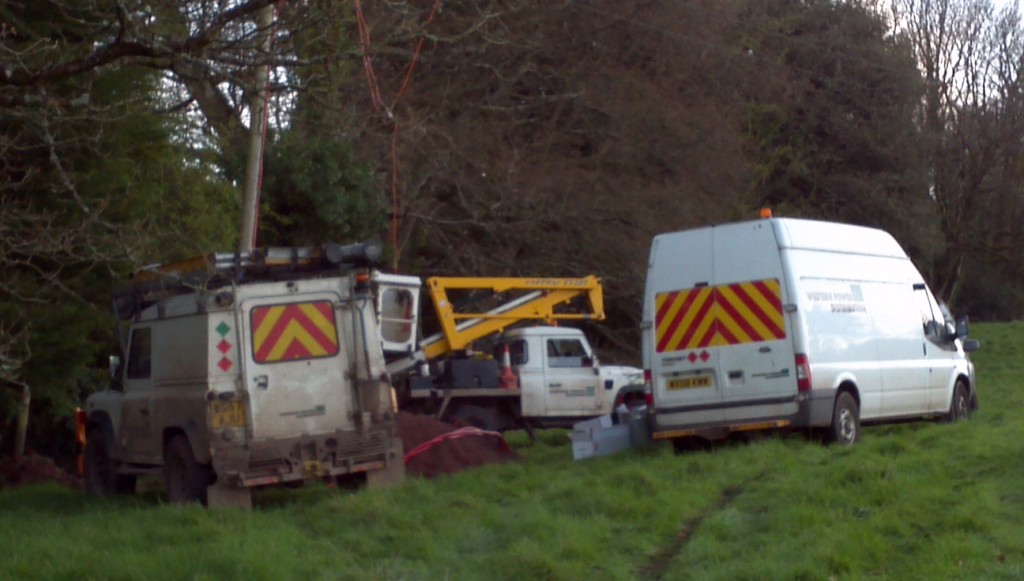
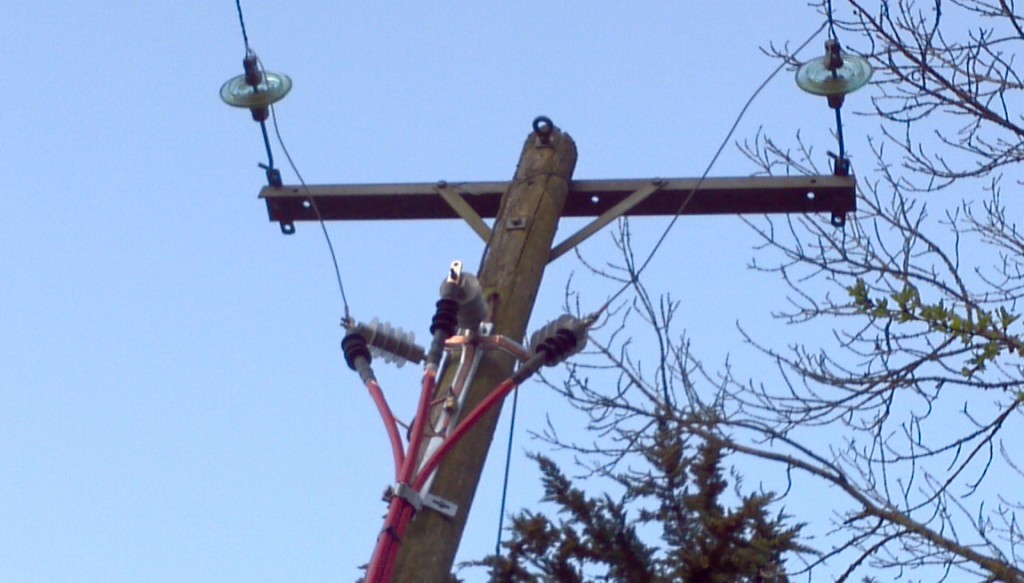
By Monday morning the epoxy resin in the Lovink red box had set, the big hole in the ground was filled in, and we were all back on mains power once again. All of which raises a few questions, in my mind at least.

In my conversations with WPD’s duty engineers I enquired whether this particular failure might be in any way attributable to the recent wet and windy winter weather here in South West England I alluded to earlier. I was told that while a causal link with any single failure was impossible to establish, it was conceivable that WPD’s electricity distribution network had suffered additional “stress” due to increased lightning strikes and the potential for trees to be more easily toppled by strong winds whilst their roots were sitting in sodden soil. I also idly enquired about the stresses placed on the network by renewable generation in the South West, but that story will require an article of its own at the very least.

In the meantime I’ve been pondering how this saga would have panned out if some of the homes in Dunchideock had already been in possession of an electric vehicle and some vehicle to home or even vehicle to grid technology. Since the powers that be here in the UK don’t seem to be wild about either of those concepts maybe a pile of shiny new lithium ion batteries from Tesla in the corner of each garage in Dunchideock might be more realistic to speculate about, or at the very least some second user EV batteries that are at least receiving some R&D funding on this side of the Atlantic? In that case perhaps we should add distributed storage to grid (or S2G for short) to our list of TLAs under consideration?

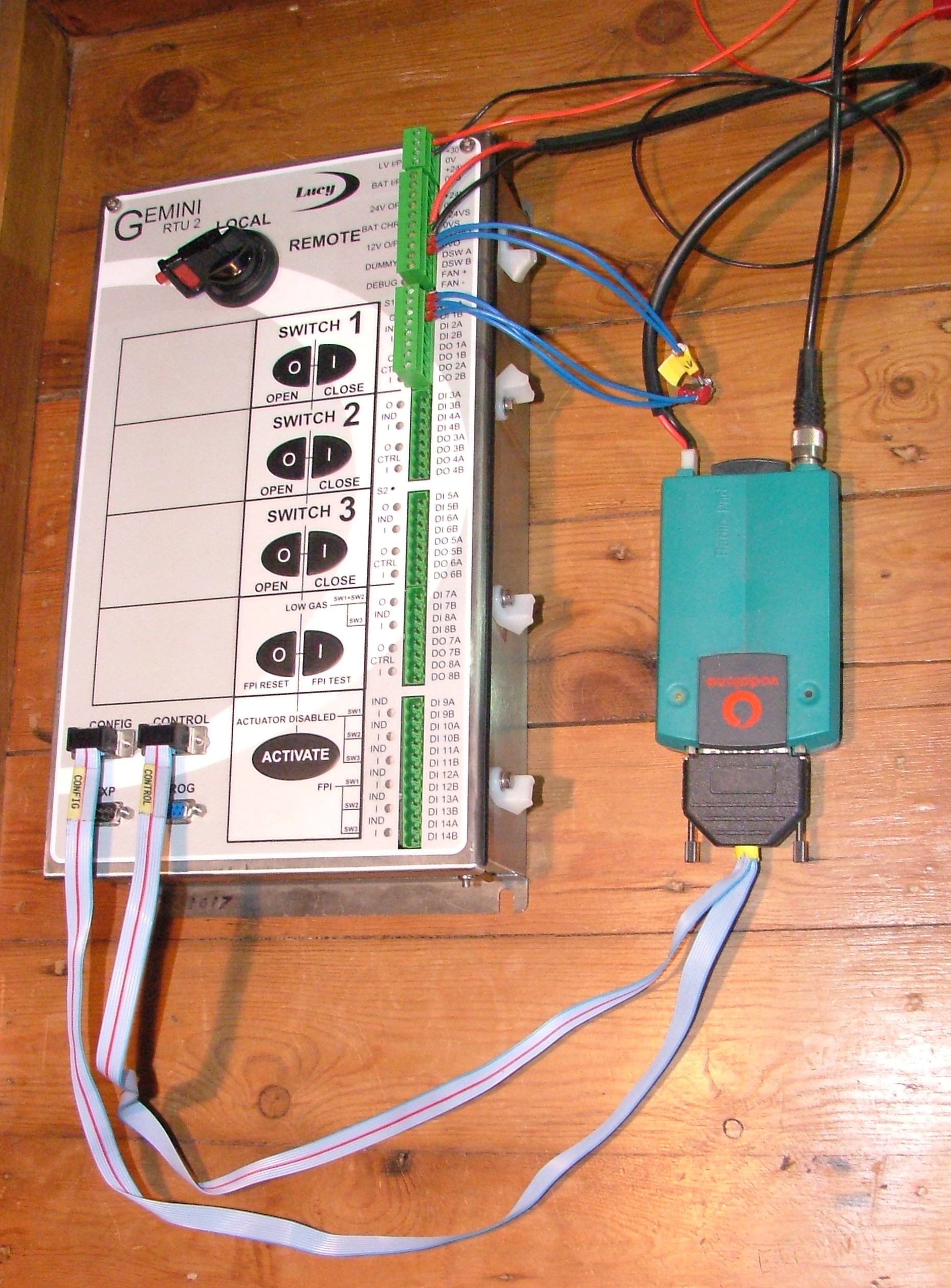
The lights wouldn’t have gone out in any V2H or storage equipped home. Their broadband would have kept on working too, so information about the failure could have been swiftly despatched to WPD’s control centre to enable the location of the fault to be pinpointed more swiftly. If some people had V2G and/or S2G installed as well, and subject to being suitably reimbursed for their public spiritedness, they could have kept their neighbours’ lights on as well as their own provided that WPD’s equipment was capable of sectionalising their network with greater granularity than at present. As luck would have it there is a pile of such equipment already in Dunchideock, although it’s only in the V2G lab at the moment rather than attached to any of the WPD poles I’ve mentioned apart from the one in Alphington, or in the corner of anyone else’s garage in Dunchideock. Here’s what a remote terminal unit looks like from the outside:
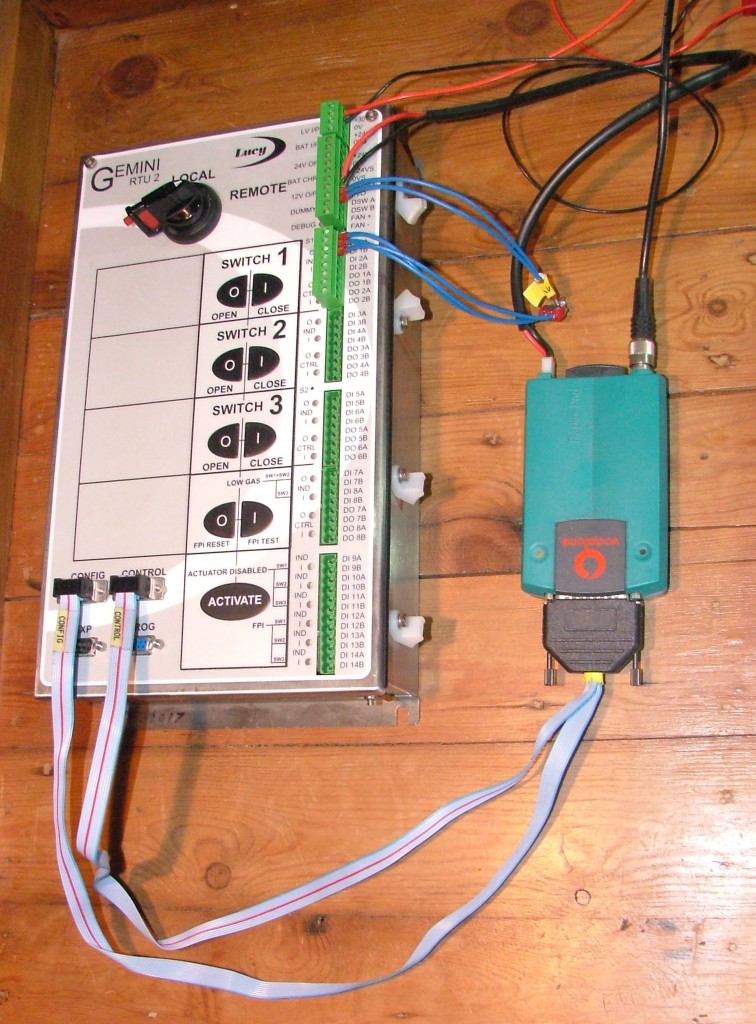
A Lucy Switchgear Gemini Remote Terminal Unit plus PakNet PAD

A Lucy Switchgear Gemini Remote Terminal Unit plus PakNet PAD

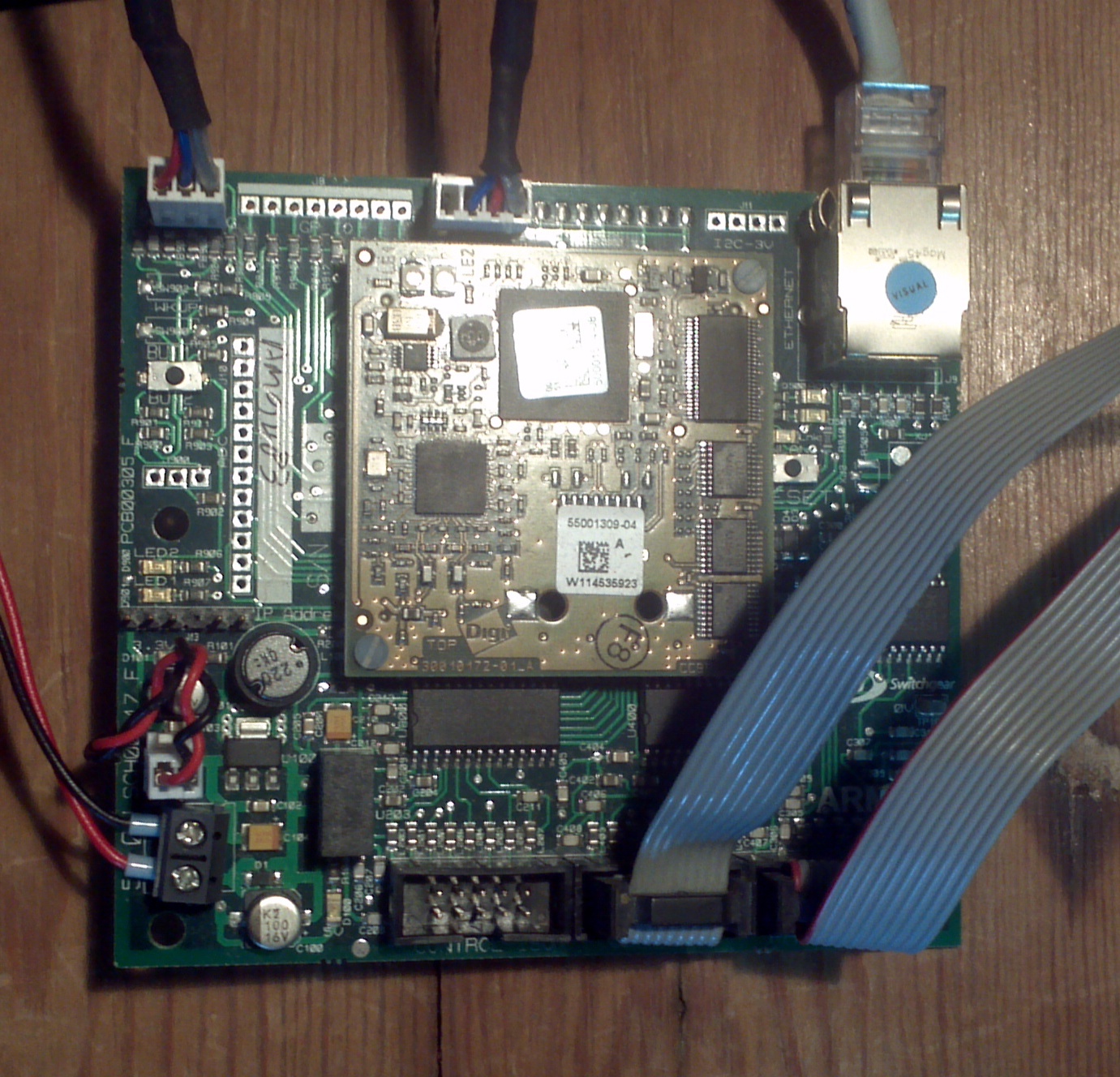
and here’s what the ARM powered CPU board on the inside looks like:
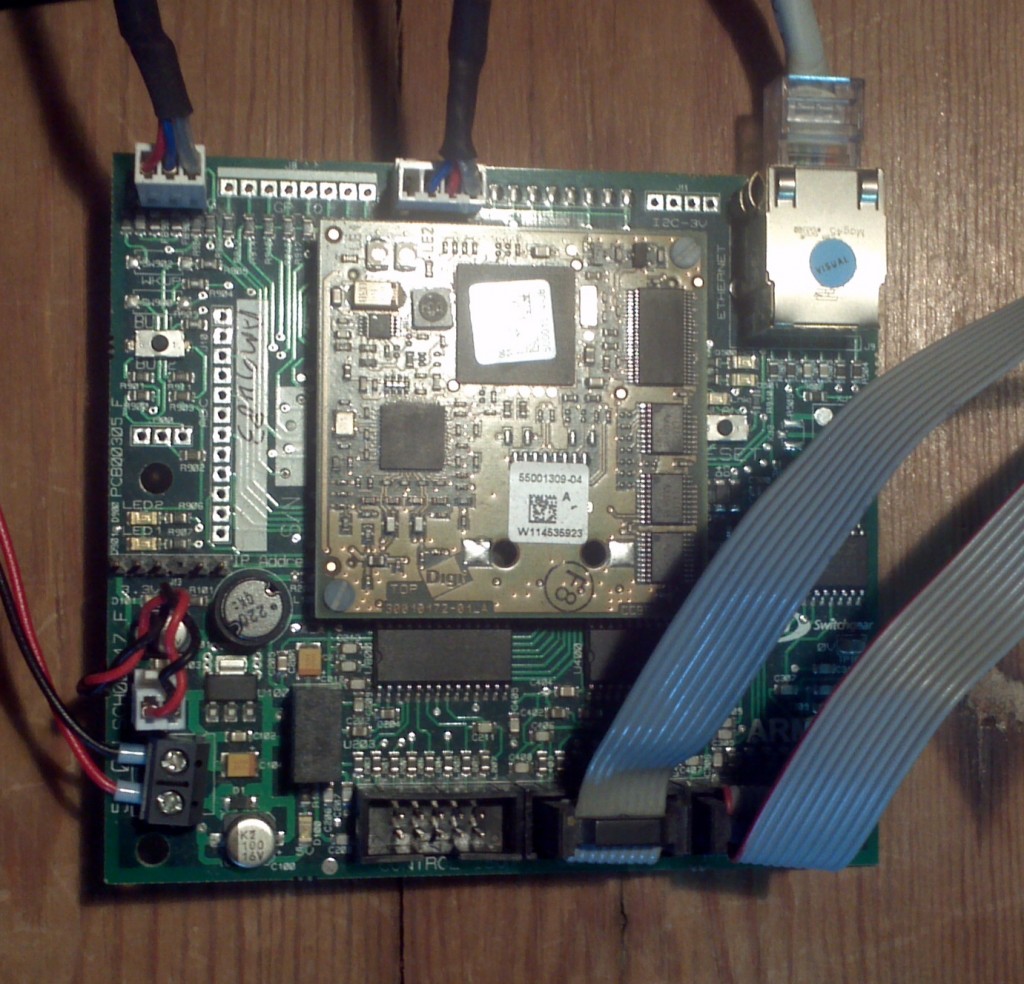
Gemini ARM CPU card

A Lucy Switchgear Gemini ARM CPU card, connected to the internet

As you can see, in actual fact it’s not a whole lot different to a Raspberry Pi, or the guts of the average smartphone for that matter:

A Raspberry Pi model B, connected to the internet

A Raspberry Pi model B, connected to the internet

Hence such a piece of electronics wouldn’t in and of itself add a whole lot to the price of an electric vehicle and/or a garage in Dunchideock, or anywhere else on the planet for that matter.

In conclusion, I also cannot help but wonder how much the Great Dunchideock Blackout cost Western Power Distribution, how much the evidently changing climate in this part of the world is costing and will cost them, and how their electricity distribution network is coping with the assorted stresses and strains generated by all the renewable power sources currently being tacked onto it down here in not so Sunny South West England that do not currently have any form of energy storage associated with them.
California and DoD Commit $3.75 million to Explore V2G at Los Angeles Air Force Base

Last year the US Office of Science and Technology Policy announced that:

Air Force officials unveiled a plan to establish Los Angeles Air Force Base as the first Federal facility to replace 100% of its general-purpose fleet with Plug-in Electric Vehicles (PEV’s). This is the start of a broader Department of Defense (DoD) effort toward large-scale integration of PEV’s into its fleet. Lessons learned from this project will help DoD and other agencies understand operational implications of fleet electrification, while demonstrating cutting-edge PEV technologies, such as vehicle-to-grid (V2G) systems.

Yesterday the California Energy Commission announced that it had:

Unanimously approved funding of more than $15 million to projects that will advance biofuels and electric vehicle research in California.

Amongst other EV projects, some of the funding goes to:

Lawrence Berkeley National Laboratory, in Berkeley, [which] will receive $1 million as match funding for a $3.75 million project to demonstrate vehicle-to-grid (V2G) technology for an all-electric heavy duty non-tactical vehicle fleet at Los Angeles Air Force Base. The fleet vehicles will be used to explore the revenue-generating capability of V2G technology by participating in the California’s electricity markets, where the vehicles can at different times charge from the grid and also discharge energy into the grid to meet demand. The Department of Defense is providing $2.75 million for the project at the lab, which is supported by the U.S. Department of Energy.

I wonder how much this pilot project will assist the US Navy in avoiding rolling blackouts in California as the summer heats up?

State energy officials say Southern California could be hit by rotating blackouts this summer if a heat wave hits while San Onofre‘s twin reactors remain dark.