Hurricane Ophelia Power Cuts

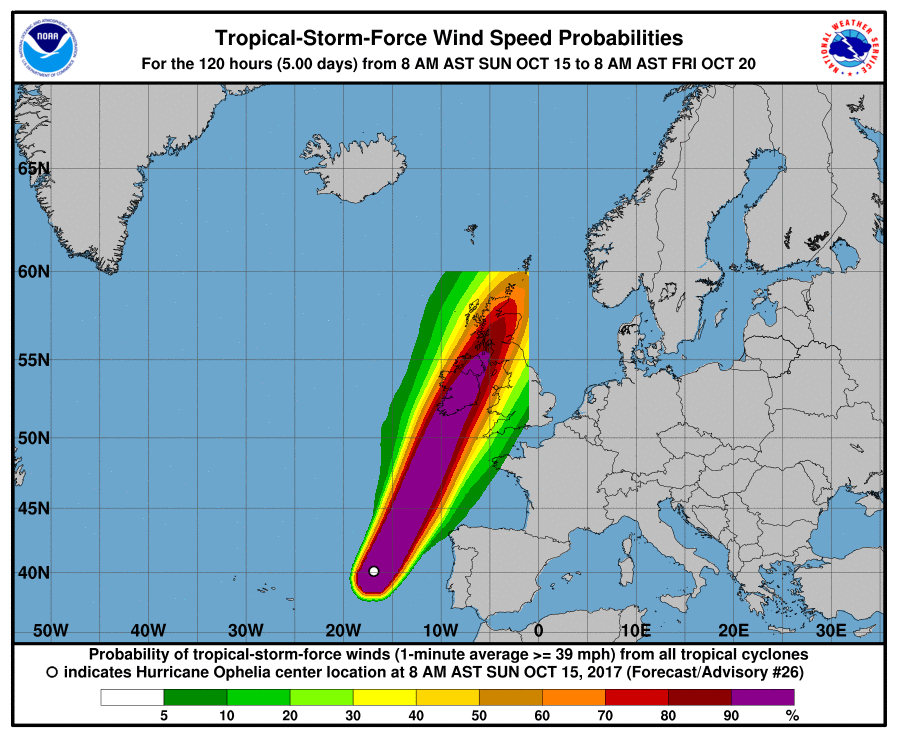
Hurricane Ophelia is heading in our direction. Reaching category 3 strength earlier today she is the strongest hurricane on record this far east in the North Atlantic. Moving further north over cooler waters her maximum wind speeds have now reduced to category 2. By the time she gets here she will have morphed into an extratropical cyclone, but she’ll still be packing hurricane force winds. Here is the current forecast from the United States’ National Hurricane Center:
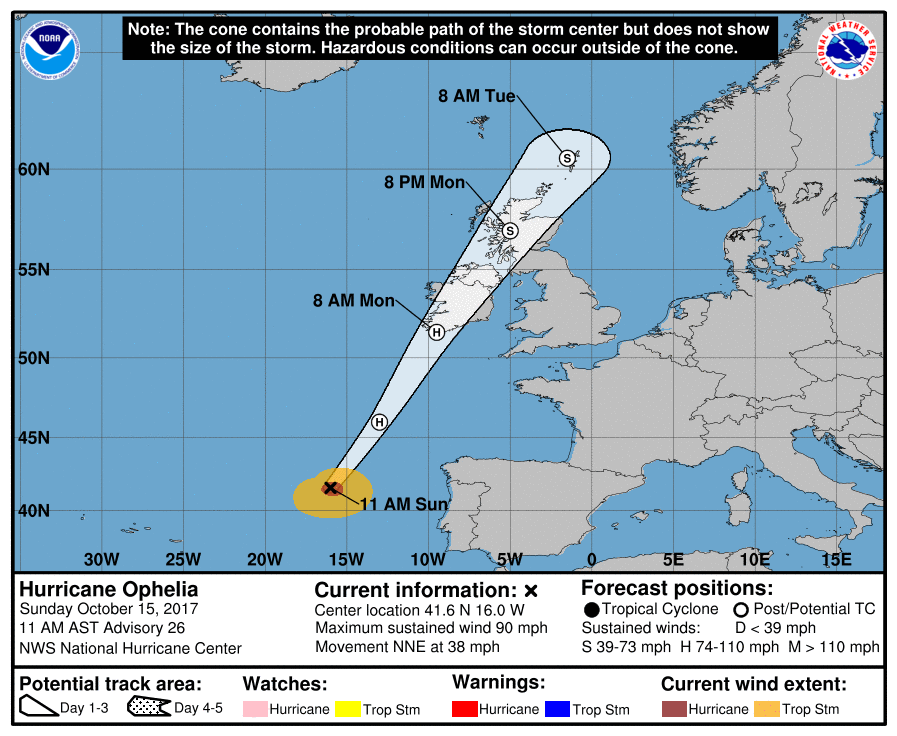
ophelia_5day_cone_20171015-15Z

ophelia_wind-prob_20171015-15Z

Met Éireann have issued a red wind warning across the south of Ireland:

Wind Warning for Wexford, Galway, Mayo, Clare, Cork, Kerry, Limerick and Waterford

Hurricane Ophelia is expected to transition to a post tropical storm as it approaches our shores on Monday bringing severe winds and stormy conditions . Mean wind speeds in excess of 80 km/h and gusts in excess of 130km/h are expected, potentially causing structural damage and disruption, with dangerous marine conditions due to high seas and potential flooding.

Here’s the Met Office’s warning of an amber alert for Northern Ireland tomorrow, together with a yellow wind warning for us here in Cornwall:
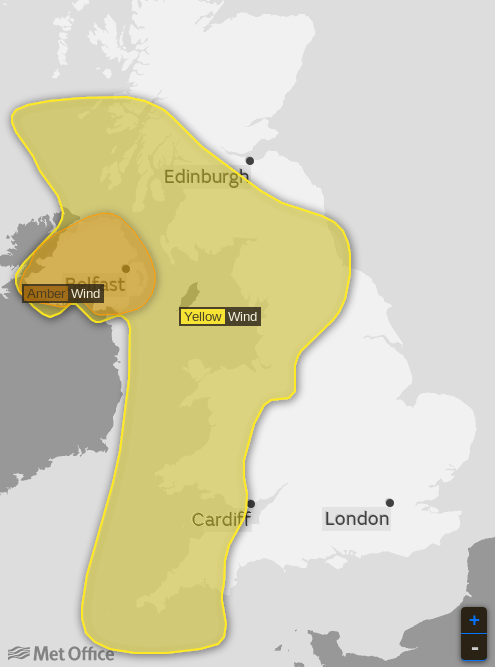
ophelia-UKMO-warning_20171015+1d

Finally, for the moment at least, here is the current Magic Seaweed surf forecast for North Cornwall tomorrow:
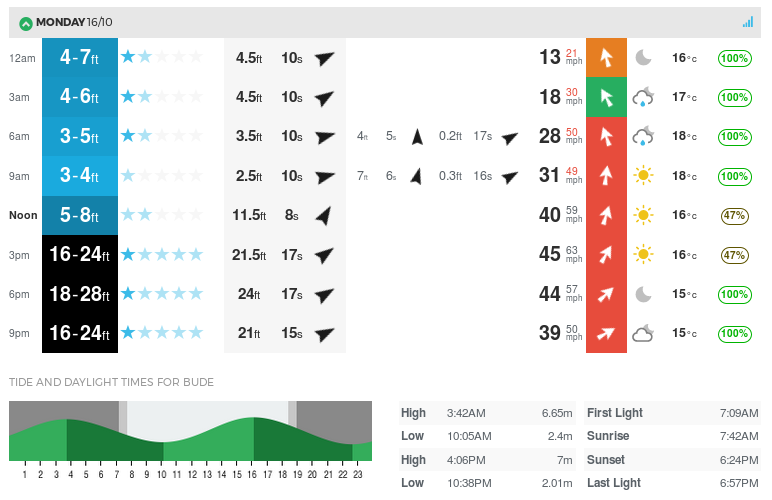
WidemouthSurf-20171015+1d


[Edit – October 16th 08:00]

Here’s our weather forecast for today in North Cornwall:
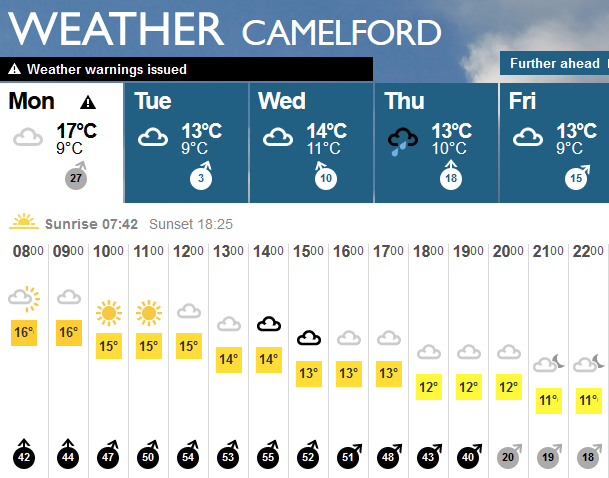
BBC-Camelford-2017-10-16_0800

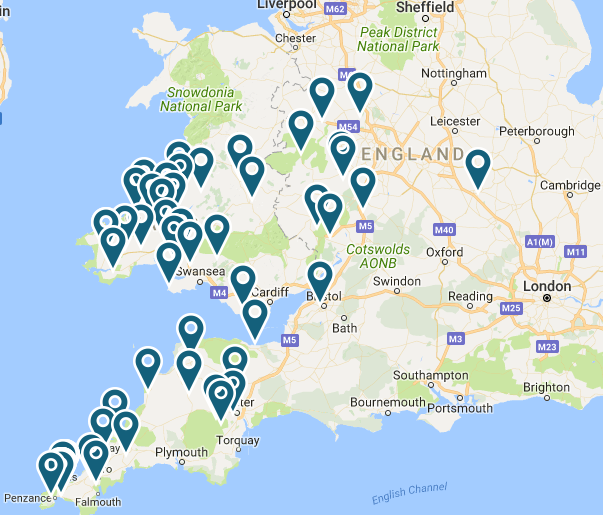
It definitely sounds blustery outside! Western Power Distribution’s power cut map doesn’t display anything too unusual yet:
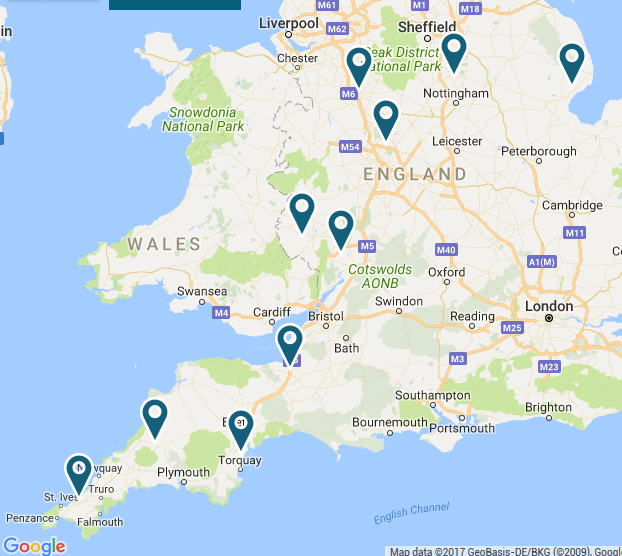
WPD-Map-2017-10-16_0721

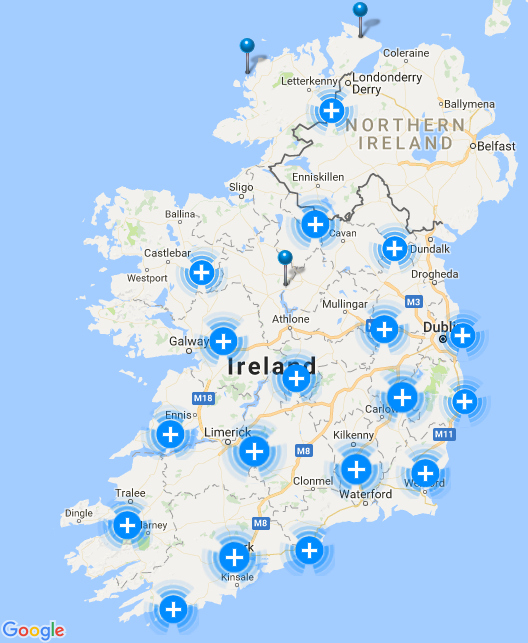
However a few power cuts have started appearing on ESB Networks’ map of Southern Ireland:
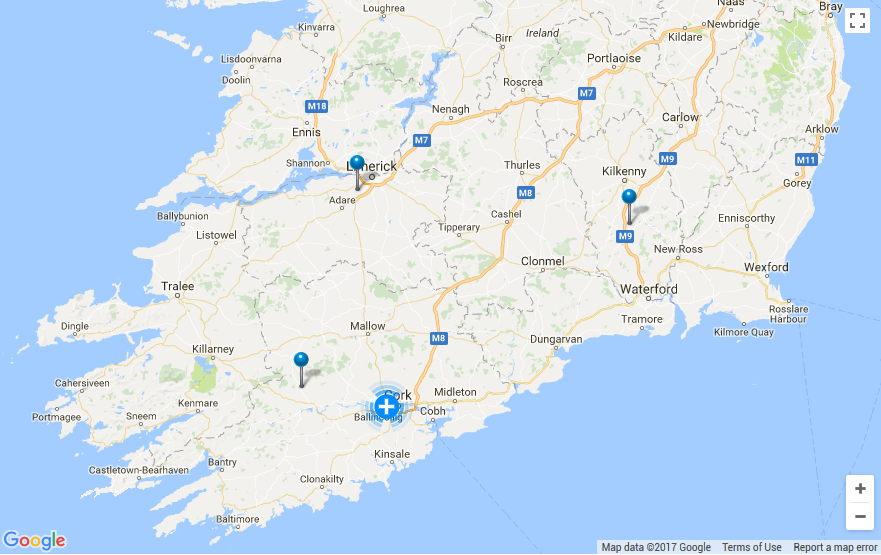
ESB-Map-2017-10-16_0824


[Edit – October 16th 11:00]

Over 35,000 properties are now without power across southern Ireland:
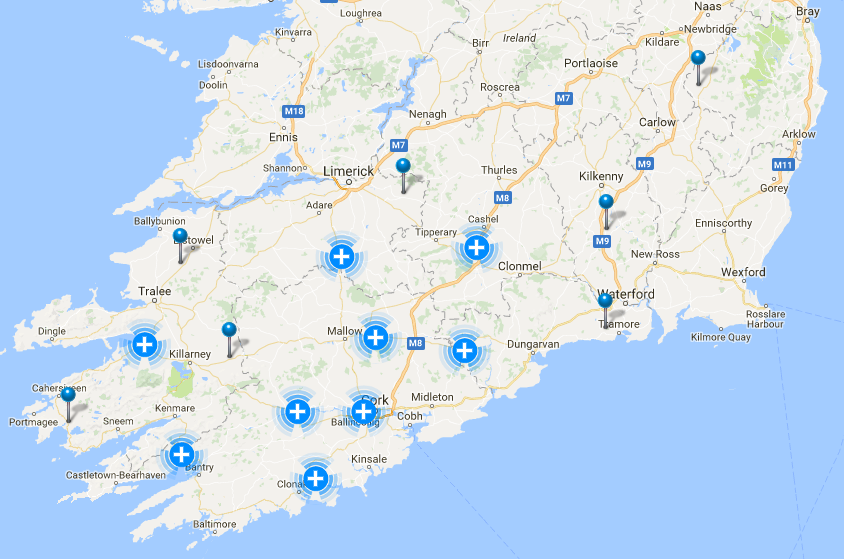
ESB-Map-20171016-1058

The lights are starting to go out here in South West England too:
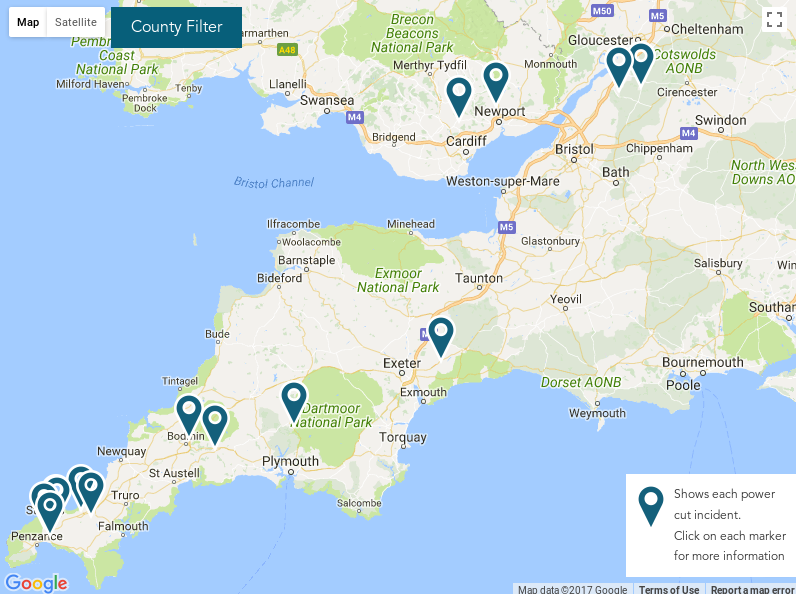
WPD-Map-20171016-1053

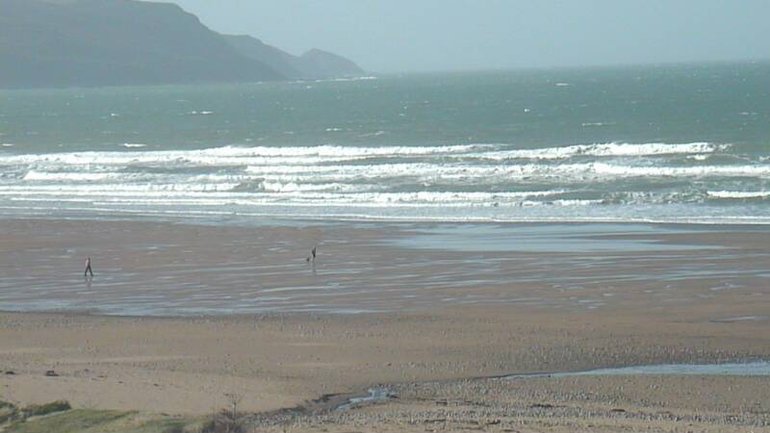
The waves are getting bigger too:

Widdy-20171016-1107


[Edit – October 16th 16:00]

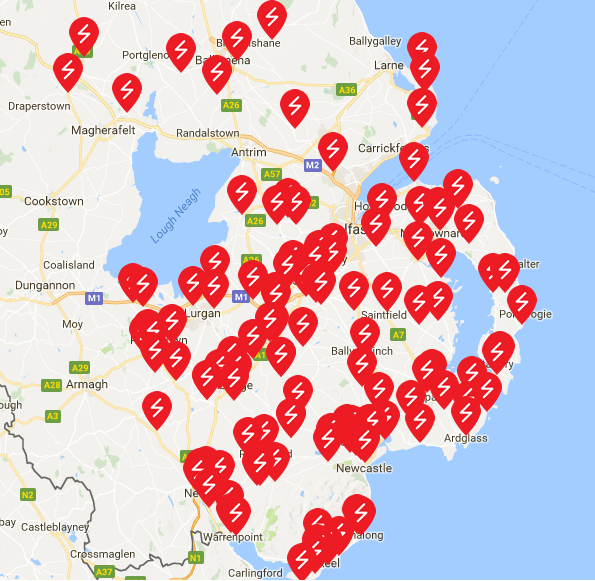
The ESB Networks power cut map seems to have given up under the strain. At 14:00 it showed over 180,000 properties without power. Meanwhile the storm has been bringing down power lines in Northern Ireland:
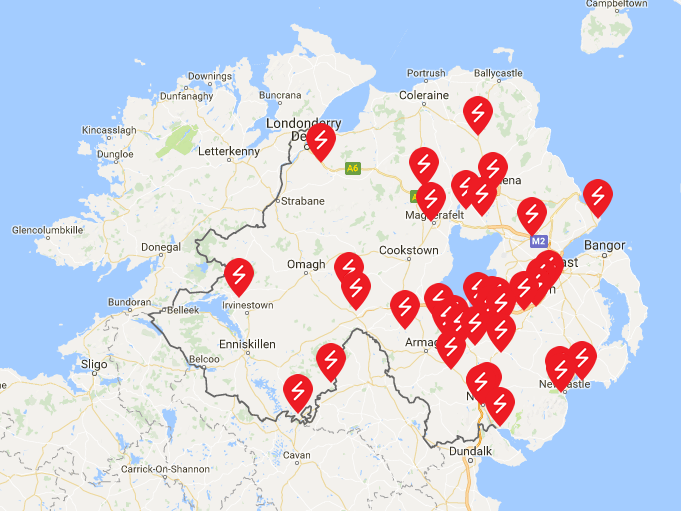
NIE-Map-2017-10-16_1613

and Wales:

WPD-Map-2017-10-16_1613

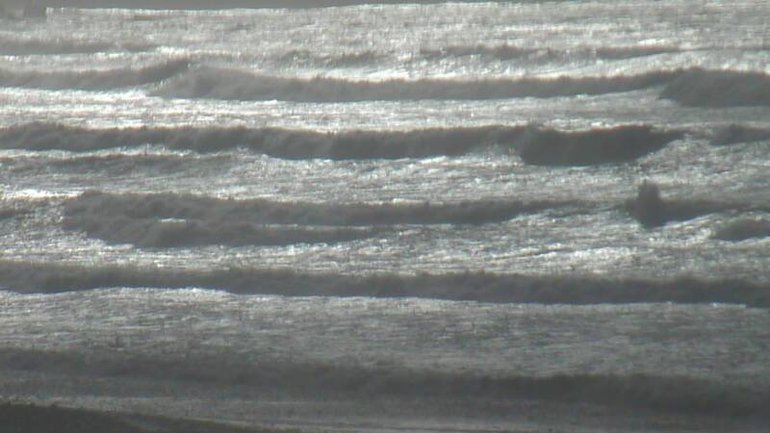
There are now a total of ~3500 properties without power across Western Power Distribution’s four areas of the country. Here’s how our local surf spot looks at the moment:
Widdy-20171016-1504


[Edit – October 17th 11:00]

Here’s a selection of reports about Ophelia from the media, together with this morning’s set of power cut maps:

ESB-Map-20171017-1012

NIE-Map-20171017-1012

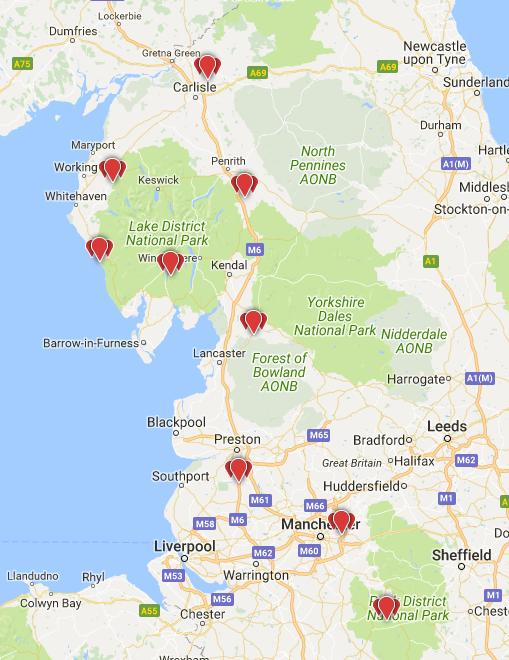
Engineers from Electricity North West are working in difficult conditions today to restore power after ex-hurricane Ophelia hit the North West overnight.

The region’s power network operator has restored supplies to more than 16,000 properties throughout the night following the Met Office’s yellow weather warning for severe gales of 60 to 65mph.

Around 2,000 properties remain without power as flying debris has hit power lines and high winds make access difficult for repair teams. Properties are affected mainly in the Lake District with 1,700 without power and 150 properties in Lancashire are currently without power.
ENW-Map-20171017-1025

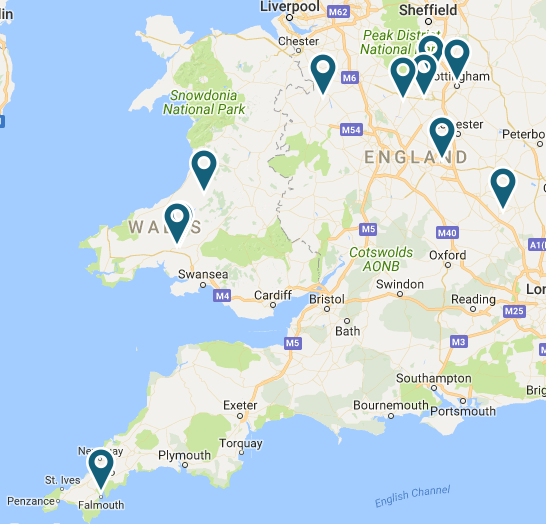
As a result of the high winds brought by the remnants of Storm Ophelia, whilst a number of customers have had their electricity supplies affected, the level of power cuts is considered busy but not exceptionally so.

The biggest impact has been in West Wales and Cornwall where a number of weather related incidents have occurred.

Currently around 3,000 customers are off supply. All incidents are currently being worked on by our engineers, with supplies on track to be restored this evening.

Since around 9am this morning we have restored around 12,000 customers in the South West and South Wales.
WPD-Map-20171017-1025

According to ESB Networks:

We are advising all customers impacted by outages that they should prepare to be without electricity for number of days. It is very important that any customers who use electrically powered medical devices should contact their healthcare professional to make alternative arrangements if necessary.

According to the Irish Times:

The country is facing days of “catch-up” as schools, hospitals, roads, electricity networks and other key public infrastructure are cleared of debris or repaired following Storm Ophelia.

Three people were killed on Monday in the worst storm to hit Ireland in more than 50 years, which left hundreds of thousands without electricity overnight.

The storm caused the most devastation in the south and west but left every county with some level of disruption.

Ministers and senior officials have warned that it will take days for some public services to get back to full strength. All schools will remain closed on Tuesday to allow for safety inspections to take place, with most expected to reopen on Wednesday.


[Edit – October 18th]

ESB Networks report that:

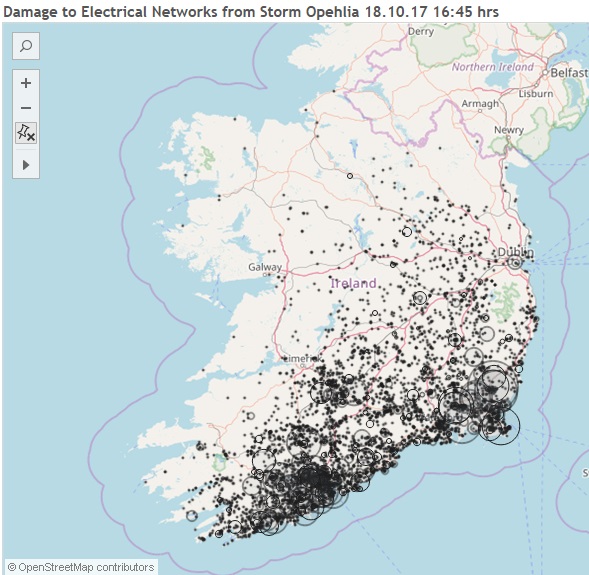
The following map shows the remaining faults caused by ex-hurricane Ophelia to be repaired. We have restored over 70% of homes and businesses and here are currently 105,000 homes and businesses still without power that are represented on the following map by the black circles. The bigger the circles the more faults there are that need to be repaired in that area.

ophelia-heat-map-20171018

Electricity North West have now repaired almost all the faults caused by Ophelia:

Engineers from Electricity North West have worked tirelessly to repair damage caused by ex-hurricane Ophelia and subsequent bad weather and restore power to the majority of customers in the region.

Despite working round the clock to restore power to those affected by ex-hurricane Ophelia on Monday and early Tuesday, further bad weather last night from 6.30pm caused power cuts to another 5,000 properties along the county’s west coast.

Engineers worked through the night and restored power to all but 18 customers and they will continue to work today to restore those final few customers located in Egremont, Cumbria.

Electricity North West has turned their attention to assisting the restoration efforts in the Republic of Ireland. A team of more than 30, including engineers and overhead lines people, will help repair damage and restore power to thousands still without power in the Republic of Ireland.


[Edit – October 19th]

ESB Networks have produced another power cut heat map. This evening they say that:

ESB Networks have now restored power to 322,000 homes, farms and businesses affected by ex-hurricane Ophelia. The following map illustrates the ​63,000 homes and businesses that we are currently working to restore.
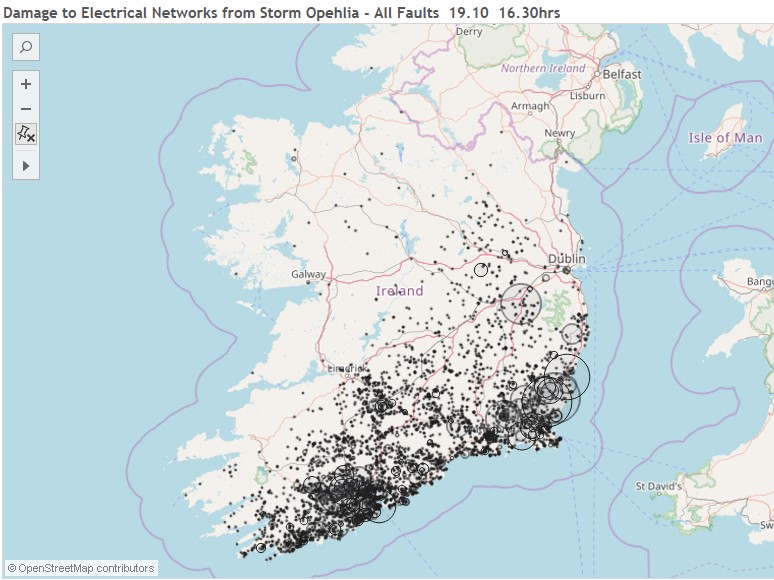
ophelia-heat-map-20171019


[Edit – October 20th]

Here’s the latest power cut heat map from ESB Networks:

42,000 homes, farms and businesses remain without power this morning. These are highlighted in the following heat map.

ophelia-heat-map-20171020

The rate of progress numbers wise from here will slow down as each individual fault must be repaired pole by pole. Also with the weather forecast to worsen the conditions that the crews are working in makes the restoration effort more difficult and slower.
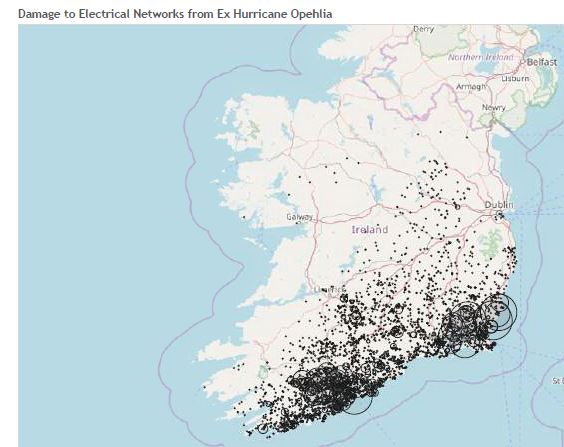
In a later news release they report that:

ESB Networks have now continued to restore power this morning, with power now restored to 343,000 families, farms and businesses. Approximately 42,000 customers remain without supply.

​The worst impacted areas are in the environs of Enniscorthy, Wexford town, New Ross, Bandon, Dunmanway and Fermoy.

Assisted by contractors, crews from Northern Ireland and overseas utilities, as well as the army and air corps, ESB Networks will continue restorations to every last family, farm and business until their lives are back to normal.

A Met Éireann Status Orange wind warning has been issued for seven coastal counties, including Cork and Wexford, will hamper restoration efforts. Should the weather conditions worsen further, our crews will be stood down until it is safe to resume repairs again. Winds speeds up to 130 km/h will cause outages to customers in Mayo, Galway, Clare, Kerry, Cork, Waterford and Wexford on Saturday.
National Grid Launches Carbon Intensity Data Feed

In a press release last week National Grid announced that:

The company today launches innovative new software that forecasts the carbon intensity of electricity generation up to two days ahead, helping people to understand and control their energy use.

National Grid is working with Environmental Defense Fund Europe and WWF to make the software openly available to the public. WWF has used the data as the basis of an online tool which points users to the best times to turn on or turn off home appliances to minimise carbon emissions, while Environmental Defense Fund Europe are working on policy implications of having this data available and widely understood. Shifting activities like dishwasher cycles or electric vehicle charges could help relieve pressure on the energy system, reduce the need to use back-up fossil fuel plants, and potentially reduce bills for households.

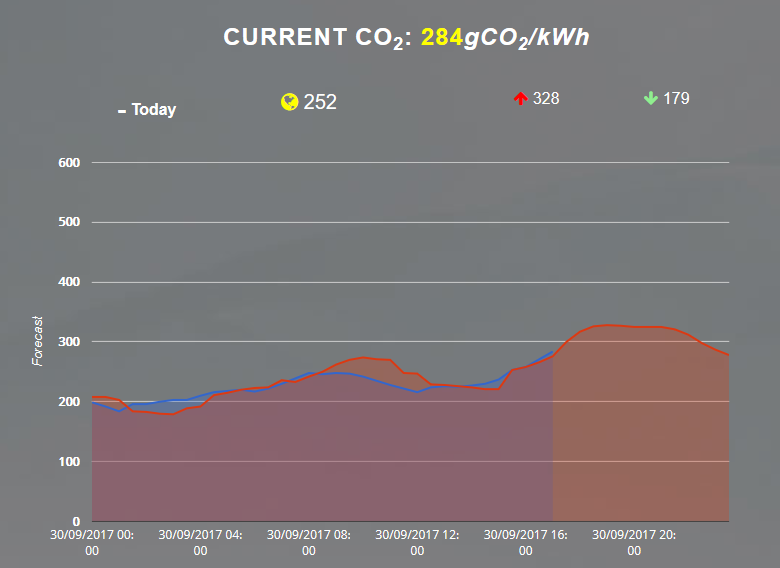
Here’s how National Grid’s visualisation of their carbon intensity data looks at the moment:

NGIntensity-20170930-1700

According to Duncan Burt, Director of the System Operator at National Grid:

We’re providing our forecast data in a format that allows technology companies to build innovative apps and software that could make a real difference to how and when people use energy. Clear and concise information that can tell you in advance when’s best to turn on the washing machine, load the dishwasher or charge your car for example, is a step in the right direction towards a low carbon future. This technology puts people at the heart of it, helping everyone to use power when it’s greenest, and likely, more cost efficient.

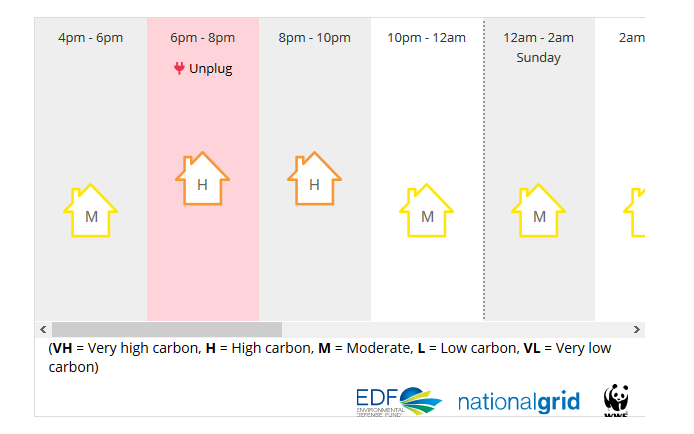
Simultaneously the WWF published a web page entitled “How do you make a green cup of tea” that presents the carbon intensity data in a “user friendly” fashion. According to the WWF:

Electricity is changing in the 21st century. Coal is being phased out and renewable energy sources like wind and solar now make up a quarter of our electricity.

This means that the greenness of our electricity now varies throughout the day. When it’s sunny and windy, we’ve got more green power. When it’s overcast and calm, we’ve got more fossil fuels online.

This new forecasting tool shows you what the greenest and dirtiest times of day will be up to two days ahead. This can help people plan their energy use, switching things on when energy is green and off when it’s not.

Being flexible with our energy use boosts our energy security and cuts carbon emissions by reducing the need for back-up fossil fuel generation. It could potentially save people money as well if they’re on time of use tariffs.

So if you want to make a green cup of tea, check out our forecast to find the greenest time of day to stick the kettle on.

Here’s how that forecast looks at the moment:

WWFIntensity-20170930-1700

Apart from the assorted press releases about the carbon intensity API there’s also a blog post from National Grid:

Working with WWF and Environmental Defense Fund Europe to finesse the science, we agreed to make the data that sits behind the forecast publicly available. The aim is to see tech developers creating consumer-friendly apps that can tell the public, in advance, when electricity generation is expected to be cleaner and greener, and more likely cost efficient.

The new software was a good idea hatched at a GB System Operator Hackathon and is yet another example of how our System Operator continues to be at the forefront of the energy revolution.

This new tool is a credit to the team in Wokingham – led by James Kelloway and his team members Alasdair Bruce and Lyndon Ruff, along with the sponsorship and guidance of Director of System Operations Duncan Burt and support from Corporate Affairs.

Not to be outdone the Met Office has also written another blog post on the topic:

Using hourly weather data from the Met Office and combining it with historical data from the grid, National Grid are able to forecast demand for electricity and also identify the contribution from renewable energy flowing into the grid. Using this information, they can forecast the carbon output of the grid over a 48-hour period, and identify the periods of lowest carbon output and highest carbon output. In other words, how green the grid will be during that period.

Using this information, the partners involved in the project hope that electricity consumers across Great Britain will be able to plan their electricity use around periods of high availability for renewable energy, reducing carbon output.

Patrick Sachon, Met Office Business Group Leader for Energy said: “The green energy forecast is a great example of innovative re-use of Met Office data. As a scientific organisation we encourage the re-use of our data, particularly if it can be applied to develop a deeper understanding of the interrelation between weather and something that is so integral to our everyday lives such energy.”

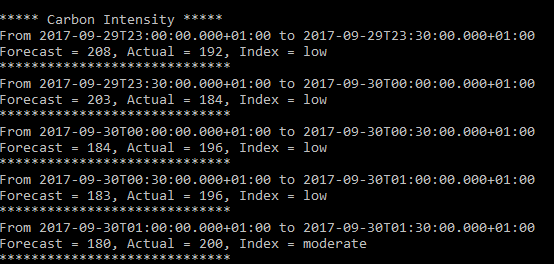
Down here at V2G UK we like to think of ourselves as an “innovative technology company” so we’ve already started using the new API. It’s very easy to use if you’ve ever written a JSON parser before, which fortunately we have. Here’s how the raw data for today looks as decoded by our trusty Raspberry Pi:

CarbonIntensity-20170930

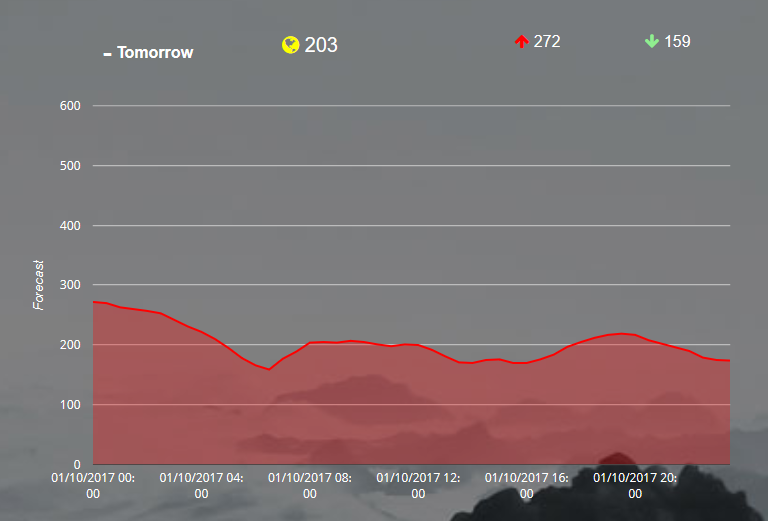
We haven’t persuaded our Pi to produce any pretty pictures as yet, so for now here’s National Grid’s forecast for tomorrow, which is forecast by the Met Office to be rather wet and windy:

NGIntensity-20170930+24h

Having slaved over a hot keyboard typing in this article I could really do with a nice hot cup of tea now, but it looks as though now is not a very good time. Wouldn’t it be a good idea if I could boil a kettle using electrical energy obtained from my very own battery instead of from the local grid? Another good idea would be if, much like the Met Office already do for the weather, National Grid could supply us with a carbon intensity forecast for Camelford as well as for the UK as a whole.

[Edit – October 1st]

Our experimental application is now producing simple graphs. If you’d like to experiment along similar lines we’ve uploaded our Java source code to GitHub. For further details see our new project page:

“National Grid Carbon Intensity API“

Evangelising V2G in South West England

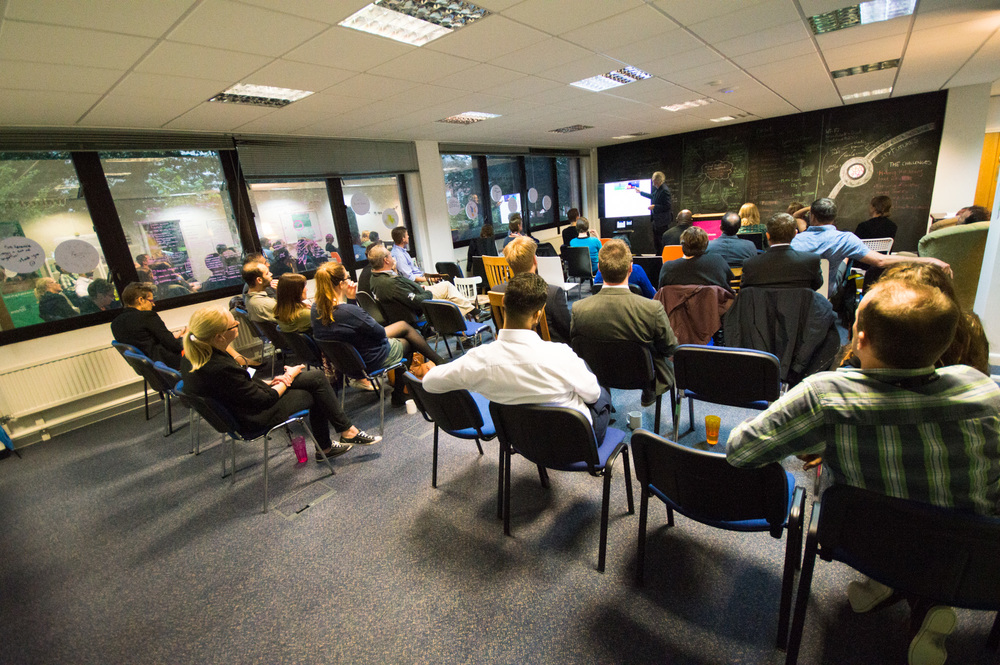
I’ve been out on the road this week, explaining the potential benefits of vehicle-to-grid technology to a variety of audiences. First up on Wednesday evening was the “Autumn Connect” event at Exeter City Futures, where I made a presentation entitled “V2G – How to simultaneously store energy and reduce congestion.”. I had the luxury of being allowed 5 minutes to present an “elevator pitch” on that subject to the assembled throng:

Image Autumn Connect 2017 (for web)_013 (1)

Here’s an expanded version of the PowerPoint slide deck I used. They all had Kasia’s “artist’s impression” of V2G in action at the top, so I’ll omit that part here. The first two slides are taken from a 2 minute pitch I presented at the Met Office on Thursday (see below) and have to conform to a template provided by the Knowledge Transfer Network. Hence:

V2G Limited

  • A small “smart grid” consultancy located amongst the wind and solar “farms” of North Cornwall
  • The “smart grid” is actually the “internet of big things”!
  • Producing embedded firmware for 35 years
  • Under a previous name provided multi-drop fleet routing interfaced to SAP for a FTSE 250 company
  • Long experience in electricity distribution. The Lucy Switchgear Gemini RTU firmware is our baby
  • Whilst we understand hardware our expertise is in designing software/firmware
  • Evangelising Vehicle-to-Grid technology for 5 years

I trust that is all self explanatory?! If not please see below or ask questions in the space made available for that purpose in the comments section at the bottom.

I always like to encourage some audience participation at these events, and Exeter City Futures delivered in spades! For the first time ever I didn’t need to blow my own bidirectional trumpet:

BiDirectionalTrumpet-Horiz

Timekeeper Lyndsey volunteered to blow the V2G trumpet for me, though ultimately it informed me that my time was up before I even managed to display the last slide, so make sure to read all about that below!

To make my “internet of big things” point I waved my trusty Raspberry Pi 3B at the audience. Here is what it looks like close up:

RasPi3B-Horiz

Dr. Sarah Ward from the University of Exeter correctly, if somewhat hesitantly, identified the mystery object. Now I’ve been programming the firmware (i.e. the software inside the hardware) in those sorts of devices for a very long time. 35 years ago single board computers were a lot slower and a lot bigger, but they still did the same sort of job. In those days they didn’t have USB ports like the Pi. Instead they had serial ports that conformed to the RS-232 standard. Getting two devices to talk to each other was always “interesting”!

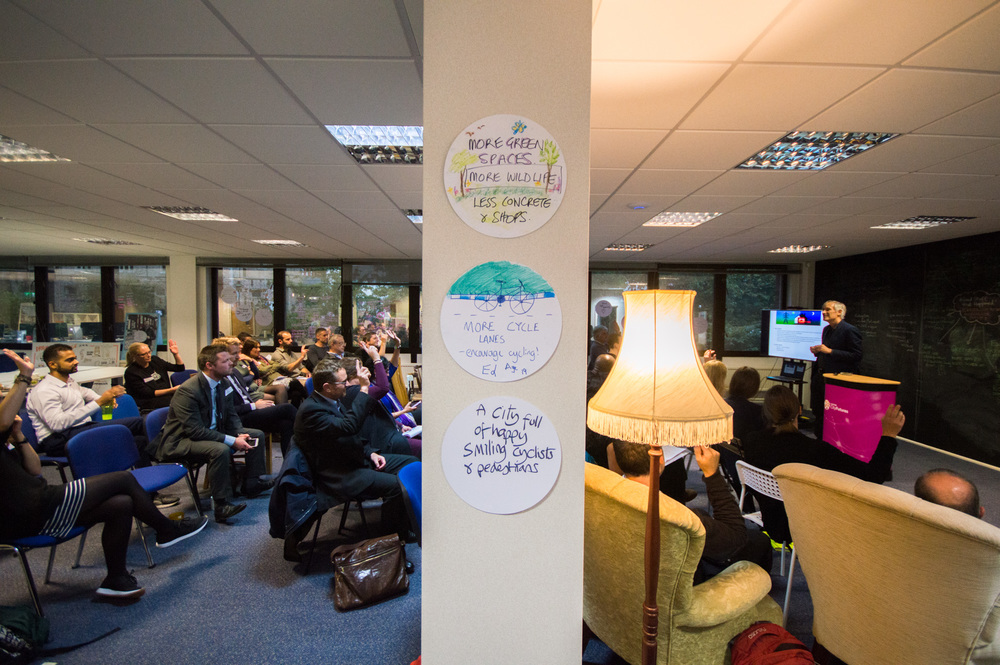
I asked the audience to raise their hands if they’d previously heard of the “smart grid”. Quite a lot had:

Image Autumn Connect 2017 (for web)_012 (1)

Then I asked who had heard of the “internet of things”. Slightly more hands were raised. The point being that hardware a lot like the Raspberry Pi is at the heart of your smartphone, at the heart of the Smart Grid and (albeit in a smaller form factor) at the heart of the Internet of Things. The main difference being that the smart grid has been around quite a lot longer than the IoT! A point that some of my audience at the Met Office on Thursday seemed to agree with since they nodded their heads vigorously at that juncture!

Moving on to slide 2:

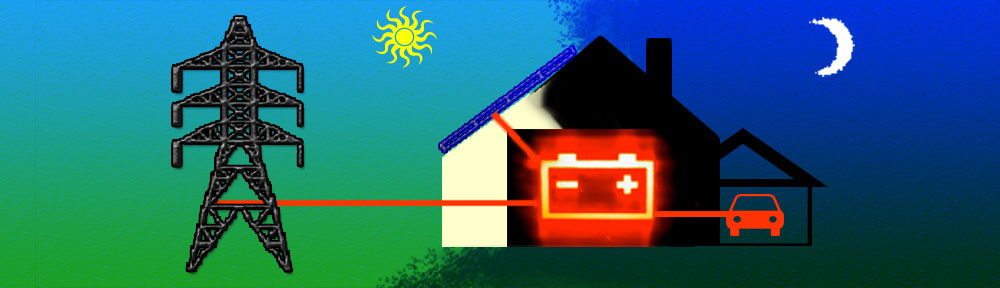
WP-banner-V2G

1. Our project idea

  • See the infographic above
  • North Cornwall is ideal!
  • Charge EVs on sunny lunchtimes
2. What’s innovative about it?

  • Nobody’s done it yet
  • On all sorts of levels!
  • Price signals / regulation?
3. The services we can offer?

  • Vast systems integration experience
  • Vast enthusiasm
  • AI for Energy Systems
4. The partners/services we seek?

  • Kite marked V2G hardware
  • An all electric car club
  • A suitable site

I asked the audience if it was obvious what the infographic represented. I was subsequently informed that a hand had gone up in the far corner of the room, but I didn’t notice at the time. To explain, imagine a conventional home with solar PV panels on the roof exporting excess electricity to the local distribution grid. Now add some static batteries in the utility room or the garage. Store any excess “free” energy generated when the sun is shining in that battery. When the household electric vehicle returns from the daily commute charge it up from the battery rather than from the mains, since by now the sun will be low in the sky or already below the horizon in winter.

If you have that basic hardware setup available then there’s lots of other things you can do with it! How about buying electricity from the grid when it’s cheap and storing it in your static and/or mobile batteries. Then just for starters you could sell it back to the grid when electricity’s more expensive? There are other possibilities too, which brings me on to slide 3:

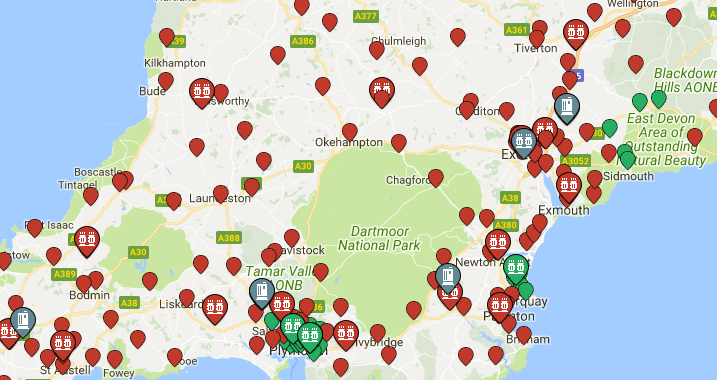
WPD-NoCapacity

That’s a portion of Western Power Distribution‘s network constraint map. Note that most of Devon & Cornwall is plastered in red due to all the intermittent renewable electricity generation we have down here. One day (hopefully!) soon you’ll be able to earn money by allowing WPD to charge and discharge your batteries when it suits them, in order to help them cope with the stresses that intermittent generation can subject their electricity distribution grid to. The current fly in that particular pot of ointment are the rules and regulations currently enforced by Ofgem, which make it nigh on impossible for neighbouring energy “prosumers” to trade electricity with each other. Highlighting bullet point 2(c) I idly enquired if anybody else in the room “has had problems with Ofgem’s red tape?”. Not a single hand was raised in protest.

As regular readers will be aware, the town of Camelford in North Cornwall is an Air Quality Management Area (AQMA for short). Much like the centre of Exeter, the air quality in the centre of Camelford is fairly foul due to the noxious emissions of all the diesel engines that travel slowly through it. Electric vehicles can help with that, since they have no exhaust pipes and by and large use regenerative braking rather than rubbing dust off brake pads when they want to slow down. Hence slide 4 consisted of pictures of V2G capable examples of such vehicles, plus an image of the xStorage static battery storage device being produced from ex Nissan LEAF batteries by Eaton. An electric car club in Camelford and/or Exeter would be a small step along the road to reducing congestion and air pollution in both town and city centres, whilst V2G enabled vehicles in the fleet would also provide a mobile energy storage facility!

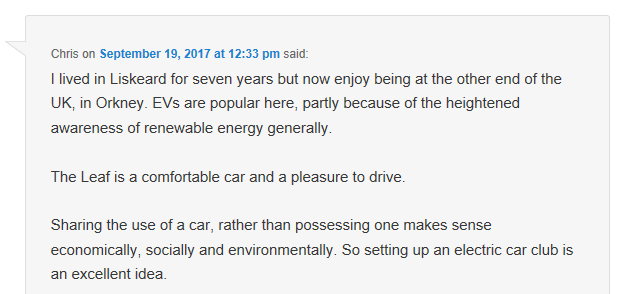
That’s about as far as I got on Wednesday before Lyndsey blew the metaphorical whistle on me, so I hastily concluded by mentioning this apposite comment from blog reader Chris:

Chris-CarClub

It seems that struck a chord with at least one member of the audience. In the first image above you can see the back of Mark Hodgson’s head, if you know where to look. Mark’s Co-Cars car club certainly isn’t 100% electric, but it has just installed a couple of EV charging points in the Exeter area. That would seem to fit the bill for my bullet point 4(b) quite nicely?

Here’s the final slide I never had a chance to mention on Wednesday evening:

Of course solar PV isn’t the only form of RE generation, and batteries aren’t the only way of storing energy, at home or in the office. There’s also heat, and cold, and eddi & zappi: http://myenergi.uk/products/

MyEnergi

What do you suppose that’s all about? To help answer that question let’s move on to Thursday and my trip to the Met Office. At least the previous evening’s rain had stopped:

2017-09-21_16-12-28_189

I was presenting at a briefing event for Innovate UK’s Emerging and Enabling Technologies competition. I got the feeling that since this was (one of?) the first KTN briefing(s) held in Exeter most delegates weren’t making the most of the KTN’s “Meeting Mojo” facility. Anybody who ventured in there would have discovered that I was hoping to meet:

Partners who appreciate that the “Smart grid” is a subset of “The internet of things”, and predates the IoT!

whilst offering a potential consortium:

Smart Grid Consultancy: 5 years vehicle-to-grid, 15 years electricity distribution, 35 years system integration. Now with added blockchain!

Shortly before the event proper got underway I explained to the KTN’s Simon Yarwood, MC for the pitch session, that although I only had 2 slides in my deck I was actually representing 2 companies from a nascent V2G consortium. He graciously allowed me to overrun my allotted 2 minutes, and here’s what I added to the top two slides above:

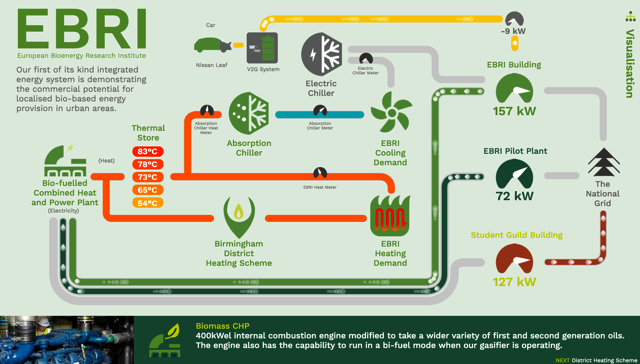
EBRI-Live-2017-09-23-0924

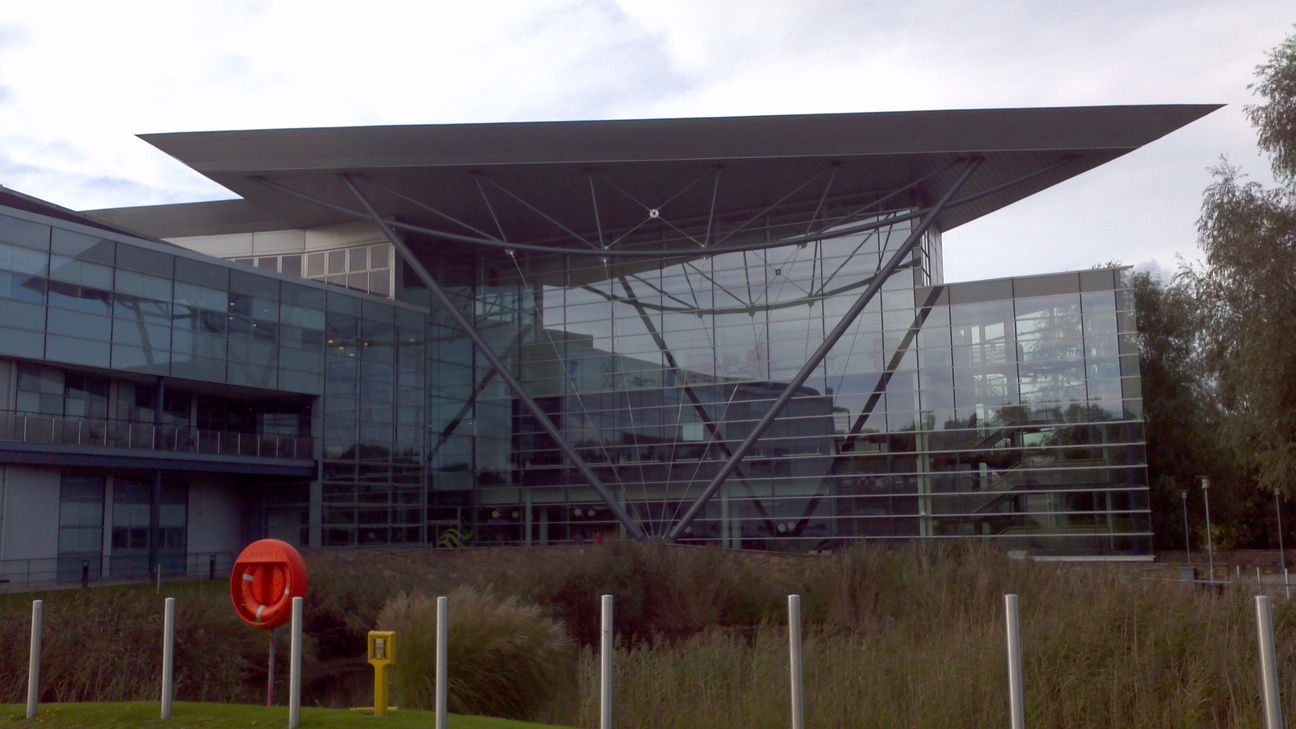
That’s a still from a web page that provides real time updates on the state of the building management system at the European Bioenergy Research Institute at Aston University:

https://youtu.be/89RDjp1E3W4

As you can see at the top of that page, a bidirectional charging station with associated static storage connected to a Nissan LEAF pool car is employed at EBRI as both an energy source and sink, in what is the UK’s first V2x pilot project. Strictly speaking it’s vehicle to building (V2B) rather than fully fledged V2G, but as far as the charging station itself is concerned that is of no consequence.

The BMS software at EBRI is now being further developed by Grid Edge Ltd. who assure me that it utilises various machine learning methods using a variety of inputs including weather forecasts, energy usage history, WiFi connections and football match schedules to optimise the overall energy use profile of the building and the assets within. As well as a modest amount of battery storage the EBRI building also includes energy storage in the form of large tanks of both hot and cold water in the basement, as indicated on the real time infographic shown above. That’s where the MyEnergi system depicted in slide 5 above comes in. It doesn’t use complex prediction or optimisation software, but it does attempt to sensibly direct the electricity generated by domestic solar PV panels to charge your EV, heat up your hot water, or if all else fails export some to the grid.

Q.E.D?

Storm Doris Blacks Out Britain

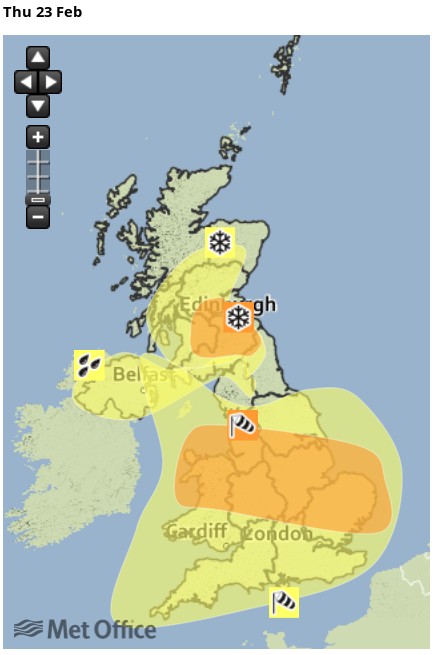
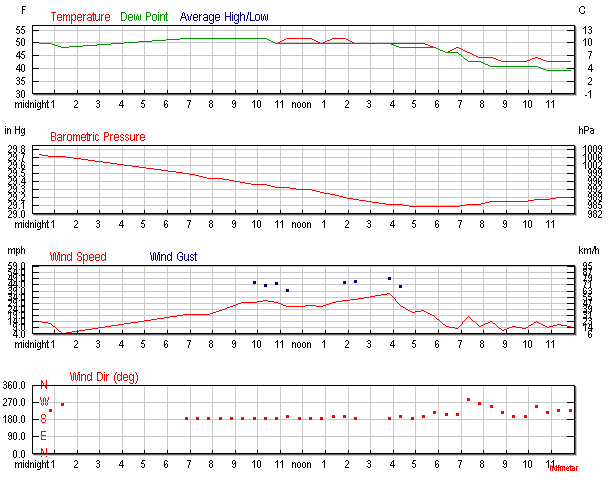
Here is the United Kingdom Met Office’s severe weather warning map for today:

According to the Met Office forecast for the West Midlands:

Some very strong winds are expected on Thursday in association with storm Doris with gusts of 60-70 mph likely, and 70-80 mph on coasts and hills.

There is still some uncertainty about the track of storm Doris, but increasing confidence that there will be widespread disruption across parts of England and Wales.

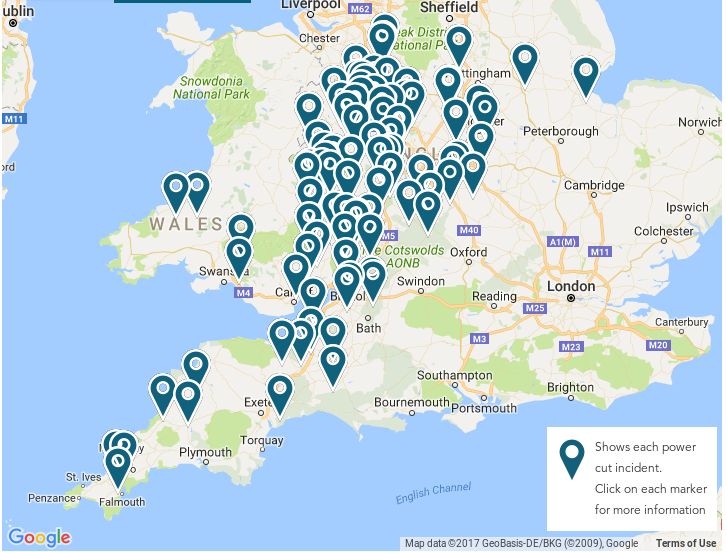
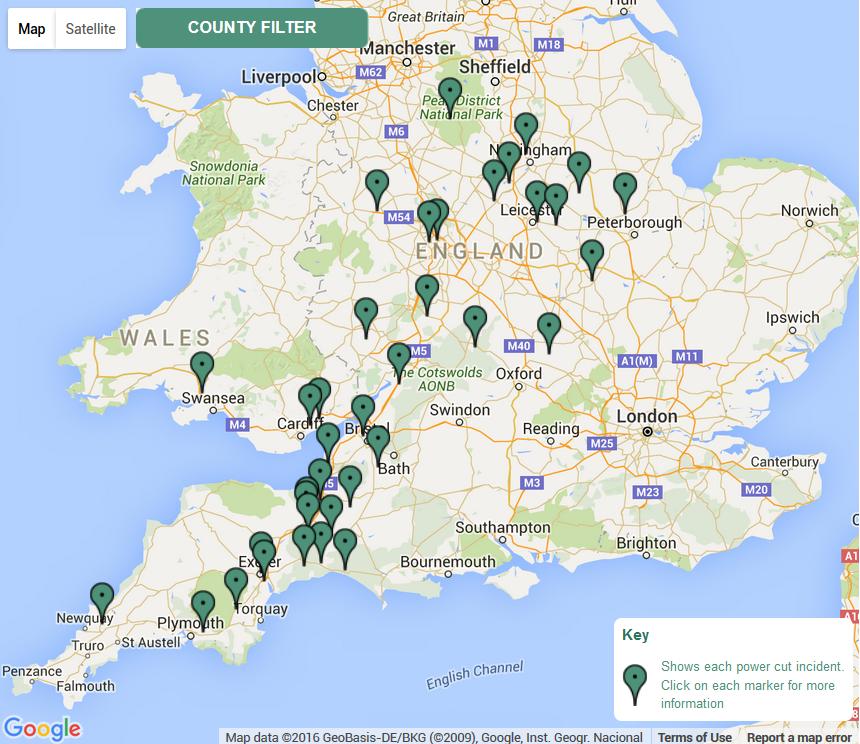
Earlier this morning we took a snapshot of Western Power Distribution’s live power cut map. It looked like this:

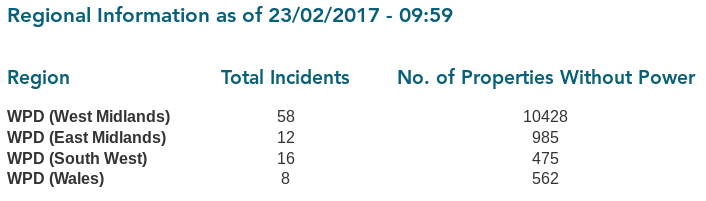
It’s now 10 AM on Thursday February 23rd, and WPD’s map now looks like this:


[Edit – Feb 23rd 12:15]

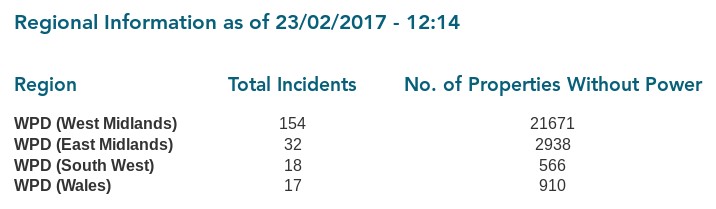
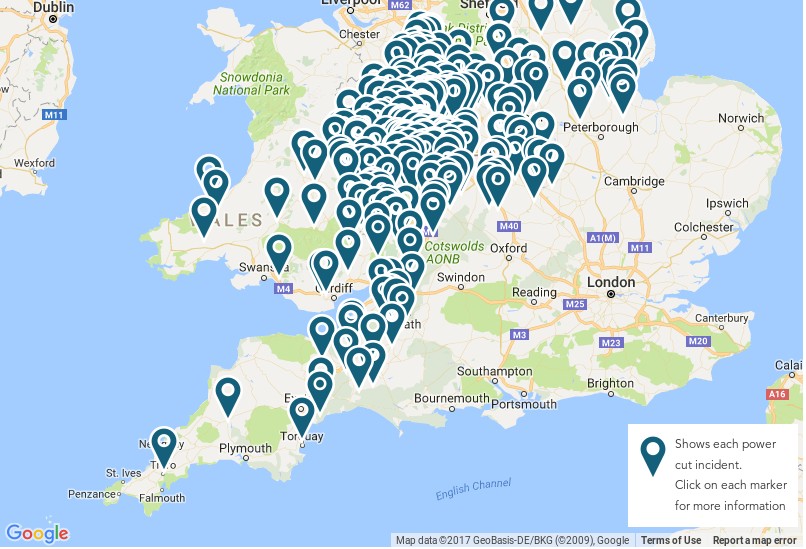
It’s now 12:15 PM on Thursday February 23rd. Over 20,000 properties are now without electric power in Western Power Distribution’s West Midlands region alone:

Electricity Northwest are tweeting helpful information to their online customers:

So are UK Power Networks:

However if you’ve just had a power cut you’d need to have a UPS for your PC in order to read those helpful messages! Or a fully charged mobile device with nearby comms towers still powered up!


[Edit – Feb 23rd 13:15]

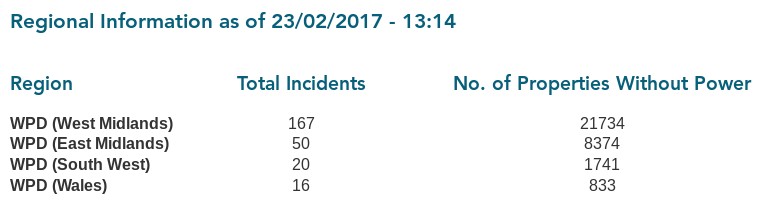
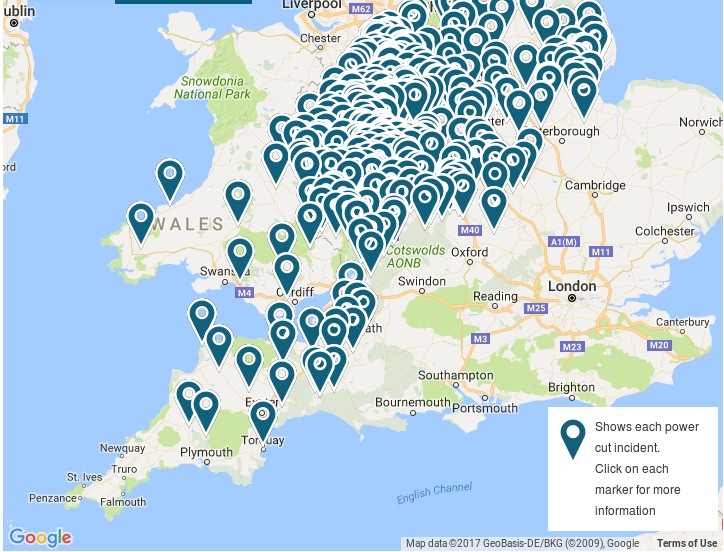
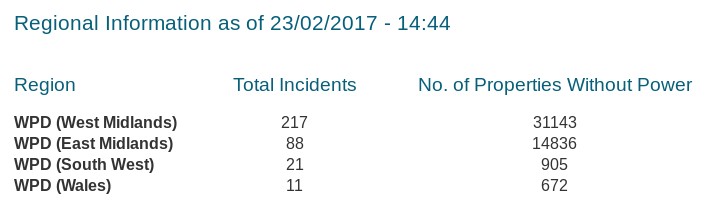
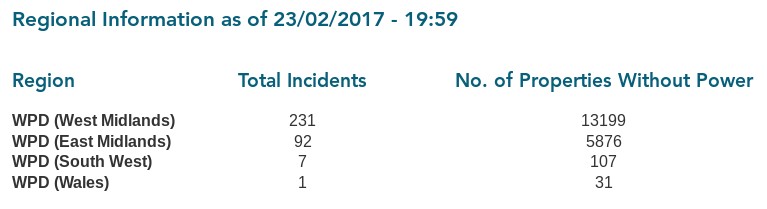
It’s now 13:15 on Thursday February 23rd. Over 30,000 properties are now without electric power across Western Power Distribution’s East and West Midlands regions:

Scottish & Southern Energy Networks have issued a news release:

SSEN engineers are making good progress in reconnecting customers affected by damage to overhead lines and network equipment. Since midnight, SSEN engineers have successfully restored power to over 22,000 homes, with approximately 5,000 homes currently without power. All faults are fully resourced and all customers are expected to be restored tonight.

The worst of the conditions have been observed in Oxfordshire, Berkshire and Hampshire where a wind gust of 65mph was recorded in Odiham.

SSEN has more than 1,000 engineering, technical and support staff on duty. Ahead of the storm, engineering teams were mobilised to key locations to minimise disruption and inconvenience to customers.

Customer service teams have been contacting over 7,000 customers on our Priority Service Register to check on their wellbeing in case they need additional help.


[Edit – Feb 23rd 14:45]

It’s now 14:45 on Thursday February 23rd. Over 45,000 properties are now without electric power across Western Power Distribution’s East and West Midlands regions:


[Edit – Feb 23rd 16:00]

It’s now 16:00 on Thursday February 23rd. WPD’s live power cut map is down for maintenance:

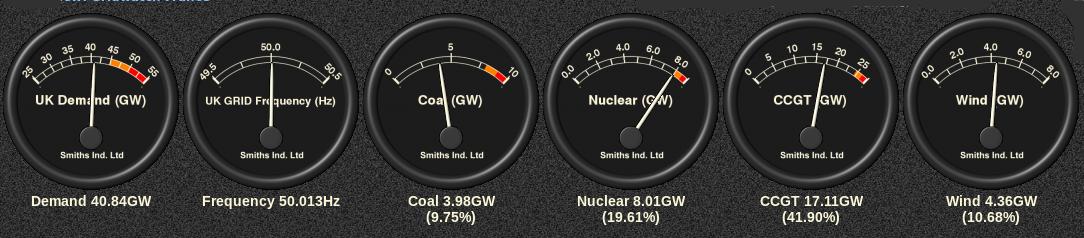
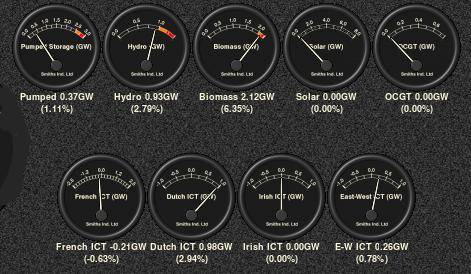
It’s obviously fairly breezy across the United Kingdom today! Let’s take a look at the current UK electricity generation mix at the moment, courtesy of GridWatch:

Western Power Distribution have issued a severe weather update:

We are currently exceptionally busy within WPD with the East and West Midlands area being especially affected in particular by the effects of Storm Doris so far.

Issued on: Thursday 23rd February – 3pm

The West Midlands has been significantly affected with almost 22,000 customers currently off supply with the vast majority being affected between 09:00 and 12:00 with Hereford, Ludlow, Worcester, Telford and Stoke suffering the worst effects.

During the last hour the fault rate in East Midlands has picked up where we have around 10,000 without power as the storm is now tracking eastwards as expected.

Our engineers are currently working hard to restore supplies as quickly and safely as possible, and we have additional staff in our Contact Centres, Control Rooms and operational depots.

The South West and South Wales areas were impacted earlier today, but not exceptionally so. Both areas have fewer than 3,000 customers affected and all incidents are currently resourced and being worked on.

Electricity North West have issued a press release, which begins:

Engineers from Electricity North West are working in difficult conditions today to restore power as Storm Doris hits the North West.

The region’s power network operator has restored supplies to around 5,000 properties throughout the morning following the Met Office’s amber weather warning for severe gales of 70 to 80mph and a yellow warning for snow to hit the North West today.
Around 2,500 properties remain without power as flying debris has hit lines and high winds make access difficult for repair teams. Properties are affected mainly in Lancashire, Manchester and the Peak district including250 properties currently without power in Horwich, Bolton.


[Edit – Feb 23rd 17:00]

It’s now 17:00 on Thursday February 23rd. WPD’s live power cut map is still down. However SSEN have issued a 4 PM update:

SSEN engineers are making good progress in reconnecting customers affected by damage to overhead lines and network equipment. Since midnight, power has been restored to over 29,000 homes, with approximately 8,000 homes currently without power. All faults are fully-resourced and we are working to restore power to all customers tonight.

The worst of the conditions have been observed in Oxfordshire, where around 5,000 customers are currently without power, as well as parts of Berkshire and Hampshire.


[Edit – Feb 23rd 18:30]

It’s now 18:30 on Thursday February 23rd. WPD’s live power cut map is still down! SP Energy Networks have now issued a press release:

The MET Office Amber warnings remain in place until 8pm tonight as Storm Doris continues to cause significant impact across the UK.

SP Energy Networks distribution licence area in Cheshire, Merseyside and North Wales has experienced extreme weather conditions today, with wind gusts of over 90mph experienced in exposed areas. Over the course of today we have restored power to over 50,000 customers impacted by this severe weather.

Our restoration efforts have been hampered today by the gale force winds making it unsafe for our engineering teams to work at height. The winds have now reduced somewhat, albeit we are still seeing wind gusts in excess of 50mph in exposed areas.
However, where it is safe to do so, our restoration efforts will continue this evening and tonight. As a result of the extensive damage experienced today, we now expect that some customers will be without power overnight.

Where possible, we will endeavour to make contact with those customers impacted to discuss welfare options. We have been working with the Red Cross who will help support our vulnerable customers impacted by today’s events.

Electricity North West have issued another press release:

Engineers from Electricity North West will work into the evening and through the night to restore the final properties affected by Storm Doris.

The region’s power network operator has restored supplies to around 6,700 properties throughout the day following the winds of 70 to 80mph in the North West.

800 properties remain without power in a number of small pockets, mainly across Lancashire as flying debris and fallen trees have hit power lines in the region.

Western Power Distribution have issued another severe weather update:

The current situation within WPD is still exceptionally busy, with the East Midlands, and even more so the West Midlands areas still having large numbers of customers off supply due to the effects of Storm Doris that passed through our area today.
Issued on: Thursday 23rd February – 6pm

There are approximately 20,000 customers in the West Midlands off supply and we have restored around a further 20,000 throughout the day. As of the last update the worst affected areas have been Hereford, Ludlow, Worcester, Telford and Stoke.
There are currently fewer than 10,000 customers off supply in the East Midlands with us having restored a further 10,000 approximately throughout the day.

Whilst busy, the volume of faults affecting the South West and South Wales have not been too bad, with all incidents being worked on and resourced. There are currently fewer than 1,500 customers off throughout the two areas and staff from those areas have been moved into the Midlands to assist where required.

Our contact centre has dealt with over 22,000 calls from customers with an average speed of response time of 6.7 seconds.

We have had one helicopter airborne today flying from Nottingham that has inspected two EHV faults in Stoke and Telford. Tomorrow, all four aircraft will be available from first light to aid and assist in repairs as required.


[Edit – Feb 23rd 20:00]

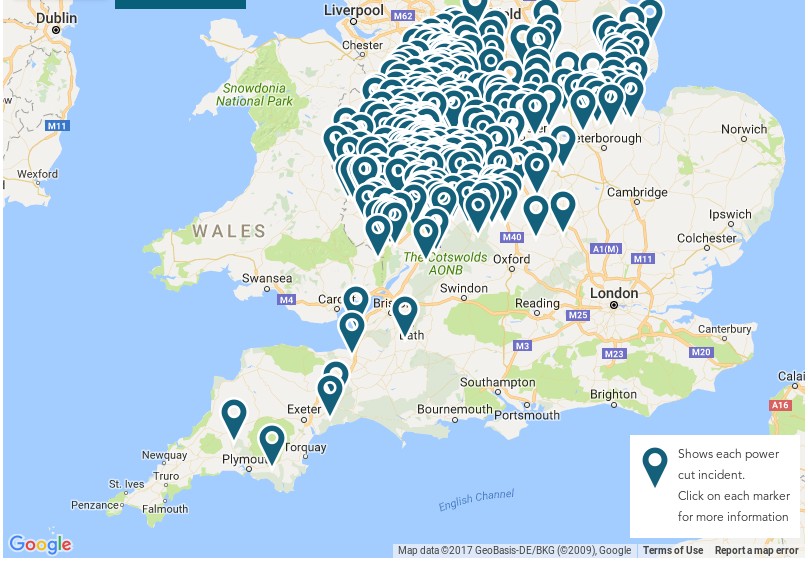
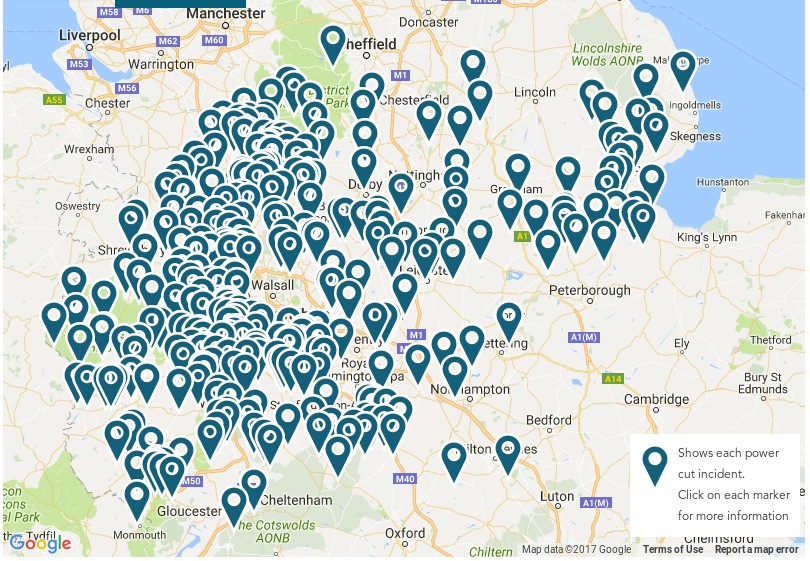
It’s now 20:00 on the evening of Thursday February 23rd. WPD’s live power cut map is operational again, and it’s moved to a dedicated subdomain! Here is what it reveals:


[Edit – Feb 23rd 22:30]

This will be our last update for today, at 22:30 on the evening of Thursday February 23rd. First of all WPD’s live power cut map, zoomed in on the Midlands:

Next the 20:00 update from Scottish and Southern:

Since midnight, power has been restored to over 30,000 homes, with approximately 4,000 homes currently without power. All faults are fully-resourced and engineers are working to restore power to all customers tonight.

Storm Doris brought severe winds, with gusts of up to 65mph, across the region. The worst of the conditions were felt in Oxfordshire, where around 2,500 customers are currently without power. Extra linesman and repair teams have been despatched to the area to aid restoration efforts. Parts of Berkshire and Hampshire were also affected.

Finally the 21:30 update from Scottish Power:

Over the course of the day our distribution licence area in Cheshire, Merseyside & North Wales has experienced extreme weather conditions, including winds in excess of 90mph. As a result of these storm force winds, our network has sustained a level of damage resulting in a loss of power for some of our customers. Despite the extremely challenging conditions, and the restrictions that our teams have faced working at heights in such extreme conditions, our engineers have worked tirelessly over the course of today to restore power to as many homes as possible, restoring power to over 66,000 people. However, a number of customers will remain without power overnight and we will make every effort to contact these customers tonight.

We continue to work to maximise our resource levels, with additional engineering teams from our Scottish distribution area already dispatched to support the restoration efforts as well as continuing to work with our contracting partners to secure additional resources. We will also be looking to mobilise helicopters tomorrow morning to help the fault finding process on some of the more challenging terrain.

For a warming nightcap after the blustery day here’s the GridWatch UK electricity generation mix tonight, including the minor contributors:

Storm Imogen Follows Floods in South-West England

The United Kingdom’s Met Office is just down the road from here in Exeter, and they have just announced that the newly named “Storm Imogen” is heading our way:

Imogen follows in the footsteps of her brother Henry further north and the unnamed storm that has just deposited 57.8 mm of rain on Okehampton in 24 hours:

whilst Exeter Airport endured gusts of wind up to 50 mph and a mere 21.0 mm of rainfall:

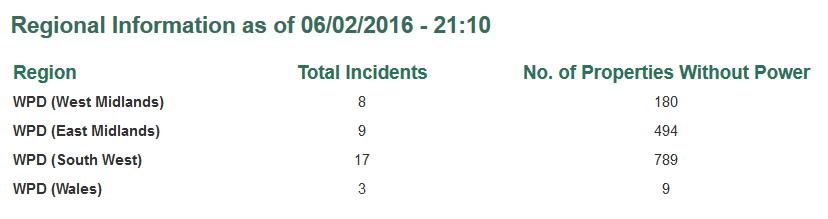
We have previously speculated about the effects of such storms on Western Power Distribution’s network in the South-West Peninsula, so here is how things look qualitatively at the moment, following today’s flooding:

and here’s the associated quantities

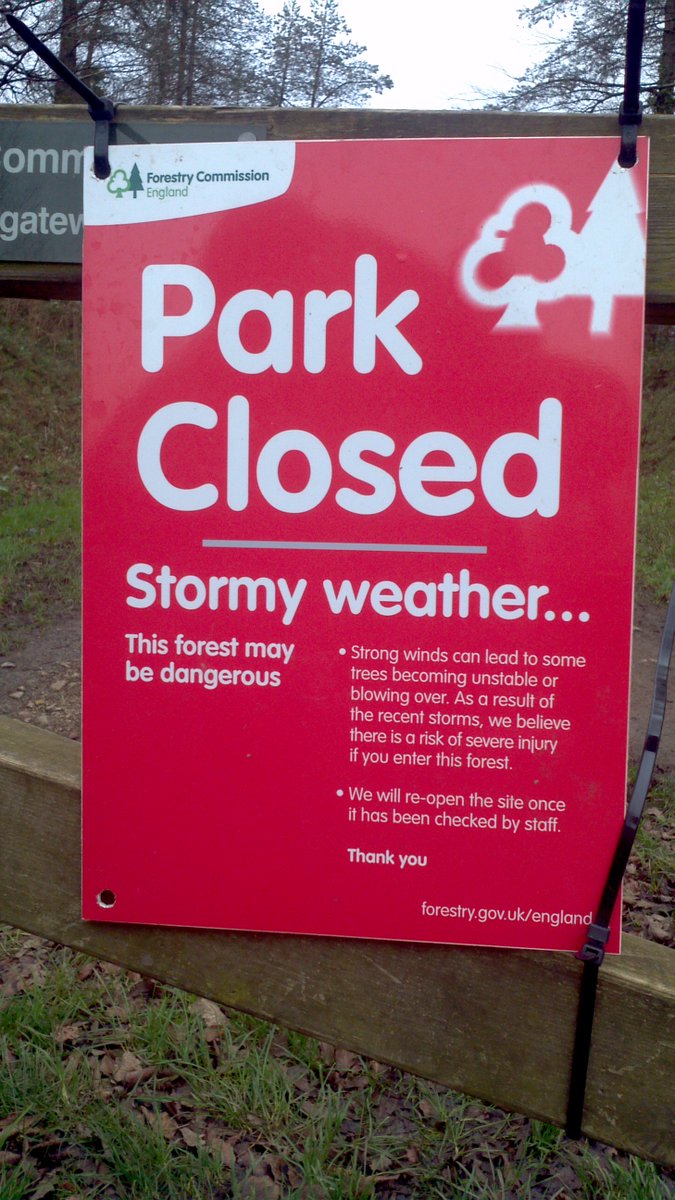
Here’s how Haldon Hill has been preconditioned for Imogen’s imminent arrival:

and here is the Met Office’s forecast [updated Sunday AM] for our back yard on Monday:

Do you suppose there will be another power cut here tomorrow?

The First Great Dunchideock Blackout

At May’s film night in Dunchideock Village Hall it was announced that anybody interested in learning more about the recent power cut in the village could “read all about it” on this very web site. A cry was heard from the audience:

Which one is that then?

It has now been brought to my attention that the other end of the village has suffered far more from the absence of electricity this year than my own particular neck of the woods. Having engaged in further communications with some local residents and Western Power Distribution I have another long tale of woe to tell!

There was undoubtedly much wet and windy weather around the Haldon Hills earlier this year. According to the UK Met Office, handily situated just up the road in Exeter, in their summary of Winter 2013/14:

Winter 2014 was an exceptionally stormy season, with at least 12 major winter storms affecting the UK in two spells from mid-December to early January, and again from late January to mid-February. When considered overall, this was the stormiest period of weather experienced by the UK for at least 20 years. An analysis of pressure fields by the University of East Anglia suggests this winter has had more very severe gale days than any other winter season in a series from 1871.

All those storms didn’t appear to have any long lasting impact on the southern side of Dunchideock at the time, but the story is rather different slightly to the north. Here’s a map of Western Power Distribution’s high voltage electricity network in the area:

WPD map of 11 kV (red) and 33 kV (green) cables south and west of Exeter

WPD map of 11 kV (red) and 33 kV (green) cables south and west of Exeter

Hopefully it is now apparent to you that the northern part of Dunchideock is on a completely different “circuit” to the southern part. You can also see that there have been a few electricity supply issues over the past few months! Taking them in chronological order, the first outage was on Tuesday February 4th. It’s unlikely to be mere coincidence that on the same day the Met Office issued a press release saying that:

The stormy conditions are expected to bring damaging gusts of wind of up to 60 mph inland and perhaps as high as 80 mph along some southern and western coasts of Britain on Tuesday night and Wednesday. These severe gales, combined with further heavy rain may cause some disruption because of fallen trees and high waves in coastal areas.

The net result as far as northern Dunchideock was concerned was:

A power cut from 21:00 to 02:00 on the 5th. When the power went off alternate houses in the road came back on after a minute or so and stayed on.

According to Western Power Distribution the immediate cause was that:

One of two low voltage fuses blew (on a split phase transformer). Hence 50% of customers would be on supply.

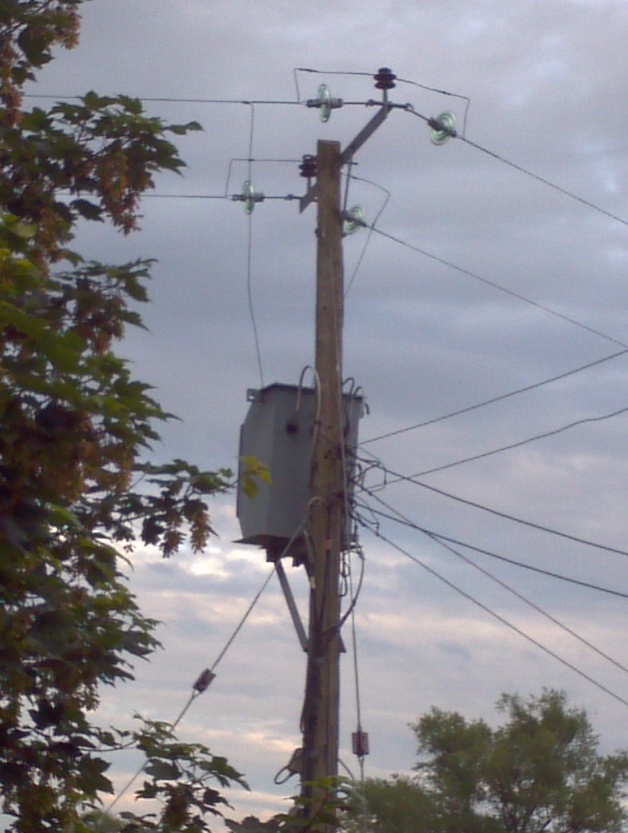
Transformer 31/0174 near Thornes Meadow, Dunchideock

Transformer 31/0174 near Thornes Meadow, Dunchideock

Ten days later the real “Great Dunchideock Blackout” occurred. According to the Met Office once again, in their forecast for Friday February 14th:

The Met Office was so concerned about the wind speeds on Wednesday a Red weather warning was issued for wind, the first red warning since January 2013. Extremely strong winds were seen in the south and northwest of England and parts of Wales.

We have another weather system crossing the UK on Friday bringing further heavy rain and very strong winds, leading to a number of weather warnings being put in place. The rain will push into the UK from the southwest during Friday morning, moving quickly north eastwards.

There are Yellow weather warnings for wind in place for the South coast and round into East Anglia with an Amber weather warning for wind along the South coast. We are expecting some gusts of around 60 miles per hour inland and perhaps 80 miles per hour in exposed areas along the coast itself. With these very strong winds large waves will push onto the coastline with dangerous conditions possible as well as some localised coastal flooding.

Here in Dunchideock, for the residents of Thornes Meadow at least, the result was a power cut lasting almost two days:

The second power cut was on 14th February at 19:30 and the electricity did not come back on until 14:00 on the 16th. Everybody in Thornes Meadow was off this time. The recorded messages of restoration times were continually put back.

As you may be able to imagine, in such circumstances Western Power Distribution had a very long list of problems to deal with. The immediate issues for Dunchideock were:

Two separate  High Voltage faults (conductors down due to trees and an entire barn roof being blown onto the line).

Due to the number of faults WPD had to bring in extra engineers from the Midlands and South Wales to help with the repairs. In normal circumstances the UK electricity market regulator Ofgem specifies a maximum 18 hour time limit on restoring electricity supplies. However in extreme circumstances this can relaxed. Ofgem themselves foresaw the potential difficulties, and issued a news release of their own on February 12th, stating that:

Severe weather is currently forecast across Great Britain. Electricity distribution companies, who own and operate the local networks, are making preparations ahead of this weather. We set rules on how quickly companies have to respond to restore power in both normal weather and severe weather conditions.

For severe weather there are different categories according to the severity of the storm. The category sets the amount of time companies have to restore power before compensation must be paid. The category is determined by the number of major faults experienced within a 24 hour period on the distribution company’s network.

The distribution company may be able to give an initial early view of what category the storm is but the data is checked and verified by us. The time you are off supply before being able to claim payments varies according to severity of storm. This is because the companies will have more work to do to fix faults.

  • Category 1: After 24 hours
  • Category 2: After 48 hours

In this case the storm was ultimately classified as category 2, and hence the unfortunate residents of Thornes Meadow are not entitled to any compensation despite being without any electricity supply for nearly two days.

Moving on to the next outage, which took place on “February 25th from 18:50 to 19:45” on which date there were no special press releases from the Met Office. Thankfully this power cut was of much shorter duration than the previous one, and was because:

A high voltage fuse operated. Restoration was via HV fuse replacement.

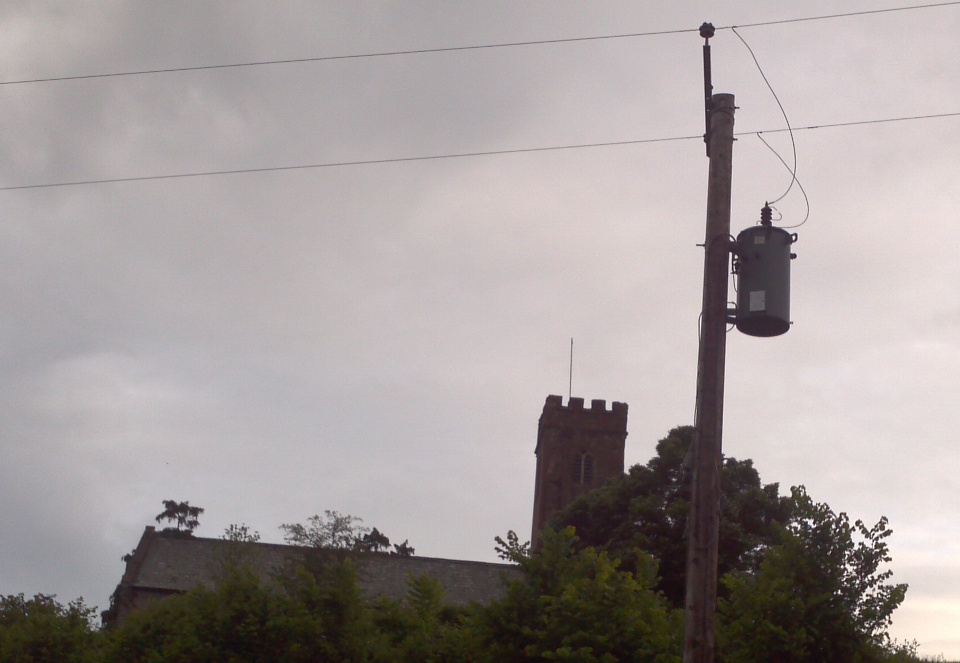
Finally we come to May 14th, when “a faulty high voltage insulator” led to a power cut in properties supplied by transformer 31/6871 in the vicinity of Dunchideock Church. Once again the weather wasn’t sufficiently inclement to warrant a Met Office press release.

Transformer 31/6871 near Dunchideock Church

Transformer 31/6871 near Dunchideock Church

All of this additional information leads me to conjecture yet again about all those blown fuses and faulty insulators. What stresses and strains is our local electricity distribution network being subjected to these days by the combination of lots of inclement weather and renewable electricity generation, down here in not always Sunny South West England?

Rather too many for comfort would seem to be the answer, if Dunchideock’s recent experience is anything to go by.