Ultra Fast Charging of Electric Vehicles

A recent news release from the Ecole Polytechnique Fédérale de Lausanne discusses what’s involved in “Charging an electric car as fast as filling a tank of gas”:

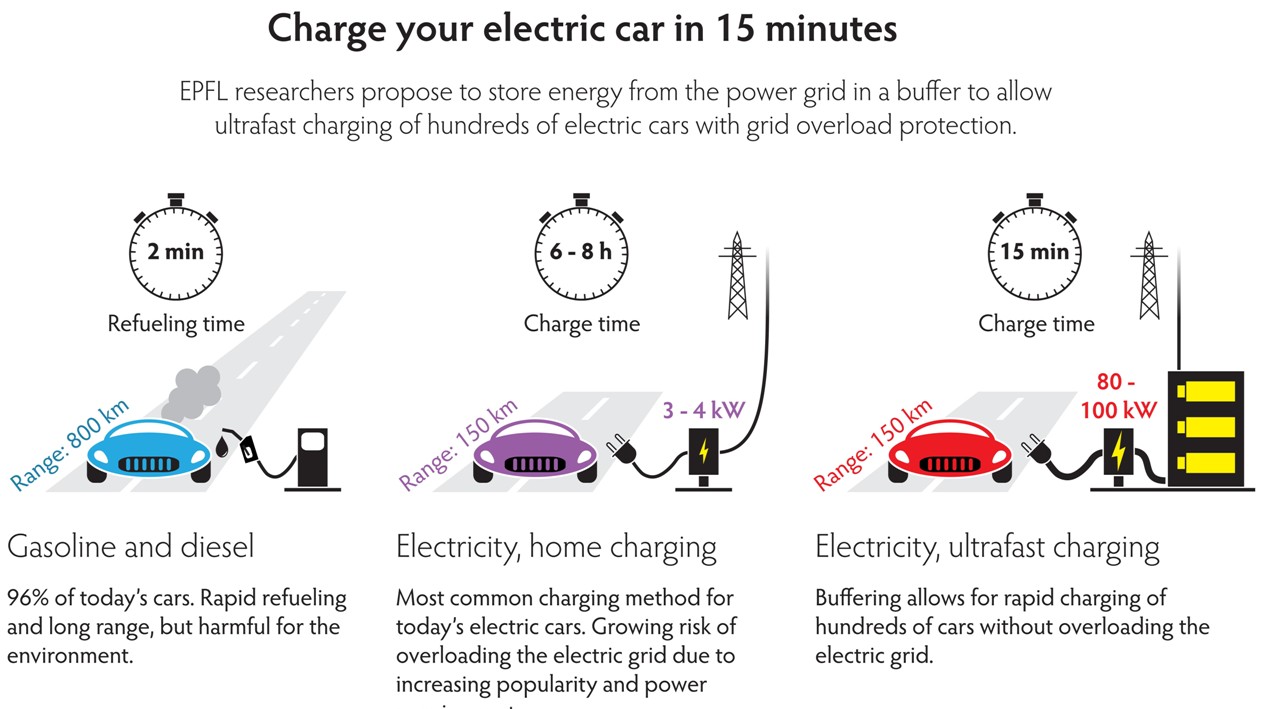
Electric cars will be competitive when they can be charged in the time it takes to fill the gas tank. EPFL researchers have found the solution to this problem without bringing down the power grid: intermediate storage.

Electric cars will only be truly competitive when it doesn’t take longer to charge them than it does to fill a gas tank. The storage capacity of batteries is improving exponentially, but the power grid is the weak link: how could it possibly charge thousands of cars at the same time? This is especially problematic in the case of ultra-fast charging, which requires more than 10 times more power. EPFL researchers have found the solution: intermediate storage.

It only takes a minute and a half to put enough fuel into the tank of a diesel car to run for around 1,000 kilometers. After being charged for the same amount of time, the best electric cars will only go six kilometers. The only way to make the charging process faster is to increase the power flow going in. But such a quick charge would require 4.5 MW of power – equivalent to 4,500 washing machines. This would bring down the power grid.

EPFL also provide this infographic to help explain the idea:

The release quotes Prof. Alfred Rufer from EPFL’s Industrial Electronics Lab. as follows:

We came up with a system of intermediate storage. With this buffer storage, charging stations can be disconnected from the grid while still providing a high charge level for cars. And this can be done using the low-voltage grid (used for residential electricity needs) or the medium-voltage grid (used for regional power distribution), which significantly reduces the required investment.

and goes on to explain that:

Intermediate storage is achieved using a lithium iron battery the size of a shipping container, which is constantly charging at a low level of power from the grid. When a car needs a quick charge, the buffer battery promptly transfers the stored electricity to the vehicle. The grid is not even used.

To prove the system works, the researchers at the EPFL Energy Center and Industrial Electronics Lab built a demonstrator together with their partners from the Swiss Federal Laboratories for Materials Science and Technology (EMPA), the Swiss Federal Institute of Technology in Zurich (ETHZ) and the Bern University of Applied Sciences. The demonstrator is a trailer holding the intermediate storage battery. It draws power from the low-voltage grid and, in the space of 15 minutes, provides the 20 to 30 kWh needed to charge a standard electric car battery.

If you’re technically minded the UFCEV team also provide a handy bibliography of academic papers and presentations covering the concept.

DECC Launches a “Consultation to Ensure Regulation in the Energy Sector Encourages Innovation”!

This is such exciting news (to yours truly at least!) that I reproduce the United Kingdom’s Department of Energy & Climate Change’s announcement in full. From their headquarters in London:

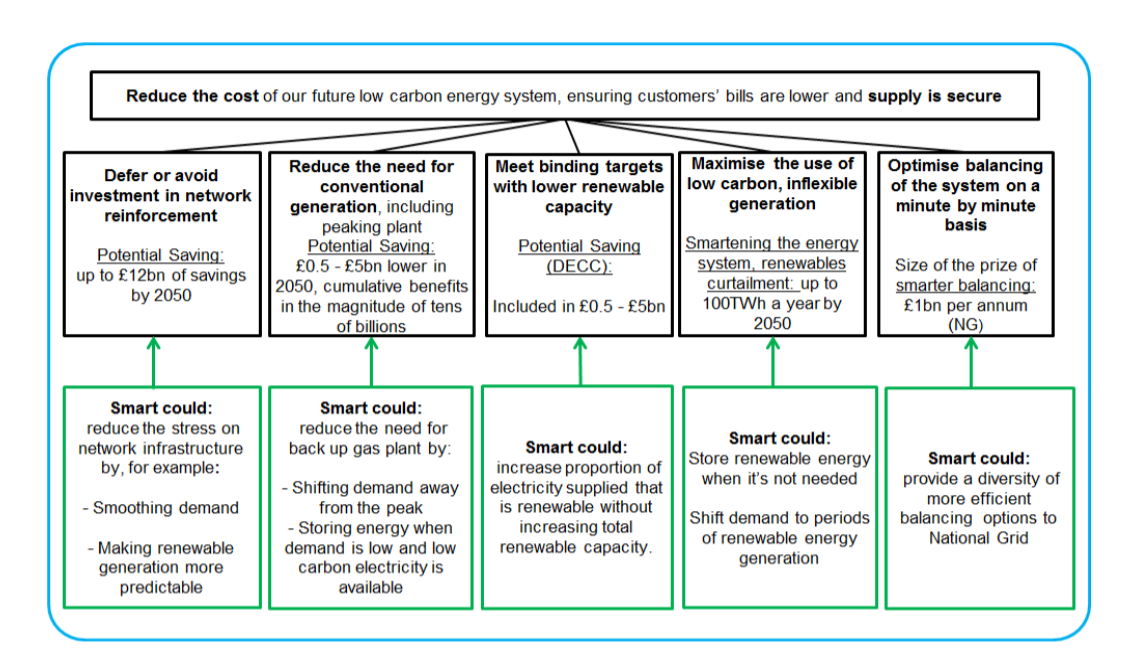
Image courtesy of DECC

DECC has today launched a Consultation to ensure regulation in the energy sector encourages innovation.

DECC invites stakeholders to offer their views on how effective the current regulatory framework is in enabling innovation.

The consultation focuses on the activities of DECC and the Oil and Gas Authority, with other energy sector regulators undertaking parallel engagement exercises.

Lord Bourne commented:

  • Innovation has the power to transform the energy sector and the way we live every day.
  • We are committed to cutting red tape and creating industry environments that foster new ideas and give technologies a commercial edge.
  • Collaboration is key and I look forward to hearing the ideas from industry so we can ensure an innovative energy sector that works for hardworking families and businesses.

The Consultation on ensuring regulation encourages innovation will run for four weeks.

For more information and to have your say please email [email protected]

Rest assured that one way or another I shall be getting in touch with the innovation team at DECC before the deadline of 5 PM on February 11th 2016. Perhaps I’ll send them my past musings on the regulatory framework here in the United Kingdom? If you would like to do so as well all the small print is available from:

https://www.gov.uk/government/consultations/consultation-on-ensuring-regulation-encourages-innovation

which adds that:

In its Productivity Plan, the government required all departments to publish an Innovation Plan by spring 2016. The purpose of each Plan is to set out how departments and regulators are adapting legislation and enforcement frameworks to enable innovation in the form of emerging technologies and innovative business models.

This consultation enables stakeholders to offer their views on current regulatory activities led by DECC and the OGA and how they interact with energy sector innovation. Other regulators are conducting parallel engagement exercises, for which links and contacts are provided within the document.

A related document from DECC, published last month and entitled “Towards a Smart Energy System“, is also well worth a read. It explains some smart energy innovations that the authors would presumably like to see implemented:

A smart, flexible energy system would involve incorporating new forms of flexibility in combination, including energy storage, demand side response (DSR), smart networks,as well as increasing interconnection. It could also involve energy efficiency improvements which target peak demand. Combining these solutions in a whole-system approach would help us achieve the following benefits:

  • Defer or avoid investment in network reinforcement.
  • Reduce the need for a significant increase in reserve generation capacity.
  • Meet binding climate change targets with less low carbon generation.
  • Make the best use of our low carbon generation.
  • Optimise balancing of our energy system on a minute-by-minute basis.

It also summarises some of the associated regulatory “barriers” currently facing us here in the UK:

We have identified some potential barriers that mean new forms of flexibility such as DSR and storage may not develop in a timely or adequate way. This includes market and regulatory barriers, where we need to take a whole system perspective in some of our policies and regulatory arrangementin the future. Existing business models may also mean incumbents have incentives to stick with the status quo. Cultural inertia and skills gaps within existing energy companies may also be a factor in slowing the uptake of these technologies. The presence of these barriers shows that further action is likely to be needed if we want to realise the full potential of smarter energy system.

Energy and Climate Change Committee Discusses V2G

Last year the United Kingdom’s House of Commons Energy and Climate Change Committee launched an inquiry into low carbon network infrastructure in the UK. Initially they sought written submissions of evidence, and are now televising live oral submissions to the committee. Fortunately these events are also recorded, and during the one that took place on January 12th there was much discussion of energy storage in general and electric vehicle batteries in particular. Here’s an extract:

Amongst a variety of other contributions you can hear the chair Angus MacNeil MP ask:

To what extent will electricity demand in future exhibit greater peaks and troughs due to the electrification of heat and transport? What changes will that make in demand?

The first expert witness to respond was Sara Bell, the Chief Executive of Tempus Energy:

I think that depends very much on how we manage that demand. Both the demands that you have mentioned are highly flexible, so that offers an enormous opportunity to match that demand to generation, and variable generation can be matched very successfully to that flexible demand. Every electric vehicle could be charged when we have excess renewable generation. There is a way, from an economic standpoint, of managing that sensibly.

The experts went on to discussheat pumps for bit, and then Dr Philipp Grünewald from the Environmental Change Institute at Oxford University pointed out that:

Electric vehicles could play a very interesting role in helping to balance the system, because they have inbuilt storage, but another debate is ongoing on the extent to which you want to use that type of storage for the grid. We might come back to that.

to which Dr Jill Cainey of the Electricity Storage Network added:

On electric vehicles, it is more that the charging is the critical thing that you need to control, not necessarily using the battery device for the system services. National Grid has a project in which it has looked at that — at providing frequency response.

You may correctly surmise from the name of this blog that I don’t entirely agree with Jill on that point! “Smart charging” certainly has its place, but so might “using EV batteries for system services” in a rather different market and regulatory environment to the current one. The panel discussed that issue a bit later in the proceedings. Sara Bell again:

We have not even started the process of making the demand side flexible. Tempus Energy is the only electricity supplier that unlocks flexibility in customer premises. We go to our customers and we put control and sensor technology into their premises so that we can move their demand. Every time — and I mean every time — we go into customer premises, they are using electricity at times in a very expensive way, completely unnecessarily, because no supplier has ever rewarded them for their flexibility before, so why should they bother?

We are one small new supplier. If the whole market operated like this, we would unlock a great deal of flexibility, which would reduce the total system cost.

Jill Cainey again:

There are some issues with capacity now. That is why we have the capacity market. I guess Electricity Storage Network would argue that that incentivises particular types of technology for security of supply but doesn’t necessarily support the new innovative approaches such as demand side and electricity storage because of the way that market has been designed…

There are technologies and approaches, such as demand side response and aggregation — aggregators are providing demand side response as well. We need to facilitate those approaches to move forward. That is a market approach.

That we can agree on 101%, and I also agree with Dr Gordon Edge who is Director of Policy at RenewableUK who said:

I would argue that some of the time-limiting steps are not technology but the regulatory market approaches. We need to be thinking about how we make the market so that these things, when they are economic, just happen automatically. At the moment, there are too many barriers.

and with Stephen Goldspink who is Director of Strategy and Business Development at Siemens Energy Management, who added that:

Technology and solutions are already available, as my colleagues has already said, so it is about how fast we deploy those technologies and the regulatory barriers that need to be removed to deploy them. Energy storage, demand side management, energy efficiency — all these things can support this capacity margin issue and put us on the journey to low-carbon networks much quicker.

Angus MacNeil then said:

Thank you. I understand what you are saying about regulatory barriers, but we will leave that section there.

Hence so will we, for the moment at least.

Nissan and Green Charge to Deploy Second-Life EV Batteries

In a press release earlier this week Nissan expanded on some of the points Carlos Ghosn made in his speech to Nissan shareholders last month. “In his latest LinkedIn Influencer post, Renault-Nissan Alliance CEO Carlos Ghosn points to encouraging figures for electric vehicles, including the sale of the Alliance’s 250,000th EV in early June”

I don’t see other automakers as competitors when it comes to zero-emissions vehicles. They’re allies. And it is great to see the number of “Alliance allies” growing, as other automakers introduce more affordable EVs to compete with the segment-leading Nissan LEAF.

We reached the 250,000-unit milestone in early June, four-and-a-half years after the LEAF was introduced as the world’s first mass-market, zero-emission vehicle.

We also are seeing demand grow quickly in places where businesses and governments are joining to expand the charging infrastructure, and as more motorists get the chance to experience an EV.

In fact, computer engineer Yves Nivelle, who bought our 250,000th EV, was spurred in part by an incentive in France that encourages owners of older diesel-engine vehicles to trade them in on a new EV.

That sort of enthusiasm is quite common among our EV owners. Our EVs enjoy among the highest levels of customer satisfaction that we have seen for any vehicle. Operating costs are low, they require less maintenance, and they are fun to drive.

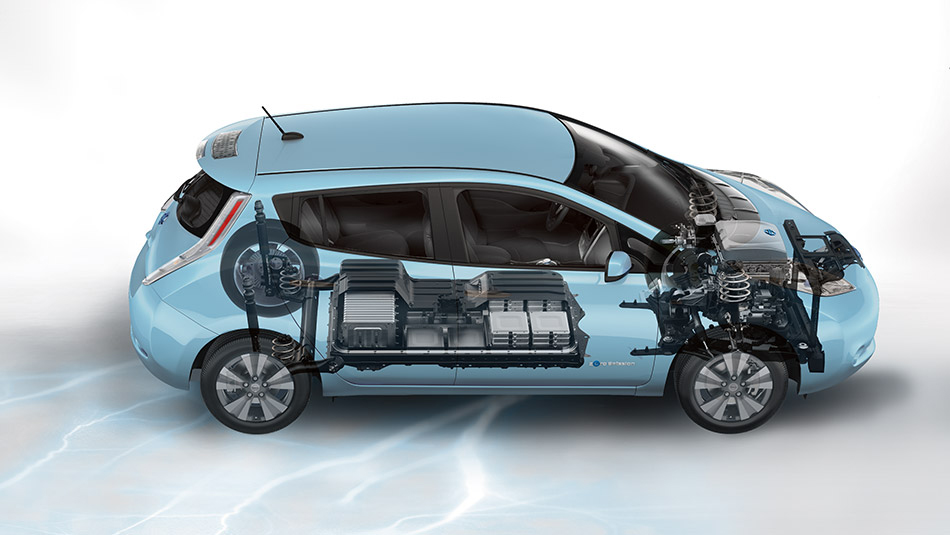
2015 Nissan LEAF cutaway

2015 Nissan LEAF cutaway

In other recent news, companies are forming to take advantage of re-packaging used EV batteries for other uses. Nissan recently announced it is teaming up with Green Charge Networks, an energy start-up, to reuse LEAF batteries to store energy for commercial and industrial buildings.

After many years of service, car batteries eventually need to be replaced. But they still retain enough charge for lighter chores.

When electricity rates are highest, in the middle of the day, a corporate customer can switch its energy use from the power grid to these re-packaged batteries. Or, even better, it can use the batteries to store unused energy from rooftop solar panels. Some homeowners already are doing this by connecting their solar panels to their EVs, to store the energy in the car’s batteries for later use.

Battery technology continues to improve, as well. In fact, the day is nearing when the typical EV motorists will be able to leave home with a full charge, go about their daily routine, and return home with ample charge remaining in their Nissan LEAF or Renault ZOE.

Later this year, you will hear more about our initial steps to increase the range of our EVs. Our goal is to eliminate “range anxiety” for our customers, as we continue our effort to make zero-emission vehicle a mainstream choice.

I missed it first time around, but additional information is available in the “Second-life” press release of June 15th:

Nissan Motor Company and Green Charge Networks, the largest provider of commercial energy storage, have joined forces to deploy second-life lithium-ion vehicle batteries for stationary commercial energy storage in the U.S. and international markets.

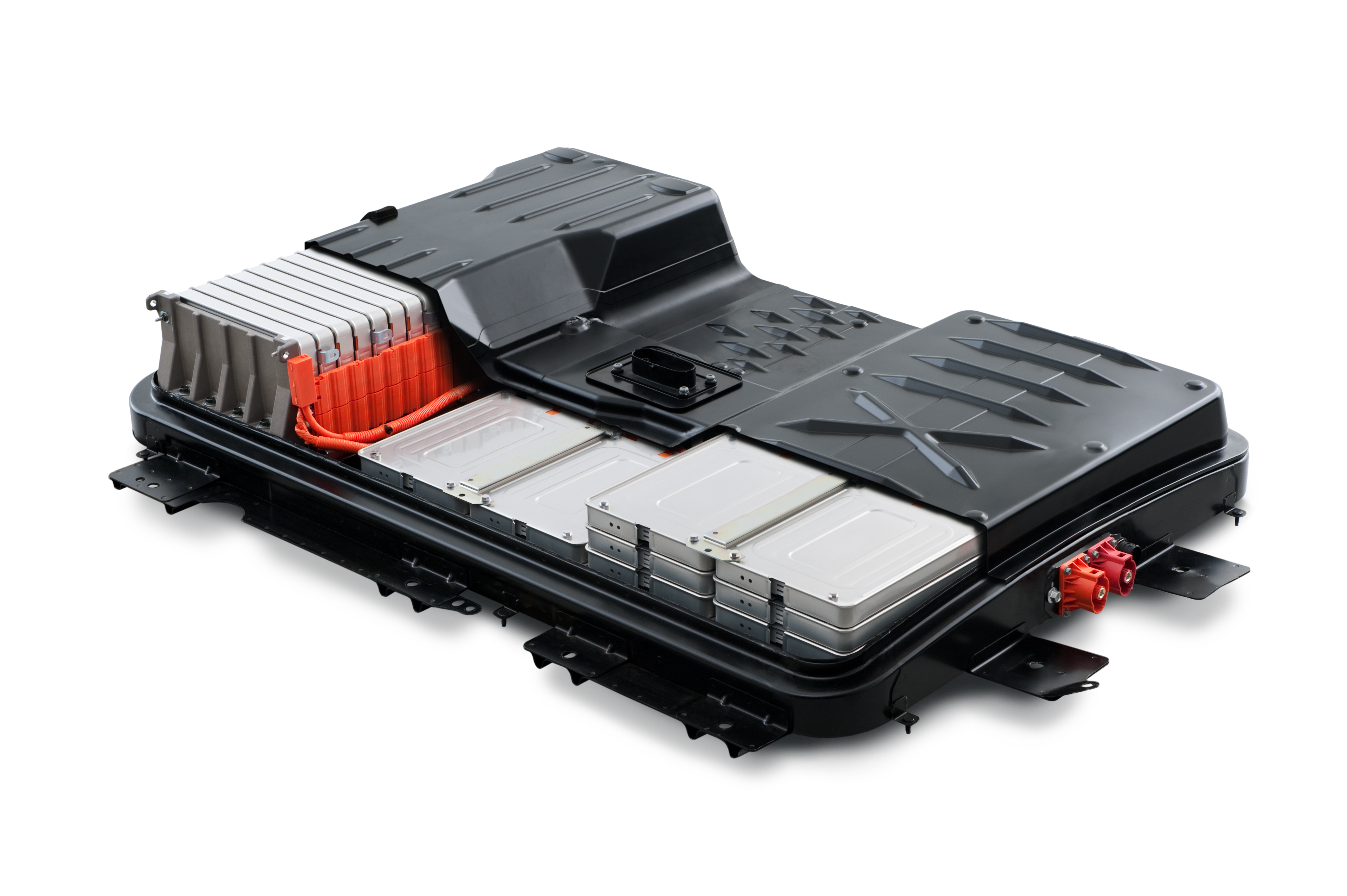
2015 Nissan LEAF battery pack

2015 Nissan LEAF battery pack

As part of the company’s commitment to sustainability and reducing greenhouse gas emissions, Nissan has conducted multiple research projects in Japan, the U.S. and Europe to use LEAF batteries outside the vehicle through 4R Energy, a joint-venture with Sumitomo Corp. formed in 2010.

In a new stationary storage application powered by Green Charge’s intelligent software and Power Efficiency Agreement™, the second-life energy storage unit has a cost advantage over traditional units, opening up new markets where incentive programs are currently not offered.

Engineering teams from both companies have worked together for more than a year to ensure safety, reliability and performance of this offering for commercial customers.

The first combined storage unit will be installed at a Nissan facility this summer, where multiple Nissan LEAF batteries will be configured to offset peak electricity demand, creating savings while also benefiting the utility grid. Systems like this also can be paired with renewable energy sources such as wind or solar to further reduce a facility’s environmental footprint and enhance energy savings.


The Resilience of the UK’s Electricity System

Coincident with yesterday’s “Fuelling the Debate” report by the House of Commons Energy and Climate Change Select Committee, the House of Lords Science and Technology Select Committee published a report of their own, entitled “The Resilience of the Electricity System“. The Committee say in their overview of the report that:

The Government should not be congratulated on keeping the lights on. It is not acceptable for an advanced economy, hugely dependent on electricity, to sail so close to the wind. It found that we have been forced to generate extra capacity in the system, using expensive measures with heavy reliance on fossil fuel generation. The report urges the Government to improve its long-term planning to avoid squeezing the capacity margin like this.

The Chair of the Committee, Lord Selborne, commented that:

We chose to look at this issue because, such is our increasing reliance on electricity, any blackouts have the potential to bring our communications and vital services to a grinding halt.

The encouraging finding from our investigation is that overall, the resilience of the electricity system is robust, and witnesses told us we have the most reliable transmission network in Europe. But our report found that the Government sailed too close to the wind, allowing the capacity margin, its safety net, to be squeezed too tightly before taking last minute measures. Moreover these measures, which came at a cost to the taxpayer, were in conflict with the Government’s wider aims to decarbonise electricity generation.

We’re entering new and unchartered territory. As we strive for more decarbonised electricity provision, it will become harder and harder to keep electricity affordable and to guarantee security of supply. These are the three irreconcilable pressures of the ‘energy trilemma’, and we feel that there is more the Government needs to do to inform the public about potential higher prices.

We found that new technologies mean that our electricity system is undergoing immense and radical change. The report stresses that the Government must stay ahead of the game, with dedicated investment into research and development across a wide range of technologies, and constant alertness to cyber‑threats. Only then can the Government ensure that it can weather any storm, and continue to keep the lights on in the long‑term.

Delving deep into the report itself, chapter 5 concerns itself with “Changing demand”, and paragraph 143 even mentions vehicle to grid technology, albeit not using that name:

Electric vehicles and electric heat pumps are two technologies that are expected to increase demand for electricity.

If electric vehicles are widely taken up then they will increase electricity demand, though this could be concentrated during off peak hours. On the other hand, a smart grid could allow battery-powered electric vehicles to supply power to the grid, e.g. during peak times when prices are high, and then to recharge during off peak hours. They could also further contribute to electricity security by providing a backup supply during power outages. Electric vehicles are not the only low carbon option for road transport – hydrogen and biofuels (2nd or 3rd generation) also offer potential.

Paragraph 144  goes on to point out that:

Electrification of large parts of the energy used for heating or transport “would change its time-of-use profile, placing ever increasing pressures on the electricity system.” Charging electric vehicles will bring complexity and it will be important that vehicle
charging management systems and standards are carefully designed. Vehicle charging is a manageable problem, since the overnight load can be fitted into the available system capacity. However simplistic charging management solutions will create unfortunate effects, such as cliffs of coordinated switch-on and switch-off. There are other issues that need to be addressed in designing an effective charging system. Unmanaged systems will contribute significantly to peak load, since people naturally
plug in at the point of arrival home and then charge through the evening peak. It is therefore critical that carefully designed vehicle charging management systems and standards at the national level are developed and incorporated into any large scale demonstrations and early roll-outs. These systems need to address both the capacity of the national system and also the local distribution system.

Plenty of sensible suggestions then, which at the end of the day leaves us coming to much the same conclusion as the House of Lords Select Committee:

We recommend that the Government supports research, development, demonstration and early deployment across a diverse range of technologies. This should include electricity supply, demand side response, storage and smarter networks [and V2G!].
Particular attention should be paid to technologies that could strengthen electricity system resilience and how these technologies fit together in systems.

Given budgetary constraints, there will be a need to prioritise some technologies over others. We recommend that the rationale for these choices is clear, transparent and made publicly available.

Implementing that final sentence would certainly be a big improvement over the current state of affairs!

Catherine Mitchell Meets Exeter Community Energy

On Tuesday I attended a meeting organised by Exeter Community Energy. The theme for the evening was “UK Energy Policy and the role of community energy”, and the main speaker was Catherine Mitchell who is Professor of Energy Policy at Exeter University, and was a lead author in the Inter-Governmental Panel on Climate Change Working Group 3’s recent fifth assessment report. To summarise briefly, Catherine had many more good words to say about community energy than she did about Great British Energy Policy!

It quickly became apparent that Catherine felt that the change “from ‘dirty’ energy to sustainable energy” is happening much faster elsewhere in Europe, and further afield, than it is here in the UK. After taking a while to consider a suitable epithet she settled on “constipated” as the best descriptor of UK energy policy!

Energy is always political, and has become much more political under the coalition government. Rational evidence based decision making has stopped. The current focus is on nuclear power, with only lip service being paid to renewable generation, demand management, demand reduction and community energy generation.

What positive changes that are taking place are “moving in from Europe”. Catherine moved on to give an overview of the current state of play of electricity generation across Europe. Broadly demand in the 21st century has been constant, with a slight dip due to the recession in 2009. The renewables’ share of  total generation has been increasing throughout that period, and the most recent figures show much more renewable capacity being constructed than fossil fuels or nuclear.

In the UK wholesale prices are the 3rd highest in Europe, and interconnections with other countries, which are “very helpful for renewables”, are lacking. Great Britain and Poland “are trying to water down” the EU 2030 framework for climate and energy policies. Conventional utilities are however “under threat” due to the low marginal costs of renewable energy sources, which undermines their business model. However in the UK “self reinforcing governance” makes it hard for new entrants to challenge the “Big 6”, who currently have 91% of the UK electricity market, and even more for energy overall. However “despite this, there are some changes”.

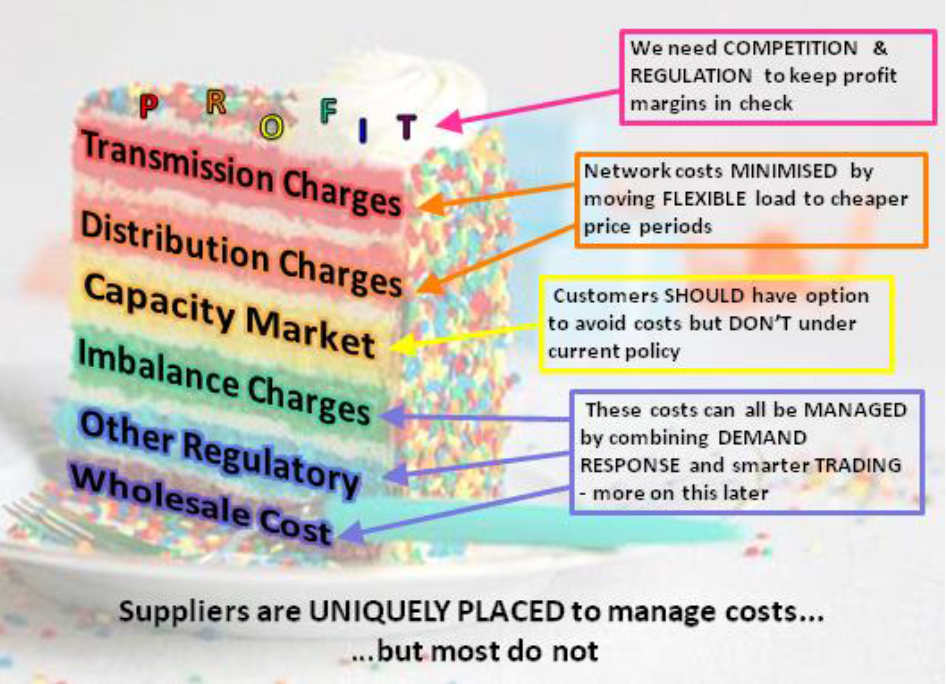
Community energy policy is “very inconsistent”, but there are new demand side entrants such as Tempus Energy, and new financial models from the likes of OVO Energy. Combined heat & power “is starting to come together”, but “the Big 6 don’t want to change. People need to start to do things differently”. Here’s how the UK energy cookie currently crumbles according to Tempus:

and here’s a video in which they explain how matters might be improved by using “a smarter approach for everybody”:

At that point the questions from the audience began. The one that most interested me concerned energy storage, and the possibility of getting paid for providing that useful service. According to Catherine “Norway is doing wonderful stuff, Germany has started, but there are no plans in Great Britain”. A member of the audience pointed out that the Renewable Energy Association had recently launched “UK Energy Storage” to lobby government, apparently:

The trade body for all storage technologies across the UK

I waved my hand in an endeavour to point out that the Electricity Storage Network has in fact been around for quite some time now, and say they are:

The industry association for the promotion of electrical energy storage.

However my turn to ask a question didn’t come around until right at the end of the evening. It seemed apparent that Catherine wasn’t very impressed by current UK energy markets, and I wondered:

Whether any future market based on “Anglo Saxon Capitalism” would be up to the job of solving the “energy/climate conundrum”?

Catherine assured me that she didn’t see capitalism going away for the foreseeable future. The slides from her presentation can be downloaded from the IGov web site.

Last year, in her role as an IPCC lead author, Catherine Mitchell also gave a presentation about UK energy policy at the Transformational Climate Science conference at Exeter University. Here it is:

Catherine also published an article on the IGov web site after that conference. For additional background information please also read:

“In Matters Of Climate Change, The Environmental Requirement Must Take Precedent Over Short Term Economic Goals”

Catherine’s conclusion was that:

We as individuals and communities in civil society have to do all we can to get our politicians, neighbours, businesses, energy suppliers and so on to take climate change seriously. Climate and energy policy must take note of the IPCC warning and act now.

Used Nissan EV Batteries Now Provide Grid Scale Storage

Nissan have recently announced that:

The manmade island of Yumeshima in western Japan’s Osaka is now home to the world’s first large-scale energy storage system, a project that also highlights the potential to reuse electric vehicle batteries.

Hikari-no-Mori – or Forest of Light – is a mega-solar project of 36,000 solar panels built on top of a landfill and managed by Sumitomo Corporation.

The first paragraph is not strictly accurate, since as we reported a couple of years ago, such things have been in use in Spain for a while now. Sumitomo’s press release about the project was nearer the mark stating instead that:

Sumitomo Corporation has developed and installed the world’s first large-scale power storage system which utilizes used batteries collected from electric vehicles.

Nissan did however also release the following video, so we can see for ourselves what the partnership has in fact developed:

According to Sumitomo once more:

Over the next three years, the system will measure the smoothing effect of energy output fluctuation from the nearby “Hikari-no-mori,” solar farm, and will aim to establish a large-scale power storage technology by safely and effectively utilizing the huge quantities of discarded used EV batteries which will become available in the future. This project has been selected as a model project for “Verification of the battery storage control to promote renewable energy” for the fiscal year 2013 by the Ministry of the Environment of Japan.

Sumitomo Corporation created the joint venture company, “4R Energy Corporation”, in collaboration with Nissan Motor Co., Ltd. in September 2010, to address the secondary use of EV lithium-ion batteries. The used EV batteries that will be recycled into this large-scale storage system have been recovered and have gone through thorough inspection and maintenance at 4R, to confirm safety and performance. This prototype system (600kW/400kWh) consists of sixteen used EV batteries.

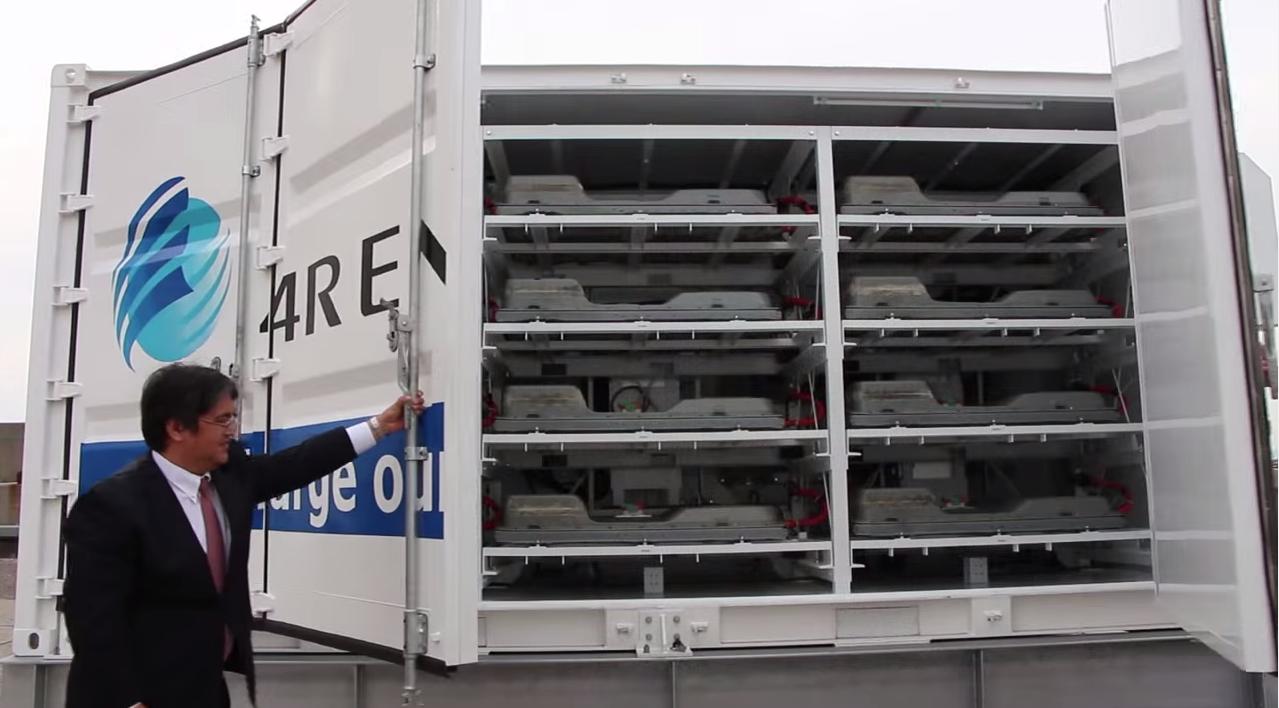
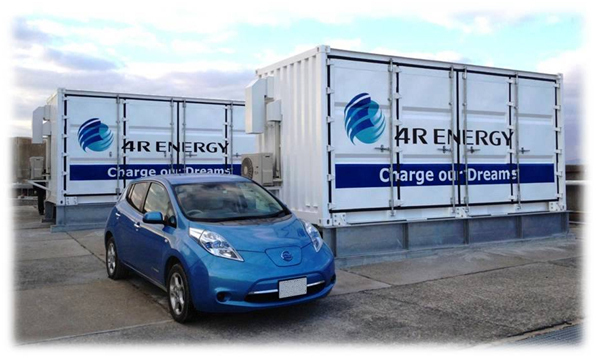
The 600kW/400kWh rating of the Japanese energy storage system compares unfavourably with the 1.1MW/560kWh of the lithium-ion battery Saft system installed in Spain, so it can’t even claim to be the largest such system in the world, but the French system uses new batteries rather than ones that are no longer up to the job of powering an electric vehicle. Here’s what the 4R system looks like:

A glimpse inside a 4R Energy used EV battery storage system

A glimpse inside a 4R Energy used EV battery storage system

It seems to have 12 battery packs per container, although Nissan claim that:

A joint venture between Sumitomo and Nissan called 4R Energy – Reuse, Resell, Refabricate and Recycle – uses 16 lithium-ion batteries from EVs to help monitor energy fluctuations and store the solar farm’s energy output.

Judging by both Nissan’s video and Sumitomo’s picture there looks to be two of those on the man-made island, so maybe the actual number is in fact 24?

Continuing with some further (hopefully accurate!) quotes from Nissan’s press release:

Natural energy sources, such as solar and wind, vary in strength and frequency, and the innovative battery management system developed by 4R is the first of its kind, says the firm’s President Eiji Makino.

“Depending on use, a battery’s degree and rate of deterioration and the battery’s condition vary by vehicle,” says Makino. “So 4R has created a technology that allows us to have optimal control in regulating those conditions.”

The project is part of a three-year test under Japan’s Environment Ministry to expand renewable energy resources and power grid management. In Japan, electricity liberalization will be realized after 2016.

The batteries have up to 70% of capacity remaining – the average left after 100,000 kilometers or five years of driving.

Sumitomo General Manager Norihiko Nonaka said his company, in cooperation with 4R, expects to make the results of the project commercially viable in 5 years or so.

“The electricity-value-chain is divided into 3 sections: electricity generation, transmission and distribution. We would like to focus on electricity generation and transmission. If we rely on renewables to obtain energy – like solar and wind – they don’t always generate the necessary amount of energy and that may cause an issue with supply-and-demand,” said Nonaka.

“On the other hand, if the cost of batteries is too high and is economically inefficient, 4R will have to continue to work and investigate the situation and market in the long term, about 5 years or maybe after 2020.

In conclusion I fear I may have to disagree slightly with Sumitomo for a change. Why should “the electricity-value-chain” not also include community renewable energy projects such as the South Brent Community Energy Society’s 250 kW wind turbine, which is located a few miles down the A38 from the V2G offices, and of which I am a proud (albeit modest) shareholder?

Independent Body of Experts Needed to Inform Energy Policy

The Institute for Sustainability at Newcastle University have announced this week that:

The UK’s energy industry is fragmented and a ‘system architect’ is needed to inform technical decisions and take a holistic view of the energy system in order to secure the country’s future energy supply, experts are warning. Now academics at Newcastle University are calling on the Government to create an independent, expert body to inform energy policy.

The recommendation is included in a briefing note on energy policy, being sent today, 6 May 2014, to relevant MPs and other organisations, outlining a number of concerns about the fundamental problems facing the UK’s energy market. These include: energy storage and distribution; energy pricing models; lack of competition; and water use in electricity generation.

The press release goes on to quote Professor Phil Taylor, Director of the Newcastle Institute for Research on Sustainability, as saying that:

Energy is a hot topic at the moment and the Government has made some positive steps to open up competition in the market, but much more work is required – and quickly. There’s an urgent need to reduce carbon emissions while protecting the UK’s future energy security. It’s vital that politicians move beyond short-term political soundbites and instead support those initiatives that could make a real and sustainable difference.

The University is calling on the Government to establish a group of experts that can take a long-term view about what is required and inform technical decisions and energy policy in a more effective manner than the current situation. For instance, debate among policymakers focuses almost exclusively on issues of affordability and emissions reductions, ignoring the vital issue of the energy sector’s use of water. This thinking risks locking the UK into a future in which water availability could put energy security at risk, and power stations could be forced to reduce production or even shut down if there isn’t sufficient water available to keep them safely operational.

The briefing note itself elucidates:

The Energy Act received Royal Assent on 18 December 2013. The Act is designed to establish a legislative framework for the delivery of secure, affordable and low carbon energy. However, we are concerned that the Act does not take into account some of the more fundamental problems facing the energy market, putting the sustainability of the UK’s energy systems at risk. We believe there are five areas that need further consideration:

  1. Energy storage and distribution
  2. Energy pricing models
  3. Competition
  4. Water use in electricity generation
  5. The need for a system architect

Here at V2G we have long championed the cause of distributed energy storage, so we have nothing to quibble about with this from the first bullet:

The national electricity network… cannot feasibly be replaced. But it will struggle to cope with the substantial additional demands likely to be placed on it over the coming decades, such as decarbonisation and additional electrification of transport and heat demand.

Policymakers and energy providers need to do more to understand how and why customers use and generate energy, so they can look at ways to enable behaviour change and reduce demand on the network in peak times.

  • We need to find ways to store energy efficiently and effectively when plentiful and low carbon so it can be released during periods of high demand, high carbon or to keep the lights on after major storms have damaged network assets.
  • In addition, smart grids… will provide better understanding of when and why people use energy in the ways they do.

Moving on to competition:

The way energy provision is managed needs to be transformed. Currently, companies that develop and build energy generators, whether wind farms, solar panels or tidal turbines, have to sell the energy they produce on the wholesale market. This puts them at a serious disadvantage to the big six energy suppliers, who can generate energy and then sell it back to themselves at preferential rates, before selling it on to customers at a profit.

Agreed. Pricing models next:

  • Currently, energy companies make very small margins on each unit of energy produced, so they need to sell volume in order to make a profit. This leads to a bad deal for consumers, as there is no incentive for companies to help customers reduce their energy use.
  • Instead, energy providers should be rewarded for providing tools and techniques that help customers use energy efficiently and cost-effectively.

So far so good, but how might that second bullet be implemented in practice?

The Government needs to work with the energy industry to fundamentally change the way energy is priced, to enable us to move from a system where generation follows demand to one where demand is based on the cost of generation, storage and distribution at any given time.

For us here at V2G this is the 64,000 ExaPound (E£64k for short) question. That’s very easy to say Phil, but how on Earth do you achieve it in practice? Given the fact that I sit on international standards committees that discuss this sort of thing on a regular basis, perhaps I might rephrase the question as “What international standards for deregulated energy markets will be required in order to facilitate a system in which demand follows generation + storage at any given time?”

The Guardian “Energy Industry” section has published an article on this topic, but they seem to me to miss that vital (IMHO!) point. They lead off with a picture of some electricity pylons with no storage in sight, and say that:

The government must urgently establish a strategic authority to oversee the future growth of Britain’s ageing energy infrastructure, a study argues on Tuesday .

Academics at Newcastle University challenge the government’s market-based approach, saying the £100bn needed to secure energy security is not being delivered by a fragmented system that lacks central direction.

The academics, led by Prof Phil Taylor, argue that the country needs a “systems architect” and that energy, at least for the bulk of the population, is too cheap, which is leading to waste.

While the Labour party has already said it wants an energy security board, one leading figure in the industry has said that Taylor was highlighting that “nobody is in charge” of the country’s energy policy.

The Guardian doesn’t mention the word “standards” once, and neither do Newcastle University. Here are their concluding bullet points:

  • There are a number of problems facing the energy market, and policymakers need to think seriously about the wide ranging and long lasting effect their decisions will have.
  • The Government needs to ensure that the price of energy reflects the cost of storing and distributing it, as well as generating it, and that those firms that provide energy to the wholesale market are rewarded fairly with respect to those who sell it direct to consumers.
  • In addition, the impact of energy generation on water availability must be considered to avoid a future in which the UK faces power shortages and even blackouts.
  • Finally, the Government should make better use of independent experts when considering energy policy.

Hear, hear! To that last bullet point at the very least! For the Guardian and anybody else out there that might be interested, here’s what some storage in Spain looks like:
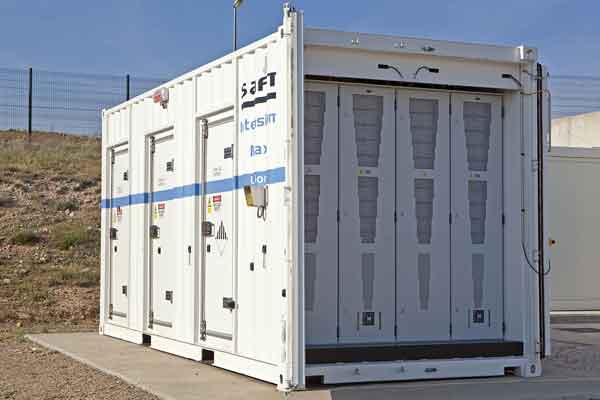
Saft 1 MW Li-ion storage module in northern Spain

Saft 1 MW Li-ion storage module at Tudela in northern Spain

In Delaware at Least, Electric Vehicles Earn Money From the Grid

Vehicle to grid technology is making money at last, and it’s mainstream news too. In a press release earlier today NRG Energy said that:

Joined by government and industry leaders, the University of Delaware and NRG Energy are celebrating an important milestone for its eV2g project today: becoming an official resource of PJM Interconnection and proving for the first time that electric vehicle-to-grid technology can sell electricity from electric vehicles (EVs) to the power grid.

Cameras were on hand to record those celebrations, and here is the resulting video:

According to NRG’s press release, Delaware Governor Jack Markell said that:

Moving innovative ideas out of the classroom and into the marketplace is critical to growing our economy. The partnership between NRG and University of Delaware perfectly illustrates the potential for research institutions to spur economic development

whilst NRG Executive Vice President Denise Wilson said that:

This demonstrates that EVs can provide both mobility and stationary power while helping making the grid more resilient and ultimately generating revenue for electric vehicle owners.

and University of Delaware President Patrick Harker said that:

I thank all of the industry and policy leaders who have come together around a project that incorporates clean transportation, stable energy and profitable sustainability. And I thank Prof. Willett Kempton and his fellow scientists for leading the way. It might be a few more years before a grid-integrated vehicle sits in every American driveway, but I’m excited to continue the journey.

Personally I suspect it might be a few more years before a grid-integrated vehicle sits in any American driveway, let alone in any British driveway. One of the reasons I say that is covered next in the press release. NRG briefly mention the raison d’être of V2G:

For grid operators, the technology serves as an innovative new approach to energy storage. It has the potential to balance the power provided by intermittent renewable resources such as wind and solar. Energy storage, such as large-scale batteries or those in a fleet of vehicles, can take the wind’s power generated at night and store it to use when demand is higher.

Whilst that potential may well exist, here’s the rub when it comes to reality. Michael J. Kormos, who is senior vice president of operations at PJM pointed out that:

PJM changed rules for participation in the regulation service market to decrease the minimum amount of power needed to participate and we implemented new rules that recognize and compensate faster, more accurately responding resources, such as batteries. We knew that by doing so would attract innovation and would find potential for energy storage or other technologies. We’re glad to be a part of this project and hope that this inspires continued innovation among our partners and others in the industry.

How many other “grid operators” like PJM, whether in the United States or over here in Europe, are going to be willing to change their rules and lower their thresholds for entry into wholesale electricity markets to include an EV sat in a driveway overnight, or even a fleet of 15 Mini EVs as in this project? If the answer turns out to be “none”, then who’s going to do the necessary aggregation and sit in the middle between the EVs in every driveway and the PJM’s of this world?

Be all that as it may, and no doubt having read the same press release as me, the New York Times put a slightly different spin on the story. They point out that:

The scale of this project, using 15 two-passenger Mini E models, donated by BMW, is indeed minuscule compared with the task of keeping the grid system that serves two-thirds of North America in balance, making sure that supply matches demand as precisely as possible.

and quote Michehl Gent, former president of the North American Electric Reliability Corporation (or NERC for short) as saying that:

The Delaware idea is tiny but promising. If we can get our electric vehicles to do more than just be electric vehicles, it will be very well received.

It would certainly be well received by your humble author, although at this juncture in history I cannot help but wonder which of all the currently competing international standards will ultimately ensure that all the electrical, mechanical and financial components of a future smart grid, produced by a plethora of international vendors, will all happily co-exist. There are still a long list of hurdles to be jumped before the realisation of Professor Kempton’s vision of:

[Seeing] the electric car and the wind machine as complementary tools for a low-carbon energy system.

is turned into electrical, mechanical and financial reality.

Andrew Neil Tilts at “Windmills”

In my capacity as a member of the FIX Protocol Limited working group on electrical energy pricing (now inactive) I attended the FPL EMEA Trading Conference at Old Billingsgate in London on Thursday. The keynote speaker at the event was Andrew Neil. Publisher, writer and broadcaster according to the delegate guide. As you might expect Andrew had many insightful and/or amusing things to say about the current state of the global economy in general, and the no longer AAA British economy in particular. It’s probably not much consolation to most of my readers when I say that he was far more optimistic about prospects for the United States than for the United Kingdom and Europe.  I’ve been waiting for someone to post a comprehensive overview of Andrew’s musings, but nobody seems to have done so as yet, so it looks as though I will have to pick up the baton. It’s a tough job, but someone’s got to do it!

Neil Ainger over at bobsguide has briefly covered the first part of Andrew Neil’s speech, but for some reason neglects to mention the considerable amount of time he spent offering his different prognoses regarding the future energy security of us over here in Europe compared to our cousins over in the United States.  According to Neil:

In his opening speech, Neil [the other one] outlined the UK and European economic and political situation for the audience of traders, investors, technologists and financial market participants, warning that loose monetary policy in the UK has the potential to incubate a low wage, high inflation economy. In recent years, wage rises have not kept pace with the cost of living in the UK, depressing demand and creating a downward economic cycle in the country.

You get the idea! Please feel free to read the rest of Neil’s article should you feel the need to experience a pain in all the diodes down your left side. My ears really pricked up however, when Andrew start talking about what he described as an imminent “major geopolitical change” based upon the much improved outlook for United States energy security. He thought that the exploitation of large deposits of shale oil in North Dakota will, almost literally, change the world overnight:

When Mr. Obama was re-elected for a second term in November 2012 only 10% of US oil was imported from the Middle East.  When he leaves office not a single drop of oil will come from the Middle East.

Mr. Neil predicted that in the comparatively near future the US will actually become a net exporter of both Liquified Natural Gas and oil. Consequently Mr. Obama would become “the first Pacific President”, and the United States’ strategic interests and military muscle would move away from Europe, the Middle East and Africa (EMEA for short) towards a “Pan Pacific Pact“. As Mr. Neil put it:

Once that has happened who will keep the Strait of Hormuz open if not the Americans. Even the Chinese cannot do it. They don’t have enough planes.

With that sobering thought still ringing in our ears, Andrew offered to take a few questions from the floor. I waved my arm hopefully in the air, and was the second lucky recipient of the precious microphone. After announcing my name and affiliation I continued as follows:

You’ve already answered most of the questions I had about energy policy, but I do have a couple of supplementary questions. Tar sands, Keystone XL, renewables in the US and renewables in Europe?

Mr. Neil seemed convinced that both gas and oil would be flowing towards the Gulf of Mexico for export in significant quantities. However he didn’t seem optimistic that “windmills” as he called them would save our bacon over on this side of the Atlantic Ocean. I still had hold of the mic at that point, and took the opportunity to gently point out that the correct terminology is “wind turbines”. According to Mr.Neil renewable energy in general, and wind in particular, is far too variable to ever be more than a peripheral supplier of electrical energy, either in Europe or the United States.

By this time I had already handed the microphone back, so I had to bite my tongue while Andrew answered another question or two. After a well deserved round of applause he sat down.  At this point I stood up, jumped onto the podium, handed him my business card and suggested he get in touch at a more convenient time.

Here’s the thing. If Andrew knows anything about what the FPL EEP working group got up to, or what the rest of the United States smart grid working groups and committees are endeavouring to achieve, he gave a very good impersonation of someone who hasn’t got a clue.

Mr. Neil seemed to be similarly unaware that no less an authority than George Osborne recently suggested that low cost energy storage is vital to the UK’s future economic well being. As George succinctly put it last year:

Electricity demand peaks at around 60 GW, whilst we have a grid capacity of around 80 GW – but storage capacity of around just 3 GW. Greater capability to store electricity is crucial for [renewable] power sources to be viable. It promises savings on UK energy spend of up to £10 billion a year by 2050 as extra capacity for peak load is less necessary.