Road Testing the 2018 Nissan LEAF and “RapidGate” Rumours

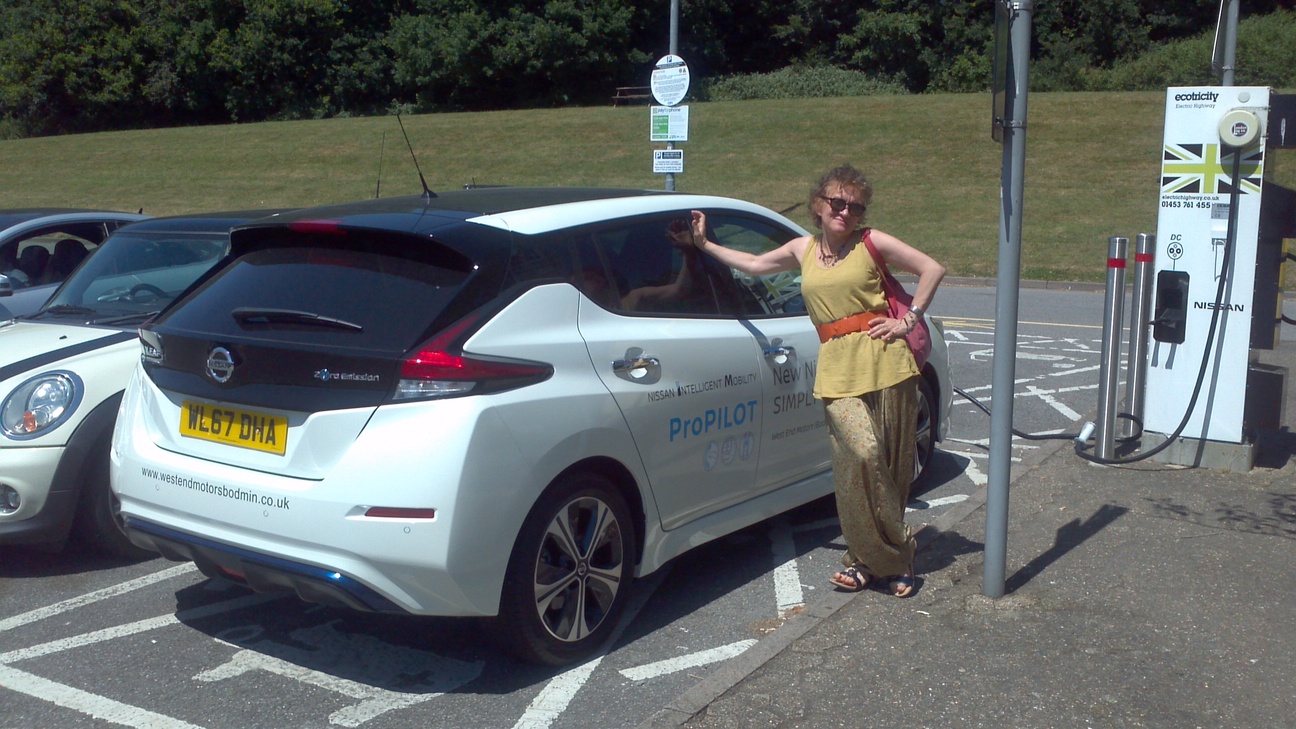
Here at V2G UK we’ve finally managed to complete an extended test drive of the 2018 model Nissan LEAF 2.0! We’d booked a 2 day test a couple of months ago, but had to cry off thanks to yours truly suffering a dose of the “man flu”. This time around my health held up and we picked up our two tone LEAF from West End Motors just down the A30 from here in Bodmin:
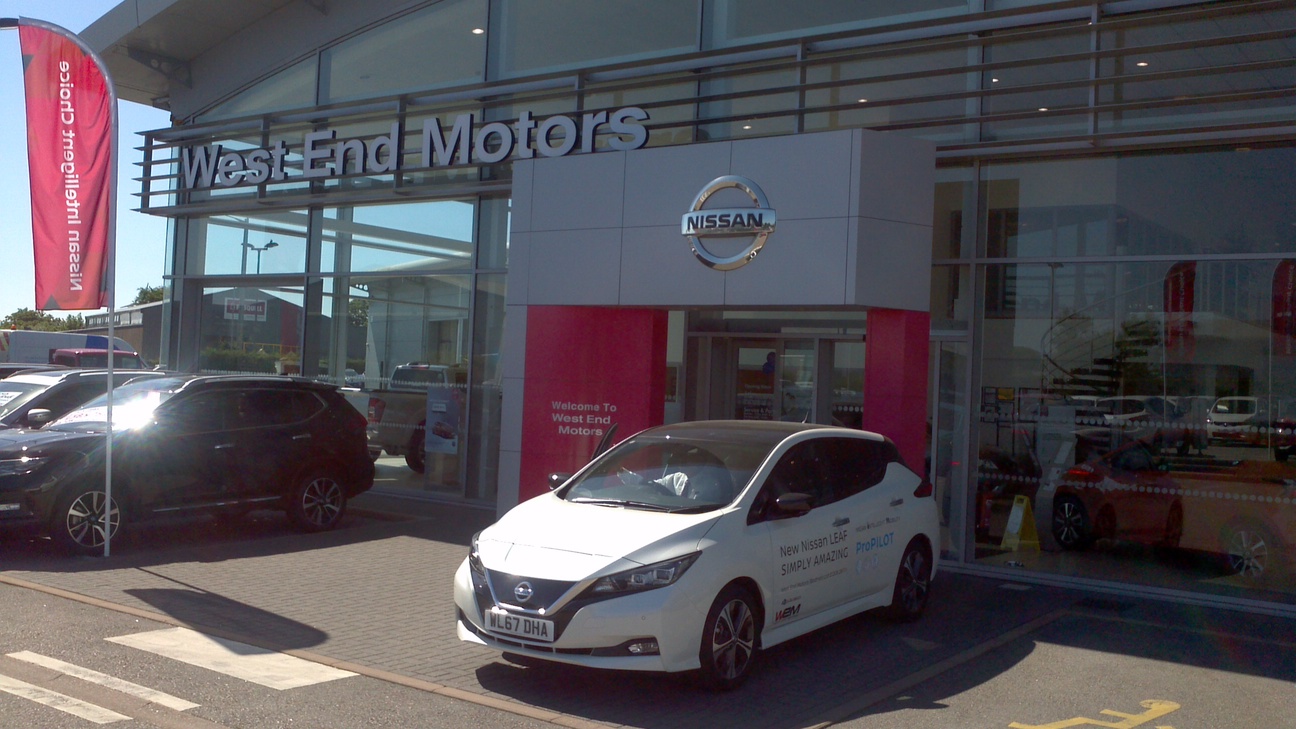
2018-06-26_10-29-07_147

Our test drive was timed to coincide with the Welsh Government’s Connected and Autonomous Vehicles briefing in Cardiff. More on that in due course, but amongst many other things we wanted to discover if there was any truth to the so called “#RapidGate” rumours flying around on Twitter and elsewhere. If that is double Dutch to you then please watch this explanation of the term from the inimitable Bobby Llewellyn:

When the “kerfuffle” started Nissan issued the following “news release” on Twitter:

During our trip we intended to do a lot of motorway driving at 70 mph, including a cross country trip to visit Platinum Nissan in Trowbridge. Much more on proPILOT in due course as well, but we set off up the A30 from Bodmin and engaged Nissan’s by now somewhat autonomous version of “cruise control” with a target speed of 70 mph:
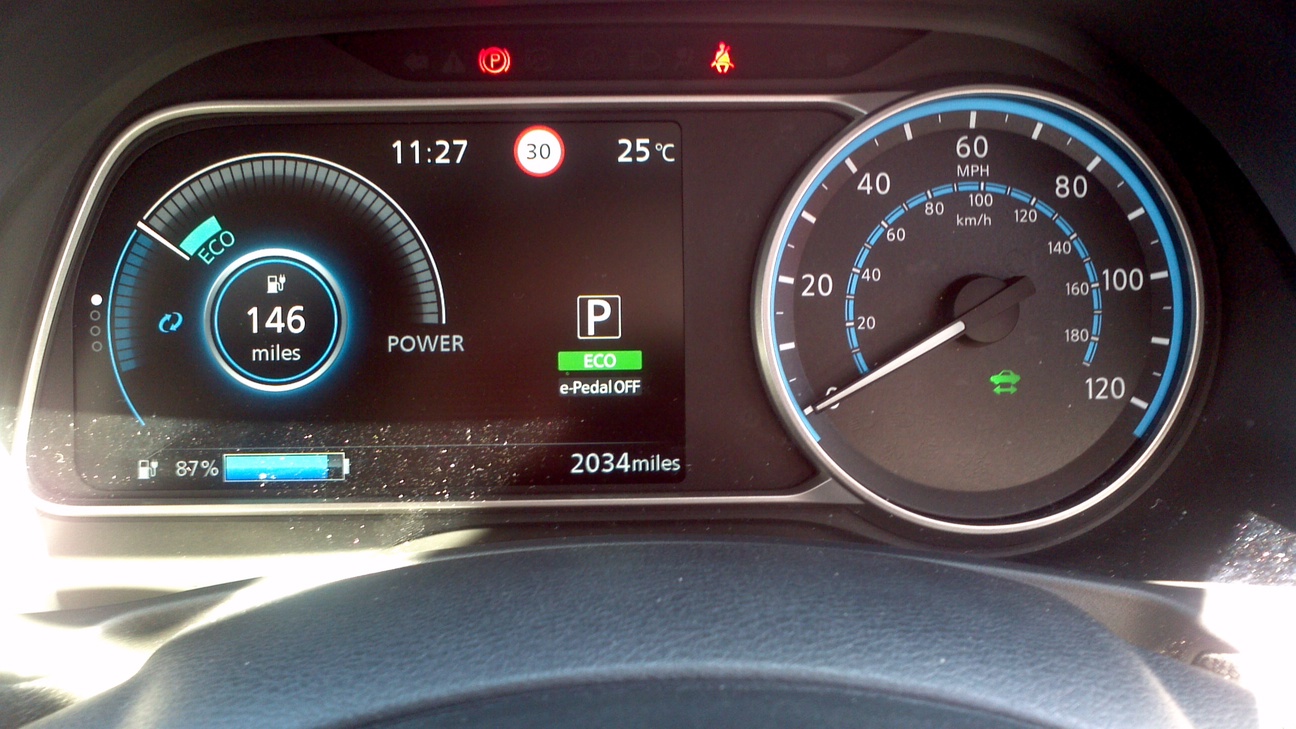
2018-06-26_11-27-10_686

We still had some juice left in “the tank” by the time we reached Taunton Deane Services. According to the LEAF’s clock a distance of 90 miles:
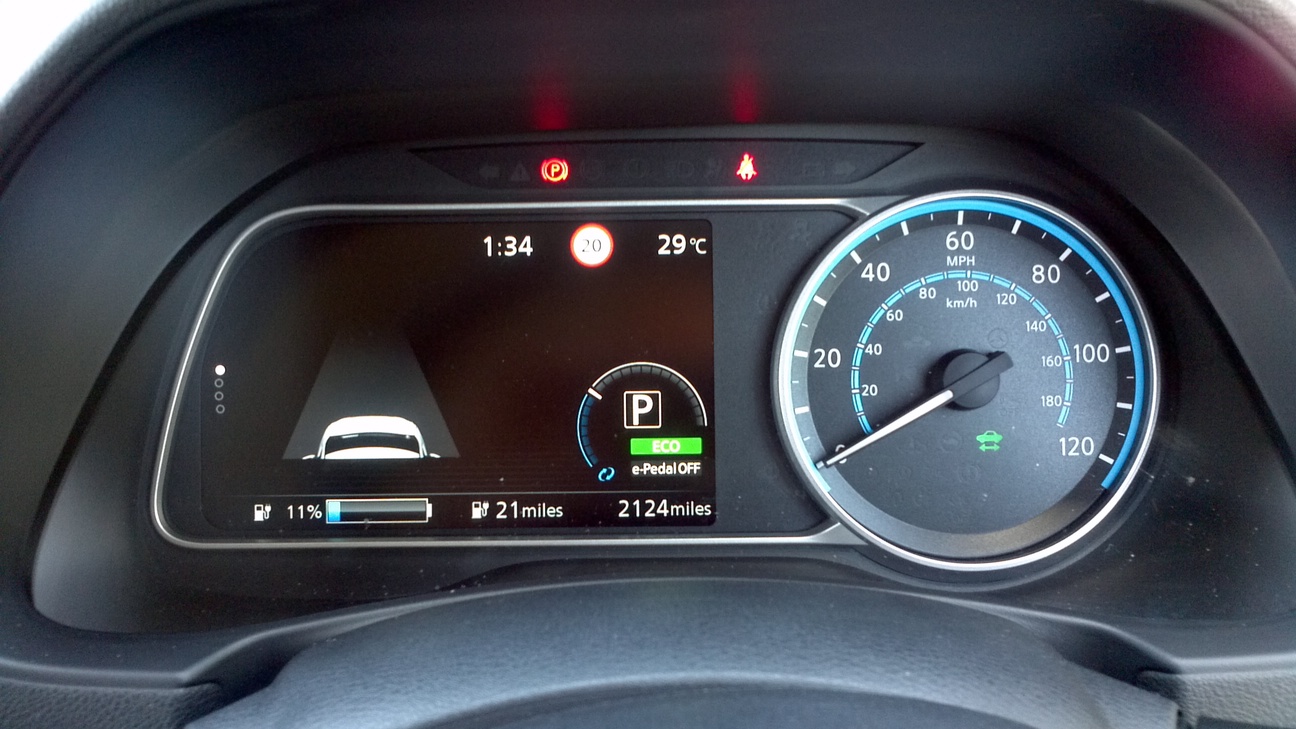
2018-06-26_13-34-15_225

Before heading cross country we plugged in to the Ecotricity charging station:
2018-06-26_13-47-17_336

Having set things in motion we grabbed some lunch, then returned to discover this:

2018-06-26_14-36-Session1

We certainly weren’t “fully charged”, and 25.2 kWh over 48 minutes is rather less than the advertised 50 kW rapid charging. We called Platinum to inform them we’d be arriving late, and enquired whether they had a “rapid” charger. They haven’t!

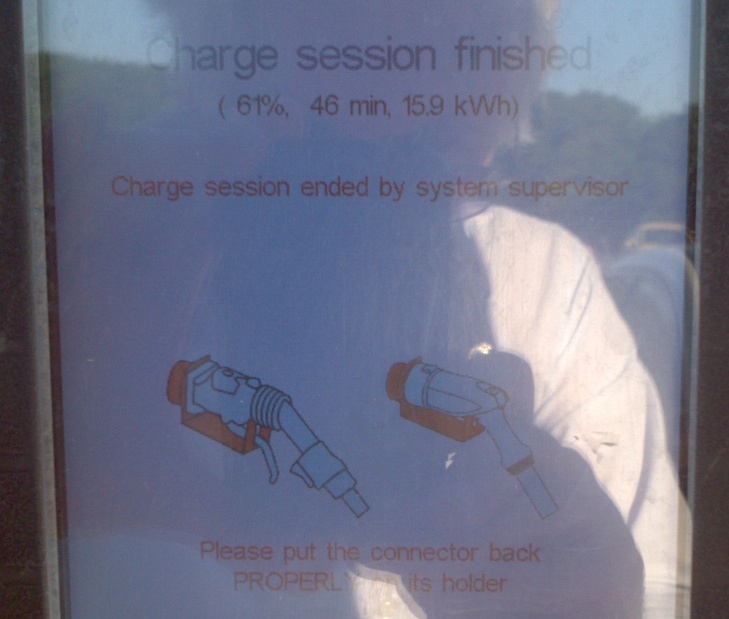
The LEAF’s satellite navigation system directed us to Trowbridge via the A303, and we followed its instructions. Certainly not the shortest route, but arguably the quickest? Once at Platinum we plugged in quickly and topped up “slowly”. Discretion being the better part of valour we departed an hour or so later and headed for Leigh Delamere Services for what we hoped would be a “rapid” charge. We were sadly disappointed:
2018-06-26_18-57-Session2

Our own experience suggests that the #RapidGate rumours are not without foundation, and what is more the issue is not confined to the third “rapid” charging session of the day and beyond.

To be continued……
Next Generation Nissan LEAF to Include “Autonomous” Technology

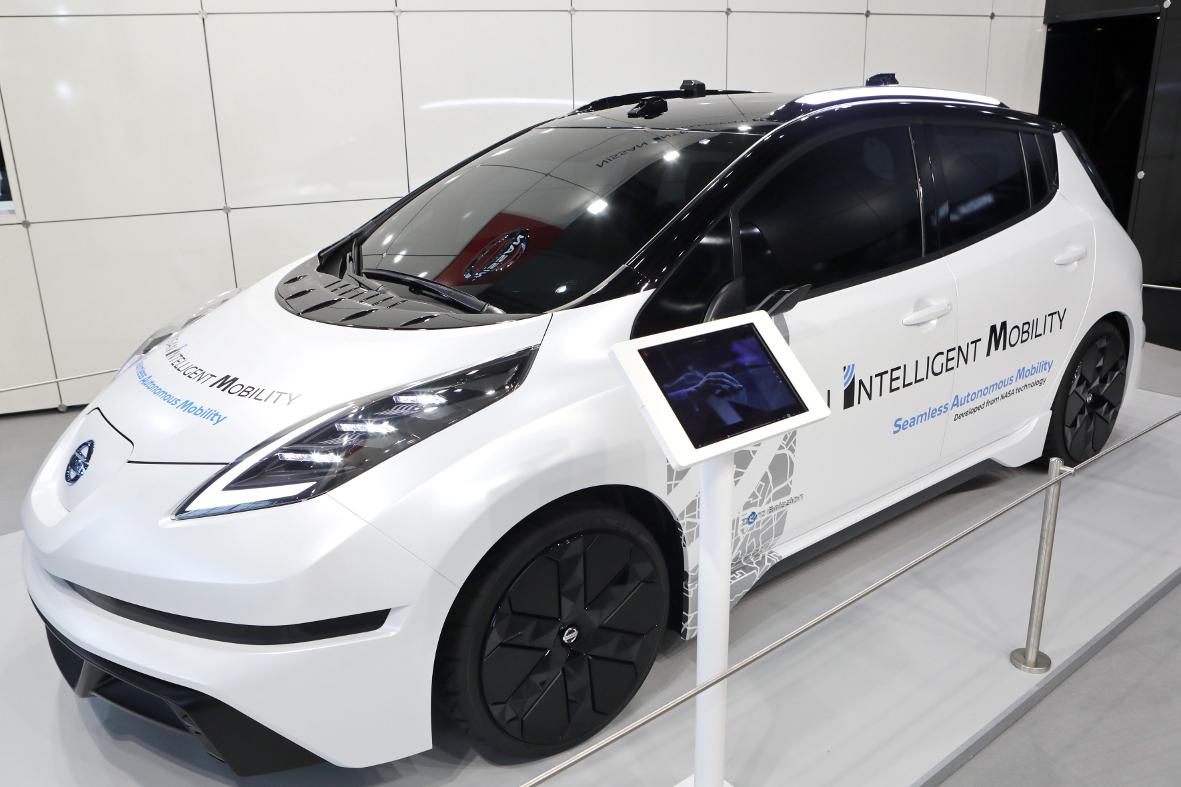
Nissan Europe exhibited at the CeBIT exhibition in Hannover, Germany for the first time last week. According to their press release:

Just weeks after demonstrating its advanced autonomous drive technology on public roads in Europe, Nissan today makes its debut at CeBIT, Europe’s largest digital expo, showcasing innovations set to revolutionise the future of motoring.

At the heart of its display at CeBIT, Nissan will showcase another autonomous innovation – Seamless Autonomous Mobility (SAM) system which was demonstrated earlier this year at CES.

Developed from NASA technology, SAM partners in-vehicle artificial intelligence with human support to help autonomous vehicles make decisions in unpredictable situations such as accidents, road construction, or other obstacles. With SAM, the autonomous vehicle becomes aware of when it should attempt to negotiate the situation by itself, and when it should seek human assistance. Knowing how to manoeuvre these situations will be key to realising a fully autonomous driving future.

Nissan has also confirmed that phase one of its innovative ProPILOT autonomous drive technology will be made available in the new Nissan Qashqai launching in FY17 and the second-generation model of the Nissan LEAF coming soon. This technology enables single lane autonomous driving on motorways and is already available on the Nissan Serena which was launched in Japan last year.

What should we expect from Nissan’s assorted “autonomous” technologies? The answer is provided by Robert Llewellyn in his latest “Fully Charged” video! As Bobby puts it:

Our first ride in a fully autonomous car on public roads in the UK.

What this car can do already, now, is drive itself anywhere on the roads. Obviously this is not available now. You can’t buy one of these Nissan LEAFs yet. This is still a development vehicle.

The idea with this, according to Nissan, is that this will be part of standard cars in around 2020

The next question is obviously “when should we expect the second-generation model of the Nissan LEAF to become available in the UK?”. A partial answer has just been “Tweeted” by Nissan UK:

Meanwhile, and perhaps not entirely coincidentally, the Department for Business, Energy & Industrial Strategy has announced:

The first competition to access funding supporting the creation of test facilities for connected and autonomous vehicles.

Business Secretary Greg Clark launched the first competition to access funding from the government’s £100 investment programme supporting the creation of test facilities for connected and autonomous vehicles today (30 March 2017) at the Society of Motor Manufacturers and Traders Connected Conference in London.

In his speech to an international audience of over 400 industry leaders from the automotive and technology sectors he outlined plans to create a cluster of excellence in CAV testing along the M40 corridor between Birmingham and London.

Time for me to call our local Nissan dealer to try to arrange a “test driven”! Perhaps there’s one small fly in the BEIS ointment though? South West England isn’t “along the M40 corridor between Birmingham and London”.

P.S. Nissan have released a “teaser” video in the build up to the launch of the “next generation” 2018 LEAF:

Will the United Kingdom Become an Electric Nation?

Electric Nation is an OFGEM funded electric vehicle “smart charging” trial project which:

Aims to provide local electricity network operators with the tools to be able to ensure that their networks can cope with [the] massive new challenge [of local electricity networks becoming overloaded], whilst avoiding replacing cables and substations.

The always entertaining Bobby Llewellyn explains the problem with a little help from Roger Hey, Future Networks Manager of Western Power Distribution:

As Roger puts it:

The more cars that you put in a single area, the more stress that you’re going to put on. The network was never really designed to have so many things all in one place. It was designed for powering people’s homes, for cooking. It wasn’t originally designed for transportation fuel as well!

Carl Sanderson of BMW UK adds:

What happens when, let’s say, 25% of the motoring public are plugging in their car at a similar time? Are we going to see massive blackouts? Are the lights going to go out? I think it’s a key point that needs addressing.

Andy Eastlake of the Low Carbon Vehicle Partnership suggests a solution:

One of the challenges is energy storage, and if we’re putting a huge energy storage capability into the cars can we use that to balance the grid?

To which Bobby responds:

So what you’re talking about then is very much vehicle-to-grid, [energy] going both ways, communicating smartly, the whole development of that technology?

Andy outlines the case for “smart charging” instead of full blown V2G, but adds:

There’s a problem with electricity tariffs. We’re not allowed to have lots and lots of electricity tariffs because the perception was the market will be too complex, so that’s one of the things holding back electricity supply companies in delivering creative tariffs.

Ben Godfrey, also from WPD, tells Bobby something he didn’t already know:

Effectively for every EV we connect to the network, it’s adding an extra house.

and points out that:

The interesting thing about vehicles as well is that they follow where people go. People move from town centres in the day, which is where we have the big load, to domestic places in the evening which also mirrors the load on the electricity network. If we could use the storage built into the vehicles to move that power from cities out into domestic areas then that would replace the need for us to put in extra cables which is going to cause disruption to the network.

If we can harness vehicle-to-grid then that can save us from building any extra cables, digging up roads and causing lots of disruption.

Bobby adds:

And potentially from building new power stations. You could time shift that power to a certain extent.

All in all a remarkable good advertisement for full blown V2G at the launch of a “smart charging” trial! First things first though. Is your home currently connected to Western Power Distribution’s network?

If so and if you have or are getting an electric vehicle and if you haven’t yet taken advantage of the UK Government’s home charger grant you may well be interested in finding out more about the Electric Nation trial:

Electric Nation is seeking to recruit over 500 electric vehicle (EV) owners (including pure electric and plug-in hybrids) to take part in the largest trial of its kind. Participants will charge their cars at home using a smart charger which can manage when and how their vehicle battery charges. The findings of the trial will help electricity network operators to manage the effect of the additional load caused by charging EVs on the local electricity network. This is essential for the security of electricity networks in the future and the decarbonisation of the transport sector which is responsible for approximately 21% of the UK’s greenhouse gas emissions.

30 kWh Nissan LEAF Extended Test Drive

We have mentioned the new “go further” Nissan LEAF previously on the V2G blog, and now thanks to JFE Nissan in Exeter we have the chance to test the new 30 kWh battery pack equipped 2016 LEAF for ourselves. According to the Nissan UK web site:

Every full charge will give you a range of up to 155 miles.

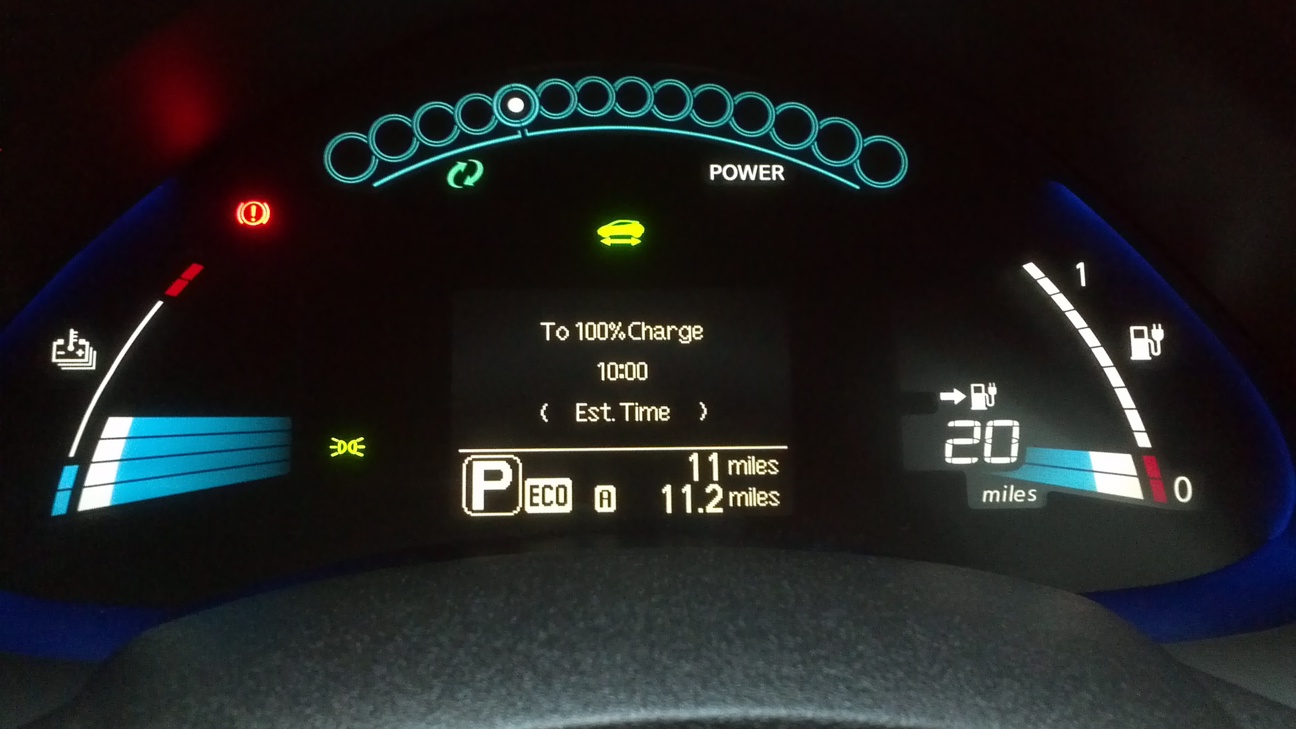
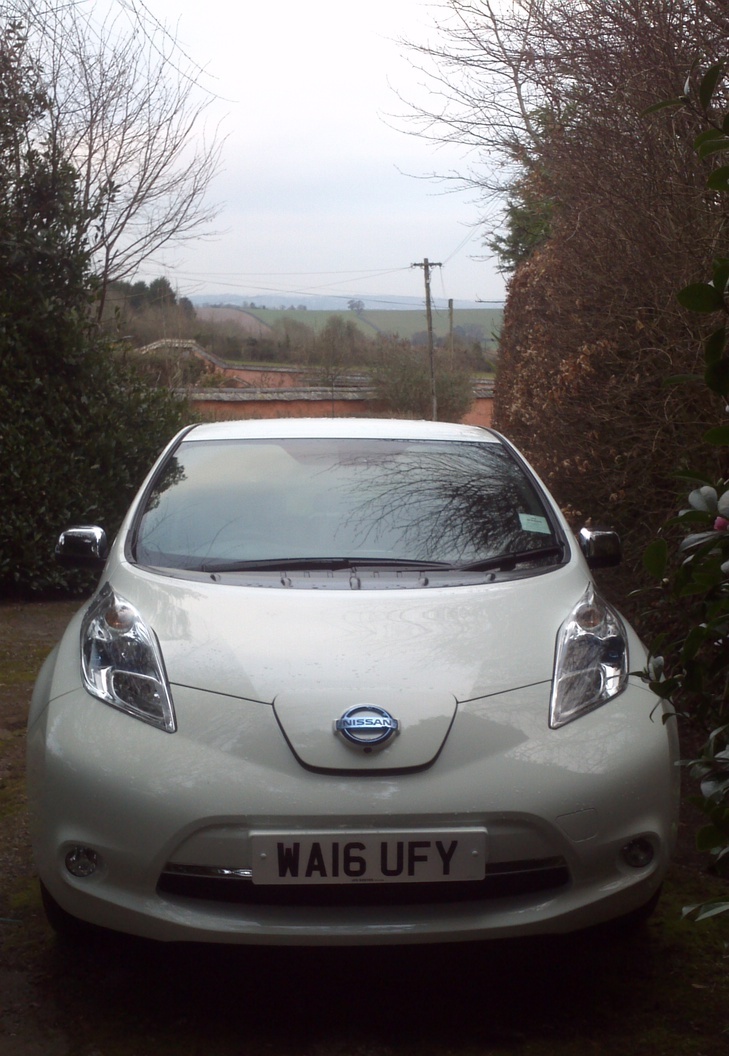
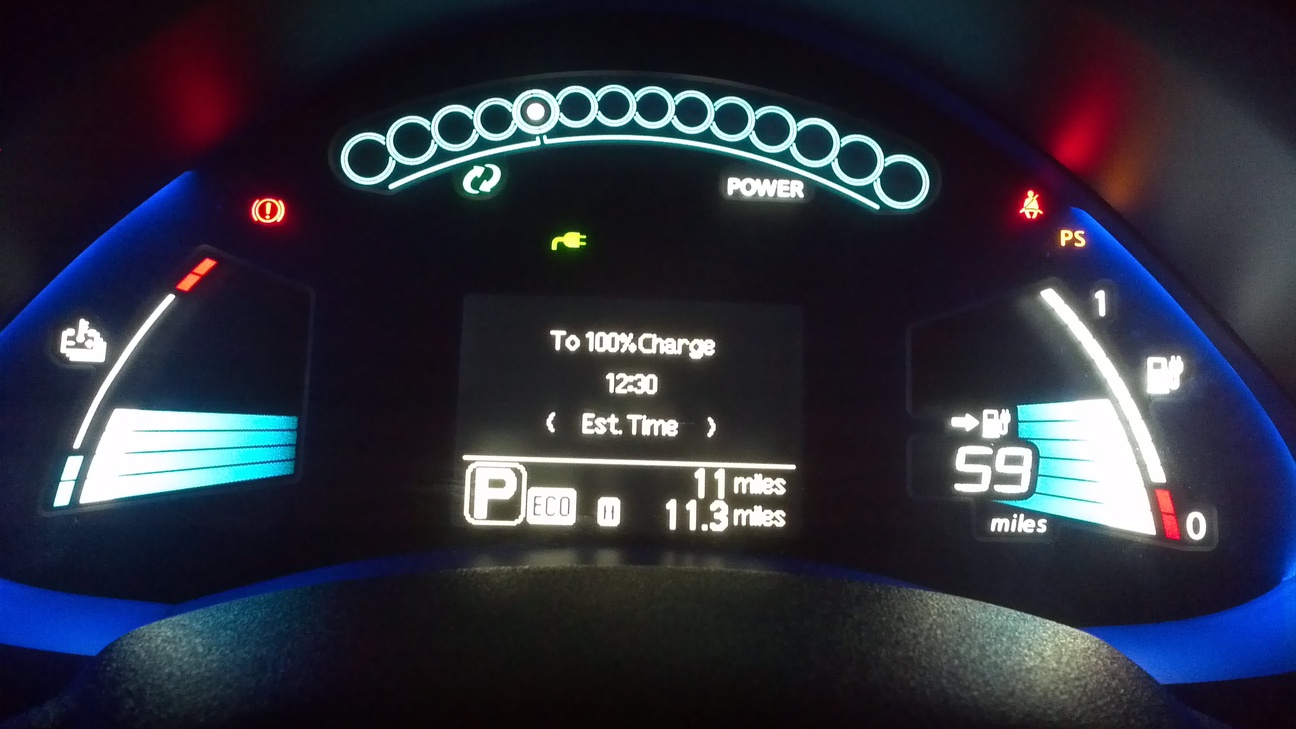
I don’t know about you, but we’d like to check that claim for ourselves! At the very start of our test the odometer on the bright white LEAF we were borrowing read 6 miles as we collected it earlier today, and had advanced to 11 miles by the time we got back to base:

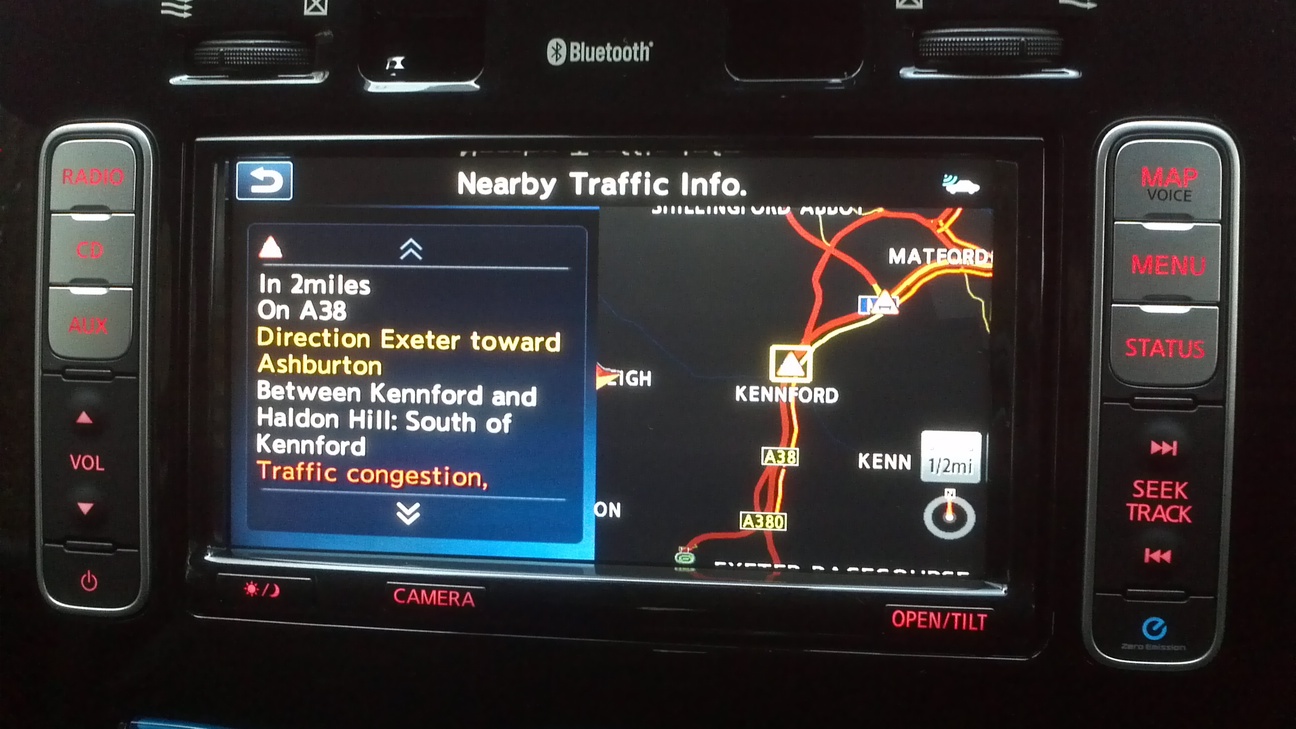
We had intended returning from Exeter to the wilds of the Haldon Hills via a main road. However before we left the Marsh Barton trading estate we consulted the LEAF’s handy traffic news feed, which revealed this:

According to Radio Devon “a caravan’s been abandoned in the inside lane on Telegraph Hill”! Hence we took the scenic route through some narrow Devon country lanes, and ended up with 20 miles worth of range left in the traction battery pack, according to the LEAF’s dashboard at least:

Having previously had some trouble using the rapid charger at Exeter Services, and having to avoid the motorway for other reasons on this occasion, we were in the perfect position to test the LEAF’s 13 amp “Electric Vehicle Supply Equipment” charging lead. We plugged it in at 18:30, and by 22:30 tonight the dashboard told us this:

More from us tomorrow on our Spring 2016 LEAF test, but for now we leave you with the inimitable Robert Llewellyn’s take on the new LEAF:

À bientôt, as I believe they say in France.

Renault ZOE – An Offer You Can’t Refuse? Day 1!

A few days ago I received an unsolicited telephone call asking me if I would like to test drive any Renault car. I said yes, as long as it was possible to test the Renault ZOE in and around Exeter. I was told “Certainly sir, which free gift would you like?”. I gather this offer is by invitation only, but you can nonetheless read all about it here, where it explains that one can:

Test drive and experience any model from the Renault range before 30 September 2015 and you can choose one of three complimentary gifts. Choose from a night away for two in a choice of hotels, afternoon tea for two or a spa treatment.

That definitely seemed like too good an offer to refuse, so I didn’t! The first thing I do at times like this is to take a look at Robert Llewellyn’s always entertaining reviews of electric vehicles on his Fully Charged show. Here’s the one for the Renault ZOE, recorded in 2013:

and here are a few of Robert’s bullet points concerning the ZOE:

  • It’s a small car. It has a really big boot, which is a surprise.
  • It’s got enough oomph to “get you out of trouble”.
  • A range of between 80 and 120 miles.
  • It’s much lighter than the Nissan LEAF.
  • It’s got a really clever heating system, that uses a heat exchanger, and it can also do the other way round. It’s 3 times more energy efficient than conventional heaters and air conditioning systems.
  • It has a 22 kWh battery.
  • It really holds the road well.
  • It’s got very good visibility.
  • When you buy this car it’s much, much cheaper than any other electric car that’s been on the market.
  • When you buy this car you don’t buy the batteries. The batteries belong to Renault, and they rent you the batteries.
  • It is a really nice car to drive. It’s a really simple car to drive.
  • It comes with a special car rental deal. If you buy this car and then you want to “Go to Scotland” or “Go to the South of France”, then you ring up and you book a car and it gets delivered to your house and you’ve got a rental internal combustion engine (ICE) car and you go on holiday [in that instead].

So far so good then, and a couple of days later we had a short drive around the Marsh Barton trading estate in Exeter. We both took our turn at driving the ZOE, and Kasia liked it a lot. Daniel Mann, the Renault Sales Manager at Bristol Street Motors in Exeter, explained that their most attractive offer at the moment is a two year PCP deal for £79 down and then £79/month, which doesn’t include the battery. The small print explains that “Battery hire is £55 per month for 750 miles per quarter“. That also sounds very much like an offer one cannot refuse, but it was at that point that I had to explain our particular circumstances to Dan. The ZOE seems to us like an excellent way of driving a few tens of miles to work and back, but V2G’s home, office and laboratory are all in the same building. We don’t do a daily commute, but we do occasionally drive to Bristol Airport, we do occasionally go on business trips to the far side of London, and we do from time to time go surfing on the north coast of both Devon and Cornwall. Our short test drive hadn’t given us much of a feel for how the ZOE would be able to cope in those situations. As Robert explains in the video above we could always hire a more conventional car as and when required, but then we’d hardly ever use the ZOE!

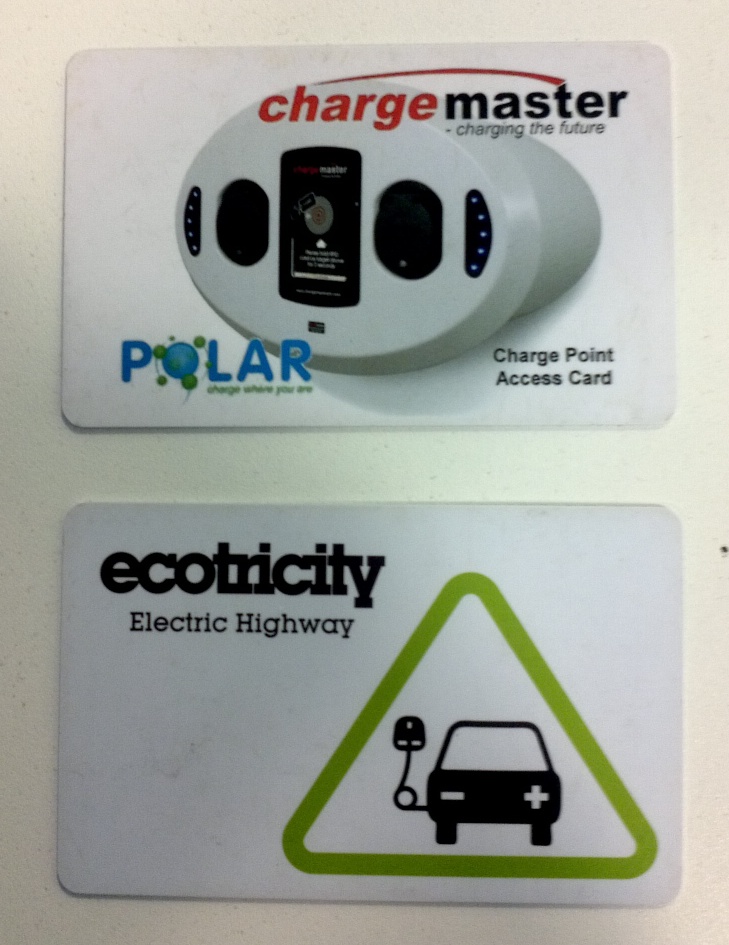
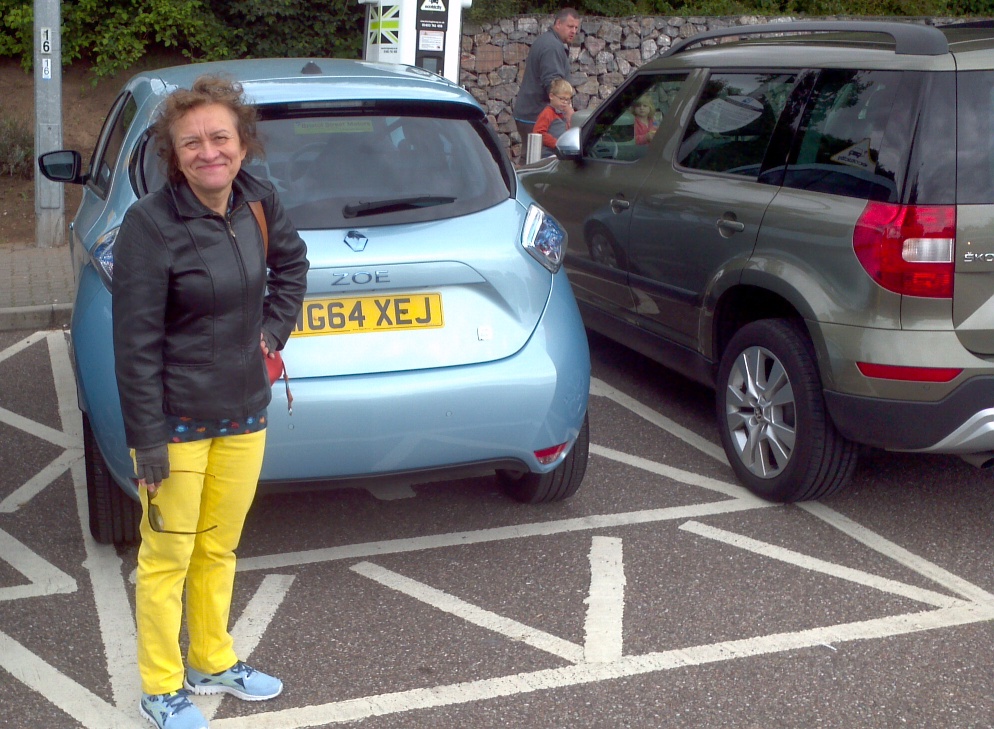
We had a chat to Marc Seabridge, Bristol Street Motors EV specialist (pictured below), and explained that I’d be dropping Kasia off at Bristol Airport the following weekend and then returning to Exeter. I wondered whether we could borrow the ZOE to do that trip, in an endeavour to discover if it was fit for our particular purposes. Marc said yes! When we picked the car up at 11:00 on Friday he lent us a couple of RFID cards so that we could charge the ZOE en route, one for ChargeMaster’s Polar network and one for Ecotricity’s Electric Highway:

The ZOE’s lithium ion battery was about 70% full when we picked it up, so we thought we’d get the hang of charging an EV at a public fast charger by heading straight to Exeter Services, just off the M5 motorway. That’s where our troubles began!

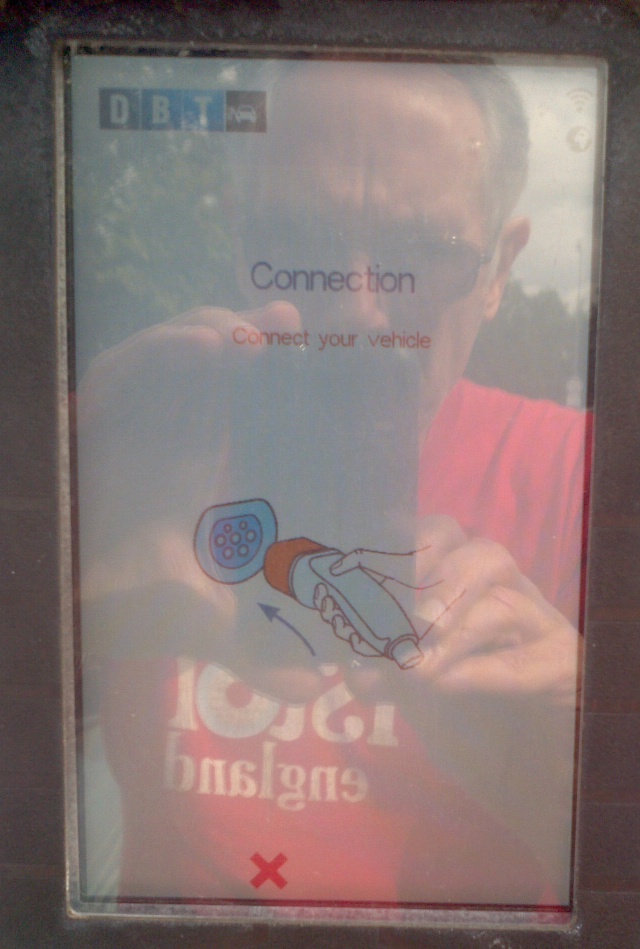
Try as we might, and even with lots of telephone assistance from James Cocks, the Service Manager at Bristol Street Motors, we couldn’t persuade the ZOE to successfully connect to the Electric Highway type 2 fast charger. Here’s what the problem looked like:

Whatever we tried, there was no way we could persuade a little green tick to show itself. Chastened, we headed back to Marsh Barton to top up the ZOE at one of BSM’s own charging points:

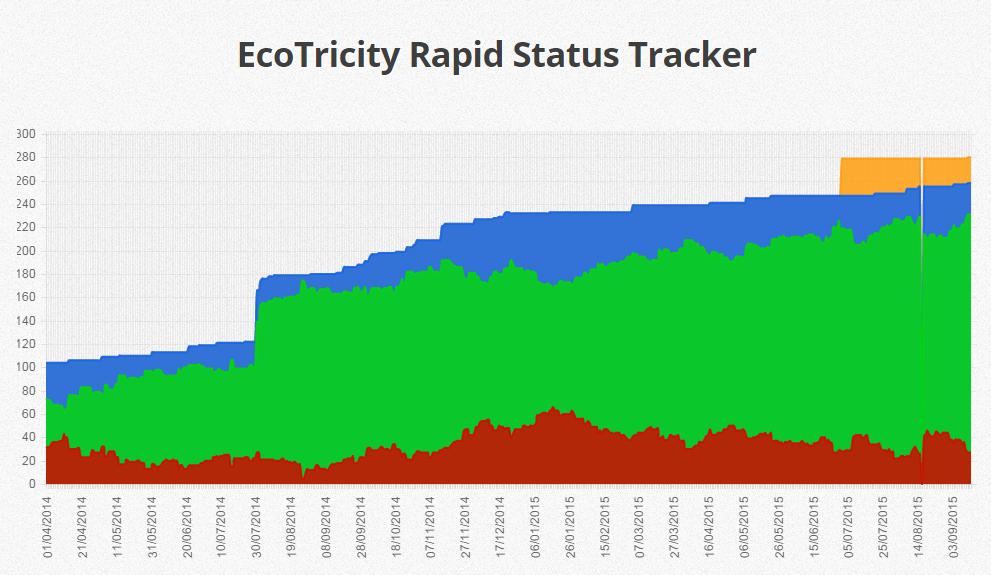
Whilst we waited I telephoned the Electric Highway helpline and explained what we’d discovered. I was told that Ecotricity were already aware of the problem, but they couldn’t tell me when it might be fixed. It seems they have quite a few non functional chargers, and not many engineers available to repair those that cannot be restored to full health via a remote connection from Ecotricity’s offices. Here’s a graphical demonstration of the problem:

To be continued……..

My Electric Avenue Preliminary Results Revealed

Just in case the name is unfamiliar to you, the My Electric Avenue project has been running for a couple of years now. According to the My Electric Avenue web site:

Whilst there’s plenty of capacity to deliver power for EV charging across the UK, if the charging requirements are concentrated in small areas and during peak demand, local feeders can become overloaded. With the development of even faster charging times, this problem shows no signs of fading.

The full size and scale of the problem that EV clusters could cause will only become apparent to Distribution Network Operators (DNOs) when they are already on the network, demanding costly mitigation measures in short timescales.

EA Technology and Scottish and Southern Energy Power Distribution (SSEPD) are working together with partners under the Ofgem Low Carbon Networks (LCN) Fund to develop a ready-made low cost solution. EA Technology is developing an EV charge control system to balance out the charging cycles of EVs at times of network stress.

To test the system the trial is simulating a future EV network, and to do this, clusters of EVs have been ‘created’.

If all that information strikes you as being a bit on the dry side, here’s an episode of Robert Llewellyn’s “Fully Charged” show that explains the project in a more entertaining fashion!

I watched a webinar last week in which some preliminary results from the project were released, but EA Technology had a few internet connection problems due to high winds in the North of England, and the feed gave up the ghost halfway through! To rectify that they’ve made a video of the proceedings available to all and sundry, and here it is:

There’s also a page on the My Electric Avenue web site where you can download additional information.

The data referred to in the video is based on the initial results from an ongoing survey. It explains that the approximately 200 participants who each leased a Nissan LEAF were split into two roughly equal groups. The “technical” group used “smart” or “controlled” charging, whilst the “social” group simply had their EV charging activity monitored. There’s obviously much more detail available from the video and accompanying documentation, but in brief:

  • Only ~5% of people disagreed with the proposition that “EVs are easy to live with”, however
  • 117 out of 193 people “struggle to charge away from home”
  • Of those 117, 12% intend to buy their LEAF at the end of the trial and 43% intend to lease it
  • Overall 17% intend to buy their LEAF at the end of the trial and 41% intend to lease it
  • Even after the “controlled” charging trial 80% of people like to charge their car until it is full
  • Of the people on the “technical” trial, 16% disagreed with the proposition that “My electric vehicle charges sufficiently in the time available to charge”

The concluding section of the presentation points out that the sense of “community” was very important to the success of the project, with “local champions” recruiting friends and neighbours into their “cluster” of EVs a vital element of that.

The final report on the My Electric Avenue project is due to be released by De Montfort University towards the end of October 2015. In the meantime if you are in the EV business and you would like to take a quick survey yourself on the topic of “Industry Views on the Impact of Cycling Electric Vehicle Charging” then you can do so over at:

https://www.surveymonkey.com/s/Y5N8TTV

Electric Land Rover Defender Starts Work at the Eden Project

Land Rover have recently announced that:

The first Electric Defender started worked work at the Eden Project near St Austell in Cornwall this summer in an inaugural real world trial of its capabilities. Unveiled at this year’s Geneva Motor Show, the Land Rover Electric Defender is a pioneering research project into the electrification of an all-terrain vehicle.

The project forms part of Land Rover’s overall sustainability objectives which have included the move to aluminium platforms in the latest all-new Range Rover and Range Rover Sport as well as the forthcoming Range Rover hybrid products. The innovative 4×4 is a rolling laboratory to develop new ideas, and investigate electrification in a real-world environment. A fleet of six vehicles will be placed with organisations where their performance can be assessed.

Here’s what both the Electric Defender and The Eden Project look like:

An Electric Land Rover Defender poses for a picture at the Eden Project

An Electric Land Rover Defender poses for a picture at the Eden Project

The press release also reported the opinions of senior managers involved in the project. Jeremy Greenwood, Principal Engineer on the Electric Defender project, said that:

The car has been modified so it now includes a second battery. That will allow it to work a full day at the Eden Project, but also improves weight distribution and stability. In addition, we’ve linked the land-train’s air brakes to the foot pedal of the Land Rover, enhancing safety.

Gus Grand, Climate Change Lead for the Eden Project, said:

We’re very pleased to be working with Land Rover on this exciting project. It will be a great talking point for our visitors and proves that electric vehicles can be every bit as tough and rugged as their fossil fuel counterparts, while being much quieter, cheaper to run and with zero emissions at the point of use.

Here’s a video of an Electric Defender in action, driven by Robert Llewellyn of “Fully Charged” fame. Feel free to ignore the Ecotricity advert at the end if you so wish:

I wonder if Jaguar Land Rover have any plans for retro-fitting V2H and/or V2G technology to an Electric Defender in their R&D pipeline?