California is keen on V2G!

Take a look at this recording of California Governor Gavin Newsom‘s closing remarks at the Climate Week NYC plenary session earlier this week:

By all means watch the whole thing, but make sure not to miss the part at 4:20 where Gavin says that:

We talk about grids and reliability? Give me a break!

The opportunity now with electric vehicles, and the vehicle-to-grid technology, and the bi-directional opportunity of two way charging creates opportunities for million and millions of batteries on wheels.

Then up on your home, in your phone, selling back electricity to the grid. Taking money not out of your pocket, but putting it now in your pocket.

Low carbon green growth!

In other recent news from the Golden State, Queen Máxima of the Netherlands met with Gavin’s wife Jennifer:

Continue reading →

More March Power Cuts in Cornwall

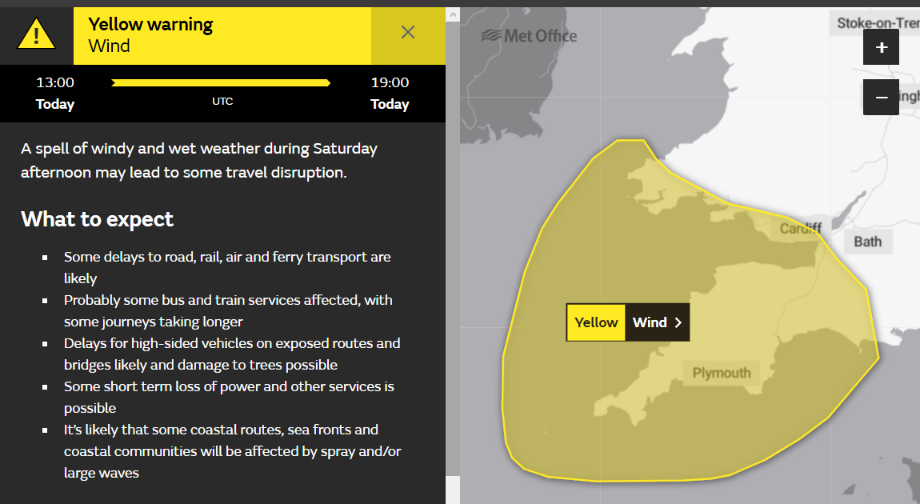
The UK’s Met Office has issued a yellow warning for wind and rain across South West England this afternoon:

As the Met Office point out:

Some short term loss of power and other services is possible.

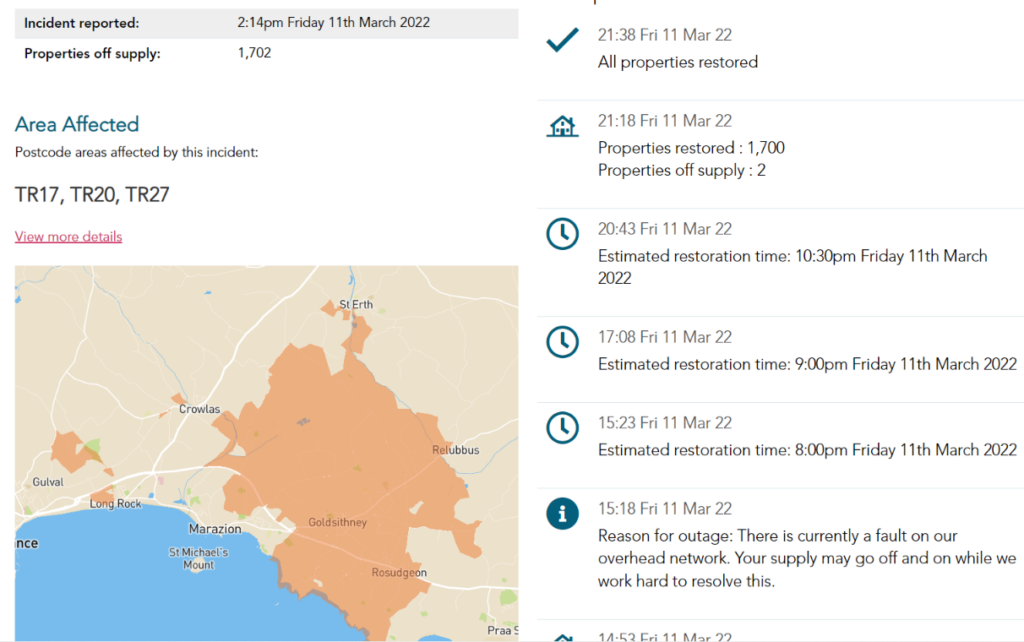
We would go somewhat further, and suggest that some power cuts are likely here in Cornwall. Not least because 1,702 properties near Marazion suffered a power cut yesterday afternoon:

[Edit – 14:00 on March 12th]

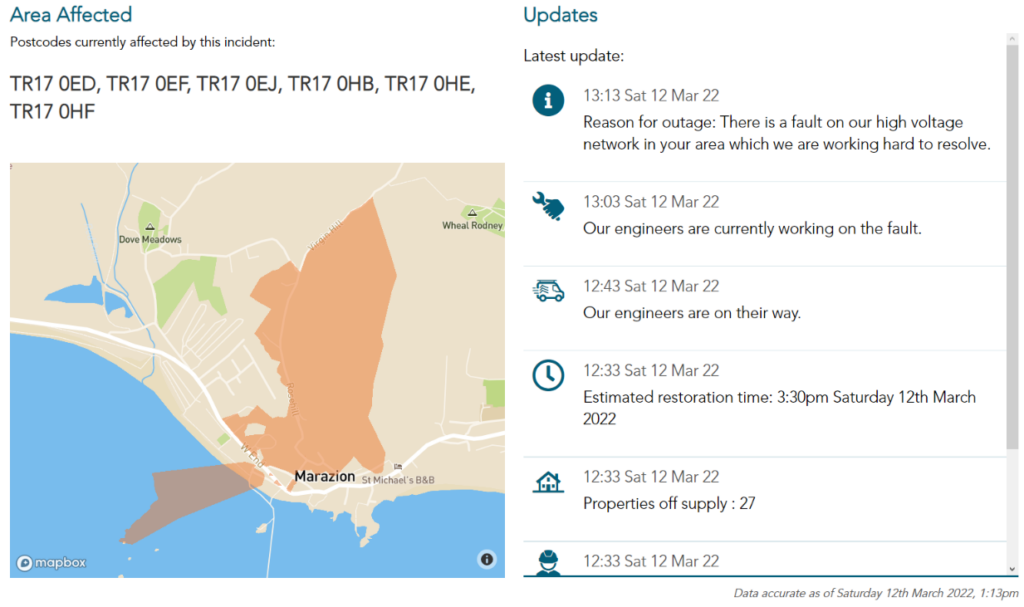
Would you believe that this afternoon’s first Cornish power cut was in Marazion?

Watch this space!

General Motors Announce V2H Pilot Project

A number of commenters on Twitter are getting very excited about an announcement from General Motors earlier today. Here’s GM’s Mary Barra and PG&E’s Patti Poppe talking with Phil LeBeau on CNBC’s “Squawk Box”:

As Mary says to Phil:

Bi-directional charging will help when there’s a power outage or additional demand, to really help supply energy and keep everybody having the energy they need to live their lives.

Phil suggests:

What you guys are talking about doing is making smart vehicles and a smart grid, where the communication happens and I don’t need to be involved. Correct?

Patti responds:

Automatically! There’s like this value stack for electric vehicles that I don’t think people fully appreciate yet. The first is obviously decarbonising transportation, number one and everybody gets that. And it’s a great driving experience. But then you stack on the resiliency play because of the effects of climate change, and then on a peak summer day imagine being able to leverage the fleet of electric vehicles. In California, in fact in my service area alone, one in five electric vehicles sold in America are in my service area, so we can really deploy them to power homes and to enable the grid.

In the accompanying press release General Motors reveal that:

Pacific Gas and Electric Company and General Motors today announced a breakthrough collaboration to pilot the use of GM electric vehicles as on-demand power sources for homes in PG&E’s service area.

PG&E and GM will test vehicles with cutting-edge bidirectional charging technology that can help safely power the essential needs of a properly equipped home. EVs play a critical role in achieving California’s goals for reducing greenhouse gas emissions and already provide customers with many benefits. Bidirectional charging capabilities add even further value by improving electric resiliency and reliability…

Skipping to the “How the pilot will work” section of the news release GM explain that:

PG&E and GM aim to test the pilot’s first vehicle-to-home capable EV and charger by summer 2022. The pilot will include the use of bidirectional hardware coupled with software-defined communications protocols that will enable power to flow from a charged EV into a customer’s home, automatically coordinating between the EV, home and PG&E’s electric supply. The pilot will include multiple GM EVs.

Following lab testing, PG&E and GM plan to test vehicle-to-home interconnection allowing a small subset of customers’ homes to safely receive power from the EV when power stops flowing from the electric grid. Through this field demonstration, PG&E and GM aim to develop a user-friendly vehicle-to-home customer experience for this new technology. Both teams are working quickly to scale the pilot with the goal of opening larger customer trials by the end of 2022.

It seems as though Mary, Patti, Phil et al. are blissfully unaware that pilot projects involving V2H/V2G and several hundred electric vehicles have been under way here in the United Kingdom since 2018.

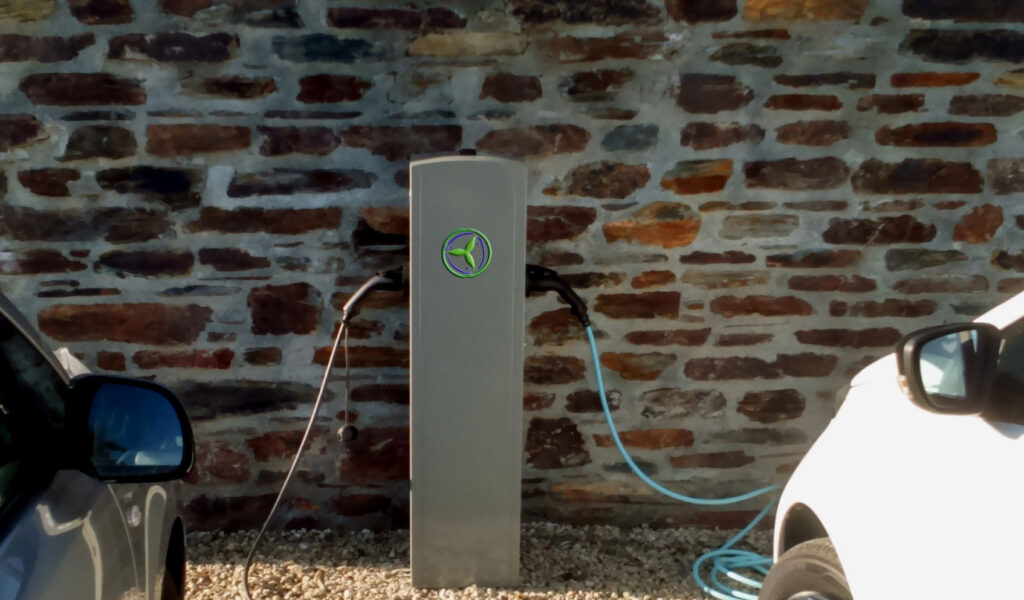
We have even been running a “cutting-edge bidirectional charging technology” project in our very own car park here in wild and woolly South West England for the last couple of years:

For a more detailed overview of the UK pilot projects referred to above please download the presentation available at our sister web site:

“UK ‘Domestic’ V2G and DSR Trial Projects”

Ukraine War Wholesale Electricity Prices in the UK

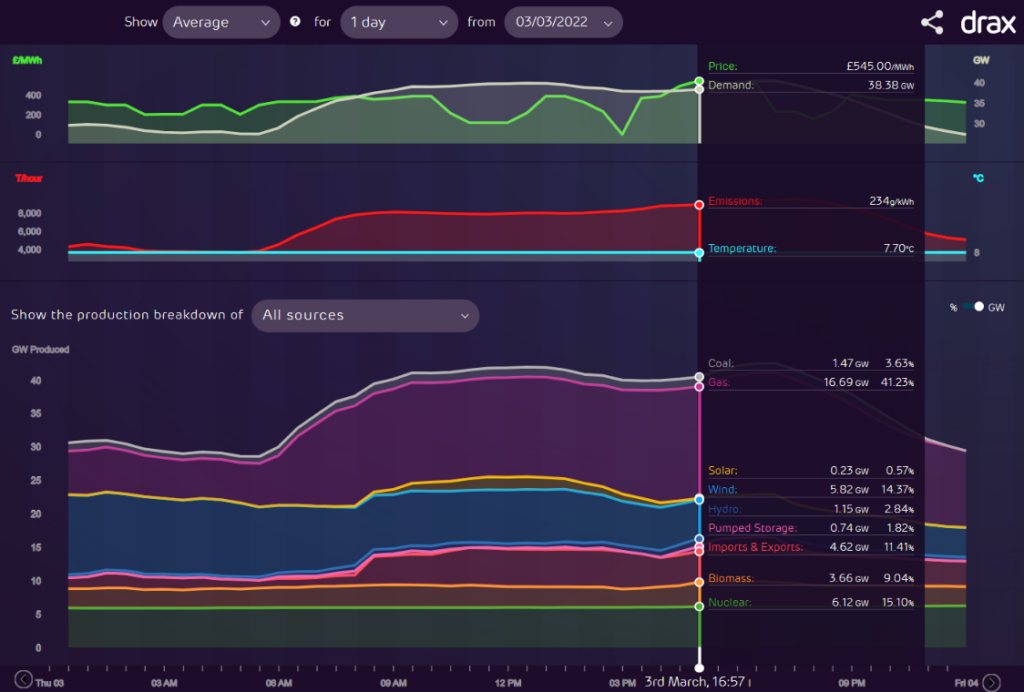
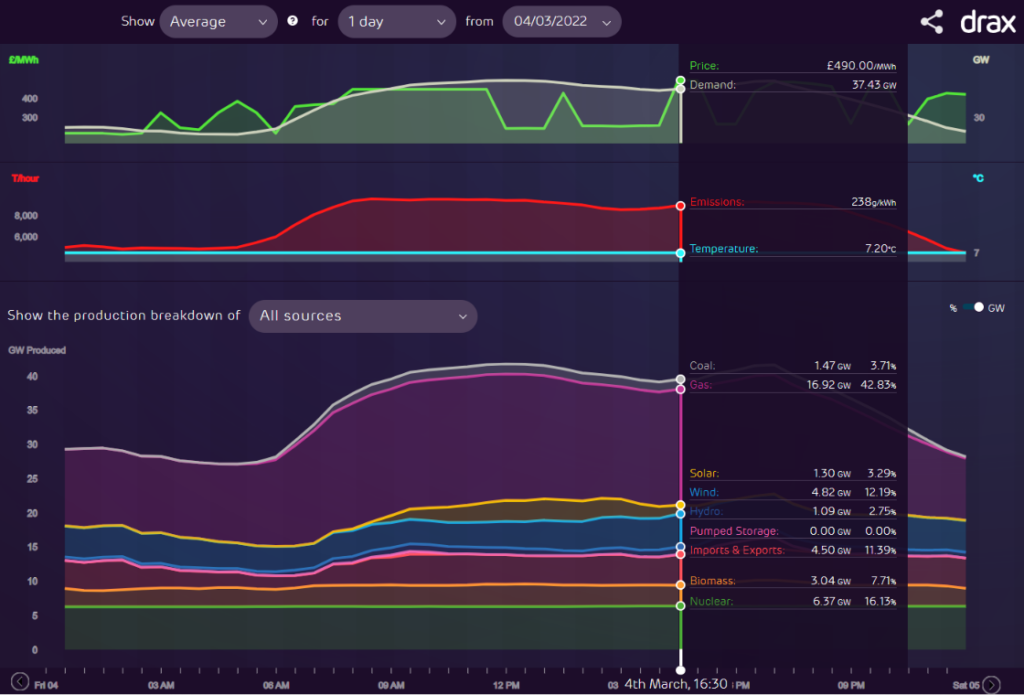
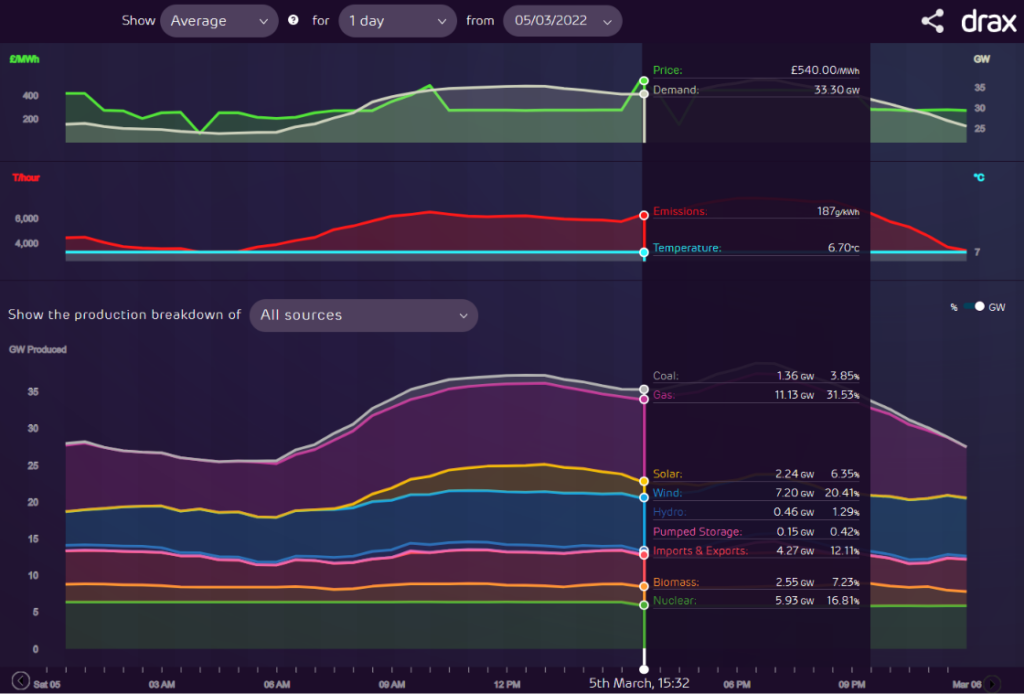
Regular readers may recall some of my previous musings on UK electricity prices during previous “shocks” to UK energy markets? The latest proximate cause of apparently absurdly elevated prices is the ongoing war in Ukraine following the Russian invasion.

Here are the maximum UK wholesale electricity prices for the last 3 days according to Drax Electric Insights:

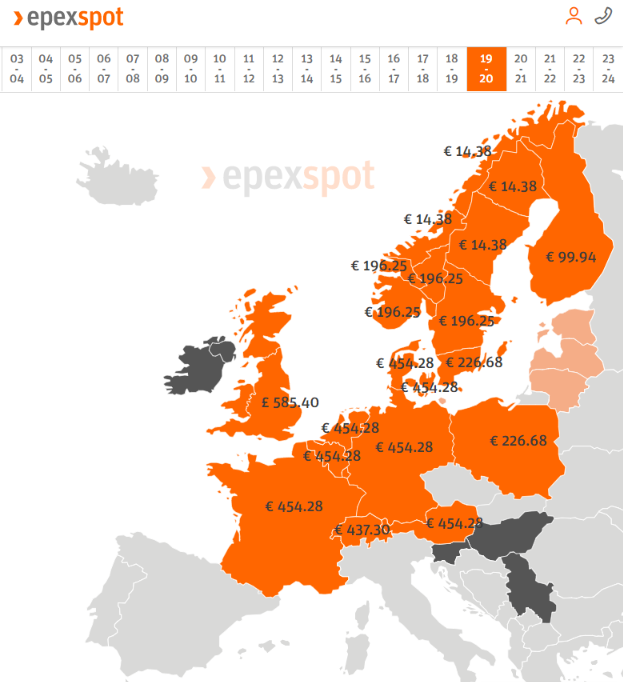
Here too are the Epex Spot day ahead electricity prices across much of Europe for later this evening:

Watch this space!

The State of the UK’s Public Charging Infrastructure?

This wasn’t Plan A, but circumstances beyond our control resulted in Lisa, our ageing V2G R&D Nissan LEAF, making a return trip to Bristol Airport over the last couple of days. Here is a Twitter thread revealing what she discovered en route:

https://twitter.com/V2gUK/status/1499713360258080771
Continue reading →

An Open Letter to Trudy Harrison, Scott Mann et al.

Particularly given recent events in Ukraine and the publication of the IPCC’s AR6 WG2 report the urgency of this issue increases with every day that passes. Hence I reproduce below an email I sent to Trudy Harrison MP on December 17th 2021.

Below that is the only response I have received to date:

Electric Vehicles (Smart Charge Points) Regulations 2021

To: Trudy Harrison MP
Cc: Scott Mann MP

Hello Trudy,

I originally e-met Rachel Maclean via a Cicero Group webinar. Since you have now taken over her role it seemed appropriate to introduce myself to you, particularly in view of the Prime Minister’s recent announcement about electric vehicle charging points.

In particular I am the only UK representative on a wide range of “smart grid” and “EV charging” international (and hence British) standards setting committees. I also sit on the British Standards Institution’s L/13 “smart energy overview” committee as the UK’s leading expert on V2G technology.

If possible I would like to discuss some of the “interoperability standards” implications of the draft legislation associated with the Prime Minister’s statement with someone in Government. Who do you recommend?

Best wishes,

Jim Hunt
CEO
V2G EVSE Limited

=================================================================

Thank you for contacting me.  Please accept this as an acknowledgement of your email. You will receieve a response within 7 days.

Please note the following:

·  If you are a constituent please ensure that you have provided your full name and address, including postcode. There is a strict Parliamentary protocol that MPs only deal with matters raised by residents of their own constituency. 

· Where possible, all circular email campaigns will be responded to by letter and on my website – https://www.trudyharrison.co.uk/

· I may need to pass your details and email to any relevant authority deemed appropriate to help answer your query. If you do not wish this to happen you need to inform my office to this effect.

Thank you for taking the time to write to me.

=================================================================
ISO 15118 Ready for California

The California Energy Commission (CEC for short) have recently undertaken a consultation on Assembly Bill 2127, which mandates a biennial assessment of electric vehicle charging infrastructure in California. Following that consultation they have now published a technical note which recommends the “Deployment of ISO 15118-Ready Chargers “. It states amongst other things that:

California Energy Commission (CEC) staff recommends that charging providers pursue widespread deployment of ISO 15118-ready chargers. CEC analysis indicates that ISO 15118-ready chargers are needed to support current and upcoming vehicle features, critical vehicle-grid integration capabilities, and an easier-than-gas user experience.

The technical note provides an “ISO 15118-Ready Hardware Definition” which states that:

Based on dozens of stakeholder conversations, CEC staff has identified the following capabilities needed to support ISO 15118 communication for chargers using the J1772 or CCS connector. An “ISO 15118-ready” charger is capable of, at minimum:

  1. Powerline carrier (PLC) based high-level communication as specified in ISO 15118-3.
  2. Secure management and storage of keys and certificates.
  3. Transport Layer Security (TLS) version 1.2; additional support for TLS 1.3 or subsequent versions is recommended to prepare for future updates to the ISO 15118 standard.
  4. Remotely receiving updates to activate or enable ISO 15118 use cases.
  5. Connecting to a backend network.
  6. Selecting the appropriate communication protocol used by the vehicle.

An ISO 15118-ready charger uses at least one J1772 or CCS connector; this includes multiple-connector DC chargers with at least one CCS connector. ISO 15118-ready chargers should have onboard hardware to support the above capabilities, although software implementation of specific ISO 15118 use cases is not included in the scope of this recommendation. For example, an ISO 15118-ready charger should have the onboard hardware needed for Plug and Charge, but might not yet have Plug and Charge software implemented.

ISO 15118-ready chargers should be capable of selecting the appropriate communication protocol used by the vehicle. AC chargers should support pulse-width modulation control as specified in J1772 and be capable of communicating using ISO 15118-2 and/or ISO 15118-20. DC chargers should support DIN 70121 and be capable of communicating using ISO 15118-2 and/or ISO 15118-20.

The CEC then mention an area dear to our heart here at V2G UK, bi-directional charging:

CEC staff estimates that the marginal hardware components needed for ISO 15118 readiness cost less than $6 per charger. Despite the growing number of electric vehicle models using ISO 15118 for Plug and Charge and grid-integration features, many existing chargers, particularly AC chargers, are not equipped to reciprocate such communication. To fully support these vehicle models and capabilities, CEC staff recommends widespread deployment of ISO 15118-ready chargers.

The capabilities of an ISO 15118-ready charger identified above outline a hardware baseline for chargers using the J1772 or CCS connector and do not discourage additional functionality. ISO 15118-ready chargers may optionally support bidirectional charging. ISO 15118-ready chargers do not affect the use of other communication pathways (such as vehicle telematics).

All in all it sounds as though smart charging stations destined for the Californian market will in future bear a close resemblance to their European equivalents, albeit with some differences. A 60 Hz supply for example, and a CCS1 DC plug rather than CCS2:

Image by Mliu92, CC BY-SA 4.0, https://commons.wikimedia.org/w/index.php?curid=108208696

There is however a fly in the ISO 15118 ointment:

CEC staff also plans to monitor related market indicators, such as PLC transceiver lead times.

V2H on the VW ID. Buzz Surf Bus!

In a press release earlier today VW announced that:

The world premiere of the ID. BUZZ concept car at the Detroit Motor Show in January 2017 triggered a sensational response around the globe. The positive feedback made only one decision possible: the concept car had to be transferred to full production. Five intensive years of development work followed. Now the time has come: the ID. Buzz – an electric motoring game-changer – is ready. Volkswagen is therefore activating the countdown for a double world premiere: on 9 March, the all-electric Bulli will be simultaneously taking off emission-free as the ID. Buzz (5-seater) and Buzz Cargo (van).

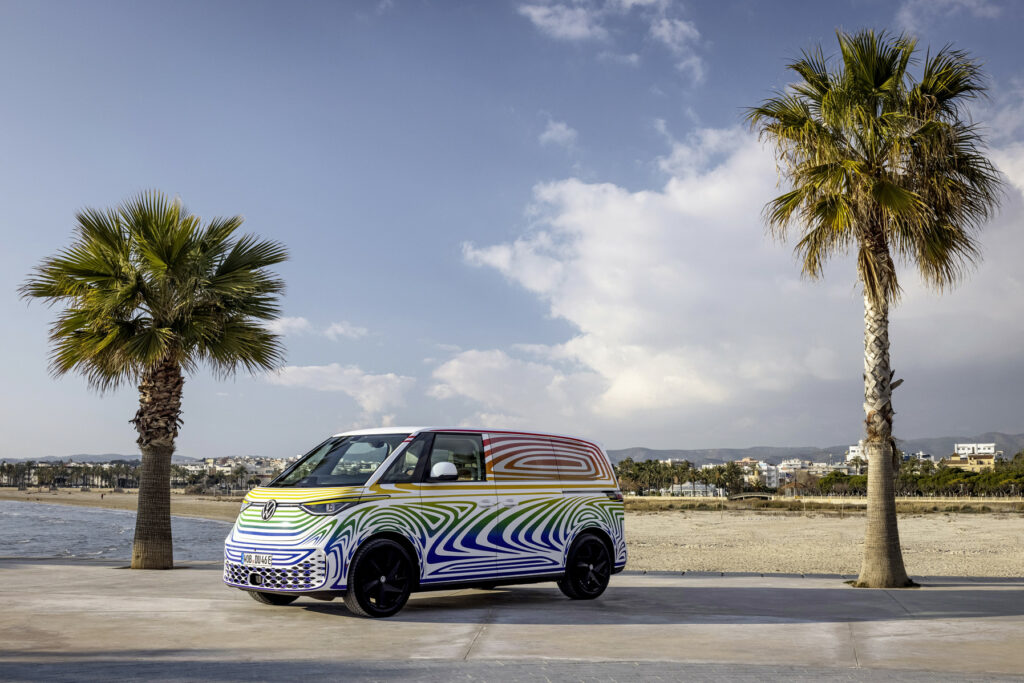
The ID. Buzz in Barcelona


The ID. Buzz looks like the iconic electric surf bus for the 2020s and beyond?

Not having had a chance to test drive the Buzz ourselves as yet, here for your delectation is Jonny Smith’s initial review on his Late Brake Show .

By all means rewind to the start and watch the entire video, but I’ve chosen to look first at the section captioned “Bi-directional charging”:

According to Markus Arand, head of brand and product communications at VW Commercial Vehicles:

When you have solar panels on your home, for example, this car will be able to have a thing called bi-directional charging. You can give the energy from the ID. Buzz back to your home. This is the combination we are talking about.

The other technical innovation of particular interest to yours truly, since I sit on the international standards committee that developed it, is that the ID. Buzz evidently supports the ISO 15118-20 communications protocol between the EV and the charging station. The resulting ability to “Plug & Charge” without messing around with plastic cards or dodgy apps is mentioned at 25:46 in Jonny’s video.

The Buzz “data sheet” doesn’t mention its vehicle-to-home capability, but does include the following information:

Important dates

• World premiere: 9 March 2022

• Start of production ID. Buzz Cargo: first half of 2022

• Start of production ID. Buzz: first half of 2022

• Market launch in Europe: autumn 2022

Here at V2G UK we await more technical details about the Buzz’s V2H capabilities with barely bated breath! A test drive to the seaside would also be much appreciated. And also a bit of vehicle-to-home interoperability testing in our suitably equipped car park:

Lisa our Nissan LEAF also cannot wait to meet Buzz. She gets very lonely at times:


Storm Franklin Power Cuts

There are still numerous faults across South West England caused by Storm Eunice last Friday that haven’t been repaired yet. Now a lot more power cuts have been added to the long lists of UK DNOs thanks to the arrival across the British Isles of yet another named storm yesterday, Storm Franklin. Here’s how the Met Office initially announced the news:


Storm Franklin has been named as the low-pressure system is expected to bring high winds during Sunday night and into Monday morning for much of the UK.

The latest storm follows on from a week in which Storm Dudley and Storm Eunice also impacted the UK, although wind gusts from Storm Franklin are expected to be lower than Eunice which triggered two Red Weather Warnings.

Northern areas of Northern Ireland are covered by an Amber Wind Warning that will be in force from early Monday morning. Within the Amber Warning area, winds could be in excess of 80mph in exposed coastal areas, but more widely between 60 and 70mph. Damage to buildings is possible, and there’s likely travel disruption.


An extended Yellow Warning for wind which covers much of the rest of the UK, except the northeast, has also been issued for Storm Franklin. Within the yellow warning area, wind gusts will be 65-75mph in coastal areas, and more widely 50-60mph further inland. The coasts of the northwest of England and the southwest of Scotland could see gusts of up to 75mph for a short period on Sunday night and early Monday morning.

Here are the by now all too familiar live power cut maps from across the British Isles this morning, starting with the island of Ireland:

Continue reading →

Storm Eunice Blacks Out Davidstow

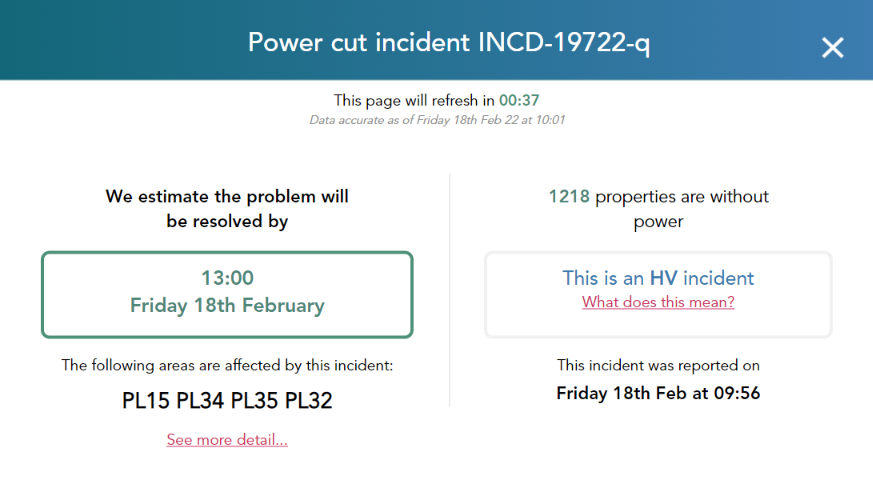
It’s just gone 10 AM, and Storm Eunice is raging outside. Our lights went out and our uninterruptible power supplies started beeping a couple of minutes ago. The lights came back on and the beeping stopped a few seconds later. There are 13,884 properties suffering a power cut in Cornwall, but at least ours was brief!

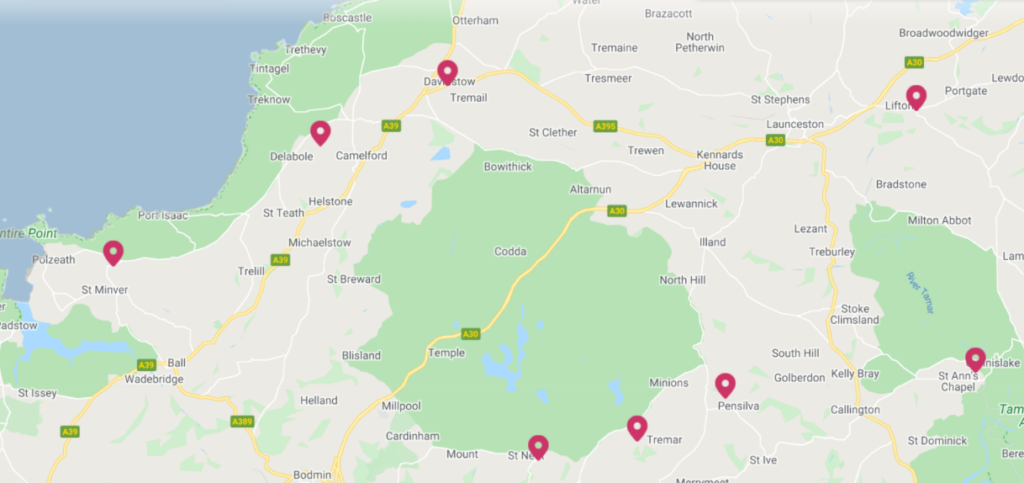
However some other local residents are not so fortunate:

Western Power Distribution currently estimate that the fault will be fixed by 1 PM, but what with one thing and another that strikes me as being a bit optimistic.

[Edit – 11:00 February 19th]

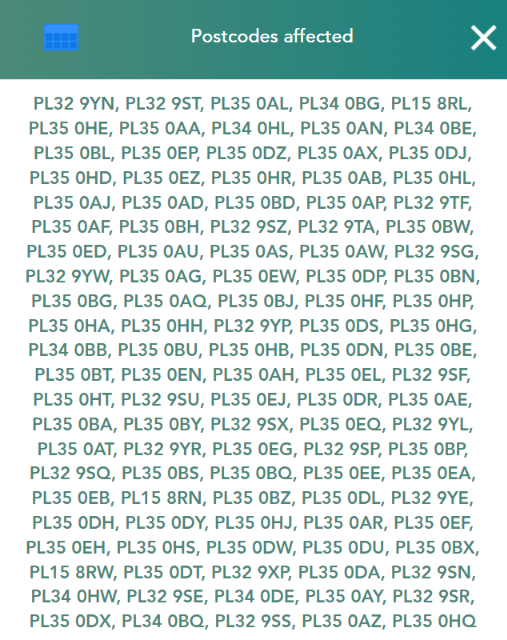
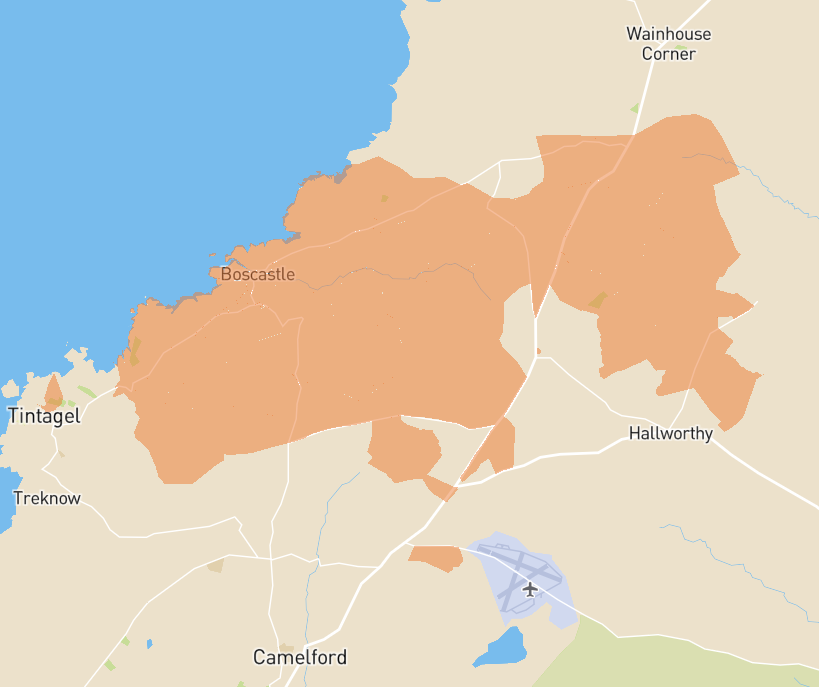
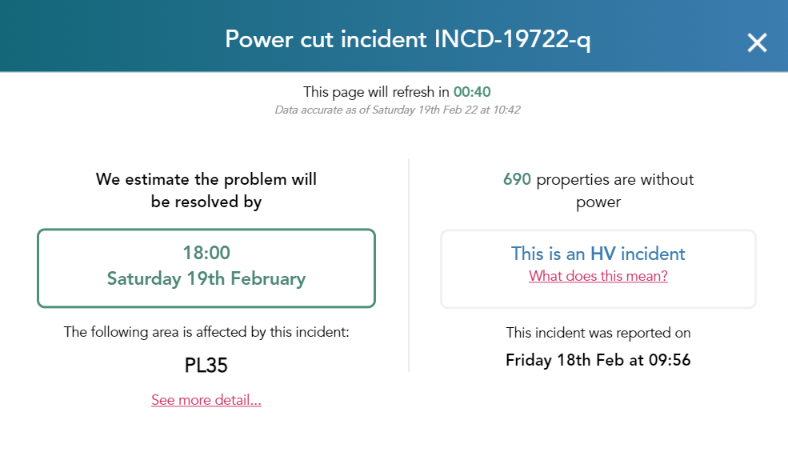
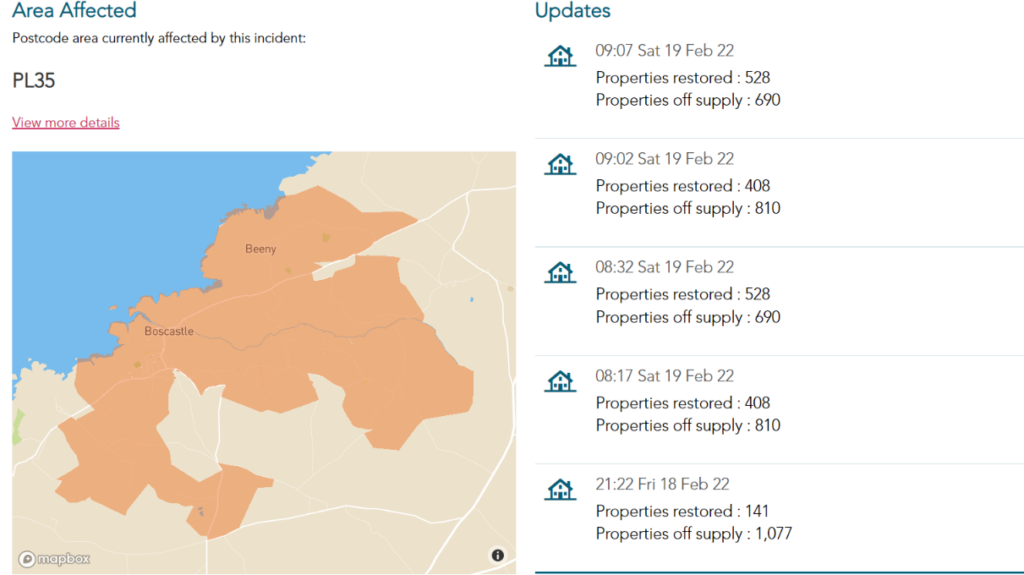
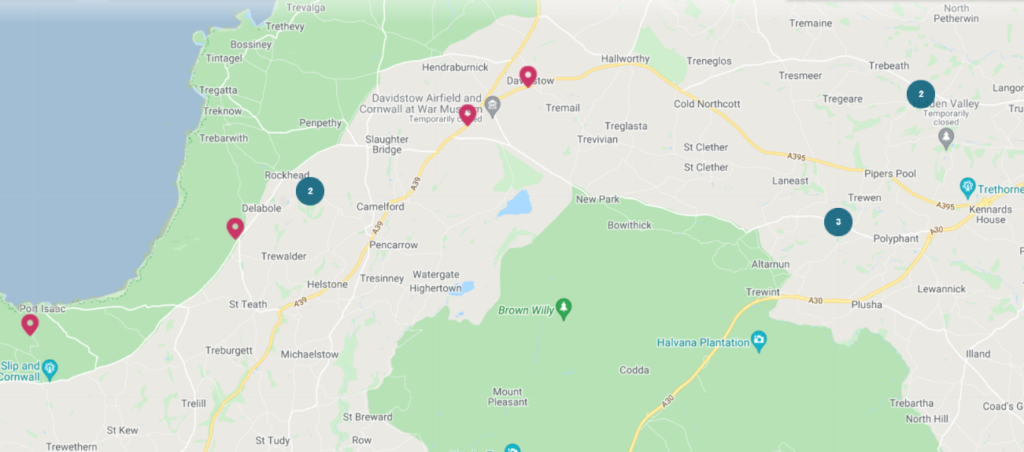
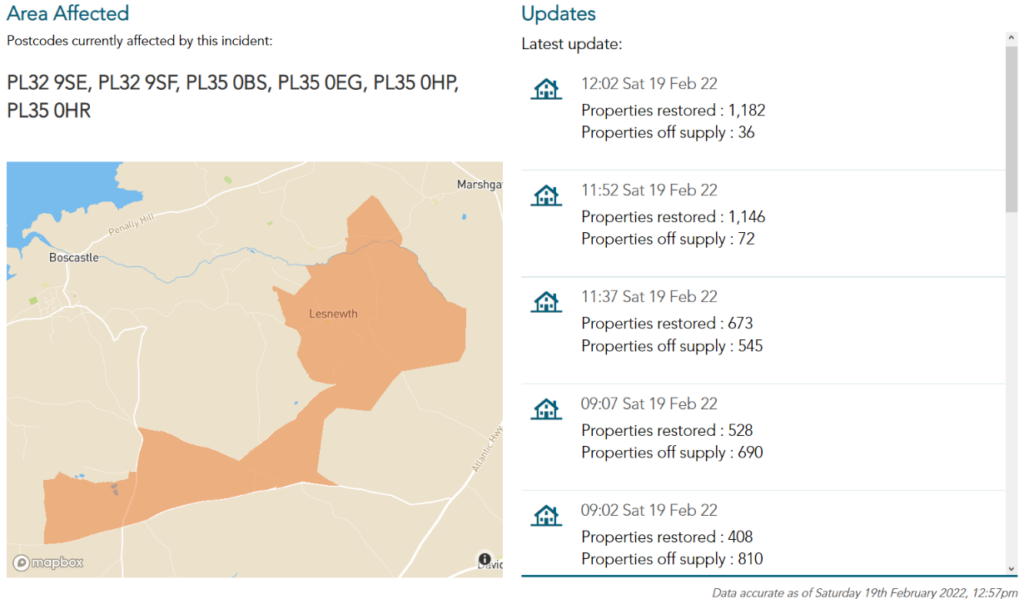
WPD have been gradually fixing the faults on their network in the Davidstow area following Storm Eunice yesterday. However there are still 690 properties that have been without electricity for over 24 hours:

There are also still several more faults nearby:

[Edit – 14:00 February 19th]

It seems our flickering lights this morning meant that we’ve just dodged another metaphorical electric bullet here on the fringes of Davidstow. Whilst yesterday’s fault is now almost fixed:

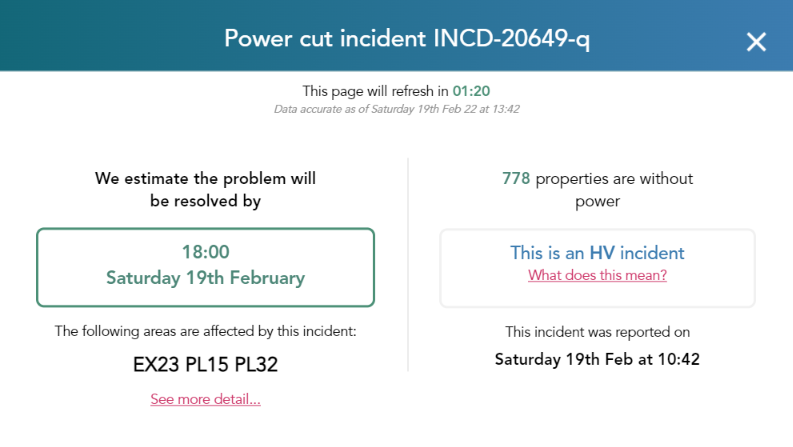
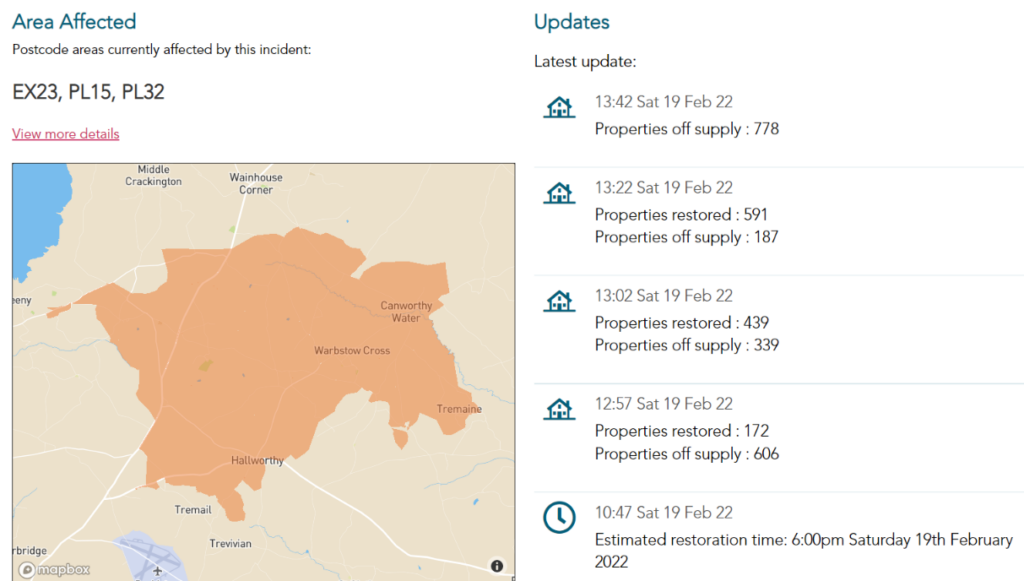
another big high voltage fault hit this side of the Atlantic Highway this morning:

[Edit – 18:00 February 19th]

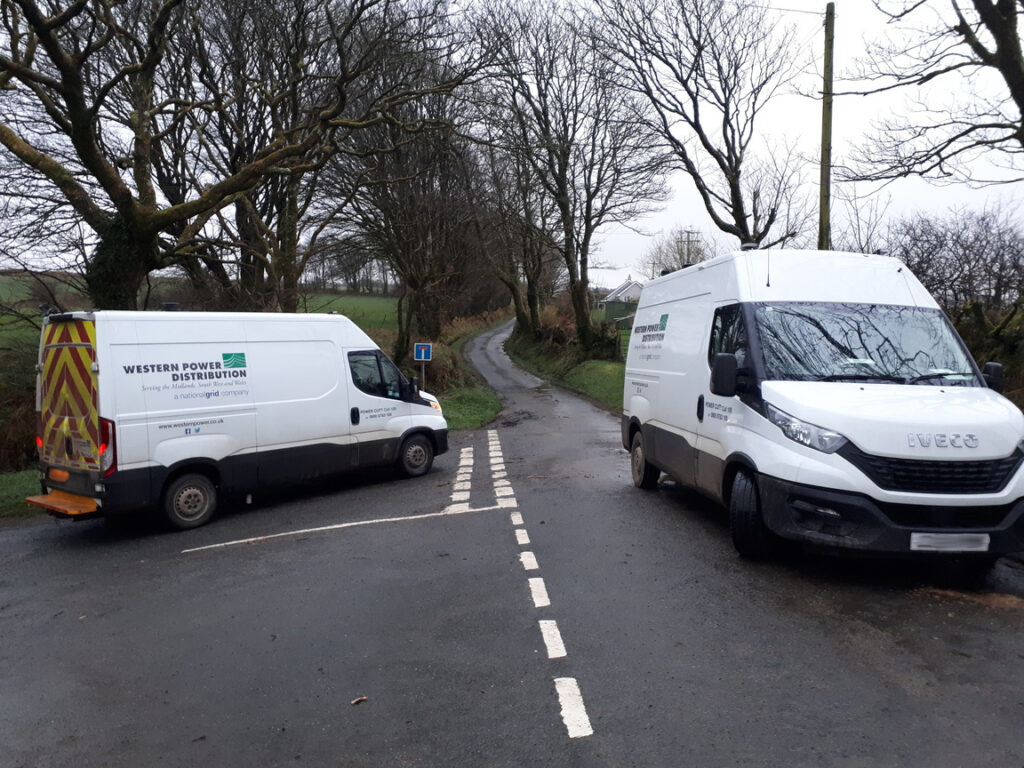
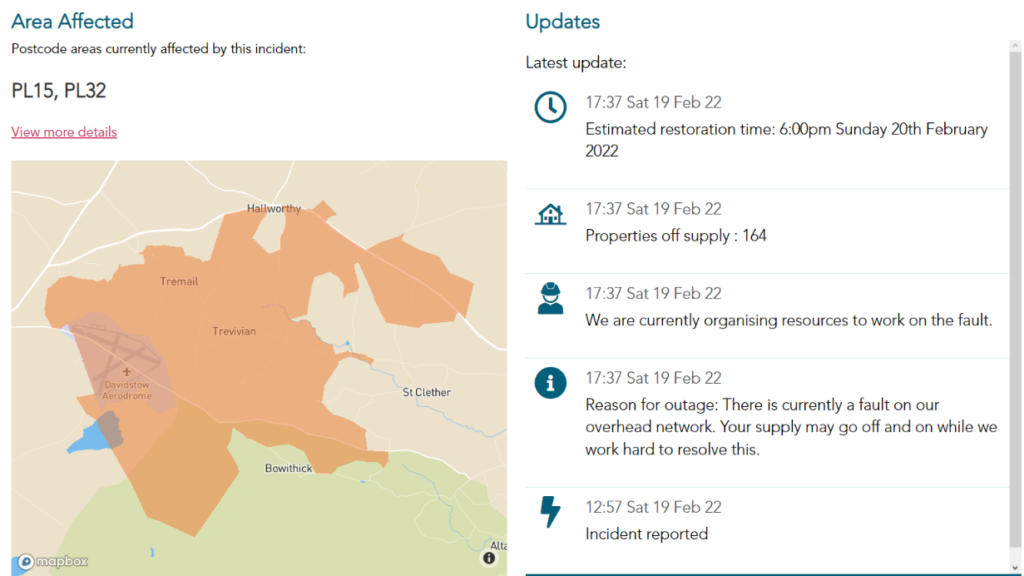
We may have managed to dodge the first two bullets, but unfortunately not the third. I went on a bike ride around the neighbourhood this afternoon try to find some WPD engineers. More on all that in due course, but I failed miserably in my mission until the very end of my ride. This was the sight that greeted me at the end of our lane:

This was the reason for their visit:

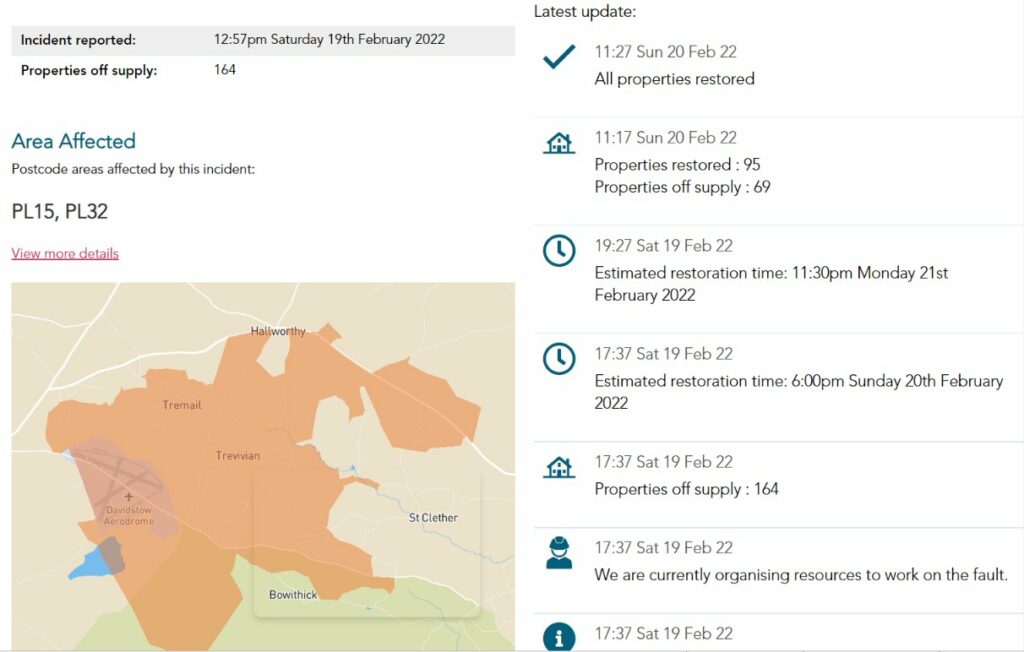
[Edit – 12:00 February 20th]

We’ve received some unexpected good news this morning. Thanks to the efforts of Western Power’s engineers by floodlight overnight electricity is already flowing around our ring mains once again!