This morning a new section was visible on the “Smart Tariffs” section of Octopus Energy’s web site. The new tariff is introduced by Constantine the friendly octopus as follows:
Octopus Power Pack: the UK’s first Vehicle-to-Grid tariff
Get free EV charging with our groundbreaking vehicle-to-grid (V2G) tariff
Add Octopus Power Pack to your regular tariff. We’ll set up your V2G charger to automatically manage your charging and discharging in the greenest way possible, so you can fill up for free.
A typical V2G driver could save £880 per year compared to Flexible Octopus, and £180 compared to Intelligent Octopus Go.
Power Pack represents the latest stage in our V2G rollout, following our wildly successful Powerloop V2G trial. It’s currently a beta tariff.
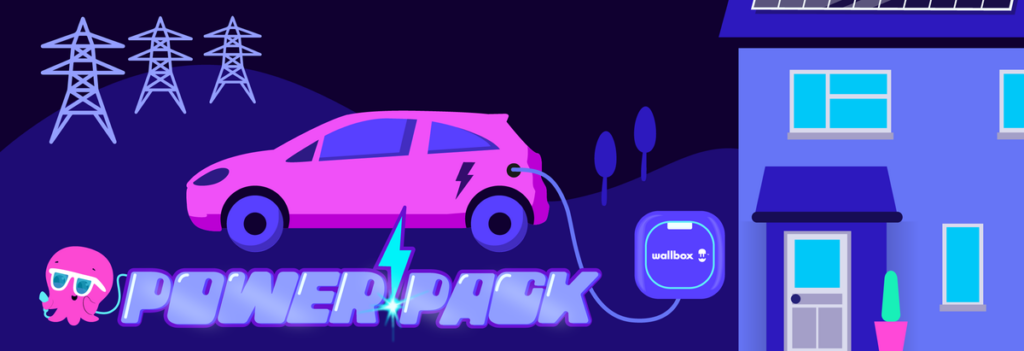
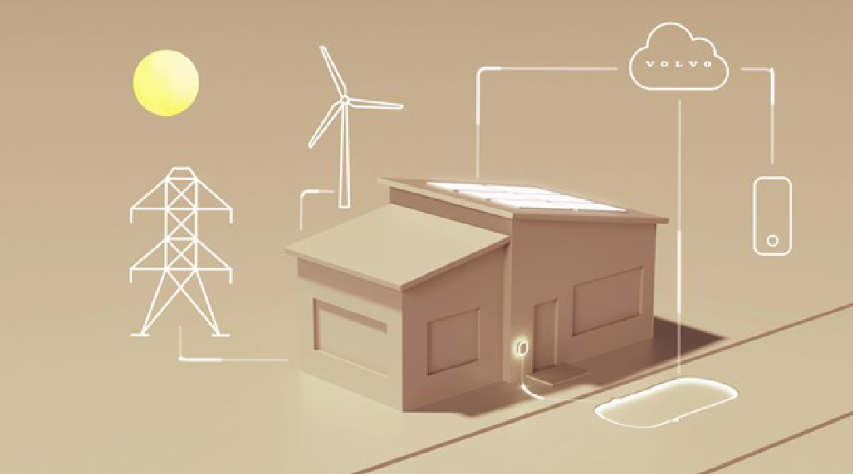
I cannot help but wonder if Constantine the intelligent octopus has been peeking at our decade old “artistic impression” of V2G technology in the domestic environment? See the banner above.
Renault have released more details about the forthcoming Renault 5, and it’s excellent news to our ears:
The future electric Renault 5 will be Renault’s first car to come with a bidirectional on-board charger.
Over the years we have covered at some length Renault’s experiments with ZOEs modified to include bi-directional capabilities, and we are pleased to hear that AC V2G will finally be going into production in the shape of the new Renault 5.
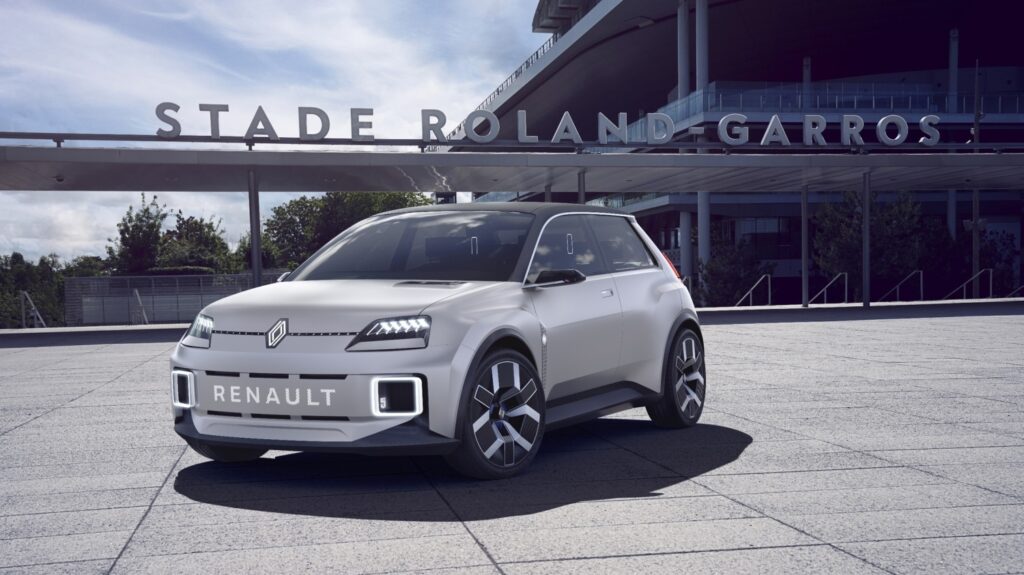
A previous press release revealed the external shape of the new R5 outside Stade Roland Garros:
Now we get to see the internals too! According to Renault:
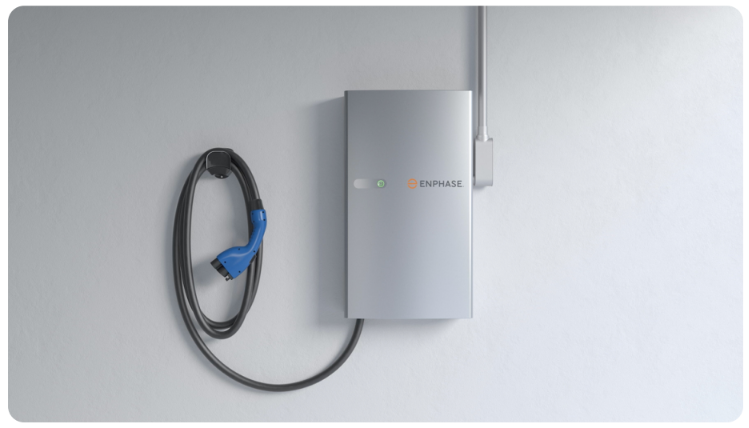
It has just been brought to my attention that at the beginning of this month Enphase Energy issued a press release announcing that:
Enphase Energy, Inc., a global energy technology company and the world’s leading supplier of microinverter-based solar and battery systems, announced today a successful demonstration of its bidirectional EV charger enabling vehicle-to-home (V2H) and vehicle-to-grid (V2G) functionality.
This product will leverage the power of grid-forming IQ8™ Microinverters and Ensemble™ energy management technology to seamlessly integrate into Enphase® home energy systems. In addition, Enphase’s bidirectional EV charger is expected to work with most EVs that support standards such as CCS (Combined Charging System) and CHAdeMO (a Japanese charging standard).
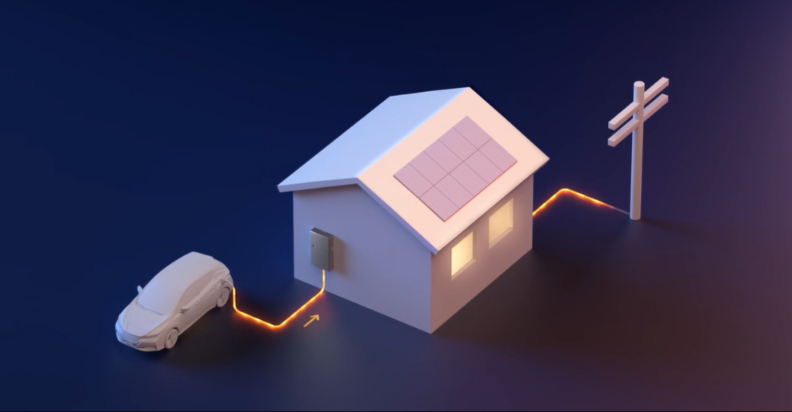
Here too is a still image from the video, which once again looks remarkably reminiscent of the decade old V2G UK banner at the top of this article!
The press release continues:
In addition to charging an EV, Enphase’s bidirectional charger will support the following functionality:
Vehicle-to-home (V2H) –enables the EV battery to provide uninterrupted power to a home during a power outage. Vehicle-to-grid (V2G) –allows the EV battery to share energy with the grid to help relieve the strain on electric utilities during times of peak energy demand. Green charging –sends clean solar energy directly to the EV battery.
Raghu Belur, co-founder and chief products officer at Enphase Energy, said that:
The new bidirectional EV charger, along with Enphase’s solar and battery storage system, can be controlled from the Enphase App, empowering homeowners to make, use, save, and sell their own power. We are working with standards organizations, EV manufacturers, and regulators to bring this charger to market in 2024.”
Since I sit on numerous EV (dis)charging and energy management standard development committees it would be very interesting to discover precisely which “standards organizations, EV manufacturers, and regulators” Enphase is working with!
Mohammad Alkuran, Ph.D., senior director of systems engineering at Enphase Energy, added that:
“ The Enphase bidirectional EV charger is the next step on our roadmap to building a solar-powered, all-in-one home energy system that further unlocks electrification, resilience, savings, and control for homeowners. This product will be a game changer for homeowners who want maximum control over their energy usage.”
For those of us that are more technically inclined Enphase Energy has also published a white paper about their bidirectional EV charger. Here’s an extract:
The Enphase Bidirectional EV Charger is part of the Ensemble energy management technology, which is the heart of the Enphase® Energy System™. The Enphase Energy System is a complete solution that produces, stores, monitors, exports, controls, and analyzes the energy in your home.
To achieve this, Enphase Energy System brings solar, batteries, other energy resources like generators, fuel cells, connected appliances and software together in one complete package so that a homeowner can make, use, save, and sell their own power—all through the Enphase mobile app.
Enphase has pioneered power conversion devices called IQ8™ Microinverters. These microinverters are best-in class power electronics components that convert power and comply with standards like UL 1741 for grid reliability functions and IEEE 1547 for interconnection of distributed energy resources (DER). These microinverters can create their own grid, also known as microgrid. They can operate in on-grid mode (as grid-tied) and off-grid mode (creating a microgrid). Enphase microinverter technology is at the forefront of the grid interface for our solar microinverters, storage batteries, and EV chargers.
The Enphase Bidirectional EV Charger leverages Enphase’s IQ Microinverter technology and IQ™ Battery architecture. When the charger is used with a vehicle that supports bidirectional charging, it enables the transfer of power and communication between the Enphase Energy System and the EV. The combination of the EV and the bidirectional charger is similar to an Enphase IQ Battery and can be controlled in an equivalent fashion.
The use of the terms “grid-forming” and “microgrid” is of particular interest to yours truly, since not all V2x charging stations are so well endowed.
The upcoming, fully electric Volvo EX90, which will be revealed on November 9, will be the first Volvo car to be hardware-ready for bi-directional charging capabilities. Initially becoming available in selected markets, bi-directional charging has the potential to help you make your energy utilisation cheaper, more efficient and sustainable. Paired with smart-charging capabilities coming to the Volvo Cars smartphone app, the Volvo EX90 will allow you to charge your car when demand from the grid and prices are low – usually meaning there are more renewable sources in the energy mix – and save that stored energy to be used later.
Once available, bi-directional charging in the Volvo EX90 could enable you to power your home, as well as other electric devices.
The press release wasn’t accompanied by any images of the EX90. I suppose all will be revealed on November 9th. However there is this video, entitled “What if your car could power your life?”. A very good question, which has been on our minds here at V2G UK for over a decade:
The video doesn’t include any images of the EX90 either, but it does include Volvo’s Head of Electrification Ecosystem, Olivier Loedel, saying things like:
With the Volvo EX90 you can power your life.
You could use its battery in many ways, from topping up your electric bike when you’re out and about, to hooking up an outdoor cooking appliance for your weekend camping trip. It could even power your house during the expensive peak hours of the day.
The press release adds:
Depending on rules specific to each energy market, bi-directional charging could also allow customers to support the grid in different ways. This could include taking in more energy during times when there’s a surplus of renewable energy, or selling energy back during peak usage hours when there is more demand. If most cars have this functionality in the future, then the grid could be balanced more often. That could increase the overall sustainability of the grid by reducing potential energy waste from renewable sources at times when production outperforms demand.
and in the video Olivier adds:
Bi-directional charging will in the future become available through a customer offer including a wallbox and a Home Energy Management System that connects the car, wallbox and power meter of a house together…
Bi-directional charging could allow customers to sell electricity back to the power grid, for example during peak hours when demand is high:
Once again an EV OEM has come up with an infographic which bears a strange resemblance to the banner at the top of this page, which is now over ten years old. Apart from the cloud labelled “Volvo” that is! As Olivier puts it, “technical solutions to enable this are under way. We have done some research!”
All in all it sounds to me an awful lot like Volvo intend to deliver full blown vehicle-to-grid in the foreseeable future! However the press release does also include the following “small print”:
* Future technology and features are described, and capabilities may vary. Features may not be available in all markets and will not be standard in all markets or for all models. * The bi-directional charging offer will initially be launched in selected markets. We are currently investigating which use cases we will be able to offer in different markets. * We will equip the Volvo EX90 with the necessary hardware to support the grid, and we are currently assessing in which markets it would be possible to offer this to our customers.
Which does beget another few questions at the back of my mind. Such as:
“Will the Volvo EX90 and associated wallbox support AC or DC V2x?”,
“Will the UK be one of Volvo’s initial selected markets?”, and
“If so, when will this exciting technology finally become available to the (wo)man in the UK street?”
Take a look at this recording of California Governor Gavin Newsom‘s closing remarks at the Climate Week NYC plenary session earlier this week:
By all means watch the whole thing, but make sure not to miss the part at 4:20 where Gavin says that:
We talk about grids and reliability? Give me a break!
The opportunity now with electric vehicles, and the vehicle-to-grid technology, and the bi-directional opportunity of two way charging creates opportunities for million and millions of batteries on wheels.
Then up on your home, in your phone, selling back electricity to the grid. Taking money not out of your pocket, but putting it now in your pocket.
Low carbon green growth!
In other recent news from the Golden State, Queen Máxima of the Netherlands met with Gavin’s wife Jennifer:
We have previously discussed the work of the Warwick Manufacturing Group on mitigating potential battery degradation by “intelligently managing V2G technology”. In a recent press release the EV-elocity project refers to a new WMG paper on that subject, reporting that:
A number of studies have identified the strategic importance of charging infrastructure to support the introduction of electrified vehicles (EVs) and to underpin consumer acceptance of the technology. For this reason, considerable research has been undertaken to evaluate the different facets of the technology, including the ability to charge at higher rates of electrical power, the introduction of smart charging (V1G) that allows dynamic management of the charging process in terms of both power and charge time and vehicle-to-grid (V2G) that enables bidirectional energy flow between the vehicle and the supply. In recent years, the term V2G has become more generalised to V2X, to acknowledge the variability in which the EV may be integrated, either to the grid or behind-the-meter, for example within a local electrical network, such as a building (V2B).
Irrespective of the exact nature of the integration method, understanding the impact of different strategies on battery degradation is a key requirement that may ultimately underpin consumer acceptance. Only a few studies have examined the potential impact of V2G operation on battery degradation. Often their assertion is that the increased charge-throughput will negatively impact battery life. These works often neglect that the battery will equally degrade through a process of calendar-ageing in which the retained capacity of the battery reduces as the battery is stored at no-load.
As highlighted in these results from the EV-elocity project, the nature of the degradation is highly complex with dependencies that crosscut: the state of charge (SOC) of the battery with respect to the optimal SOC storage condition and the duration of the parking interval. To further compound the challenge, experimental results shows that the optimal SOC point varies with battery life.
Transport electrification is a key enabler to reduce fossil fuel depletion and related carbon dioxide emissions. However, critical barriers exist in terms of battery costs and their expected life. Vehicle-to-grid technology can bring benefits to both the electrical power grid and electric vehicle owners, while its practical implementation faces challenges due to the concerns over accelerated battery degradation. This paper presents a comprehensive study on reduced Lithium-ion battery degradation through state-of-charge pre-conditioning strategies that allow an electric vehicle to participate in vehicle-to-grid operations during periods in which the vehicle is parked. Energy capacity reduction of the electric vehicle battery are predicted using semi-empirical ageing models, which have been built and validated to capture the degradation behaviours of the battery with respect to both calendar and cycling ageing. Five charging strategies for battery state-of-charge pre-conditioning have been developed to evaluate the ability to mitigate battery ageing before commencing vehicle-to-grid operations. Simulation studies on battery degradation utilizing such charging mechanisms under two different operational profiles have been undertaken.
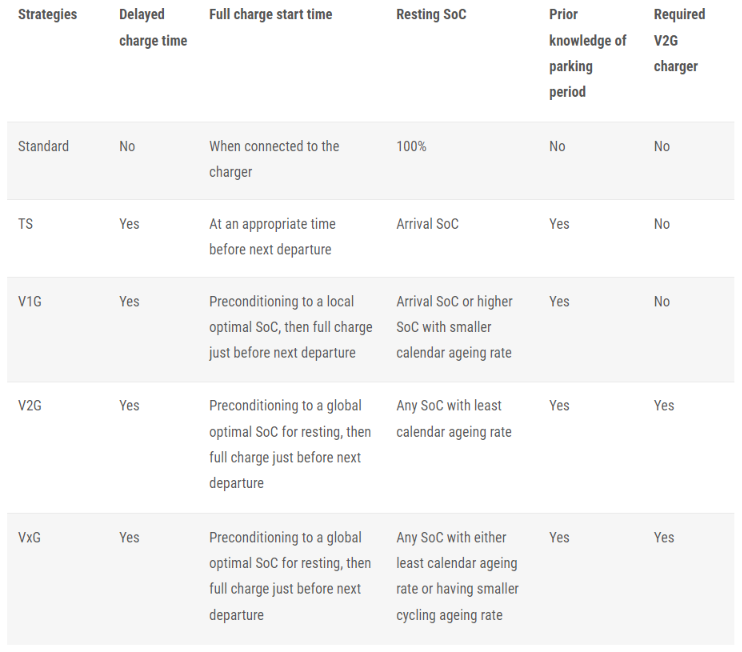
At this point you may be wondering exactly what the various charging mechanisms entail? Here’s a summary of the assorted strategies from the press release:
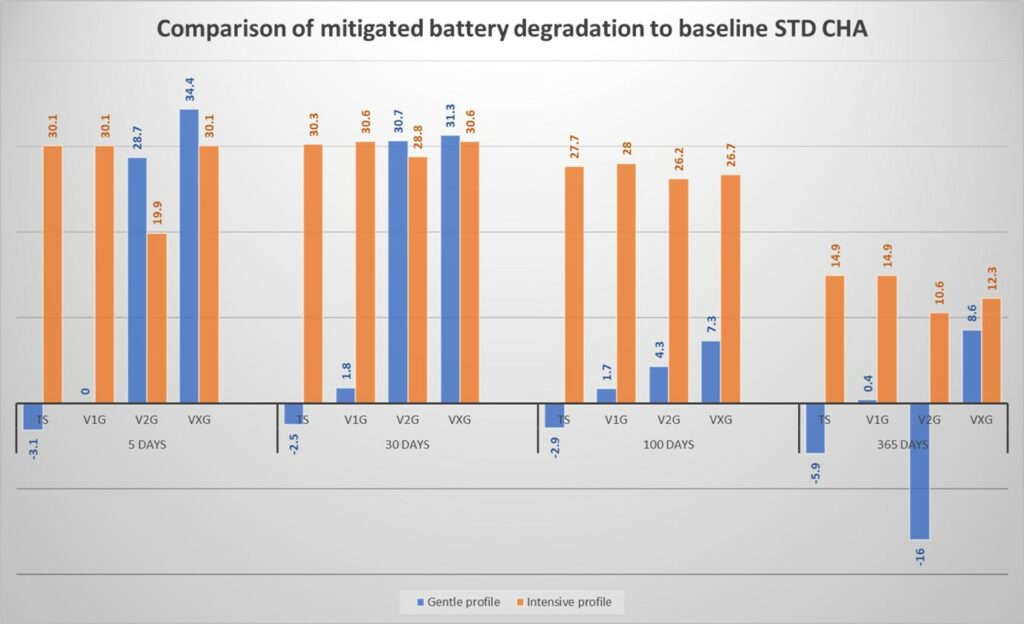
and here’s a summary of the results:
Going back to the abstract from the Bui et al. paper, the brief conclusions are that:
The analytical results show that the proposed charging strategies do not accelerate battery degradation and are capable of mitigating the total ageing process from 7.3 – 26.7% for the first 100 days of operational life and gradually vary to 8.6 – 12.3% for one-year continual operation compared to the reference standard charging approach.
To summarise, leaving your electric vehicle plugged in and “fully charged” is not good for the “state of health” of its traction battery. Here’s a video from Euan McTurk that delivers a similar message:
I remotely attended several sessions at the recently completed COP26 conference in Glasgow, but what with one thing and another I missed out on attending this one as it happened:
As you can already see it was organised by Scottish and Southern Electricity Networks (SSEN for short) and was hosted by Laura Sandys. Note in particular the part at 6:30 where Professor Malcolm McCulloch of Oxford University says that:
So the challenge is to say “How do we allow that potential problem and risk, how do we turn that around to be something that’s really a friend and an aid to the system?”
And the one thing that worries me right at the moment is that we’re seeing a huge uptake in electric vehicles over the last while, I mean it’s kind of fascinating that at the beginning of this year the most popular vehicle being sold was the Ford Focus, last three months it’s been the Tesla Model 3! That kinds of tells you what the change in our dynamics is looking at.
At the moment we’re missing a trick because most of the vehicles being sold except for a few Nissan’s and a few others don’t have vehicle-to-grid. In other words the power flows in only one direction, so all that huge amount of storage capacity that’s available on the grid, we’re talking about by the time we get to 2030 there’s enough energy in the batteries of our electric vehicles to power the UK for two days. That’s a tremendous amount of energy that’s sitting there, but if we don’t install V2G soon, really soon, that boat is going to pass and we’re going to have real trouble in trying to, or much more costly ways of doing that.
Needless to say we broadly agree with Malcolm’s analysis, and the conversation in Glasgow continued. Please watch the whole 30+ minutes, but now there is further news. The Local Energy Oxfordshire project (LEO for short) has just released a white paper authored by Origami Energy and the Low Carbon Hub catchily entitled “Vision on the inclusion of small (under 7kW) flexibility from the grid edge and its role in Future Energy System“. Please also read it from cover to cover, and note that it briefly (and belatedly!) mentions that:
In 2021, British Standards Institute as part of [its] Smart Energy Appliance programme published two standards designed to support [a] testing and certification programme to motivate greater potential for demand response from [the] residential sector.
Note also LEO’s recommendations:
Grid-edge flexibility has great potential to be the enabler of Net Zero as outlined by the “Leading the Way” FES scenario. However, t he two biggest challenges facing the inclusion of small flexibility from the grid edge into delivering Net Zero are societal participation and commercial environment. A common pillar to both challenges is the value of flexibility which only partially reflects the benefits delivered through the flexibility markets. Today, each flexibility market is monopsonistic (market dominated by one buyer), segregated and short-term (there is a lack of long term stability in the regulatory landscape). There is a need to standardise products and services across all flexibility markets to encourage greater transparency and involvement of flexibility as these flexibility markets grow.
To support the inclusion of grid-edge flexibility, the proposed recommendations include:
• To tailor the legislation and regulation to support the development of local communities who act collectively to manage their LCTs and interact with the flexibility markets and other users of the system at a single node (e.g. enabled by an iDNO) or multiple nodes.
• Create a new energy and carbon marketplace to encourage wider deployment of Smart Local Energy Systems where local generation and demand flexibility is recognised as being critical for a healthy and affluent society. The Flexible Services players are seen to add significant benefit to the local society and also provide support to the National scale economy.
• Align the energy policy, welfare policy and housing policy to deliver long-term strategy for Net Zero and beyond ensuring balanced distribution of costs and benefits associated with grid-edge flexibility and cost of energy.
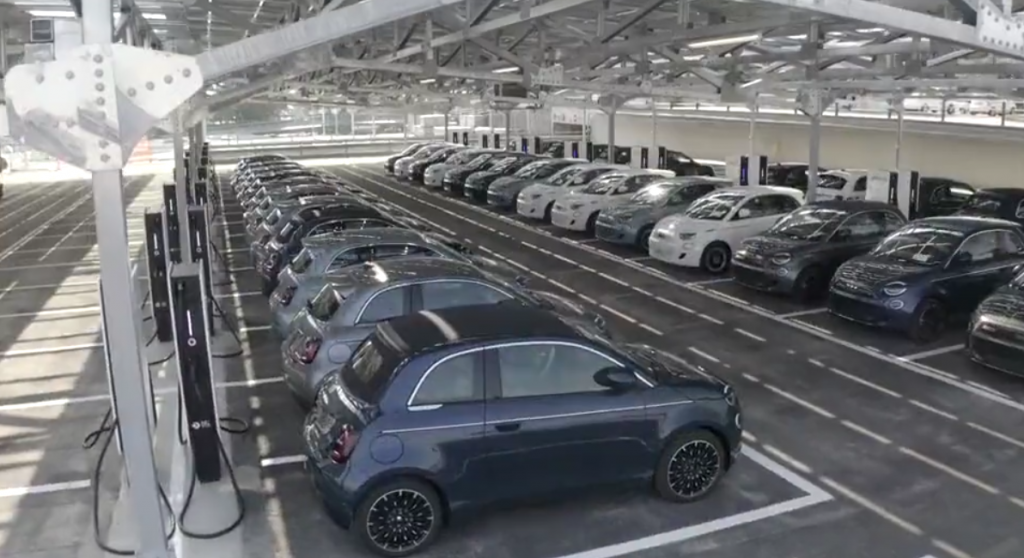
Today at the headquarters of the Heritage Hub within FCA’s Mirafiori industrial district in Turin, FCA, Engie Eps and Terna presented the Vehicle-to-grid (V2G) electric-mobility pilot project, which will be the largest in the world once completed.
The V2G installation, located in the Drosso logistics area, was inaugurated during an international conference in the presence of the Minister of Economic Development, Stefano Patuanelli, the Mayor of Turin, Chiara Appendino and the President of the Piedmont region, Alberto Cirio, along with numerous other institutional guests and journalists from Italy and around the world, with a demonstration of its features and operating methods.
The V2G plant at Mirafiori is a project “100% made in Italy”. On the one hand, it is a significant opportunity for the Italian industrial system to take a leading role in the development of the future of sustainable mobility. On the other, it is the result of the joint effort of three companies that lead their sectors. In their use of such an innovative technology, their experiments are now beginning on a bidirectional charging solution that benefits from physical aggregation in a single point of interconnection with the power grid, capable of interacting with the other energy resources on site.
Over on the eastern side of the Pacific Ocean there has been a summer heat wave in California:
As a consequence air conditioning works hard, electricity demand goes up, and over the last few days there have been some rolling blackouts across the Golden State. According to the New York Times on August 16th:
As temperatures began to rise in California on Friday and again on Saturday, the manager of much of the state’s electric grid called on utilities to cut power to hundreds of thousands of customers. But the rolling blackouts on those days left some of the state’s energy experts bewildered. They said that the utilities had plenty of power available and that the blackouts weren’t necessary. The grid’s capacity may be tested in coming days as temperatures are forecast to reach into the triple digits again in some places.
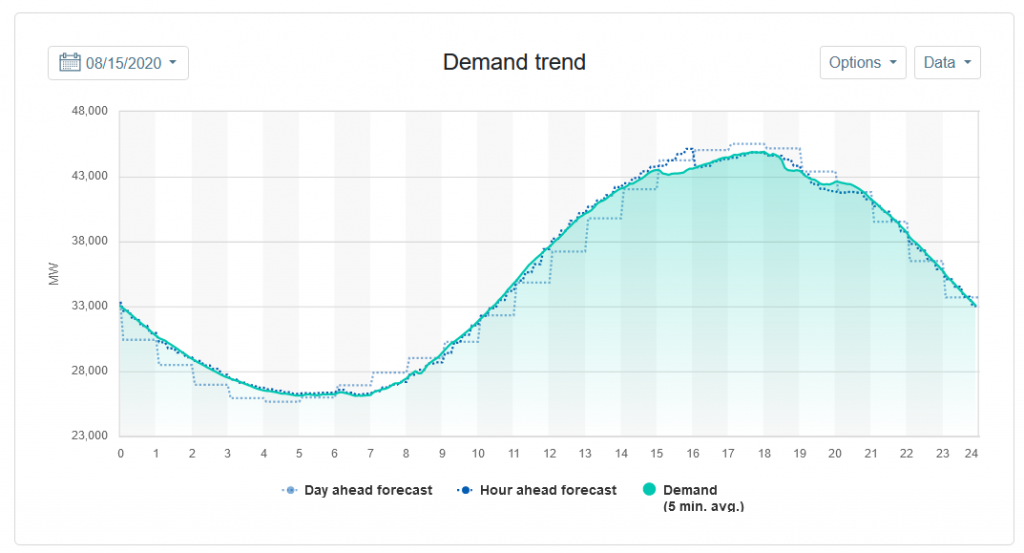
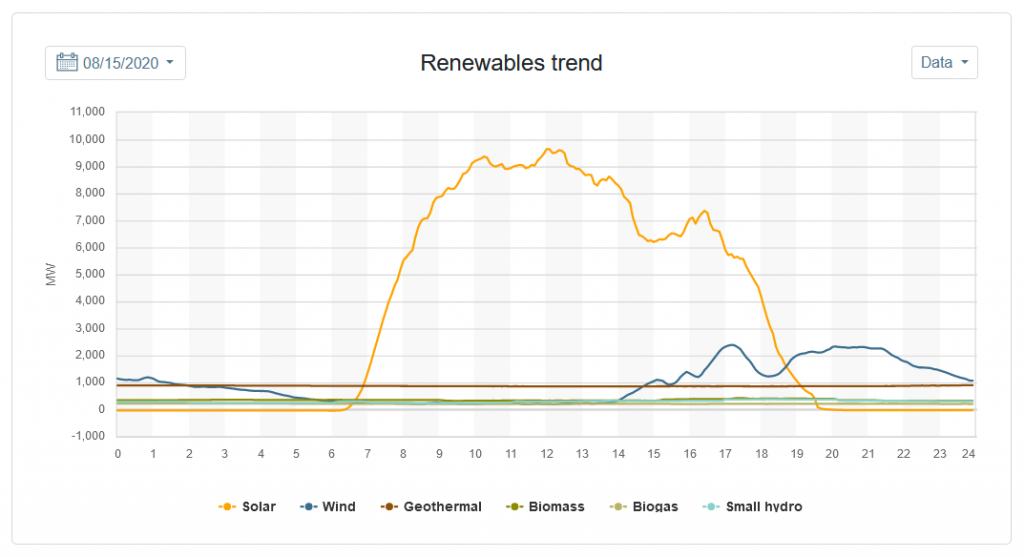
The grid’s capacity was indeed tested in the following days. It’s not clear why the California Independent System Operator (CAISO for short) didn’t issue a call for a voluntary “Flex Alert” on August 15th, but the ultimate consequence was some power cuts. Here’s CAISO’s record of electricity demand and renewable generation that day:
In a press release earlier today E.ON and Nissan announced that they:
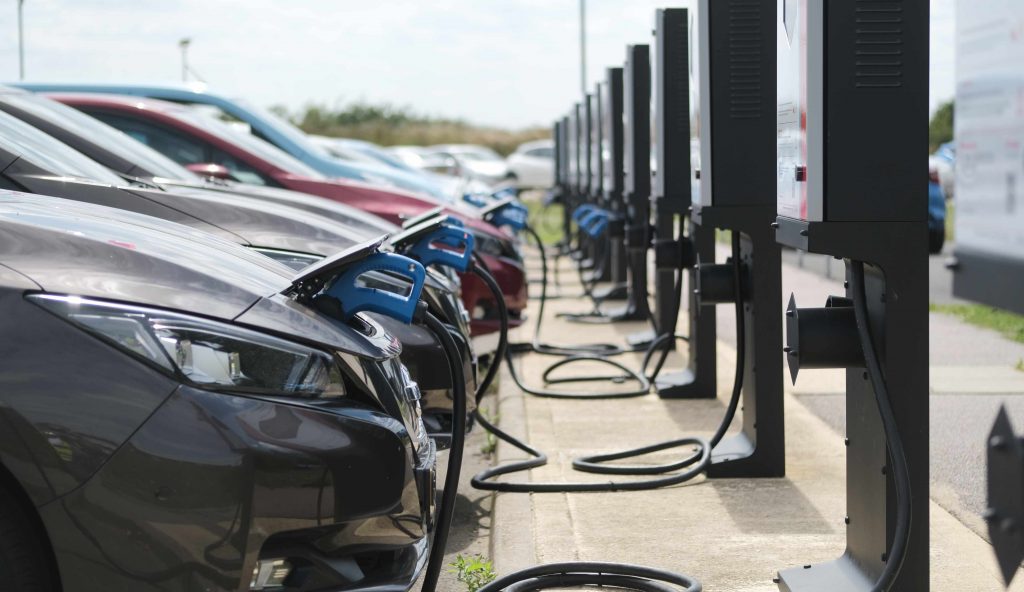
Have successfully deployed 20 vehicle-to-grid (V2G) chargers as part of a trial to demonstrate how electric vans and cars could play a role in supporting the UK grid and provide a profitable and sustainable solution for business fleets.
The install at Nissan’s European Technical Centre in Cranfield is the first in a large-scale V2G trial co-funded by Innovate UK. The project will test and demonstrate how storing and sharing electricity in fleet vehicles’ batteries can generate additional revenue for participating companies as well as supporting the power grid.
Having validated the technology at Nissan’s Cranfield site, the project is now recruiting further participants for the trial and plans to deploy V2G chargers for organisations across the UK.
E.ON Drive’s Vehicle to Grid chargers at Nissan’s UK Research and Innovation site in Cranfield.
If you are a fleet owner think of going electric then Nissan want to talk to you! The press release continues with this quote from Nissan Motor GB’s Fleet Director, Peter McDonald:
We know many fleets are not just looking at electric vehicle acquisition, they are also reviewing their energy infrastructure for a world where electric vehicles are fast becoming the norm. Nissan is collaborating with E.ON on this exciting energy infrastructure project to expedite V2G technology in the UK. Thanks to the LEAF and e-NV200 being V2G-capable, these EVs are well set for the future.
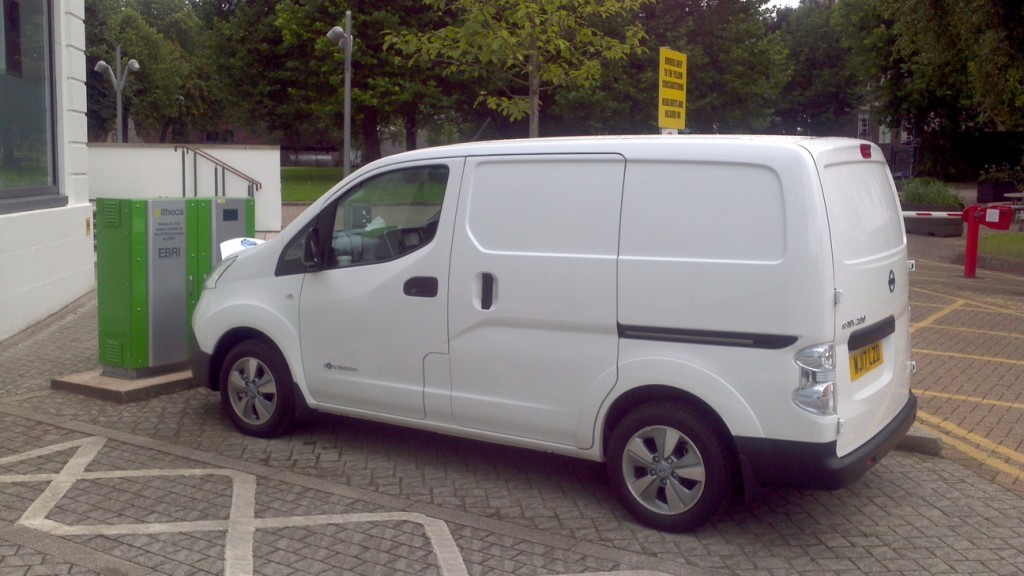
I wonder whether Lisa, our very own Nissan LEAF counts for the purposes of this trial. As regular readers will no doubt be aware, we have been looking to expand our small “fleet” with an e-NV200 for quite some time. Perhaps this is the perfect opportunity, since:
The V2G package for participants in the trial will be offered at a heavily subsidised price through grant funding made available through Innovate UK. Vehicles compatible with the technology being used in this project are currently the Nissan e-NV200 and the Nissan LEAF2.
As well as E.ON and Nissan the V2G project consortium (known as e4Future) includes Newcastle University, Imperial College London, Northern Powergrid, UK Power Networks and National Grid ESO. The V2G platform used on the trial utilises a combination of E.ON’s existing Virtual Power Plant software as well as a charger operating system provided by E.ON’s e-mobility partner Virta.
The project is part of the V2G programme, funded by the Department for Business, Energy and Industrial Strategy and the Office for Low Emission Vehicles (OLEV), in partnership with Innovate UK. Part of UK Research and Innovation (UKRI), Innovate UK is the UK’s innovation agency investing in science and research.
Here is an image of our concept that we prepared earlier. In 2017 to be precise: