Fastned Electric Vehicle Charging Profiles

In the wake of the BBC’s “RapidGate” article last weekend I find myself debating the pros and cons of the 2018 model year Nissan LEAF that we road tested last week with a fan of the Hyundai Ioniq EV:

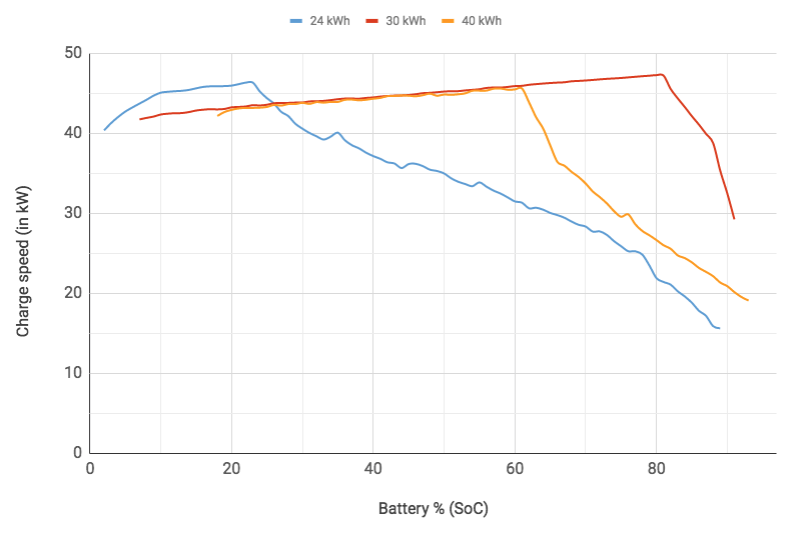
Dutch charging station operator Fastned helpfully provides some experimental evidence to inform the debate. Whilst they don’t publish data on the effects of successive rapid charging sessions on a long drive they do provide charging profiles for all three flavours of the Nissan LEAF:

Fastned Nissan Leaf GB

which does indeed show the latest LEAF fitted with a 40 kWh battery pack throttling the charging rate earlier than the preceding 30 kWh version. According to Fastned:

With a Nissan Leaf or e-NV200 (Evalia) you use the CHAdeMO plug. The charge speed is up to 50 kW at all of our chargers. In the charge curve below you can see the charge speed of the Nissan Leaf and e-NV200. On average both cars charge 100 km of range in 20 – 25 minutes. Charging behaviour largely depends on the battery size:

24 kWh edition: fast charging until 25%, charging will gradually go slower after this
30 kWh edition: fast charging until 80%, charging will go slower after this
40 kWh edition: fast charging until 60%, charging will go slower after this

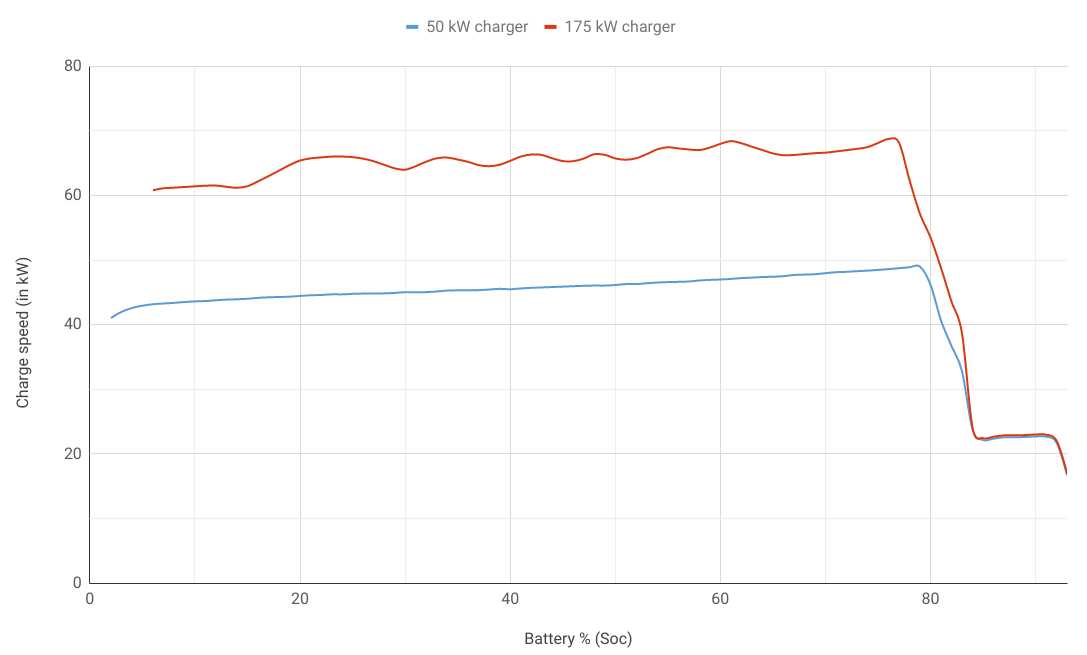
For comparison purposes here’s the equivalent graph for the Hyundai Ioniq:

Fastned Ioniq GB

According to Fastned once again:

If you have a Hyundai Ioniq, then you use the CCS plug. The charge speed is up to 70 kW at our next generation fast chargers and 50 kW at our other chargers. In the charge curve below you can see the charge speed of the Ioniq at both chargers. On average the Ioniq charges 100 km in 15 – 25 minutes. Above 75% the charge speed requested by the car will drop, and above 85% the charge speed is reduced to 22 kW.

The Results of our Recent “RapidGate” Research

No sooner had we completed our extended test drive of the new 40 kWh Nissan LEAF than the BBC published an article by Brian Milligan stating that:

Owners of Nissan’s new electric Leaf say they were given misleading information about the car before buying it.

They say charging the Leaf can take three times longer than claimed on Nissan’s website.

Others are unhappy that the range on a single charge is not as good as the 235 miles (378km) they were promised.

Nissan admitted that charging times can vary, but denied there was a problem or that any customers were misled.

The Advertising Standards Authority is now considering whether to launch an investigation into the issue.

We were already aware of “charging can take three times longer” issue, which was originally reported by Jonathan Porterfield of Eco Cars in Orkney:

For our test we weren’t intending to drive from Land’s End to John o’Groats, or even Leicestershire to Aberdeen. However we were planning a trip from Bodmin to Cardiff via Trowbridge, then back via the M4/M5/A30.

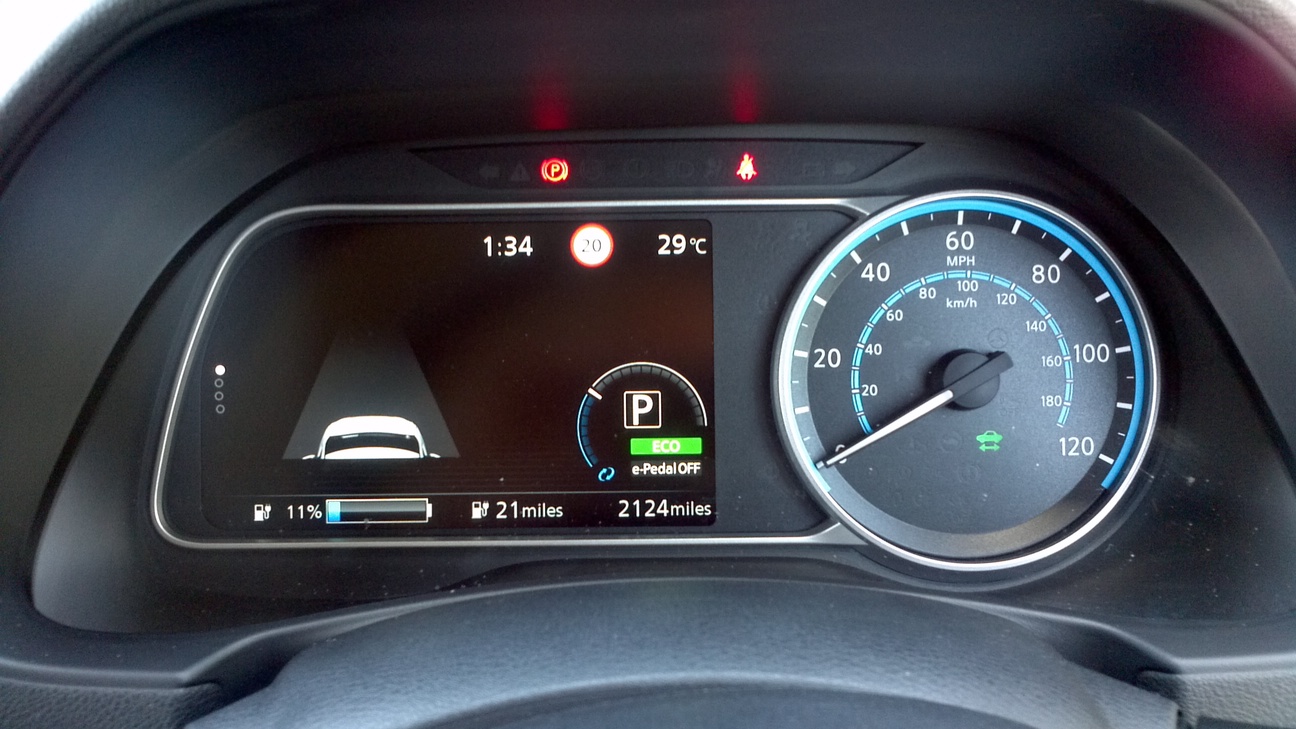
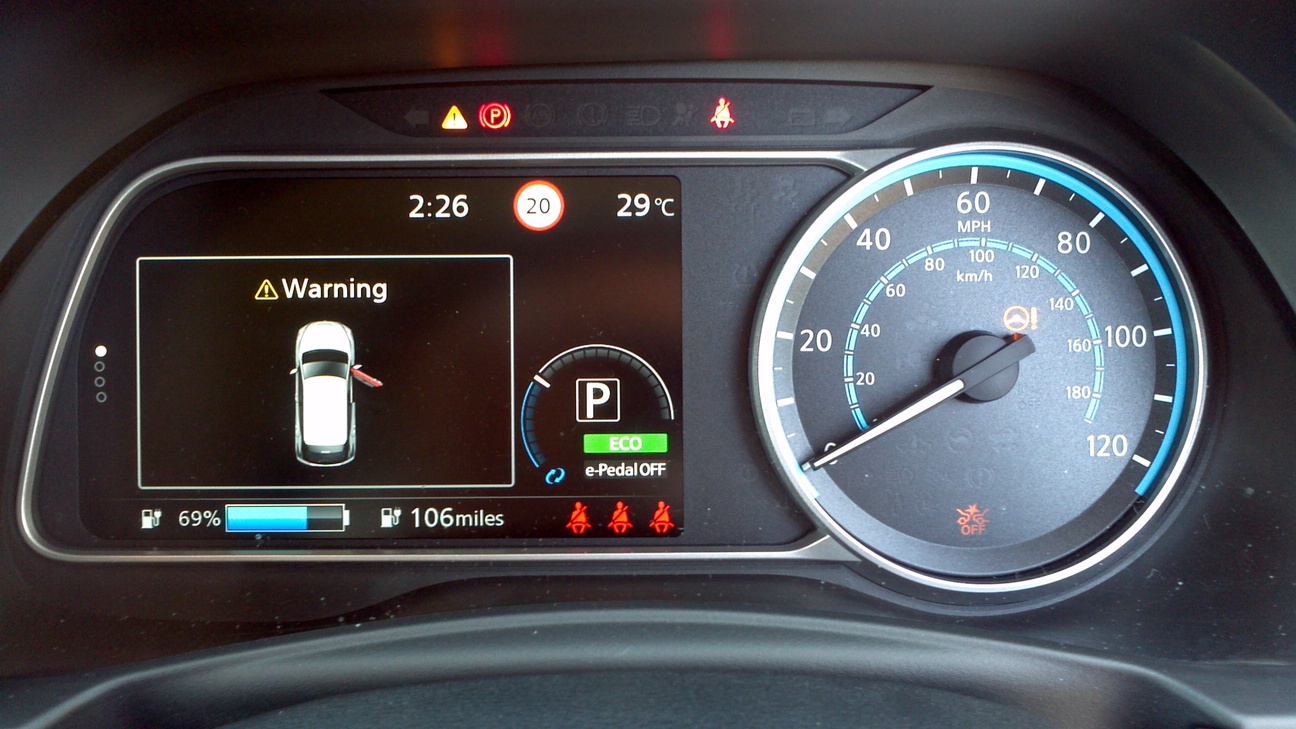
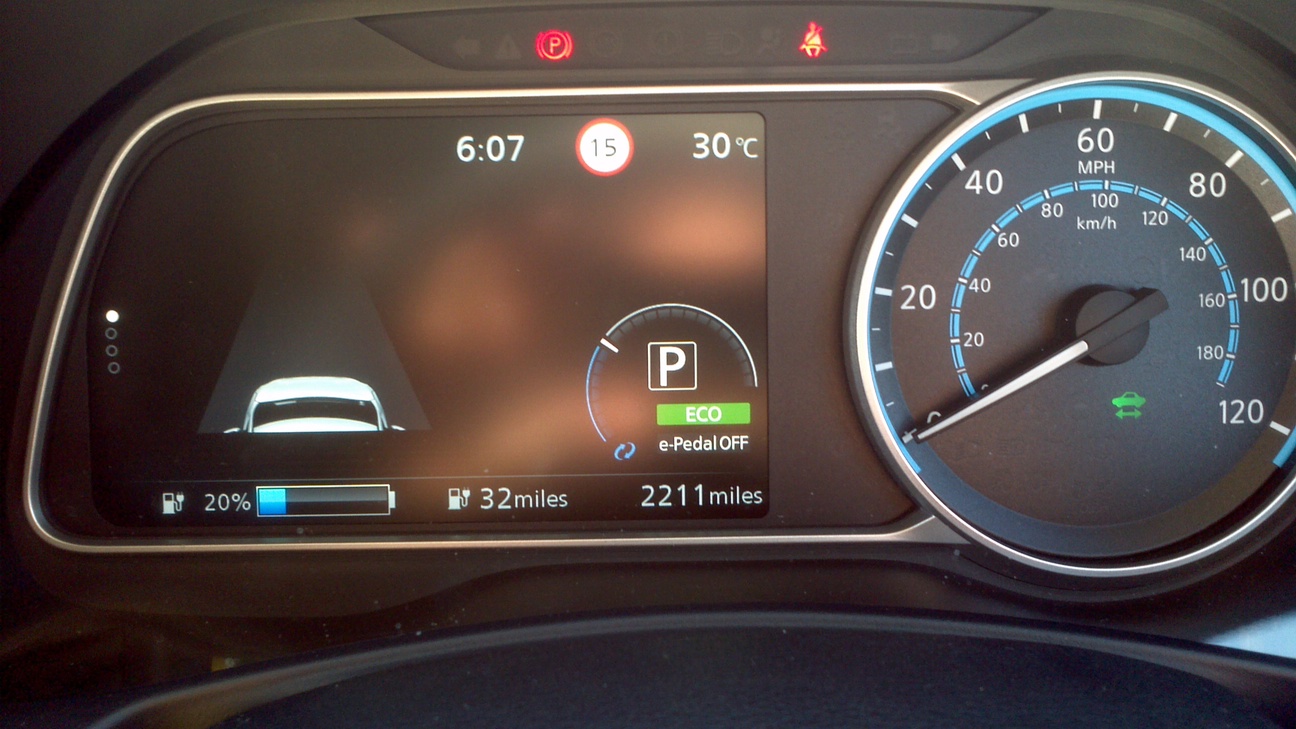
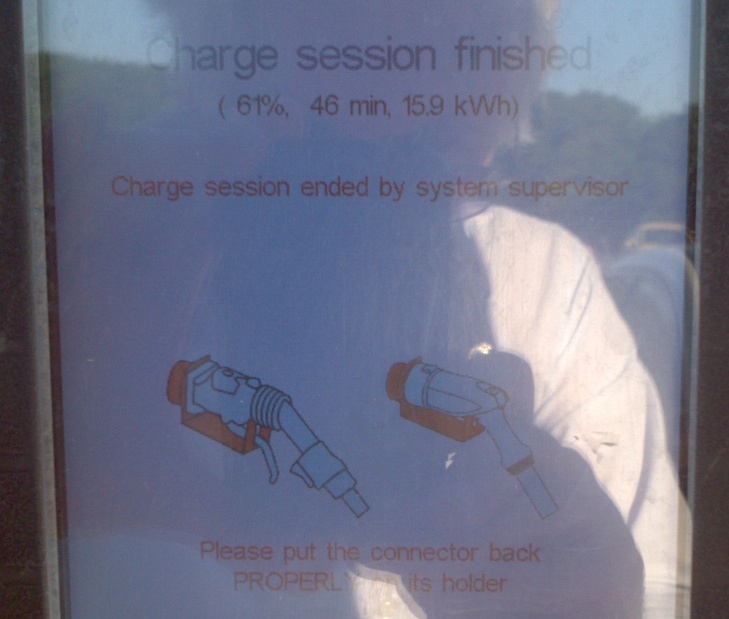
Here is what we discovered. After heading up the A30 and then the M5 at a proPILOT controlled 70 mph our first stop to “rapid charge” was at Taunton Deane Services where this transpired:

2018-06-26_13-34-15_225

2018-06-26-TauntonDeane

2018-06-26_14-26-07_595

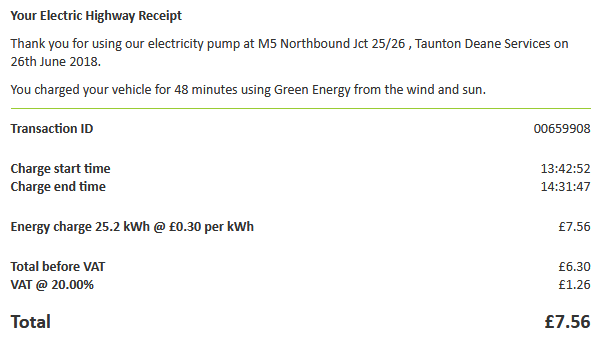
By my calculations that’s an average of ~31.5 kW

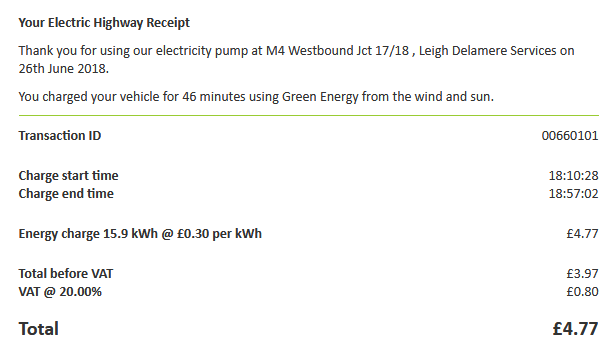
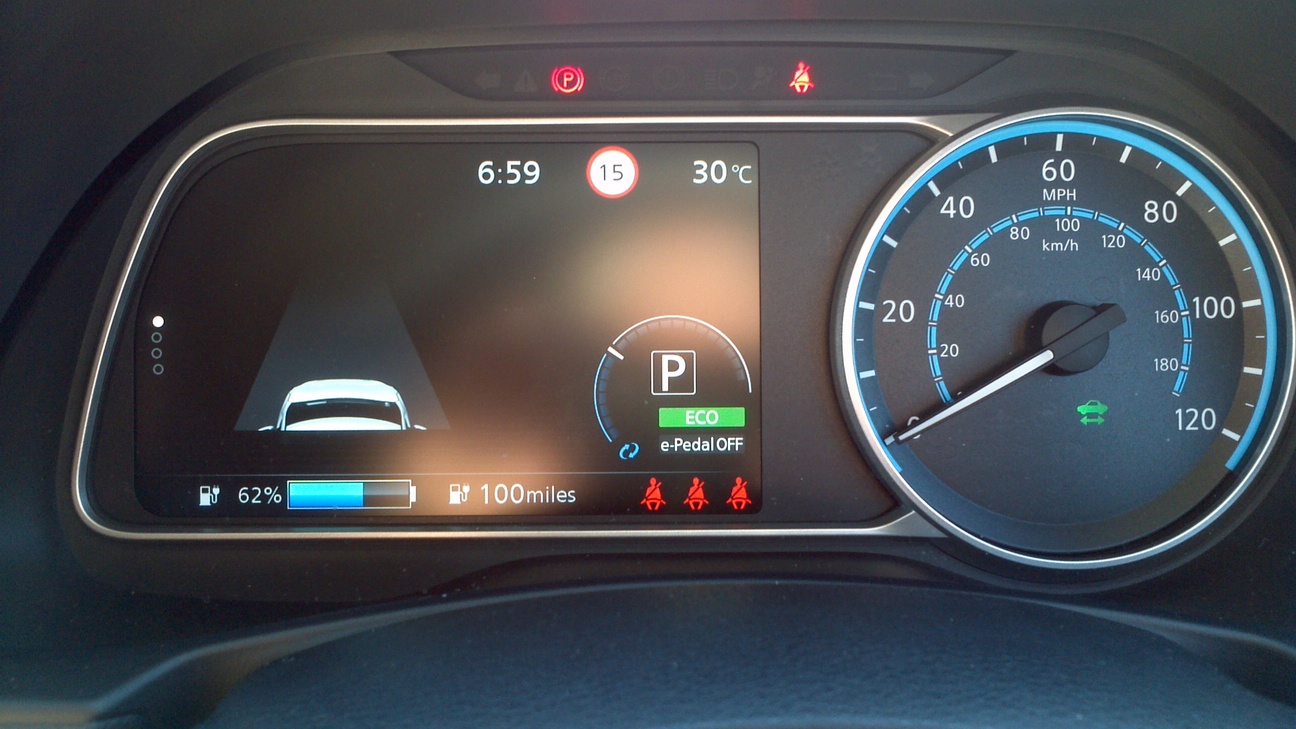
After driving to Trowbridge via the A303, and hence a fair bit more at speeds of 60 and 70 mph, we spent an hour or so charging at a stately 6.6 kW. Then we headed north to Leigh Delamare services, where this transpired.

2018-06-26_18-07-46_824

2018-06-26-LeighDelamare

2018-06-26_18-59-15_667

By my calculations that’s a lot less than 31.5 kW. An average of ~21 kW in actual fact. It certainly looks as though there is some truth to those RapidGate rumours.

“Several of the Twitterati debating the issue have been suggesting that the 40 kWh LEAF 2.0 should have employed the same sort of “active battery temperature management” employed in the e-NV200 van. Let’s take a look at what Nissan themselves have to say about that:

The Nissan e-NV200’s motor is powered by a Nissan-developed 48-module compact lithium-ion battery, just like LEAF, but there are significant differences between the two packs.

Like LEAF, the cells are manufactured at Nissan’s new battery plant in Sunderland close to the NMUK facility, but these are then shipped to Barcelona where they are assembled into a pack specially configured for e-NV200 to avoid encroaching into the cargo area.

The battery pack is shorter and narrower than that in LEAF but, for the most part, deeper. Weighing 267.5 kg, it is also 7.5 kg lighter.

It is mounted under the floor of the vehicle within the wheelbase to keep the centre of gravity as low as possible and is contained within in a sturdy metal casing to provide extra protection in the event of a side impact.

As in the LEAF, the battery pack comprises 48 modules with a nominal capacity of 24 kWh, but it incorporates a bespoke cooling pack that operates automatically during quick charging.

Due to more compact packaging and because e-NV200’s duty cycle is likely to be quite different to LEAF – it is anticipated that the vehicle will be operated intensively during the working day and there will be greater use of Quick Chargers to minimise down time – cooled air from the vehicle’s heating and ventilation system is channelled over the battery cells to ensure optimum charging conditions at all times.

Conversely, in cold weather, the vehicle’s HVAC system wafts warm air over the battery, again to ensure it reaches its optimum operating temperature as quickly as possible.

It does rather sound as though Nissan didn’t anticipate that quite so many people would want to operate the new LEAF “intensively during the working day”, and through the night too is some cases. However to be frank it beats me why all those people want to work their new LEAF that hard. For Jonathan driving LEAF’s a long way in a hurry is part of his business. For everybody else though, this seems to sum things up nicely:

Finally, for the moment at least, here is an excellent video from Dr. Euan McTurk on the complexities of electric vehicle battery chemistry:

Note that around the 22 minute mark Euan mentions that there are lithium rich brines here in Cornwall!

To be continued……

In Which Kasia Falls in Love with the 2018 Nissan LEAF

A lot of people are afraid or even horror-struck with the idea of driving in an autonomous car. But I belong to the opposite group – I dream about an autonomous car, I long for it and I long to have one. An ideal one would be able to float over the roads and country lanes. For these longings and dreams about floating self driving vehicles I should probably blame SF writers.

To make it clear I am not a professional test driver, I don’t work for Nissan, I am a woman, 62 years old, an artist and writer but also a huge fan of electric cars.

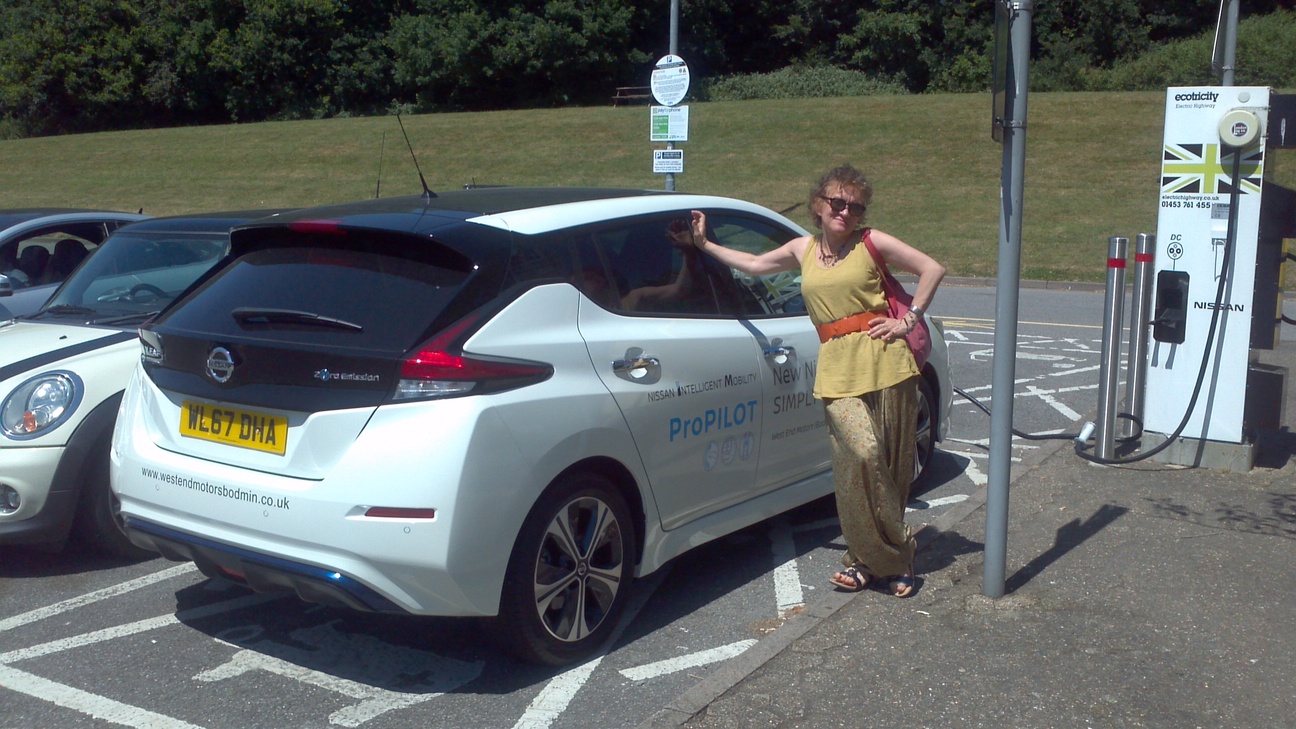
2018-06-26_13-47-17_336

A few days ago (Today is June, 30th 2018) we had the pleasure to go on an alas not many days journey in a new Nissan Leaf with the proPILOT “autonomous” mode, from the North Cornish town of Bodmin, through Devon (A30 and M5), Somerset, across country lanes and carriageways into Wiltshire, then Gloucestershire to sunny Cardiff and then back. The sun was shining, the air-conditioning was working, the temperature outside was rising above 30C and the quality of the audio was flawless and using the Amazon Music app we could listen to the newly released 50 legendary albums.

To start with I felt a kind of uneasiness and unreal-ness when using the cruise control – could I really trust the car to control things in all the busy traffic on the M5 and to take the decision about slowing down behind other cars and then accelerating again? Could I just start a series of yoga legs and feet exercises without causing an accident? I have to tell you that I could. The car is intelligent enough to keep us in a lane, to anticipate the bends in the road, to read all the traffic around it, to spot the car in front of it, even a car which cuts us up. I was trying to drive without keeping my hands on the steering wheel, the car was driving totally autonomously but not for long. After a while it started piping and blushing at me. I had to put my hands back on the steering wheel otherwise according to the manual the car will start to slow down and finally will make a stop. Not a good idea on a motorway.

The Leaf in the cruise control (ACC for short – adaptive cruise control) mode performs marvellously on the motorway, it also does a spot-on job on partly B-roads, partly A-single and dual roads and even those roads in the towns and villages, something none of these systems is really made for but is a good indication of how well they read lane markings. The Leaf stays within its lane at the speed limit, reads all the diverse speeds limits between 70, 60, 50,40, 30 and 20 miles/h and even drives itself around corners sharper than those on the average highway.

Several times on those roads we encountered stop-and-go traffic and the ACC was able to track the vehicle ahead of it stationary at the line for a stop sign or just for busy traffic and after waiting it started to move forward when a gap opened to the car in front. Just marvellous. On the last day I tested the e-pedal – one pedal system and it worked fabulously too. I totally forgot to say that I drove all the time in eco-mode. And even in the eco mode the acceleration of the Leaf was pretty good, in my opinion. A few times I speeded to over 70 mph to overtake a few annoying cars on highways/motorways and it happened pretty fast only the car did complain about my behaviour ;-).
It is an intelligent car – perfect for me, an undisciplined car driver, to correct me and teach me how to behave as a civil and polite person and citizen on the roads.

We did have issues with charging. Every time we left the Leaf at a charging point to become fully charged, it never happened. The Ecotricity chargers stopped every time after charging for 45 minutes. It is a pity.

The only concern for me is the seat, more specifically the headrest. It is pushed forward too much for my taste, and it is impossible to adjust it. It only moves up and down. Maybe it is my problem because I am short, 5’2 inch.

It is fair to say we were simply amazed by the proPILOT autonomous functionality. I love this car, just love it:

To be continued……

Road Testing the 2018 Nissan LEAF and “RapidGate” Rumours

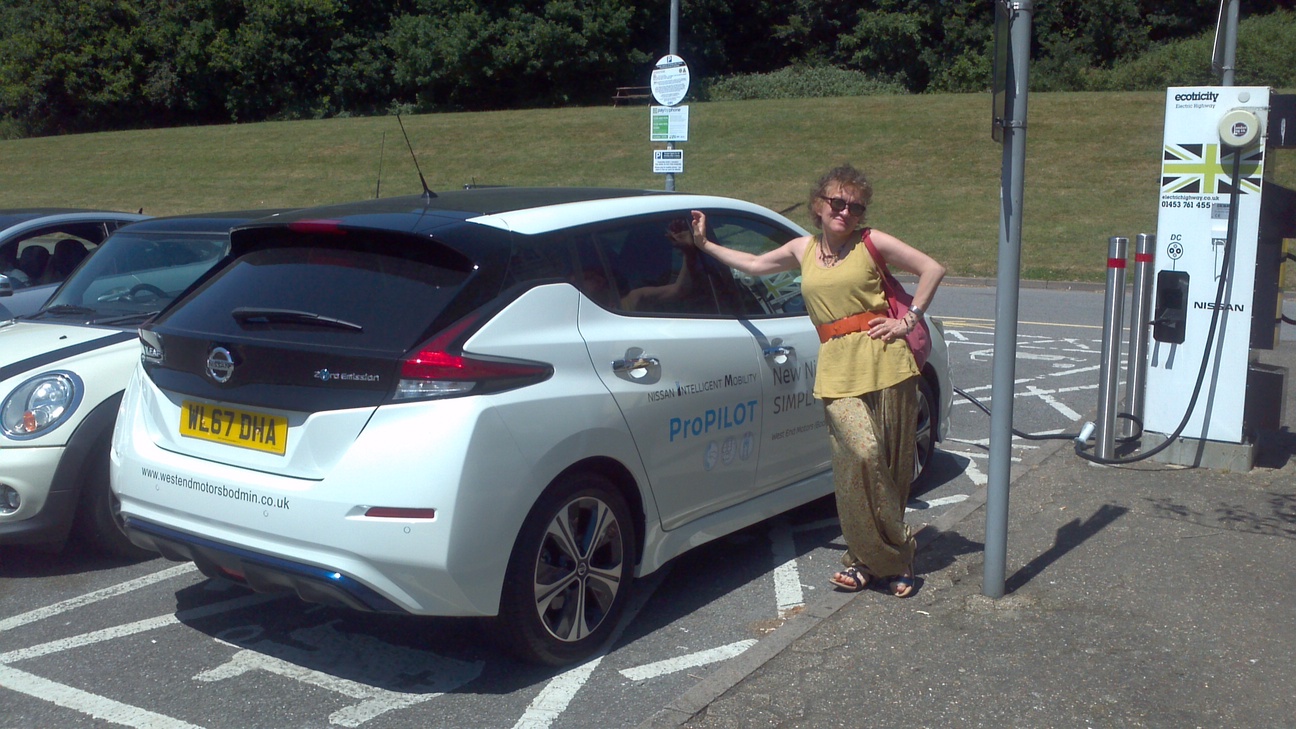
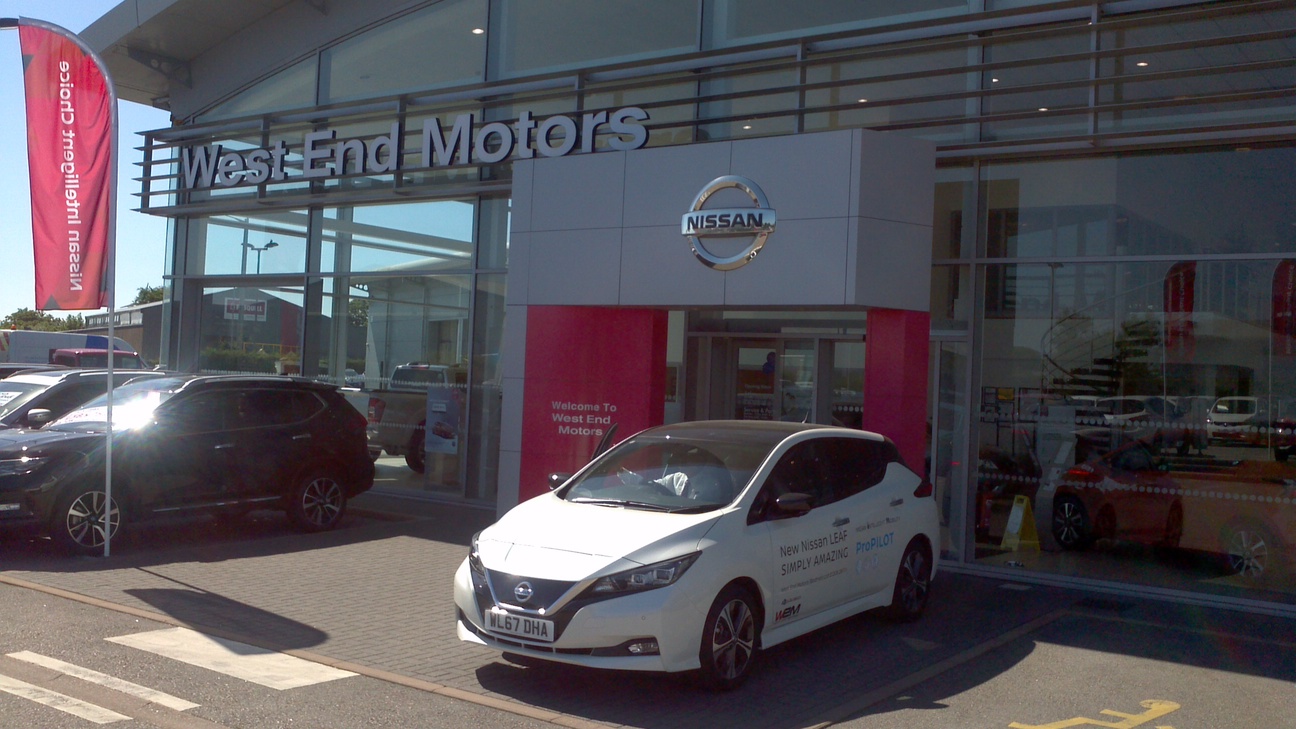
Here at V2G UK we’ve finally managed to complete an extended test drive of the 2018 model Nissan LEAF 2.0! We’d booked a 2 day test a couple of months ago, but had to cry off thanks to yours truly suffering a dose of the “man flu”. This time around my health held up and we picked up our two tone LEAF from West End Motors just down the A30 from here in Bodmin:

2018-06-26_10-29-07_147

Our test drive was timed to coincide with the Welsh Government’s Connected and Autonomous Vehicles briefing in Cardiff. More on that in due course, but amongst many other things we wanted to discover if there was any truth to the so called “#RapidGate” rumours flying around on Twitter and elsewhere. If that is double Dutch to you then please watch this explanation of the term from the inimitable Bobby Llewellyn:

When the “kerfuffle” started Nissan issued the following “news release” on Twitter:

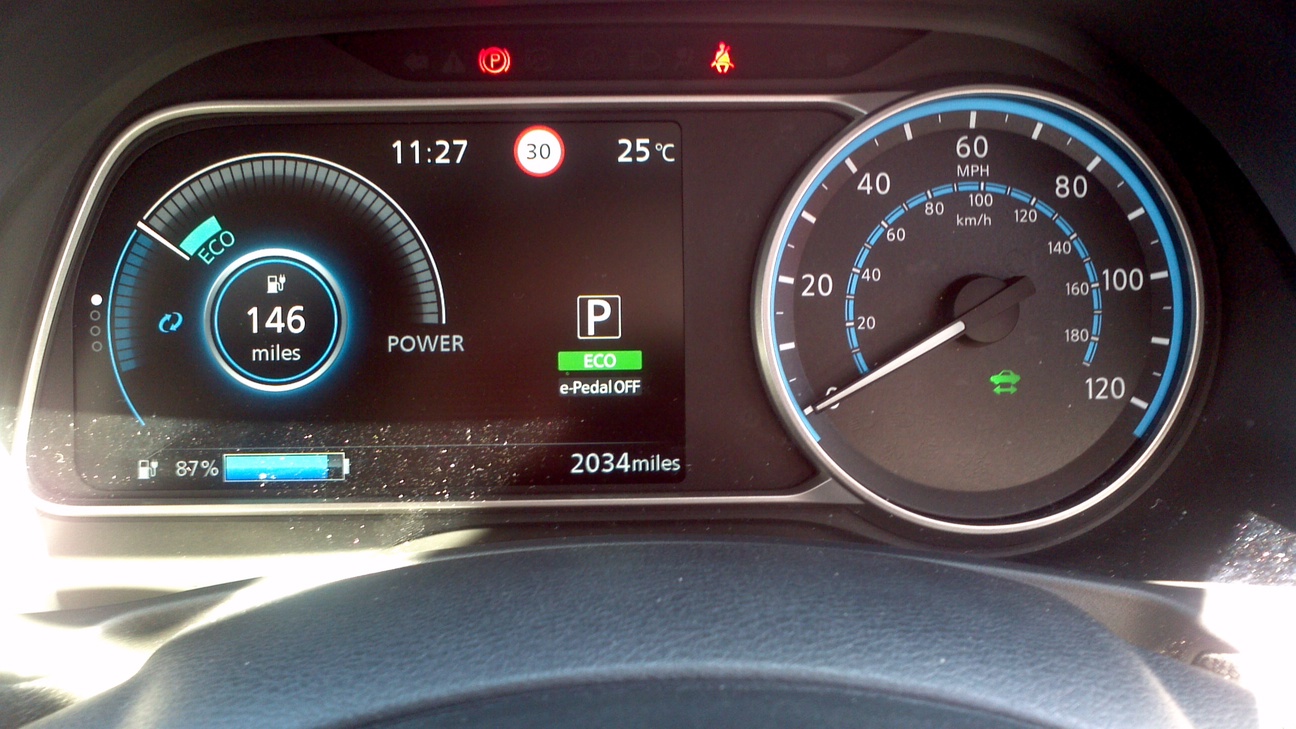
During our trip we intended to do a lot of motorway driving at 70 mph, including a cross country trip to visit Platinum Nissan in Trowbridge. Much more on proPILOT in due course as well, but we set off up the A30 from Bodmin and engaged Nissan’s by now somewhat autonomous version of “cruise control” with a target speed of 70 mph:

2018-06-26_11-27-10_686

We still had some juice left in “the tank” by the time we reached Taunton Deane Services. According to the LEAF’s clock a distance of 90 miles:

2018-06-26_13-34-15_225

Before heading cross country we plugged in to the Ecotricity charging station:

2018-06-26_13-47-17_336

Having set things in motion we grabbed some lunch, then returned to discover this:

2018-06-26_14-36-Session1

We certainly weren’t “fully charged”, and 25.2 kWh over 48 minutes is rather less than the advertised 50 kW rapid charging. We called Platinum to inform them we’d be arriving late, and enquired whether they had a “rapid” charger. They haven’t!

The LEAF’s satellite navigation system directed us to Trowbridge via the A303, and we followed its instructions. Certainly not the shortest route, but arguably the quickest? Once at Platinum we plugged in quickly and topped up “slowly”. Discretion being the better part of valour we departed an hour or so later and headed for Leigh Delamere Services for what we hoped would be a “rapid” charge. We were sadly disappointed:

2018-06-26_18-57-Session2

Our own experience suggests that the #RapidGate rumours are not without foundation, and what is more the issue is not confined to the third “rapid” charging session of the day and beyond.

To be continued……

3 MW xStorage Now Live at the Johan Cruijff ArenA

We covered the start of this story, and are now pleased to be able to report that the xStorage Buildings electricity storage system at the Johan Cruijff ArenA, home of Ajax Amsterdam, is now live. According to this morning’s press release:

Today the largest European energy storage system using second-life and new electric vehicle batteries in a commercial building was made live. Amsterdam Alderman Udo Kock, deputy mayor for Finance and Economic Affairs (Amsterdam) conducted the official opening ceremony.

This unique project is the result of collaboration between Nissan, Eaton, BAM, The Mobility House and the Johan Cruijff ArenA, supported by the Amsterdam Climate and Energy Fund (AKEF) and Interreg.

The 3 megawatt storage system provides a more reliable and efficient energy supply and usage for the stadium, its visitors, neighbors and the Dutch energy grid. Combining Eaton power conversion units and the equivalent of 148 Nissan LEAF batteries, the energy storage system not only enables a more sustainable energy system, it also creates a circular economy for electric vehicle batteries.

Europe’s largest energy storage system is now live at the the Johan Cruijff Arena

Europe’s largest energy storage system is now live at the the Johan Cruijff Arena

According to Henk van Raan, director of innovation at the Johan Cruijff ArenA:

Thanks to this energy storage system, the stadium will be able to use its own sustainable energy more intelligently and, as Amsterdam Energy ArenA BV, it can trade in the batteries’ available storage capacity.

The ArenA is assured of a considerable amount of power, even during an outage. As a result, the stadium will contribute to a stable Dutch energy grid. The Johan Cruijff ArenA is one of the most sustainable stadiums in the world and leads the way in introducing smart innovations like this unique energy storage system.

The press release continues:

The energy storage system plays an important role in balancing supply and demand of energy in the Johan Cruijff ArenA. The storage system has a total capacity of 3 megawatt, enough to power several thousand households. This capacity also means that the energy produced by the 4,200 solar panels on the roof of the ArenA can also be stored and used optimally. The energy storage system will provide back-up power, reducing the use of diesel generators, and provide relief to the energy grid by flattening the peaks that occur during concerts.

Finally, for the moment at least, here’s a video of the Ajax Amsterdam ArenA and it’s new static distributed energy storage system in action:

OVO Energy Reveal “Domestic V2G Charger” Images

We’ve previously mentioned OVO Energy’s announcements about the vehicle-to-grid technology they’ve been working on, and now we can show you some pictures too! In a news release to accompany the launch event in London OVO announced yesterday that:

Today at its first ever Energy Technology Product Showcase, OVO unveiled a range of products that together with its intelligent platform VCharge will form the components of a distributed, domestic energy system for the future.

The range includes the world’s first widely available, domestic electric vehicle-to-grid charger, designed and manufactured in the UK. The charger will accelerate the global transition to electric vehicles and will enable drivers to sell surplus energy from their electric vehicle batteries back to the electricity grid – meaning they may never have to pay to be on the road again.

On the new V2G page on OVO’s web site they even revealed what their “domestic electric vehicle-to-grid charger” will look like. Here it is:
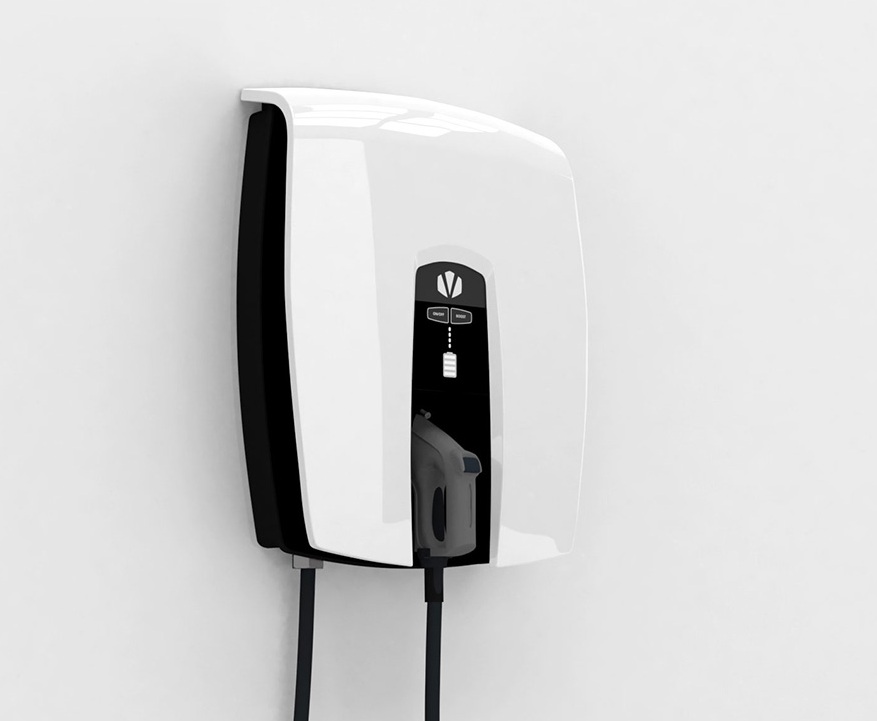
OVO-V2G-1

According to OVO’s CEO Stephen Fitzpatrick:

Renewable energy and electric vehicles are perfect partners for the 21st Century. Today we’re launching the world’s first widely available vehicle-to-grid charger, helping to solve one of the biggest challenges facing the energy sector. We’re enabling thousands of EV batteries to help balance the grid in times of peak demand, more renewable energy to come onto the system, and households to reduce their electricity bills.

This is the first step in building the distributed energy system of the future. One that is truly customer centric and built around households and their connected energy storage devices.

Our completely new approach to energy has been made possible by the convergence of emerging technologies, applying intelligence, and years of working with customers to redesign the entire energy system.

The technical specification of their V2G charger available on OVO’s web site doesn’t give one an awful lot to go on:

The OVO Vehicle-to-Grid Charger is 520 x 210 x 690 mm. It weighs 17kg. And it can be installed indoors or outdoors.

although the snaps from the launch event also reveal:

Power rating: 6 kW charge and discharge.

The news release continues:

The OVO Vehicle-to-Grid Charger is the world’s first widely available domestic bi-directional charger. Using VCharge, this charger will give drivers the option to discharge and sell surplus electricity from their electric vehicle batteries back to the electricity grid, helping to supply energy at times of peak demand. VCharge will also optimise vehicle charging to take advantage of cheaper electricity when it’s available and when there are more renewables in the system. Through their partnership, Nissan and OVO are leading the way with this technology.

Here’s another image, this time portraying OVO’s partnership with Nissan:
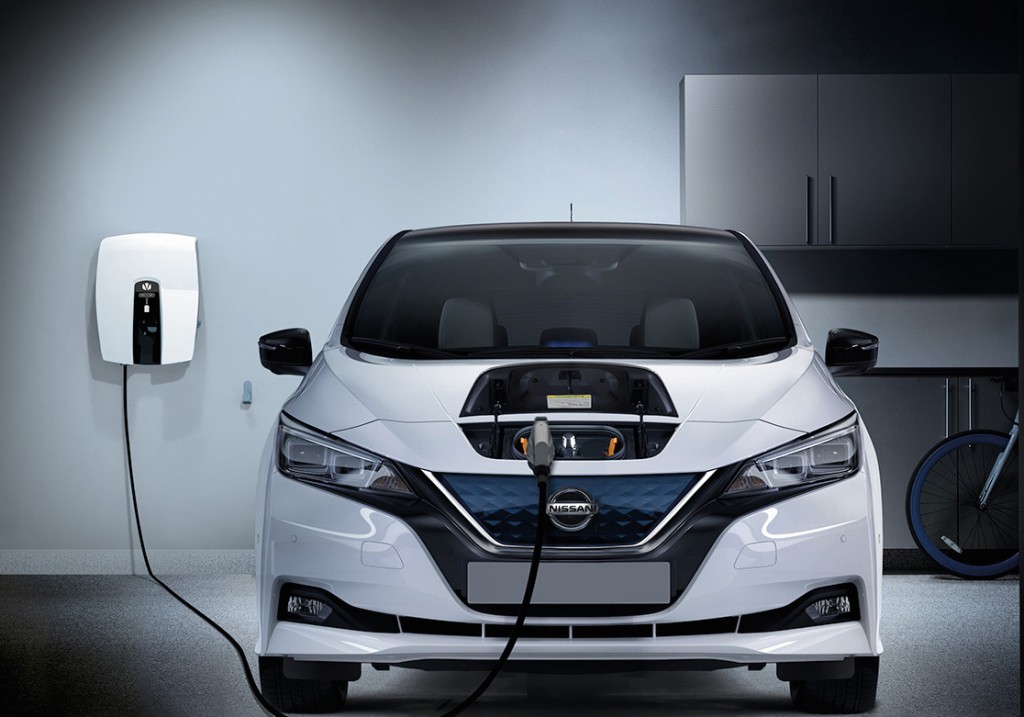
OVO-V2G-2

With slightly less fanfare OVO also pointed out that:

OVO is launching a Smart Charger which, like the vehicle-to-grid charger, will enable electric vehicles to be charged during off-peak hours, thereby easing pressure on the electricity grid as well as allowing drivers to take advantage of cheaper off-peak electricity.

There don’t seem to be any pictures available of the OVO smart charger yet, apart from snaps taken at the launch event:

However as the image above suggests OVO had more exciting news to reveal yesterday:

OVO is also announcing its debut in the home battery market with a Home Energy Storage solution. This powerful battery with a custom built control and communications unit will dynamically and proactively manage energy and power use. It will enable everyone to store, use and sell back electricity, whether or not they produce it themselves.

As if that wasn’t enough, there is still more to tell you!

The smart electrification of heating is an essential component of decarbonising our energy system. Showcased at the event was the OVO Heat Dynamo, an internet connected smart switch that can be retrofitted to electric storage heaters. It allows users to control the level of heat they want, when they want it via OVO’s Smart Heat Customer App, while reducing their electricity bills by as much as 30% and providing balancing services to the electricity grid.

Here at V2G UK we did of course sign up for news of OVO’s V2G activities many moons ago. They’ve asked us to do that again so we did, only to be informed:
2018-04-19_0852_FreeV2G

It would seem that OVO’s announcement of the “the world’s first widely available, domestic electric vehicle-to-grid charger” is a trifle premature? According to their web site it’s:

Arriving this summer.

P.S. Here’s a better picture of the OVO smart charger:
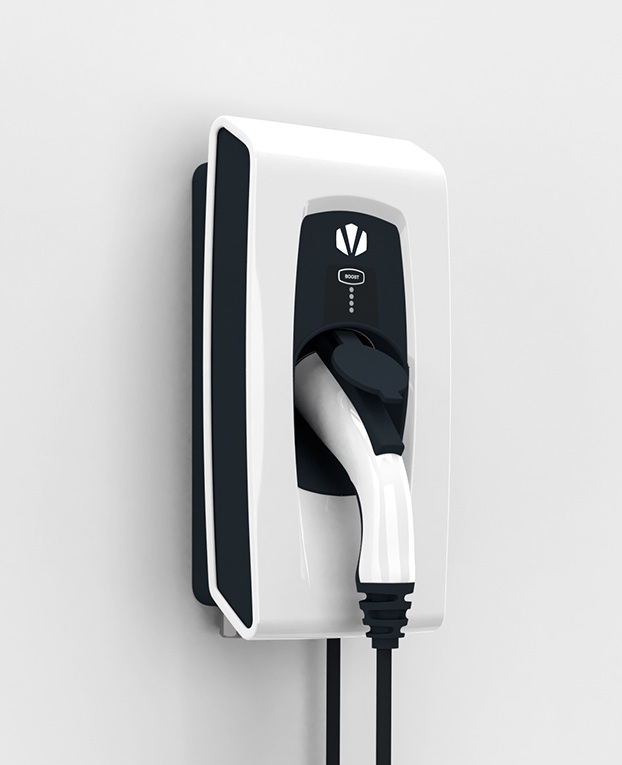
OVO-Smart-1

“Arriving this autumn”

Nissan Announce 1000 V2G Installations in the UK

Since it mentions “1000 V2G installations” and comes with a nice picture of a 2018 LEAF plugged in to a V2G charging station Nissan’s announcement of its “e4Future” project’s successful entry in the recent Innovate UK V2G funding competition deserves an article of its very own:

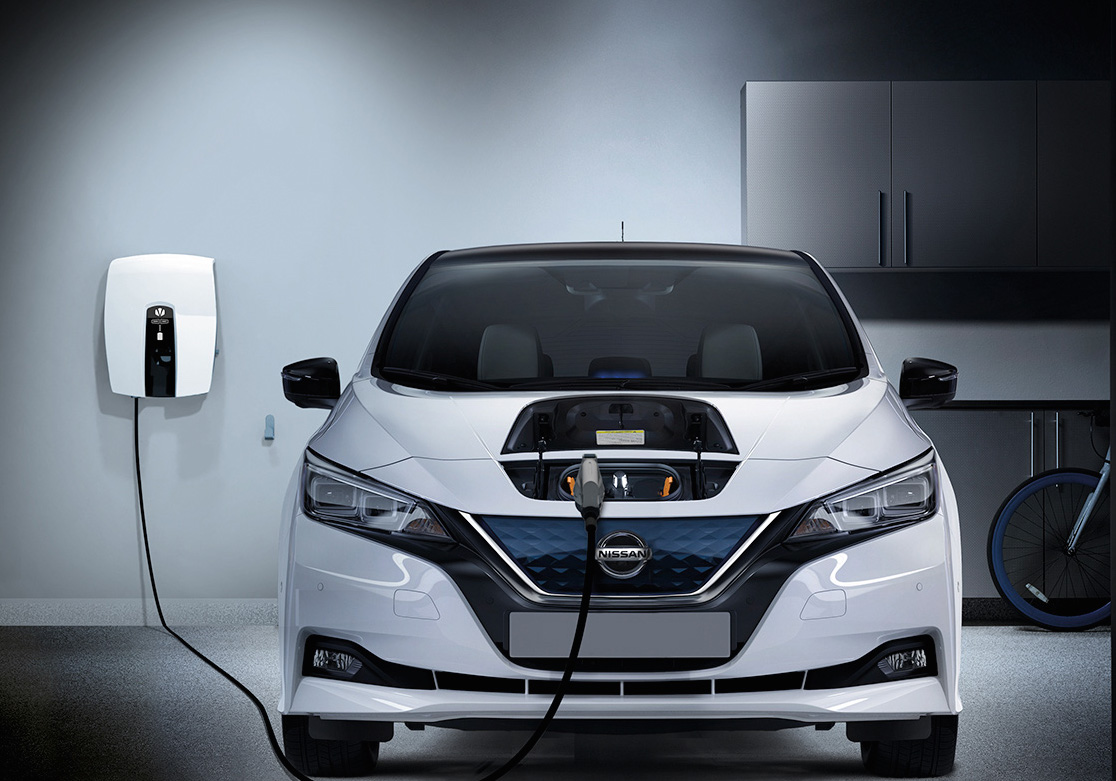
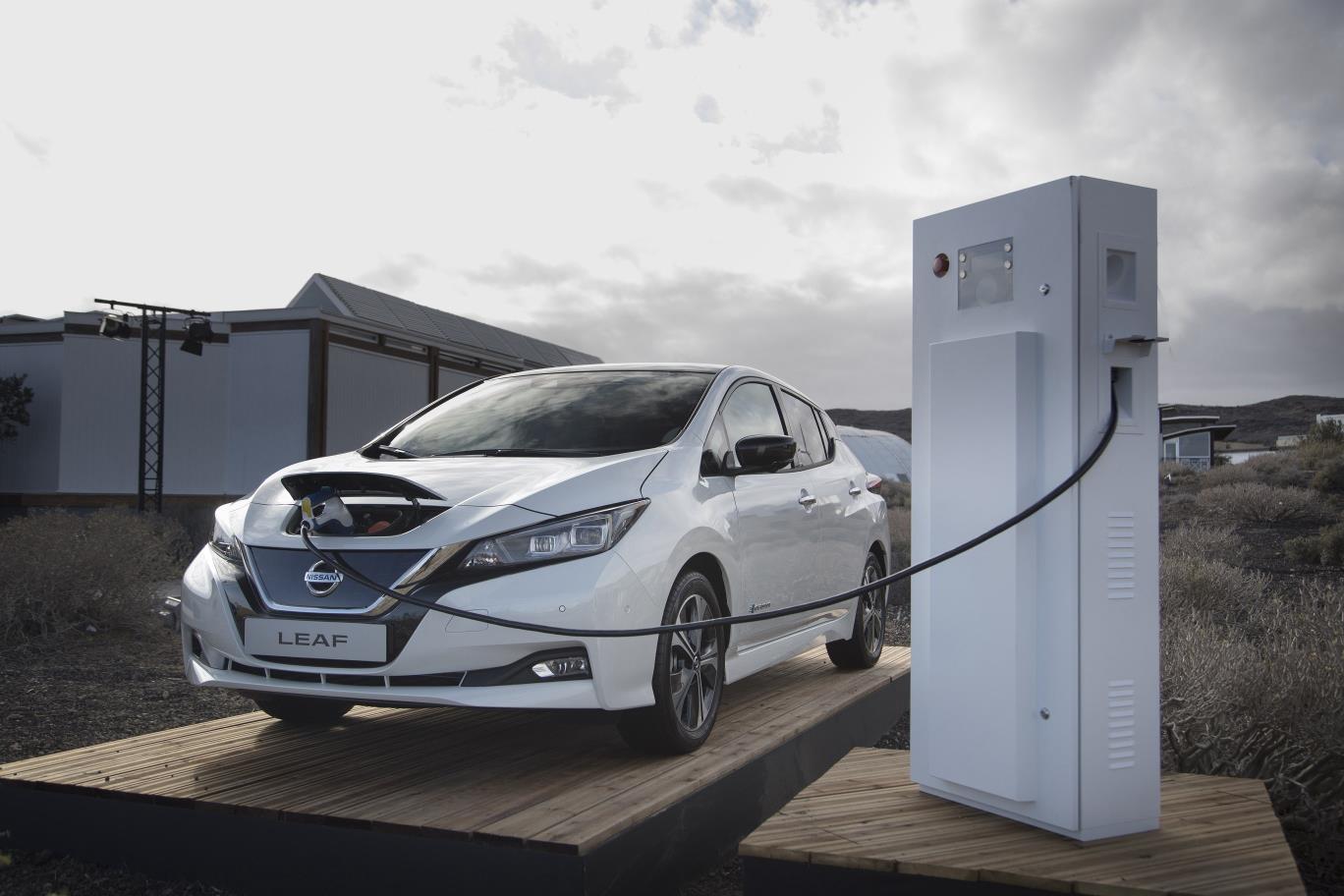
2018-LEAF-V2G

Whilst it is certainly connected to the vehicle the charging station doesn’t seem to be connected to the grid! Regarding their successful bid Nissan say that:

Nissan and its partners welcome the announcement by Department for Business, Energy and Industrial Strategy minister Richard Harrington to award £9.8m for a Vehicle-to-Grid demonstrator project.

The project foundation is for a large-scale demonstrator targeting 1000 Vehicle-to-Grid (V2G) installations that will evaluate a commercial offer to electric vehicle fleet customers. The chargers will be controlled by an aggregator and data will be collected to understand the technical characteristics of vehicle to grid charging for both the vehicles and the electricity networks.

A consortium, led by Nissan, will bring expertise from across the whole Vehicle-to-Grid value chain: V2G infrastructure/aggregator provider Nuvve, the energy community represented by National Grid, two Distribution Network Operators (DNOs); UK Power Networks and Northern Powergrid, with varied grid infrastructure. The research and analysis activities will be supported by Newcastle University and Imperial College London.

Vehicle-to-Grid technology and this project will leverage Nissan’s brand commitment to Nissan Intelligent Mobility to transform the way people drive and live, creating a more exciting and sustainable future.

Once again V2G charging station manufacturers are conspicuous by their absence from the list of Nissan’s collaborators, and there is no label on the white charging station displayed above. Nissan also provide the following bullet points summarising the e4Future project:

  • In January 2018, OLEV and BEIS announced that 21 projects (8 feasibility studies, 5 collaborative research and development projects, and 8 real-world V2G trial projects) were to receive funding of £30m to develop the business proposition and core technology around V2G, and demonstrate those with large scale trials. The projects involve more than 50 industrial partners and research organisations from both the Energy and Automotive sector, marking the largest and most diverse activities on V2G in the world, and trialling more than 2700 vehicles across UK.
  • The V2G projects represent a significant step towards the transition to a low carbon transportation and a smart energy system. Allowing EVs to return energy to the Power Grid when parked and plugged for charging, will increase Grid resilience, allow for better exploitation of renewable sources and lower the cost of ownership for EV owners, leading to new business opportunities and clear advantages for EV users and energy consumers.

Amongst other things Nissan’s Managing Director of Nissan Energy at Nissan Europe, Francisco Carranza, said that:

Our EVs can be plugged into the grid and support the transmission and distribution companies in making the UK grid more sustainable and more stable. The increase of electric vehicles penetration, the introduction of more and more distributed generation and storage and the overall increase in renewable energy penetration should be done smartly.

To ensure Nissan plays a wider role in the advancement and protection of our cities, our electric V2G-ready vehicles will be used as clean mobile energy units.

Nissan has also reiterated its bold mission to offer customers free power for their EVs. V2G introduction will change the rules of the game and make energy cheaper for everyone.

The press release also contains a long list of quotes from Nissan’s collaborators on the project. Let’s take a look at this one from Myriam Neaimeh of Newcastle University:

The Government’s announcement will be a real game changer as we move towards decarbonising the grid.

This will be the first, large scale demonstration of vehicle to grid technology anywhere in the world and crucially, this project brings together all the key players for the first time – a giant of the automotive industry with energy providers, infrastructure experts and academics – so we can work together to really make this happen. It’s a really exciting time and fantastic that Newcastle University has been involved right from the beginning.

I still cannot help but wonder who will be manufacturing the all important V2G capable charging stations that will be installed as part of the e4Future project, and what de facto or international standards they will comply with?

Nissan launches “Nissan Energy Solar” for the UK

In a press release today Nissan announced “Nissan Energy Solar“:

Nissan Energy Solar is the all-in-one solution that combines world-class residential solar panels with energy storage system to make the most of UK homes.

The solution has been designed to allow UK homeowners to reduce their energy bills and get more independence from the grid, allowing them to live more sustainably.

Traditionally, solar energy has been used to power home appliances during the day, but now with Nissan Energy Solar householders can collect and store the excess energy from their solar panels and use it during the night – even to charge their Nissan LEAF and e-NV200 – and on cloudy days.

Nissan launches Nissan Energy Solar: the ultimate all-in-one energy solution for UK homes

Nissan launches Nissan Energy Solar: the ultimate all-in-one energy solution for UK homes

The accompanying image shows an xStorage static battery on the garage wall, but no electric vehicle is to be seen. No mention is made of discharging said absent electric vehicle, so Nissan’s new offering only delivers part of the functionality implied by our artist’s impression of our SaMDES project displayed at the top of the page.

The press release continues:

Francisco Carranza, Managing Director, Nissan Energy, Nissan Europe says ‘Solar panels have become the world’s fastest growing source of new energy and we’re thrilled to launch Nissan Energy Solar in the UK. Over 880,000 UK homes already have solar panels installed and they are seeing the benefits every day, from decreasing electricity bills to increasing property values.’

‘Nissan Energy Solar is just one step in supporting our commitment to investing in innovative energy solutions for a more sustainable future and intelligent way of living.’

The new product also includes a home energy management system that will allow users to control how and when they want to use their energy in real time as well as making the entire energy system more efficient and sustainable. The system reduces energy costs and carbon footprint for homeowners significantly, by automating energy flows, purposefully utilizing solar production peaks and storage capacities.

Nissan Energy Solar solution will start at £3881**.

Here’s the small print:

**Includes the supply and installation of a six panel solar system, Home Energy Management system, and VAT at 5%.

The xStorage unit shown in the garage obviously adds to that price, as would upgrading to the “most efficient” or “sleek integrated” solar PV panels. The product web site merely states “On sale soon” and provides no additional pricing information as yet.

The 40 kWh Nissan e-NV200: The LCV market game changer!

Nissan’s latest electric vehicle press release doesn’t include the exclamation mark in our title for today:

Nissan’s breakthrough e-NV200 100% electric van combines the features of the award-winning Nissan NV200 van with the market-leading New Nissan LEAF, offering businesses a zero-emission vehicle packed with innovative technology and functionality.

From spring 2018, Nissan will introduce in Europe its new zero-emissions van that goes further than ever on a single charge thanks to a new 40kWh battery. The Nissan e-NV200 now offers a 60% extended range with unchanged cargo capacity and single-shift transmission that makes driving easier and safer.

Nissan e-NV200 40 kWh (ab MY 2018)

With more than 15,000 vehicles on the roads since its introduction in Europe in 2014, this new generation of 100% electric Nissan e-NV200, embodying the company’s Nissan Intelligent Mobility vision, now goes another step forward. The longer range provided by its bigger battery and a full new series of connectivity features makes the 100% electric e-NV200 a real game changer in the LCV market.

Regular readers will be aware that we wholeheartedly agree with that final sentence! Whilst it was a non-typical use case our mainly motorway road test of a 24 kWh equipped e-NV200 last summer would have been considerably swifter with an extra 60% range. Our local rural post lady assures us that her currently diesel powered round is about 50 miles. Absolutely no problem in the new e-NV200. Are you listening Royal Mail? According to Nissan once again:

As well as helping business customers enhance their green credentials, the van represents a key pillar in Nissan’s wider commitment to cutting the level of emissions in city centres caused by professional drivers making deliveries and/or collections, ranging from CO2 emissions to noise pollution. It can help make 100% electric last mile deliveries achievable for businesses and professional drivers everywhere, with customers now able to drive more than 100 km further on a single charge compared to the previous generation e-NV200 fitted with 24kWh battery.

No more range anxiety then, and Nissan Europe’s Director of Electric Vehicles, Gareth Dunsmore, makes a very important point:

Businesses have a huge impact on air quality and traffic congestion, especially in city centres, and the Nissan e-NV200 helps cut the level of CO2 emissions they create.

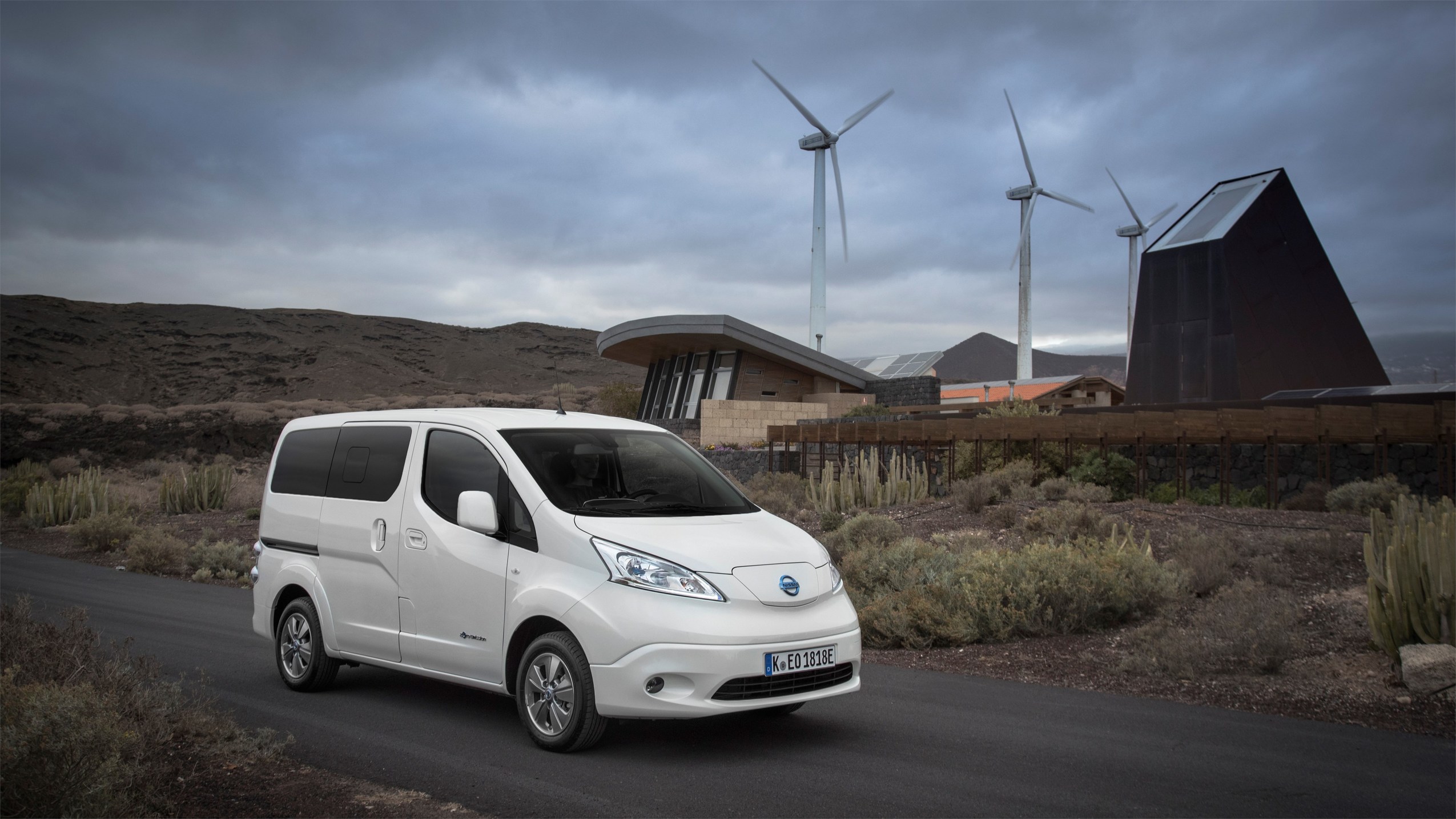
The photos accompanying the press release are of the white “Evalia” 7 seater people carrier version of the e-NV200 rather than a red parcel carrying van, and seem to have been shot in amongst some renewable generation on the isalnd of Tenerife:

Nissan e-NV200 40 kWh (ab MY 2018)

Whatever the colour or configuration, we’d love to try one out on some Great British roads in the not so Great British winter. It seems that we’ll have to wait until “spring” though.

Nissan further inform us that:

Using the same battery technology as the new Nissan LEAF just introduced in Europe, and with no increase in the size of the battery itself, e-NV200 customers face no compromise in load space. Crucially, it can help make 100% electric last miles delivery achievable for businesses and professional drivers everywhere.

At long last Nissan get around to the V2G bit:

The Nissan e-NV200 is also much more than just a 100% electric vehicle. It is a mobile power unit complete with unique bi-directional charging. This means it can give back energy to power the world around it by connecting to offices or business facilities. It can even return any excess charge to top up and stabilise the local energy grid thanks to Nissan’s innovative Vehicle to Grid technology.

We couldn’t agree more!

Nissan and Qualcomm Trial Cellular V2X in Japan

In a press release yesterday Nissan announced that:

Continental, Ericsson, Nissan, NTT DOCOMO, Inc., OKI and Qualcomm Technologies, Inc., a subsidiary of Qualcomm Incorporated (NASDAQ: QCOM), announced today plans to carry out their first Cellular Vehicle-to-Everything (C-V2X) trials in Japan. The objective is to validate and demonstrate the benefits of C-V2X using direct communication technology defined by the 3rd Generation Partnership Project (3GPP) in their Release 14 specifications. The trials are designed to show the enhanced range, reliability and latency benefits of C-V2X direct communications operated in 5 GHz band. Additionally, the C-V2X Trials are designed to demonstrate the complementary benefits of network-based communications utilizing LTE-Advanced (LTE-A). The trial results will help develop the ecosystem by providing inputs to the relevant stakeholders, including ITS-related organizations and government agencies, as we prepare for the connected car of the future and the industry’s evolutionary transition towards 5G New Radio (NR), the new global cellular standard being defined in 3GPP.

Here at V2G UK we’ve been waiting for a trial “proof of concept” of this sort of technology since we showed our Lego “V2x concept” at the Department for Business, Energy and Industrial Strategy in London last year. Nissan’s press release continues:

C-V2X radio technology is state-of-the-art cellular technology and is being validated for global deployments, and leverages the upper layer protocols developed by the automotive industry over years of research to support new advanced end-to-end use cases. C-V2X direct communications provides enhanced range and reliability without relying on cellular network assistance or coverage.

Preparation work is well underway, with the trial expected to begin in 2018, and the used cases are designed to focus on Vehicle-to-Vehicle (V2V), Vehicle-to-Infrastructure (V2I) and Vehicle-to-Pedestrian (V2P) direct communications, as well as Vehicle-to-Network (V2N) operations over cellular network-based wide area communications with cloud access.

The use case we showed at BEIS involved Vehicle-to-Infrastructure communications, so this is all music to our ears! There is more:

For the field trials, Continental will utilize the Qualcomm® C-V2X Reference Design, which features the Qualcomm® 9150 C-V2X chipset with integrated Global Navigation Satellite System (GNSS) capability to build connected car systems and integrate the systems into Nissan vehicles. Nissan will perform V2X use case selection and develop test scenarios with key performance indicators (KPIs) for C-V2X technology validation. OKI, one of the leading companies in ITS, will bring their expertise in roadside unit (RSU) infrastructure and applications to demonstrate V2I as a viable technology for advanced traffic applications by integrating the Qualcomm® 9150 C-V2X chipset into their RSU. Ericsson, as one of the leading companies in technology and service for telecommunications, will join the V2N use case discussion considering combination of direct communication and LTE-A network technologies. NTT DOCOMO will provide LTE-A network and V2N applications to demonstrate the benefits of complementary use of network-based communications for a variety of advanced automotive informational safety use cases.

Great stuff! Now all that’s required is to add a Nissan LEAF and a touch of V2G to the V2x mix. The press release didn’t include any images, so here’s one from our own archives:

2017-10-13-Connected-2