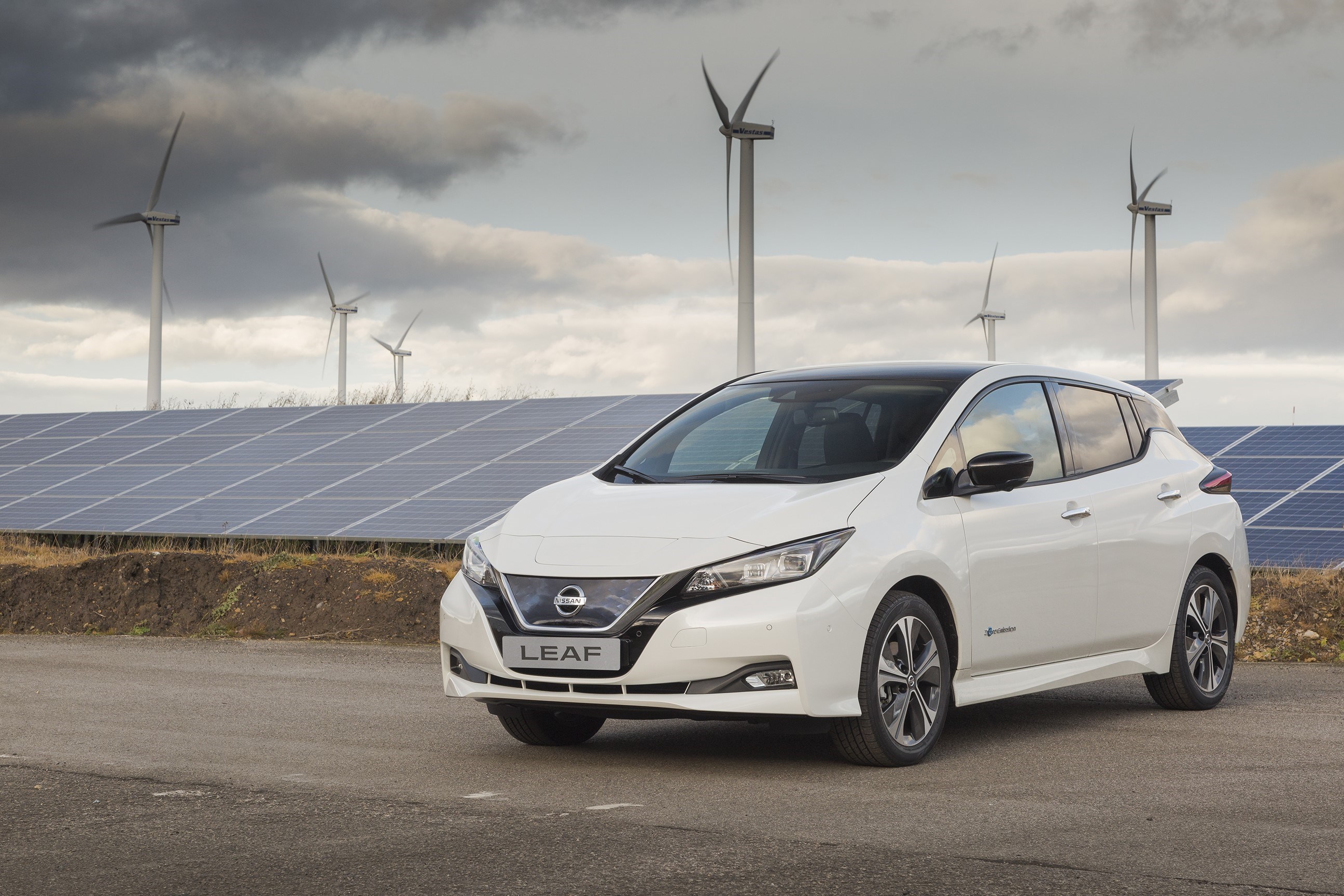
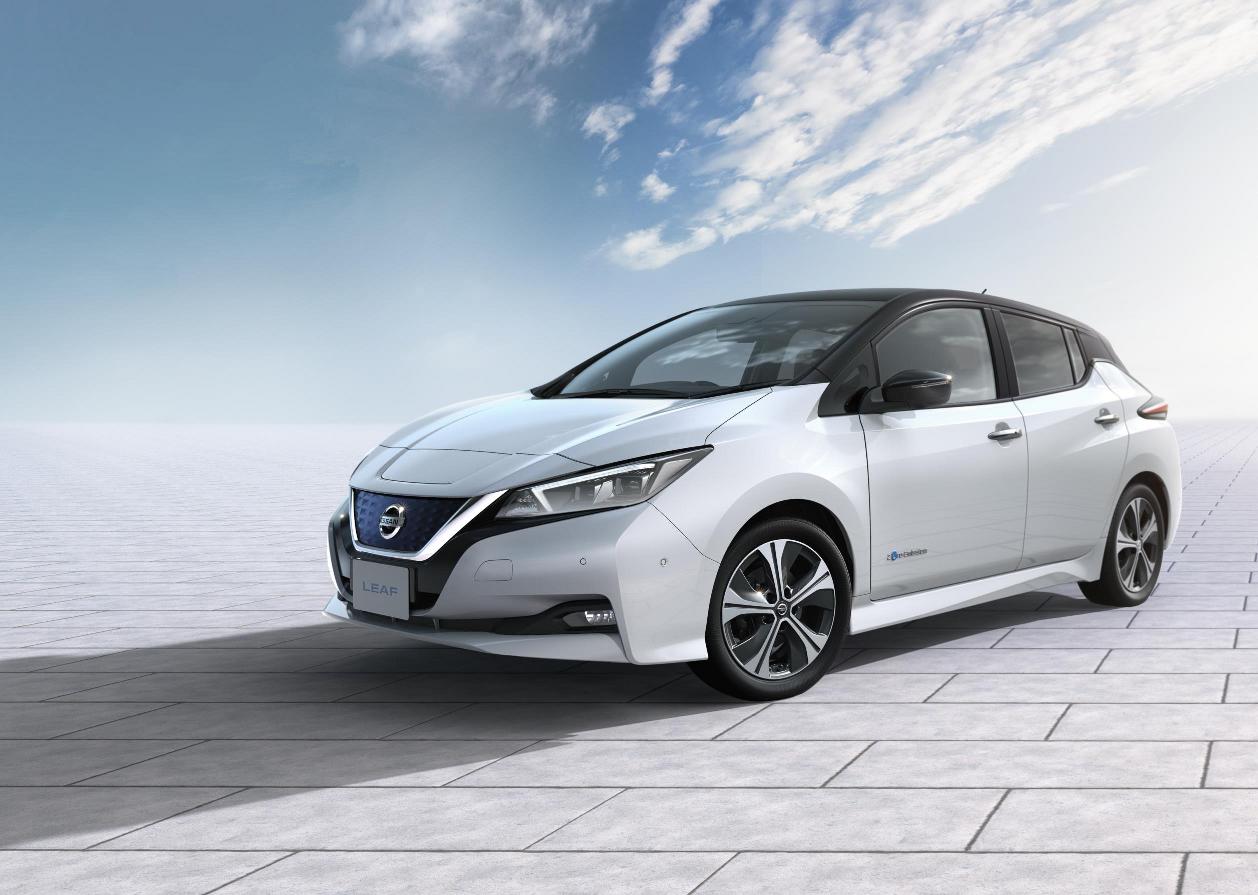
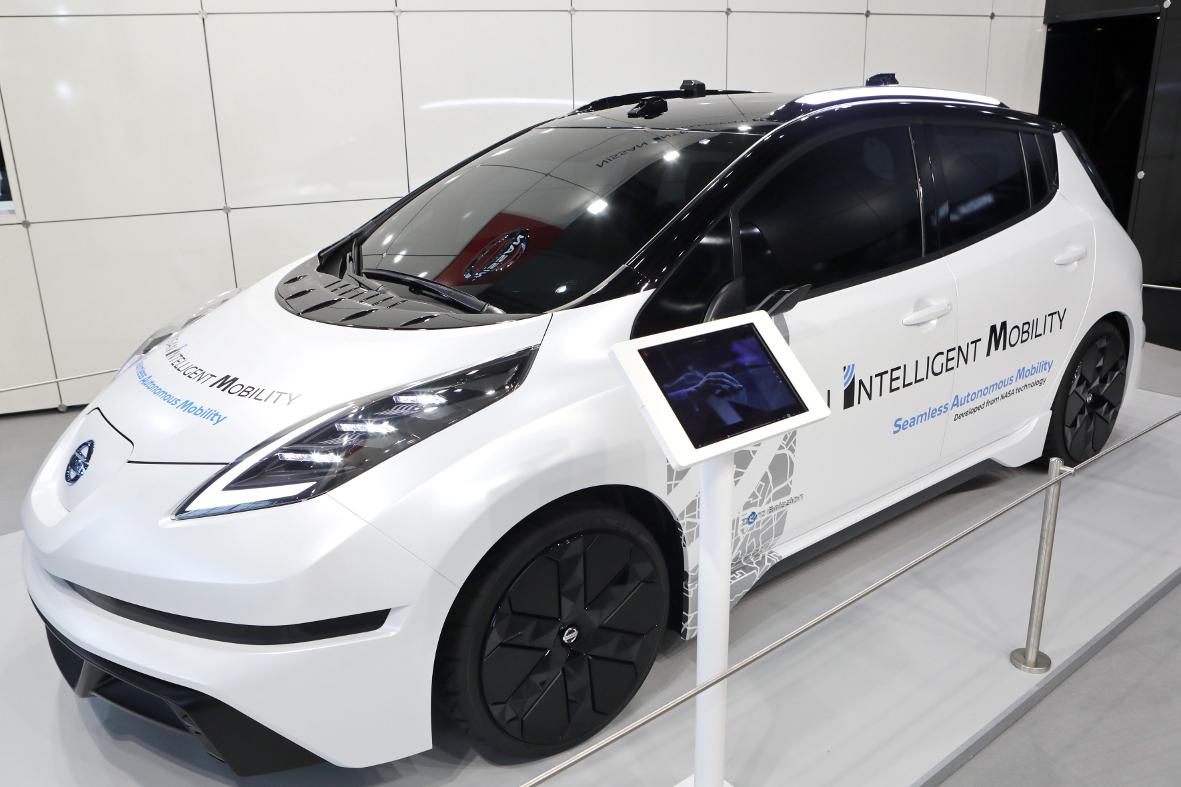
Production of the all-new Nissan LEAF, the next generation of the world’s best-selling electric vehicle, is officially underway for European customers.
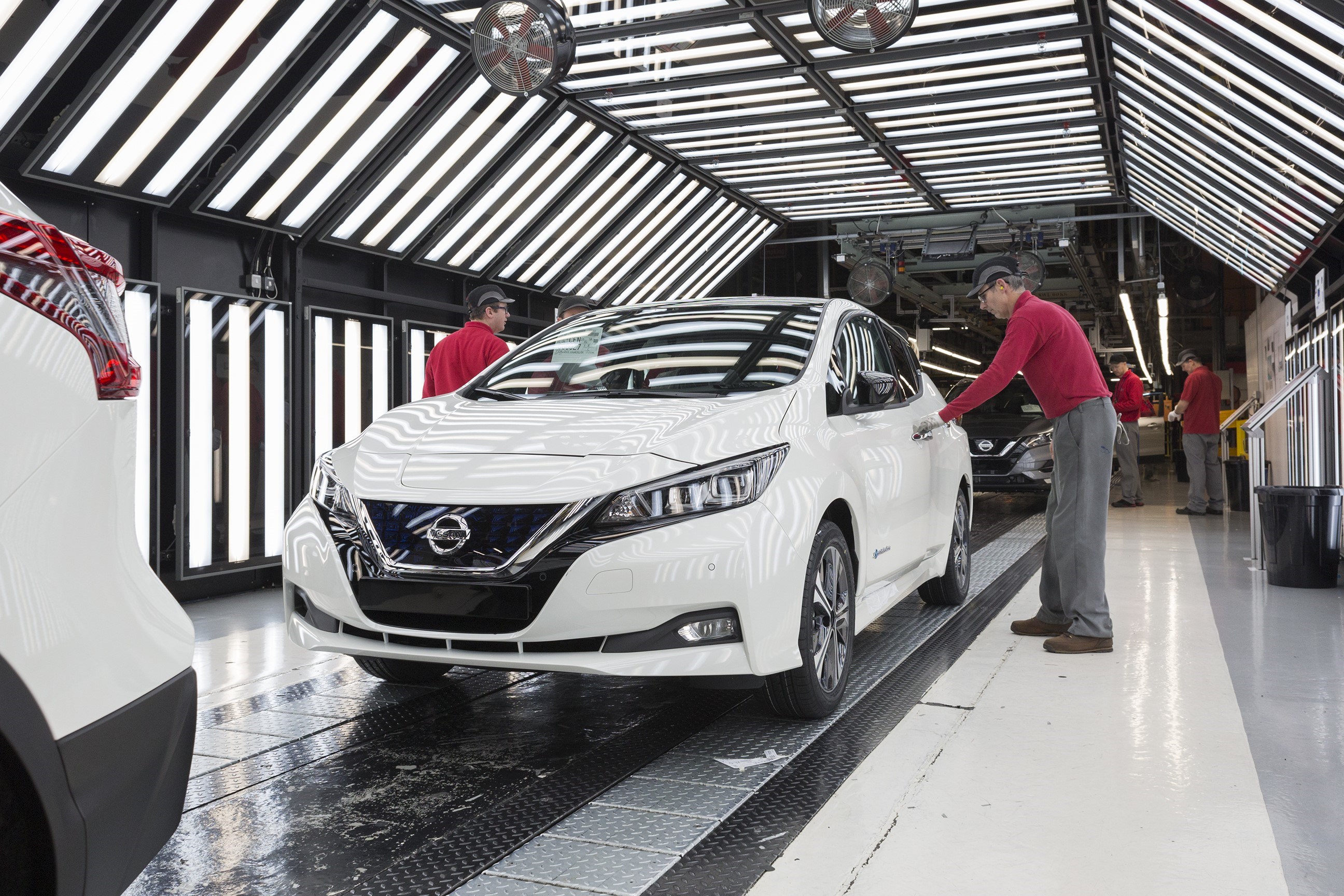
With the first new LEAFs now rolling off the line at Nissan’s plant in Sunderland, UK, the countdown has now started to the first customers receiving their vehicles in February.
Embodying Nissan’s Intelligent Mobility vision and already winning international awards for innovation and technology, this new model has been reinvented to offer greater range, dynamic design, advanced driver assistance technologies and enhanced connectivity.
Production begins of the new Nissan LEAF in Europe
According to Nissan Europe’s Divisional Vice President for Manufacturing, Kevin Fitzpatrick:
Nissan led the way in introducing electric vehicles to Europe in 2011, and every year since then it’s been clear that more and more customers share our vision for the future of driving.
We’re excited to start production in Sunderland and to bring the new Nissan LEAF to European markets from February.
The 2018 Nissan LEAF production line in Sunderland
The Nissan LEAF has been in production in the UK since 2013 for European markets, with more than 85,000 units sold in Europe since 2011, when the first deliveries began from Nissan’s Oppama plant in Japan. Following an initial investment of £420m, the introduction of the new Nissan LEAF has been supported by a further £36m investment in Nissan Sunderland Plant, supporting more than 2,000 jobs at Nissan and in the UK supply chain.
Nissan’s Sunderland Plant
The start of production follows the new Nissan LEAF’s first major international awards last month, at the CES (Consumer Electronics Show) annual CES Unveiled ceremony in New York, presented by the Consumer Technology Association. LEAF was awarded:
CES Best of Innovation award winner for Vehicle Intelligence and Self-Driving Technology, and
CES honoree for Tech for a Better World
Here’s a video of the 2018 LEAF production line in Sunderland in action:
Here at V2G UK we cannot now help but wonder when the first 2018 model year e-NV200 van will become available here in the United Kingdom?
Our roadmap didn’t call for this announcement just yet, but on Autumn 2017 budget day Philip Hammond, the Great British Chancellor of the Exchequer, had this to say:
Some good news in #Budget2017 for #EV charging infrastructure, if not necessarily for #V2G. "We'll establish a new £400m charging infrastructure fund, invest an extra £100m in the plug-in car grant and a further £40m in charging R&D" @FSBCornwall@scottmann4NC @clairehewlett62
Nissan Motor Parts Center in Europe is the first company in the Netherlands to make its roof available to others for the production of sustainable energy on a large scale. The electricity generated is sufficient for the power consumption of 900 households. The first section becomes operational at the end of February. The project will be fully completed in May.
With the installation of this immense solar roof, Nissan is taking a further step toward its strategy focusing on Intelligent Mobility, with sustainable energy as one of its cornerstones.
“This project is perfectly suited to Nissan’s endeavors to make mobility smarter and more sustainable,” said Koen Maes, managing director Nissan Benelux (Belgium, Netherlands and Luxembourg). “That’s why we are working on sustainable energy production and on projects such as energy storage in used batteries – vehicles which return energy to the network and car sharing. The solar roof is one of the cornerstones.”
That’s pretty much the way we see things too, and after a couple of false starts over the years the team here at V2G UK decided to accelerate our plans:
Here are some other things that have been happening on Twitter over recent days:
In case it’s not yet obvious to you, our Static and Mobile Distributed Energy Storage project roadmap includes rolling out just the right sort of V2G capable electric vehicle charging station for our purposes. My personal Twitter profile reads as follows:
I’ve been programming computers since the late 60s. We had to build our own! Now what can I program next? Will I have to build it first?
It looks as though the answer to that question is YES!
V2G is now a hot topic in the UK mainstream media! A few days ago The Times newspaper published an article on vehicle-to-grid technology. According to Edward Lucas:
The hunt is on for cheaper and better storage, which is where electric cars come in. For its owners, the car battery is an unused asset most of the time, just as the engine is for those of us with old-style vehicles. Yet for grid managers dealing with the spikes and troughs in demand, a terawatt hour stored in spare batteries is exactly what is needed. Instead of subsidising standby generators, we can pay car owners to sip power from their vehicles’ batteries.
But making this work on a larger scale requires change. Our existing energy set-up is centralised: big power plants transmit large amounts of electricity over long distances to passive consumers. This arrangement copes with the 115,000 electric cars we have now. But it will not be fit for 2040, when the government intends to ban the sale of new diesel and petrol cars. By then we are predicted to have more than 25 million electric vehicles.
Done wrong, that will resemble something like a vast network of electric kettles. Charging them all at once at home would crash the grid. Consumers will curse, costs will soar and benefits will shrivel. To avoid that, the electricity system of the future will have to look like the internet: decentralised and interactive. Consumers will also be producers — perhaps from rooftop solar panels or by supplying power from their car batteries back into the grid when needed. Demand will be smarter: appliances will adjust their consumption according to price. Electric car owners, for example, will not mind exactly when their vehicle is charged, so long as it is ready when they need it. They will take advantage of cheap electricity just as consumers do already with night storage heaters.
The prospect is both exciting and daunting. Dieter Helm, the energy economist who recently reviewed energy costs for the government, says that the combination of electric vehicles, battery technology and digitisation presents challenges of a scale and magnitude not witnessed since the reconstruction of our electricity system after 1945.
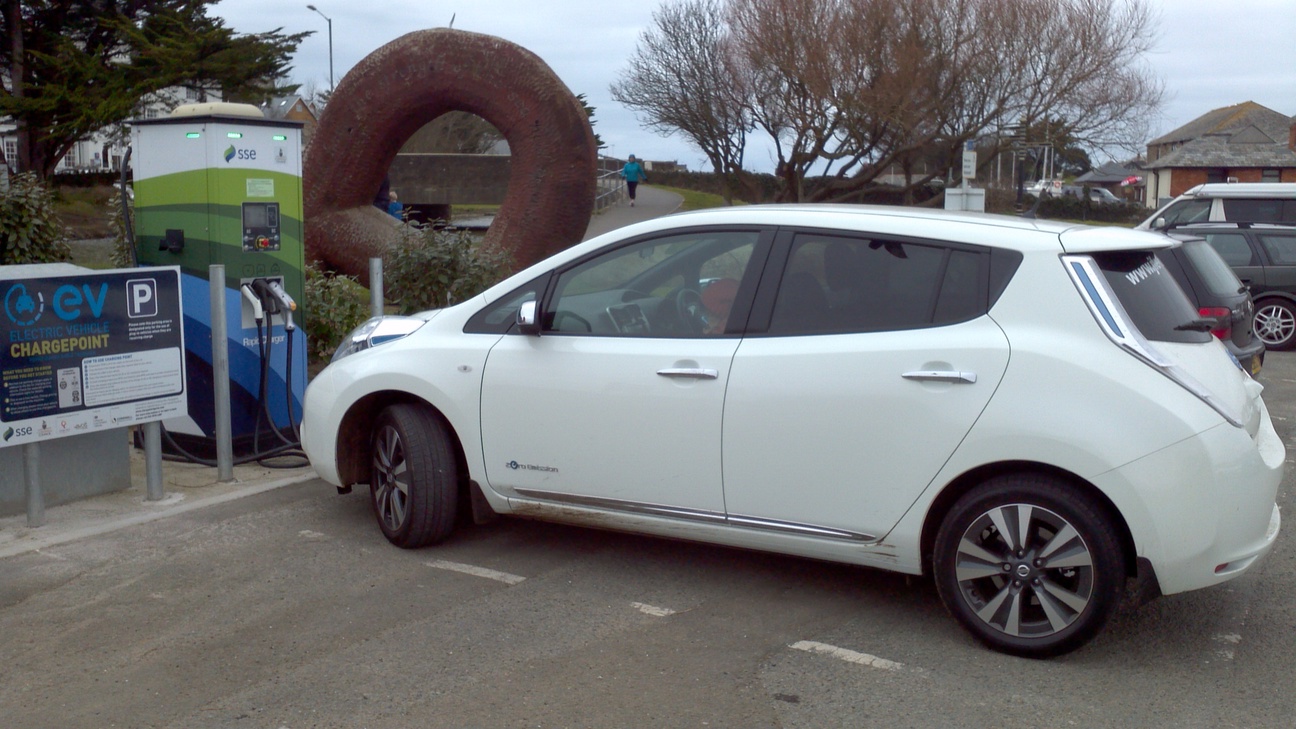
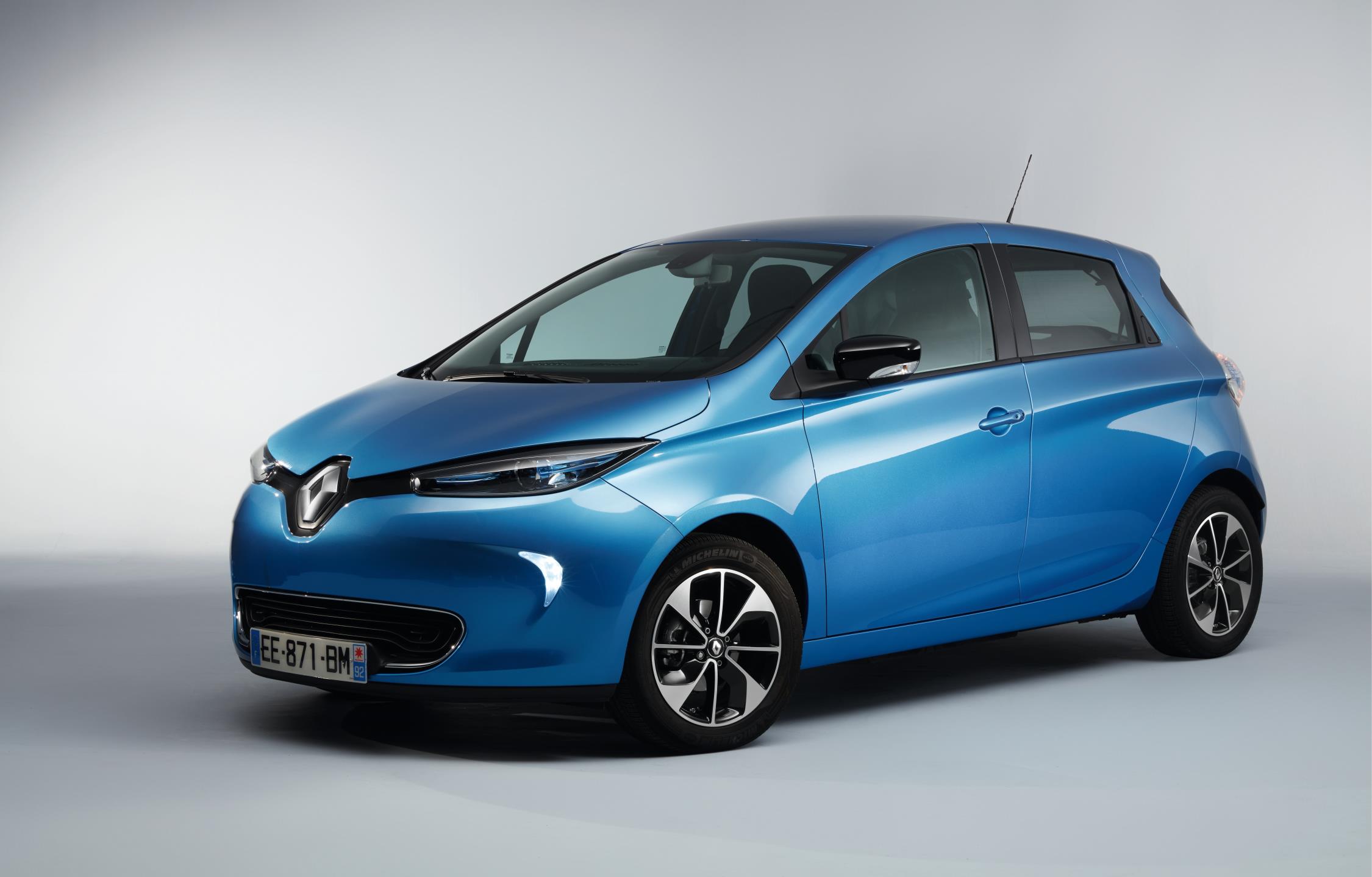
Today the BBC have followed the Times’ lead by publishing an article by Theo Leggett with a slightly different perspective. Unfortunately they included at the top a stock photo of what looks a lot like a Renault ZOE instead of a Nissan LEAF. Here’s one of our stock photos of a 2016 LEAF, which is V2G capable:
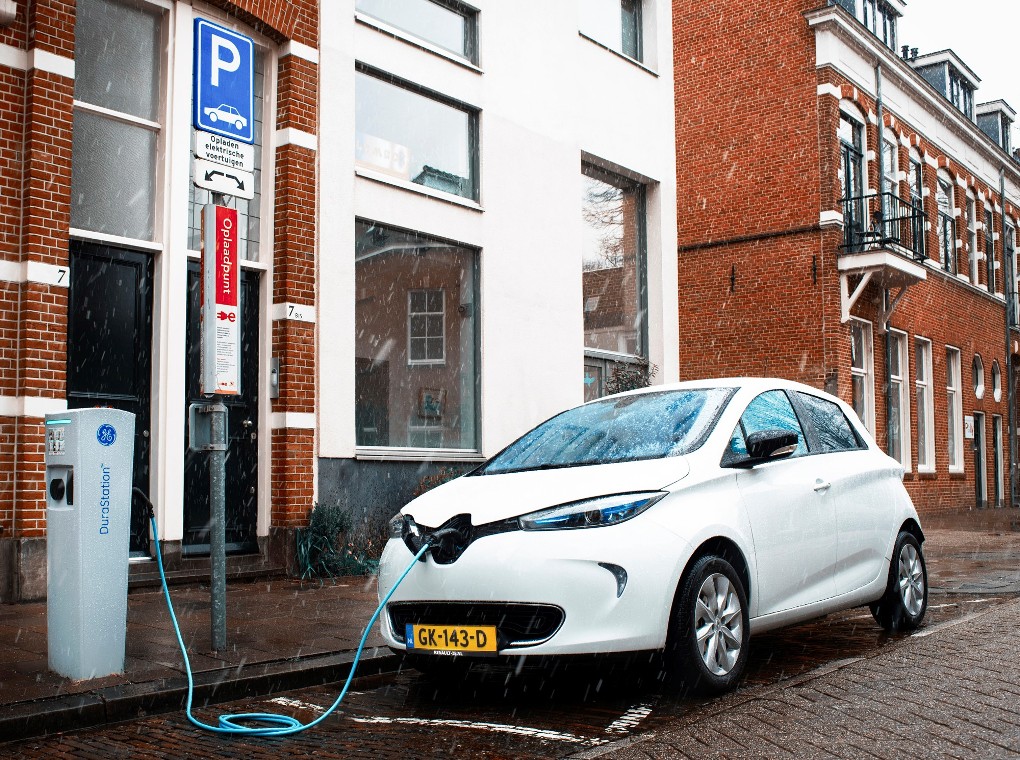
However currently the ZOE is not. Here’s what one of those looks like:
Theo points out that:
At the Nissan Technology Centre in Cranfield, Bedfordshire, a number of the company’s electric Leaf models are lined up alongside a bank of chargers. But these cars aren’t just drawing energy from the grid; they’re also putting it back.
The system is called Vehicle to Grid, or V2G. The Japanese company is developing it in partnership with the Italian power firm Enel and is already operating a small trial hub in Denmark.
Electric cars are, in effect, energy storage devices, and because they spend much of their time parked up not doing anything they can help smooth out the peaks and troughs in energy demand.
“Basically, we can consider the car as a battery with wheels,” says Maria Laura Corallini, the engineer in charge of the V2G project.
“You can use the energy storage capability in the battery to provide specific services back to the grid.”
The system uses software to regulate the charging level of multiple vehicles.
When the grid needs extra power, it can draw very small amounts from each individual vehicle. When energy is abundant, it can top them up again. Users will get paid for the electricity they provide.
If thousands of cars are connected together, then the amount of energy given back to the grid can be substantial, and it can be varied on a second-by-second basis.
Initially the plan is to sell it to businesses that operate large fleets, although the company says it will also introduce a residential version. Other organisations are also experimenting with the technology.
I suppose V2G UK must count as one of those “other organisations” in this context! Theo continues by referring to an oft mentioned tale of V2G woe:
Not everyone agrees that V2G makes commercial sense, however. The chief technical officer of Tesla, JB Straubel, for example, has suggested in the past that he doesn’t see it becoming a viable solution, largely due to its cost and complexity.
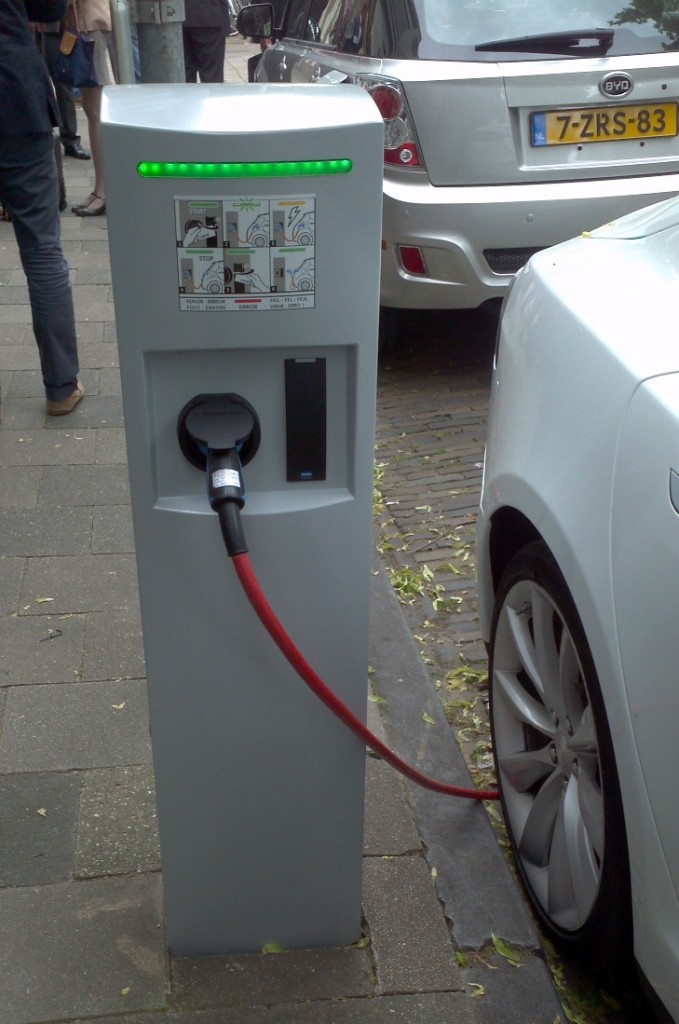
I am forced to agree with JB that here in the UK V2G currently doesn’t “make commercial sense”, which further forces me to reveal once again this image of a Tesla Model S connected to a V2G capable bi-directional charging station in the Netherlands:
Unfortunately in all the circumstances that particular Tesla was only capable of charging from the kerbside bi-directional charging station. The BYD e6 parked next to it could however also discharge, ultimately to the local distribution grid. Do you suppose that if and when the “cost and complexity” reduces and V2G does “make commercial sense” in Tesla’s view, power will suddenly start flowing in the opposite direction down that stout red cable?
The 3rd “Nissan Futures” event entitled “The Car and Beyond” took place in Oslo today. Apart from the European launch of the 2018 Nissan LEAF our suspicions about a 40 kWh battery for the e-NV200 were confirmed:
The new 40kWh battery for the 100% electric e-NV200 offers a 60% extended range of up to 280km NEDC. And, with no increase in size of the battery itself, customers will face no compromise in either load space or payload. Crucially, it can help make 100% electric last miles delivery achievable for businesses and professional drivers everywhere, with customers now able to drive more than 100 km further on a single charge.
As well as helping business customers enhance their green credentials, the van represents a key pillar in Nissan’s wider commitment to cutting the level of CO2 emissions in city centres caused by professional drivers making deliveries and/or collections.
Nissan announced a few other things as well, including a so called “Revolutionary ‘free power for EVs’ breakthrough”:
Over the past year in Denmark, Nissan has been testing this revolutionary new way of driving and today, this has become an offer open to all fleet customers throughout the country. Using Nissan bi-directional charging, customers can draw energy from the grid to power their car or van and then ‘sell’ back to the grid for others to use. This means, once a nominal charge has been paid by the business for the installation of a V2G charger there are no fuel or energy costs; just free power for your EV.
And Denmark is just the start. Nissan also announced a UK collaboration with OVO allowing customers to purchase an xStorage home energy unit at a discounted price enabling them to ‘sell’ back energy to the grid. This helps contribute to grid stability in a world where demand for energy is increasing due to a growing, urbanising population. It can result in an additional expected income for users averaging £350 / €400 per year.
OVO Energy have also issued a press release about their collaboration with Nissan today:
The new offering is the first of its kind in the UK and will combine VNet – OVO’s groundbreaking intelligent energy technology – with the capabilities of the innovative Nissan xStorage Home system.
Building from this collaboration, OVO plans to launch OVO SolarStore (beta), the company’s first battery storage offering for qualifying customers. OVO customers with solar households will soon be able to purchase an xStorage Home system direct from OVO for £4,800 (excluding installation, subject to terms and conditions), and benefit from a £350 annual credit and estimated average £240 savings on their energy bill.
According to OVO CEO Stephen Fitzpatrick:
Electric vehicles are fast becoming a mainstream option for drivers and solve many of the challenges facing our cities. We believe that they have an integral part to play in the twenty-first century power grid and accelerating decarbonisation and mobility.
We’re delighted that we can now offer such a compelling incentive to customers who are generating their own clean power, providing a truly sustainable alternative to the traditional energy model.
The press release also waxes lyrical about vehicle-to-grid technology!
Customer vehicle-to-grid (V2G) service planned from January 2018…
V2G technology allows electric vehicles to be fully integrated into the electricity grid and will likely help the grid maximise the use of renewables in the energy system.
The V2G offering will work by allowing Nissan EV owners to connect to the grid to charge at low-demand, cheap tariff periods. They can then use the electricity stored in the vehicle’s battery at home and at work when costs are higher, or even feed electricity back to the grid which could generate revenue for the EV owner. OVO plans to create special tariffs to reward customers for this interaction with the grid.
Currently if all 20,000 Nissan electric vehicles in the UK were connected to the energy network, we estimate that they would generate the equivalent output of a 200 MW power plant with a 10kW charger.
In a future where all vehicles on UK roads are electric, V2G technology could generate a virtual power plant of up to 200 GW. This energy capacity is more than double the peak requirement on the UK grid.
The new Nissan LEAF will be compatible with OVO’s VNet intelligent energy technology. Further details of the offer and the first installations will happen at the same time of the deliveries of the new Nissan LEAF, in January 2018.
If you want to register your interest in OVO’s forthcoming V2G offer they have a page on their web site where you can do so.
In a move towards building a complete “grid smart” charging solution for electric vehicles, OVO Energy will begin to introduce its proprietary VNet technology across the network, unlocking smart charging capabilities on a national scale, ultimately enabling OVO Energy customers’ electric vehicles to function as mobile batteries at home and on-the-go, balancing renewable energy on the grid and allowing drivers to sell back unused energy.
To accelerate this transition to smart charging, OVO has also acquired electric vehicle charge point specialists, ChargedEV and Indra Renewable Technologies, an electric vehicle components and services supplier, and is harnessing their technical expertise combined with Chargemaster’s, to develop a game-changing smart charger, due to be launched to market later in 2017.
OVO also now have a shiny new section on their web site devoted to the “OVO SolarStore (Beta)“:
Built to harness the potential of your solar set-up, OVO SolarStore (Beta) combines a home battery with state-of-the-art software.
Not only could it lower your bills, but by joining the beta you’ll be helping to create a greener, more-efficient energy system for the UK.
Reduce your bills by storing surplus solar power in your battery to use later.
Your battery will support renewable generation in the energy grid by storing electricity when it’s abundant, and discharging electricity when national demands spike.
Receive a fixed monthly credit for using your battery and helping to balance the grid.
Optimised and managed by our advanced technology, so you won’t need to do a thing.
The OVO SolarStore page also includes comprehensive facts and figures:
Nissan xStorage – Power: 4.6kW, Capacity: 4.2kWh, Up to 5 year warranty, subject to Nissan’s terms and conditions.
Export Credit & Increased Solar-self consumption: £240 saving a year
Annual value of Battery Credit: £350 saving a year
Battery installation survey: £50
Battery cost: £4,800
Battery installation indicative cost: £500
Getting back to the Nissan press release for a moment, it also points out that:
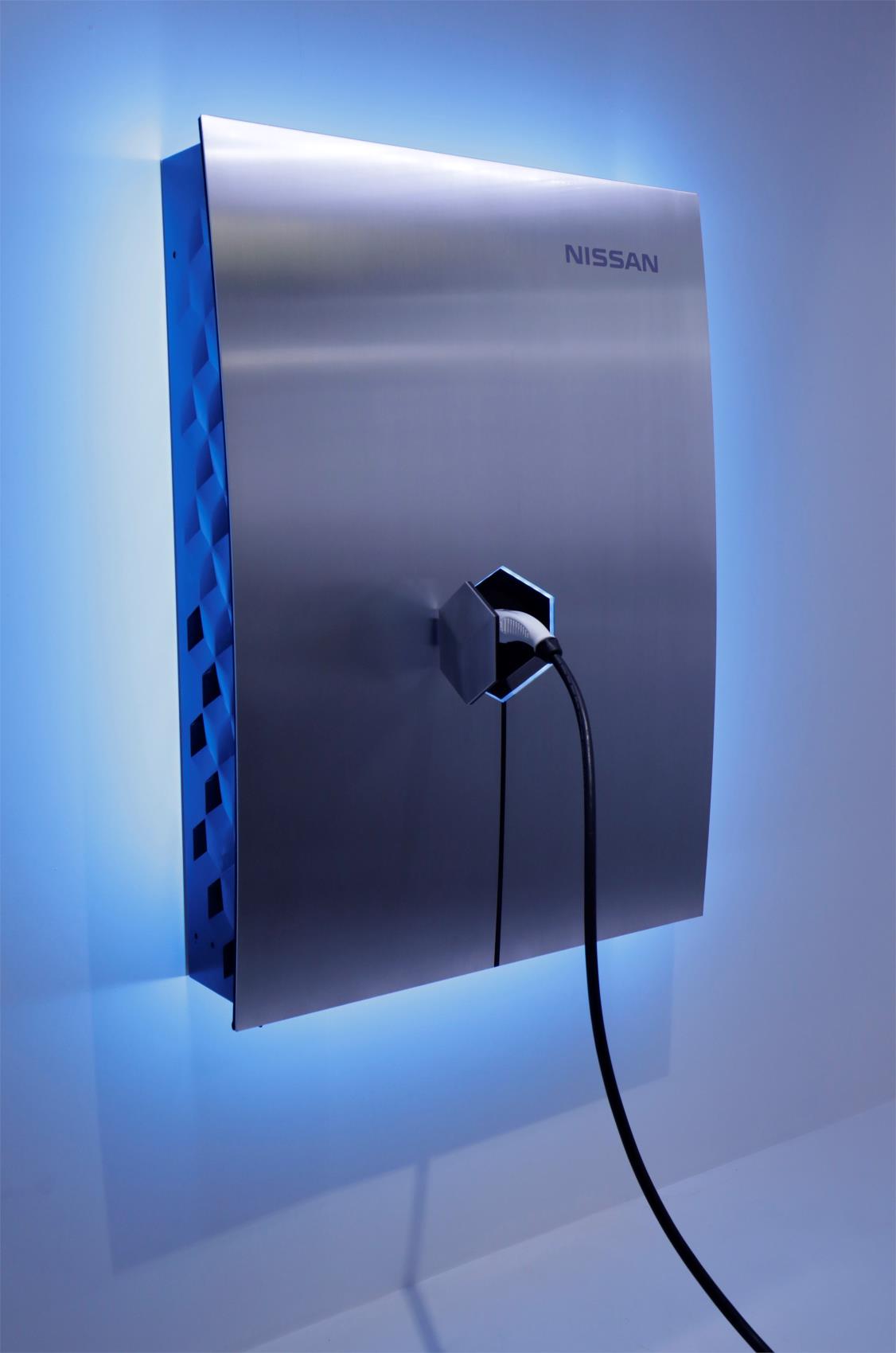
Nissan also showcased its new home energy storage system, which follows on from the success of xStorage. Created especially for EV owners, customers can plug their electric vehicle directly into the wall box to charge. It comes with its own built in energy storage system, giving customers the ability to better manage their energy costs and even generate their own electricity from solar panels, delivering 100% renewable and zero emission power for their car.
I wonder if OVO will ever get around to offering a game-changing bidirectional smart charger version of Nissan’s new combined home energy storage system? That would seem to be the perfect answer to the conundrum posed in our banner way back at the top of this article!
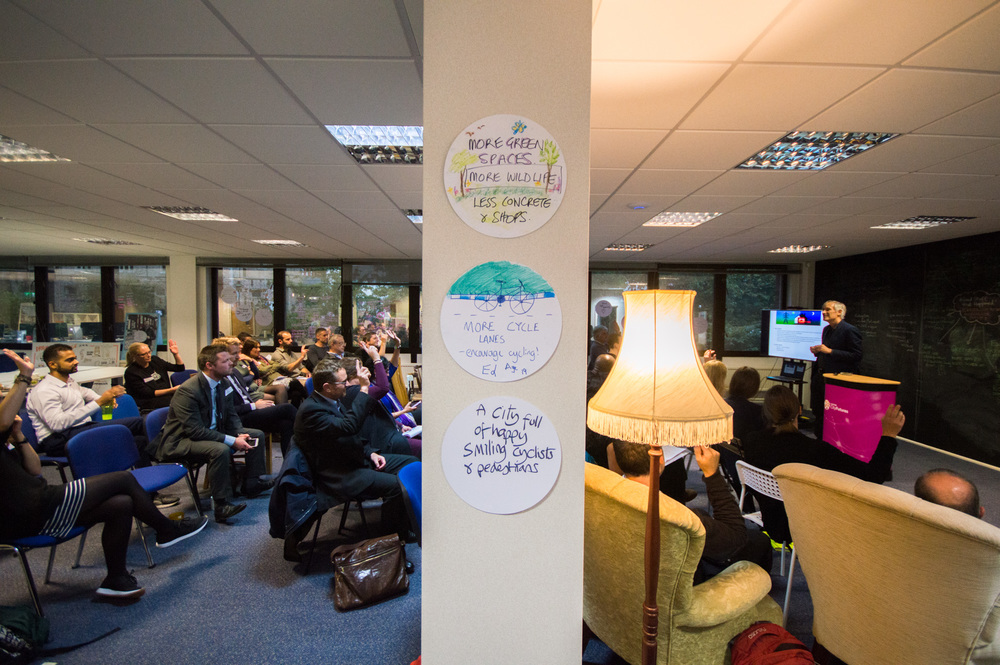
I’ve been out on the road this week, explaining the potential benefits of vehicle-to-grid technology to a variety of audiences. First up on Wednesday evening was the “Autumn Connect” event at Exeter City Futures, where I made a presentation entitled “V2G – How to simultaneously store energy and reduce congestion.”. I had the luxury of being allowed 5 minutes to present an “elevator pitch” on that subject to the assembled throng:
Here’s an expanded version of the PowerPoint slide deck I used. They all had Kasia’s “artist’s impression” of V2G in action at the top, so I’ll omit that part here. The first two slides are taken from a 2 minute pitch I presented at the Met Office on Thursday (see below) and have to conform to a template provided by the Knowledge Transfer Network. Hence:
V2G Limited
A small “smart grid” consultancy located amongst the wind and solar “farms” of North Cornwall
The “smart grid” is actually the “internet of big things”!
Producing embedded firmware for 35 years
Under a previous name provided multi-drop fleet routing interfaced to SAP for a FTSE 250 company
Long experience in electricity distribution. The Lucy Switchgear Gemini RTU firmware is our baby
Whilst we understand hardware our expertise is in designing software/firmware
Evangelising Vehicle-to-Grid technology for 5 years
I trust that is all self explanatory?! If not please see below or ask questions in the space made available for that purpose in the comments section at the bottom.
I always like to encourage some audience participation at these events, and Exeter City Futures delivered in spades! For the first time ever I didn’t need to blow my own bidirectional trumpet:
Timekeeper Lyndsey volunteered to blow the V2G trumpet for me, though ultimately it informed me that my time was up before I even managed to display the last slide, so make sure to read all about that below!
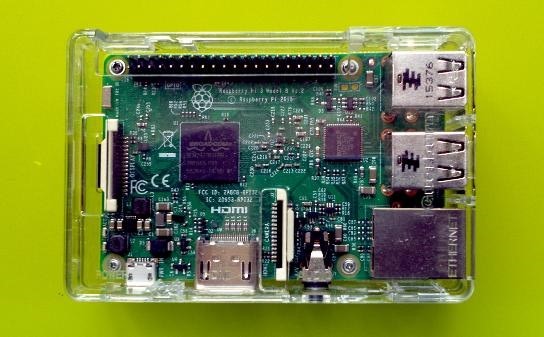
To make my “internet of big things” point I waved my trusty Raspberry Pi 3B at the audience. Here is what it looks like close up:
Dr. Sarah Ward from the University of Exeter correctly, if somewhat hesitantly, identified the mystery object. Now I’ve been programming the firmware (i.e. the software inside the hardware) in those sorts of devices for a very long time. 35 years ago single board computers were a lot slower and a lot bigger, but they still did the same sort of job. In those days they didn’t have USB ports like the Pi. Instead they had serial ports that conformed to the RS-232 standard. Getting two devices to talk to each other was always “interesting”!
I asked the audience to raise their hands if they’d previously heard of the “smart grid”. Quite a lot had:
Then I asked who had heard of the “internet of things”. Slightly more hands were raised. The point being that hardware a lot like the Raspberry Pi is at the heart of your smartphone, at the heart of the Smart Grid and (albeit in a smaller form factor) at the heart of the Internet of Things. The main difference being that the smart grid has been around quite a lot longer than the IoT! A point that some of my audience at the Met Office on Thursday seemed to agree with since they nodded their heads vigorously at that juncture!
Moving on to slide 2:
1. Our project idea
See the infographic above
North Cornwall is ideal!
Charge EVs on sunny lunchtimes
2. What’s innovative about it?
Nobody’s done it yet
On all sorts of levels!
Price signals / regulation?
3. The services we can offer?
Vast systems integration experience
Vast enthusiasm
AI for Energy Systems
4. The partners/services we seek?
Kite marked V2G hardware
An all electric car club
A suitable site
I asked the audience if it was obvious what the infographic represented. I was subsequently informed that a hand had gone up in the far corner of the room, but I didn’t notice at the time. To explain, imagine a conventional home with solar PV panels on the roof exporting excess electricity to the local distribution grid. Now add some static batteries in the utility room or the garage. Store any excess “free” energy generated when the sun is shining in that battery. When the household electric vehicle returns from the daily commute charge it up from the battery rather than from the mains, since by now the sun will be low in the sky or already below the horizon in winter.
If you have that basic hardware setup available then there’s lots of other things you can do with it! How about buying electricity from the grid when it’s cheap and storing it in your static and/or mobile batteries. Then just for starters you could sell it back to the grid when electricity’s more expensive? There are other possibilities too, which brings me on to slide 3:
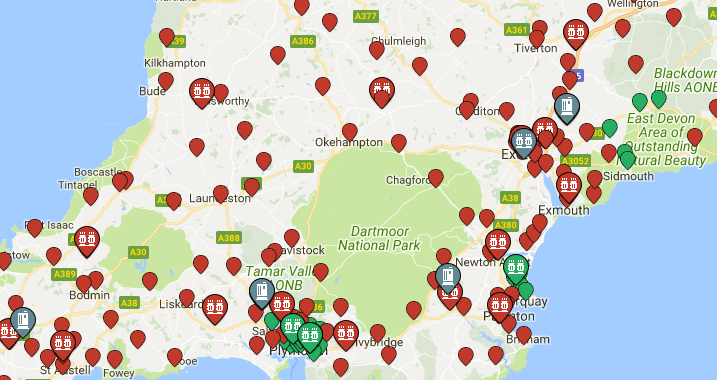
That’s a portion of Western Power Distribution‘s network constraint map. Note that most of Devon & Cornwall is plastered in red due to all the intermittent renewable electricity generation we have down here. One day (hopefully!) soon you’ll be able to earn money by allowing WPD to charge and discharge your batteries when it suits them, in order to help them cope with the stresses that intermittent generation can subject their electricity distribution grid to. The current fly in that particular pot of ointment are the rules and regulations currently enforced by Ofgem, which make it nigh on impossible for neighbouring energy “prosumers” to trade electricity with each other. Highlighting bullet point 2(c) I idly enquired if anybody else in the room “has had problems with Ofgem’s red tape?”. Not a single hand was raised in protest.
As regular readers will be aware, the town of Camelford in North Cornwall is an Air Quality Management Area (AQMA for short). Much like the centre of Exeter, the air quality in the centre of Camelford is fairly foul due to the noxious emissions of all the diesel engines that travel slowly through it. Electric vehicles can help with that, since they have no exhaust pipes and by and large use regenerative braking rather than rubbing dust off brake pads when they want to slow down. Hence slide 4 consisted of pictures of V2G capable examples of such vehicles, plus an image of the xStorage static battery storage device being produced from ex Nissan LEAF batteries by Eaton. An electric car club in Camelford and/or Exeter would be a small step along the road to reducing congestion and air pollution in both town and city centres, whilst V2G enabled vehicles in the fleet would also provide a mobile energy storage facility!
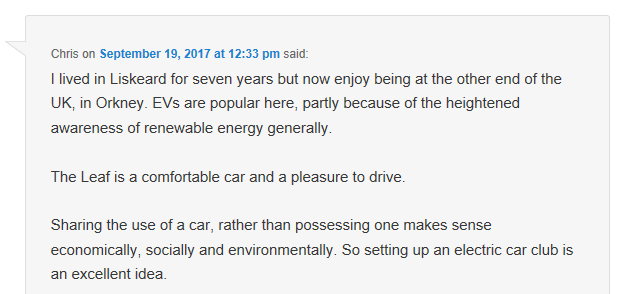
That’s about as far as I got on Wednesday before Lyndsey blew the metaphorical whistle on me, so I hastily concluded by mentioning this apposite comment from blog reader Chris:
It seems that struck a chord with at least one member of the audience. In the first image above you can see the back of Mark Hodgson’s head, if you know where to look. Mark’s Co-Cars car club certainly isn’t 100% electric, but it has just installed a couple of EV charging points in the Exeter area. That would seem to fit the bill for my bullet point 4(b) quite nicely?
Here’s the final slide I never had a chance to mention on Wednesday evening:
Of course solar PV isn’t the only form of RE generation, and batteries aren’t the only way of storing energy, at home or in the office. There’s also heat, and cold, and eddi & zappi: http://myenergi.uk/products/
What do you suppose that’s all about? To help answer that question let’s move on to Thursday and my trip to the Met Office. At least the previous evening’s rain had stopped:
I was presenting at a briefing event for Innovate UK’s Emerging and Enabling Technologies competition. I got the feeling that since this was (one of?) the first KTN briefing(s) held in Exeter most delegates weren’t making the most of the KTN’s “Meeting Mojo” facility. Anybody who ventured in there would have discovered that I was hoping to meet:
Partners who appreciate that the “Smart grid” is a subset of “The internet of things”, and predates the IoT!
whilst offering a potential consortium:
Smart Grid Consultancy: 5 years vehicle-to-grid, 15 years electricity distribution, 35 years system integration. Now with added blockchain!
Shortly before the event proper got underway I explained to the KTN’s Simon Yarwood, MC for the pitch session, that although I only had 2 slides in my deck I was actually representing 2 companies from a nascent V2G consortium. He graciously allowed me to overrun my allotted 2 minutes, and here’s what I added to the top two slides above:
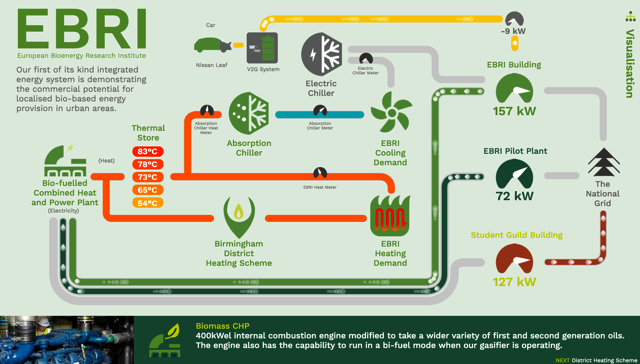
As you can see at the top of that page, a bidirectional charging station with associated static storage connected to a Nissan LEAF pool car is employed at EBRI as both an energy source and sink, in what is the UK’s first V2x pilot project. Strictly speaking it’s vehicle to building (V2B) rather than fully fledged V2G, but as far as the charging station itself is concerned that is of no consequence.
The BMS software at EBRI is now being further developed by Grid Edge Ltd. who assure me that it utilises various machine learning methods using a variety of inputs including weather forecasts, energy usage history, WiFi connections and football match schedules to optimise the overall energy use profile of the building and the assets within. As well as a modest amount of battery storage the EBRI building also includes energy storage in the form of large tanks of both hot and cold water in the basement, as indicated on the real time infographic shown above. That’s where the MyEnergi system depicted in slide 5 above comes in. It doesn’t use complex prediction or optimisation software, but it does attempt to sensibly direct the electricity generated by domestic solar PV panels to charge your EV, heat up your hot water, or if all else fails export some to the grid.
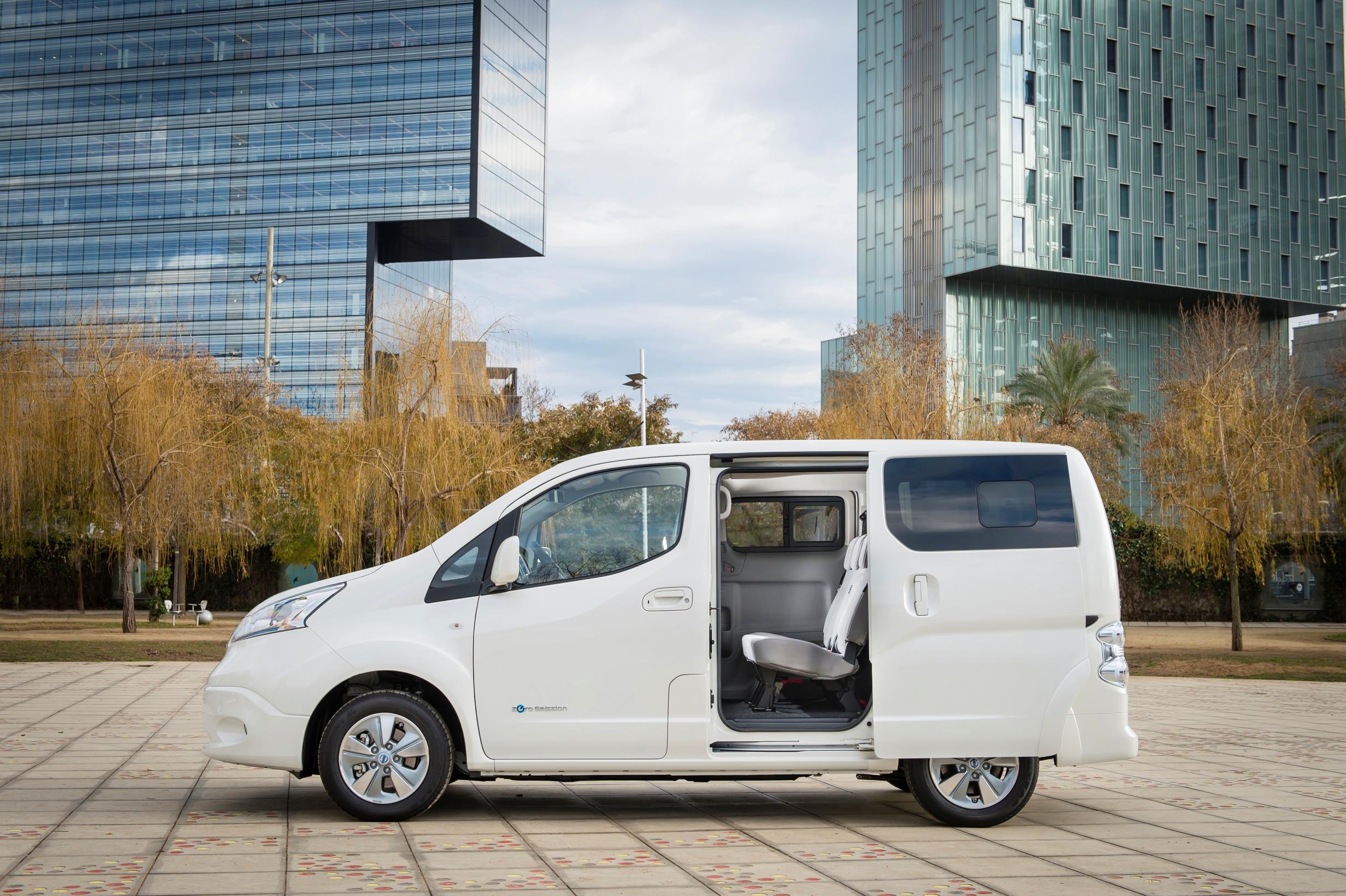
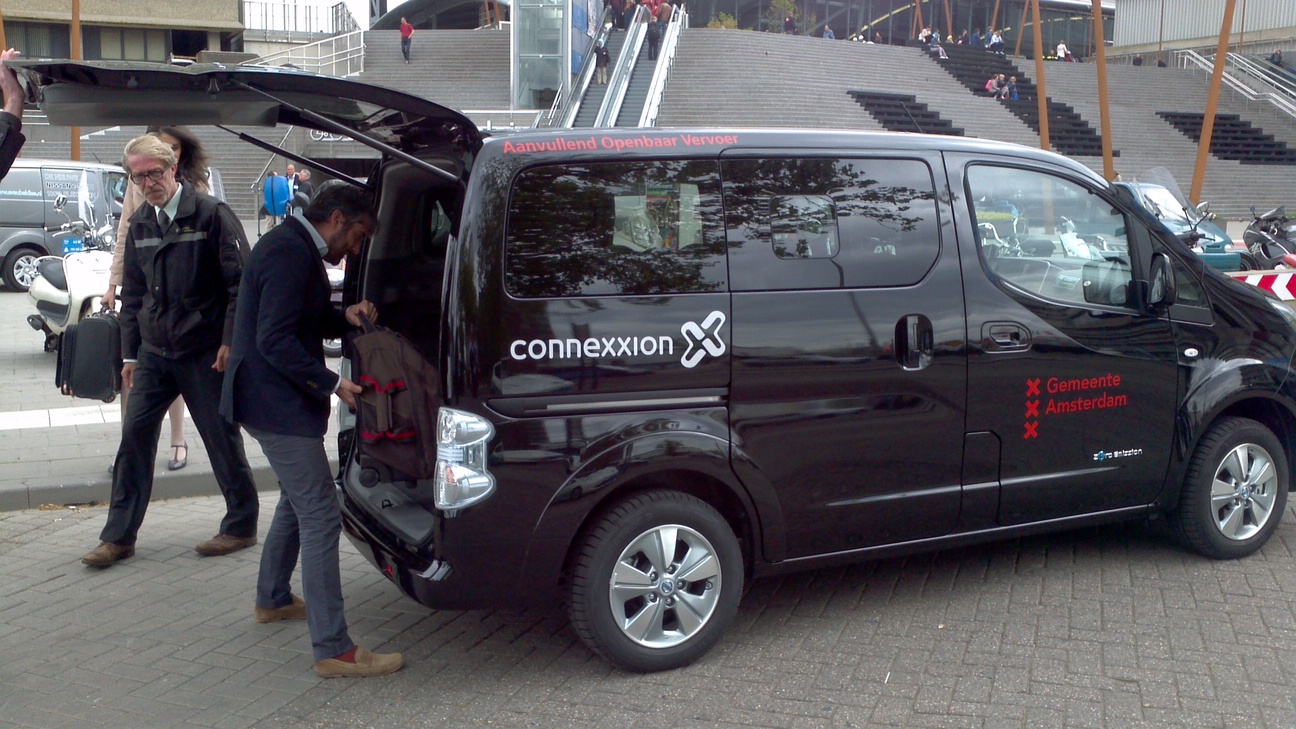
Nissan recently announced the new 2018 edition of their popular LEAF saloon, with increased range over the previous model thanks to a 40 kWh battery pack. Over the weekend a “leak” revealed that a 40 kWh version of Nissan’s e-NV200 van is on the way. That will provide a big increase in range over the e-NV200’s current 24 kWh battery pack, and make the “van” a much more realistic choice for a wide variety of small businesses. Note also that there is an MPV/taxi version of the e-NV200 known as the “Combi”, which I have taken a ride in over the North Sea in the Netherlands:
That means we’re really talking about an electric vehicle club, not a mere “car” club. That’s one way of implementing the concept known as “Mobility as a Service” (or MaaS for short).
Here’s another very good reason to try and put more electric vehicles on the streets of Camelford:
Earlier this year Camelford was declared an Air Quality Management Area (AQMA for short). According to the Town Council web site:
Cllr Claire Hewlett… said “I’m very pleased that Camelford has now been declared an air quality management area, as it means that Cornwall Council and Defra have offically acknowledged we have an air quality problem. The Clean Air Group have been working closely with Cornwall Council’s environmental protection team to get this far. Talking to people in town today, everyone is excited that something might actually happen.”
As part of the consultation, the council asked for residents and businesses to convey their ideas for improving air quality, and some of these will be investigated as part of a range of options before the final plan is published.
Now electric vehicles improve air quality in town and city centres by reducing nitrogen oxide emissions and particulates from exhaust pipes and brake dust, so here’s our idea.
Apart from improving air quality an electric vehicle club in Camelford would also reduce the number of cars sitting unused in garages and car parks for much of the time. One car club vehicle can result in 10-20 private cars being taken off the road. If you don’t possess a car you’re more likely to indulge in healthier alternatives such as walking or cycling for short journeys. In rural areas with poor public transport car clubs allow people who could never afford a car of their own to make occasional longer trips they would otherwise be unable to, except perhaps by taxi. For more on the benefits of car clubs see:
Obviously a few extra EVs in and around Camelford won’t initially result in a vast improvement in air quality if lots of diesel engines keep running whilst queueing along the A39, but you have to start somewhere! The same principle applies to charging infrastructure. Camelford has the advantage of already possessing a rapid charging point in the Churchfields car park, but additional lower power EV charging points would need to be installed. If that could be achieved then a 100% electric car club would allow people to experiment with driving an electric vehicle at very little cost, and thereby discover the many benefits of EVs for themselves. Assuming that hurdle can be overcome we’d like to perform a consultation of our own.
Please take our short survey and let us know your opinion about which sort of vehicle should be the first one to be made available to Camelford residents:
The Nissan LEAF has been completely reinvented, combining greater range with a dynamic new design and advanced technologies*, representing Nissan’s technological leadership.
“The new Nissan LEAF drives Nissan Intelligent Mobility, which is the core brand strategy for Nissan’s future,” said Hiroto Saikawa, president and chief executive officer of Nissan. “The new Nissan LEAF, with its improved range, combined with the evolution of autonomous drive technology such as ProPILOT Park, and the simple operation of the e-Pedal, strengthens Nissan’s EV leadership as well as the expansion of EVs globally. It also has core strengths that will be embodied by future Nissan models.”
Although the main press release doesn’t mention the fact the new LEAF does of course still incorporate V2G technology. However another press release does point out that:
Nissan’s pioneering vision of the potential of electric vehicles doesn’t stop at powering the new Nissan LEAF. The car’s batteries can also be used as mobile energy devices.
Vehicle-to-Grid (V2G) technology combines two-way charging allowing electric vehicles to be fully integrated into the electricity grid. It helps improve the capability to handle non-programmable renewable energy flows, making renewable sources even more widely integrated and affordable. The system works by allowing Nissan EV owners to connect to the grid to play an active role in grid services, while providing the opportunity for an alternate source of income. Once scaled up, the V2G technology will be a game-changer for owners of Nissan electric vehicles as they become active participants in the energy market.
Working towards a more sustainable society means making better choices every day. xStorage, energy storage system, draws on the collective experience of the industry’s best to make home energy consumption more efficient and more sustainable. xStorage Home stores energy at the most economical times of the day while controlling how and when that energy is put to use, saving customers money and improving the entire energy system. It seamlessly integrates all the hardware and software needed to manage and store all of the energy the home needs in a single unit. Used to provide Grid services, xStorage Home could charge from the grid or discharge to the grid in order to generate the flexibility needed to further increase the usage of renewable energy.
The new Nissan LEAF links drivers, vehicles and communities through the user-friendly NissanConnect feature and systems that share power between electric vehicles and homes, buildings and power grids.
Using vehicle-to-home systems, the battery makes it possible to store surplus solar power during the daytime and then use it to help power the home in the evening. The customer can also recharge the battery in the middle of the night, when prices are lowest in some markets, and then use the electricity during the day to reduce energy costs.
All this is of course music to our ears at V2G UK, but there is still a fly in our ointment. When will UK owners of Nissan electric vehicles be able to play an active role in grid services by becoming active participants in our antiquated energy markets?
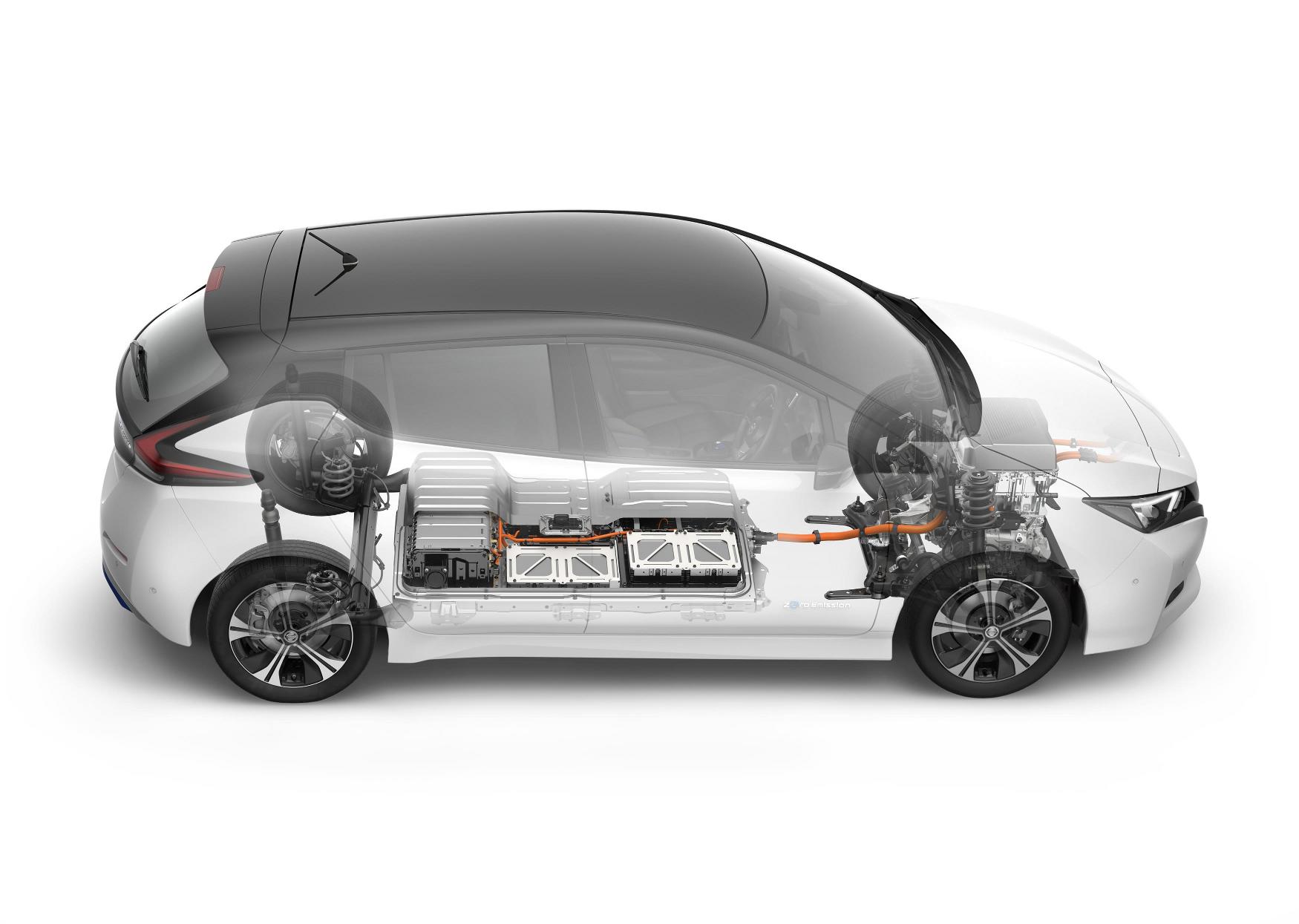
And what of the new LEAF battery pack? Here’s a picture of that:
According to the main press release once again:
The new Nissan LEAF offers a range of 400 km (Japan JC08 cycle**), allowing drivers to enjoy a safer and longer journey. The new e-powertrain gives the new Nissan LEAF 110 kW of power output and 320 Nm of torque, improving acceleration and driver enjoyment.
** 150 miles with EPA, 380 km with NEDC, both subject to homologation.
For customers who want more excitement and performance, Nissan will also offer a version with more power and longer range at a higher price in 2018 (timing may vary by market).
So it’s 40 kWh in the short term then, and perhaps the rumoured 60 kWh in the not too distant future?
The new Nissan LEAF will go on sale Oct. 2 in Japan. The model is slated for deliveries in January 2018 in the U.S., Canada and Europe.
Now I cannot help but wonder when Nissan will announce a 40 kWh version of the e-NV200. I also cannot help but wonder whether UK energy markets will get a matching upgrade in 2018?
P.S. The inimitable Robert Llewellyn reports from the 2018 LEAF launch near Tokyo:
P.P.S. It seems that our prayers have been answered! According to Pedro Lima at PushEVs:
Thanks to chrissy, a Nissan dealer and active member of the German forum Going Electric we now know that the electric van from Nissan will finally get its range increased in the spring of next year. According to chrissy, since yesterday it’s no longer possible to order the current model year (MY), because the new one with better range is coming soon.
The United Kingdom Government have finally seen the light and have pledged to pump £20 million into vehicle-to-grid technology:
Up to £20 million is available from the Department for Business, Energy & Industrial Strategy – working with the Office for Low Emission Vehicles and Innovate UK – to fund projects that investigate new business models, consumer awareness and technologies that support interaction between electric vehicles and the grid.
So-called vehicle-to-grid technologies are expected to play a big part in making the UK’s electricity supply network smarter and in encouraging take-up.
Vehicles that can take electricity from the grid when demand is low and return it when demand is high could help to even out peaks and troughs and make the grid more efficient.
The UK government wants nearly all cars to be zero emission by 2050, and it sees a smarter and more flexible electricity system as a major benefit to consumers and a key to future growth.
This is of course very good news, apart from the time it has taken UK plc to get around to it! As a consequence of the announcement V2G UK booked ourselves in to give a two minute “elevator pitch” at a Knowledge Transfer Network V2G briefing event at the Energy Systems Catapult offices in Birmingham.
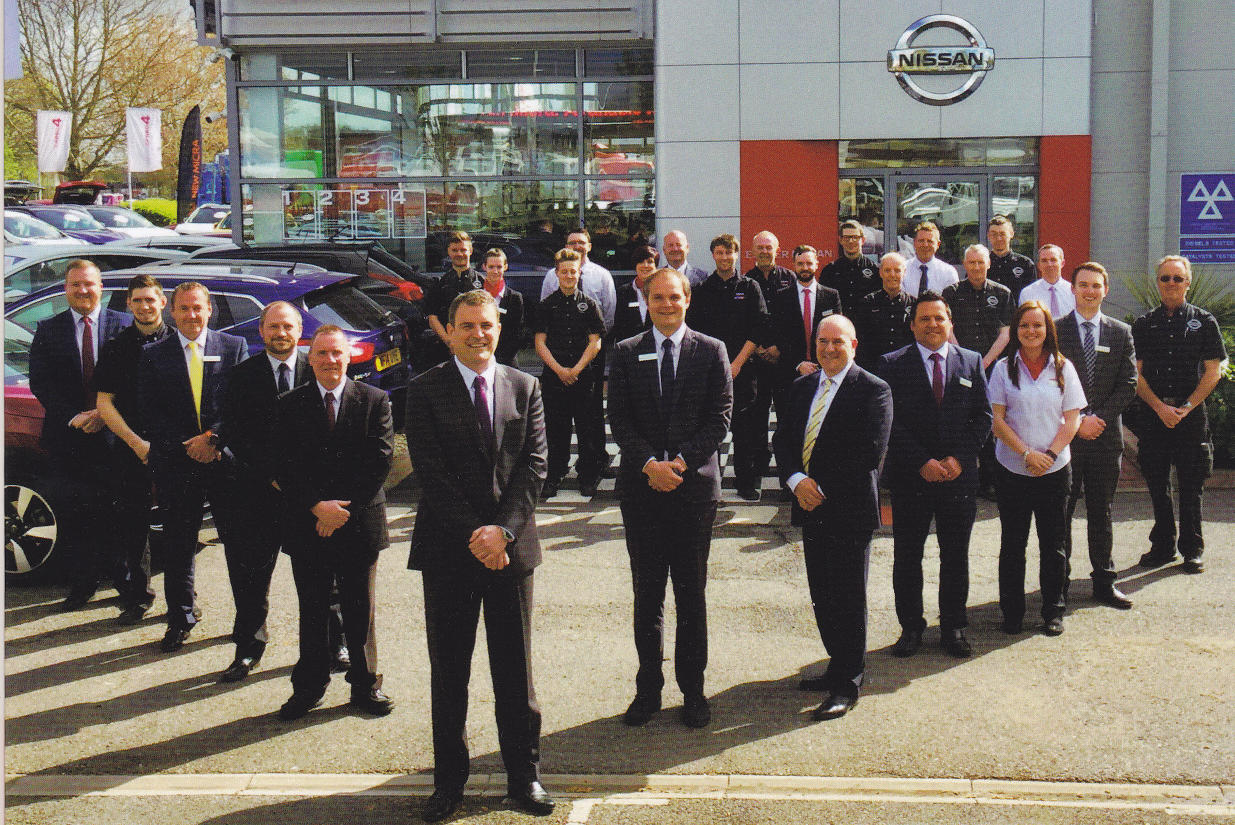
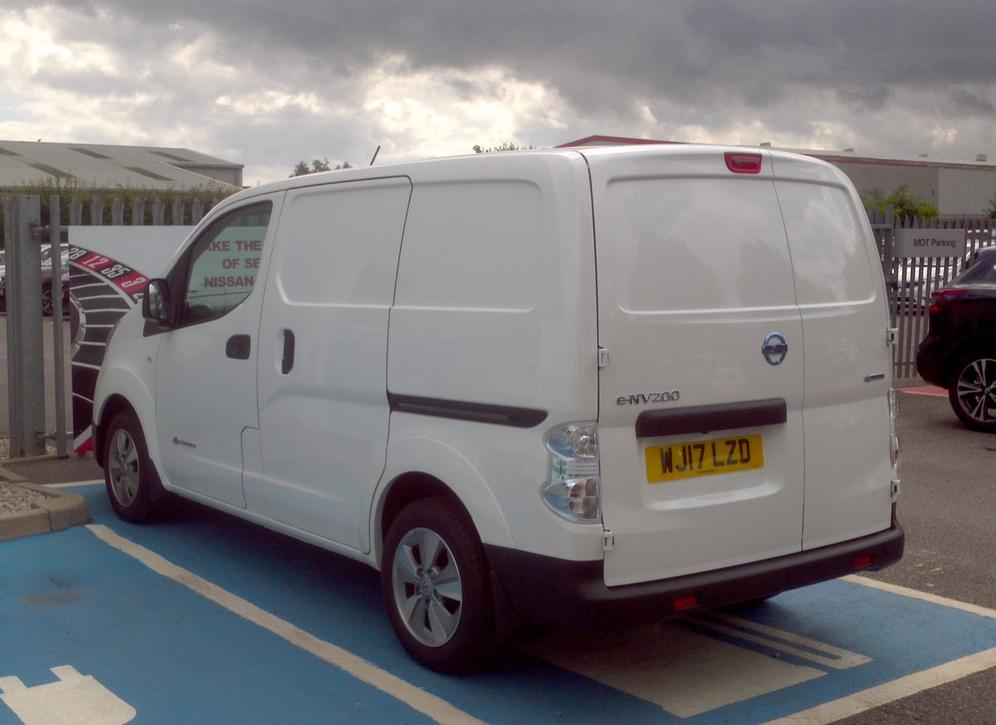
We decided we should travel in style, and Exeter Nissan kindly offered us an extended test drive in an almost brand new Nissan e-NV200 van! That’s much better for our purposes than a black stretch limo, which we will hopefully prove to you in due course. Here’s a photo of the Exeter Nissan team for posterity:
Arguably the most enthusiastic and experienced Nissan team in the UK!
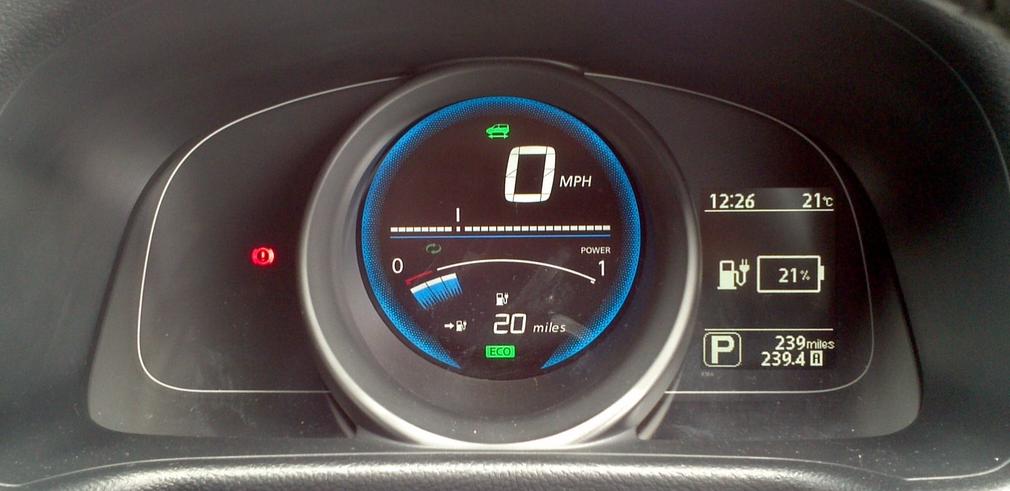
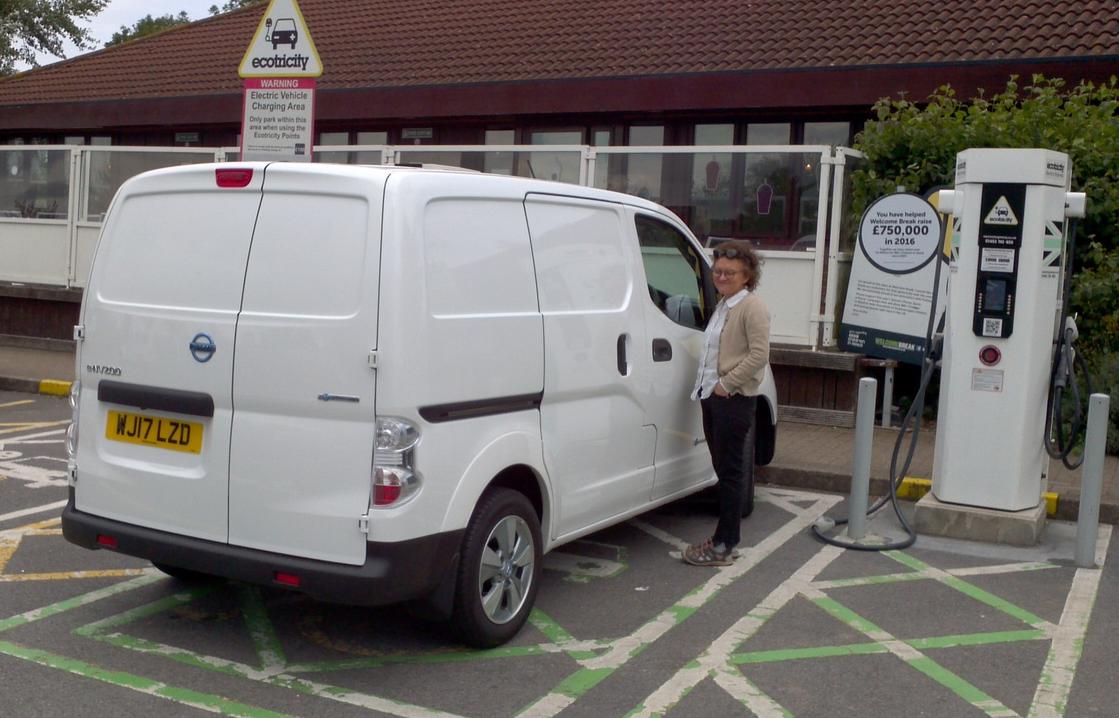
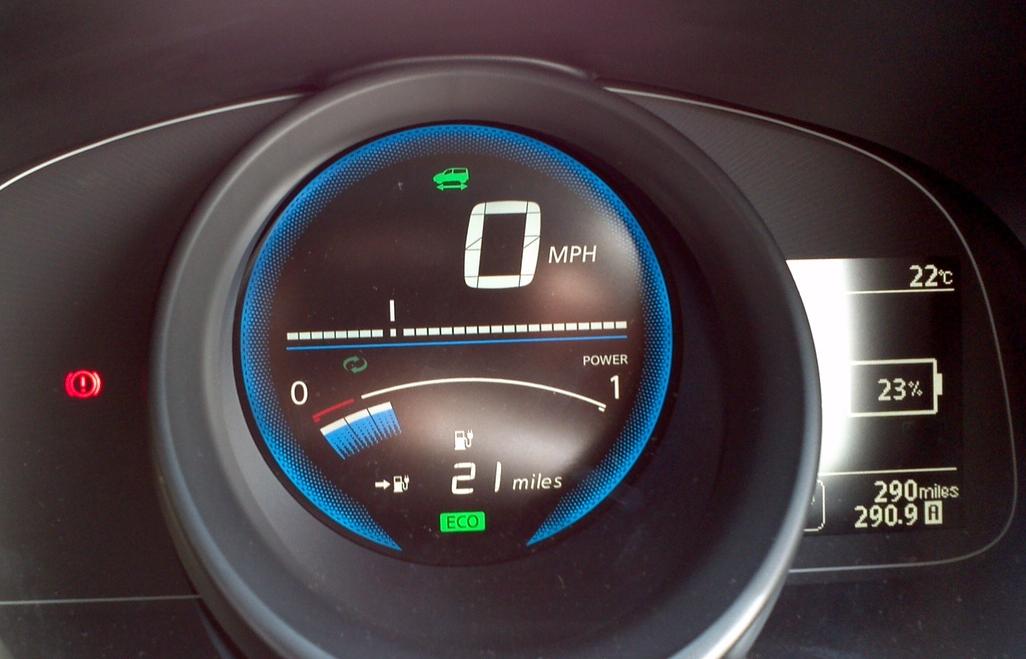
We picked up the e-NV200 from them almost fully charged, and here’s how it looked at the time:
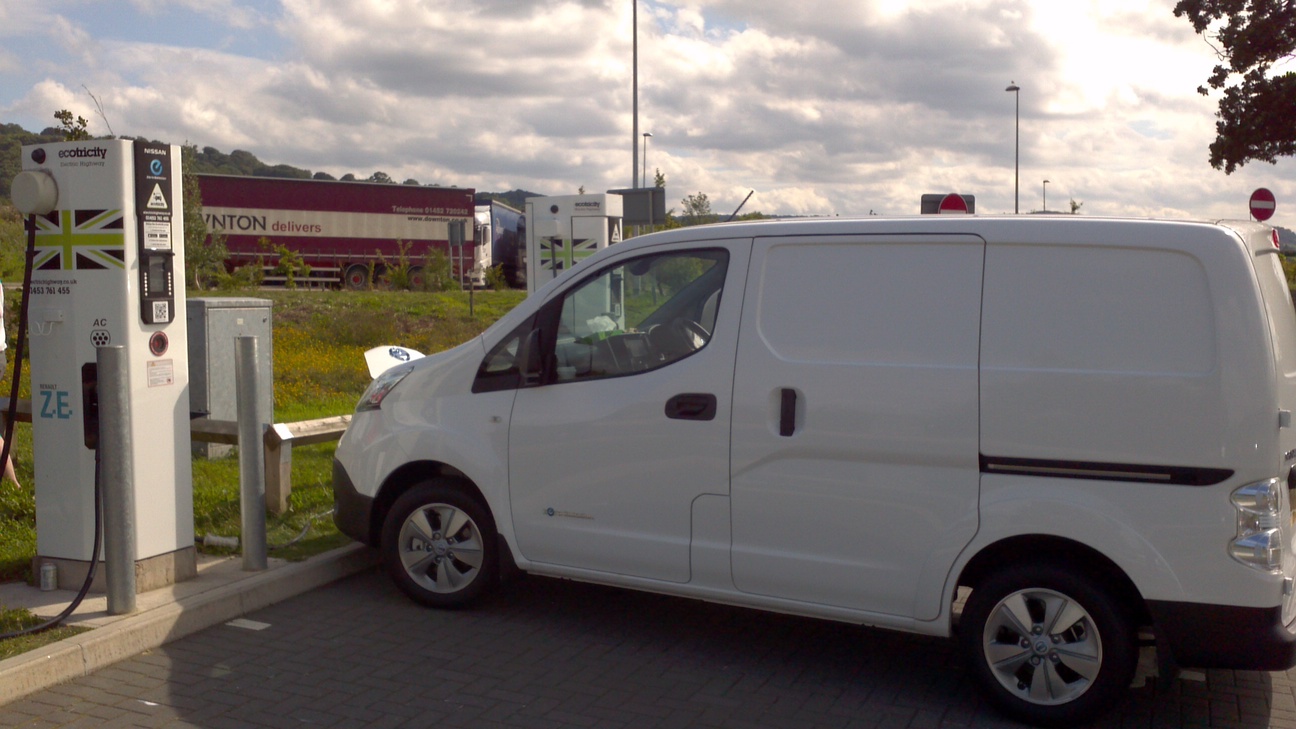
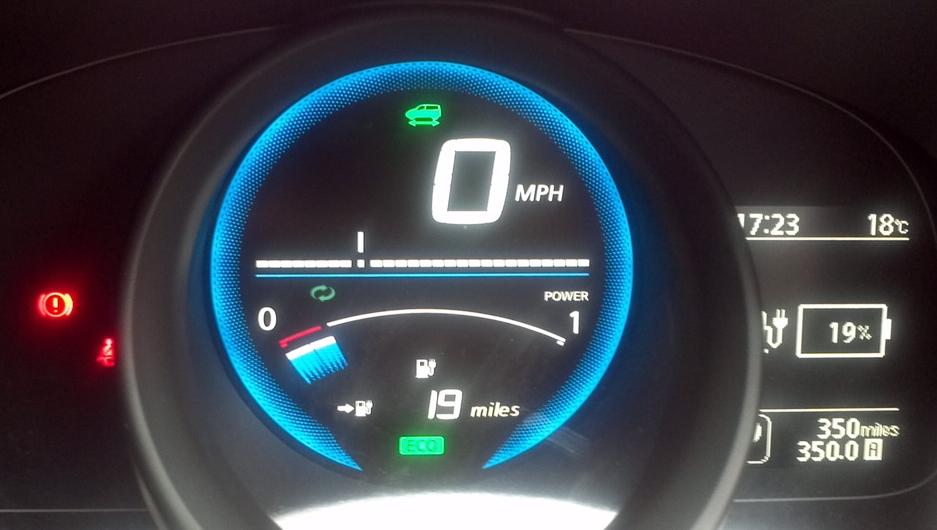
The weather wasn’t too bad, so we jumped straight in and drove the 56 and a bit miles up the M5 to Sedgemoor Services in “Eco” mode at a steady 60 mph or thereabouts. Now zooming up the motorway carrying an overnight bag and a couple of suits in the back isn’t a typical days work for a van, but with that proviso in mind here are some of the sights we saw on arrival at Sedgemoor:
The e-NV200 dashboard will be familiar to LEAF drivers, although there are some other differences. The “gear stick” is mounted below the dashboard, and the foot operated parking brake has morphed back into a conventional handbrake. In our case the 56 miles we’d travelled plus 20 left in “the tank” equates to a range of 76 miles by my reckoning, which is roughly what we achieved during the entire journey.
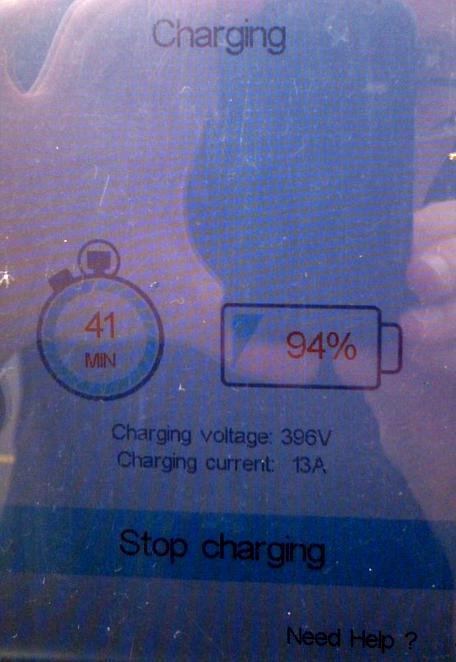
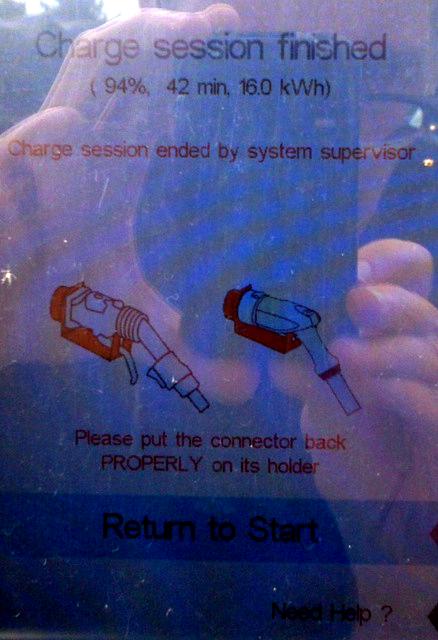
We’d used the old Ecotricity free “smart card” system on previous test drives, but this time we had to pay through the nose using their new smartphone app. That refused to install on my ancient Motorola Atrix, but we eventually got things working on Kasia’s more modern Sony Xperia. After a lengthy lunch break we returned to see this:
Stopping charging proved to be a non trivial procedure. Pressing the button on the charging station prompted Kasia to tap a button on her phone. That seemed to do the trick on the physical equipment but the virtual app insisted that charging hadn’t stopped yet.
We eventually pressed on regardless to the shiny new Gloucester Services:
51.7 miles according to Google maps. 51 miles according to the e-NV200:
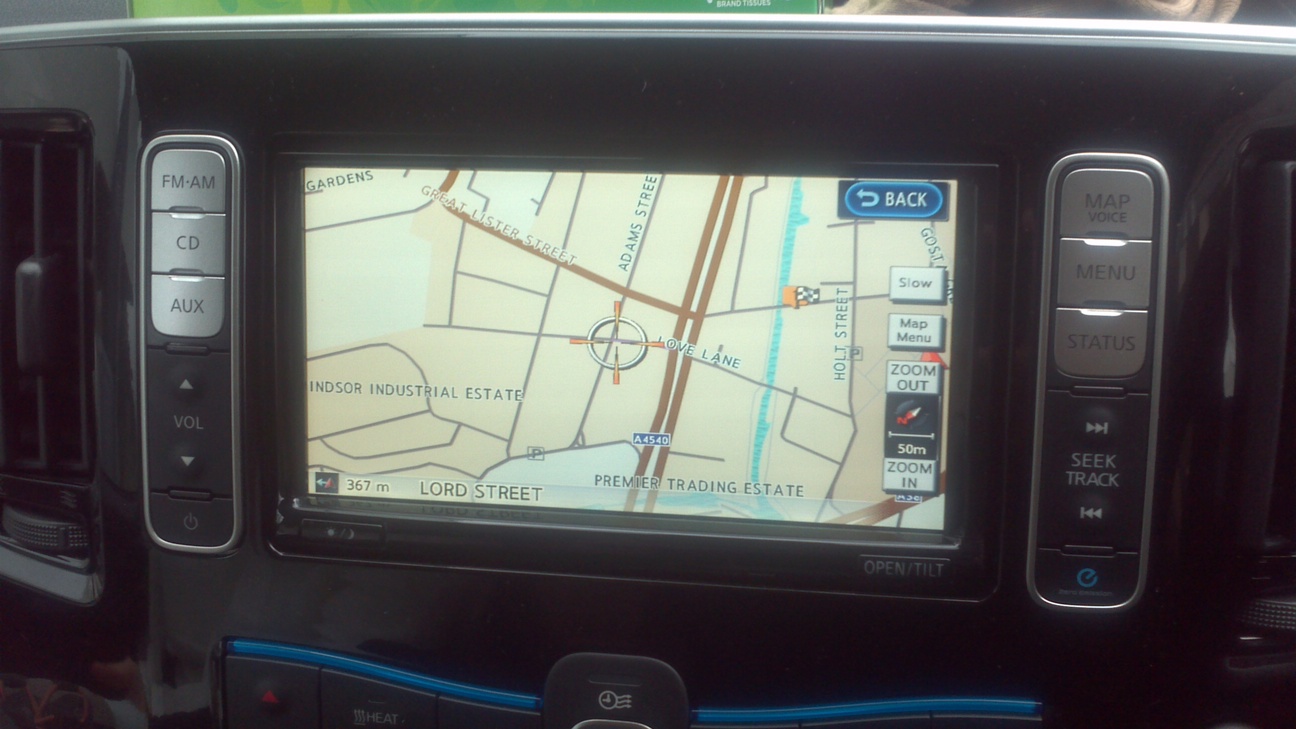
Kasia’s Ecotricity app was still insisting the charging session at Sedgemoor hadn’t finished yet! Power cycling her phone enabled us to get a new session started. After a slightly swifter coffee break this time we set off on the last leg to Birmingham with a 95% charge. That was when our troubles really began. The Nissan satellite navigation system kept insisting “you may be unable to reach your destination” even though there was apparently plenty of juice in the battery. It seems the M5 north of junction 5 was jammed solid. The sat nav eventually suggested an alternative route taking the A38 around Bromsgrove and then the M42 before heading towards Aston University in the centre of Birmingham. After several apologetic phone calls we eventually arrived at the European Bioenergy Research Institute well behind schedule:
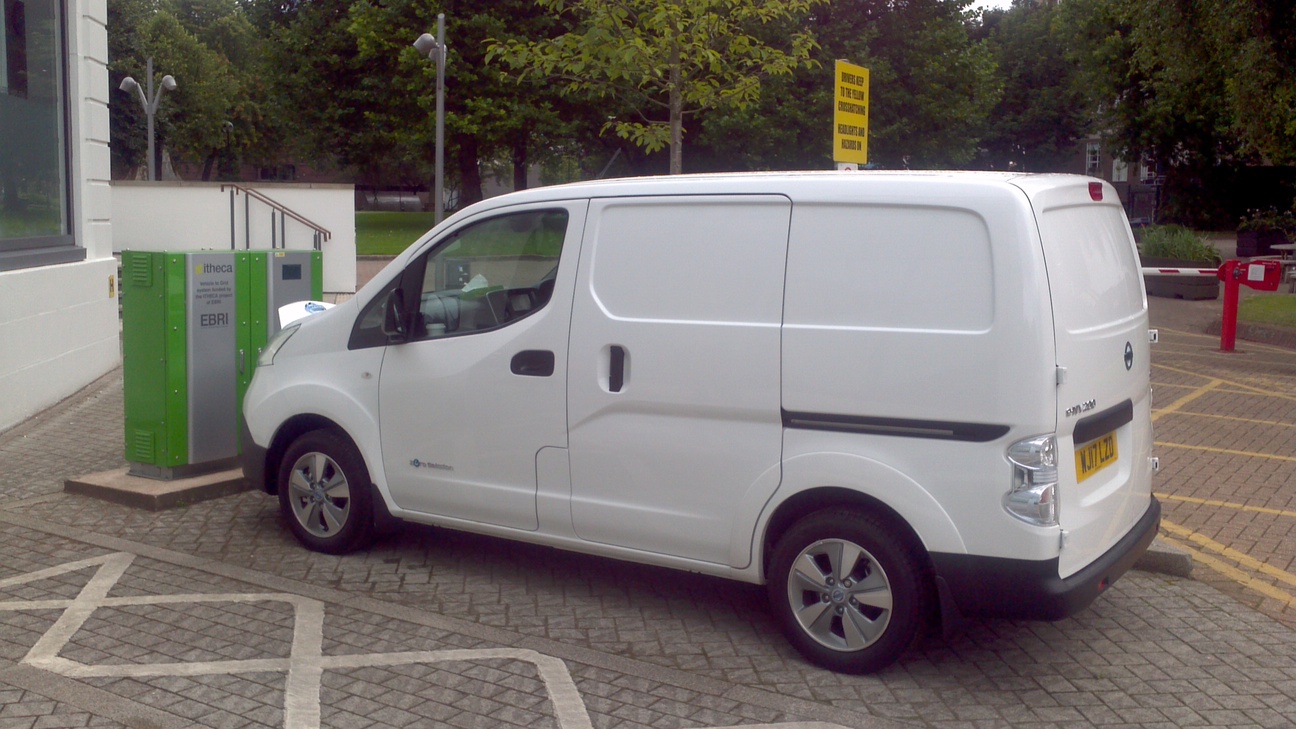
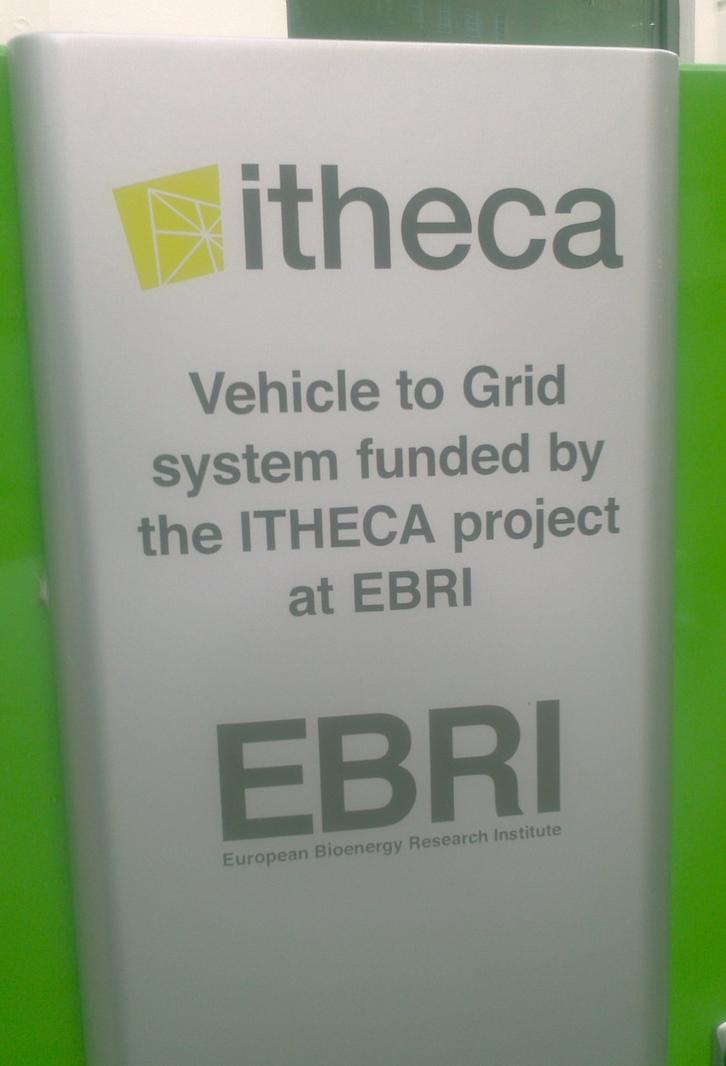
Thankfully in all the circumstances our e-NV200 started charging without problems on the ITHECA project‘s bright green bi-directional charger!
The rumours have been flying around for months, but Nissan have just issued another “teasing” press release about the next generation LEAF. It makes no mention of new battery technology or increased range, but it does say this:
Packed with our most advanced technologies, the redesigned next-generation LEAF will amaze your senses and raise the bar for the electric vehicle market.
Being 100% electric and zero emissions, the new Nissan LEAF, an icon of Nissan Intelligent Mobility, offers a quiet and refreshing experience while driving. With Nissan Intelligent Mobility technologies, you are more confident with enhanced vision and can better sense what is around the car. Premium interiors designed to suit your taste offer a touch more comfort.
Nissan established itself as a pioneer in the EV movement by launching the LEAF, the world’s first mass-market electric vehicle.
The world premiere for the new Nissan LEAF will take place on September 6, 2017 in Japan and we will be bringing the unveil to you live online.
It also includes this image:
and comes complete with this video:
Nissan’s previous 2018 LEAF press release suggested improved aerodynamics would lead to increased range even in the absence of a novel battery pack:
The new Nissan LEAF will feature an improved aerodynamic design that makes it even more efficient, allowing drivers to travel farther on a single charge.
Aerodynamics is key to how efficiently an electric car moves. Less drag and better stability enable the vehicle to drive longer distances before having to recharge.
The redesigned next-generation Nissan LEAF is lower to the ground, helping it realize zero lift for better stability at high speeds. Other new design features significantly stabilize the car when hit by strong crosswinds.
Inspired by airplane wings, Nissan engineers recreated the ideal shape for the new LEAF, enabling a symmetric air flow that helps it slice through the air for a smoother, more efficient journey.
Nissan announced today that the widely anticipated new Nissan LEAF will come with e-Pedal, a revolutionary technology that transforms the way we drive.
With the flip of a switch, the technology turns your accelerator into an e-Pedal, allowing drivers to accelerate, decelerate and stop using just the e-Pedal. e-Pedal technology is the world’s first one-pedal operation that allows drivers to bring the car to a complete stop even on hills, stay in position, and resume driving instantly.
Drivers can cover 90% of their driving needs with the e-Pedal, making the process of driving more exciting. In heavy traffic and during city commutes, drivers will greatly reduce the need to shift from one pedal to the other, making your drive simpler and more engaging.
The e-Pedal technology represents another key milestone in Nissan’s ongoing commitment to bring accessible, advanced driver assistance technologies to the mainstream. Set to make driving safer and more enjoyable, the development of these technologies is part of Nissan Intelligent Mobility, the company’s blueprint for transforming how cars are driven, powered and integrated into society.
Here’s the e-Pedal video:
Please note the extremely important footnote:
Use conventional brake pedal for aggressive braking situations.
Before you leave please make sure to also take a look at our previous article that includes video of the next generation LEAF’s autonomous driving capabilities.
Nissan Europe exhibited at the CeBIT exhibition in Hannover, Germany for the first time last week. According to their press release:
Just weeks after demonstrating its advanced autonomous drive technology on public roads in Europe, Nissan today makes its debut at CeBIT, Europe’s largest digital expo, showcasing innovations set to revolutionise the future of motoring.
At the heart of its display at CeBIT, Nissan will showcase another autonomous innovation – Seamless Autonomous Mobility (SAM) system which was demonstrated earlier this year at CES.
Developed from NASA technology, SAM partners in-vehicle artificial intelligence with human support to help autonomous vehicles make decisions in unpredictable situations such as accidents, road construction, or other obstacles. With SAM, the autonomous vehicle becomes aware of when it should attempt to negotiate the situation by itself, and when it should seek human assistance. Knowing how to manoeuvre these situations will be key to realising a fully autonomous driving future.
Nissan has also confirmed that phase one of its innovative ProPILOT autonomous drive technology will be made available in the new Nissan Qashqai launching in FY17 and the second-generation model of the Nissan LEAF coming soon. This technology enables single lane autonomous driving on motorways and is already available on the Nissan Serena which was launched in Japan last year.
What should we expect from Nissan’s assorted “autonomous” technologies? The answer is provided by Robert Llewellyn in his latest “Fully Charged” video! As Bobby puts it:
Our first ride in a fully autonomous car on public roads in the UK.
What this car can do already, now, is drive itself anywhere on the roads. Obviously this is not available now. You can’t buy one of these Nissan LEAFs yet. This is still a development vehicle.
The idea with this, according to Nissan, is that this will be part of standard cars in around 2020
The next question is obviously “when should we expect the second-generation model of the Nissan LEAF to become available in the UK?”. A partial answer has just been “Tweeted” by Nissan UK:
@ecocars1 The new LEAF will come with Pro-PILOT technology but more info about specifics will be available at the global unveil in Sept. ^ML
Meanwhile, and perhaps not entirely coincidentally, the Department for Business, Energy & Industrial Strategy has announced:
The first competition to access funding supporting the creation of test facilities for connected and autonomous vehicles.
Business Secretary Greg Clark launched the first competition to access funding from the government’s £100 investment programme supporting the creation of test facilities for connected and autonomous vehicles today (30 March 2017) at the Society of Motor Manufacturers and Traders Connected Conference in London.
In his speech to an international audience of over 400 industry leaders from the automotive and technology sectors he outlined plans to create a cluster of excellence in CAV testing along the M40 corridor between Birmingham and London.
Time for me to call our local Nissan dealer to try to arrange a “test driven”! Perhaps there’s one small fly in the BEIS ointment though? South West England isn’t “along the M40 corridor between Birmingham and London”.