Nissan, Enel and National Grid Announce UK V2G Trial

Things seem to be looking up for vehicle-to-grid technology here in the United Kingdom! In a press release Nissan have just announced that:

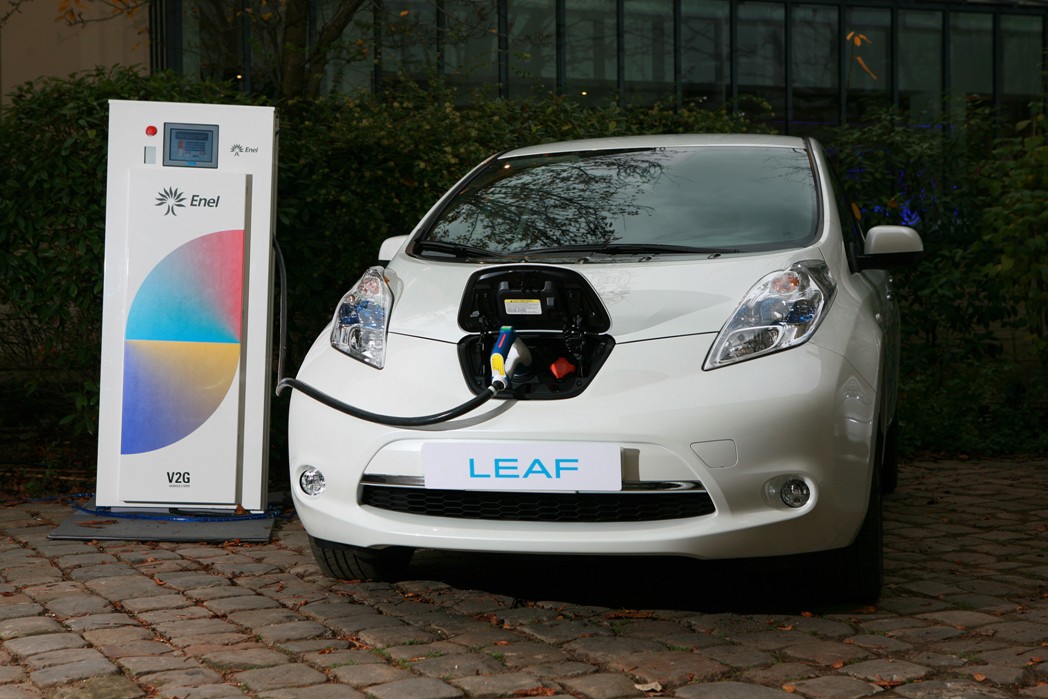
Automotive industry leader Nissan and multinational power company Enel, today confirmed plans to launch a major vehicle-to-grid (V2G) trial – the first ever carried out in the UK. The trial will work by installing and connecting one hundred V2G units at locations agreed by private and fleet owners of the Nissan LEAF and e-NV200 electric van. By giving Nissan electric vehicle owners the ability to plug their vehicles into the V2G system, owners will have the flexibility and power to sell stored energy from their vehicle battery back to the National Grid.

Technical details of the trial are however conspicuous only by their absence from the announcement. I for one would love to know exactly how “sell[ing] stored energy from [a] vehicle battery back to the National Grid” is going to work in practice. The press release continues:

Today’s announcement heralds an exciting era for energy management in the UK. Not only will Nissan electric vehicle owners be able to play an active role in grid stability, providing an alternate source of income, but it will revolutionise how energy is supplied to the grid. Once scaled up, the V2G technology can become a game-changer for owners of Nissan EV in the UK as they become fully fledged and active participants in the UK energy market.

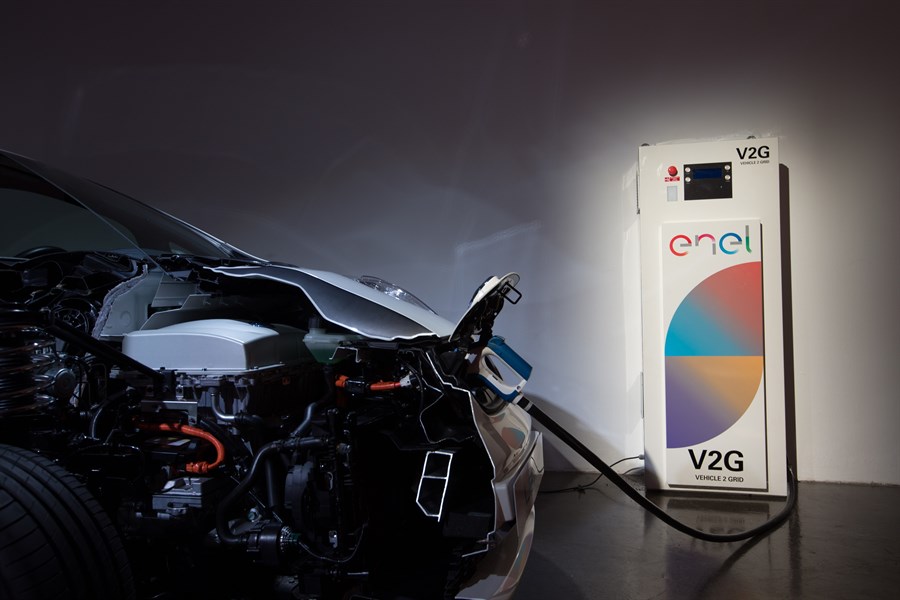
Personally I’d love to be the owner of an electric vehicle that is a “fully fledged and active participant in the UK energy market” but I don’t foresee that happening any time soon. I cannot help but wonder what Nissan UK and National Grid know that I don’t? Whilst I wait to find out the answer to that particular UK energy market conundrum, here’s a publicity picture of the associated hardware:
Perhaps the most pertinent comment in the announcement comes from Steven Holliday, the former CEO of National Grid plc, who points out that:

At National Grid we are constantly looking to the future to ensure we have the capacity to meet national energy demand – it’s our job to future proof the national transmission network.

The rapid uptake of Electric Vehicles is certainly positive yet could also be challenging if we don’t plan ahead to understand precisely what effect this new technology will have on the electricity system. Our Future Energy team predict that there could be up to 700,000 Electric Vehicles in 2020 requiring an extra 500MW of energy. That’s why we support innovative technologies and pioneering projects such as this one that have the potential to make a real difference to the way we manage energy supply and demand.

The press release concludes:

Today’s announcement follows the signing of a partnership agreement between Nissan and Enel in Paris in December 2015 during the 21st UN Conference on Climate Change (COP21) to trial V2G technology in Europe. A trial comprising 40 V2G units began in Denmark in January 2016.

I wonder if any Nissan LEAF owners are already active participants in the Danish energy market?
BMW Announce New “195 mile” Range i3

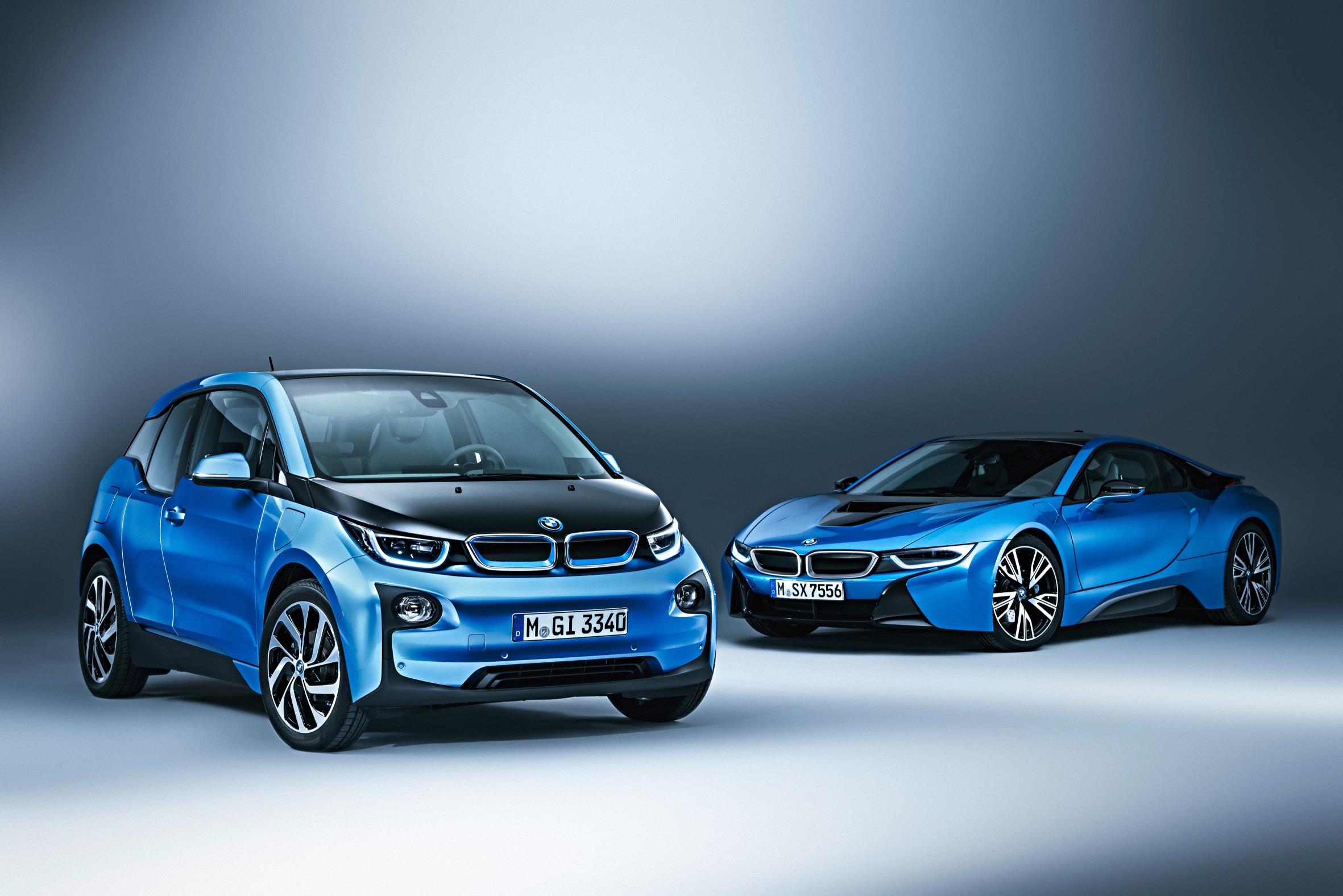
In a press release a couple of days ago BMW announce a new “go further” version of their i3 model – “The world’s first premium car designed from the ground up to be powered by an electric drive system.”.

The BMW i3 94Ah replaces the current 60Ah model and has a capacity of 33kWh thanks to the higher storage density of the lithium ion cells. The battery dimensions remain unchanged with more than a 50 per cent range increase in the standard NEDC cycle. This equals a range of 195 miles in everyday driving. The motor propels the BMW i3 from zero to 62mph in just 7.3 seconds (BEV) making the BMW i3 both the sportiest and most efficient electric vehicle in its segment.

Here’s a picture of the new i3, with a gratuitous i8 sports car in the background for good measure!

BMW continue:

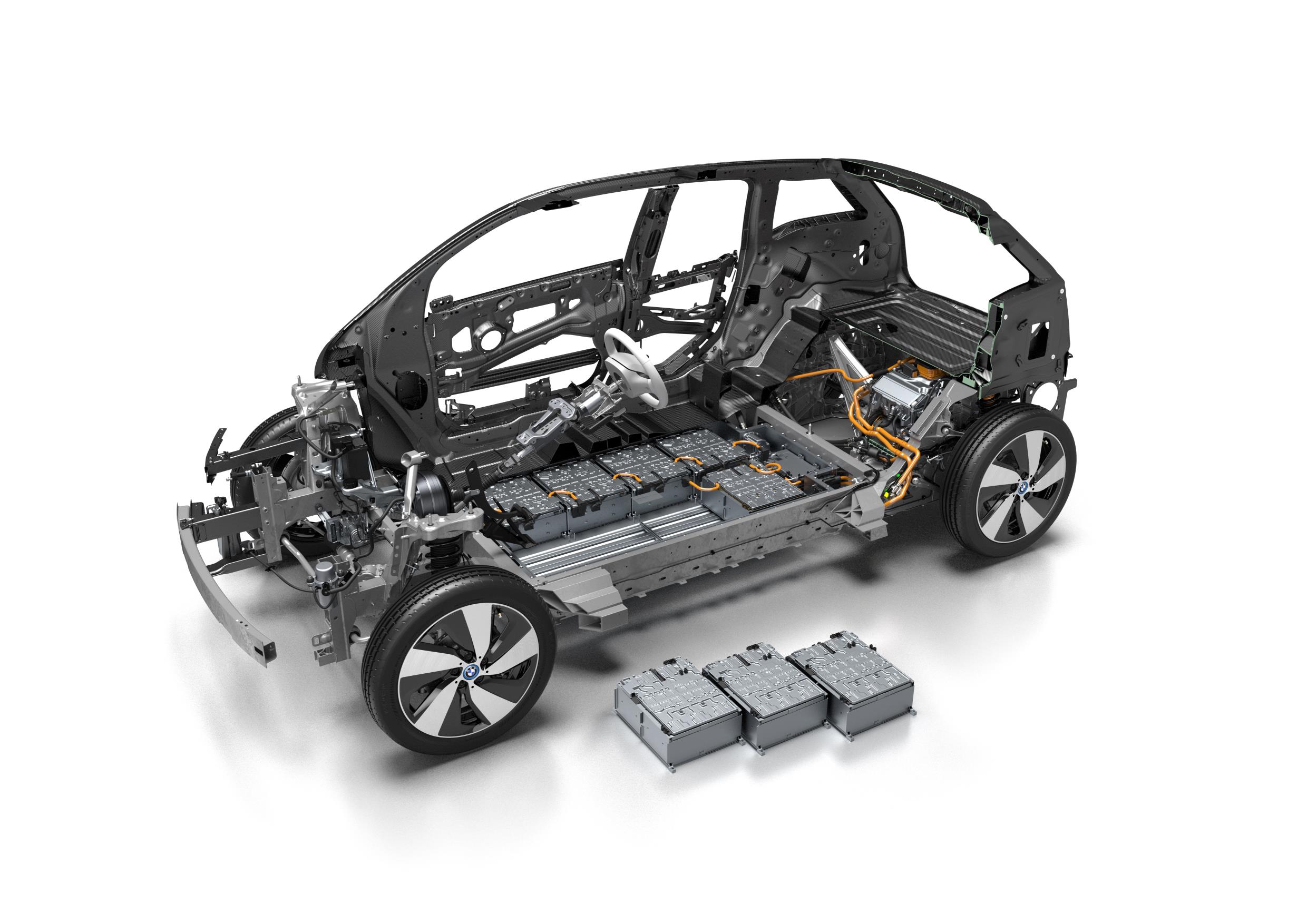
The high-voltage battery in the BMW i3 consists of eight modules (each with 12 individual cells), and its capacity has increased significantly without any changes in structure or exterior dimensions. By optimising the cell-internal packages with more electrolyte and adapting the active material, BMW has succeeded in increasing cell capacity to 94Ah and overall battery energy to 33kWh.

The range of the new BMW i3 94Ah (BEV) in everyday use, on a full battery charge with the air conditioning or the heating on has been significantly increased to 195 miles. This is achieved with no subjective loss of driving performance and agility. BMW i models strike the ideal balance between efficiency, performance and range. From standstill to country-road speeds, the BMW i3 94Ah is on par with sporty, conventionally combustion engine powered cars.

The lithium-ion cells used in the battery are particularly notable for their high energy density and impressive cycle life: they are designed to perform their energy storage function over the vehicle’s entire lifespan.

The coolant of the air conditioning system is responsible for cooling the high-voltage battery very effectively. An optional heating system can also be used to heat the battery to ensure the optimum operating temperature of 20°C before starting off. The battery has been designed to last for the car’s entire service life. Customers receive an 8-year or 100,000 mile warranty on the battery.

A couple of other significant things to note about the new range are that:

The emissions of the BMW i3 94Ah with Range Extender amounts to 12g/km, a 1g/km reduction in comparison to the previous model while the exclusively electrically powered BMW i3 produces zero emissions locally, plus

DC Rapid Charge now available as standard.

The new models will be available from July, in Protonic Blue with Frozen Grey metallic highlights:

Previously, this paintwork was reserved for the BMW i8 hybrid sports car!

Nissan Electric Vehicles Prove Popular at UK Universities

In a news release today Nissan UK point out that:

The all-electric Nissan e-NV200 van has graduated with flying colours to become one of the most popular new vehicle choices for university fleets in the UK.

The multi award-winning van, which costs from just two pence per mile to run and offers zero emissions mobility whilst driving, is now in service on the fleets at more than 20 of the nation’s leading academic institutions.

University of Birmingham was the first fleet operator in the country to take delivery of the model when it added two to its fleet in 2014.

Since then, the University has added four more and the e-NV200 has moved to the top of the of the list for universities and colleges the length and breadth of the UK.

e-NV200s are now in service at universities including Bath, Brighton, Coventry, Dundee, Edinburgh, Exeter, Leicester, Leeds, Manchester, Manchester Metropolitan, Newcastle, Oxford, Sheffield, St Andrews, Swansea, the University of Central Lancashire and the University of Wales.

In addition, a number of other universities across the UK are currently trialling the e-NV200 as they explore the environmental and financial benefits it could have for their fleets.

Many moons ago I lived in Mayals and I’ve studied at Swansea University:

Nissan point out that in Swansea:

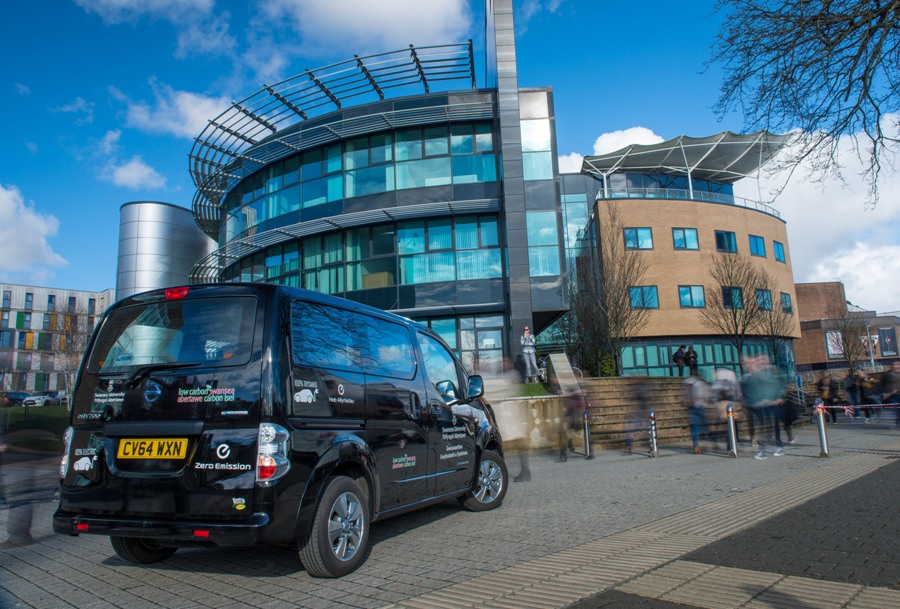
The e-NV200 Combi has been introduced as part of a broader commitment to sustainability and is operated as a pool vehicle, available on a booking system, by the information services and systems team.

As part of a seven-strong EV fleet, which also includes four Nissan LEAFs, the e-NV200 has proved a popular choice thanks to its size, flexibility and car-like driving dynamics.

Nigel Morris from the information services and systems team at Swansea University said:
 “Our EV fleet has already been a big success, cutting our carbon emissions by 4.5 metric tons and saving around several thousand pounds in fuel so far.

“The e-NV200 has made a terrific contribution to those figures as it’s proved so popular with staff. It’s a big vehicle that’s got lots of space for cargo or people but it’s very easy to drive.”

This news is all very encouraging of course, but I cannot help but wonder about something Nissan didn’t reveal to us this morning. Which of their long list of UK universities might actively be researching the application of vehicle-to-building or even fully fledged vehicle-to grid technology?

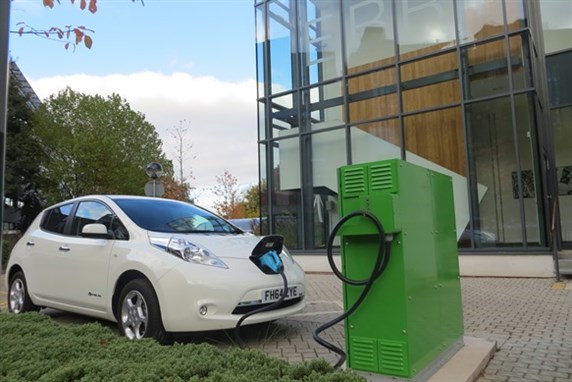
Perhaps the answer is “none of them”, but I am able to reveal that a UK University not mentioned by Nissan is in fact already so doing. Here’s an exterior view of the European Bioenergy Research Institute (EBRI for short) at Aston University:

and here’s what EBRI’s press release from a month or more ago has to say about the bright green box attached to the 24 kWh battery equipped 2014 model year Nissan LEAF pictured above:

Aston University has successfully commissioned the UK’s first permanent electric vehicle to grid (V2G) charging system.

This next generation of electric vehicle charging infrastructure allows power to flow both in the traditional way (grid to vehicle) and in reverse (vehicle to grid). The technology, developed in Japan to improve electricity supply reliability in the wake of the Fukushima disaster, is being investigated in collaboration with our leading industry partners, as a new method for energy storage and grid balancing services in Europe.

Please do read the press release in it’s entirety, and when you’ve done that also take a good look at the user interface of EBRI’s “load matching system”:

Exciting times for V2G enthusiasts here in the United Kingdom! Now that this pilot project is up and running there’s a few more urgent things to be ticked off on the to do list. How about OCPP 2.0 or even fully fledged British and international standards for “smart charging”, V2B and ultimately pukka V2G protocols for starters?

Here’s how the Open Charge Alliance explain the need for “Open Standards”:

The specification for version 2.0 of the Open Charge Point Protocol still seems to be absent from their web site however!

Storm Katie Cuts Power Across Southern England

On Easter Saturday the Met Office announced the impending arrival of another named storm from across the Atlantic:

Storm Katie is forecast to affect southern England and south Wales on Easter Monday

Anticipating the development of an area of low pressure, which will affect southern England and south Wales on Easter Monday, The Met Office has decided to name the storm Katie. This will be the 11th named storm since last autumn.

A National Severe Weather Warning for strong winds has been issued, covering much of Easter Monday.

The Met Office also issued a severe weather warning for the winds from Storm Katie across Southern England:

Issued at: 1031 on Sat 26 Mar 2016
Valid from: 0115 on Mon 28 Mar 2016
Valid to: 1400 on Mon 28 Mar 2016

Winds will strengthen markedly across southern England and through the Bristol Channel from the start of Monday, with the potential for 50-60 mph gusts inland and 70 mph gusts around coasts exposed to the south. Whilst there is a low likelihood of all areas seeing these strong gusts for a time southern coastal counties from Hampshire eastwards look most likely to see the strongest winds. These will then ease from the southwest during the morning, clearing from the east early in the afternoon. Additional hazards may include large waves around exposed coasts as well as a period of heavy rain.

Please be aware of the potential for disruption to outdoor activities and travel, as well as the possibility of fallen trees and temporary interruptions to power supplies.

On Easter Sunday the Met Office’s “Chief Forecaster’s assessment” firmed up the forecast a bit, saying that:

There is increased confidence in the likelihood of a period of disruptive southerly winds, veering westerly later. Winds are likely to be strongest in southern coastal areas, but there is potential for some very strong, squally gusts inland during the morning before winds ease from the west during the day.

Now the morning of Easter Monday has arrived, as have those “temporary interruptions to power supplies”. Storm Katie has done her worst, and here’s how the damage looked at 08:00 BST. First of all here’s Western Power Distribution‘s current power cut map:

Further east here’s Scottish and Southern Energy Power Distribution‘s power cut map:

and here’s one from UK Power Networks‘ for South East England:

Unlike WPD, SSEPD and UKPN don’t publish real time tables of the number of properties without power. SSEPD are however providing a “Live Storm Feed” for Katie:

According to their latest news bulletins:

Southern Electric Power Distribution has more than 900 engineering, technical and support staff on duty to deal with Storm Katie, and since last night power has been restored to 40,300 customers.

There are currently 28,497 customers in West Sussex whose power supply have been affected by Storm Katie.

There are currently 4,152 customers in Berkshire whose power supply have been affected by Storm Katie.

There are currently 2,893 customers in Dorset whose power supply have been affected by Storm Katie.

According to the UKPN Press Office:

There are currently 19,000 properties without power across South East England (Kent, Surrey and Sussex)

SSEPD are also “Live Tweeting” about the problems Katie’s winds have caused their network:

A Nissan LEAF Goes Surfing

Our apologies for the delay in publishing this article, but at this juncture it appears as though British Telecom have pushed out a firmware upgrade which has broken some (or all?) of their “business hubs” in the UK:

Whilst we wait for them to sort out the problem, which hit us 2 days ago, we’ve reverted to an ancient “2Wire” WiFi router that was gathering dust on one of our shelves. Having intended to head for North Cornwall at 9:30 on Saturday at the latest we eventually hit the road shortly after 11:00. Here’s our set of charging cables:

The blue one is a 10 meter 13 amp extension cable, just in case none of our planned rapid charging stations en route proved to be fully functional! When packing our bodyboarding gear Kasia’s 36″ board fitted in the boot easily:

whereas my 42″ bat tail was just too long and had to sit on the back seat:

The LEAF also has a split rear seat so if there had been three of us on the trip we could have used that to fit everyone and everything in. Finally we were ready to leave!

The Nissan sat nav planned a route past Whitehouse Services near Okehampton which suited us perfectly, and the open road beckoned:

This is the sight that greeted us when we arrived at Whitehouse Services:

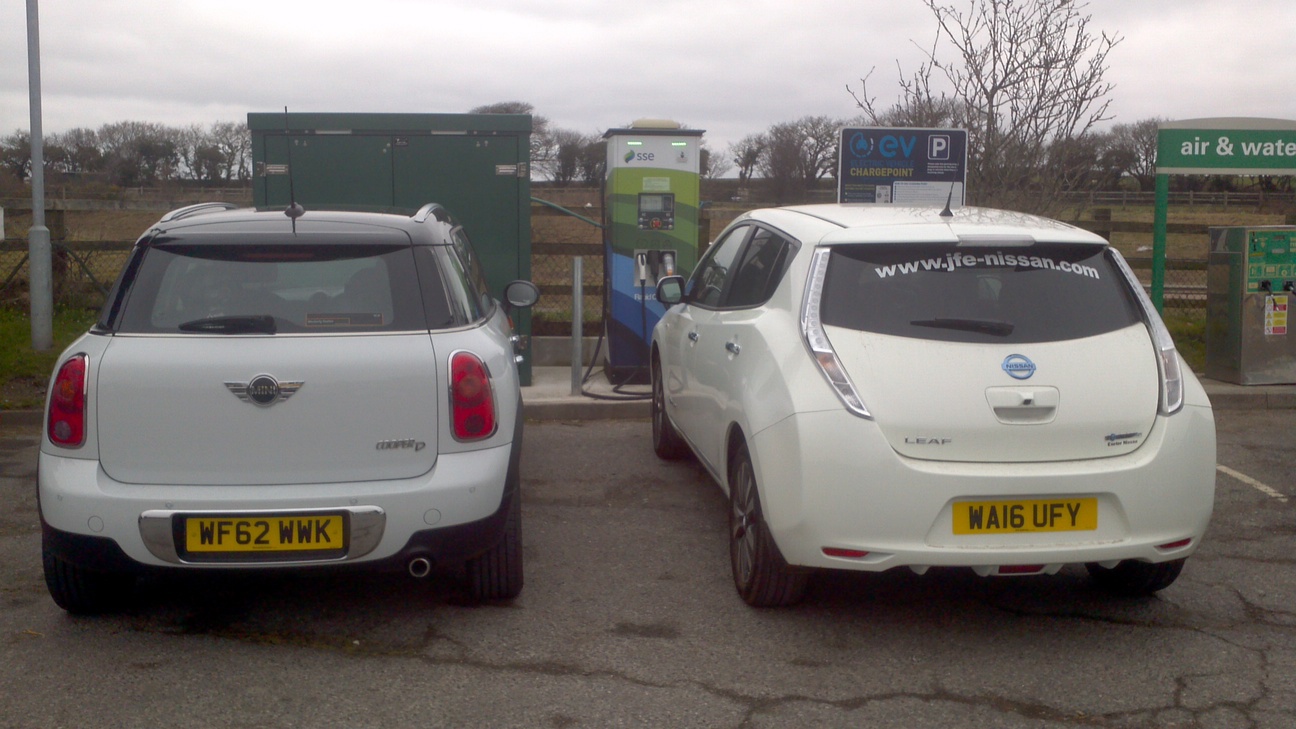
Just in case you’re wondering, the vehicle on the left does not incorporate an electric drive train!

To be continued….

30 kWh Nissan LEAF Extended Test Drive

We have mentioned the new “go further” Nissan LEAF previously on the V2G blog, and now thanks to JFE Nissan in Exeter we have the chance to test the new 30 kWh battery pack equipped 2016 LEAF for ourselves. According to the Nissan UK web site:

Every full charge will give you a range of up to 155 miles.

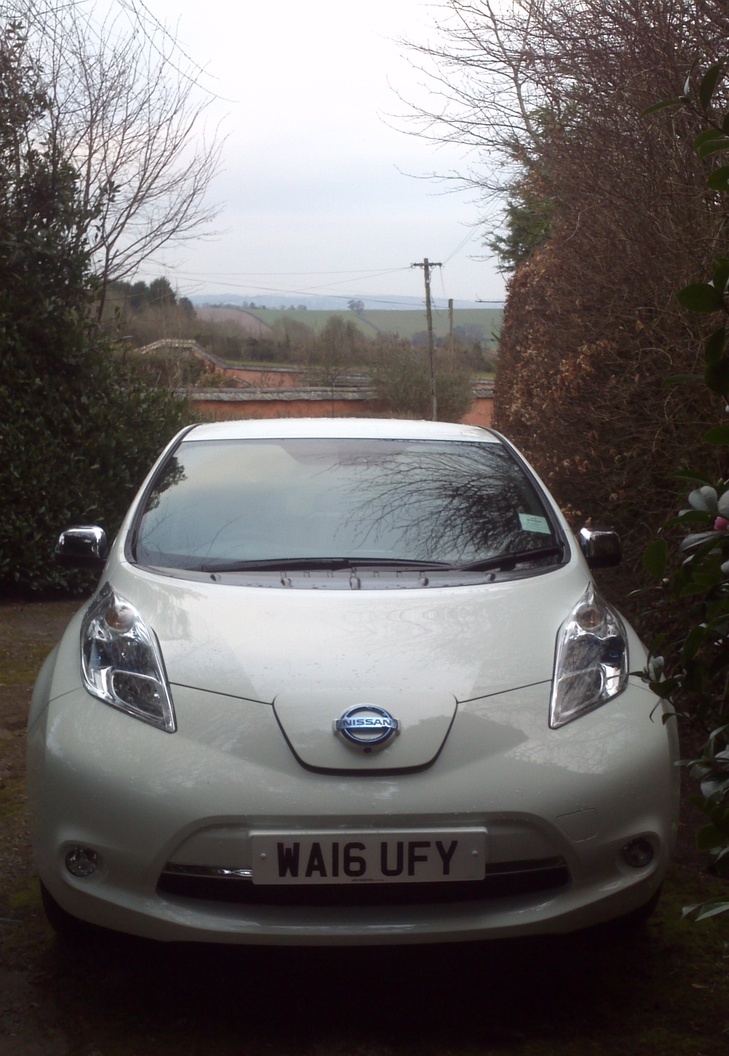
I don’t know about you, but we’d like to check that claim for ourselves! At the very start of our test the odometer on the bright white LEAF we were borrowing read 6 miles as we collected it earlier today, and had advanced to 11 miles by the time we got back to base:

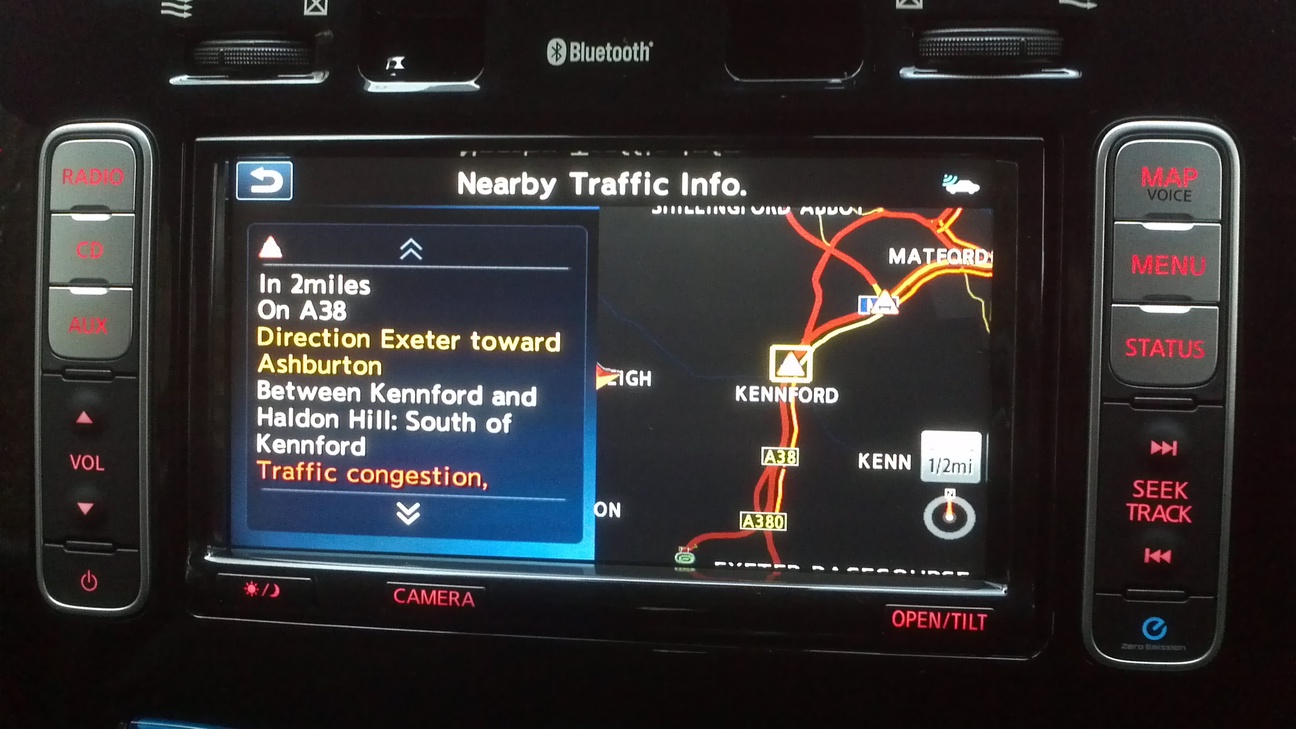
We had intended returning from Exeter to the wilds of the Haldon Hills via a main road. However before we left the Marsh Barton trading estate we consulted the LEAF’s handy traffic news feed, which revealed this:

According to Radio Devon “a caravan’s been abandoned in the inside lane on Telegraph Hill”! Hence we took the scenic route through some narrow Devon country lanes, and ended up with 20 miles worth of range left in the traction battery pack, according to the LEAF’s dashboard at least:

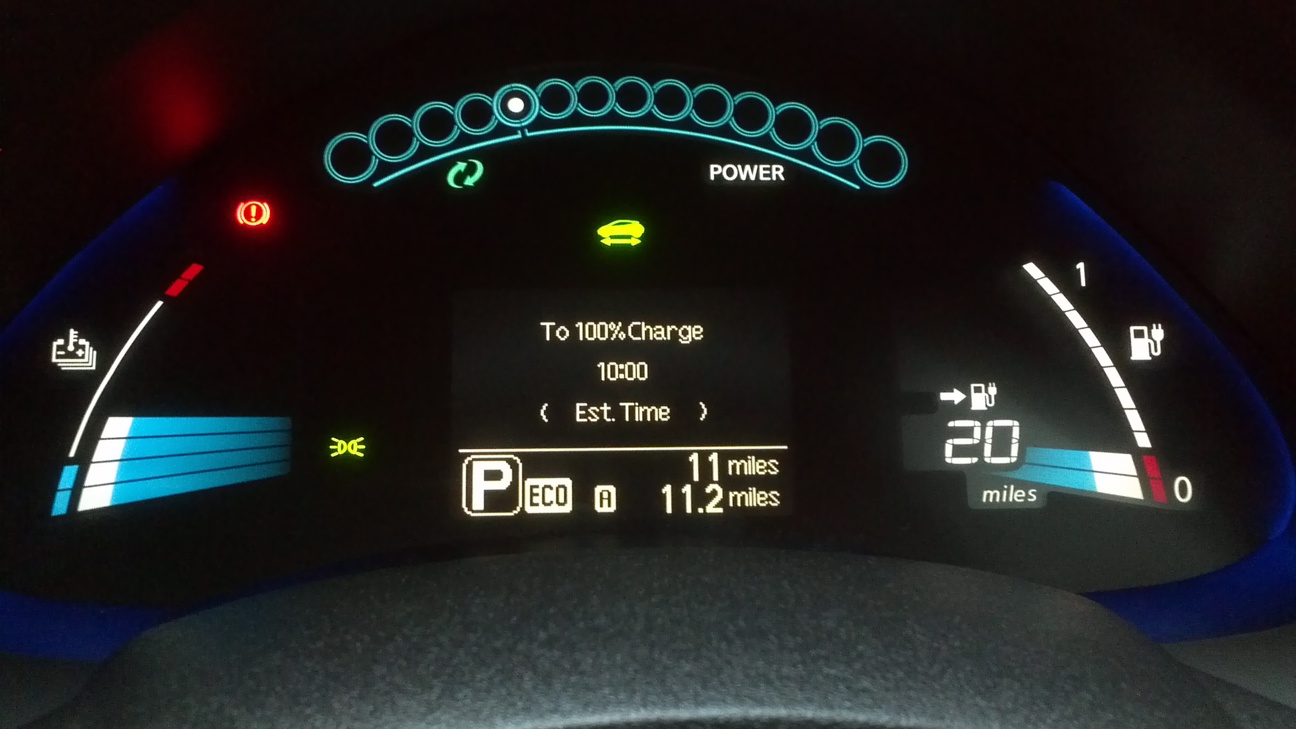
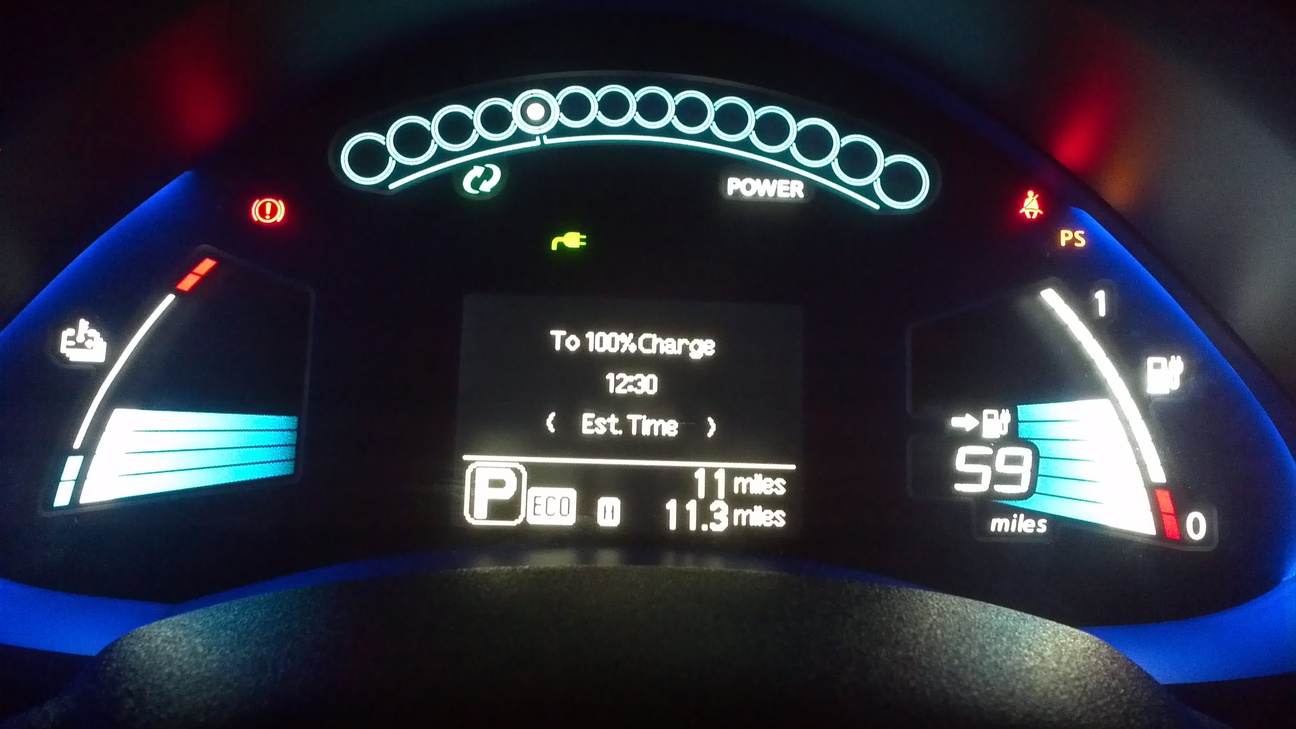
Having previously had some trouble using the rapid charger at Exeter Services, and having to avoid the motorway for other reasons on this occasion, we were in the perfect position to test the LEAF’s 13 amp “Electric Vehicle Supply Equipment” charging lead. We plugged it in at 18:30, and by 22:30 tonight the dashboard told us this:

More from us tomorrow on our Spring 2016 LEAF test, but for now we leave you with the inimitable Robert Llewellyn’s take on the new LEAF:

À bientôt, as I believe they say in France.

Solar Smart Charging in Utrecht with 150 Renault ZOEs

In a press release earlier today Renault announced that:

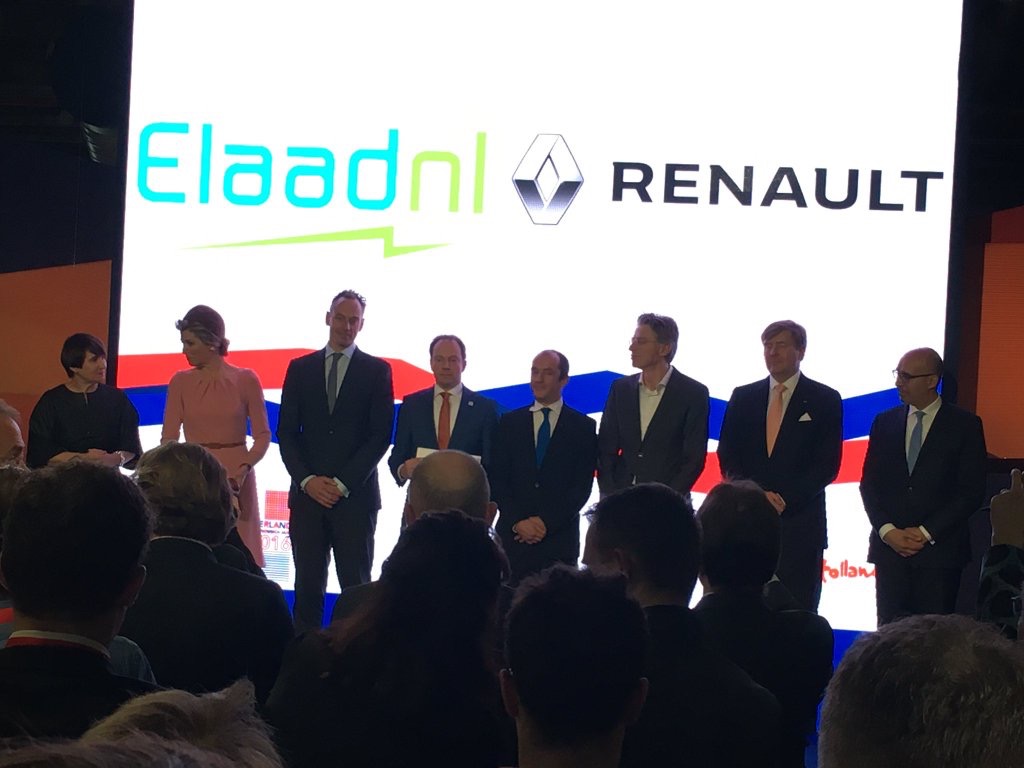
Renault has signed a letter of intent with the Dutch Utrecht City Council, ElaadNL and LomboXnet on Smart Solar Charging for electric vehicles.

The signature took place during the state visit to Paris of King Willem-Alexander and Queen Máxima of the Netherlands.

According to the letter of intent, the city of Utrecht could be the testing ground for the solar smart-charge project. Renault, Europe’s leader in electric vehicles, would supply a fleet of 150 Renault ZOE models through 2017 to the city. ElaadNL would handle management of infrastructures and the smart-charge standard, and LomboXnet would take charge of installing the network of unique public charging terminals powered by a 44 kW grid connection. Grid operator Stedin would be involved to balance supply and demand of the grid.

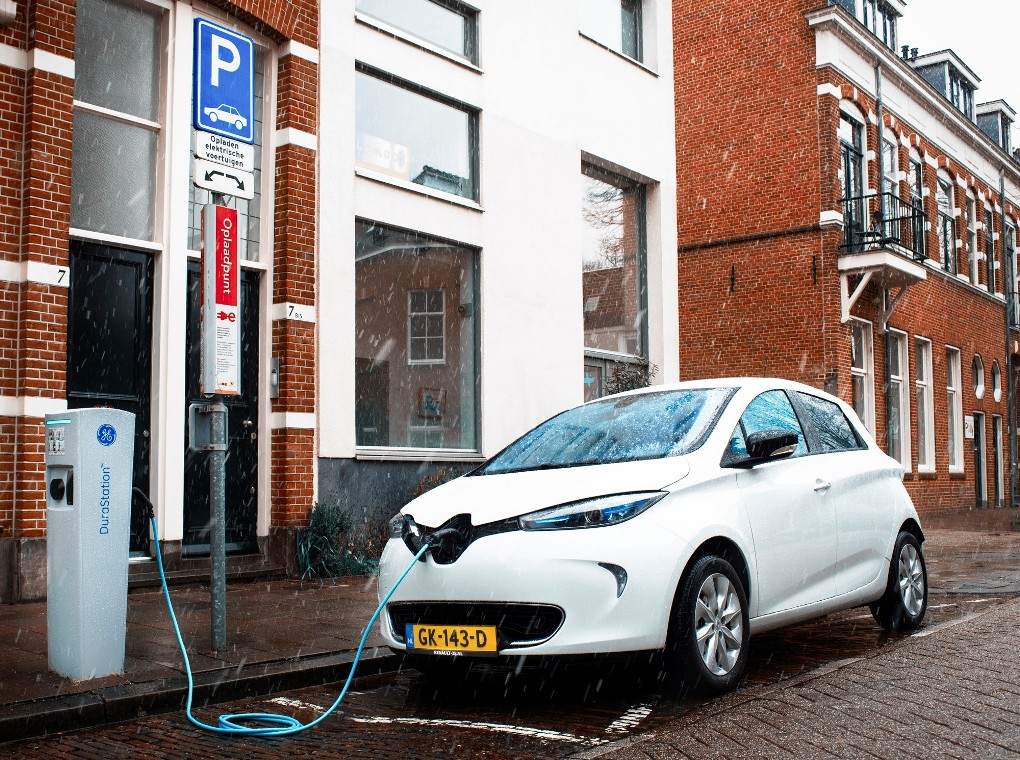
The Royal Family might have left better weather behind during their trip to Paris, but here’s a Renault ZOE charging outside the LomboXnet offices in Utrecht, in the rain:

Moving on to some more technical details of the Utrecht project:

Phase one of the project would involve setting up 1,000 smart solar-charge stations, powered by 10,000 photovoltaic panels in the Utrecht region. Infrastructure installation would run side by side with development of a car-share service of electric cars, powered by renewable energy, for Utrecht residents. The Renault ZOE R.Access connectivity and 22 kW charging make it ideal for car-share and smart charging applications.

So far so good, and then comes phase 2!

Phase two of the project would proceed with the partners developing a vehicle-to-grid ecosystem, with the network of solar chargers capable of both charging the electric cars and of feeding energy stored in the batteries of parked cars onto the grid to meet demand peaks. This could be the starting point for a new system storing renewably sourced energy.

As always at this juncture, one cannot help but wonder where and when the first “vehicle-to-grid ecosystem” will evolve here in the United Kingdom!

Nissan’s New Office Will Be Electric Vehicle Powered

Nissan announced at the Geneva Motor Show today that:

Its new regional office in France will house the largest grid-integrated electric vehicle (EV) system and second life battery storage unit ever installed in a building, anywhere in the world.

The new building will feature 100 vehicle-to-grid chargers, from Nissan’s partner ENEL, allowing Nissan’s range of EVs to plug in and draw down energy from the grid at off-peak periods with the ability to “sell back” the stored energy to the grid. It will also feature a 1 MWh energy storage system, from Nissan’s partner EATON, the battery storage experts, powered by 64 Nissan LEAF second life EV batteries combined with solar energy generation.

The company hopes to extend this innovative battery technology to other major Nissan sites and facilities around the world over the next few years. The systems which will be installed at Nissan’s new French office will serve as a live test case of what can be achieved when electric cars are used to their full potential.

By reducing grid dependency and using excess energy stored in EV batteries in a smart way, Nissan believes today’s announcement will be a game-changer in the way people and businesses utilise electric vehicle fleets.

The new technology is expected to slash energy costs at the new France office by reducing drawdown of energy during peak periods in favour of off-peak tariffs. The new energy management system will also decrease the amount of contracted power consumed from the local electricity supplier.

Nissan announced plans to create a viable long-term solution to environmental protection in relation to energy use and storage at the COP21 climate conference in Paris last year. This included a partnership between Nissan and EATON on giving electric vehicle batteries a second life as stationary energy storage units and a partnership with ENEL on vehicle-to-grid integration. Grid integration trials have already begun in Denmark.

What Should Be In SEWTHA 2.0?

In case the six letter acronym (SLA for short) in our title for today means nothing to you it stands for “Sustainable Energy Without The Hot Air“, the title of a 2008 book by David MacKay, who amongst other things is Regius Professor of Engineering at the University of Cambridge. We first mentioned SEWTHA back in 2012, when Bill Gates praised it in an interview with the Wall Street Journal. I mention it again today because my attention was drawn by a bit of a barney (BoB for short) on Twitter between Prof. MacKay and Jeremy Leggett, who amongst other things is a founding director of solar PV company Solarcentury.

First of all here’s the BoB in question, including the V2G UK addendum!


In case you would like to listen to the edition of Evan Davies’ “The Bottom Line” on the topic of “Renewable Energy” under discussion, here it is:

http://bbc.in/1PIZD9G

Evan’s guests were Jeremy Leggett, Juliet Davenport of Good Energy and Paul Cowley, managing director of RWE Energy UK. Here are of few of my own “edited highlights”:

01:30 JD – One of the examples is Wyke Farm Cheeses. When they wash down the dairy every night and when they make the cheese, that they then anaerobically digest which creates a gas and they generate power. That’s one of our generators.

02:37 JL – A small cottage with bespoke solar tiles. these are different from the modules you use in solar farms or on a big installation on a commercial roof because they really are tiles. They go straight on the battens of the house. They generate electricity. They’re waterproof.

08:45 ED – I also wanted to talk about the physical constraints on whether you can get, in a country like ours, to 100% renewables. I’ve been very influenced by a particular book called SEWTHA by David MacKay.

09:30 JL – That book was published a good few years ago now. It’s out of date and I don’t think Dr. MacKay even believes that any more.

10:18 JD – We did some work, following David MacKay’s book actually, and used the work that he did. He went on to be the scientific advisor to DECC. He developed these pathways/models and we used them to look at how hard can you push the system to get it 100%. The UK has sufficient resource, whether it’s wind, whether it’s solar, to get to 100% on the current usage. [My emphasis!]

One of the things about climate change, it’s going to change the way we use power as well. So we saw last year energy usage in the domestic gas market dropped by 10%. 2014 one of the warmest years ever. You’ve also had the highest ever wind power production this winter. We’ve seen a lot of storms come through… So the parameters that David used in that book, I think we’re now looking for Hot Air 2.0.

11:30 ED – To give another example from the book, taking that it’s out of date, to get 50 kWh per day per person, and we’re currently using 125 kWh per day, to get 50 from offshore wind would mean filling a sea area twice the size of Wales. It would be expensive. It would be a very big deal.

One of things here, and it’s been much under-discussed in this area, is not only do we need to get our current electricity decarbonised, but we’re talking about decarbonising the transport industry to a large degree, and David MacKay’s good on this. You’ve got to almost double or triple your electricity generation, so not only do we have to replace the nuclear power and the coal that’s falling out of use over the next decade. You’ve got to replace that and add in plug-in cars. [My emphasis!]

12:59 JD – That’s what really exciting about right now. We’ve got a different problem on our hands. We’re going to have different technologies coming through, and we’re going to have to figure out how consumers use that. And actually the car storage part is really interesting because each car has a battery in it, and suddenly you’ve got a flexible power source that you can either use for transport or potentially use within people’s homes. And that piece of technology hasn’t really been thought through, about what that can really deliver [Juliet’s emphasis!]

13:45 PC – We see it in the press all the time. Wind turbines not running because the wind’s not blowing! The reality is that turbines generate around 85% of the time. They start generating at a very low wind speed… and then builds up to an optimum wind speed.

14:13 ED – We haven’t got yet a very efficient mechanism for storing electricity have we?

14:25 JL – Things are moving so fast. Let’s not forget, Apple is going to be mass producing electric vehicles four years from now. That is their stated intent. Each one of those is going to be a little power plant, and who knows how they’re all going to be hooked up to each other? It’s going to move so fast Evan, and I think this is the criticism that people like me have of, you know good guys like David MacKay with his book. They’re still flogging the idea of these vast centralised, humongously expensive centralised power plants, nuclear in particular, that take 10 years to construct.

The upshot of all this, apart from the BoB? More and more people are mentioning the concept of vehicle-to-grid technology in public pronouncements here in the UK. Andrea Leadsom at DECC assures us that she’s “as keen as mustard” on energy storage. That is of course nice to hear, but what do Physics & Chemistry have to tell us about the hard realities of distributed energy storage? And what about DECC & Ofgem too, with their assorted rules and regulations?

I might also have a minor quibble about Juliet’s “hasn’t really been thought through” remark. Some people have been thinking quite hard about V2H and V2G for quite some time!

OECD Advocates Investment in Infrastructure

It’s a point we’ve been peddling for years now, but it looks like the OECD have at long last come to the conclusion that investment in infrastructure is in fact an excellent idea. By way of some proof that we haven’t been in a minority of one up to now, here’s The Economist from October 2014, underneath a picture of a parrot pushing up the daisies:

Germany’s chancellor, Angela Merkel, should allow France and Italy to slow the pace of their fiscal cuts; in return, those countries should accelerate structural reforms. Germany, which can borrow money at negative real interest rates, could spend more building infrastructure at home.

That would help, but not be enough. It is a bit like the early years of the euro debacle, before Mr Draghi’s whatever-it-takes pledge, when half-solutions only fed the crisis. Something radical is needed. The hitch is that European law bans many textbook solutions, such as ECB purchases of newly issued government bonds. The best legal option is to couple a dramatic increase in infrastructure spending with bond-buying by the ECB. Thus the European Investment Bank could launch a big (say €300 billion, or $383 billion) expansion in investments such as faster cross-border rail links or more integrated electricity grids — and raise the money by issuing bonds, which the ECB could buy in the secondary market.

Obviously here at V2G UK we were particularly keen on the bit about “more integrated electricity grids”. More recently the United Kingdom’s House of Commons Energy & Climate Change Select Committee put much the same message this way:

This promising new demand-side response technology has been disadvantaged in the auctions under the Government’s Capacity Market – meaning costs and emissions could be higher than necessary. Only a fraction of the £1 billion pounds that will be spent keeping the lights on through the Capacity Market will actually provide new capacity and just 0.4% will go on demand-side response – with most of the rest going to existing fossil fuel power stations, paying some of them to stand idle for much of the year.

Today the OECD announced its latest “Interim Economic Outlook” in a blaze of publicity under the headline “Stronger growth remains elusive: Urgent policy response is needed”:

Global GDP growth in 2016 is projected to be no higher than in 2015, itself the slowest pace in the past five years. Forecasts have again been revised down in light of disappointing recent data. Growth is slowing in many emerging economies with a very modest recovery in advanced economies and low prices depressing commodity exporters. Trade and investment remain weak. Sluggish demand is leading to low inflation and inadequate wage and employment growth.

Financial instability risks are substantial. Financial markets globally have been reassessing growth prospects, leading to falls in equity prices and higher market volatility. Some emerging markets are particularly vulnerable to sharp exchange rate movements and the effects of high domestic debt.

A stronger collective policy response is needed to strengthen demand. Monetary policy cannot work alone. Fiscal policy is now contractionary in many major economies. Structural reform momentum has slowed. All three levers of policy must be deployed more actively to create stronger and sustained growth. The recipe varies by country, especially with regard to needed structural reforms.

Diving into the depths of the OECD report itself, the bit that caught my attention runs as follows:

A stronger collective fiscal policy response is needed to support growth and provide a more favourable environment for productivity-enhancing structural policies. Governments in many countries are currently able to borrow for long periods at very low interest rates, which in effect increases fiscal space. Many countries have room for fiscal expansion to strengthen demand. This should focus on policies with strong short-run benefits and that also contribute to long-term growth.

A commitment to raising public investment collectively would boost demand while remaining on a fiscally sustainable path. Investment spending has a high-multiplier, while quality infrastructure projects would help to support future growth, making up for the shortfall in investment following the cuts imposed across advanced countries in recent years. These effects would be enhanced by, indeed need to be undertaken in conjunction with, structural reforms that would allow the private sector to benefit from the additional infrastructure; notably in the Europe Union, cross-border regulatory barriers are a significant obstacle.

Here’s a video of the proceedings in Paris earlier today:

The presentation was given by Catherine Mann, the OECD’s chief Economist, and the bit where she mentions the OECD’s concerns about the need for fiscal stimulus and investment in infrastructure is is around half an hour into the video:

Implementation of the “Juncker” investment plan has yet to deliver the targeted boost to investment. The further harmonisation in regulation needed to make the plan work also lags.

Note also Ms. Mann’s remark during the Q&A session, at around 48 minutes:

Fiscal spending on just any old thing, to the same white elephants, that is not the type of collective action that is going to generate the improvement in growth and the improvement in debt to GDP fiscal sustainability that we can see as possible. So our recipe is very much one that we started talking about more than a year ago. The recipe is we deploy the full set of tools that we have at our disposal as policymakers. Fiscal and monetary policy under the demand side, and a range of structural reforms that are unique to each country, depending on what it is they need to do.