Last week there was a significant “Energy Technology” announcement in Manchester. This article was supposed to be written/published last weekend, but Storm Darragh and our subsequent 20 hour power cut proved more than capable of disrupting the carefully laid plans of both mice and men!
Hastily returning to a rather damp Manchester on December 5th, here is a recording of the meat of the initial presentation by Devrim Celal, Chief Marketing and Flexibility Officer of KrakenFlex Limited, speaking at the launch of the “Mercury Consortium” at the “UK’s first energy tech superhub”:
Devrim’s presentation was followed by a panel session with representatives of four “manufacturers”, which we will cover at a future date. After a “networking break” there was another panel session with speakers from four “utilities”, introduced by Arshad Mansoor who is President and CEO of the Electric Power Research Institute. Here’s what Arshad had to say:
Today we are finally able to bring you exciting news of a large vehicle-to-grid installation in the Netherlands, with some unusual twists apart from the sheer number of charging stations.
In a thankfully English language article in PlaceTech it was reported earlier this week that:
Edge has delivered an office building for Triodos Bank in the Netherlands engineered to be sustainable inside and out with the latest circular construction principles designed throughout. The 135,000 sq ft office in Driebergen-Zeist, Netherlands was built with the intention to harmonise with the surrounding fauna and flora, on a construction level and beyond.
Please bear in mind that the article is referring to EDGE Technologies which is part of Dutch developer OVG Real Estate, and not the U2 guitarist!
After further description of the office building itself the article eventually gets to the part of the project of most interest to us. The solar PV covered car park:
The extensive use of renewable energy, reflected in over 3,000 m² of solar panels, as well as heat and cold storage, contributes to the energy neutrality of the building. The project encompasses ‘smart charging’ electric cars from solar energy and ‘Vehicle2grid’ technology. Vehicle2grid means that the cars cannot only be charged with solar energy but also discharged, which is called bi-directional charging. The cars become an active part of a ‘smart net’, which includes such benefits as being able to store solar energy.
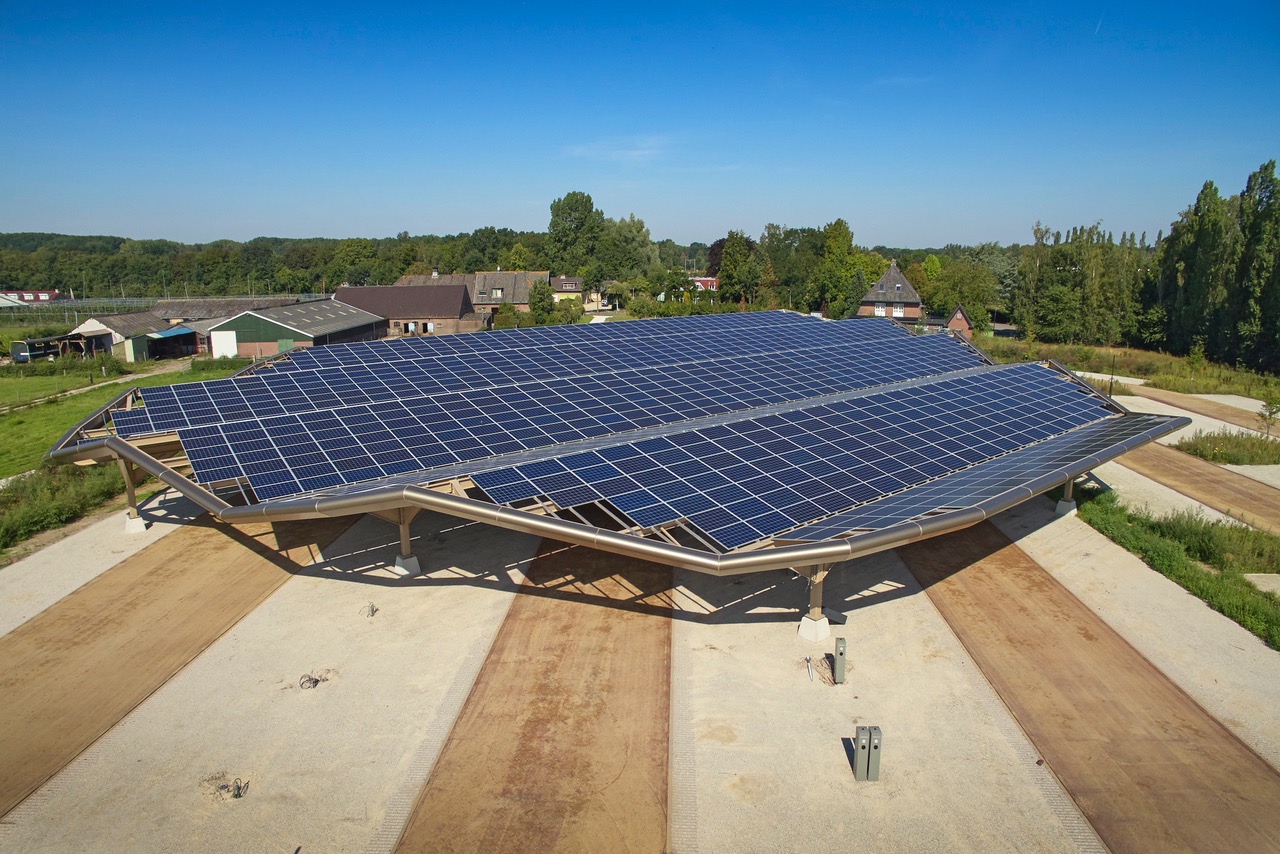
The PlaceTech article doesn’t go into any more detail than that but we certainly intend to, not least because the aerial view of the solar PV canopy reveals a number of electric vehicle charging stations that look identical to the one we have installed in our “wall to wall” V2G “living lab”:
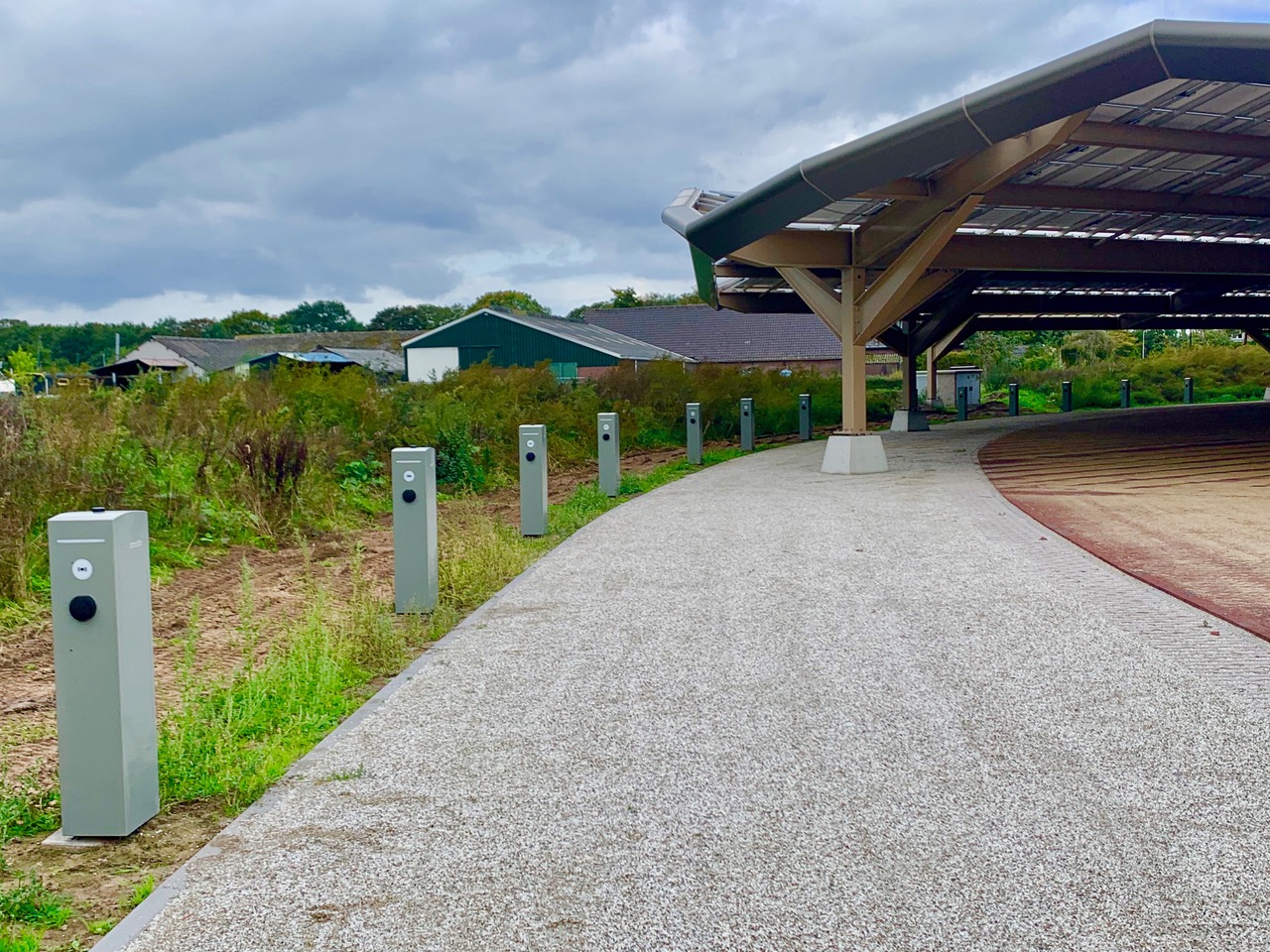
Taking a look at the new Triodos car park from ground level it becomes apparent that a large array of AC V2G capable charging stations are currently being installed, both under and around the solar PV canopy:
To find out more about what’s going on we’ve had to resort to Google Translate. According to a Dutch language article on the Triodos Bank web site from earlier this year:
The largest bidirectional charging plaza in the world is under construction at the new office building of Triodos Bank next to Driebergen-Zeist station. From this Autumn, 120 smart chargers will be able to store solar energy in the batteries of shared electric cars.
Triodos Bank have realised the project in close collaboration with developer EDGE Technologies and We Drive Solar. The bidirectional chargers are directly connected to 3,253 m² of solar panels and have a triple function. Electric cars can charge here. Cars whose battery is full enough can also supply power, so that the energy can be used in the office building or be fed back into the electricity grid.
Part of the plan is that Triodos Bank will replace its pool cars with 100% electric cars, so that they become part of the bidirectional charging ecosystem. Triodos Bank will investigate how, in addition to Triodos Bank employees, the residents of Zeist and the surrounding area can also use its shared electric cars. According to Triodos Bank director Matthijs Bierman “The plan fits in with our new ambitions in the field of sustainable mobility. We want to make car sharing as sustainable and attractive as possible. Not only for our employees, but also for the local community.”
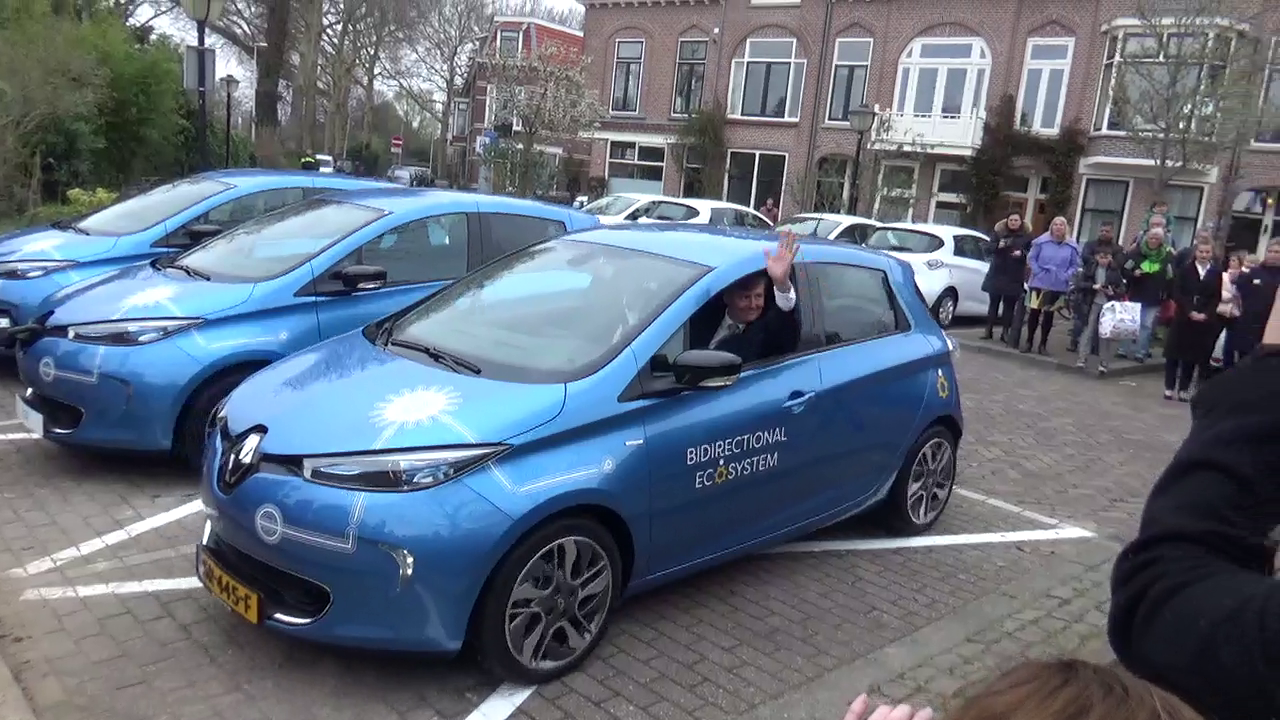
Now 120 AC V2G charging stations sounds amazing, but where are 120 or more AC V2G capable electric cars going to come from? I can help answer that question, since I attended the launch of the We Drive Solar bi-directional ecosystem in Utrecht earlier this year. According to Renault:
A fleet of fifteen Zoe vehicles with vehicle-to-grid charging will be introduced in Europe over the course of 2019 to develop our future offerings in reversible charging and lay the groundwork for the future standards —with our partners’ help. These pilot schemes will begin today in Utrecht (the Netherlands) in an ecosystem developed by We Drive Solar and on Porto Santo Island (in the archipelago of Madeira, Portugal) with Empresa de Electricidade da Madeira, an energy supplier. Following these, more pilot schemes will be introduced in France, Germany, Switzerland, Sweden and Denmark.
So that explains 15 prototype AC V2G capable Renault ZOE’s across Europe in 2019, but that’s a lot less than 120 in the Triodos car park! As far as I am aware Renault have not announced when V2G enabled ZOEs will go into production, but when ultimately they do Triodos Bank will be ready! In the meantime I’m sure that plenty of “smart charging” will be going on in Driebergen-Zeist and across the Netherlands
All in all the project sounds a lot like a combination of our “Camelford Electric Car Club” and “Static and Mobile Distributed Energy Storage” projects, albeit on a much grander scale! That probably explains this remark by Robin Berg of We Drive Solar to Bobby Llewellyn at the recent Fully Charged LIVE event at Silverstone in the summer?
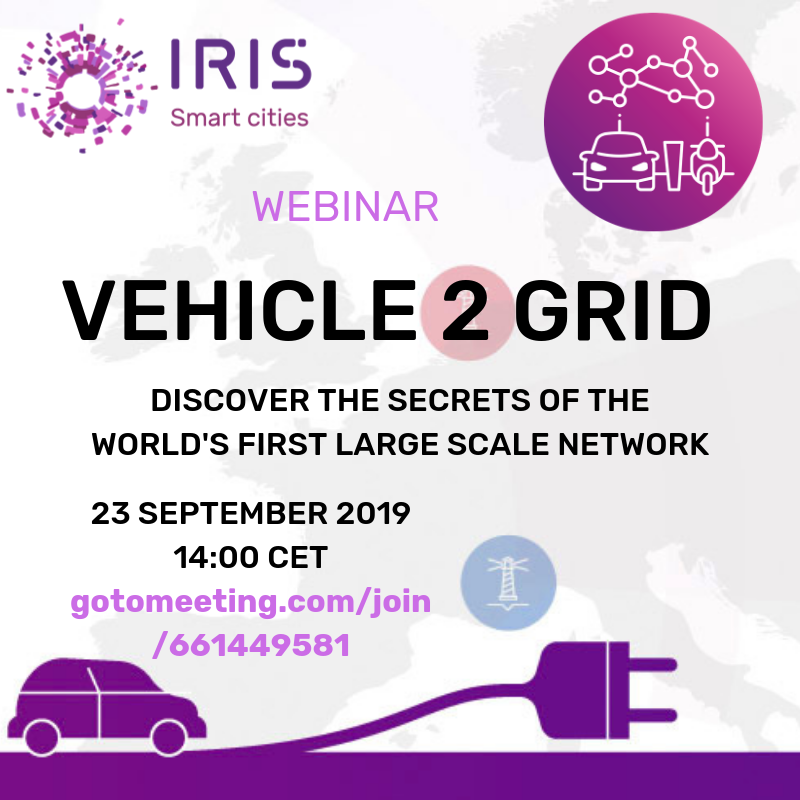
If you want to discover more about the We Drive Solar bi-directional ecosystem then please feel free to attend this webinar on September 23rd at 13:00 British Summer Time:
Regular readers with long memories may recall that way back when in November 2017 we here at V2G UK announced the launch of our Static and Mobile Distributed Energy Storage project? Those readers can no doubt imagine my surprise when I recently discovered an article by Sebastian Blanco in Forbes magazine announcing that:
There’s the grid, the evolving smart grid and then there’s no grid at all. That’s the paradigm that Tesla is exploring in a new patent application, Number 16/186390, which calls for controlling energy generation interactions (solar roofs, anyone? ) that bypass the electric grid.
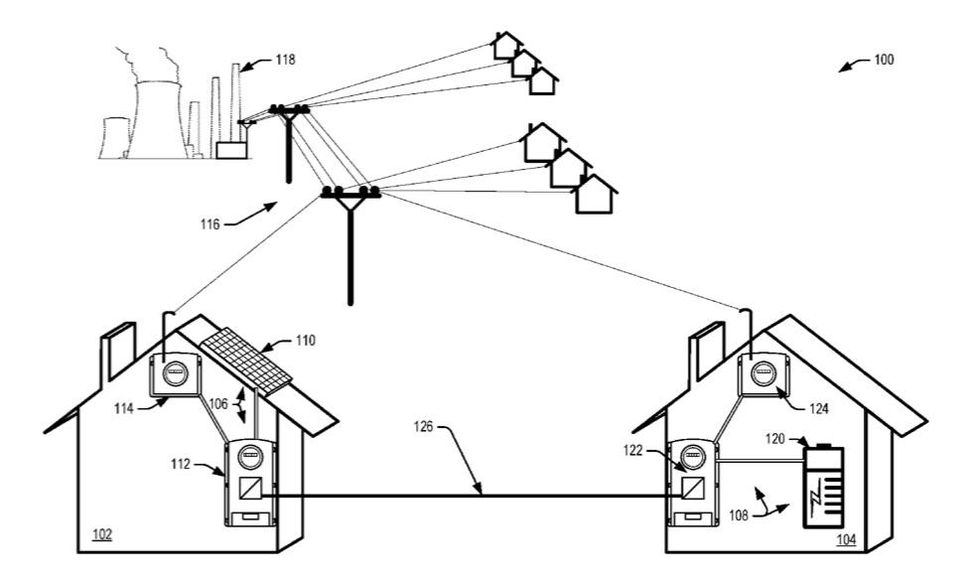
Here’s the monochrome graphic that Sebastian extracted from Tesla’s recent microgrid patent application:
To my way of thinking that’s remarkably similar to the left and central portions of the much more colourful “prior art” in the banner that’s been proudly displayed at the top of every page on this web site for many years now. Do you suppose that Elon Musk is an avid reader of the V2G UK web site? If so perhaps he first arrived here way back in 2014 when I took Tesla’s marketing mavens to task over their propensity to be “economical with the truth” concerning open source electric vehicles.
Tesla’s recent US patent application includes the following paragraph:
This application is a continuation application of U.S. patent application Ser. No. 15/153,037 entitled “ENERGY GENERATION INTERACTIONS BYPASSING THE GRID,” filed on May 12, 2016, which is herein incorporated by reference in its entirety for all purposes.
That seems to refer to this 2018 patent assigned to “SolarCity Corporation, San Mateo, CA”. Does the US patent office by any chance have a number to call to advise them of occurrences of “patenting the bleedin’ obvious”?
I don’t recall ever being quite so excited reading a press release. I’m afraid I’ve been far too busy here in the UK to travel to China this week to work on EV charging station standards, as I originally planned a few months ago. I’m still far too busy even to travel to the eMove360° conference and trade fair in Munich today. Which is something of a pity since I’d like to take a very close look at this device in the flesh, so to speak:
The Wallbox press release I’ve recently been reading contains a few interesting pieces of background information for we V2G watchers here in the UK, such as:
Research, technical development, product testing and manufacturing take place in Barcelona, where Wallbox has strong engineering resource and capacity to produce 100,000 chargers per year.
The company is Spanish but the brand is international. Wallbox operations are solely conducted in English. It began UK operations in September 2018.
not to mention:
Wallbox operates in 30 markets around Europe and overseas as far as New Zealand and China. Wallbox is partner to major automotive OEMs and energy companies. The company is approaching 20,000 installations across all markets and sees the UK as one of its most important growth opportunities. The company is 80-strong and growing, with over half of the workforce involved in software and hardware development. Many employees have made the transition from IT to automotive, coming from the likes of Apple and Tesla, which in part accounts for the unique design quality.
Moving on to Wallbox’s shiny new black box pictured above, let’s take a look at the basic specification first. According to the press release:
All Wallbox chargers are rated up to 22 kW, suitable for domestic and commercial installation and connect to the myWallbox energy management platform. This enables scheduling to take advantage of time and use tariffs, energy balancing between vehicle and the home, and a host of other easily accessible features. Wallbox chargers have connectivity through WiFi, Ethernet or Bluetooth.
Presumably that 22 kW applies to the DC black box as well in which case it can handle three phase, and if the entire Wallbox range can connect to an energy management system (EMS for short) somewhere in the clouds I’d like to take a very close look at all the other AC boxes as well! Sticking with DC for now though:
The new DC charger puts energy created and stored in the home, straight into the electric vehicle through a CCS or ChaDeMo connector. Home generation and storage are now becoming much more cost effective considerations as electric vehicle range and battery size increase and reduce ROI timescales.
The charger’s unique bi-directional power electronics reconcile the alternating (AC) and direct (DC) energy that flows between vehicle charging, rooftop PV generation or garden wind turbines, and home battery storage.
Wallbox are talking just the sort of language we like to hear when discussing our “Static & Mobile Distributed Energy Storage” (SaMDES) project, and they have even uttered the magic words “bi-directional power electronics”. This sounds like pukka vehicle-to-home capable kit, so the next obvious question from our North Cornwall perspective is “when will it start shipping to the UK?”
First sales are planned for mid 2019
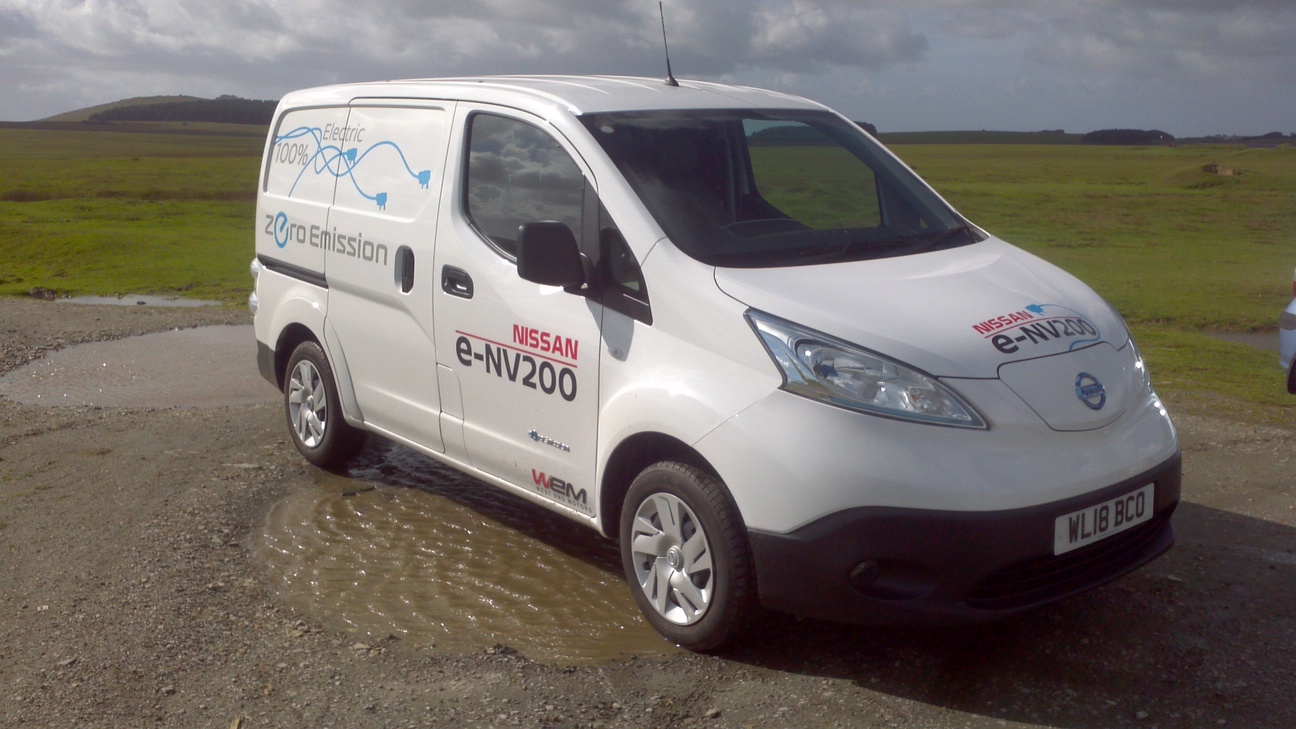
A minor disappointment there then, but yesterday I did manage to speak at length with Stewart Mckee who is Director of Wallbox UK. He assures me that the black box on display in Munich today isn’t just an empty shell. It is in fact “production ready”. That being the case I cannot wait to experiment with plugging one into the CHAdeMO connector at the front of one of Nissan’s new 40 kWh e-NV200 vans, which we test drove for three days following the recent Cornwall New Energy EV event in Wadebridge:
As if all that wasn’t exciting enough there’s more where that came from!
Wallbox is also making it easier to manage electric vehicle charging at home. The company is introducing software that allows spoken commands, and cognitive intelligence that learns about an owner’s charging behaviour and preferences, in order to predict optimum energy balance with home and grid.
This unique two-tier combination of software technologies means that you can speak directly to your home charging system and it will interpret your requirements in the most energy efficient manner. For instance, you can simply say: ‘I need my car fully charged for the morning’ and Wallbox will take care of the rest, with consideration for all other home energy demands during the same period of charging.
The ability for Wallbox software to automatically manage charging in this way adds another smart layer to dynamic load balancing between between vehicle and the home, and vehicles parked in the same area.
Please forgive me, but after all that excitement I need to go and lie down now. However make sure to watch this space, because we’re hoping to have a chat with Wallbox’s CEO Enric Asunción real soon now.
MMC already has 28 showrooms throughout Japan which have solar panels and the ability to use an electric vehicle’s battery power as an emergency power source, via a Vehicle-to-Building (V2B) charger. However the new Omiya “Hyper Energy Station”, opened this week in Saitama City, has also been fitted with its own lithium-ion battery packs to provide substantial power back up to the local electricity grid.
Saitama City has partially subsidized the cost of the facilities and the dealership has been designated a Next-generation Automobile & Smart Energy Special Zone by the Japanese government. The Omiya showroom, run by the Kanto Mitsubishi Motors Sales Group, is the fourth private facility and the first automobile dealer to adopt the system.
Featuring lithium-ion batteries with a capacity of 12kWh, the building can supply power for recharging electric vehicles (EV) in the event of a natural disaster or power outage, when normal power supplies are cut off. EVs have played a key role in transporting people and good in previous emergencies in Japan, when conventional fuel supplies have been severely disrupted.
Here’s an artist’s impression of the combined “Static and Mobile Distributed Energy Storage” (SaMDES for short) unit:
Apart from the new hardware that combines both static and mobile lithium ion battery storage Mitsubishi also pointed out that:
MMC has already opened 28 “DENDO Drive Station” showrooms across Japan, all featuring solar panels and V2B charging stations. It plans to increase this number to 200 by 2020.
In addition to charging vehicles, V2B allows the EV’s battery to provide power to the building in times of high demand or an emergency. The building will then switch to charging the car at times of low grid demand, or when renewable energy production is at a peak. This has major benefits for the grid and provides cheaper, sustainable power for the EV owner.
Nissan Energy Solar is the all-in-one solution that combines world-class residential solar panels with energy storage system to make the most of UK homes.
The solution has been designed to allow UK homeowners to reduce their energy bills and get more independence from the grid, allowing them to live more sustainably.
Traditionally, solar energy has been used to power home appliances during the day, but now with Nissan Energy Solar householders can collect and store the excess energy from their solar panels and use it during the night – even to charge their Nissan LEAF and e-NV200 – and on cloudy days.
Nissan launches Nissan Energy Solar: the ultimate all-in-one energy solution for UK homes
The accompanying image shows an xStorage static battery on the garage wall, but no electric vehicle is to be seen. No mention is made of discharging said absent electric vehicle, so Nissan’s new offering only delivers part of the functionality implied by our artist’s impression of our SaMDES project displayed at the top of the page.
The press release continues:
Francisco Carranza, Managing Director, Nissan Energy, Nissan Europe says ‘Solar panels have become the world’s fastest growing source of new energy and we’re thrilled to launch Nissan Energy Solar in the UK. Over 880,000 UK homes already have solar panels installed and they are seeing the benefits every day, from decreasing electricity bills to increasing property values.’
‘Nissan Energy Solar is just one step in supporting our commitment to investing in innovative energy solutions for a more sustainable future and intelligent way of living.’
The new product also includes a home energy management system that will allow users to control how and when they want to use their energy in real time as well as making the entire energy system more efficient and sustainable. The system reduces energy costs and carbon footprint for homeowners significantly, by automating energy flows, purposefully utilizing solar production peaks and storage capacities.
Nissan Energy Solar solution will start at £3881**.
Here’s the small print:
**Includes the supply and installation of a six panel solar system, Home Energy Management system, and VAT at 5%.
The xStorage unit shown in the garage obviously adds to that price, as would upgrading to the “most efficient” or “sleek integrated” solar PV panels. The product web site merely states “On sale soon” and provides no additional pricing information as yet.
The UK’s new “Industrial Strategy” was published last week. The last time we had a good look at UK plc’s strategy was three years ago, when we concluded that “it rather sounds as though ‘Storage to Grid’ (or S2G for short) is a more likely prospect here in the United Kingdom than fully fledged V2G”. So how about this year?
The foreword by Greg Clark, Secretary of State for Business,Energy and Industrial Strategy (or BEIS for short), states that:
This Industrial Strategy deliberately strengthens the five foundations of productivity: innovation, people, infrastructure, places and the business environment.
At the very least “innovation” and “infrastructure” sound like the sort of things we get up to here at V2G UK. Here’s how Gov.UK visualises our future infrastructure:
Moving on, Greg continues:
As well as setting a path to improved productivity, our Industrial Strategy sets out four areas where Britain can lead the global technological revolution. These four Grand Challenges – in artificial intelligence and big data; clean growth; the future of mobility; and meeting the needs of an ageing society – have been identified on the advice of the our leading scientists and technologists. They will be supported by investment from the Industrial Strategy Challenge Fund and matched by commercial investment.
There’s a video explaining the ISCF:
There’s even a video summarising each of the Grand Challenges. Electric vehicles get a mention in the one about mobility:
https://youtu.be/wlqQRp5vhOU
We’ve previously touched on the Government’s new “clean growth” strategy on the V2G blog, and obviously we’re inordinately interested in the “future of mobility”, so there really should be something of interest to us in the 131 page white paper. Let’s delve a little deeper shall we? Under the “infrastructure” heading we’re told that:
Our approach is to undertake a comprehensive package of measures to promote the uptake of zero emission vehicles. We have announced a further £100m for the plug-in car grant to incentivise the purchase of battery electric vehicles, and we are committing to 25 per cent of the cars in central government department fleets being electric by 2022. We are announcing an additional £200m of public investment, to be matched by private investment, to create a new £400m Charging Infrastructure Investment Fund, and we will regulate to support further expansion of the charging infrastructure network.
After the Grenfell Review, we will update building regulations to mandate that all new residential developments must contain the enabling cabling for charge-points in the homes. We will also provide £40m to support new technologies for on-street and wireless charging.
All of which sounds like very good news for our SaMDES project which envisages installing static battery storage and V2G charging stations in homes and small businesses across the South West of England. The news gets even better! A little further on we discover:
The zero emission road transport strategy, to be published in the coming months, and work on the options for the long-term decarbonisation of heating will build on this. They will support the growth of markets for technologies that create synergies between systems, such as energy storage, smart meters, vehicle-to-grid charging and heat networks.
Will the sweet music to our ears never stop? Not for the moment at least. Next we discover that:
We are determined to tackle air pollution and support affected areas, given the significant negative impact it has on public health, the economy and the environment. We will provide £220m for a new Clean Air Fund that will allow local authorities in England with the most challenging pollution problems to help individuals and businesses adapt as measures to improve air quality are implemented. This new fund is in addition to the £255m provided to implement the Air Quality plan earlier this year.
That sounds like more potential assistance for Camelford due to the town’s Air Quality Management Area status. Moving on once more, regular readers will be aware that we are proponents of energy efficiency. “Negawatts not Megawatts!” we cried when the predecessor to BEIS pulled the plug on zero carbon homes a couple of years ago. Will they make amends now? Unfortunately not really. There are a couple of sentences to the effect that:
In the more immediate term, energy efficiency and reforms to the retail energy market will provide the opportunity to lower bills. Up to £6bn could be saved in 2030 through investment in cost effective energy saving technologies in the industrial and commercial sector.
We will encourage greater investment in energy efficiency measures and technologies, including by developing a new scheme to support investment in industrial energy efficiency, to help large businesses install measures that will cut their energy use and bills, as we as improve their productivity.
Plus there’s:
We want to support greater collaboration between councils, a more strategic approach to planning housing and infrastructure, more innovation and high quality design in new homes and creating the right conditions for new private investment.
From where I’m sat I’m afraid that’s not a patch on “the proposed 2016 increase in on-site energy efficiency standards” that bit the dust in 2015. The white paper contains some great news if you’re into decarbonising transport, as we most certainly are. However unfortunately reducing the energy wasted by the UK’s poorly insulated housing stock, both old and new, still seems to be very much on UK plc’s back burner.
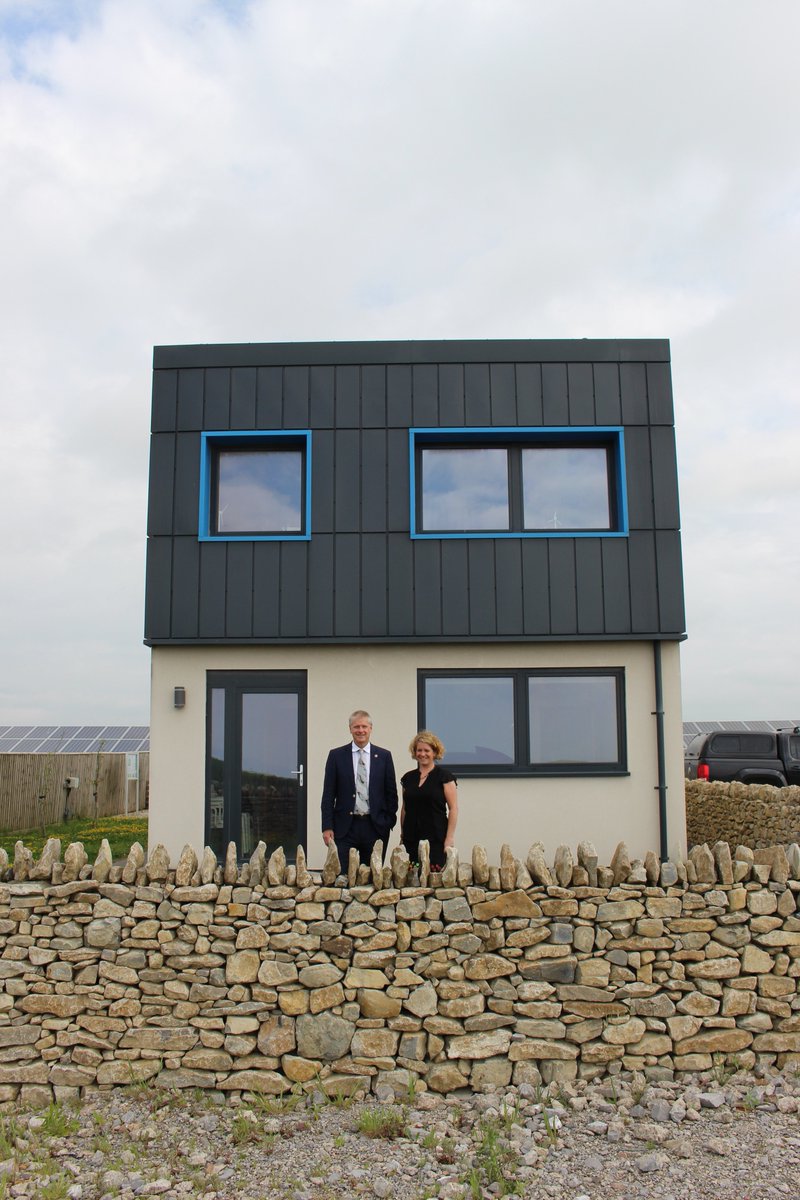
It seems as though we still have a long wait in store before homes like this will be constructed as a matter of urgency:
Our roadmap didn’t call for this announcement just yet, but on Autumn 2017 budget day Philip Hammond, the Great British Chancellor of the Exchequer, had this to say:
Some good news in #Budget2017 for #EV charging infrastructure, if not necessarily for #V2G. "We'll establish a new £400m charging infrastructure fund, invest an extra £100m in the plug-in car grant and a further £40m in charging R&D" @FSBCornwall@scottmann4NC @clairehewlett62
Nissan Motor Parts Center in Europe is the first company in the Netherlands to make its roof available to others for the production of sustainable energy on a large scale. The electricity generated is sufficient for the power consumption of 900 households. The first section becomes operational at the end of February. The project will be fully completed in May.
With the installation of this immense solar roof, Nissan is taking a further step toward its strategy focusing on Intelligent Mobility, with sustainable energy as one of its cornerstones.
“This project is perfectly suited to Nissan’s endeavors to make mobility smarter and more sustainable,” said Koen Maes, managing director Nissan Benelux (Belgium, Netherlands and Luxembourg). “That’s why we are working on sustainable energy production and on projects such as energy storage in used batteries – vehicles which return energy to the network and car sharing. The solar roof is one of the cornerstones.”
That’s pretty much the way we see things too, and after a couple of false starts over the years the team here at V2G UK decided to accelerate our plans:
Here are some other things that have been happening on Twitter over recent days:
In case it’s not yet obvious to you, our Static and Mobile Distributed Energy Storage project roadmap includes rolling out just the right sort of V2G capable electric vehicle charging station for our purposes. My personal Twitter profile reads as follows:
I’ve been programming computers since the late 60s. We had to build our own! Now what can I program next? Will I have to build it first?
It looks as though the answer to that question is YES!