General Motors Announce V2H Pilot Project

A number of commenters on Twitter are getting very excited about an announcement from General Motors earlier today. Here’s GM’s Mary Barra and PG&E’s Patti Poppe talking with Phil LeBeau on CNBC’s “Squawk Box”:

As Mary says to Phil:

Bi-directional charging will help when there’s a power outage or additional demand, to really help supply energy and keep everybody having the energy they need to live their lives.

Phil suggests:

What you guys are talking about doing is making smart vehicles and a smart grid, where the communication happens and I don’t need to be involved. Correct?

Patti responds:

Automatically! There’s like this value stack for electric vehicles that I don’t think people fully appreciate yet. The first is obviously decarbonising transportation, number one and everybody gets that. And it’s a great driving experience. But then you stack on the resiliency play because of the effects of climate change, and then on a peak summer day imagine being able to leverage the fleet of electric vehicles. In California, in fact in my service area alone, one in five electric vehicles sold in America are in my service area, so we can really deploy them to power homes and to enable the grid.

In the accompanying press release General Motors reveal that:

Pacific Gas and Electric Company and General Motors today announced a breakthrough collaboration to pilot the use of GM electric vehicles as on-demand power sources for homes in PG&E’s service area.

PG&E and GM will test vehicles with cutting-edge bidirectional charging technology that can help safely power the essential needs of a properly equipped home. EVs play a critical role in achieving California’s goals for reducing greenhouse gas emissions and already provide customers with many benefits. Bidirectional charging capabilities add even further value by improving electric resiliency and reliability…

Skipping to the “How the pilot will work” section of the news release GM explain that:

PG&E and GM aim to test the pilot’s first vehicle-to-home capable EV and charger by summer 2022. The pilot will include the use of bidirectional hardware coupled with software-defined communications protocols that will enable power to flow from a charged EV into a customer’s home, automatically coordinating between the EV, home and PG&E’s electric supply. The pilot will include multiple GM EVs.

Following lab testing, PG&E and GM plan to test vehicle-to-home interconnection allowing a small subset of customers’ homes to safely receive power from the EV when power stops flowing from the electric grid. Through this field demonstration, PG&E and GM aim to develop a user-friendly vehicle-to-home customer experience for this new technology. Both teams are working quickly to scale the pilot with the goal of opening larger customer trials by the end of 2022.

It seems as though Mary, Patti, Phil et al. are blissfully unaware that pilot projects involving V2H/V2G and several hundred electric vehicles have been under way here in the United Kingdom since 2018.

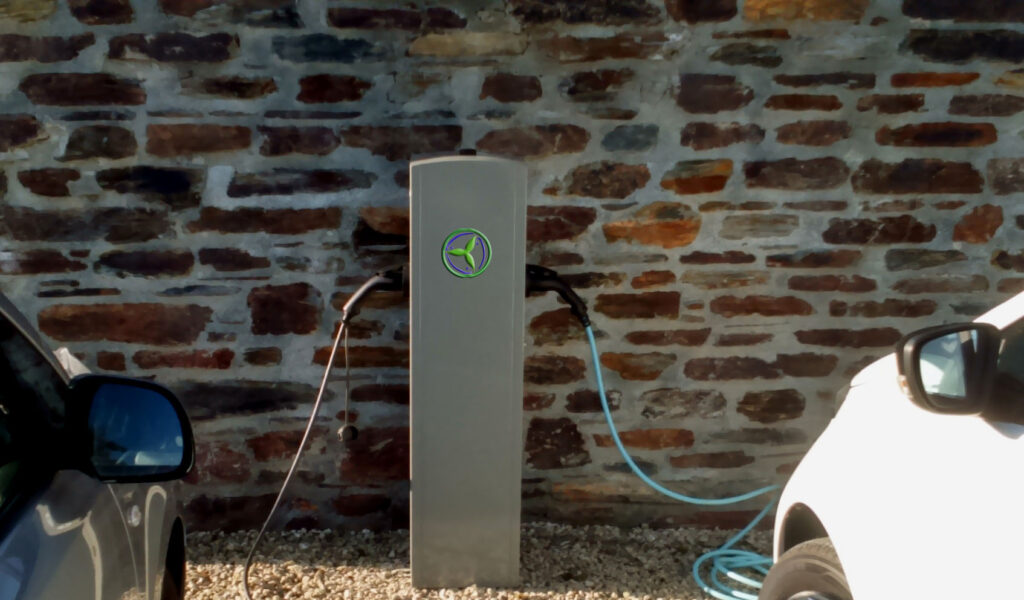
We have even been running a “cutting-edge bidirectional charging technology” project in our very own car park here in wild and woolly South West England for the last couple of years:

For a more detailed overview of the UK pilot projects referred to above please download the presentation available at our sister web site:

“UK ‘Domestic’ V2G and DSR Trial Projects”

V2H on the VW ID. Buzz Surf Bus!

In a press release earlier today VW announced that:

The world premiere of the ID. BUZZ concept car at the Detroit Motor Show in January 2017 triggered a sensational response around the globe. The positive feedback made only one decision possible: the concept car had to be transferred to full production. Five intensive years of development work followed. Now the time has come: the ID. Buzz – an electric motoring game-changer – is ready. Volkswagen is therefore activating the countdown for a double world premiere: on 9 March, the all-electric Bulli will be simultaneously taking off emission-free as the ID. Buzz (5-seater) and Buzz Cargo (van).

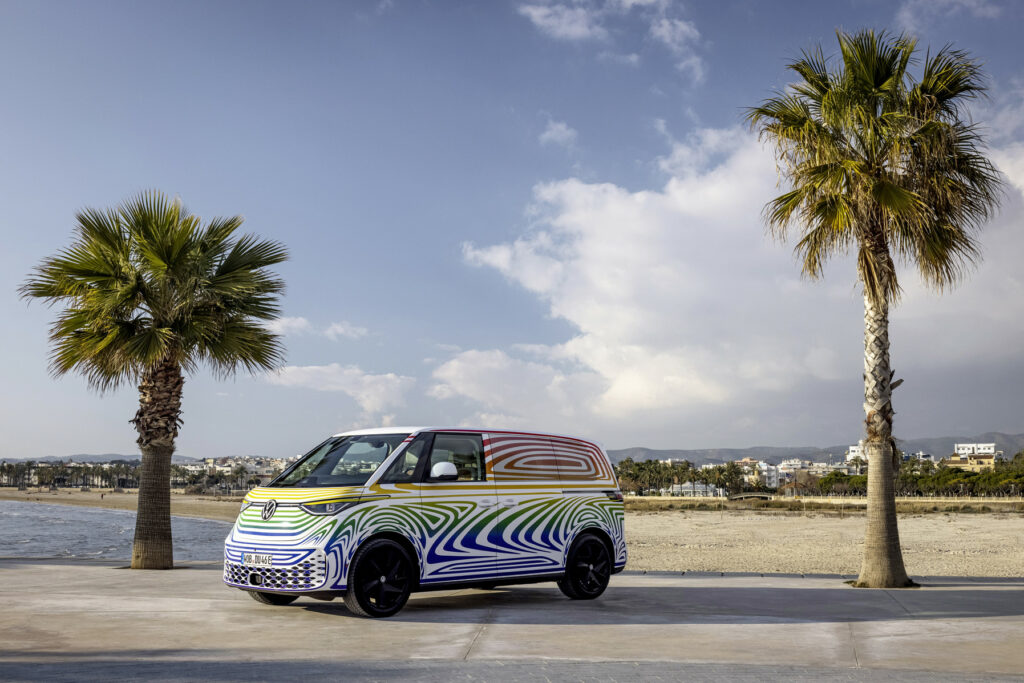
The ID. Buzz in Barcelona


The ID. Buzz looks like the iconic electric surf bus for the 2020s and beyond?

Not having had a chance to test drive the Buzz ourselves as yet, here for your delectation is Jonny Smith’s initial review on his Late Brake Show .

By all means rewind to the start and watch the entire video, but I’ve chosen to look first at the section captioned “Bi-directional charging”:

According to Markus Arand, head of brand and product communications at VW Commercial Vehicles:

When you have solar panels on your home, for example, this car will be able to have a thing called bi-directional charging. You can give the energy from the ID. Buzz back to your home. This is the combination we are talking about.

The other technical innovation of particular interest to yours truly, since I sit on the international standards committee that developed it, is that the ID. Buzz evidently supports the ISO 15118-20 communications protocol between the EV and the charging station. The resulting ability to “Plug & Charge” without messing around with plastic cards or dodgy apps is mentioned at 25:46 in Jonny’s video.

The Buzz “data sheet” doesn’t mention its vehicle-to-home capability, but does include the following information:

Important dates

• World premiere: 9 March 2022

• Start of production ID. Buzz Cargo: first half of 2022

• Start of production ID. Buzz: first half of 2022

• Market launch in Europe: autumn 2022

Here at V2G UK we await more technical details about the Buzz’s V2H capabilities with barely bated breath! A test drive to the seaside would also be much appreciated. And also a bit of vehicle-to-home interoperability testing in our suitably equipped car park:

Lisa our Nissan LEAF also cannot wait to meet Buzz. She gets very lonely at times:


Ford Announce F-150 Lightning with V2H

In a press release yesterday Ford announced that the:

F-150 Lightning with available Ford Intelligent Backup Power can provide power and security during an electrical outage – the first electric truck in the U.S. to offer this capability; in the future, new features will offer additional ways to manage energy use and potentially save on energy costs.

Truck owners are used to tapping a variety of features – torque, towing capability and more – to get things done. Now, with the all-electric F-150® Lightning™ pickup, Ford is the first in the U.S. to offer the ability for customers to power their homes with an electric truck when the grid goes dark, providing innovative new capabilities that enhance the energy independence of its customers.

Ford and F-Series, America’s best-selling trucks for 45 years*, are partnering with Sunrun, the nation’s leading solar company, to enhance home energy management, leveraging the substantial onboard battery capability of the all-electric F-150 Lightning. Americans experienced the most power interruptions on record in 2020, according to the U.S. Energy Information Administration; and with F-150 Lightning, homeowners can use their truck to maintain their routines during brief or extended outages.


The press release was accompanied by this video:

https://youtu.be/oc3sQ2UcTlg

As the narrator puts it:

What if the next time the power went out, your pickup truck could
electrify your home

A very good question! Which we here at V2G UK have been pondering for many a year.

Note that the narrator also points out that:

You’ll need a Ford Charge Station Pro, which comes with an F-150 Lightning Extended Range truck, and an available home integration system….

[Edit – February 12th]

Siemens have announced that:

Siemens Smart Infrastructure announced it has worked with Ford on the Ford Charge Station Pro, a custom electric vehicle (EV) charger for the Ford F-150 Lightning. This innovative charger is the first bidirectional-ready EV solution set for release at retail customer scale to receive certification under the newly expanded Underwriters Laboratories (UL) 9741, an important industry-wide benchmark that ensures products meet safety standards. The new charge station also features a peak power of 19.2kW, achieving the maximum power rating currently available for a Level 2 charge station.

The Ford Charge Station Pro is needed to enable Ford Intelligent Backup Power, a system that allows the Ford-150 Lightning to become an interactive part of the home and be used as a power generation source during outages, the first electric truck to do so. In the future, additional features will be made available with firmware updates to the charger that will help customers interact even further with the grid. 

“Together with Ford, Siemens is not only helping accelerate electric vehicle adoption in the residential space but is also empowering drivers to take more ownership of their energy future,” said John DeBoer, head of Siemens eMobility in North America. “The technology behind this charger is helping make charging at home more sustainable, more reliable, and more accessible. We’re incredibly proud to put our experience to work to help usher in a new era for electric vehicles and grid resiliency.” 

[Edit – March 1st]

Ford have announced pricing for their Charge Station Pro:

Ford Charge Station Pro comes with the F-150 Lightning with extended-range battery. If your F-150 Lightning has a standard-range battery, it is available for purchase:

Price: $1,310.00 (plus shipping and installation)

As far as I can see there are no details available on the “home integration system” mentioned above.

P.S. It has come to our attention that at least one purveyor of EV “news” is peddling inaccurate information. Hence:

[Edit – September 2024]

Earlier this year I was on a couple of panel sessions on the topic of V2x technology at the Everything Electric NORTH event in Harrogate. Whilst there I took a look at the
F-150 Lightning on show in the exhibition hall. Until now I have remained blissfully unaware that Everything Electric’s Robert Llewellyn recorded this exceedingly interesting interview with Ford CEO Jim Farley at the end of the previous year’s Fully Charged LIVE show in Harrogate:

Note in particular the part at 15:20 where Jim says:

The F-150, the main reason why people are buying the F-150, more than half the customers are new to a full size truck, is because it can power their house for 3 days. We didn’t know that a mobile battery on a work site was going to be that evocative as a reason to buy a vehicle. We thought it was going to be 0-60 4 seconds. We were wrong. So the exportable power turns out to be the main reason people are excited about the Lightning.

Watch this space!

Toyota Announce bZ4X 100% BEV, with V2L!

You could argue that Toyota’s recent launch of a 100% battery, non hybrid, electric vehicle was worthy of an article on this web site, but what with one thing and another we had more important things to write about. However that has now changed!

“First of all here’s the UK version of the bZ4X “world premiere” press release from October 29th, which states that:

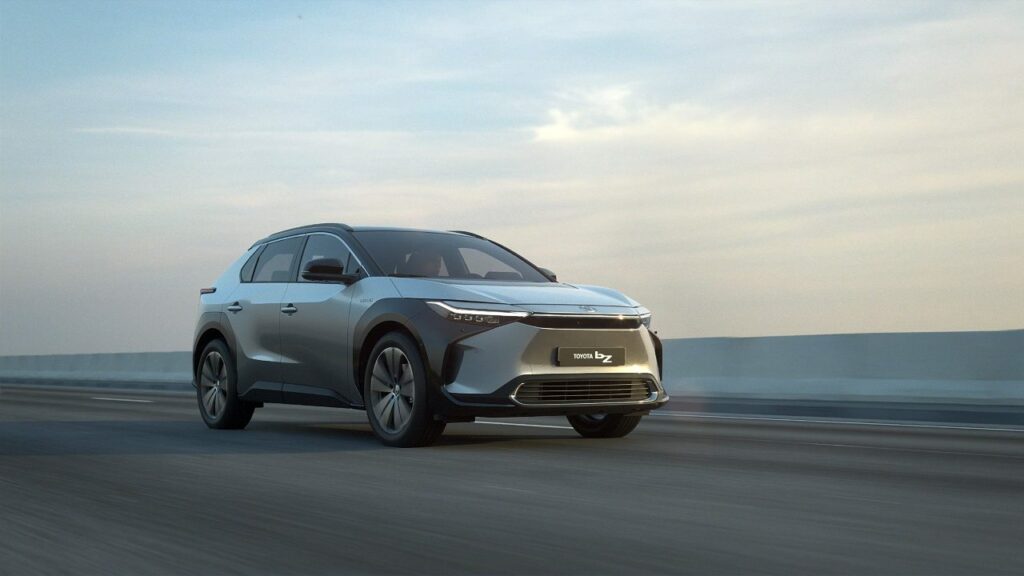
Today, Toyota presents the world premiere of the all-new bZ4X, the first model in a new series of bZ – beyond Zero – battery electric vehicles (BEVs).

Faithful in its design and technology to its concept predecessor, revealed earlier this year, the production-ready bZ4X is the first model to be developed by Toyota entirely as a BEV. It is also the first car to be built on the company’s new dedicated BEV platform. Based on e-TNGA philosophy, this has been co-developed by Subaru and Toyota.

Incorporating the battery unit as an integral part of the chassis, beneath the vehicle floor, it gives the fundamental benefits of a low centre of gravity, excellent front/rear weight balance and high body rigidity for high levels of safety and ride and handling quality…

With a fully charged battery, expected range is more than 280 miles (depending on version, exact data to be confirmed later). The bZ4X will also offer advanced technology features, including a solar panel roof to help charge the battery while driving or parked, and third generation Toyota Safety Sense with new and improved active safety and driver assistance systems.

The bZ4X will have its European premiere on 2 December; customers who want to be among the first to obtain the new model will be able to place a reservation via the Toyota.co.uk website from 15 December.

The “European premiere” press release on December 2nd added a range of additional information, including:

Toyota has drawn on almost 25 years’ experience in electrified vehicle battery technology to ensure the new lithium-ion unit in the bZ4X has world-leading quality, durability and reliability. Its confidence in the technology is reflected in an extended care programme that guarantees the battery will still operate to 70 per cent of its original capacity after up to 10 years of ownership or one million kilometres driven, subject to the customer taking their vehicle to an authorised Toyota service centre for an annual health check. To ensure this guarantee could be offered, Toyota developed the battery with a target of 90 per cent of capacity retained after 10 years/240,000 km.

This level of quality and performance is supported by multiple monitoring of the battery’s voltage, current and temperature, from individual cell level. If any abnormal heat generation is detected, controls are automatically triggered. Countermeasures have been put in place to mitigate any material degradation, and there are safeguards in the manufacturing process to prevent foreign matter from entering the battery. In a Toyota first, the battery is water-cooled.

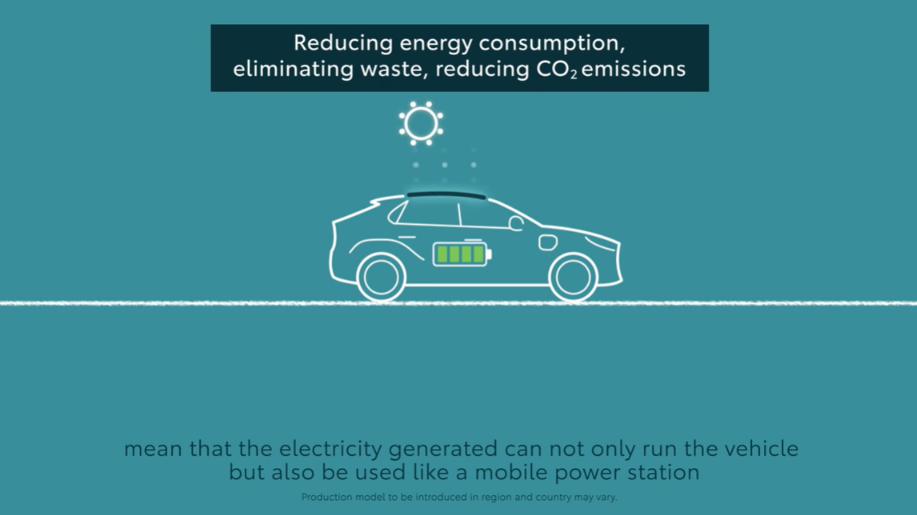
All very interesting of course but still no mention of any mechanism for discharging the bZ4X’s water cooled battery to the outside world. Until now that is! Earlier today my attention was drawn to the Toyota Global bZ4X launch video:

https://youtu.be/d9qp2eoOWCk?t=230

On board solar panels included with the bZ mean that the electricity generated can not only run the vehicle but also be used like a mobile power station in emergencies and in outdoor activities.

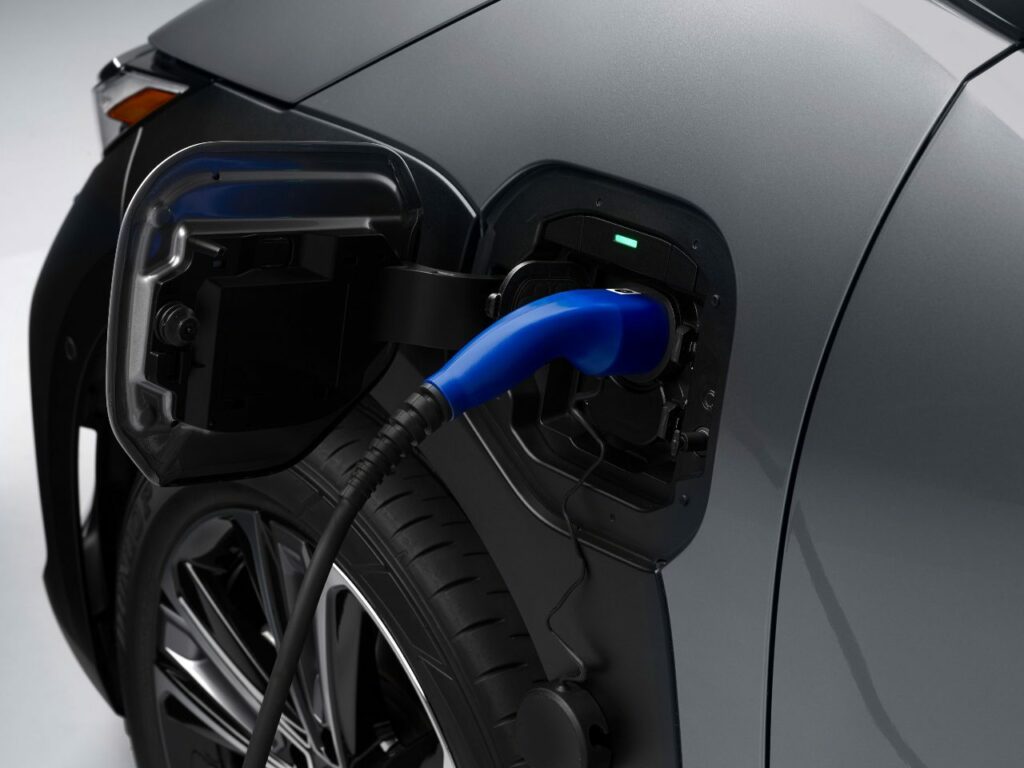
Which sounds an awful lot like V2L to me! Close inspection of the associated
press release
reveals the following information:


Roof solar panel (specially equipped vehicles)

Generates electricity equivalent to 1,800 km of driving distance per year (in-house estimate), contributing to superb cruising range. Can charge in parking lots where there are no charging stations, and solar power can be used to charge in disasters or other emergencies.

DC external power supply function (Japanese specifications)

Can connect to a power feeder to supply high-output electricity to homes and home appliances for outdoor activities, and during disasters and other emergencies.

When used with home solar power generation, solar power can supply electricity to the house in the daytime, surplus electricity can be used to recharge the vehicle via a power feeder, and electricity stored in the vehicle can be used to power the home at night.

The bZ4X is scheduled for launch in all regions from mid-2022.

Which is extremely interesting, because unlike other V2L/V2H capable EVs that have been announced recently this one seems to claim that it offers a “high-output DC” rather than a “low-output AC” feed:

However be sure to read the (very) small print. Only in Japan by the sound of it.

Watch this space!

Audi & Hager Group Research V2H

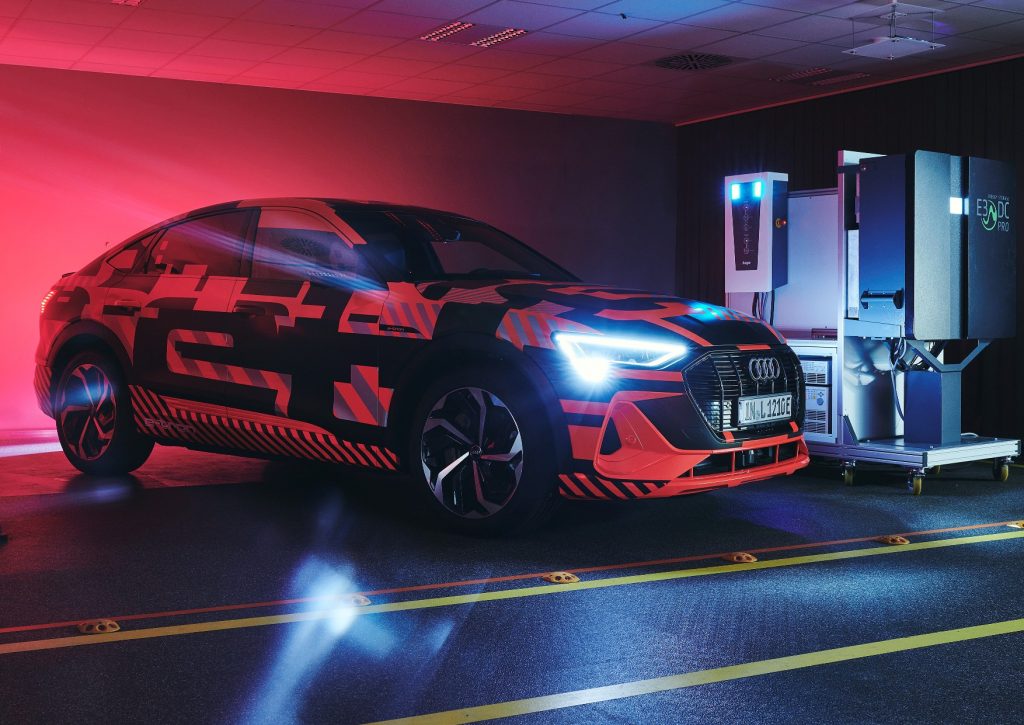
Without even mentioning the term vehicle-to-grid Audi announced in a press release last week that:


Increasing network stability, lowering electricity costs, and contributing to climate protection – that is the vision that Audi and the Hager Group are pursuing. The incorporation of the electric car into the domestic grid is at the core of an innovative research project on bidirectional charging. This offers major advantages in combination with a photovoltaic system in particular. Excess PV electricity can be stored temporarily and output as needed.

Audi has committed to the objectives of the Paris Climate Agreement and is working on making its vehicle fleet CO2-neutral by 2050. In order to achieve this aim, the brand with the four rings is pursuing a broad electric offensive that involves launching around 20 fully electric models by 2025. And not only that: The electric car is to evolve into part of an increasingly broad mobility offer and become an element of the sustainable energy transition.

Electric cars as part of the energy transition

The press release does however mention a slightly less familiar three letter acronym:


The idea is as simple as it is genius: The high-voltage battery of the electric car not only is charged via the wall box at home but can also supply energy back to the house as a decentralized storage medium. If the customer has a photovoltaic system, the electric car serves as a temporary storage medium for the domestically generated eco-electricity. When the sun is no longer shining, the vehicle can supply the stored electricity back to the house. Bidirectional charging at home – also known as Vehicle to Home (V2H) – has great potential to reduce the home owner’s electricity costs and increase network stability. As a further expansion stage in combination with a home storage unit, it is possible to achieve near complete energy independence and increased security of supply in the event of a blackout. “Using the battery of electric vehicles to contribute to climate protection while lowering electricity costs at the same time is a vision that we have found fascinating since the very beginning. And we have found an ideal partner in Audi,” explains Ulrich Reiner, project manager at Hager Group.

We are very pleased to hear Audi state that “The idea is… genius “, since we put our “artist’s impression” of our “Static and Mobile Distributed Energy Storage” (SaMDES for short) concept in the banner at the top of every page on the V2G UK web site over 7 years ago!

Audi explain our V2H genius in greater detail in slightly stilted English as follows:

What sounds simple in theory requires a high level of technical intelligence and coordinated interaction between different technical components in terms of infrastructure and in the vehicle in practice. An Audi e-tron with near-series charging technology was used in the research project. In the test grid, the fully electric Audi model operated with a DC wall box, which enables a charging capacity of up to 12 kW, and a flexibly extendable home storage unit with a capacity of 9 kWh. While it could provide additional flexibility in possible series production, it is not a necessary requirement for bidirectional charging. Thanks to the DC voltage level in the overall grid, the connection between the PV system and the vehicle does not require an inverter and is thus a particularly efficient solution.

One thing Audi and Hager have done that we hadn’t quite managed to get around to just yet is to create a video that explains our SaMDES concept in an approachable way and set to music. Here it is:

Do you suppose that given all their resources Audi will eventually catch up with us?


Wallbox Announces the “First ever DC charger for the home”

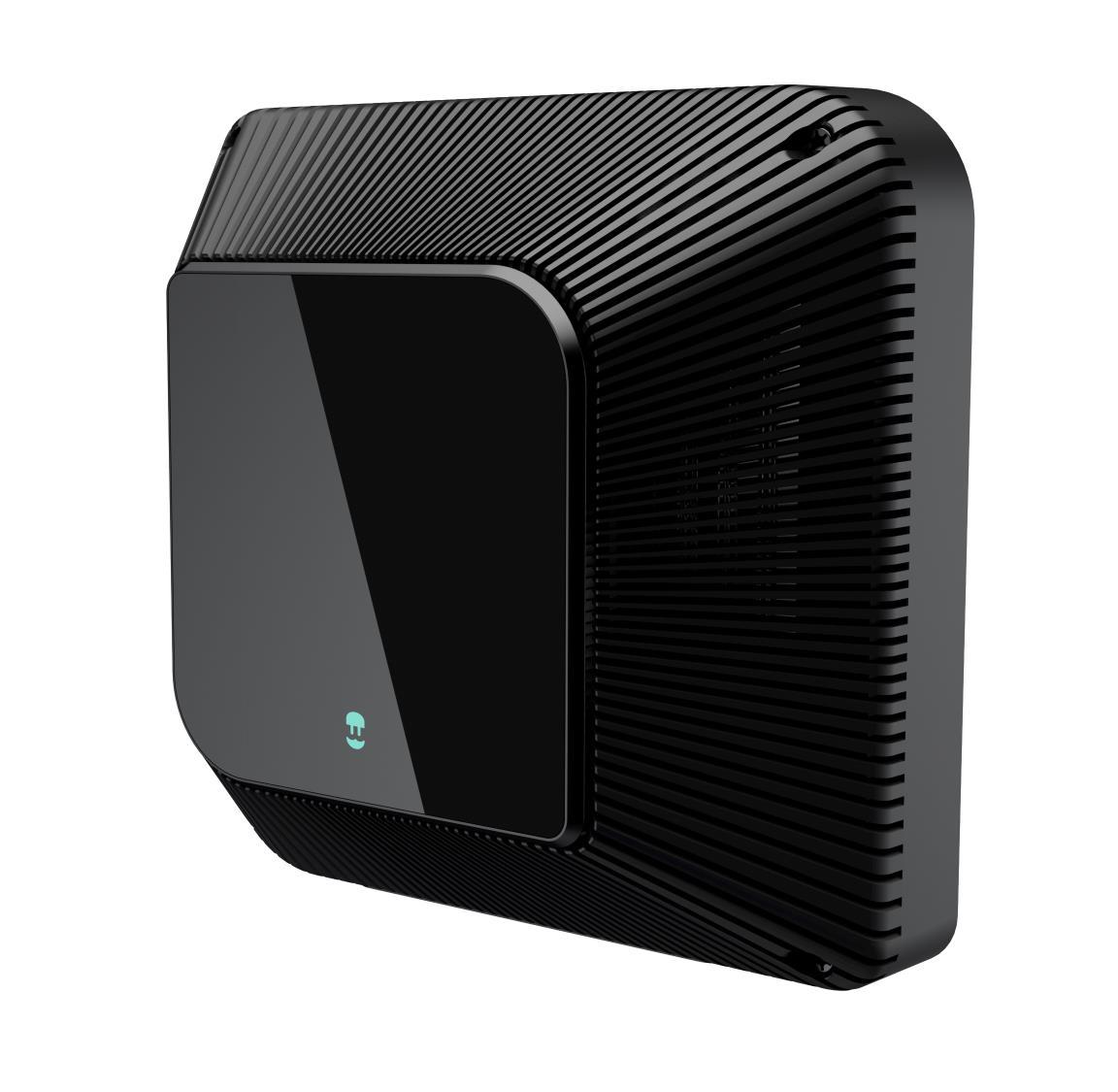
I don’t recall ever being quite so excited reading a press release. I’m afraid I’ve been far too busy here in the UK to travel to China this week to work on EV charging station standards, as I originally planned a few months ago. I’m still far too busy even to travel to the eMove360° conference and trade fair in Munich today. Which is something of a pity since I’d like to take a very close look at this device in the flesh, so to speak:

DC-Wallbox

The Wallbox press release I’ve recently been reading contains a few interesting pieces of background information for we V2G watchers here in the UK, such as:

Research, technical development, product testing and manufacturing take place in Barcelona, where Wallbox has strong engineering resource and capacity to produce 100,000 chargers per year.

The company is Spanish but the brand is international. Wallbox operations are solely conducted in English. It began UK operations in September 2018.

not to mention:

Wallbox operates in 30 markets around Europe and overseas as far as New Zealand and China. Wallbox is partner to major automotive OEMs and energy companies. The company is approaching 20,000 installations across all markets and sees the UK as one of its most important growth opportunities. The company is 80-strong and growing, with over half of the workforce involved in software and hardware development. Many employees have made the transition from IT to automotive, coming from the likes of Apple and Tesla, which in part accounts for the unique design quality.

Moving on to Wallbox’s shiny new black box pictured above, let’s take a look at the basic specification first. According to the press release:

All Wallbox chargers are rated up to 22 kW, suitable for domestic and commercial installation and connect to the myWallbox energy management platform. This enables scheduling to take advantage of time and use tariffs, energy balancing between vehicle and the home, and a host of other easily accessible features. Wallbox chargers have connectivity through WiFi, Ethernet or Bluetooth.

Presumably that 22 kW applies to the DC black box as well in which case it can handle three phase, and if the entire Wallbox range can connect to an energy management system (EMS for short) somewhere in the clouds I’d like to take a very close look at all the other AC boxes as well! Sticking with DC for now though:

The new DC charger puts energy created and stored in the home, straight into the electric vehicle through a CCS or ChaDeMo connector. Home generation and storage are now becoming much more cost effective considerations as electric vehicle range and battery size increase and reduce ROI timescales.

The charger’s unique bi-directional power electronics reconcile the alternating (AC) and direct (DC) energy that flows between vehicle charging, rooftop PV generation or garden wind turbines, and home battery storage.

Wallbox are talking just the sort of language we like to hear when discussing our “Static & Mobile Distributed Energy Storage” (SaMDES) project, and they have even uttered the magic words “bi-directional power electronics”. This sounds like pukka vehicle-to-home capable kit, so the next obvious question from our North Cornwall perspective is “when will it start shipping to the UK?”

First sales are planned for mid 2019

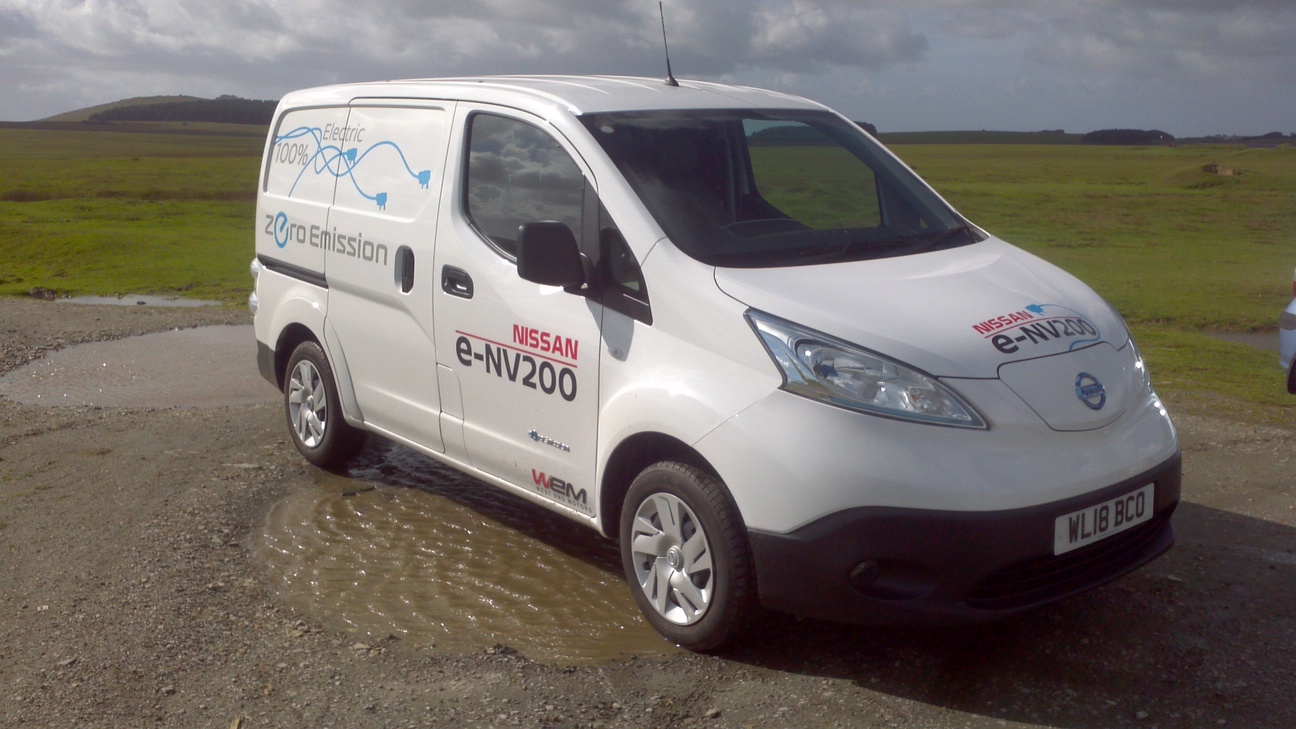
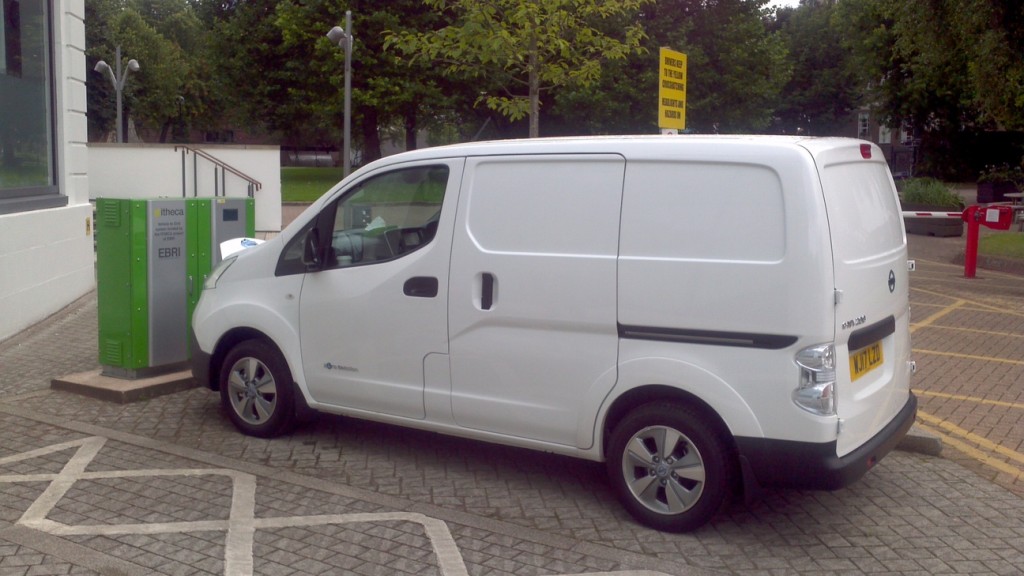
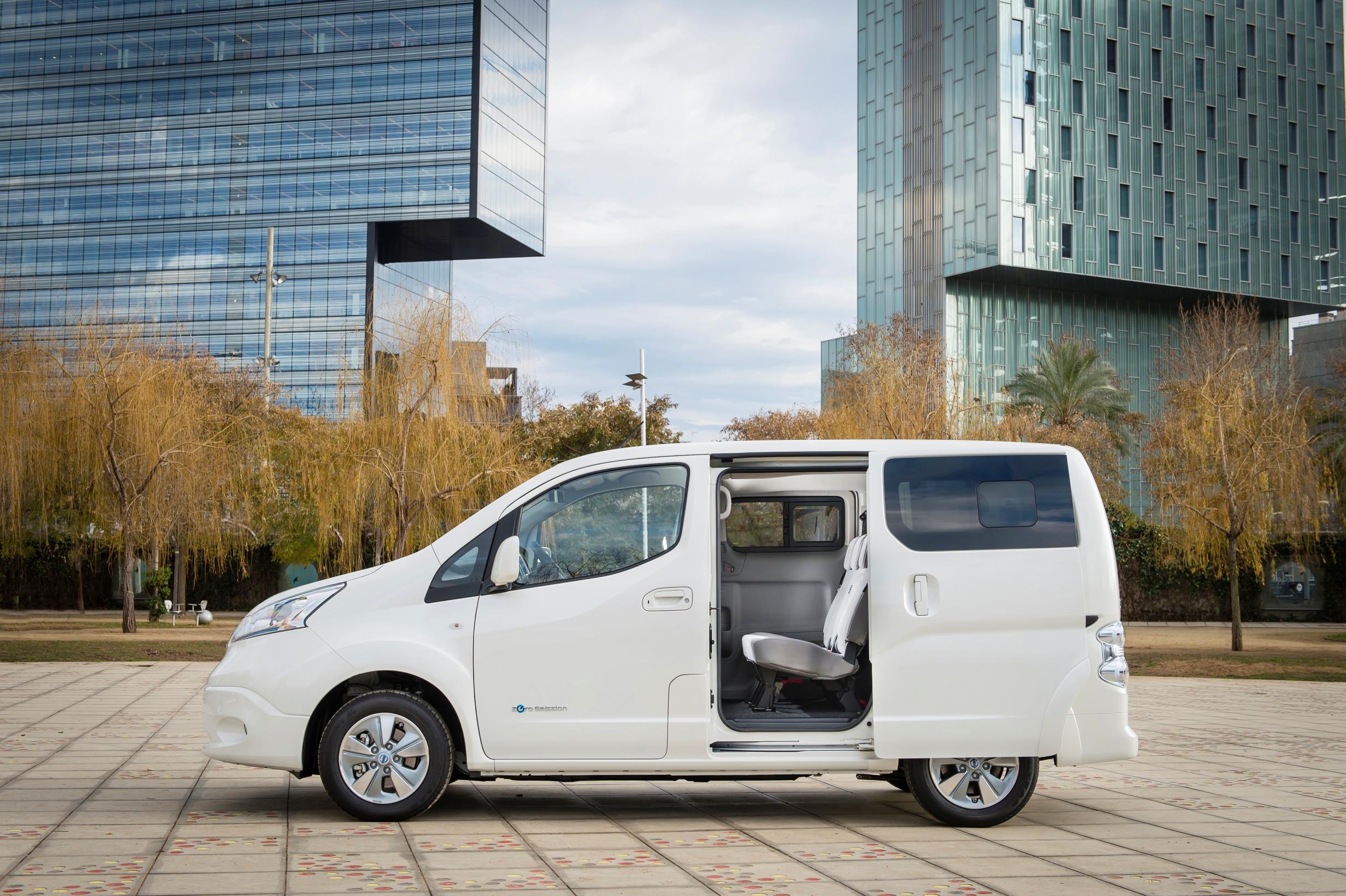
A minor disappointment there then, but yesterday I did manage to speak at length with Stewart Mckee who is Director of Wallbox UK. He assures me that the black box on display in Munich today isn’t just an empty shell. It is in fact “production ready”. That being the case I cannot wait to experiment with plugging one into the CHAdeMO connector at the front of one of Nissan’s new 40 kWh e-NV200 vans, which we test drove for three days following the recent Cornwall New Energy EV event in Wadebridge:

2018-09-21_11-45-21_174

As if all that wasn’t exciting enough there’s more where that came from!

Wallbox is also making it easier to manage electric vehicle charging at home. The company is introducing software that allows spoken commands, and cognitive intelligence that learns about an owner’s charging behaviour and preferences, in order to predict optimum energy balance with home and grid.

This unique two-tier combination of software technologies means that you can speak directly to your home charging system and it will interpret your requirements in the most energy efficient manner. For instance, you can simply say: ‘I need my car fully charged for the morning’ and Wallbox will take care of the rest, with consideration for all other home energy demands during the same period of charging.

The ability for Wallbox software to automatically manage charging in this way adds another smart layer to dynamic load balancing between between vehicle and the home, and vehicles parked in the same area.

Please forgive me, but after all that excitement I need to go and lie down now. However make sure to watch this space, because we’re hoping to have a chat with Wallbox’s CEO Enric Asunción real soon now.

OVO Energy Reveal “Domestic V2G Charger” Images

We’ve previously mentioned OVO Energy’s announcements about the vehicle-to-grid technology they’ve been working on, and now we can show you some pictures too! In a news release to accompany the launch event in London OVO announced yesterday that:

Today at its first ever Energy Technology Product Showcase, OVO unveiled a range of products that together with its intelligent platform VCharge will form the components of a distributed, domestic energy system for the future.

The range includes the world’s first widely available, domestic electric vehicle-to-grid charger, designed and manufactured in the UK. The charger will accelerate the global transition to electric vehicles and will enable drivers to sell surplus energy from their electric vehicle batteries back to the electricity grid – meaning they may never have to pay to be on the road again.

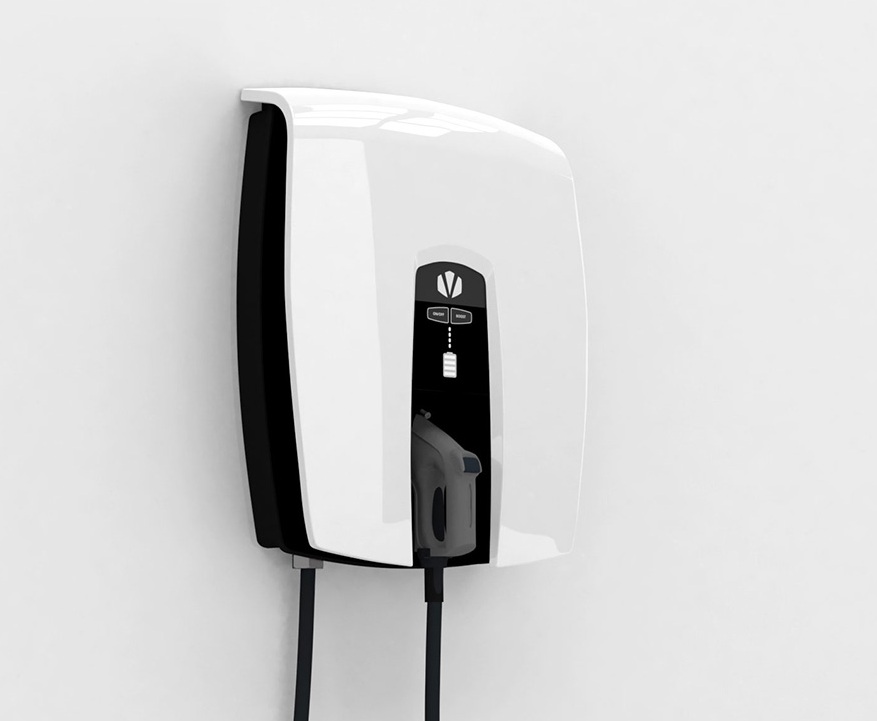
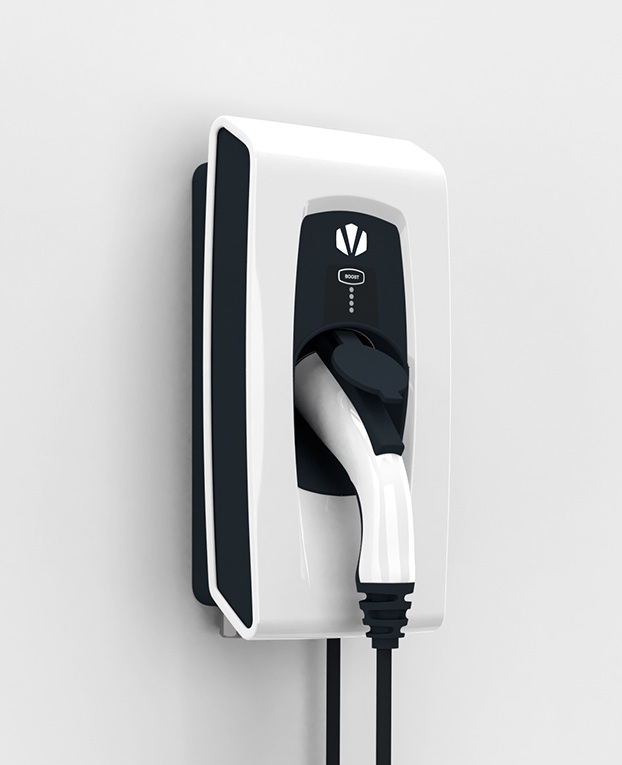
On the new V2G page on OVO’s web site they even revealed what their “domestic electric vehicle-to-grid charger” will look like. Here it is:

OVO-V2G-1

According to OVO’s CEO Stephen Fitzpatrick:

Renewable energy and electric vehicles are perfect partners for the 21st Century. Today we’re launching the world’s first widely available vehicle-to-grid charger, helping to solve one of the biggest challenges facing the energy sector. We’re enabling thousands of EV batteries to help balance the grid in times of peak demand, more renewable energy to come onto the system, and households to reduce their electricity bills.

This is the first step in building the distributed energy system of the future. One that is truly customer centric and built around households and their connected energy storage devices.

Our completely new approach to energy has been made possible by the convergence of emerging technologies, applying intelligence, and years of working with customers to redesign the entire energy system.

The technical specification of their V2G charger available on OVO’s web site doesn’t give one an awful lot to go on:

The OVO Vehicle-to-Grid Charger is 520 x 210 x 690 mm. It weighs 17kg. And it can be installed indoors or outdoors.

although the snaps from the launch event also reveal:

Power rating: 6 kW charge and discharge.

The news release continues:

The OVO Vehicle-to-Grid Charger is the world’s first widely available domestic bi-directional charger. Using VCharge, this charger will give drivers the option to discharge and sell surplus electricity from their electric vehicle batteries back to the electricity grid, helping to supply energy at times of peak demand. VCharge will also optimise vehicle charging to take advantage of cheaper electricity when it’s available and when there are more renewables in the system. Through their partnership, Nissan and OVO are leading the way with this technology.

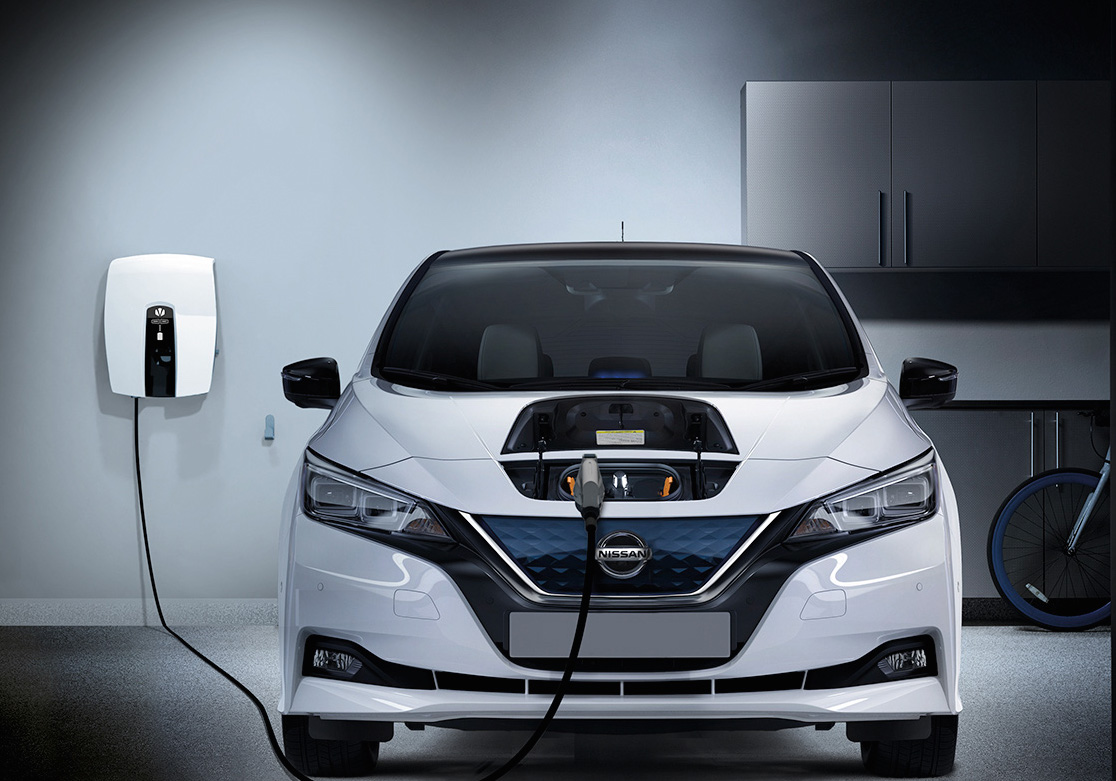
Here’s another image, this time portraying OVO’s partnership with Nissan:

OVO-V2G-2

With slightly less fanfare OVO also pointed out that:

OVO is launching a Smart Charger which, like the vehicle-to-grid charger, will enable electric vehicles to be charged during off-peak hours, thereby easing pressure on the electricity grid as well as allowing drivers to take advantage of cheaper off-peak electricity.

There don’t seem to be any pictures available of the OVO smart charger yet, apart from snaps taken at the launch event:

However as the image above suggests OVO had more exciting news to reveal yesterday:

OVO is also announcing its debut in the home battery market with a Home Energy Storage solution. This powerful battery with a custom built control and communications unit will dynamically and proactively manage energy and power use. It will enable everyone to store, use and sell back electricity, whether or not they produce it themselves.

As if that wasn’t enough, there is still more to tell you!

The smart electrification of heating is an essential component of decarbonising our energy system. Showcased at the event was the OVO Heat Dynamo, an internet connected smart switch that can be retrofitted to electric storage heaters. It allows users to control the level of heat they want, when they want it via OVO’s Smart Heat Customer App, while reducing their electricity bills by as much as 30% and providing balancing services to the electricity grid.

Here at V2G UK we did of course sign up for news of OVO’s V2G activities many moons ago. They’ve asked us to do that again so we did, only to be informed:

2018-04-19_0852_FreeV2G

It would seem that OVO’s announcement of the “the world’s first widely available, domestic electric vehicle-to-grid charger” is a trifle premature? According to their web site it’s:

Arriving this summer.

P.S. Here’s a better picture of the OVO smart charger:

OVO-Smart-1

“Arriving this autumn”

Is Hitachi’s V2G Charging Station Really “Unique”?

We pose that question because Mitsubishi Motors’ press release certainly makes it sound that way!

Hitachi Europe Ltd., Mitsubishi Motors and ENGIE have demonstrated a pioneering project to explore the potential for electric vehicles to act as a means of energy storage for an office building. For this demonstration, the consortium linked the first vehicle to everything (V2X) charger to ENGIE’s office building in Zaandam.

Hitachi’s innovative V2X Charger is the first recharger that cannot only recharge an electric car but can also discharge the energy back into the building/grid providing different flexibilities including kW, ΔkW, kWh and VAR. Moreover, it is possible to connect solar panels and external storage directly to the recharger, allowing a much more efficient electricity supply to buildings.

That all sounds as though Hitachi’s “innovative V2X Charger” is just the thing we need for our V2G “Living Lab” here in sunny South West England. Our “artist’s impression” of the concept is displayed above. As you can easily see it involves most of the buzz words from the press release, including V2H, V2G, Solar PV and “external storage”. It’s also 5 years old, which means we’ve done a lot of research into the necessary technology!

External storage and vehicle-to-building is obviously old hat. We’ve personally tested technology that does both those things at the University of Aston:

EBRI-eNV200

However the EBRI V2G pilot project didn’t incorporate “solar panels” so let’s take a look at another recent press release shall we? This one is from the Technical University of Delft in the Netherlands:

Electric vehicles and solar power systems are fundamentally direct current (DC) in nature, so conversion to AC leads to unnecessary conversion steps and losses. And two separate DC–AC inverters are required, increasing the cost and size of the power electronics.

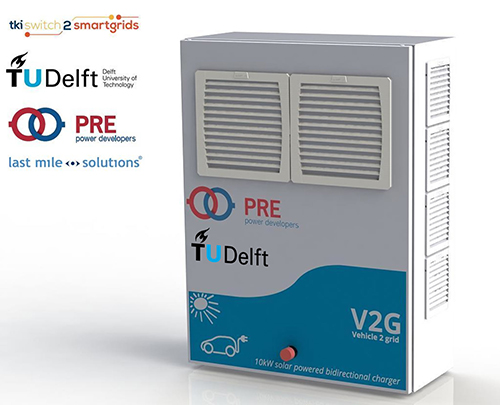
Why not use a single integrated converter that charges the electric vehicle from the solar power system on DC? That is what Mouli worked on during his PhD research. Based on Mouli’s doctoral research, TU Delft has developed a quick charger together with the Power Research Electronics and Last Mile Solutions companies which can charge cars directly with electricity from solar panels.

The TU Delft “quick charger” looks like this:
Gautham_Charger_500pix

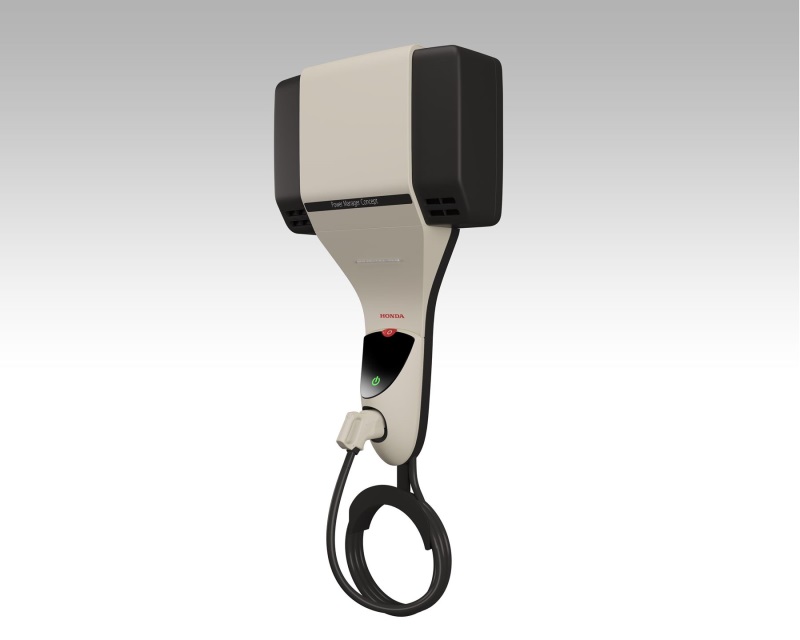
Delving further back into the mists of time last year we discussed Honda’s “Power Manager Concept” which looks like this:

honda-power-manager-800

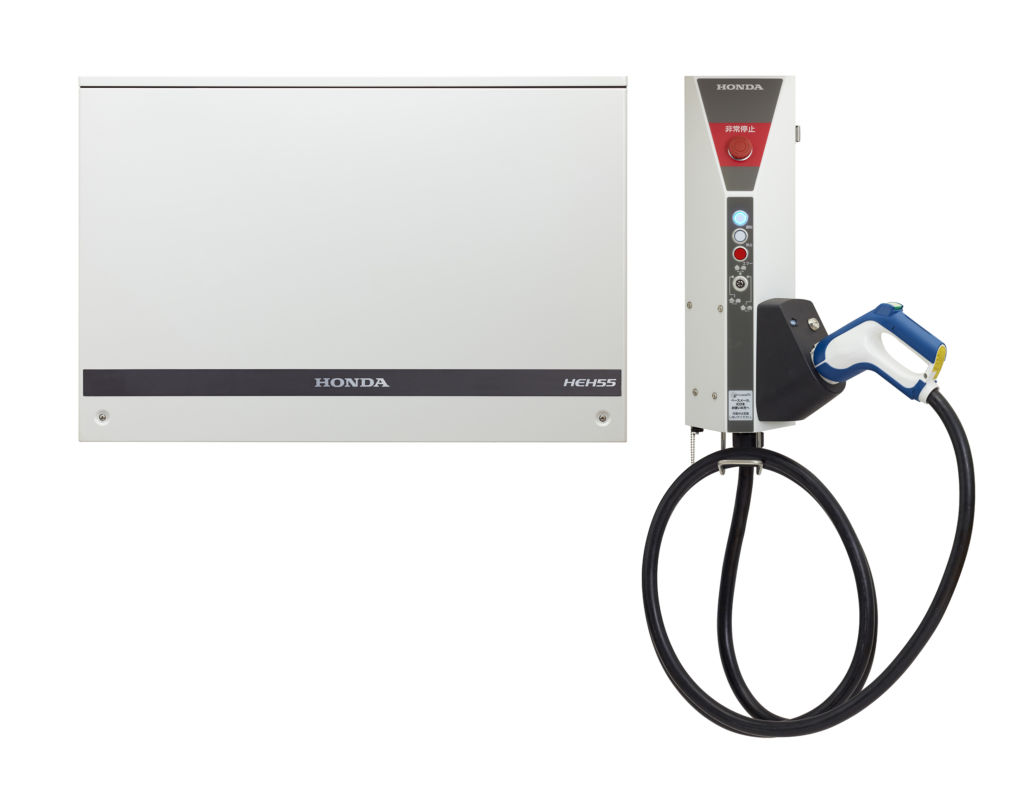
which is presumably based on their current Power Manager technology, which looks like this:

PowerManager-1024

According to Honda:

Power Manager Concept works by aggregating and distributing energy to and from the grid, solar panel-equipped homes or workplaces, and electric vehicles.

Electricity is received into the system from the grid or is generated by the solar panels and can be used to power and heat the building as well as to charge the EV. While the EV is plugged in, the energy can be stored and used at home or sold back to the grid, potentially generating value for EV owners.

Hitachi’s new offering evidently isn’t unique in that regard either then! Here’s their infographic of the ENGIE installation:

Hitachi-Mitsubishi

That makes it clear as a bell that they’re not doing pukka vehicle-to-grid yet either. Based on that image they also haven’t got any “static” battery storage installed at ENGIE yet.

We reached out to Hitachi and Mitsubishi, and whilst both companies have been very helpful we still don’t have a photograph of the equipment installed at ENGIE to show you. Hitachi point out that “the PV/Battery inverter functionality is the unique aspect of our charger”, but it’s still not clear to us in what way Hitachi’s claim to offer “the first vehicle to everything (V2X) charger” is justified. That being the case we have a suggestion to make. Perhaps Hitachi could let us test one of their new units at our V2G Living Lab just outside Camelford in Cornwall. Then perhaps we could swiftly establish for ourselves the veracity of the claims of Mitsubishi Motors’ marketing department?


[Edit – April 4th]

Hitachi Europe have pointed me at this Dutch language press release from ENGIE which includes an image of their charging station in action:

ENGIE-Outlander-V2G

Nissan’s Future Promises “Free” EV Charging

The 3rd “Nissan Futures” event entitled “The Car and Beyond” took place in Oslo today. Apart from the European launch of the 2018 Nissan LEAF our suspicions about a 40 kWh battery for the e-NV200 were confirmed:

The new 40kWh battery for the 100% electric e-NV200 offers a 60% extended range of up to 280km NEDC. And, with no increase in size of the battery itself, customers will face no compromise in either load space or payload. Crucially, it can help make 100% electric last miles delivery achievable for businesses and professional drivers everywhere, with customers now able to drive more than 100 km further on a single charge.
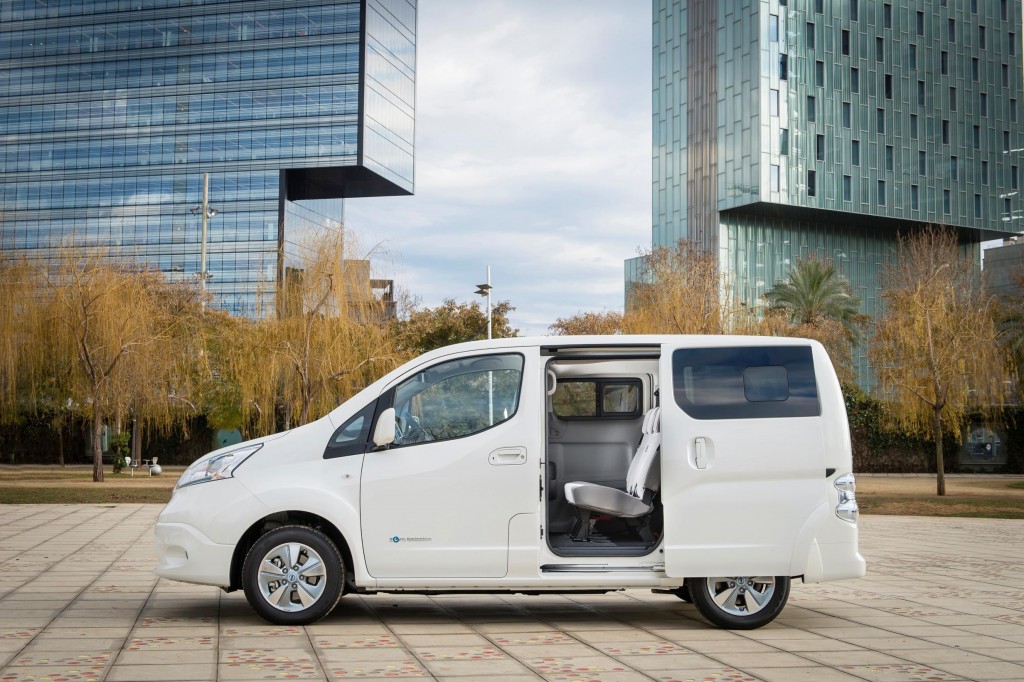
1450933_426205630_Nissan_world_premiere_of_new_longer_range_e_NV200_van
As well as helping business customers enhance their green credentials, the van represents a key pillar in Nissan’s wider commitment to cutting the level of CO2 emissions in city centres caused by professional drivers making deliveries and/or collections.

Nissan announced a few other things as well, including a so called “Revolutionary ‘free power for EVs’ breakthrough”:

Over the past year in Denmark, Nissan has been testing this revolutionary new way of driving and today, this has become an offer open to all fleet customers throughout the country. Using Nissan bi-directional charging, customers can draw energy from the grid to power their car or van and then ‘sell’ back to the grid for others to use. This means, once a nominal charge has been paid by the business for the installation of a V2G charger there are no fuel or energy costs; just free power for your EV.

And Denmark is just the start. Nissan also announced a UK collaboration with OVO allowing customers to purchase an xStorage home energy unit at a discounted price enabling them to ‘sell’ back energy to the grid. This helps contribute to grid stability in a world where demand for energy is increasing due to a growing, urbanising population. It can result in an additional expected income for users averaging £350 / €400 per year.

OVO Energy have also issued a press release about their collaboration with Nissan today:

The new offering is the first of its kind in the UK and will combine VNet – OVO’s groundbreaking intelligent energy technology – with the capabilities of the innovative Nissan xStorage Home system.

Building from this collaboration, OVO plans to launch OVO SolarStore (beta), the company’s first battery storage offering for qualifying customers. OVO customers with solar households will soon be able to purchase an xStorage Home system direct from OVO for £4,800 (excluding installation, subject to terms and conditions), and benefit from a £350 annual credit and estimated average £240 savings on their energy bill.

According to OVO CEO Stephen Fitzpatrick:

Electric vehicles are fast becoming a mainstream option for drivers and solve many of the challenges facing our cities. We believe that they have an integral part to play in the twenty-first century power grid and accelerating decarbonisation and mobility.

We’re delighted that we can now offer such a compelling incentive to customers who are generating their own clean power, providing a truly sustainable alternative to the traditional energy model.

The press release also waxes lyrical about vehicle-to-grid technology!

Customer vehicle-to-grid (V2G) service planned from January 2018…

V2G technology allows electric vehicles to be fully integrated into the electricity grid and will likely help the grid maximise the use of renewables in the energy system.

The V2G offering will work by allowing Nissan EV owners to connect to the grid to charge at low-demand, cheap tariff periods. They can then use the electricity stored in the vehicle’s battery at home and at work when costs are higher, or even feed electricity back to the grid which could generate revenue for the EV owner. OVO plans to create special tariffs to reward customers for this interaction with the grid.

Currently if all 20,000 Nissan electric vehicles in the UK were connected to the energy network, we estimate that they would generate the equivalent output of a 200 MW power plant with a 10kW charger.

In a future where all vehicles on UK roads are electric, V2G technology could generate a virtual power plant of up to 200 GW. This energy capacity is more than double the peak requirement on the UK grid.

The new Nissan LEAF will be compatible with OVO’s VNet intelligent energy technology. Further details of the offer and the first installations will happen at the same time of the deliveries of the new Nissan LEAF, in January 2018.

If you want to register your interest in OVO’s forthcoming V2G offer they have a page on their web site where you can do so.

Yet another, albeit slightly older, OVO press release reveals more about VNet that arrived with their recent acquisition of VCharge:

In a move towards building a complete “grid smart” charging solution for electric vehicles, OVO Energy will begin to introduce its proprietary VNet technology across the network, unlocking smart charging capabilities on a national scale, ultimately enabling OVO Energy customers’ electric vehicles to function as mobile batteries at home and on-the-go, balancing renewable energy on the grid and allowing drivers to sell back unused energy.

To accelerate this transition to smart charging, OVO has also acquired electric vehicle charge point specialists, ChargedEV and Indra Renewable Technologies, an electric vehicle components and services supplier, and is harnessing their technical expertise combined with Chargemaster’s, to develop a game-changing smart charger, due to be launched to market later in 2017.

OVO also now have a shiny new section on their web site devoted to the “OVO SolarStore (Beta)“:

Built to harness the potential of your solar set-up, OVO SolarStore (Beta) combines a home battery with state-of-the-art software.

Not only could it lower your bills, but by joining the beta you’ll be helping to create a greener, more-efficient energy system for the UK.

  • Reduce your bills by storing surplus solar power in your battery to use later.
  • Your battery will support renewable generation in the energy grid by storing electricity when it’s abundant, and discharging electricity when national demands spike.
  • Receive a fixed monthly credit for using your battery and helping to balance the grid.
  • Optimised and managed by our advanced technology, so you won’t need to do a thing.

The OVO SolarStore page also includes comprehensive facts and figures:

  • Nissan xStorage – Power: 4.6kW, Capacity: 4.2kWh, Up to 5 year warranty, subject to Nissan’s terms and conditions.
  • Export Credit & Increased Solar-self consumption: £240 saving a year
  • Annual value of Battery Credit: £350 saving a year
  • Battery installation survey: £50
  • Battery cost: £4,800
  • Battery installation indicative cost: £500

Getting back to the Nissan press release for a moment, it also points out that:

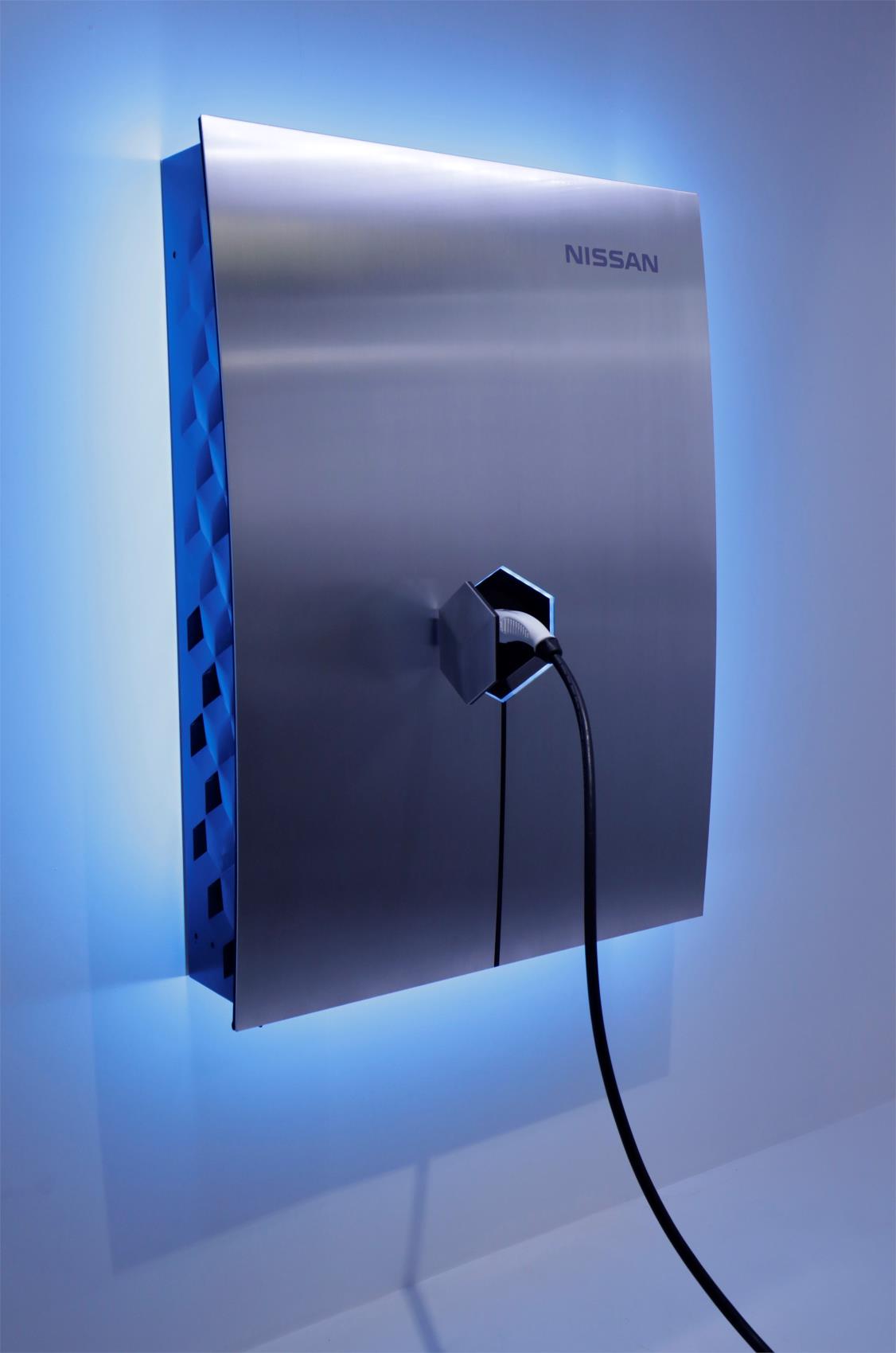
Nissan also showcased its new home energy storage system, which follows on from the success of xStorage. Created especially for EV owners, customers can plug their electric vehicle directly into the wall box to charge. It comes with its own built in energy storage system, giving customers the ability to better manage their energy costs and even generate their own electricity from solar panels, delivering 100% renewable and zero emission power for their car.
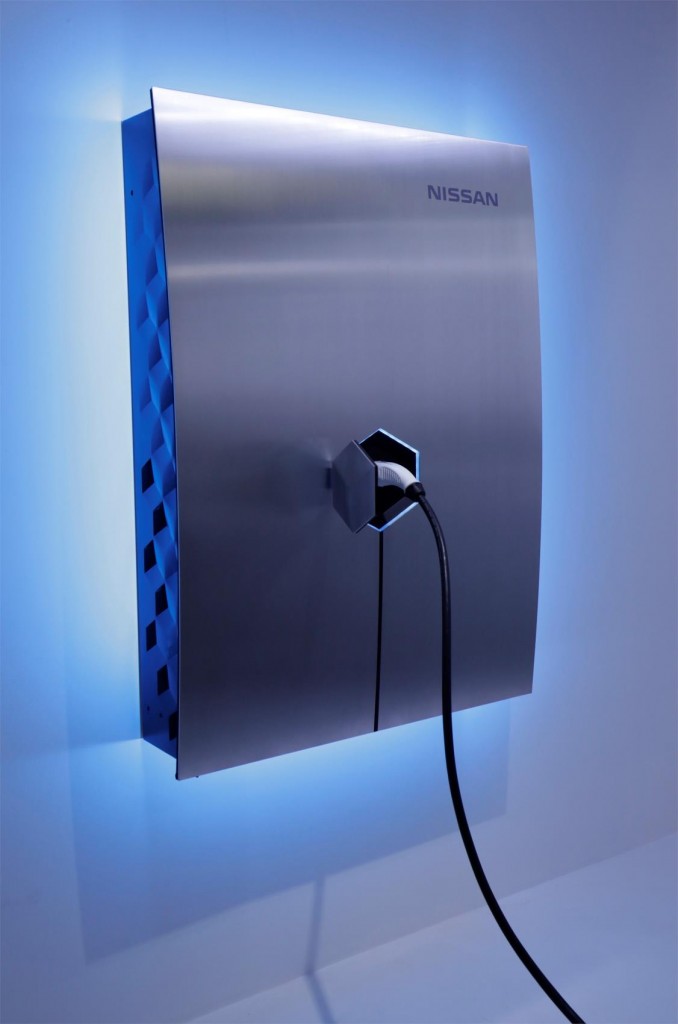
1450927_426205642_Home_Energy_System_xStorage

I wonder if OVO will ever get around to offering a game-changing bidirectional smart charger version of Nissan’s new combined home energy storage system? That would seem to be the perfect answer to the conundrum posed in our banner way back at the top of this article!