Is Hitachi’s V2G Charging Station Really “Unique”?

We pose that question because Mitsubishi Motors’ press release certainly makes it sound that way!

Hitachi Europe Ltd., Mitsubishi Motors and ENGIE have demonstrated a pioneering project to explore the potential for electric vehicles to act as a means of energy storage for an office building. For this demonstration, the consortium linked the first vehicle to everything (V2X) charger to ENGIE’s office building in Zaandam.

Hitachi’s innovative V2X Charger is the first recharger that cannot only recharge an electric car but can also discharge the energy back into the building/grid providing different flexibilities including kW, ΔkW, kWh and VAR. Moreover, it is possible to connect solar panels and external storage directly to the recharger, allowing a much more efficient electricity supply to buildings.

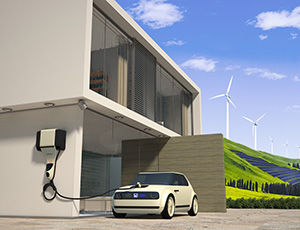
That all sounds as though Hitachi’s “innovative V2X Charger” is just the thing we need for our V2G “Living Lab” here in sunny South West England. Our “artist’s impression” of the concept is displayed above. As you can easily see it involves most of the buzz words from the press release, including V2H, V2G, Solar PV and “external storage”. It’s also 5 years old, which means we’ve done a lot of research into the necessary technology!

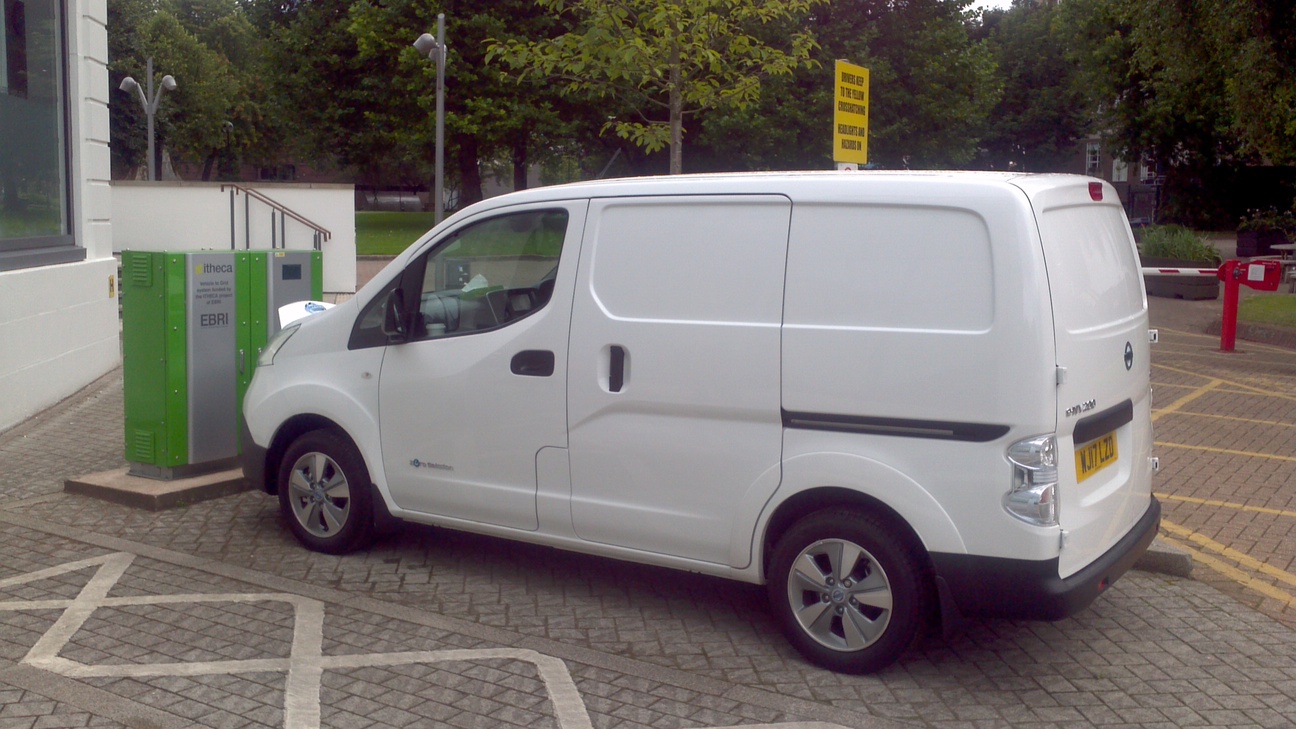
External storage and vehicle-to-building is obviously old hat. We’ve personally tested technology that does both those things at the University of Aston:
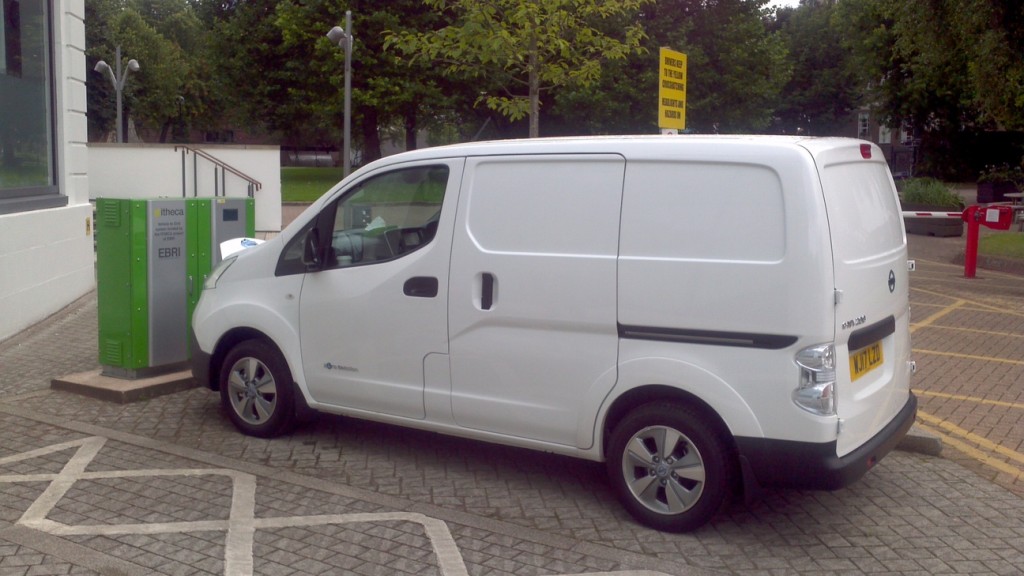
EBRI-eNV200

However the EBRI V2G pilot project didn’t incorporate “solar panels” so let’s take a look at another recent press release shall we? This one is from the Technical University of Delft in the Netherlands:

Electric vehicles and solar power systems are fundamentally direct current (DC) in nature, so conversion to AC leads to unnecessary conversion steps and losses. And two separate DC–AC inverters are required, increasing the cost and size of the power electronics.

Why not use a single integrated converter that charges the electric vehicle from the solar power system on DC? That is what Mouli worked on during his PhD research. Based on Mouli’s doctoral research, TU Delft has developed a quick charger together with the Power Research Electronics and Last Mile Solutions companies which can charge cars directly with electricity from solar panels.

The TU Delft “quick charger” looks like this:
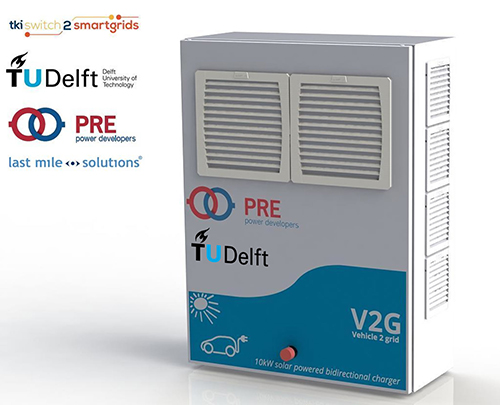
Gautham_Charger_500pix

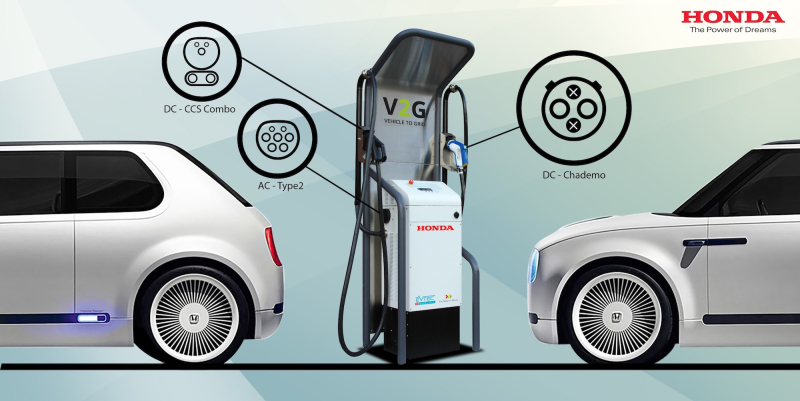
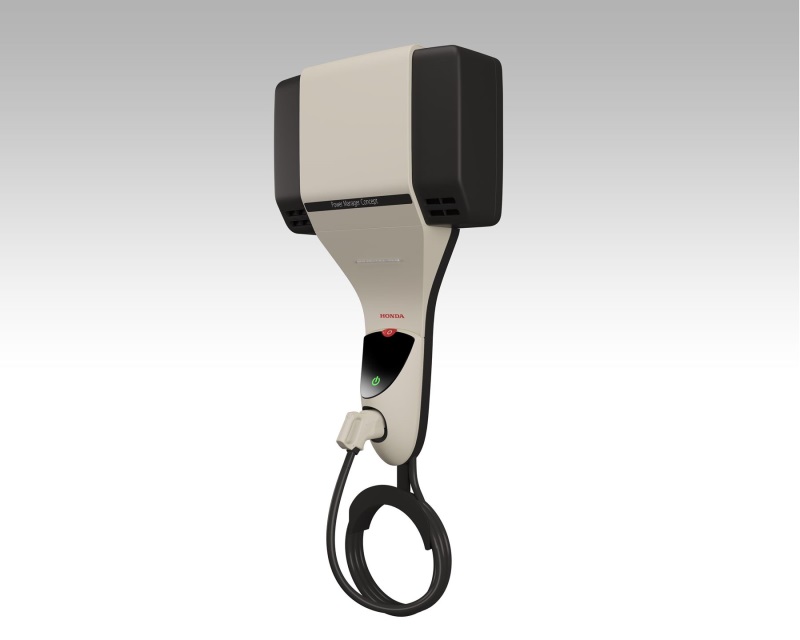
Delving further back into the mists of time last year we discussed Honda’s “Power Manager Concept” which looks like this:
honda-power-manager-800

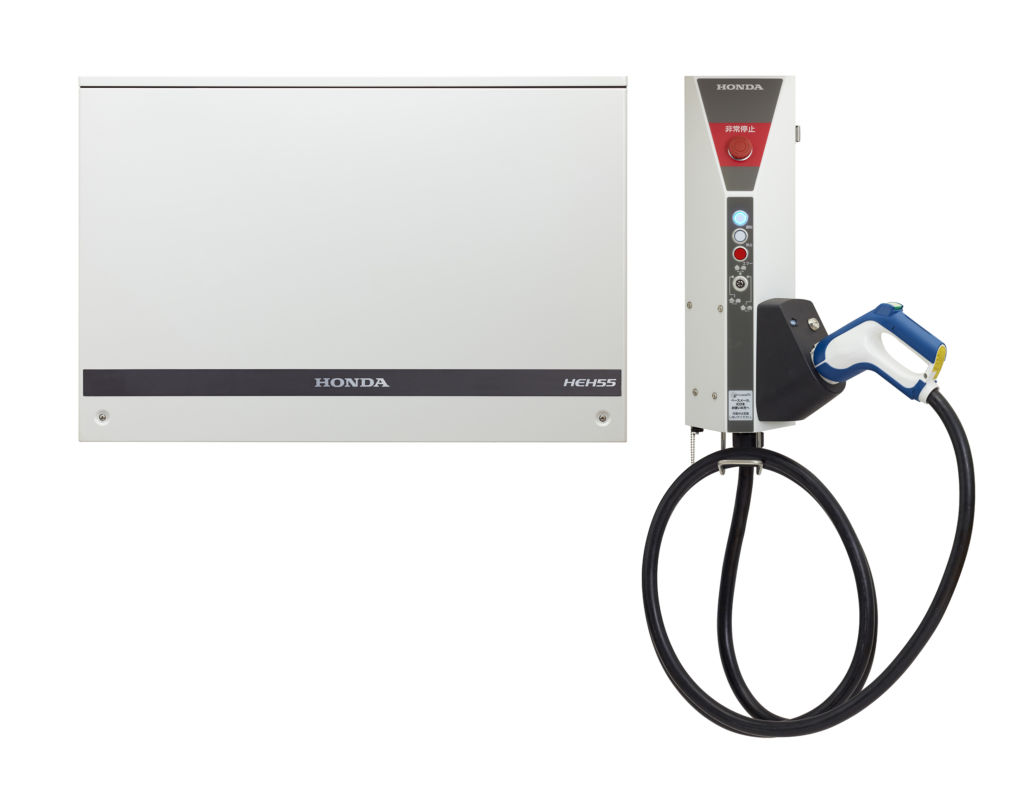
which is presumably based on their current Power Manager technology, which looks like this:
PowerManager-1024

According to Honda:

Power Manager Concept works by aggregating and distributing energy to and from the grid, solar panel-equipped homes or workplaces, and electric vehicles.

Electricity is received into the system from the grid or is generated by the solar panels and can be used to power and heat the building as well as to charge the EV. While the EV is plugged in, the energy can be stored and used at home or sold back to the grid, potentially generating value for EV owners.

Hitachi’s new offering evidently isn’t unique in that regard either then! Here’s their infographic of the ENGIE installation:

Hitachi-Mitsubishi

That makes it clear as a bell that they’re not doing pukka vehicle-to-grid yet either. Based on that image they also haven’t got any “static” battery storage installed at ENGIE yet.

We reached out to Hitachi and Mitsubishi, and whilst both companies have been very helpful we still don’t have a photograph of the equipment installed at ENGIE to show you. Hitachi point out that “the PV/Battery inverter functionality is the unique aspect of our charger”, but it’s still not clear to us in what way Hitachi’s claim to offer “the first vehicle to everything (V2X) charger” is justified. That being the case we have a suggestion to make. Perhaps Hitachi could let us test one of their new units at our V2G Living Lab just outside Camelford in Cornwall. Then perhaps we could swiftly establish for ourselves the veracity of the claims of Mitsubishi Motors’ marketing department?


[Edit – April 4th]

Hitachi Europe have pointed me at this Dutch language press release from ENGIE which includes an image of their charging station in action:
ENGIE-Outlander-V2G

Nissan Announce 1000 V2G Installations in the UK

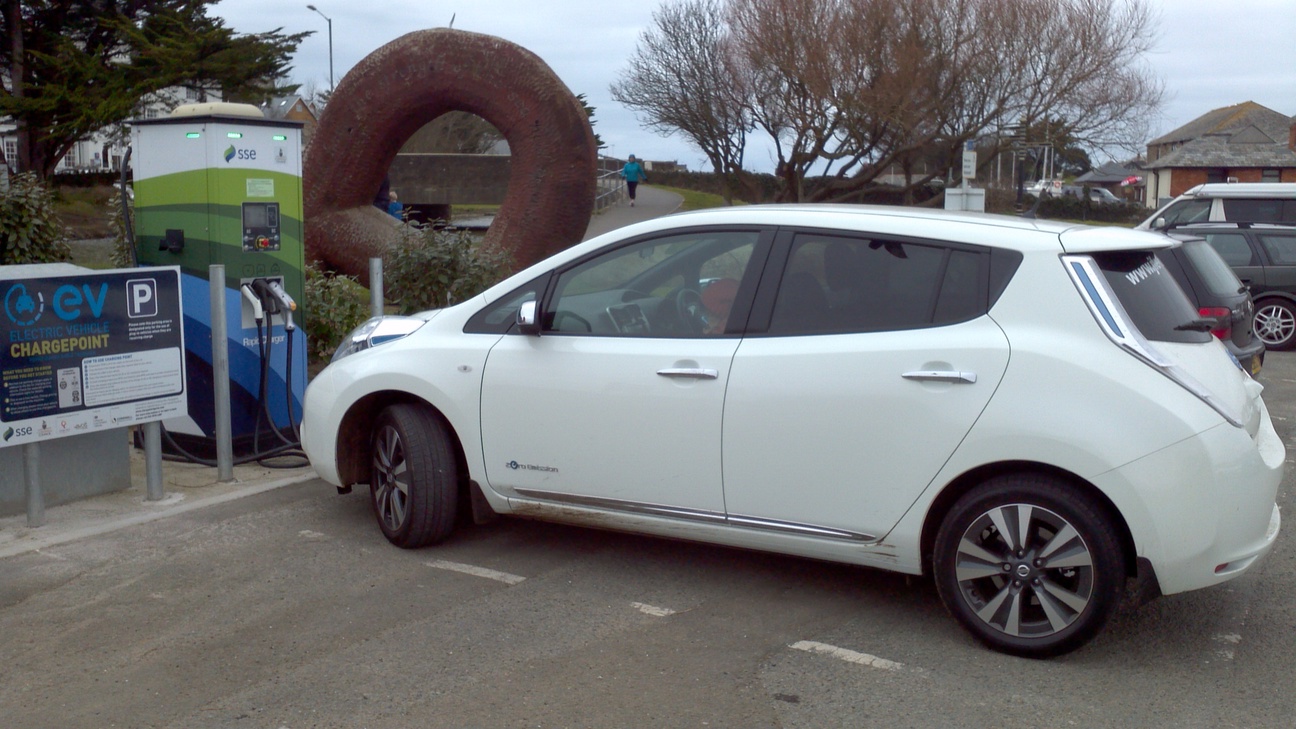
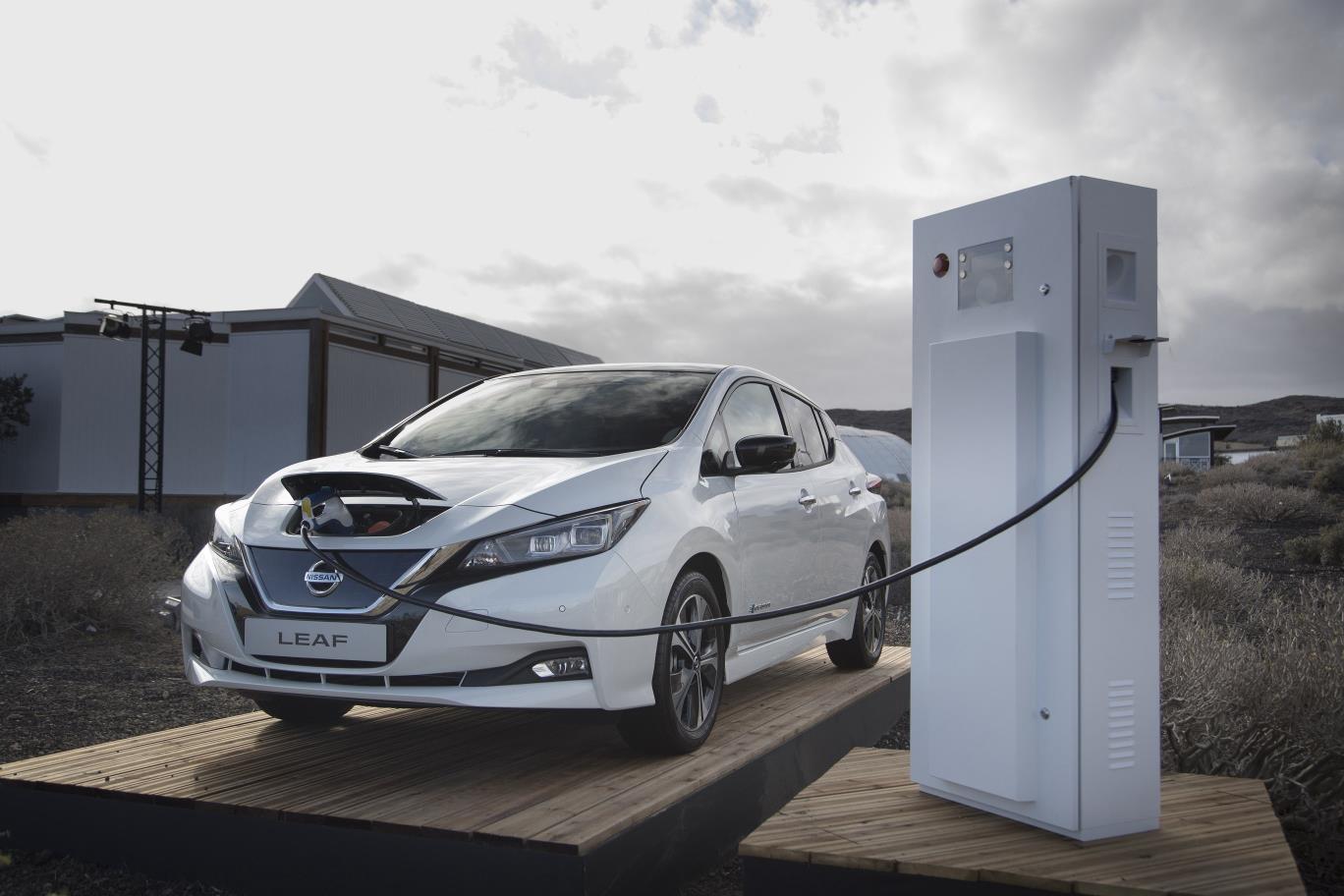
Since it mentions “1000 V2G installations” and comes with a nice picture of a 2018 LEAF plugged in to a V2G charging station Nissan’s announcement of its “e4Future” project’s successful entry in the recent Innovate UK V2G funding competition deserves an article of its very own:

2018-LEAF-V2G

Whilst it is certainly connected to the vehicle the charging station doesn’t seem to be connected to the grid! Regarding their successful bid Nissan say that:

Nissan and its partners welcome the announcement by Department for Business, Energy and Industrial Strategy minister Richard Harrington to award £9.8m for a Vehicle-to-Grid demonstrator project.

The project foundation is for a large-scale demonstrator targeting 1000 Vehicle-to-Grid (V2G) installations that will evaluate a commercial offer to electric vehicle fleet customers. The chargers will be controlled by an aggregator and data will be collected to understand the technical characteristics of vehicle to grid charging for both the vehicles and the electricity networks.

A consortium, led by Nissan, will bring expertise from across the whole Vehicle-to-Grid value chain: V2G infrastructure/aggregator provider Nuvve, the energy community represented by National Grid, two Distribution Network Operators (DNOs); UK Power Networks and Northern Powergrid, with varied grid infrastructure. The research and analysis activities will be supported by Newcastle University and Imperial College London.

Vehicle-to-Grid technology and this project will leverage Nissan’s brand commitment to Nissan Intelligent Mobility to transform the way people drive and live, creating a more exciting and sustainable future.

Once again V2G charging station manufacturers are conspicuous by their absence from the list of Nissan’s collaborators, and there is no label on the white charging station displayed above. Nissan also provide the following bullet points summarising the e4Future project:

  • In January 2018, OLEV and BEIS announced that 21 projects (8 feasibility studies, 5 collaborative research and development projects, and 8 real-world V2G trial projects) were to receive funding of £30m to develop the business proposition and core technology around V2G, and demonstrate those with large scale trials. The projects involve more than 50 industrial partners and research organisations from both the Energy and Automotive sector, marking the largest and most diverse activities on V2G in the world, and trialling more than 2700 vehicles across UK.
  • The V2G projects represent a significant step towards the transition to a low carbon transportation and a smart energy system. Allowing EVs to return energy to the Power Grid when parked and plugged for charging, will increase Grid resilience, allow for better exploitation of renewable sources and lower the cost of ownership for EV owners, leading to new business opportunities and clear advantages for EV users and energy consumers.

Amongst other things Nissan’s Managing Director of Nissan Energy at Nissan Europe, Francisco Carranza, said that:

Our EVs can be plugged into the grid and support the transmission and distribution companies in making the UK grid more sustainable and more stable. The increase of electric vehicles penetration, the introduction of more and more distributed generation and storage and the overall increase in renewable energy penetration should be done smartly.

To ensure Nissan plays a wider role in the advancement and protection of our cities, our electric V2G-ready vehicles will be used as clean mobile energy units.

Nissan has also reiterated its bold mission to offer customers free power for their EVs. V2G introduction will change the rules of the game and make energy cheaper for everyone.

The press release also contains a long list of quotes from Nissan’s collaborators on the project. Let’s take a look at this one from Myriam Neaimeh of Newcastle University:

The Government’s announcement will be a real game changer as we move towards decarbonising the grid.

This will be the first, large scale demonstration of vehicle to grid technology anywhere in the world and crucially, this project brings together all the key players for the first time – a giant of the automotive industry with energy providers, infrastructure experts and academics – so we can work together to really make this happen. It’s a really exciting time and fantastic that Newcastle University has been involved right from the beginning.

I still cannot help but wonder who will be manufacturing the all important V2G capable charging stations that will be installed as part of the e4Future project, and what de facto or international standards they will comply with?

The 40 kWh Nissan e-NV200: The LCV market game changer!

Nissan’s latest electric vehicle press release doesn’t include the exclamation mark in our title for today:

Nissan’s breakthrough e-NV200 100% electric van combines the features of the award-winning Nissan NV200 van with the market-leading New Nissan LEAF, offering businesses a zero-emission vehicle packed with innovative technology and functionality.

From spring 2018, Nissan will introduce in Europe its new zero-emissions van that goes further than ever on a single charge thanks to a new 40kWh battery. The Nissan e-NV200 now offers a 60% extended range with unchanged cargo capacity and single-shift transmission that makes driving easier and safer.

Nissan e-NV200 40 kWh (ab MY 2018)

With more than 15,000 vehicles on the roads since its introduction in Europe in 2014, this new generation of 100% electric Nissan e-NV200, embodying the company’s Nissan Intelligent Mobility vision, now goes another step forward. The longer range provided by its bigger battery and a full new series of connectivity features makes the 100% electric e-NV200 a real game changer in the LCV market.

Regular readers will be aware that we wholeheartedly agree with that final sentence! Whilst it was a non-typical use case our mainly motorway road test of a 24 kWh equipped e-NV200 last summer would have been considerably swifter with an extra 60% range. Our local rural post lady assures us that her currently diesel powered round is about 50 miles. Absolutely no problem in the new e-NV200. Are you listening Royal Mail? According to Nissan once again:

As well as helping business customers enhance their green credentials, the van represents a key pillar in Nissan’s wider commitment to cutting the level of emissions in city centres caused by professional drivers making deliveries and/or collections, ranging from CO2 emissions to noise pollution. It can help make 100% electric last mile deliveries achievable for businesses and professional drivers everywhere, with customers now able to drive more than 100 km further on a single charge compared to the previous generation e-NV200 fitted with 24kWh battery.

No more range anxiety then, and Nissan Europe’s Director of Electric Vehicles, Gareth Dunsmore, makes a very important point:

Businesses have a huge impact on air quality and traffic congestion, especially in city centres, and the Nissan e-NV200 helps cut the level of CO2 emissions they create.

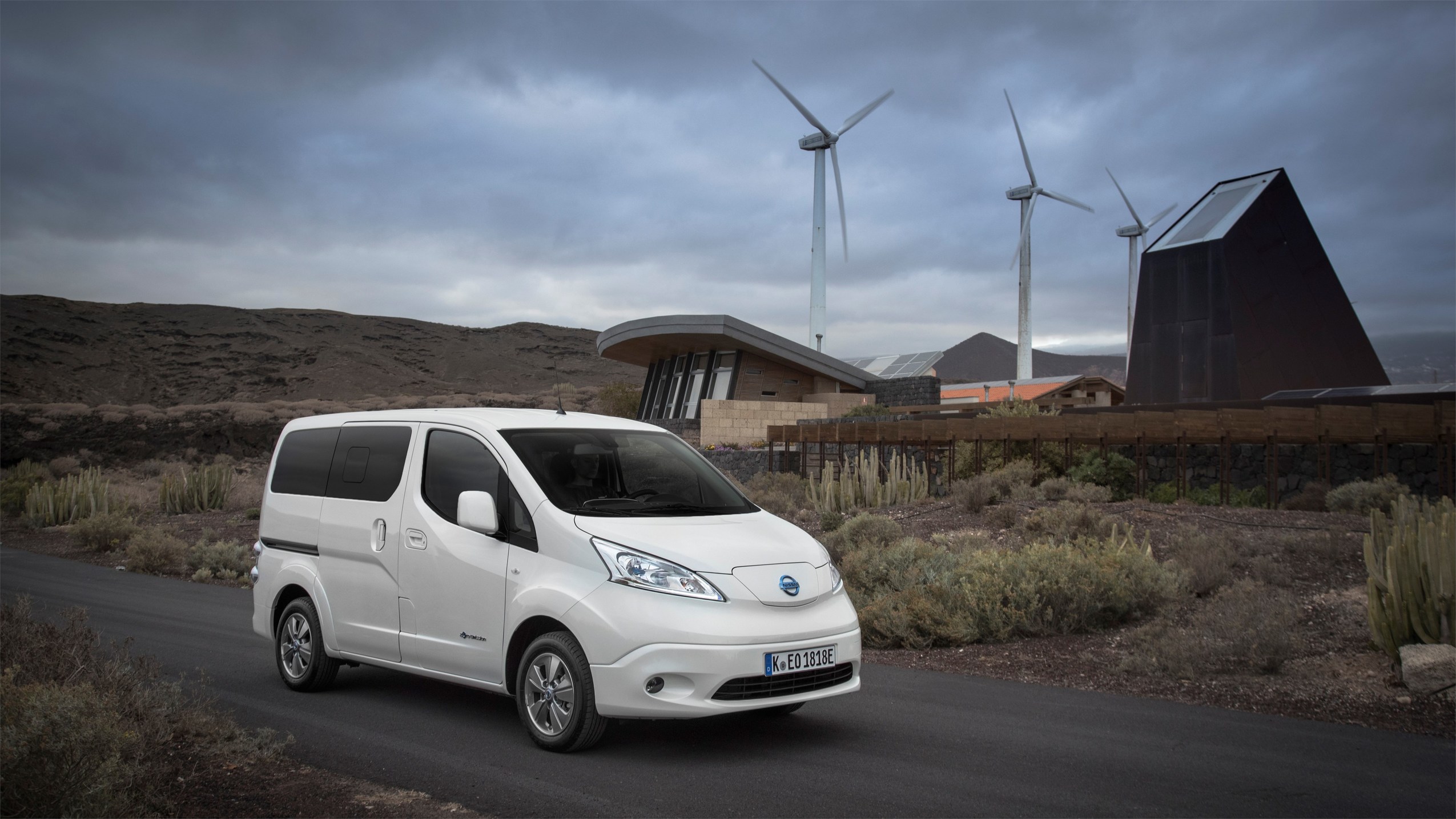
The photos accompanying the press release are of the white “Evalia” 7 seater people carrier version of the e-NV200 rather than a red parcel carrying van, and seem to have been shot in amongst some renewable generation on the isalnd of Tenerife:

Nissan e-NV200 40 kWh (ab MY 2018)

Whatever the colour or configuration, we’d love to try one out on some Great British roads in the not so Great British winter. It seems that we’ll have to wait until “spring” though.

Nissan further inform us that:

Using the same battery technology as the new Nissan LEAF just introduced in Europe, and with no increase in the size of the battery itself, e-NV200 customers face no compromise in load space. Crucially, it can help make 100% electric last miles delivery achievable for businesses and professional drivers everywhere.

At long last Nissan get around to the V2G bit:

The Nissan e-NV200 is also much more than just a 100% electric vehicle. It is a mobile power unit complete with unique bi-directional charging. This means it can give back energy to power the world around it by connecting to offices or business facilities. It can even return any excess charge to top up and stabilise the local energy grid thanks to Nissan’s innovative Vehicle to Grid technology.

We couldn’t agree more!

Honda Research V2G Technology in Europe

Honda have just announced in a press release that:

Honda has invested in advanced bi-directional charging technology at its European R&D site in Offenbach, Germany, which is helping to balance demand and store energy more efficiently across the facility. The new charging system incorporates renewable energy generation, and is a test bed for hardware that will be available to private households in the future.

The technology installation in Germany follows the debut of the domestic Honda Power Manager Concept at the 2017 Frankfurt Motor Show in September. The concept previewed a fully-integrated energy transfer, which takes power from the grid and can return stored energy from electric vehicle (EV) batteries – through ‘Vehicle-to-Grid’ or ‘V2G’ technology. This latest trial installation at Honda’s Offenbach site applies the same principles on a larger scale.

Here’s how Honda’s new bi-directional V2G capable charging station looks, albeit not in situ in Offenbach by the looks of it!

Honda installs new bi-directional charging technology at European R&D centre

Honda installs new bi-directional charging technology at European R&D centre

According to Jörg Böttcher, Vice President of Honda R&D Europe:

With the installation of the latest bi-directional charging technology at our R&D site in Germany, we are adding the next technology to our Smart Company project, which will further enhance our research activity in the field of zero-emission society and future mobility.

Here at V2G UK we have come to associate the word “Honda” with “hydrogen“, although Honda did take part in a V2G trial in the United States back in 2013. Here in Europe in 2017 they point out that:

With the help of the bi-directional hardware and with the technology of The Mobility House, Honda aims to optimise energy management at its European R&D campus, maximising the use of renewable solar power in particular. The project is testing the interaction, compatibility and power flow between specific electrical components, including the renewable energy cells and the EV batteries. The installation represents a collaboration between Honda R&D Europe, energy service provider The Mobility House and Swiss technology company EVTEC.

The investment in the bi-directional energy transfer technology further enhances the world’s most advanced public charging station for plug-in vehicles, which was launched at Honda R&D Europe in summer 2017. Its state-of-the-art 940V capability can deliver up to 150kW of energy, enabling as many as four vehicles to charge simultaneously with different types of connectors. Since its installation in June, the EV charging station has supplied power for 447 charge sessions and has saved 3.87 tonnes of CO2.

Here’s a video from The Mobility House explaining their vision of a future “V2G enabled” world:

https://youtu.be/qGtCClE4tcY

There’s more information on that topic in a press release from EVTEC which doesn’t seem to be available online at the moment. In slightly stilted English the Swiss company explain that:

With the growing importance of electric mobility, the two worlds of energy and mobility are merging. The closer this connection becomes, the more importance gain intelligent technologies that ensure this development secures a sustainable future. Such a technology is Vehicle-to-Grid, in short “V2G”. What is behind this term, is the intelligent integration of electric vehicles in the energy system and markets.

This advantage is well known to Honda, where the V2G technology is already in use today: with the help of a bidirectional charging solution, the company aims to optimize energy management at its European R & D campus in Offenbach. Within the framework of a comprehensive project over the last 12 month, the interaction of various energy components – from vehicle battery to photovoltaic system – is being tested here.

According to EVTEC co-founder and CEO Markus Kramis:

A reliable, precise, and fast acting bi-directional charger is the necessary base for every V2G application, like peak shaving and energy optimization.

All in all that EVTEC charging station sounds like just the sort of thing we need to try out at V2G Towers over here in North Cornwall, located in a distant corner of sunny South West England amongst an impressive array of large scale solar PV and onshore wind “farms”!

The same may well apply to Honda’s Power Manager mentioned above, which was announced at the Frankfurt Motor Show in September. According to a Honda press release once again:

Its all-new Power Manager Concept, a fully-integrated energy transfer system, is designed to incorporate electric vehicles into a smart power grid. It enables the collection and distribution of electricity between the grid, homes and businesses and electric vehicles, to intelligently balance demand and efficient storage of energy. Honda will apply its Power Manager technology as part of a smart grid pilot scheme in the west of France.

Honda-Power-Manager

Power Manager Concept works by aggregating and distributing energy to and from the grid, solar panel-equipped homes or workplaces, and electric vehicles.

Electricity is received into the system from the grid or is generated by the solar panels and can be used to power and heat the building as well as to charge the EV. While the EV is plugged in, the energy can be stored and used at home or sold back to the grid, potentially generating value for EV owners.

The Power Manager Concept system can help to stabilise the grid at times of either short or surplus supply, as well as representing a revenue opportunity for EV owners.

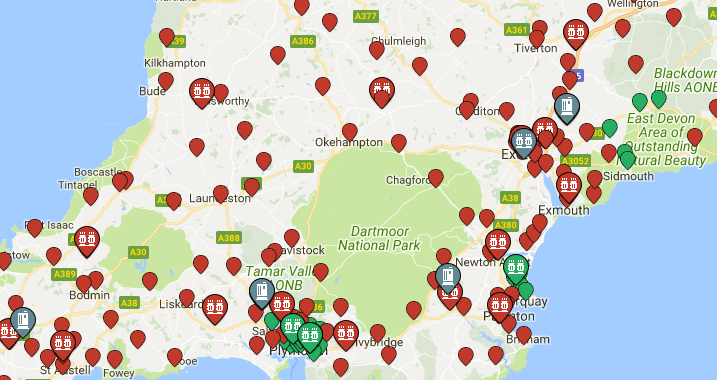
That sounds like just the sort of thing that Western Power Distribution needs to help stabilise the electricity distribution grid in our neck of the woods, which is currently heavily “constrained”:

WPD-NoCapacity

Do you suppose that we could possibly persuade Honda to apply its Power Manager technology as part of a smart grid pilot scheme here in the south west of England too?

Building a Britain Fit for the Future?

The UK’s new “Industrial Strategy” was published last week. The last time we had a good look at UK plc’s strategy was three years ago, when we concluded that “it rather sounds as though ‘Storage to Grid’ (or S2G for short) is a more likely prospect here in the United Kingdom than fully fledged V2G”. So how about this year?

The foreword by Greg Clark, Secretary of State for Business,Energy and Industrial Strategy (or BEIS for short), states that:

This Industrial Strategy deliberately strengthens the five foundations of productivity: innovation, people, infrastructure, places and the business environment.

At the very least “innovation” and “infrastructure” sound like the sort of things we get up to here at V2G UK. Here’s how Gov.UK visualises our future infrastructure:

655638110

Moving on, Greg continues:

As well as setting a path to improved productivity, our Industrial Strategy sets out four areas where Britain can lead the global technological revolution. These four Grand Challenges – in artificial intelligence and big data; clean growth; the future of mobility; and meeting the needs of an ageing society – have been identified on the advice of the our leading scientists and technologists. They will be supported by investment from the Industrial Strategy Challenge Fund and matched by commercial investment.

There’s a video explaining the ISCF:

There’s even a video summarising each of the Grand Challenges. Electric vehicles get a mention in the one about mobility:

https://youtu.be/wlqQRp5vhOU

We’ve previously touched on the Government’s new “clean growth” strategy on the V2G blog, and obviously we’re inordinately interested in the “future of mobility”, so there really should be something of interest to us in the 131 page white paper. Let’s delve a little deeper shall we? Under the “infrastructure” heading we’re told that:

Our approach is to undertake a comprehensive package of measures to promote the uptake of zero emission vehicles. We have announced a further £100m for the plug-in car grant to incentivise the purchase of battery electric vehicles, and we are committing to 25 per cent of the cars in central government department fleets being electric by 2022. We are announcing an additional £200m of public investment, to be matched by private investment, to create a new £400m Charging Infrastructure Investment Fund, and we will regulate to support further expansion of the charging infrastructure network.

That certainly sounds like very good news for our Camelford electric car club project! What’s more:

After the Grenfell Review, we will update building regulations to mandate that all new residential developments must contain the enabling cabling for charge-points in the homes. We will also provide £40m to support new technologies for on-street and wireless charging.

All of which sounds like very good news for our SaMDES project which envisages installing static battery storage and V2G charging stations in homes and small businesses across the South West of England. The news gets even better! A little further on we discover:

The zero emission road transport strategy, to be published in the coming months, and work on the options for the long-term decarbonisation of heating will build on this. They will support the growth of markets for technologies that create synergies between systems, such as energy storage, smart meters, vehicle-to-grid charging and heat networks.

Will the sweet music to our ears never stop? Not for the moment at least. Next we discover that:

We are determined to tackle air pollution and support affected areas, given the significant negative impact it has on public health, the economy and the environment. We will provide £220m for a new Clean Air Fund that will allow local authorities in England with the most challenging pollution problems to help individuals and businesses adapt as measures to improve air quality are implemented. This new fund is in addition to the £255m provided to implement the Air Quality plan earlier this year.

That sounds like more potential assistance for Camelford due to the town’s Air Quality Management Area status. Moving on once more, regular readers will be aware that we are proponents of energy efficiency. “Negawatts not Megawatts!” we cried when the predecessor to BEIS pulled the plug on zero carbon homes a couple of years ago. Will they make amends now? Unfortunately not really. There are a couple of sentences to the effect that:

In the more immediate term, energy efficiency and reforms to the retail energy market will provide the opportunity to lower bills. Up to £6bn could be saved in 2030 through investment in cost effective energy saving technologies in the industrial and commercial sector.

We will encourage greater investment in energy efficiency measures and technologies, including by developing a new scheme to support investment in industrial energy efficiency, to help large businesses install measures that will cut their energy use and bills, as we as improve their productivity.

Plus there’s:

We want to support greater collaboration between councils, a more strategic approach to planning housing and infrastructure, more innovation and high quality design in new homes and creating the right conditions for new private investment.

From where I’m sat I’m afraid that’s not a patch on “the proposed 2016 increase in on-site energy efficiency standards” that bit the dust in 2015. The white paper contains some great news if you’re into decarbonising transport, as we most certainly are. However unfortunately reducing the energy wasted by the UK’s poorly insulated housing stock, both old and new, still seems to be very much on UK plc’s back burner.

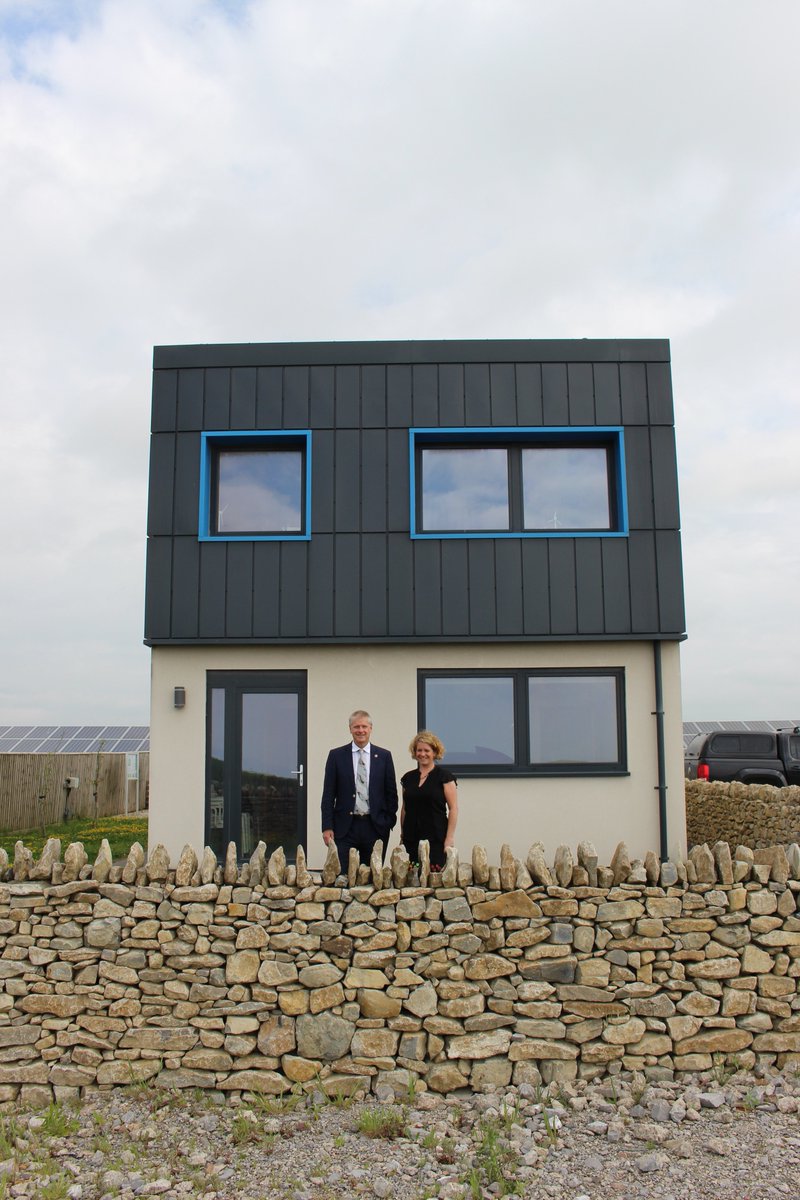
It seems as though we still have a long wait in store before homes like this will be constructed as a matter of urgency:

SOLCERHouse

Static and Mobile Distributed Energy Storage Launched At Long Last

Our roadmap didn’t call for this announcement just yet, but on Autumn 2017 budget day Philip Hammond, the Great British Chancellor of the Exchequer, had this to say:

The next day Nissan’s Francisco Carranza made an interesting announcement on Twitter:

In a bit more detail, Nissan announced:

Nissan Motor Parts Center in Europe is the first company in the Netherlands to make its roof available to others for the production of sustainable energy on a large scale. The electricity generated is sufficient for the power consumption of 900 households. The first section becomes operational at the end of February. The project will be fully completed in May.

With the installation of this immense solar roof, Nissan is taking a further step toward its strategy focusing on Intelligent Mobility, with sustainable energy as one of its cornerstones.

“This project is perfectly suited to Nissan’s endeavors to make mobility smarter and more sustainable,” said Koen Maes, managing director Nissan Benelux (Belgium, Netherlands and Luxembourg). “That’s why we are working on sustainable energy production and on projects such as energy storage in used batteries – vehicles which return energy to the network and car sharing. The solar roof is one of the cornerstones.”

That’s pretty much the way we see things too, and after a couple of false starts over the years the team here at V2G UK decided to accelerate our plans:

Here are some other things that have been happening on Twitter over recent days:

In case it’s not yet obvious to you, our Static and Mobile Distributed Energy Storage project roadmap includes rolling out just the right sort of V2G capable electric vehicle charging station for our purposes. My personal Twitter profile reads as follows:

I’ve been programming computers since the late 60s. We had to build our own! Now what can I program next? Will I have to build it first?

It looks as though the answer to that question is YES!

Meanwhile the V2G UK Twitter profile concludes:

A friendly local neighbourhood energy market would also be nice!

Are we going to have to build that too?

V2G Explained by the Mainstream Media

V2G is now a hot topic in the UK mainstream media! A few days ago The Times newspaper published an article on vehicle-to-grid technology. According to Edward Lucas:

The hunt is on for cheaper and better storage, which is where electric cars come in. For its owners, the car battery is an unused asset most of the time, just as the engine is for those of us with old-style vehicles. Yet for grid managers dealing with the spikes and troughs in demand, a terawatt hour stored in spare batteries is exactly what is needed. Instead of subsidising standby generators, we can pay car owners to sip power from their vehicles’ batteries.

But making this work on a larger scale requires change. Our existing energy set-up is centralised: big power plants transmit large amounts of electricity over long distances to passive consumers. This arrangement copes with the 115,000 electric cars we have now. But it will not be fit for 2040, when the government intends to ban the sale of new diesel and petrol cars. By then we are predicted to have more than 25 million electric vehicles.

Done wrong, that will resemble something like a vast network of electric kettles. Charging them all at once at home would crash the grid. Consumers will curse, costs will soar and benefits will shrivel. To avoid that, the electricity system of the future will have to look like the internet: decentralised and interactive. Consumers will also be producers — perhaps from rooftop solar panels or by supplying power from their car batteries back into the grid when needed. Demand will be smarter: appliances will adjust their consumption according to price. Electric car owners, for example, will not mind exactly when their vehicle is charged, so long as it is ready when they need it. They will take advantage of cheap electricity just as consumers do already with night storage heaters.

The prospect is both exciting and daunting. Dieter Helm, the energy economist who recently reviewed energy costs for the government, says that the combination of electric vehicles, battery technology and digitisation presents challenges of a scale and magnitude not witnessed since the reconstruction of our electricity system after 1945.

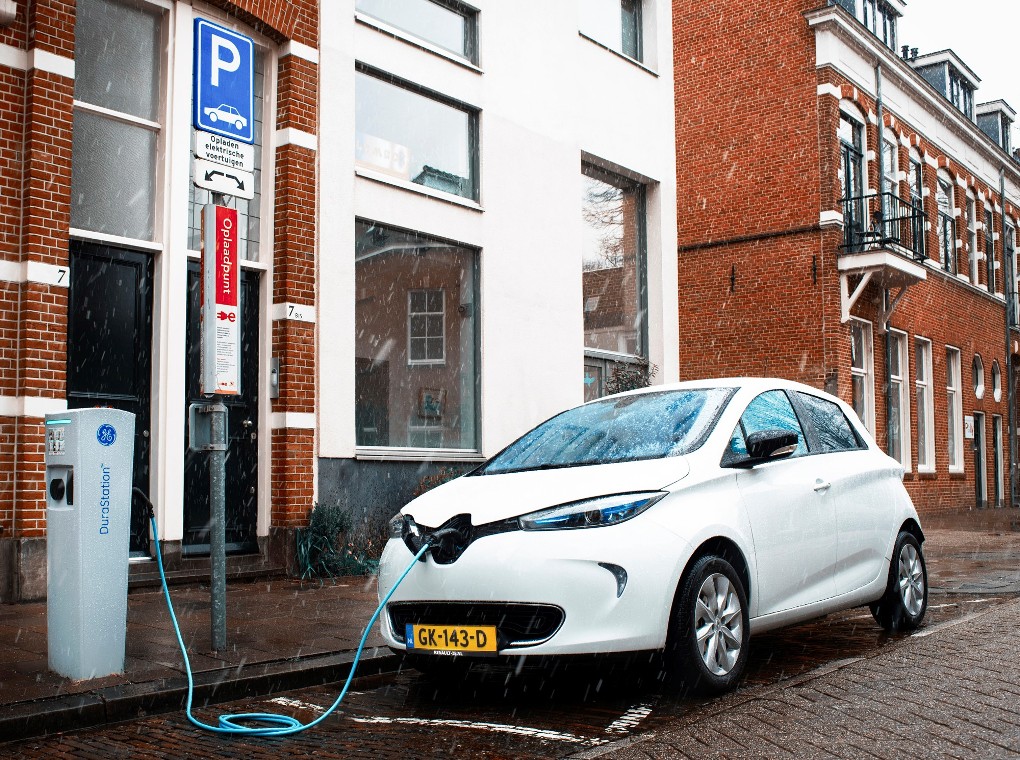
Today the BBC have followed the Times’ lead by publishing an article by Theo Leggett with a slightly different perspective. Unfortunately they included at the top a stock photo of what looks a lot like a Renault ZOE instead of a Nissan LEAF. Here’s one of our stock photos of a 2016 LEAF, which is V2G capable:

2016-03-19_12-56-18_200

However currently the ZOE is not. Here’s what one of those looks like:

ZOE-LomboXnet-1024

Theo points out that:

At the Nissan Technology Centre in Cranfield, Bedfordshire, a number of the company’s electric Leaf models are lined up alongside a bank of chargers. But these cars aren’t just drawing energy from the grid; they’re also putting it back.

The system is called Vehicle to Grid, or V2G. The Japanese company is developing it in partnership with the Italian power firm Enel and is already operating a small trial hub in Denmark.

Electric cars are, in effect, energy storage devices, and because they spend much of their time parked up not doing anything they can help smooth out the peaks and troughs in energy demand.

“Basically, we can consider the car as a battery with wheels,” says Maria Laura Corallini, the engineer in charge of the V2G project.

“You can use the energy storage capability in the battery to provide specific services back to the grid.”

The system uses software to regulate the charging level of multiple vehicles.

When the grid needs extra power, it can draw very small amounts from each individual vehicle. When energy is abundant, it can top them up again. Users will get paid for the electricity they provide.

If thousands of cars are connected together, then the amount of energy given back to the grid can be substantial, and it can be varied on a second-by-second basis.

Initially the plan is to sell it to businesses that operate large fleets, although the company says it will also introduce a residential version. Other organisations are also experimenting with the technology.

I suppose V2G UK must count as one of those “other organisations” in this context! Theo continues by referring to an oft mentioned tale of V2G woe:

Not everyone agrees that V2G makes commercial sense, however. The chief technical officer of Tesla, JB Straubel, for example, has suggested in the past that he doesn’t see it becoming a viable solution, largely due to its cost and complexity.

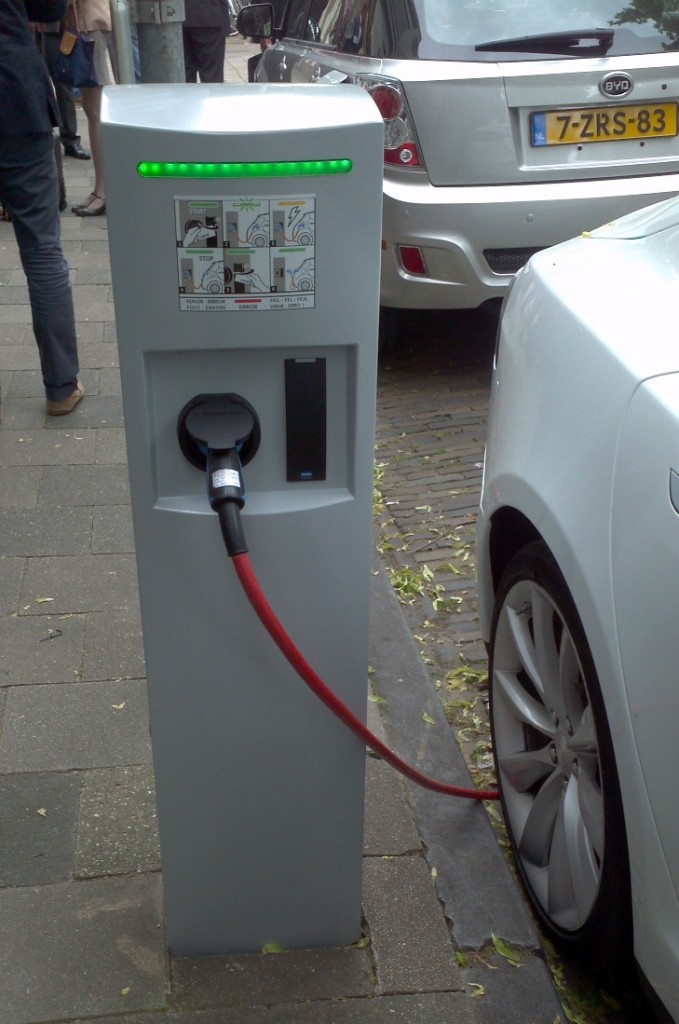
I am forced to agree with JB that here in the UK V2G currently doesn’t “make commercial sense”, which further forces me to reveal once again this image of a Tesla Model S connected to a V2G capable bi-directional charging station in the Netherlands:

Unfortunately in all the circumstances that particular Tesla was only capable of charging from the kerbside bi-directional charging station. The BYD e6 parked next to it could however also discharge, ultimately to the local distribution grid. Do you suppose that if and when the “cost and complexity” reduces and V2G does “make commercial sense” in Tesla’s view, power will suddenly start flowing in the opposite direction down that stout red cable?

An Electric Car Club for Camelford?

We think the answer to the question posed in our title for today is YES! Here’s one reason:

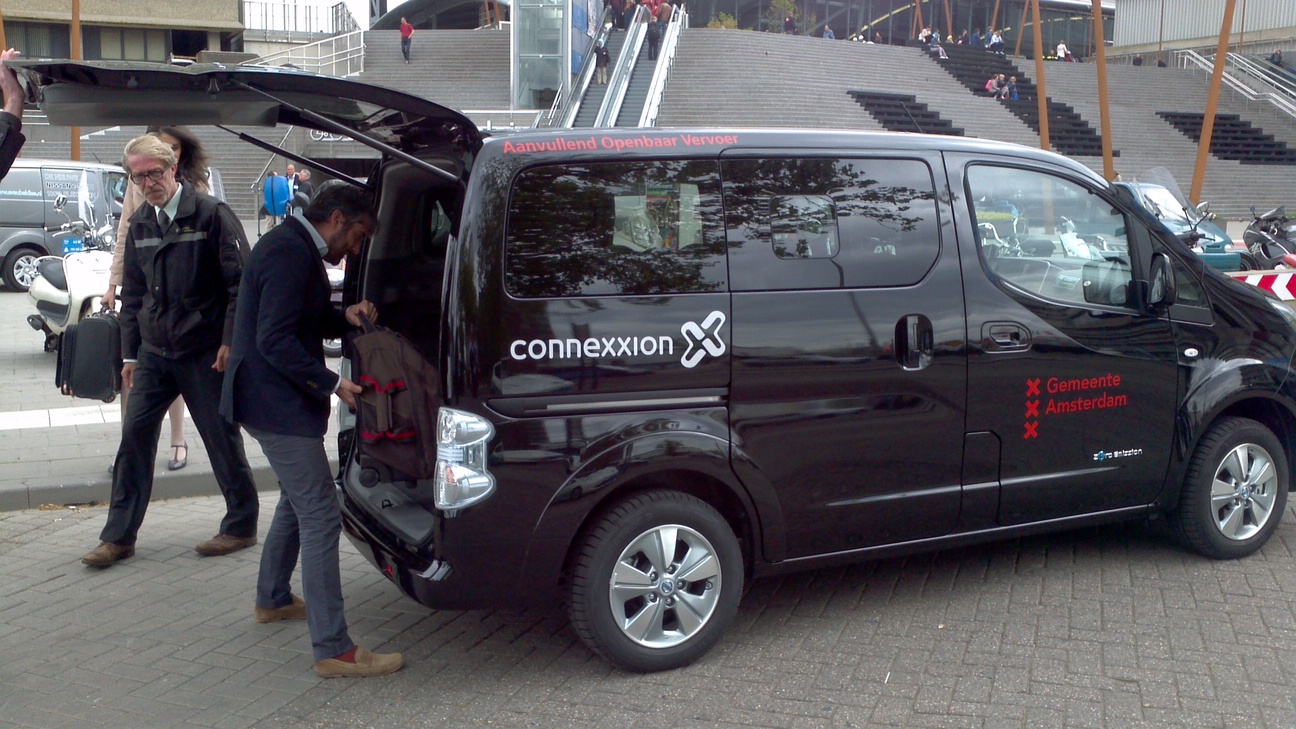
Nissan recently announced the new 2018 edition of their popular LEAF saloon, with increased range over the previous model thanks to a 40 kWh battery pack. Over the weekend a “leak” revealed that a 40 kWh version of Nissan’s e-NV200 van is on the way. That will provide a big increase in range over the e-NV200’s current 24 kWh battery pack, and make the “van” a much more realistic choice for a wide variety of small businesses. Note also that there is an MPV/taxi version of the e-NV200 known as the “Combi”, which I have taken a ride in over the North Sea in the Netherlands:

2015-06-09_11-46-07_453

That means we’re really talking about an electric vehicle club, not a mere “car” club. That’s one way of implementing the concept known as “Mobility as a Service” (or MaaS for short).

Here’s another very good reason to try and put more electric vehicles on the streets of Camelford:

Earlier this year Camelford was declared an Air Quality Management Area (AQMA for short). According to the Town Council web site:

Cllr Claire Hewlett… said “I’m very pleased that Camelford has now been declared an air quality management area, as it means that Cornwall Council and Defra have offically acknowledged we have an air quality problem. The Clean Air Group have been working closely with Cornwall Council’s environmental protection team to get this far. Talking to people in town today, everyone is excited that something might actually happen.”

As part of the consultation, the council asked for residents and businesses to convey their ideas for improving air quality, and some of these will be investigated as part of a range of options before the final plan is published.

Now electric vehicles improve air quality in town and city centres by reducing nitrogen oxide emissions and particulates from exhaust pipes and brake dust, so here’s our idea.

Apart from improving air quality an electric vehicle club in Camelford would also reduce the number of cars sitting unused in garages and car parks for much of the time. One car club vehicle can result in 10-20 private cars being taken off the road. If you don’t possess a car you’re more likely to indulge in healthier alternatives such as walking or cycling for short journeys. In rural areas with poor public transport car clubs allow people who could never afford a car of their own to make occasional longer trips they would otherwise be unable to, except perhaps by taxi. For more on the benefits of car clubs see:

Obviously a few extra EVs in and around Camelford won’t initially result in a vast improvement in air quality if lots of diesel engines keep running whilst queueing along the A39, but you have to start somewhere! The same principle applies to charging infrastructure. Camelford has the advantage of already possessing a rapid charging point in the Churchfields car park, but additional lower power EV charging points would need to be installed. If that could be achieved then a 100% electric car club would allow people to experiment with driving an electric vehicle at very little cost, and thereby discover the many benefits of EVs for themselves. Assuming that hurdle can be overcome we’d like to perform a consultation of our own.

Please take our short survey and let us know your opinion about which sort of vehicle should be the first one to be made available to Camelford residents:

[yop_poll id=”1″]


Here are those options in more detail:

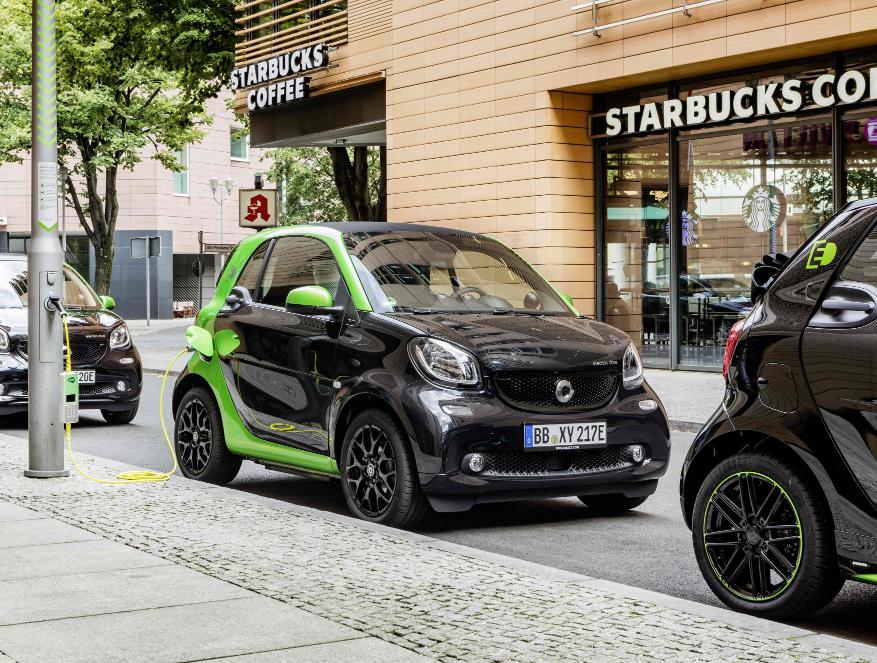
smart fortwo:

Smart-e42

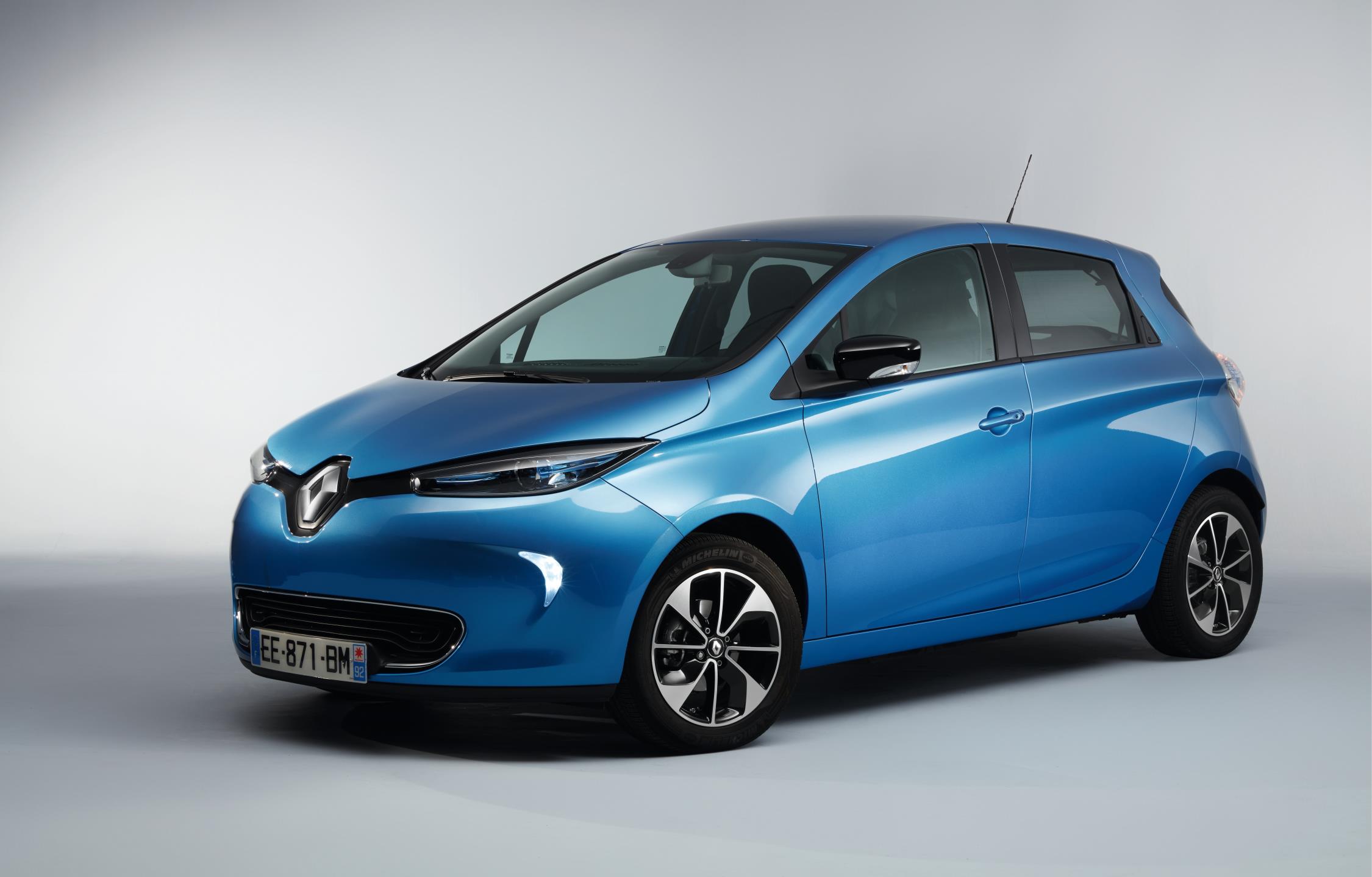
Renault ZOE:

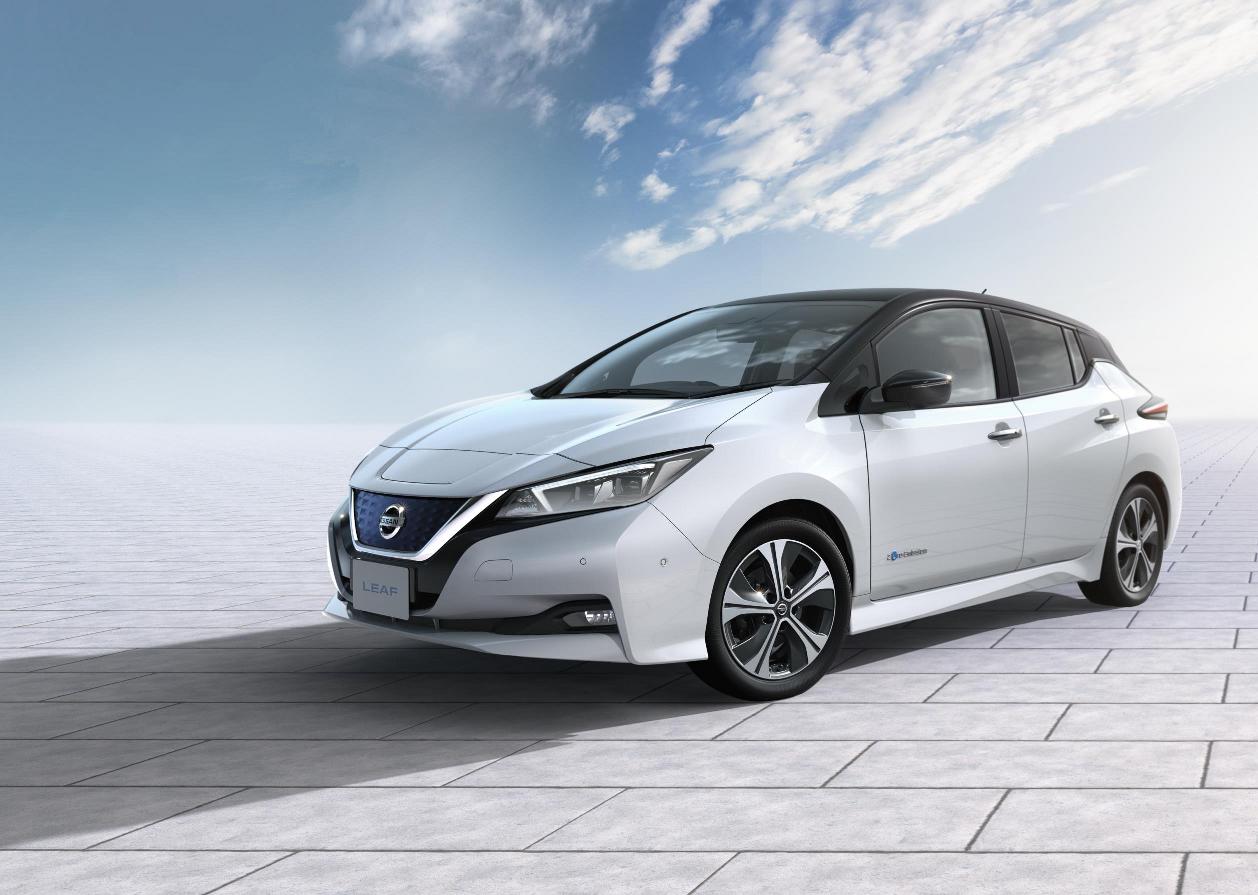
Nissan LEAF:

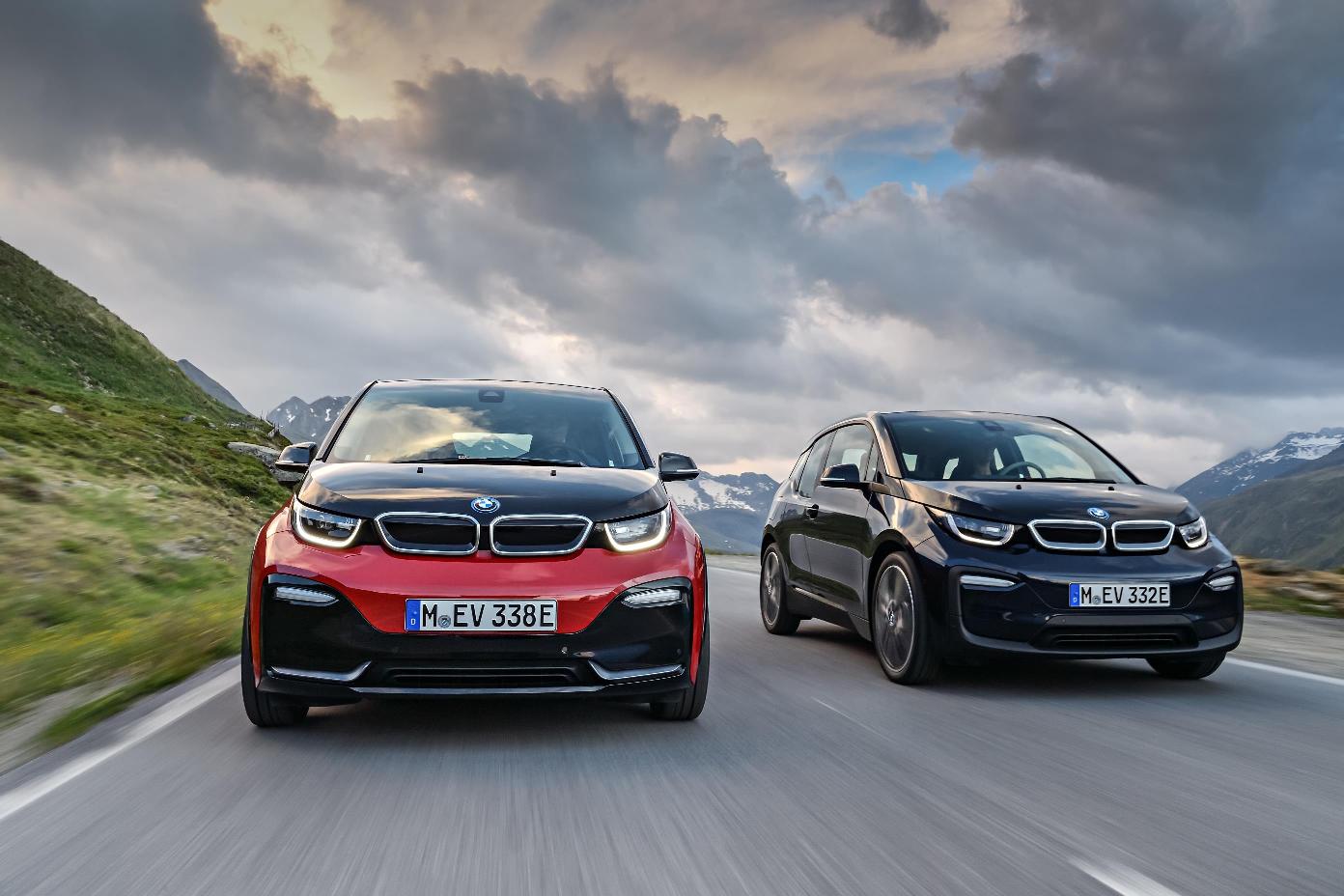
BMW i3:

Mitsubishi Outlander PHEV 4×4:

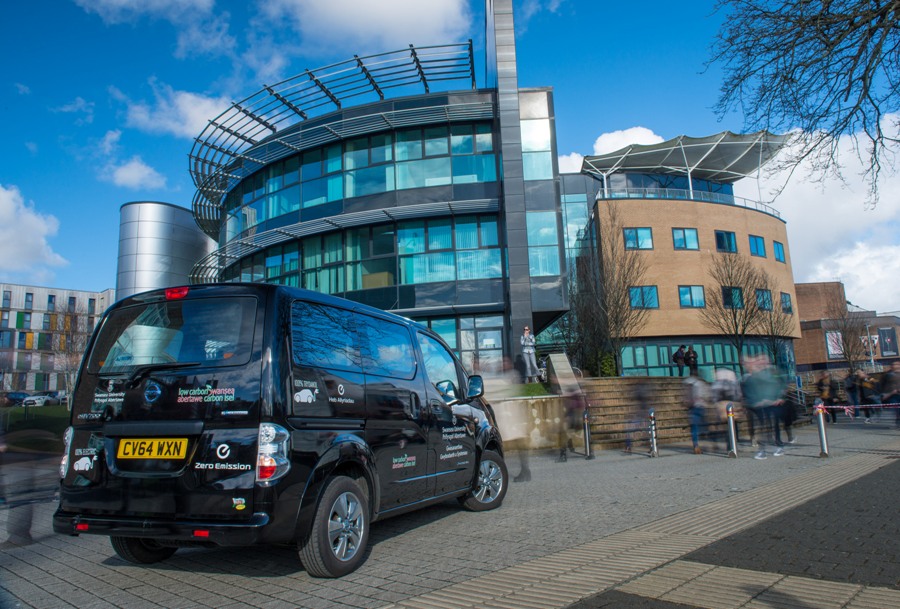
Nissan e-NV200 Van:

Nissan e-NV200 Combi:

Please also feel free to elaborate on the reason for your selection in the space provided for that purpose below.

2018 Nissan LEAF Revealed

The speculation is over. The new Nissan LEAF has been revealed. Here’s a picture of it:

and here’s a video showing it in action:

According to the Nissan press release:

The Nissan LEAF has been completely reinvented, combining greater range with a dynamic new design and advanced technologies*, representing Nissan’s technological leadership.

“The new Nissan LEAF drives Nissan Intelligent Mobility, which is the core brand strategy for Nissan’s future,” said Hiroto Saikawa, president and chief executive officer of Nissan. “The new Nissan LEAF, with its improved range, combined with the evolution of autonomous drive technology such as ProPILOT Park, and the simple operation of the e-Pedal, strengthens Nissan’s EV leadership as well as the expansion of EVs globally. It also has core strengths that will be embodied by future Nissan models.”

Although the main press release doesn’t mention the fact the new LEAF does of course still incorporate V2G technology. However another press release does point out that:

Nissan’s pioneering vision of the potential of electric vehicles doesn’t stop at powering the new Nissan LEAF. The car’s batteries can also be used as mobile energy devices.

Vehicle-to-Grid (V2G) technology combines two-way charging allowing electric vehicles to be fully integrated into the electricity grid. It helps improve the capability to handle non-programmable renewable energy flows, making renewable sources even more widely integrated and affordable. The system works by allowing Nissan EV owners to connect to the grid to play an active role in grid services, while providing the opportunity for an alternate source of income. Once scaled up, the V2G technology will be a game-changer for owners of Nissan electric vehicles as they become active participants in the energy market.

Working towards a more sustainable society means making better choices every day. xStorage, energy storage system, draws on the collective experience of the industry’s best to make home energy consumption more efficient and more sustainable. xStorage Home stores energy at the most economical times of the day while controlling how and when that energy is put to use, saving customers money and improving the entire energy system. It seamlessly integrates all the hardware and software needed to manage and store all of the energy the home needs in a single unit. Used to provide Grid services, xStorage Home could charge from the grid or discharge to the grid in order to generate the flexibility needed to further increase the usage of renewable energy.

Yet another press release points out that:

The new Nissan LEAF links drivers, vehicles and communities through the user-friendly NissanConnect feature and systems that share power between electric vehicles and homes, buildings and power grids.

Using vehicle-to-home systems, the battery makes it possible to store surplus solar power during the daytime and then use it to help power the home in the evening. The customer can also recharge the battery in the middle of the night, when prices are lowest in some markets, and then use the electricity during the day to reduce energy costs.

All this is of course music to our ears at V2G UK, but there is still a fly in our ointment. When will UK owners of Nissan electric vehicles be able to play an active role in grid services by becoming active participants in our antiquated energy markets?

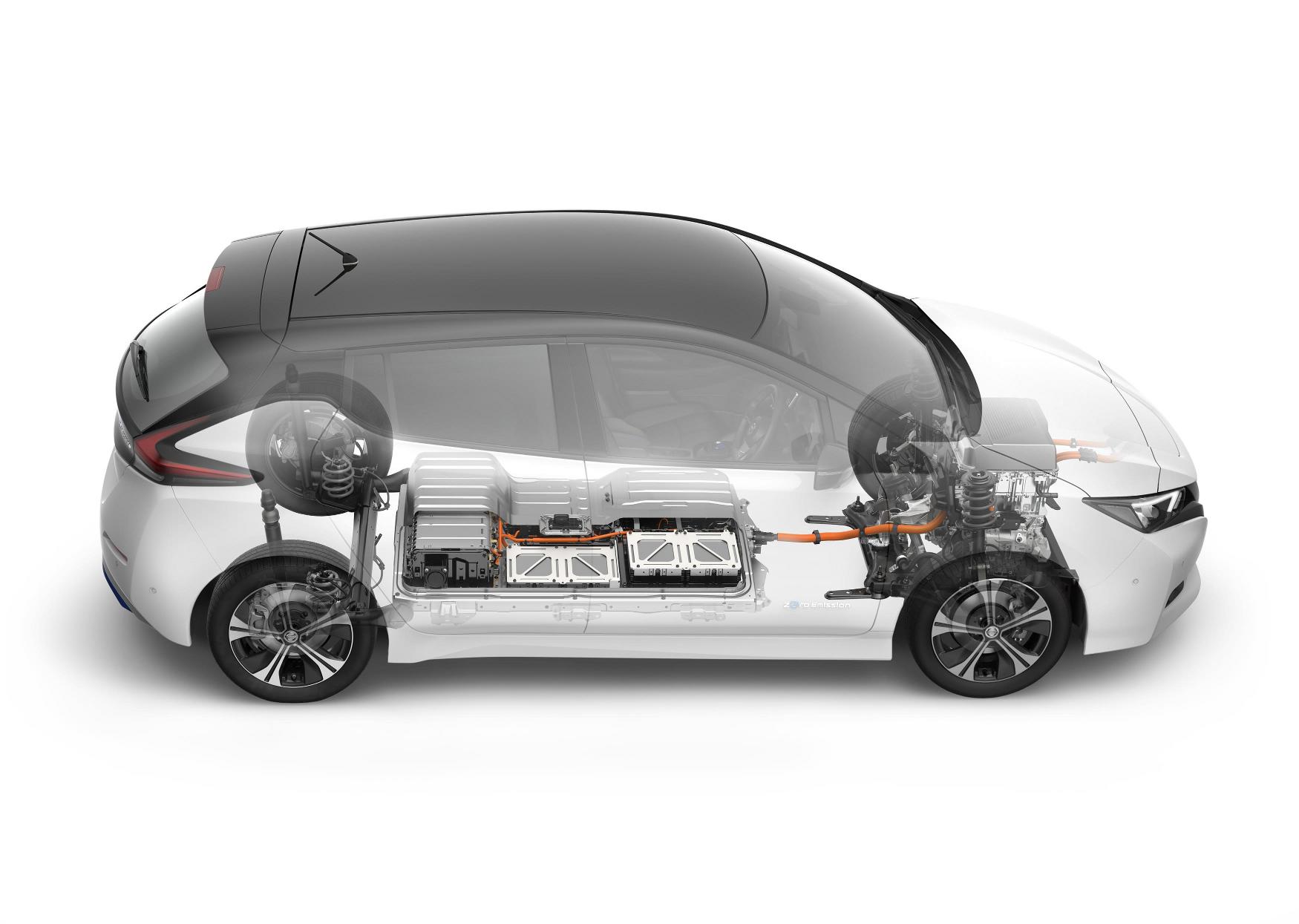
And what of the new LEAF battery pack? Here’s a picture of that:

According to the main press release once again:

The new Nissan LEAF offers a range of 400 km (Japan JC08 cycle**), allowing drivers to enjoy a safer and longer journey. The new e-powertrain gives the new Nissan LEAF 110 kW of power output and 320 Nm of torque, improving acceleration and driver enjoyment.

** 150 miles with EPA, 380 km with NEDC, both subject to homologation.

For customers who want more excitement and performance, Nissan will also offer a version with more power and longer range at a higher price in 2018 (timing may vary by market).

So it’s 40 kWh in the short term then, and perhaps the rumoured 60 kWh in the not too distant future?

The new Nissan LEAF will go on sale Oct. 2 in Japan. The model is slated for deliveries in January 2018 in the U.S., Canada and Europe.

Now I cannot help but wonder when Nissan will announce a 40 kWh version of the e-NV200. I also cannot help but wonder whether UK energy markets will get a matching upgrade in 2018?

P.S. The inimitable Robert Llewellyn reports from the 2018 LEAF launch near Tokyo:

P.P.S. It seems that our prayers have been answered! According to Pedro Lima at PushEVs:

Thanks to chrissy, a Nissan dealer and active member of the German forum Going Electric we now know that the electric van from Nissan will finally get its range increased in the spring of next year. According to chrissy, since yesterday it’s no longer possible to order the current model year (MY), because the new one with better range is coming soon.

OVO Energy Embrace V2G

We’ve mentioned OVO Energy before, in the context of innovative financial models. Now we can mention them again, this time in the same sentence as our favourite three letter acronym! In a new section of their website devoted to electric vehicles OVO include an overview of V2G and demand side response (DSR for short). Please read the whole article, but here’s an extract:

The electric vehicle revolution will do more than reduce carbon emissions. Vehicle-to-grid technology (V2G), can give you ultimate control over your energy, and even make you money. Fancy getting your own mini power station? Then read on.

‘Vehicle to grid’ technology enables energy stored in electric vehicles to be fed back into the national electricity network (or ‘grid’) to help supply energy at times of peak demand. It’s just one technological advancement in a slew of new initiatives like ‘smart charging’ and ‘demand side response’ that are aimed at changing the way individuals, and businesses, use energy in the future. In short: the electric car revolution is tied into a whole new way of consuming energy.

We’re hurtling towards a place where ‘two-way’ electric car chargers can enable homeowners with electric cars to sell their energy back to the national network. It’s a smart idea when you consider that over 90% of cars are parked at any one time – which is a lot of energy just sitting there doing nothing. This technology will give you the opportunity to manage your energy your way, and potentially become energy self-sufficient, reducing everyone’s reliance on energy companies. Get solar panels fitted, then adopt vehicle to grid technology and your home could become a private mini-power station!

For some strange reason OVO don’t include a picture of this innovative new technology in action, so here’s one from the extensive V2G UK archives:

However they do include this image in the associated demand side response article:

together with this explanation:

Did you know that, as consumers, we are at the heart of a UK wide initiative to help secure our energy future? Not simply passive bill payers, our energy will, increasingly, be in our hands and our actions will play a crucial role in ensuring its security.

Demand side response or DSR is the unwieldy name of a programme that aims to rebalance our energy needs around the country. It will not only change how we produce energy, but also how we supply and use it. From manufacturing, public sector and big business to the householder, we all have a role to play.

Please read that article from cover to cover too. The OVO V2G article concludes:

We can help you charge your electric car everywhere, for less. Our EV Everywhere tariff is designed specially for owners of electric (and plugin hybrid) cars, and comes with fixed energy prices for two years, 100% renewable energy and free membership of Polar Plus, the UK’s biggest EV charging network.

Exciting times are afoot in the V2G sector here in the United Kingdom!