Tesla Files SaMDES Patent Application

Regular readers with long memories may recall that way back when in November 2017 we here at V2G UK announced the launch of our Static and Mobile Distributed Energy Storage project? Those readers can no doubt imagine my surprise when I recently discovered an article by Sebastian Blanco in Forbes magazine announcing that:

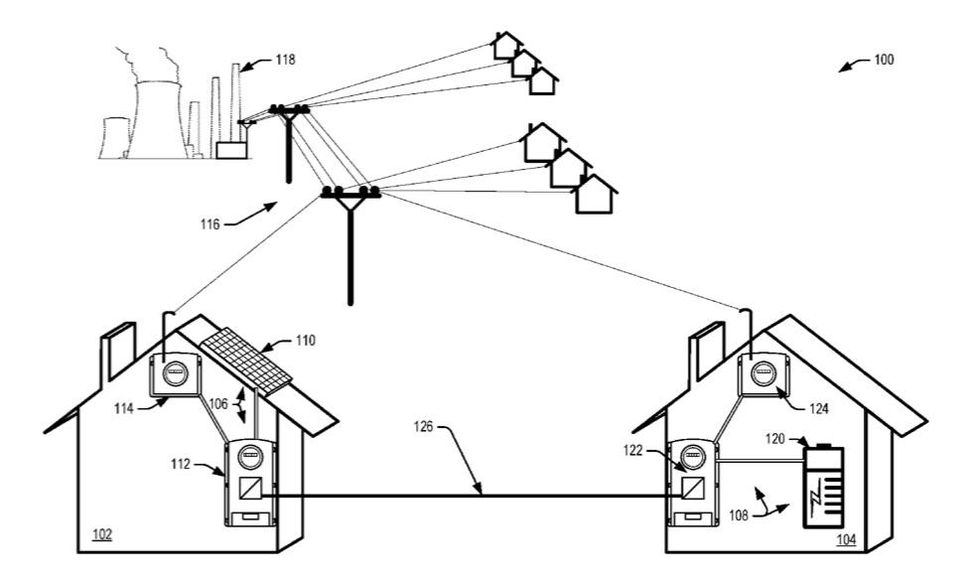
There’s the grid, the evolving smart grid and then there’s no grid at all. That’s the paradigm that Tesla is exploring in a new patent application, Number 16/186390, which calls for controlling energy generation interactions (solar roofs, anyone? ) that bypass the electric grid.

Here’s the monochrome graphic that Sebastian extracted from Tesla’s recent microgrid patent application:

SebastianBlanco_Tesla _Patent_Screen-Shot-2019-03-29

To my way of thinking that’s remarkably similar to the left and central portions of the much more colourful “prior art” in the banner that’s been proudly displayed at the top of every page on this web site for many years now. Do you suppose that Elon Musk is an avid reader of the V2G UK web site? If so perhaps he first arrived here way back in 2014 when I took Tesla’s marketing mavens to task over their propensity to be “economical with the truth” concerning open source electric vehicles.

Tesla’s recent US patent application includes the following paragraph:

This application is a continuation application of U.S. patent application Ser. No. 15/153,037 entitled “ENERGY GENERATION INTERACTIONS BYPASSING THE GRID,” filed on May 12, 2016, which is herein incorporated by reference in its entirety for all purposes.

That seems to refer to this 2018 patent assigned to “SolarCity Corporation, San Mateo, CA”. Does the US patent office by any chance have a number to call to advise them of occurrences of “patenting the bleedin’ obvious”?

Exhibit 1: https://web.archive.org/web/20140606031404/https://v2g.co.uk/blog/

Wallbox Announces the “First ever DC charger for the home”

I don’t recall ever being quite so excited reading a press release. I’m afraid I’ve been far too busy here in the UK to travel to China this week to work on EV charging station standards, as I originally planned a few months ago. I’m still far too busy even to travel to the eMove360° conference and trade fair in Munich today. Which is something of a pity since I’d like to take a very close look at this device in the flesh, so to speak:

DC-Wallbox

The Wallbox press release I’ve recently been reading contains a few interesting pieces of background information for we V2G watchers here in the UK, such as:

Research, technical development, product testing and manufacturing take place in Barcelona, where Wallbox has strong engineering resource and capacity to produce 100,000 chargers per year.

The company is Spanish but the brand is international. Wallbox operations are solely conducted in English. It began UK operations in September 2018.

not to mention:

Wallbox operates in 30 markets around Europe and overseas as far as New Zealand and China. Wallbox is partner to major automotive OEMs and energy companies. The company is approaching 20,000 installations across all markets and sees the UK as one of its most important growth opportunities. The company is 80-strong and growing, with over half of the workforce involved in software and hardware development. Many employees have made the transition from IT to automotive, coming from the likes of Apple and Tesla, which in part accounts for the unique design quality.

Moving on to Wallbox’s shiny new black box pictured above, let’s take a look at the basic specification first. According to the press release:

All Wallbox chargers are rated up to 22 kW, suitable for domestic and commercial installation and connect to the myWallbox energy management platform. This enables scheduling to take advantage of time and use tariffs, energy balancing between vehicle and the home, and a host of other easily accessible features. Wallbox chargers have connectivity through WiFi, Ethernet or Bluetooth.

Presumably that 22 kW applies to the DC black box as well in which case it can handle three phase, and if the entire Wallbox range can connect to an energy management system (EMS for short) somewhere in the clouds I’d like to take a very close look at all the other AC boxes as well! Sticking with DC for now though:

The new DC charger puts energy created and stored in the home, straight into the electric vehicle through a CCS or ChaDeMo connector. Home generation and storage are now becoming much more cost effective considerations as electric vehicle range and battery size increase and reduce ROI timescales.

The charger’s unique bi-directional power electronics reconcile the alternating (AC) and direct (DC) energy that flows between vehicle charging, rooftop PV generation or garden wind turbines, and home battery storage.

Wallbox are talking just the sort of language we like to hear when discussing our “Static & Mobile Distributed Energy Storage” (SaMDES) project, and they have even uttered the magic words “bi-directional power electronics”. This sounds like pukka vehicle-to-home capable kit, so the next obvious question from our North Cornwall perspective is “when will it start shipping to the UK?”

First sales are planned for mid 2019

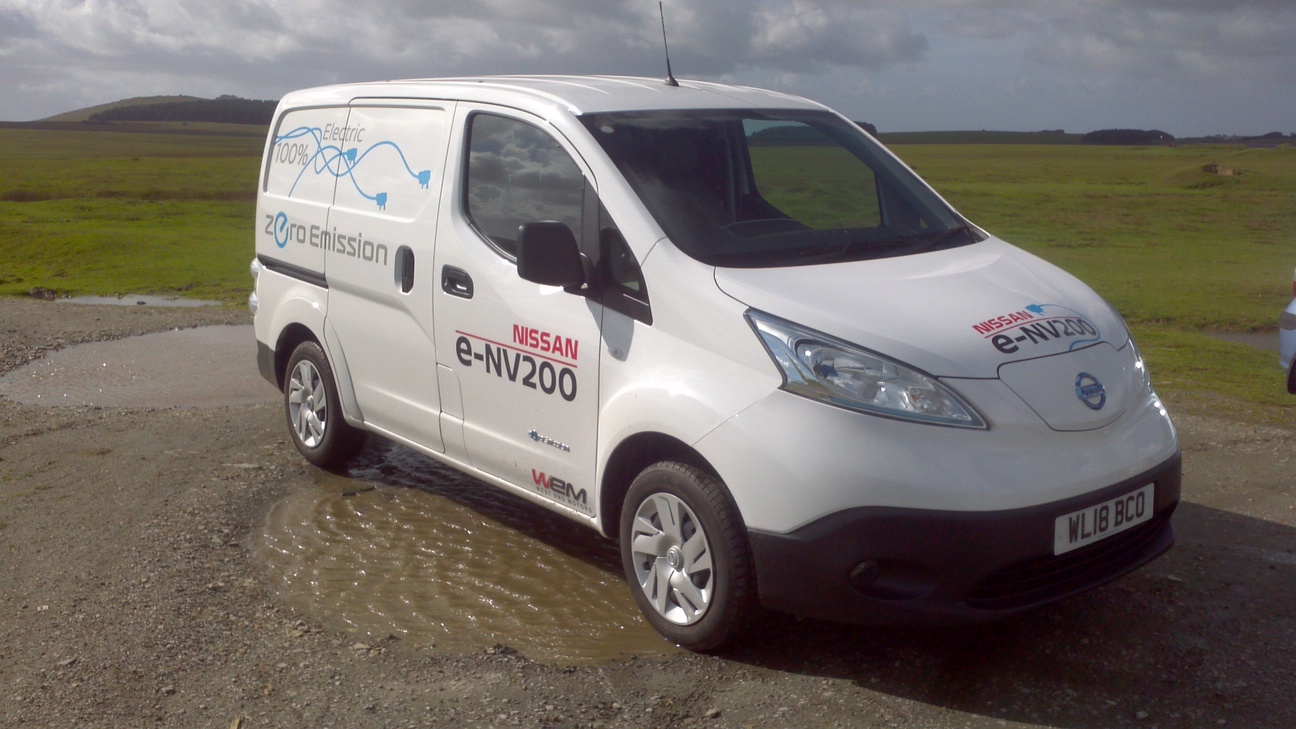
A minor disappointment there then, but yesterday I did manage to speak at length with Stewart Mckee who is Director of Wallbox UK. He assures me that the black box on display in Munich today isn’t just an empty shell. It is in fact “production ready”. That being the case I cannot wait to experiment with plugging one into the CHAdeMO connector at the front of one of Nissan’s new 40 kWh e-NV200 vans, which we test drove for three days following the recent Cornwall New Energy EV event in Wadebridge:

2018-09-21_11-45-21_174

As if all that wasn’t exciting enough there’s more where that came from!

Wallbox is also making it easier to manage electric vehicle charging at home. The company is introducing software that allows spoken commands, and cognitive intelligence that learns about an owner’s charging behaviour and preferences, in order to predict optimum energy balance with home and grid.

This unique two-tier combination of software technologies means that you can speak directly to your home charging system and it will interpret your requirements in the most energy efficient manner. For instance, you can simply say: ‘I need my car fully charged for the morning’ and Wallbox will take care of the rest, with consideration for all other home energy demands during the same period of charging.

The ability for Wallbox software to automatically manage charging in this way adds another smart layer to dynamic load balancing between between vehicle and the home, and vehicles parked in the same area.

Please forgive me, but after all that excitement I need to go and lie down now. However make sure to watch this space, because we’re hoping to have a chat with Wallbox’s CEO Enric Asunción real soon now.

V2G UK Fall Victim to Open Source Cryptocurrency Scam

Long time followers of the V2G UK blog may recall that many moons ago we took Elon Musk to task for over hyping Tesla’s open source credentials?

Yesterday evening (British Summer Time) we spotted Elon “tweeting” about Tesla’s open source credentials once again!

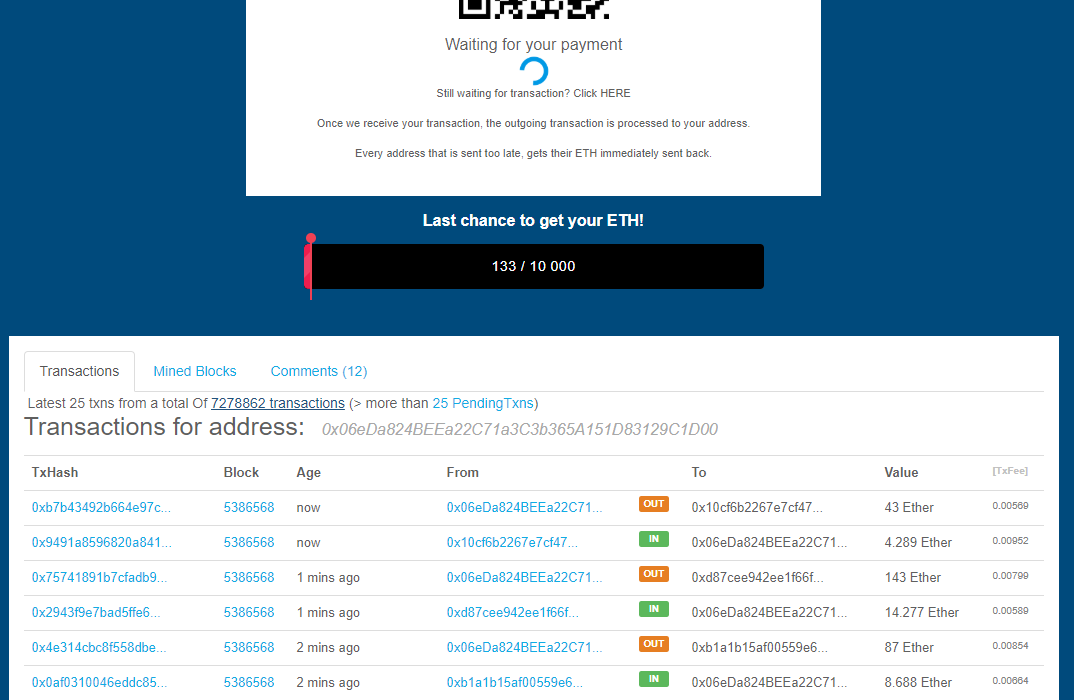
Whilst we all wait to see exactly how Elon’s offer of “Tesla vehicle security software for free” pans out, I really must mention that something else flashed before my eyes on Twitter last night. Apparently one or more of the mavens in Tesla’s marketing department had dreamt up a scheme to create some much needed publicity by “giving away” two cryptocurrencies, namely bitcoin and ethereum!

By this morning (BST) it seemed that Elon’s reserves of virtual riches had almost run out:

2018-08-12_1205-LastChanceSaloon

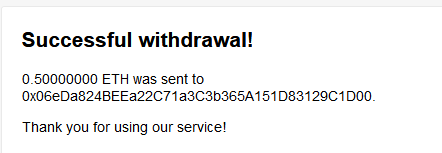
Unable to resist the temptation I hastily sent half a hard earned ethereum in Elon’s direction:

2018-08-12_1156

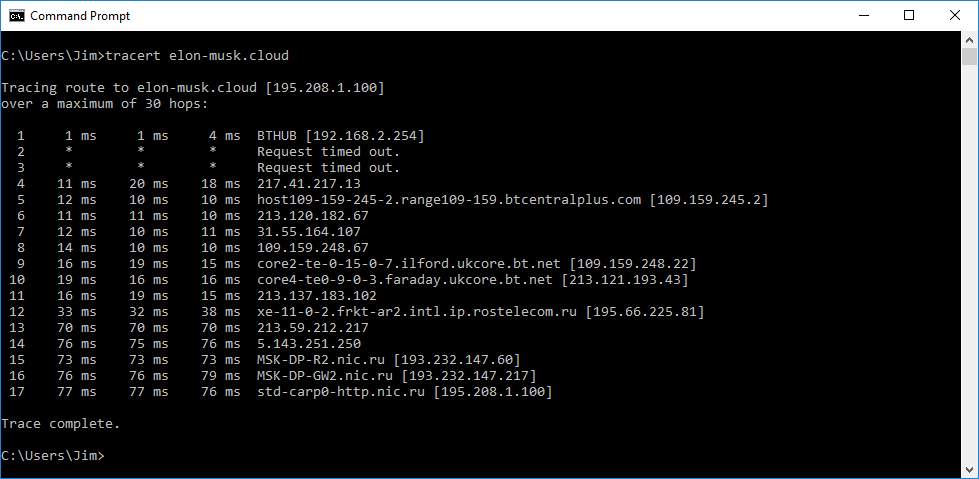
The strange thing was, half an hour later I still hadn’t received my minimum 0.5 ETH back, let alone the promised 5.0 ETH. It was at that point that things started smelling somewhat fishy. I belatedly put my almost atrophied command line skills to work, only to discover:

2018-08-12_1237-TraceRt

At first it looked as though my virtual currency must have been sent to one of Tesla’s showrooms in Russia. Belatedly doing my due diligence I discovered that whilst apparently there is a single Supercharger in Moscow, the showroom count is zero:

2018-08-12_1420-Tesla-Russia

I know that Superchargers are amazing machines, but can they run HTTP daemons? I fear not, and thus I’ve finally been forced to face the bitter truth. I’ve been conned. Now I cannot help but wonder whose desk the buck for the apparently total loss of my fractonal ethereum stops on? Perhaps someone at Twitter will carry the can?

Or perhaps not? Meanwhile, according to the Great God Google:

2018-08-12_1435-OpenSourceSecurity

V2G Explained by the Mainstream Media

V2G is now a hot topic in the UK mainstream media! A few days ago The Times newspaper published an article on vehicle-to-grid technology. According to Edward Lucas:

The hunt is on for cheaper and better storage, which is where electric cars come in. For its owners, the car battery is an unused asset most of the time, just as the engine is for those of us with old-style vehicles. Yet for grid managers dealing with the spikes and troughs in demand, a terawatt hour stored in spare batteries is exactly what is needed. Instead of subsidising standby generators, we can pay car owners to sip power from their vehicles’ batteries.

But making this work on a larger scale requires change. Our existing energy set-up is centralised: big power plants transmit large amounts of electricity over long distances to passive consumers. This arrangement copes with the 115,000 electric cars we have now. But it will not be fit for 2040, when the government intends to ban the sale of new diesel and petrol cars. By then we are predicted to have more than 25 million electric vehicles.

Done wrong, that will resemble something like a vast network of electric kettles. Charging them all at once at home would crash the grid. Consumers will curse, costs will soar and benefits will shrivel. To avoid that, the electricity system of the future will have to look like the internet: decentralised and interactive. Consumers will also be producers — perhaps from rooftop solar panels or by supplying power from their car batteries back into the grid when needed. Demand will be smarter: appliances will adjust their consumption according to price. Electric car owners, for example, will not mind exactly when their vehicle is charged, so long as it is ready when they need it. They will take advantage of cheap electricity just as consumers do already with night storage heaters.

The prospect is both exciting and daunting. Dieter Helm, the energy economist who recently reviewed energy costs for the government, says that the combination of electric vehicles, battery technology and digitisation presents challenges of a scale and magnitude not witnessed since the reconstruction of our electricity system after 1945.

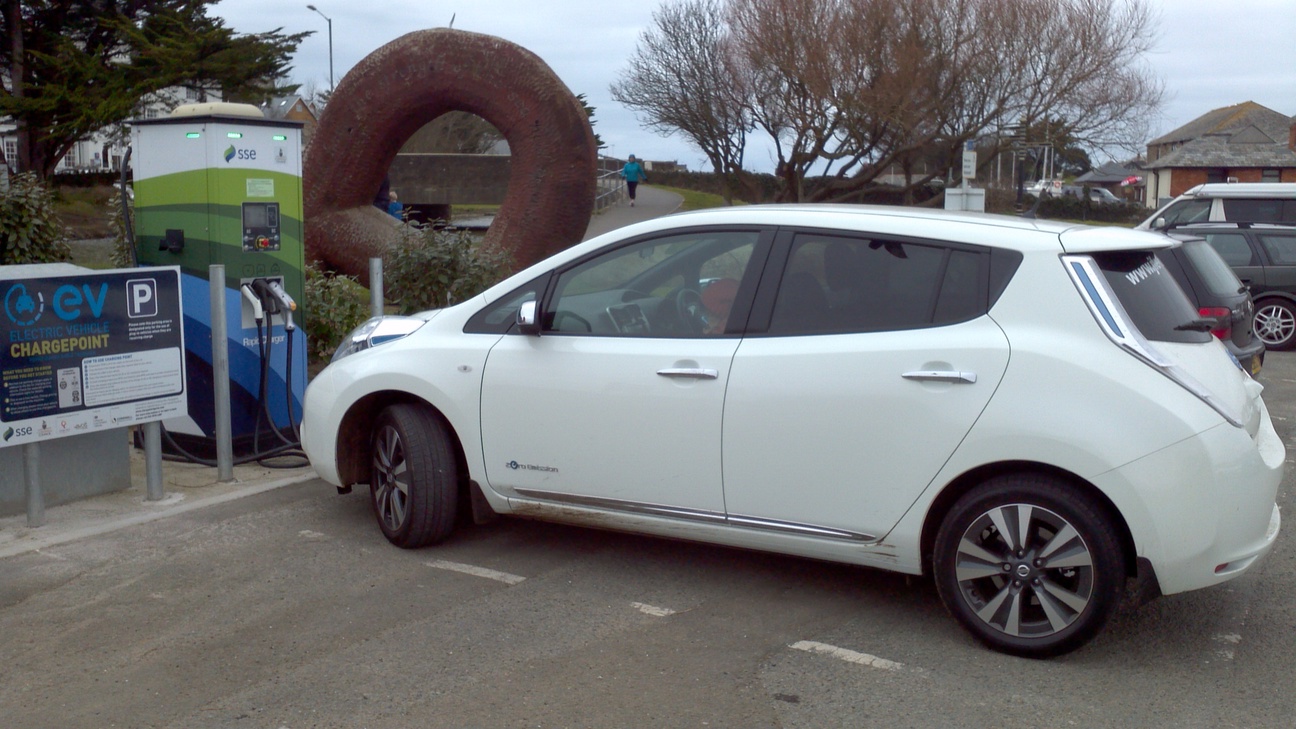
Today the BBC have followed the Times’ lead by publishing an article by Theo Leggett with a slightly different perspective. Unfortunately they included at the top a stock photo of what looks a lot like a Renault ZOE instead of a Nissan LEAF. Here’s one of our stock photos of a 2016 LEAF, which is V2G capable:

2016-03-19_12-56-18_200

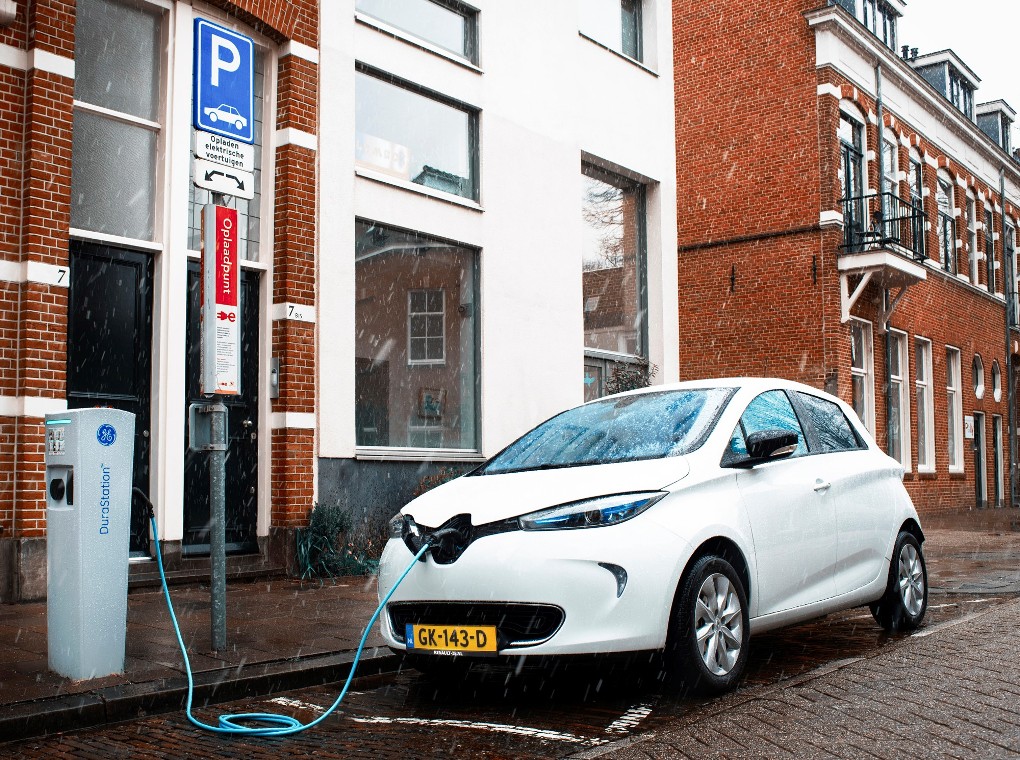
However currently the ZOE is not. Here’s what one of those looks like:

ZOE-LomboXnet-1024

Theo points out that:

At the Nissan Technology Centre in Cranfield, Bedfordshire, a number of the company’s electric Leaf models are lined up alongside a bank of chargers. But these cars aren’t just drawing energy from the grid; they’re also putting it back.

The system is called Vehicle to Grid, or V2G. The Japanese company is developing it in partnership with the Italian power firm Enel and is already operating a small trial hub in Denmark.

Electric cars are, in effect, energy storage devices, and because they spend much of their time parked up not doing anything they can help smooth out the peaks and troughs in energy demand.

“Basically, we can consider the car as a battery with wheels,” says Maria Laura Corallini, the engineer in charge of the V2G project.

“You can use the energy storage capability in the battery to provide specific services back to the grid.”

The system uses software to regulate the charging level of multiple vehicles.

When the grid needs extra power, it can draw very small amounts from each individual vehicle. When energy is abundant, it can top them up again. Users will get paid for the electricity they provide.

If thousands of cars are connected together, then the amount of energy given back to the grid can be substantial, and it can be varied on a second-by-second basis.

Initially the plan is to sell it to businesses that operate large fleets, although the company says it will also introduce a residential version. Other organisations are also experimenting with the technology.

I suppose V2G UK must count as one of those “other organisations” in this context! Theo continues by referring to an oft mentioned tale of V2G woe:

Not everyone agrees that V2G makes commercial sense, however. The chief technical officer of Tesla, JB Straubel, for example, has suggested in the past that he doesn’t see it becoming a viable solution, largely due to its cost and complexity.

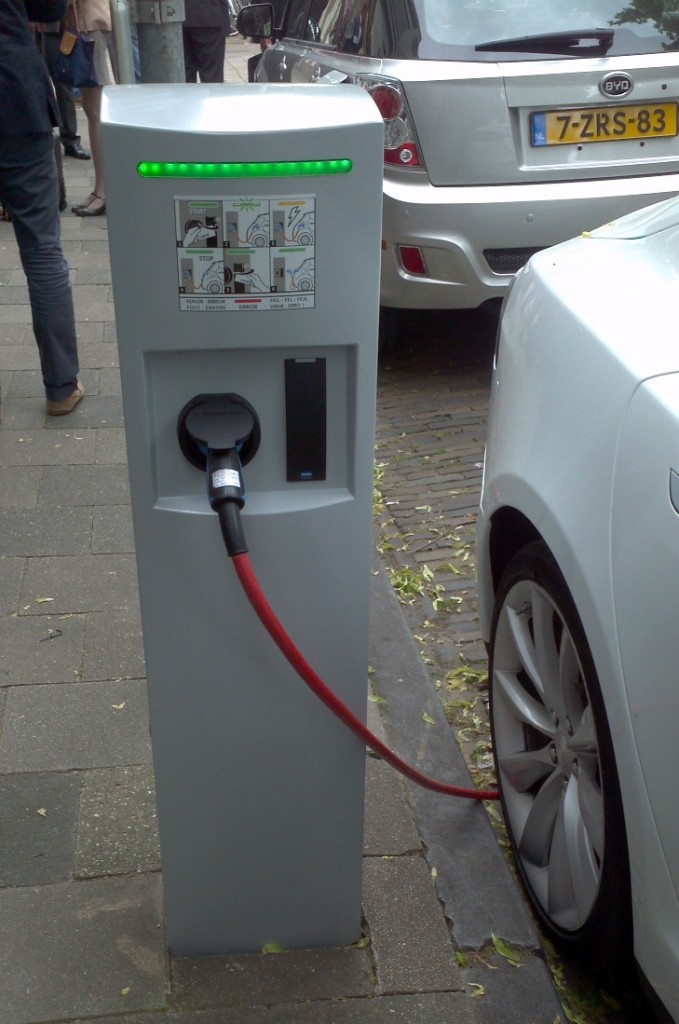
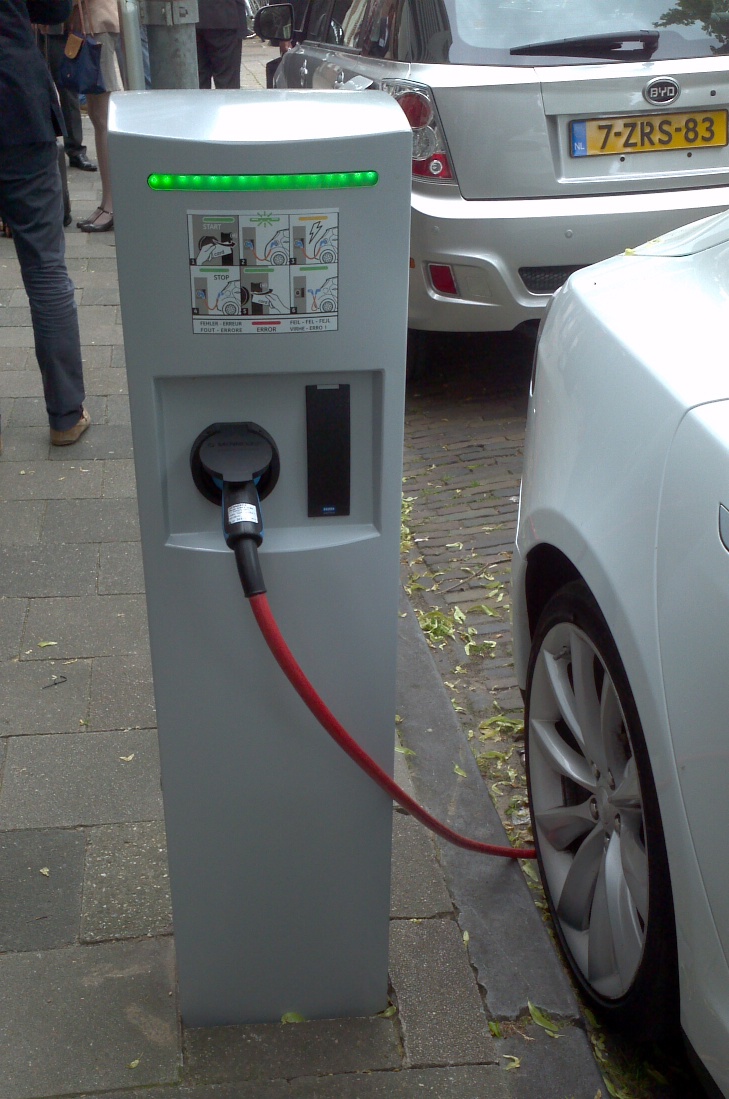
I am forced to agree with JB that here in the UK V2G currently doesn’t “make commercial sense”, which further forces me to reveal once again this image of a Tesla Model S connected to a V2G capable bi-directional charging station in the Netherlands:

Unfortunately in all the circumstances that particular Tesla was only capable of charging from the kerbside bi-directional charging station. The BYD e6 parked next to it could however also discharge, ultimately to the local distribution grid. Do you suppose that if and when the “cost and complexity” reduces and V2G does “make commercial sense” in Tesla’s view, power will suddenly start flowing in the opposite direction down that stout red cable?

Will a Cornish Lithium Gigafactory Rival Open Soon?

V2G have recently relocated to North Cornwall. As a consequence I spent yesterday afternoon with Scott Mann, my new MP, at a meeting organised by the Federation of Small Businesses in Launceston:


Scott imparted a piece of news that hadn’t previously appeared on my radar screen. It seems there’s lots of lithium to be found down old Cornish tin mines! In a news release last month Cornish Lithium Ltd. announced:

Cornish Lithium, today announces that it plans to explore for, and to potentially develop, lithium contained in underground hot spring brines in Cornwall.

The presence of lithium in hot spring brines in Cornwall has been known since the mid-1800s but this was regarded as a curiosity, given there was no developed market for the metal at that time. New technology now offers the potential to extract lithium from these hot spring brines and to supply product to the rapidly growing battery market for electric cars and for power storage.

Cornish Lithium has entered into definitive mineral rights agreements with Strongbow Exploration (listed on the Toronto Stock Exchange, TSX-V: SBW) and Mineral Exploration Limited, and has signed a Heads of Agreement with Tregothnan Estates, to carry out exploration for, and development of, lithium in hot spring brines within the majority of the mineral rights held by these entities.

Rights secured by Cornish Lithium will allow the Company to undertake what it believes to be the largest, single, unified mineral exploration programme in Cornwall’s history.

Here’s a map of the “areas around Camborne, Redruth and St. Day” that Cornish Lithium are looking into:

A bullet point further down the announcement also reveals that:

The Company has also secured rights to geothermal energy contained in the hot spring brines. It is anticipated that this energy will be utilised to generate power to reduce processing costs, but also may be used for other industries in the region.

Now as Scott Mann pointed out yesterday, with the potential for tidal and wave power as well as geothermal energy generation the South West Peninsula is well suited for “24/7” renewable energy generation as well as the more familiar “intermittent” wind and solar photovoltaic electricity generation, so that aspect of the proposed project is also of great interest to us here at V2G UK. Getting back to the lithium bearing hot spring brines though, Cornish Lithium’s news release also points out that:

  • Cornish Lithium is an independent company that has been created to develop lithium in geothermal “hot spring brines” in Cornwall. The Company believes this could result in the creation of a new lithium production industry in Cornwall.
  • Cornish Lithium’s legal agreements encompass a large area centered around the area of Camborne, Redruth and St Day, but also cover other areas of Cornwall that the Company believes may be prospective for geothermal hot spring brines. Negotiations are ongoing with other owners of mineral rights within Cornwall.
  • The rapid growth in demand for lithium-ion batteries is now centre stage globally given the dramatic switch towards electric cars. Most major vehicle manufacturers have outlined an electric car development programme with some manufacturers expecting 25 per cent of their sales to be electric vehicles by 2025. It is considered vital that new sources of lithium are developed, particularly in Europe in order that European car manufacturers can gain secure access to the lithium required.
  • The UK Government has defined lithium as a metal of strategic importance to the country.
  • The majority of lithium produced today comes from South America, Australia and China.
  • Cornish Lithium is an independent company that has been created to develop lithium in geothermal “hot spring brines” in Cornwall. The Company believes this could result in the creation of a new lithium production industry in Cornwall.
  • Cornish Lithium’s legal agreements encompass a large area centered around the area of Camborne, Redruth and St Day, but also cover other areas of Cornwall that the Company believes may be prospective for geothermal hot spring brines. Negotiations are ongoing with other owners of mineral rights within Cornwall.

The following day Cornish Lithium announced that this video had been released:

You will note that at around 5:15 Cornish Lithium CEO Jeremy Wrathall says:

We’ll hopefully go into production, with a fair wind, maybe in the next 5 years or after 5 years. That’s the sort of timeframe we’re looking at.

Presumably within that timeframe we’ll also find out whether there will be another geothermal energy generation project to add to our map of geothermal energy generation projects in the United Kingdom!

The prospect of lithium being “mined” in Cornwall also raises the question of what might happen to the metal once it’s been extracted? Perhaps Tesla and SpaceX founder Elon Musk will use the proposed Spaceport Cornwall nearby to ship the raw material to Tesla’s “Gigafactory” in Nevada? More realistically, perhaps Cornwall’s very own Lithium ion battery factory might be developed alongside Cornish Lithium’s hot brine wells?

Finally, for the moment at least, here’s some further information on Cornwall’s long mining heritage:

Robin Berg’s TEDx talk on “A new local energy and transport system”

I had the pleasure of meeting Robin Berg in Utrecht last summer at the launch of the LomboXnet solar PV powered bi-directional vehicle to grid system. Here is a video of Robin’s recent presentation at TEDx Utrecht:

Robin says many interesting and enlightening things, but for the moment please consider this one:

Tomorrow your car will run electric. The day after it will power your house. It will be 100% renewable, it will be 100% clean, and it will be the end of coal, oil and gas.

Is Distributed Energy Storage on Ofgem’s Roadmap?

In the first of my reports from the Regen SW “Community Energy Markets” conference in Bristol last Thursday I’ll be highlighting references in several of the presentations to what I like to call “Distributed Energy Storage“, which encompasses a whole lot more than just the battery packs in electric vehicles.

The first person to mention the subject was Jeff Hardy, who is Head of Future Consumers & Sustainability at Ofgem. His presentation was on the topic of “Non-traditional business models: Supporting transformative change in the energy market” which deserves an article all of its own in due course. However whilst discussing “rapid technological innovation” Jeff pointed out that “battery storage is the current flavour of the month”. After that Sonya Bedford, Head of Renewable Energy at Stephens Scown solicitors, also hinted at the subject in her talk about “Local supply models” in which she mentioned “Demand Side Response” and “Local Balancing Units”.

At the conclusion of the morning session Merlin Hyman, chief executive of Regen SW and our host for the day, asked if there were any questions from the floor. Nobody else seemed very keen to put their hand up, so I waved my arm in the air and was duly invited to stand up, state my name and affiliation, and then pose the panel a question. In the event I actually asked two. The first was to enquire if anybody else present was interested in international smart grid standards apart from me, since the LBUs that Sonya had mentioned seemed to me to come within the remit of the IEC 62325 standard working group which I am part of. Then I asked the panel whether the battery packs in electric vehicles were anywhere near being “flavour of next month” in the UK as yet.

Nobody responded to my first question, but Merlin framed my second question to the panel in terms of the recent “Powerwall” announcement from Tesla Energy. I was both pleased and somewhat surprised when Jeff pointed out that V2G was indeed on his radar screen, since he is “fascinated by EVs” and the “traditional battery worries have been overcome by technology”. Sonya was then good enough to mention that I had said much the same thing at the AGM of Exeter Community Energy earlier in the week.

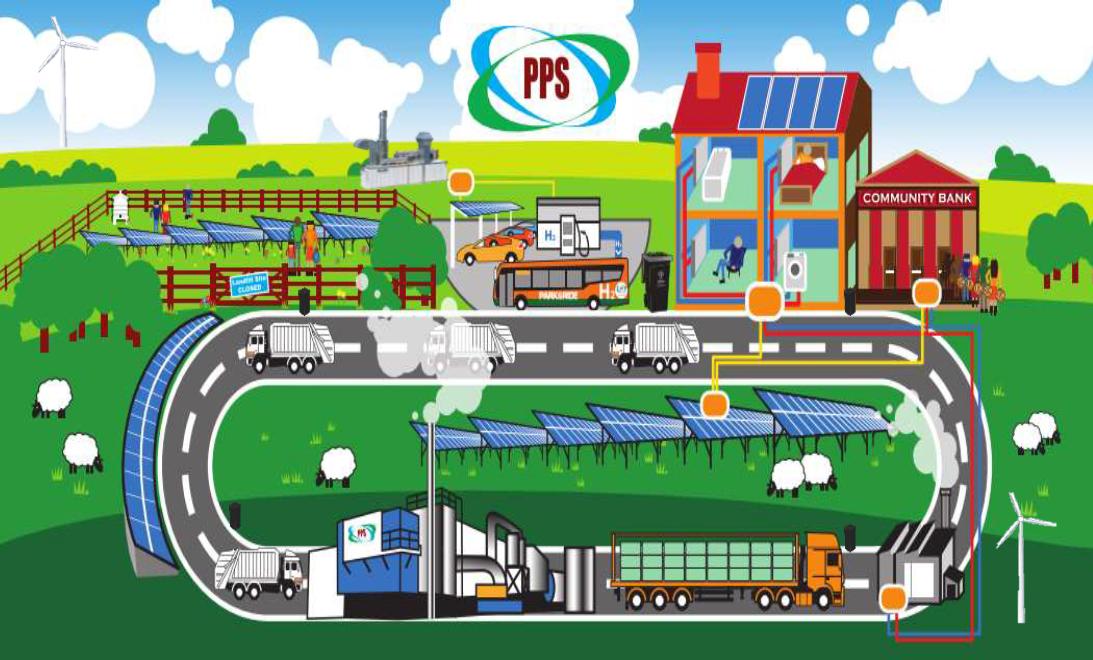
After lunch James Owen, commercial director of Public Power Solutions, started off by giving us a history lesson about local electricity generation in the UK.  Then he went on to discuss the benefits of “Local Balancing Units”, “street level storage solutions” and “a true local smart micro-grid” amongst other things, using both Swindon and the Danish island of Bornholm as examples. James freely admitted to having pinched an infographic of Bornholm, so I’ve taken the liberty of pinching one of his! Here is PPS’s template for a future Bristol, or Bornholm, or the Isle of Wight, or anywhere else in Europe for that matter.

See if you can spot the difference between this version and the one on the PPS web site. It seems those recent additions are Tesla Powerpacks, and in my own vision of a future sunny Southwest England the cars under the solar PV canopy at the park and ride would be connected to similar “black boxes” that incorporate V2G functionality.

Having finally got the preface out of the way, I’d like at long last to mention some alternative battery filled “black boxes” from suppliers other than Tesla Energy. For “grid scale” battery storage you can repurpose EV battery packs like Sumitomo, or use batteries designed for the task from the likes of Saft.

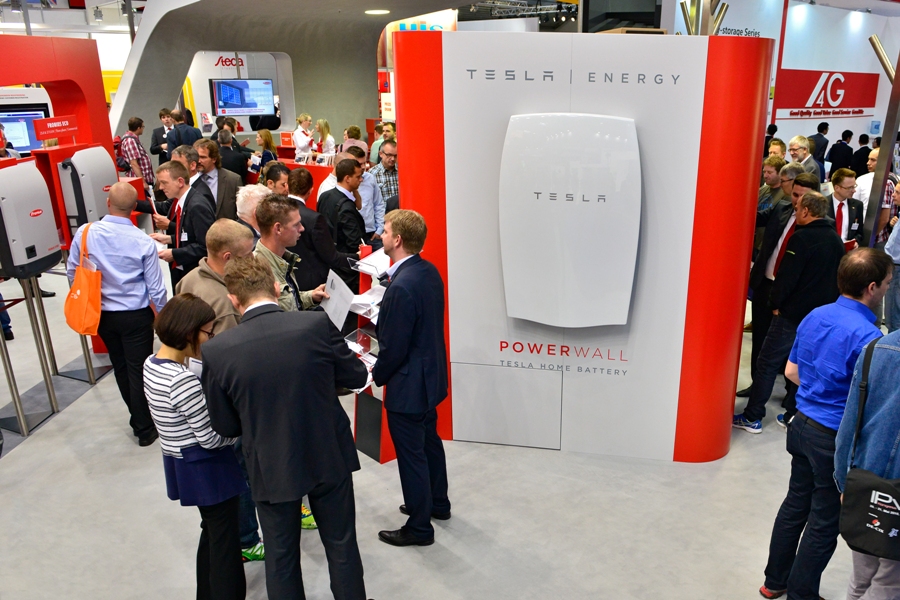
Moving down to the domestic scale I note that for some strange reason the solar PV equipped dwelling in a future Bristol/Bornholm lacks a V2x equipped garage similar to the one shown in the V2G banner at the top of this article. Moving indoors Moixa’s Maslow predates the Powerwall by a long way, and is designed to power a DC circuit for LED lighting, computers etc. Quite possibly prompted by Elon Musk‘s recent announcement, Samsung have also launched a domestic version of their modular Energy Storage System (or ESS for short). Stefan Quandt (of BMW fame) has launched the SolarWatt MyReserve, which has already won an award at the recent ees Europe exhibition over in Germany. Varta also launched their Engion Element “storage for beginners” at ees Europe. Here’s how they looked at the show:

and just in case you haven’t yet tasted the flavour of the month, here’s a Tesla Powerwall for your delectation:

As you’ve probably gathered by now I have a lot more to say about all of this and more, including covering Anthony Price of Swanbarton’s talk dedicated to “Local balancing using storage”. However for the moment at least I cannot help but wonder what Ofgem make of all this “rapid technological innovation”, not to mention the potential associated “non-traditional business models” and last but by no means least, international smart grid standards!

Solar PV Powered Public V2G Charging Launched in Utrecht

Earlier this week I attended a vehicle-to-grid workshop organised by Nissan Europe. This one was held in Utrecht in The Netherlands, where I discovered that the workshop coincided with the announcement of a new partnership between the City of Utrecht and a number of Dutch companies to ultimately deliver 120 “smart charging stations” across Utrecht. There’ll be more from me on the workshop itself in due course, but for now let’s take a close look at the world’s first publicly available solar powered V2G capable AC electric vehicle charging station:

The charging station itself is a GE DuraStation with added bi-directional capability. Sadly my wish of a few weeks ago has not yet come true, and the Tesla model S you can see in the foreground is still only capable of being charged by the DuraStation, which is IEC 61851/62196 mode 3 compliant. However the BYD e6 visible in the background IS able to discharge its batteries back to the local distribution grid.

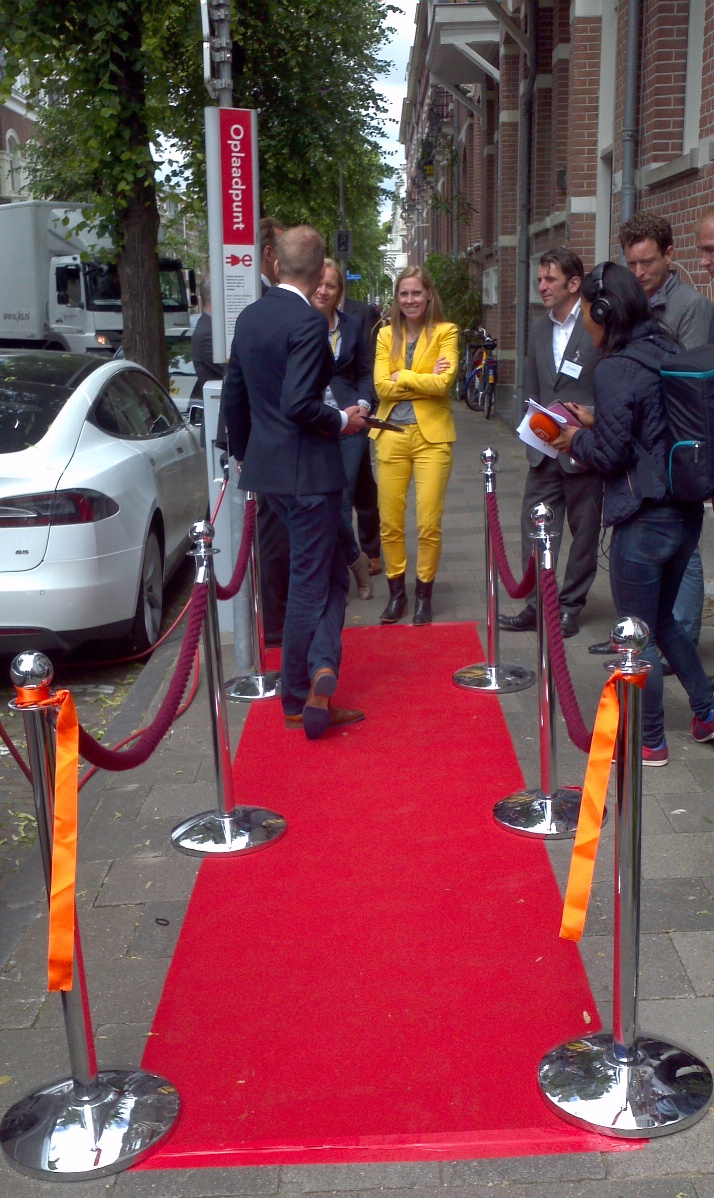
This particular charger is situated outside the offices of LomboXnet, and hence integrated with the CHAdeMO compliant V2G system we reported on back in March, which stores the excess energy generated by the Solar PV installation at a nearby primary school. Here’s another angle on the event, showing Councillor Lot van Hooijdonk shortly after she cut the ribbon to officially open the charging station:

Another part of my wish from last month has also yet to come true. In Utrecht as in the United Kingdom, and despite the red carpet, whether you own an electric vehicle manufactured by Nissan, BYD or Tesla, and whether it prefers to be charged via CHAdeMO, IEC 62196 or a Supercharger, you still won’t get paid for allowing your battery pack to be used to provide an extremely useful service to the local distribution grid. However, perhaps mighty oaks from little acorns do eventually grow?

Whilst we wait to discover if/when/how that happens, here’s the video that Robin Berg of LomboXnet showed the attendees of the 3rd Nissan V2G workshop:

Tesla Energy Launches the Powerwall

In a much anticipated announcement last week Elon Musk told the world that Tesla Motors now had a sister business entitled “Tesla Energy” which would start delivering a new product called the Powerwall later this year. Here’s a video of Mr. Musk’s presentation:

Note that at around 2 minutes 25 seconds Elon points out that:

We have this handy fusion reactor in the sky called the Sun. You don’t have to do anything, it just works. It shows up every day and produces ridiculous amounts of power. Now a lot of people aren’t clear on how much surface area is needed to generate enough power to completely get the United States off of fossil fuels….

It’s really not much, and most of that area is going to be on rooftops. You won’t need to disturb land. You won’t need to find new areas. It’s mostly going to be on the roofs of existing homes and buildings.

Now the obvious problem with solar power is that the sun does not shine at night. This problem needs to be solved! we need to store the energy that is generated during the day so that we can use it at night.

I recommend watching the whole show, but if you’re the impatient sort then skip to 11 minutes 40 seconds and listen to this bit:

What about something that scales to much, much larger levels? For that we have something else. We have the Powerpack. The Tesla Powerpack is designed to scale infinitely. You can literally make this into a GWh solution. We already have one utility that wants to do a 250 MWh installation.

According to the Tesla Energy launch press pack:

Tesla is not just an automotive company, it’s an energy innovation company. Tesla Energy is a critical step in this mission to enable zero emission power generation.

With Tesla Energy, Tesla is amplifying its efforts to accelerate the move away from fossil fuels to a sustainable energy future with Tesla batteries, enabling homes, business, and utilities to store sustainable and renewable energy to manage power demand, provide backup power and increase grid resilience.

Tesla is already working with utilities and other renewable power partners around the world to deploy storage on the grid to improve resiliency and cleanliness of the grid as a whole.

Here’s a picture of the combination of Tesla’s two businesses:
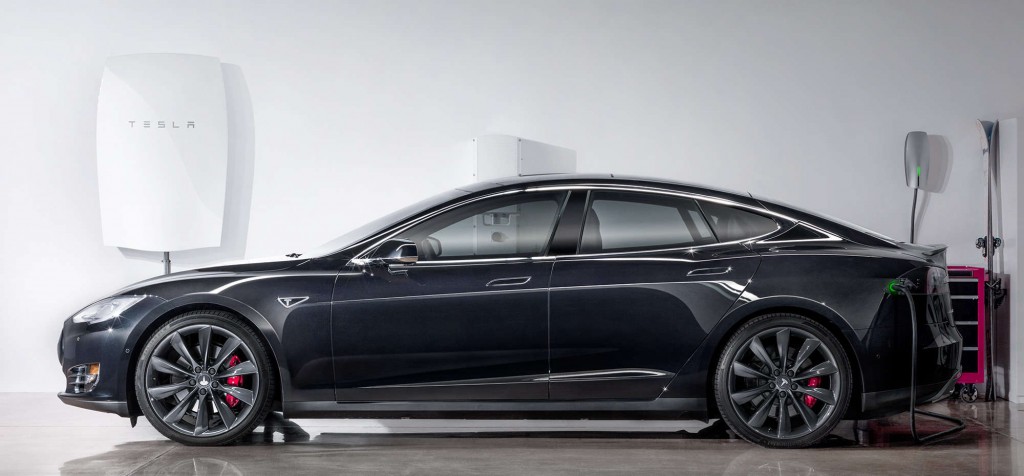
Tesla Energy reveals a Model S in close proximity to a Powerwall

Tesla Energy reveals a Model S in close proximity to a Powerwall

and here’s their description of the Powerwall:

Tesla Powerwall is a rechargeable lithium-ion battery designed to store energy at a residential level for load shifting, backup power and self-consumption of solar power generation. Powerwall consists of Tesla’s lithium-ion battery pack, liquid thermal control system and software that receives dispatch commands from a solar inverter. The unit mounts seamlessly on a wall and is integrated with the local grid to harness excess power and give customers the flexibility to draw energy from their own reserve.

The battery can provide a number of different benefits to the customer including:

  • Load shifting – The battery can provide financial savings to its owner by charging during low rate periods when demand for electricity is lower and discharging during more expensive rate periods when electricity demand is higher
  • Increasing self-consumption of solar power generation – The battery can store surplus solar energy not used at the time it is generated and use that energy later when the sun is not shining
  • Back-up power – Assures power in the event of an outage

Powerwall increases the capacity for a household’s solar consumption, while also offering backup functionality during grid outages.

Powerwall is available in 10kWh, optimized for backup applications or 7kWh optimized for daily use applications. Both can be connected with solar or grid and both can provide backup power. The 10kWh Powerwall is optimized to provide backup when the grid goes down, providing power for your home when you need it most. When paired with solar power, the 7kWh Powerwall can be used in daily cycling to extend the environmental and cost benefits of solar into the night when sunlight is unavailable.

Since we are big fans of distributed energy storage here at V2G UK this is all music to our ears, but some things are strangely lacking from Tesla’s publicity.  Apparently:

Tesla’s selling price to installers is $3500 for 10kWh and $3000 for 7kWh. (Price excludes inverter and installation.) Deliveries begin in late Summer.

It looks as though inverters to attach to Powerwalls will be supplied by third parties and the pretty picture above notwithstanding connecting a Tesla Model S to one or more Powerwalls and thence to the local electricity distribution grid is a problem that has yet to be addressed by Tesla themselves.

There have been some associated press releases, such as this one from SolarEdge:

SolarEdge Technologies, Inc., a global leader in PV inverters, power optimizers, and module-level monitoring services, announced its collaboration with Tesla Motors to provide an inverter solution that will allow for grid and photovoltaic integration with Tesla’s home battery solution, the Powerwall.

The joint development by SolarEdge and Tesla builds on SolarEdge’s DC optimized inverter solution and Tesla’s automotive-grade energy storage technology to enable more cost-effective residential solar generation, storage, and consumption for the global market.

Designed to manage both functions with just one SolarEdge DC optimized inverter, the solution will allow for outdoor installation and will include remote monitoring and troubleshooting to keep operations and maintenance costs low. The solution will also support upgrading existing SolarEdge systems with the storage solution.

The SolarEdge solution is expected to be available by the end of 2015.

Once again, however, whilst the phrase “grid integration” is mentioned “vehicle to grid” is not. I cannot help but wonder when (and how) it will become possible for a Model S to earn its proud owner a modest income by feeding some of the energy stored in its battery pack back into the local grid at its times of greatest need.

Is Apple Developing an Electric Vehicle?

According to Bloomberg the answer to the question posed in our title is a most definite yes! In a February 19th article Tim Higgins says that:

Apple Inc., which has been working secretly on a car, is pushing its team to begin production of an electric vehicle as early as 2020, people with knowledge of the matter said.

The timeframe — automakers typically spend five to seven years developing a car — underscores the project’s aggressive goals and could set the stage for a battle for customers with Tesla Motors Inc. and General Motors Co., both of which are targeting a 2017 release of an electric vehicle that can go more than 200 miles on a single charge and cost less than $40,000.

then adds that:

Apple representatives declined to comment for this story.

According to Bloomberg, however:

Apple began around June an “aggressive campaign to poach” employees from A123 Systems LLC, the Waltham, Massachusetts-based battery maker said in a lawsuit against Apple filed this month.

Apple hired five people from A123 and has tried to hire battery experts from LG Chem Ltd, Samsung Electronics Co., Panasonic Corp., Toshiba Corp. and Johnson Controls Inc., according to the lawsuit.

Bloomberg also talked to Tesla CEO Elon Musk, who told them:

That Apple was seeking to hire away his workers, offering $250,000 signing bonuses and 60 percent salary increases.

It seems as though when it comes to EVs, there’s never any smoke without fire?

[Edit – Saturday February 21st 2015]

This morning’s edition of The Economist includes an article on the Apple EV rumours:

APPLE’S ability to make desirable iGadgets designed for easy portability is beyond question. Reports emerged this week that it is planning to make a mobile device that will instead carry its users—an electric car. Apple’s plans are unclear and unconfirmed. By some accounts it has put a few hundred people to work developing cars to match Tesla, another Silicon Valley firm that makes fast and luxurious battery-powered saloons. Others reckon that it is working on a self-driving car.

Plenty of other tech firms are turning their attention to cars. In February Uber, a firm that provides taxis through a smartphone app, said it would set up a laboratory in Pittsburgh to develop self-driving taxis. Sony recently put money into ZMP, a self-driving car startup; Google has been working for years on driverless cars.

The Economist doesn’t sound optimistic about the future for the alleged Apple EV:

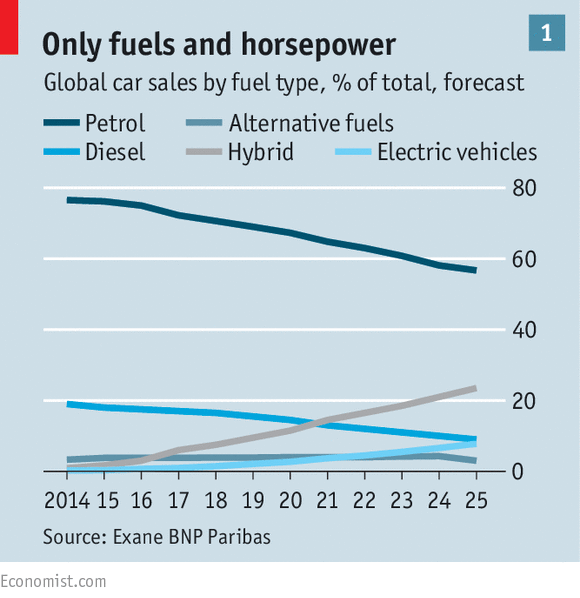
The likes of Apple may not know much about pistons and gearboxes, but the big challenge for electric cars is batteries. Battery-powered cars have many advantages: refuelling at home, cheap running costs and no tailpipe emissions. But the market for pure electric vehicles is tiny:

Expensive batteries make for costly cars, and limited range and a lack of recharging infrastructure have put off most drivers. Nissan’s Leaf, the world’s best-selling electric car, attracted only 40,000 buyers last year compared with the 250,000 the company once hoped to shift. Tesla aspires to enter the mass market but so far it has dealt with the battery problem by putting lots of them in a big, expensive car, thereby limiting it to a luxury niche. The plunging oil price dents the prospects for electrification still further.

and concludes:

Tech firms may be better off working with carmakers, to develop the software that will provide the brains of the self-driving car, and to improve the range and battery costs of the electric car. In the motor industry, supplying the key parts is generally more profitable than putting the cars together, even if you do not get your company’s badge on the bonnet. In the future cars will be different but the brands will probably be much the same.